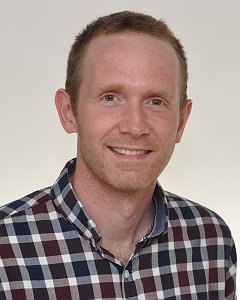
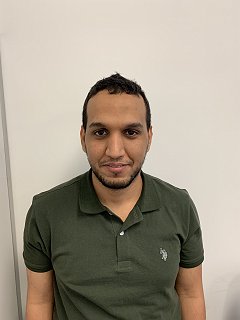
Angelos Bilas is a Professor of Computer Science at the University of Crete, Greece, and a collaborating researcher at FORTH-ICS (Foundation for Research and Technology-Hellas). He received his PhD in Computer Science from Princeton University in 1998 and has held academic positions at the University of Crete since 2002, including Department Chair (2016-2020). His research focuses on systems software for storage systems, computing architectures, and parallel systems with emphasis on flash storage optimization. PhD, Princeton University (1998) MA, Princeton University (1995) BEng, University of Patras (1993) His research interests span computer systems, storage architectures, and parallel computing , with notable contributions in memory-mapped I/O optimization, LSM key-value store design, and heterogeneous accelerator integration. He has developed frameworks like TeraHeap for DRAM pressure mitigation in big data systems and Arax for decoupling applications from accelerators. Prominent trends in his recent publications include flash storage optimization (TeraHeap), LSM tree efficiency (Tebis), and cloud-HPC convergence (EVOLVE, KNoC). His work appears in top venues like ASPLOS, USENIX ATC, and ACM Transactions on Storage. Scientific recognitions include: Marie Curie Excellent Teams Award (2005-2009) Best Presentation Award, USENIX HotStorage'20 He has served on editorial boards (ACM Transactions on Storage) and program committees (ACM HotStorage, HPCA). His research involves 35 master’s and 8 PhD students, with 45+ EU/national projects and 4 patents licensed to industry.
Dr. Panagiotis Repoussis serves as Associate Professor of Operations Research and Supply Chain Management at the Department of Marketing and Communication within the School of Business at Athens University of Economics and Business (AUEB). Previously, he held positions as Assistant Professor at Stevens Institute of Technology and visiting Lecturer at the University of Piraeus and Bayes School of Business at City University of London. His academic foundation includes a Diploma in Chemical Engineering from the National Technical University of Athens (2002), followed by graduate studies at Imperial College London and AUEB where he completed his doctoral dissertation in November 2008. His educational trajectory reflects a strategic shift from chemical engineering to operations research specialization. Dr. Repoussis specializes in Operations Research with concentrated expertise in Supply Chain Management , Vehicle Routing and Scheduling , and Production Systems Optimization . His research integrates mathematical modeling with computational intelligence to solve complex combinatorial optimization problems across logistics networks, manufacturing operations, and transportation systems. Key methodological contributions include advanced algorithms for dynamic scheduling under uncertainty and real-time decision support frameworks. Analysis of his 15 most recent publications (2019-2025) reveals a strong research trajectory toward Industry 4.0 applications, with increasing focus on IoT/AGV integration in manufacturing, disruption-resilient logistics, and robust optimization under stochastic conditions. Vehicle routing problems remain his dominant research theme, now extended to cross-docking operations, profit-oriented routing, and humanitarian logistics contexts. As principal investigator, Dr. Repoussis has secured research funding from NSF, EU programs, non-profit organizations, and private sector partners across Europe and North America. His academic service includes editorial board membership for Transportation Research Part E and Advances in Operations Research, leadership roles in the Hellenic Operational Research Society and Production and Operations Management Society, and organization of major conferences including Odysseus and MathSports. His professional activities demonstrate deep engagement with both theoretical advancements and practical implementations, particularly through development of decision support systems for waste management, healthcare logistics, and energy-aware production scheduling. Current initiatives emphasize the convergence of prescriptive analytics with emerging digital technologies in operational planning contexts.
George Papadimitriou is an Assistant Professor in the Computer Engineering & Informatics Department at the University of Patras , Greece, hosted within the School of Engineering . His primary affiliation lies with the Computer Hardware and Architecture division, where he leads research and teaching activities focused on dependable, energy-efficient computer architectures. Education: PhD in Computer Science, Department of Informatics & Telecommunications, National and Kapodistrian University of Athens (2019) Post-doctoral researcher, Computer Architecture Lab, National and Kapodistrian University of Athens Research Interests: Dr Papadimitriou’s research lies at the intersection of computer architecture , energy efficiency , and microprocessor reliability . His work specifically targets: Robust and energy-efficient CPU/GPU/accelerator architectures Post-silicon validation techniques for catching elusive hardware bugs Silent data corruption detection and mitigation across the compute stack Characterization of voltage margins and power consumption in modern microprocessors Modeling and simulation of domain-specific accelerators for low-power, dependable operation More recently, his team has been extending these methodologies to RISC-V and neuromorphic photonic accelerators within large European consortia. Scientific Awards & Recognition: Eight HiPEAC Paper Awards for top-tier conference publications (MICRO, HPCA, ISCA) between 2017–2024 IEEE Transactions on Computers 2022 Best Paper Award for the article “Anatomy of On-Chip Memory Hardware Fault Effects Across the Layers” TTTC/ITC Gerald W. Gordon Student Award 2023 Research Funding & Projects: Dr Papadimitriou is principal investigator or key technical contributor in multiple Horizon Europe and industry-backed projects that collectively exceed €50 M in funding. Current leadership roles include: DARE (Digital Autonomy for RISC-V in Europe) NEUROPULS (Neuromorphic Energy-Efficient Secure Accelerators) REBECCA (Reconfigurable Heterogeneous Highly Parallel Processing Platform) Vitamin-V (Virtual Environment & Tool-boxing for Trustworthy RISC-V Cloud Services) Intel, IBM, and Thales bilateral research contracts on energy-efficient and resilient microarchitectures Laboratory & Team: He leads the Energy-Efficient and Dependable Architectures (EEDA) research group at University of Patras, operating laboratory facilities for silicon measurement, FPGA emulation, and full-system simulation (gem5, MARSS, custom tools). The team currently comprises 3 PhD candidates, 2 post-docs, and several MSc thesis students collaborating with European and US partners.
Emmanuel Androulakis is an Assistant Professor at the Department of Statistics and Actuarial Science, University of Piraeus, specializing in Probability and Statistics. He holds a PhD from the National Technical University of Athens (2015) with a thesis on "Factorial designs, generalized linear models and variable selection using penalized probability methods". His research interests focus on Survival Analysis, Meta-analysis of Survival Data, Experimental Designs, and Biostatistics. He has published 30 works in international journals, book chapters, and conference proceedings, with over 240 citations. His recent publications span diverse applications including healthcare, environmental science, and social sciences. His articles demonstrate strong methodological development in statistical modeling with applications in geriatric care, oncology, renewable energy forecasting, and public health. The research shows particular expertise in handling complex survival data, meta-analysis techniques, and experimental design methodologies. Dr. Androulakis has served as a reviewer for 14 international scientific journals and has taught undergraduate courses including Biostatistics, Statistical Programs, and Probability, as well as graduate courses in Biostatistics and Epidemiological Statistical Methods.
Ioannis Venetis is an Assistant Professor at the University of Piraeus, School of Information and Communication Technologies, Department of Informatics, specializing in Operating Systems and Parallel Computing. He earned his PhD from the Department of Computer Engineering and Informatics at the University of Patras. His research spans programming models for parallel systems, scheduling optimization, and applications in computational neuroscience and seismology. Research Interests Operating Systems Parallel Computing Scheduling Algorithms High-Performance Computing Computational Neuroscience Seismology Projects Participation in European and national research programs Development of Gisola (GPU-accelerated seismic inversion tool) His teaching portfolio includes courses like Operating Systems, Parallel Processing, and Symbolic Programming. Articles highlight expertise in GPU acceleration, tridiagonal solvers, sensor networks, and many-core architectures. Notable contributions include work on Chimera states in neuronal dynamics and hierarchical workload scheduling frameworks.
Rajiv Gupta is a Distinguished Professor and the Amrik Singh Poonian Professor of Computer Science at the University of California, Riverside (UCR), where he serves as Associate Dean for Academic Personnel in the Bourns College of Engineering (BCOE). He is a member of the RIPLE research group and has co-authored 327 papers with an h-index of 69 and over 16,600 citations. His extensive service includes chairing major conferences such as FCRC 2015, PPoPP 2020, ASPLOS 2011, and PLDI 2008. Professor Gupta's research focuses on Programming, Compiler, Runtime & Architectural Support for Parallel & Distributed Heterogeneous Systems and Software Tools for Monitoring and Managing Runtime Behavior . His work spans graph analytics with scalability and performance, understanding and managing the dynamic behavior of parallel programs, software speculation for irregular parallelism, dynamic program analysis for secure and reliable computing, and compiler optimizations with architectural support. His research has significant applications in high-performance computing, GPU programming, and distributed systems. Analysis of his recent publications reveals a strong focus on graph processing systems, with particular emphasis on evolving and streaming graph analytics. His work addresses critical challenges in memory management for large-scale graph processing, hardware acceleration for graph algorithms, and optimization techniques for concurrent and distributed graph computations. The research demonstrates a progression from foundational compiler and architecture work to increasingly sophisticated systems for handling modern data-intensive computing challenges. Fellow of the ACM (2009) Fellow of the IEEE (2008) Fellow of the AAAS (2011) NSF Presidential Young Investigator Award (1991) UCR Doctoral Dissertation Advisor/Mentor Award (2012) Multiple best paper awards across major conferences Two students won ACM SIGPLAN Outstanding Doctoral Dissertation Award Five advisees received NSF CAREER Award Professor Gupta has supervised 42 PhD students to completion and currently advises several doctoral candidates. His advising success is reflected in his students' achievements, including multiple award-winning dissertations and significant career accomplishments in academia and industry. His research has been supported by numerous grants from NSF, DARPA, and industry partners, enabling sustained investigation into parallel computing systems. The RIPLE research group under his leadership has produced influential work that bridges theoretical foundations with practical system implementations. As the leader of the RIPLE research group at UC Riverside, Professor Gupta oversees a vibrant team focused on innovative approaches to parallel and distributed computing. The group maintains strong collaborations with industry partners and other academic institutions, contributing to the development of next-generation computing systems. Current projects include GRASP (Graph Analytics with Scalability & Performance) and research on understanding and managing the dynamic behavior of parallel programs, reflecting the group's continued focus on cutting-edge computing challenges.
Sang-Hoon Kim is an Associate Professor in the Department of Software and Computer Engineering and Department of Artificial Intelligence at Ajou University, South Korea. He leads the Systems Software Lab (Paldal Hall 1004-2) and maintains active collaborations with Virginia Tech as a Visiting Scholar since August 2024. His academic journey includes a Ph.D. in Computer Science from KAIST (2016) under advisors Seungryoul Maeng and Jin-Soo Kim, and a B.S. in Computer Science from KAIST (2002). His research spans operating systems, memory management, and storage systems with focus on mobile platforms, heterogeneous architectures, and SSD technologies. Key interests include memory fragmentation control , distributed thread execution , key-value storage optimization , and resource disaggregation . His work bridges theoretical innovation with practical system implementations, particularly for mobile and datacenter environments. Kim's publication portfolio shows consistent output in top-tier venues including USENIX FAST, VLDB, ICDCS, and ASPLOS. His research demonstrates evolution from mobile memory management (2015-2017) toward distributed systems and hardware-aware software (2019-present), with recent emphasis on resource-disaggregated environments and heterogeneous-ISA computing. The 2024 Best Paper Award at USENIX FAST highlights his impact in storage systems research. Best Paper Award at USENIX FAST'24 Multiple patents including US-9588912B2 for memory control He directs significant research projects funded by ETRI, NRF, and US ONR, including current work on memory-centric computing systems (2020-2023) and disaggregated non-volatile memory systems using RDMA (2018-2020). His Systems Software Lab maintains strong industry partnerships with Samsung Electronics and NHN, with prior projects improving Android memory management and developing SSD-based storage systems for large-scale internet services.
Fredrik Kjolstad is an Assistant Professor in the Department of Computer Science at Stanford University, specializing in compilers and programming models for sparse computing and performance engineering. His research focuses on separating algorithms from data representations to enable portable applications across diverse hardware platforms. His research interests span compilers, programming models, performance engineering, and computer architecture, with particular emphasis on sparse tensor algebra, compiler design for heterogeneous systems, and high-performance computing. He has pioneered frameworks like TACO, Simit, and Distal that enable efficient sparse computations across CPUs, GPUs, and specialized accelerators. Dr. Kjolstad's publications demonstrate expertise in compiler optimization techniques for sparse data structures, tensor algebra, and distributed systems. His work consistently addresses the challenge of bridging high-level programming abstractions with efficient hardware execution across diverse architectures. MIT EECS First Place George M. Sprowls PhD Thesis Award NSF CAREER Award Rosing Award Adobe Fellowship Google Research Scholarship Best Paper Awards at EuroMPI 2013, OOPSLA 2017, and OOPSLA 2021 ISCA Distinguished Artifact Award PLDI and OOPSLA Distinguished Paper Awards He advises multiple PhD students including James Dong, Olivia Hsu, and Rohan Yadav, while leading research on compiler technologies that have received significant grant support. His group develops practical tools like the TACO compiler and Legate Sparse that are used in both academic and industrial settings. Current projects focus on programmable accelerators for sparse tensor algebra, distributed sparse computing, and compiler support for emerging hardware architectures.
Sam Lindley is a Reader in Programming Language Design and Implementation at the Laboratory for Foundations of Computer Science within the School of Informatics at The University of Edinburgh. He holds a prestigious UKRI Future Leaders Fellowship focused on Effect Handler Oriented Programming. His academic career spans multiple institutions including Heriot-Watt University and Imperial College London. His research interests center on programming language theory and implementation, with specific expertise in type systems, effect handlers, session types, and functional programming. Lindley's work bridges theoretical foundations with practical implementation, particularly in compiler design and language semantics. His research has significant implications for language safety, efficiency, and expressiveness. Lindley's publication record demonstrates consistent contributions to top programming languages venues including PLDI, POPL, ICFP, and OOPSLA. His recent work explores modal effect types, scoped effects, and the application of effect handlers to systems programming and WebAssembly. The trend shows increasing focus on practical applications of theoretical concepts in real-world language implementations. Major Awards: UKRI Future Leaders Fellowship in Effect Handler Oriented Programming Lindley has served in significant leadership roles including ICFP 2023 Program Chair and PLDI 2025 Area Chair. He actively participates in the programming languages community through numerous program committees and workshop organization. His research is conducted within the Laboratory for Foundations of Computer Science, a leading center for theoretical computer science research at Edinburgh.
Stefano Markidis is a Professor of Computer Science specializing in high-performance computing systems at KTH Royal Institute of Technology in Sweden. He works in the Division of Computational Science and Technology, focusing on supercomputers, quantum computers, and computational methods for scientific simulations. His research spans multiple domains including plasma physics, computational fluid dynamics, and quantum computing. Markidis holds an MS degree from Politecnico di Torino and a PhD in Nuclear Engineering from the University of Illinois at Urbana-Champaign. Prior to joining KTH, he was a graduate research assistant at Los Alamos National Laboratory and Lawrence Berkeley National Laboratory, followed by a postdoc at KU Leuven. His academic journey reflects a strong foundation in both engineering and computational science. His primary research interests include High-Performance Computing , Heterogeneous Systems , and Quantum Computing . Markidis develops computational methods for plasma physics, particle-in-cell simulations, and fluid dynamics. His work bridges theoretical physics and practical computing, with applications in space physics, fusion energy, and materials science. He is particularly known for contributions to parallel computing, GPU acceleration, and the development of scalable simulation frameworks like Neko for computational fluid dynamics. His research increasingly integrates machine learning techniques with traditional numerical methods. Analysis of Markidis' recent publications reveals a strong focus on quantum-classical hybrid computing, advanced particle-in-cell methods, and high-fidelity computational fluid dynamics. His work demonstrates expertise in programming models for heterogeneous architectures including GPUs and quantum processors, with growing emphasis on AI-enhanced scientific computing. R&D100 award (2005) for the CartaBlanca project R&D100 award (2017) for the SHIELDS project Markidis teaches multiple courses at KTH including Applied GPU Programming, Quantum Computing for Computer Scientists, and High-performance Computing for Computational Scientists. He has supervised numerous degree projects across various specializations in computer science and electrical engineering. His research has been supported by various grants related to high-performance computing and quantum technologies, with applications spanning from space physics to medical treatments. Markidis leads research in computational science with a focus on developing frameworks like Neko for extreme-scale computational fluid dynamics. His team works on integrating traditional HPC methods with emerging technologies including quantum computing and AI, contributing to advancements in scientific simulation across multiple disciplines.
Sidi Mohamed Beillahi is a Lecturer in the Department of Computer Science at the University of Toronto's Faculty of Arts and Science. He teaches courses including Principles of Programming Languages (CSC324H1S) and Algorithms and Data Structures (ECE345H1F). Previously, he served as a Teaching Assistant at both University of Paris and Concordia University for courses ranging from Automata Theory to Hardware Functional Verification. Dr. Beillahi's research focuses on developing formal verification and programming languages techniques to ensure the correctness of software systems, particularly distributed systems, concurrent programs, blockchain, and smart contracts. His work bridges theoretical computer science with practical security applications in decentralized finance. His publication record shows a clear progression from quantum circuit verification during his Master's to blockchain and smart contract security in his doctoral and postdoctoral work. Recent publications demonstrate expertise in authenticated data structures for blockchain storage, flash loan attack analysis, and formal verification of decentralized applications. Scientific Awards: ACM SIGSOFT Distinguished Paper Award (ICSE '24) ICBC Distinguished Paper Award (ICBC '22) Dr. Beillahi has advised multiple research projects in blockchain security and verification, often collaborating with Professor Fan Long and Professor Andreas Veneris at the University of Toronto. His research has been supported by prestigious fellowships including an NSERC Postdoctoral Fellowship and a Mitacs Accelerate Fellowship.
Kunle Olukotun is a Professor of Electrical Engineering and Computer Science at Stanford University's School of Engineering, where he has been faculty since 1991. He directs the Stanford Pervasive Parallelism Lab (PPL) and co-leads the Transactional Coherence and Consistency (TCC) project. His research focuses on computer architecture, parallel programming environments, and scalable parallel systems. Key areas include chip multiprocessors (CMPs), transactional memory systems, domain-specific languages (DSLs) for heterogeneous computing, and hardware-software co-design for machine learning workloads. His work bridges theoretical foundations with practical systems implementation. Notable contributions include the Stanford Hydra research project (one of the first chip multiprocessors with thread-level speculation), founding Afara Websystems (acquired by Sun Microsystems), and developing the Niagara processor architecture. His DSL frameworks like Green-Marl and Spatial enable efficient graph analysis and hardware acceleration. His publications reveal strong trends in parallel systems evolution: from foundational CMP research (2000s) to transactional memory (2004-2010), then DSLs for heterogeneous computing (2010-2015), and currently foundation model systems (2023-2025). Subfield analysis shows consistent focus on hardware-software co-design, sparse computation, and compiler techniques across decades. ACM Fellow (2006) for contributions to multiprocessors on a chip and multi-threaded processor design Best Paper Award at IEEE International Symposium on Workload Characteristics (IISWC '10) for EigenBench Olukotun actively mentors researchers through the Stanford Pervasive Parallelism Lab (PPL), which seeks to proliferate parallelism across application domains. His projects have secured significant industry partnerships, including the acquisition of his startup Afara Websystems by Sun Microsystems. Current research focuses on compiler frameworks for foundation model systems and hardware acceleration for sparse machine learning workloads, supported by collaborations with major tech companies. He leads the Stanford Pervasive Parallelism Lab (PPL), which develops compiler and runtime systems for heterogeneous architectures. The lab's work spans DSLs, hardware acceleration, and parallel programming models, with strong industry ties to companies like NVIDIA and Google. Current initiatives include the Mosaic compiler framework and Stardust architecture for sparse tensor computation.