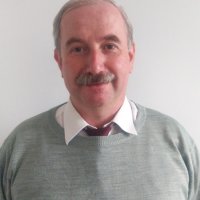
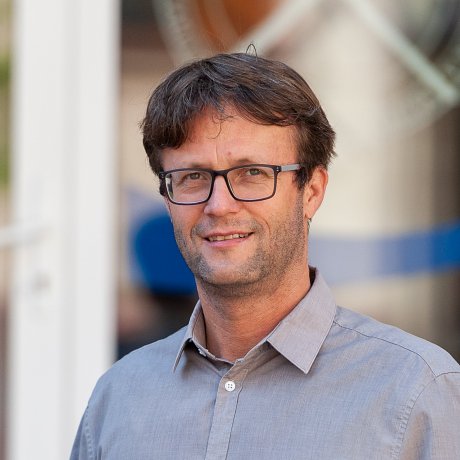
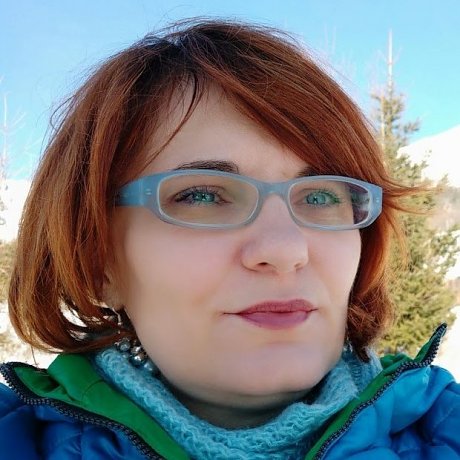
Dr. László V. Szabó is an Associate Professor in the Department of German Language and Literature at J. Selye University's Faculty of Education. He holds a habilitation in Literary Studies from the University of Pécs (2016) and a PhD from Eötvös Loránd University Budapest (2005). His academic career includes roles at the University of Pannonia (1997–2018) and J. Selye University (2018–present). He specializes in modern German literature, intercultural studies, and the reception of German philosophy in Hungary, with a focus on authors like Hermann Hesse, Rudolf Pannwitz, and Samuel Ferjenčík. Key research projects include Interkulturalität bei Rudolf Pannwitz (2007–2011) and Literárnohistorické spracovanie Ferjenčík (2018–2018). He has been awarded scholarships from DAAD, Alexander von Humboldt Foundation, and the Weimarer Klassik Foundation. His work bridges literary analysis with cultural and historical contexts, emphasizing transnational and intercultural dimensions. He has contributed over 28 publications, including monographs and peer-reviewed articles on topics like German literary hermeneutics and digital pedagogy. His academic leadership roles include vice-presidency in the Veszprém Branch of the Hungarian Academy of Sciences and coordination of Erasmus mobility programs.
Marek Babic is an Associate Professor in the Department of History at the Catholic University in Ružomberok, Slovakia, where he has been employed since 2000. He served as Dean of the Faculty of Arts and Letters from 2016 to 2023 and was Chair of the Academic Senate of the Faculty from 2012 to 2016. His academic journey began with an undergraduate degree in History and Classical Philology from Comenius University (1992-1997), followed by doctoral studies completed in 2006 and habilitation in 2017. Dr. Babic's research focuses on the history and culture of Late Antiquity, particularly the historical interpretation of Ancient Roman architecture, epigraphy, and classical languages. His work examines how Roman infrastructure, city walls, bridges, and villas functioned both practically and symbolically within the social and political fabric of the Roman Empire. He has conducted extensive research on how public construction served as political propaganda in Late Antique Rome, analyzing inscriptions and legal documents to understand the relationship between architecture and power. His scholarly output shows a clear progression from studying specific architectural elements like bridges and city walls to broader cultural interpretations of Roman society in transition during Late Antiquity. His most recent work explores luxury in Roman private baths and villa culture, demonstrating his expanding interest in the social and cultural dimensions of Roman elite life. His publications appear in journals such as Cultural History , Acta antiqua et archaeologica , and Historical Journal , reflecting his interdisciplinary approach that bridges history, archaeology, and classical studies. Notre Dame University Scholarship for Short Scholarly Visit (2011) Leadership seminar at Mendoza School of Business, Nanovic Institute, Notre Dame University (2017) Dr. Babic maintains an active research schedule with international collaborations, having conducted research stays at institutions including the American Academy in Rome, University of Cambridge, Heidelberg University, and Kyoto University. He serves on the Scientific Council of the Slovak Institute of History in Rome and is a member of the international correspondent network for late antiquity research based in Heidelberg and Tübingen. His editorial work for journals like Cultural History demonstrates his commitment to advancing scholarship in his field.
Florence Gajdošová serves as a native speaker teacher at the Department of Romance and Slavic Languages within the Faculty of Applied Languages at the University of Economics in Bratislava since 2020, specializing in French for foreigners and teacher training for both general and vocational contexts. Her international career includes Educational Coordinator roles at French Institutes in Bratislava (2016-2020), Tetouan, Morocco (2012-2016), and Marrakesh, Morocco (2009-2012), along with direct teaching experience at the French Institute in Bratislava from 2002-2009. She holds a second degree in Didactics of French as a foreign and second language and cooperation in language education fields, completed in 2005 at Aix Marseille I University, France. Her professional development encompasses specialized certifications including DELF/DALF examiner training (2021), DFP exam design (2020), iFos trainer certification (2019), and DELF/DALF exam design (2018) through France Education International and the French Chamber of Commerce. Gajdošová's research centers on French language pedagogy with emphasis on second language acquisition and vocational applications . Her work bridges theoretical frameworks with practical implementation through teacher training programs and curriculum development. She demonstrates particular expertise in adapting language instruction for professional contexts while maintaining alignment with CEFR standards. Analysis of her 2021-2023 publications reveals consistent focus on modernizing French language assessment tools and pedagogical resources. The DELF public examination series (B1/B2) showcases her contribution to standardizing proficiency testing, while the Edito series (A2/B1) demonstrates systematic curriculum development across CEFR levels. These works collectively advance language testing methodologies , teacher support materials , and vocational language integration within contemporary educational frameworks. No scientific awards were documented in the provided information. Her professional activities emphasize educational coordination and trainer development rather than formal student advising. The documented training programs (DFP exam design, iFos trainer certification, DELF/DALF examiner preparation) reflect institutional knowledge transfer initiatives rather than grant-funded research projects. No information regarding research grants or supervised theses was available. Current affiliations indicate engagement with institutional language education frameworks through the Faculty of Applied Languages, though no dedicated research laboratories or specialized teams were specified in the source materials.
Miroslava Hlinčíková is a Researcher at the Institute of Ethnology, Slovak Academy of Sciences (IES SAS), affiliated with the Faculty of Arts at the University of St. Cyril and Methodius. She holds a PhD in Ethnology (2013) and an Mgr. degree (2006). Her research spans migration, integration, multiculturalism, transnationalism, and cultural/social diversity, with a focus on Vietnamese and Bulgarian communities in Slovakia. Principal investigator in projects like Folk Knowledge and Its Sociocultural Conditions (2011–2013) and Family Histories (2014–2017). Key contributions to understanding migrant integration in urban spaces, particularly in Bratislava’s Mileticova market. Recipient of the Cena predsedníctva SAV (2016) for young researchers. Co-editor of volumes such as Za hranicami vedy? (2016) and Otvorená krajina alebo nedobytná pevnosť? (2016). Active in pedagogical roles, teaching courses like Migration Studies and Ethnicity - Nation - Nationalism at the University of St. Cyril and Methodius. Collaborated on international projects, including a 2016 professional exchange program in the USA and intensive courses at Linköping University. Her scientific work bridges ethnographic analysis with policy relevance, addressing themes like transnational social fields, urban diversity in open-air markets, and the sociocultural impacts of the COVID-19 pandemic. She contributes to public discourse through blogs like When the world changed IV (2021), highlighting post-crisis societal engagement.
Juraj Zajonc is a researcher at the Institute of Ethnology of the Slovak Academy of Sciences (Ústav etnológie SAV) in Bratislava, Slovakia, specializing in textile culture, traditional artistic expression, and cultural heritage. He holds a PhDr. degree (1989) and CSc. degree (1997), and has been with the institute since 1988. In addition to his research work, he has lectured at the Academy of Fine Arts and Design in Bratislava on textile history and techniques from 1995 to 2015. His educational background includes studies at the Department of Ethnography and Folklore Studies, Faculty of Arts, Comenius University in Bratislava (1983-1987). He is proficient in Russian and German languages. Zajonc's research focuses on textile culture, traditional artistic expression, and cultural heritage, with particular attention to historical textile production techniques, holiday traditions, and the documentation of material culture. His work often involves interdisciplinary approaches combining ethnology, archaeology, and historical research to understand traditional practices and their evolution. His publications reveal a consistent interest in reconstructing historical textile techniques, analyzing holiday rituals, and documenting cultural heritage through both traditional and digital means. He has led and participated in numerous research projects funded by VEGA and other programs, exploring topics such as traditional textile production, holiday rituals, and cultural heritage preservation. His research has significant implications for understanding how traditional knowledge is transmitted and transformed across generations, particularly in Central European contexts. 2014: Prize of the Slovak Ethnological Society for publication (2011-2013) 2013: Literary Fund Prize for scientific literature 2013: Prize of the Slovak Academy of Sciences for science popularization 2001: Literary Fund Prize and Prize of the Slovak Academy of Sciences 1997: International Prize for Ethnological and Anthropological Studies Guiseppe Pitré Zajonc has supervised numerous research projects and has been actively involved in creating electronic databases and encyclopedias documenting traditional folk culture. His work bridges academic research with practical applications in cultural heritage preservation and education, particularly through his contributions to the 'Traditional Folk Culture in Words and Images' electronic encyclopedia. He has also made significant contributions to understanding how traditional knowledge is transmitted and transformed across generations, with particular attention to the material aspects of cultural heritage.
Sergej Chodarev is an Assistant Professor at the Technical University of Košice in the Department of Computer and Information Systems. His office is located in Building Letná 9, Room B513 (B529 by the old numbering), and consultation hours can be scheduled via Calendly at https://calendly.com/sergej-chodarev/office-hours. He teaches courses in Metaprogramming, Functional Programming, User Interfaces and User Experience, and Fundamentals of Software Engineering. His primary research areas include: Domain-specific languages Programming languages Metaprogramming User interfaces Dr. Chodarev's publication record from 2011-2016 demonstrates a consistent research trajectory focused on language engineering, particularly in domain-specific languages and metaprogramming. His work bridges theoretical computer science with practical software engineering applications, often addressing challenges in language composition, syntax definition, and user interface patterns. Many publications explore how to make programming languages more adaptable and user-friendly for specific domains. He is actively involved in research projects including: Applying new principles in the education of IT specialists in the field of formal languages and translators (as Deputy Project Manager) Developing architectural knowledge across the edge-cloud continuum (as a Solver) Dr. Chodarev maintains a scholarly presence through multiple identifiers: ORCID (0000-0002-9293-0859), Scopus Author ID (54583293100), and Web of Science ResearcherID (R-3205-2019). His professional online presence includes a personal blog, GitHub, and Instagram accounts.
RNDr. Lucia Csachová, PhD, is an Associate Professor at the Department of Mathematics, Catholic University in Ružomberok. She serves as a Pedagogical Practice Methodologist for Mathematics Teachers and a Study Advisor for Mathematics students. Her work focuses on mathematics education, problem-solving methodologies, and visual learning. Current roles: Associate Professor, Pedagogical Practice Methodologist, Study Advisor Department: Mathematics Contact: lucia.csachova@ku.sk Research Interests: Csachová specializes in mathematics education, with emphasis on problem-solving strategies, visual learning in geometry, and statistical literacy. She explores interdisciplinary connections (e.g., folk art and geometry) and analyzes cognitive challenges in mathematical understanding. Article Trends: Her publications (2018–2023) highlight: Problem-solving in Slovak educational assessments Visual representation challenges in geometry Statistical literacy in secondary education Integration of folk art into mathematical teaching Remote teaching adaptations during the pandemic Advising & Consultation: Csachová offers consulting hours for students and maintains active involvement in mathematics teacher training.
Kinga Horváth is a Professor and Dean of the Faculty of Education at J. Selye University in Komárno, Slovakia. She holds academic qualifications including a PhD from Comenius University and habilitation from the University of Pécs. Her career spans over three decades, with roles progressing from primary school teacher to university dean. She leads research in educational systems, teacher identity, and minority education. Education: Primary School Teacher Training (Comenius University, 1989–1993) PhD in Pedagogy (Comenius University, 1997–1999) Examina Rigorosa in Pedagogy (Comenius University, 1999–2000) Habilitation in Pedagogy (University of Pécs, 2015) Research Focus: Investigates teacher identity in social contexts, pedagogical communication dynamics, early school leaving phenomena, and educational systems' theoretical foundations. Recent work emphasizes minority education strategies and digital assessment methods. Awards: Multiple rector awards (2018, 2021, 2023) and recognition from the Hungarian Pedagogues Union (2023) for promoting Hungarian-language education. Projects: Leads EU-funded initiatives like Erasmus+ OKTÁV (2024–2026) and coordinates research on Slovak as a second language in teacher training. Active in KEGA/VEGA grants focusing on creativity in education and minority education strategies.
Tomáš Godiš is an Associate Professor at the Faculty of Education, Trnava University in Trnava , specializing in German language teaching and linguistics. He has been employed there since 2023, previously serving as an Assistant Professor (2015–2022). He also holds a part-time university teaching position at the Faculty of Arts, Catholic University in Ružomberok since 2006. Education PhD in Department 3.2.2 Theory and History of Journalism, Catholic University in Ružomberok (2011–2014) Masters in German Language - Social Studies, Catholic University in Ružomberok (2001–2006) English Language Studies, State Language School Liptovský Mikuláš (2010–2015) Habilitation in Trade Didactics at Trnava University (2025) Research Focus Godiš's research centers on German linguistics , foreign language didactics , and media-assisted education . His work explores the intersection of language theory, pedagogical methodology, and technological integration in language instruction, particularly through his habilitation thesis on online educational programs in foreign language teaching. Publications demonstrate expertise in morphology , syntax , lexicology , and digital learning resources , with a focus on German language education through both traditional and distance learning frameworks. Scientific Milestones 2025: Habilitation Procedure in Trade Didactics Monographs and textbooks on German language teaching (2016–2023) Academic Roles Godiš serves as a German language course instructor at Mountair Slowakei AG (since 2015) and was a lecturer at Business English School Martin (2013–2014). His teaching portfolio spans university-level courses in German morphology, syntax, stylistics, and text linguistics.
Gautier Quentin Crept serves as a Lecturer in the Department of Romance Studies at the Faculty of Arts , Matej Bel University . Based in room K 129 with contact number 048 446 5129, he is actively engaged in teaching Romance language disciplines across the university's academic structure. His research centers on Romance Languages with emphasis on linguistic evolution , comparative philology , and cultural contexts of French, Spanish, and Italian language systems. This work bridges theoretical linguistics with practical language pedagogy within Central European academic frameworks. No scientific awards were documented in available sources. While student advising details remain unspecified, his role involves curriculum development for Romance language programs. No laboratory affiliations or active research teams were referenced in institutional materials.
Beáta Kiss is a Lecturer at the Faculty of Education , J. Selye University , affiliated with the Department of Pedagogy. She has extensive experience in regional education, previously serving as a primary school teacher at Juhász Gyula Alapiskola (1995-2004) and as a high school teacher/director at Czeglédi Péter Református Gimnázium (2001-2021). Education: University of Nitra (1989-1993) in Hungarian Language & Literature with Musical Education; Rigorózus at J. Selye University (2010-2012) in Hungarian Language & Literature Her research focuses on pedagogical analysis of children's and youth programs in Slovak Radio's Hungarian broadcasts, volunteering in public education , and civil professional associations' impact on Hungarian teachers' training . Her publications span educational sociology, media studies, and cultural preservation. She contributed to creating educational standards for Hungarian language instruction in Slovak schools and participated in the 16th International Conference of J. Selye University (2024) as an editor. While no explicit scientific awards are listed, her work is embedded in institutional projects like Soft Structured Liquids and Erasmus+ KA2 Strategic Partnerships .
Miroslav Melicherčík serves as an Assistant Professor at the Department of Computer Science, Faculty of Natural Sciences, Matej Bel University in Banská Bystrica, Slovakia. He has held this academic position continuously since 2013 while maintaining research connections with Comenius University in Bratislava. Education: 2002-2007: Mgr. in Chemistry-Computer Science, Faculty of Natural Sciences, Matej Bel University 2003-2008: Mgr. in Computer Science-English Language and Literature, Faculty of Natural Sciences, Matej Bel University 2011: RNDr. in Theoretical and Computational Chemistry, Faculty of Natural Sciences, Comenius University 2008-2012: PhD in Theoretical and Computational Chemistry, Faculty of Natural Sciences, Comenius University Dr. Melicherčík's research spans multiple computational domains with emphasis on High Performance Computation and Parallel computation methodologies. His work uniquely bridges Computer Vision applications with Computational Chemistry principles, while maintaining strong practical focus through Microcontroller Programming and Machine Learning implementations. This interdisciplinary approach enables innovative solutions across theoretical and applied computing domains. As an educator, he teaches a comprehensive curriculum including Algorithms and Data Structures, Programming, Effective Algorithms, Computer Systems, Internet of Things, Parallel Programming, Microcontroller programming, Quantum computing, and 3D modelling and printing. His teaching methodology integrates theoretical foundations with hands-on technical implementation, preparing students for both academic research and industry applications. Dr. Melicherčík maintains active research collaborations through the Center for High Performance Computing and the Center for Geoinformatics and Digital Technologies at Matej Bel University. His consultation hours are Monday-Wednesday 8:00-10:00, reflecting his commitment to student engagement and academic mentorship.
Prof. Vladimír Rábik serves as Professor of Medieval Slovak History at Trnava University's Faculty of Arts, concurrently holding leadership roles as Head of the Department of History, Vice-Rector for Science, Research and Artistic Activities, and Director of the Slovak Historical Institute in Rome. His academic credentials include an Mgr. in History (1999), PhDr. (2000), and PhD in Slovak History (2004) from Trnava University, with promotion to Associate Professor in 2008 and full Professor in 2014. Specializing in medieval diplomatics and auxiliary historical sciences, Rábik's research examines Slovak medieval urban development, German settlement patterns, and Vatican archival materials related to the Kingdom of Hungary. Current projects include VEGA 1/0713/21 on medieval property registers and APVV-16-0619 analyzing Roman Curia-Hungary interactions during the Middle Ages. He has secured substantial research funding through VEGA, APVV, and European Structural Funds programs, supervising graduate students in medieval history while serving on editorial boards for journals including Studia historica Tyrnaviensis and Slovak studies. Rábik directs the Slovak Historical Institute in Rome, facilitating critical access to Vatican archives, and leads international collaborations with Hungarian institutions like Péter Pázmány Catholic University and Szeged University.
Prof. PaedDr. Dana Hanesová, PhD is a full professor at the Faculty of Education of Matej Bel University in Banská Bystrica, Slovakia. She has been active in pedagogy, social pedagogy, and didactics since 1993 and currently serves as a guarantor for the Master’s study program Social Pedagogy and the Doctoral program Pedagogy. Education: Doctoral degree in Theory of Teaching Foreign Languages (Comenius University, 2003); Docentship in Teaching Arts and Education (Matej Bel University, 2005) Her research focuses on critical thinking , transversal competencies , comparative education systems , moral/spiritual development of youth , and plurilingual/multicultural competence . Recent work includes the Languages Playfully and Meaningfully textbook (2024) for primary education language teaching. She has led projects like KEGA 011UMB-4/2022 (methodological support for foreign language teaching) and e-SL4EU (digital service learning). She has received international awards such as the European Quality Label (2004) and the Silver Medal of the University of Ljubljana (2014). Her publications are used at universities in the Netherlands, Czech Republic, and Slovakia.
Vojtěch Kolman is a Full Professor of Philosophy at Charles University , specializing in Logic through the Department of Logic at the Faculty of Arts. He has held visiting positions at Universität Leipzig (Humboldt Research Fellow) and the University of Pittsburgh (Fulbright Research Scholar). Education: PhD in Logic (2002) and Master's in Logic (1999) from Charles University. His research spans logic, philosophy of language, pragmatism, philosophy of music, Hegel, Frege, and Wittgenstein , with a focus on inferentialism, dialectics, and the interplay between formal systems and human understanding. Key Publication Trends: His work bridges mathematical logic and continental philosophy , addressing topics like Hegelian dialectics , Wittgensteinian language games , and the philosophy of infinity . Collaborations include editorial projects such as From Rules to Meanings: New Essays in Inferentialism (Routledge, 2018). Scientific Awards: Humboldt Research Fellowships (2012, 2004/2005) Fulbright Research Scholarship (2011/2012) Bolzano Prize and Rector's Best Dissertation Award (2002) Multiple awards for publications (2009, 2008) Advising: Supervised PhD students on topics including identity language , rule-following , and measure in Hegel . Labs/Teams: Academic Management of the KREAS project and leadership roles at Charles University, including Vice-Dean for Research and Deputy Head of the Department of Logic.