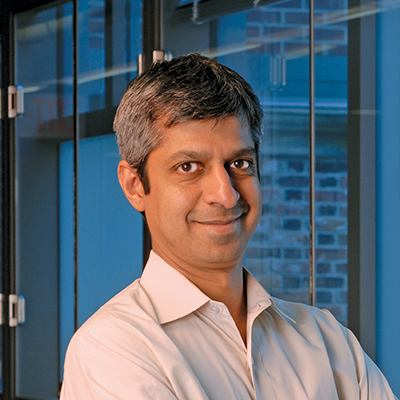
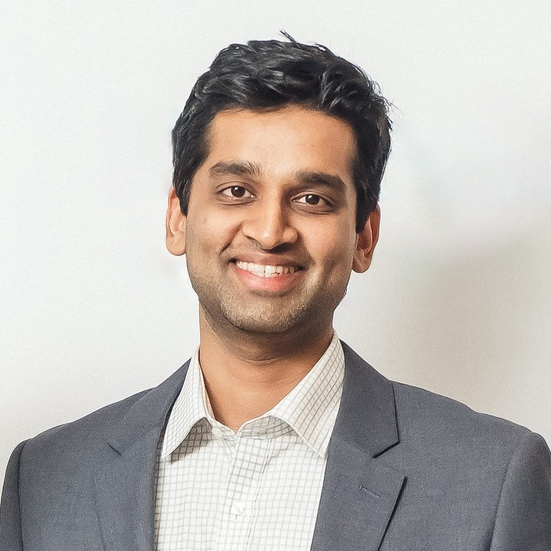
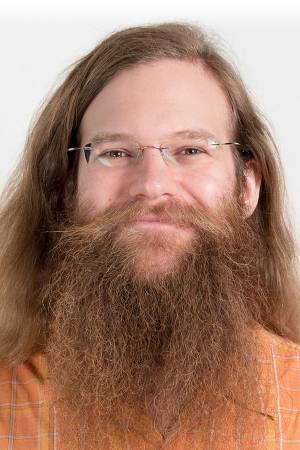
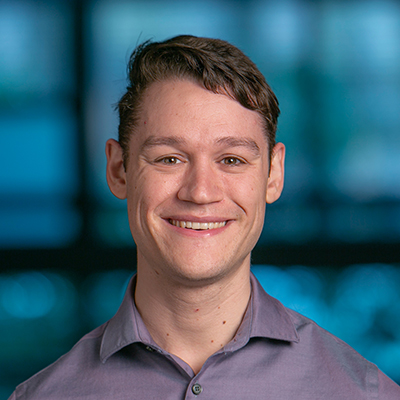
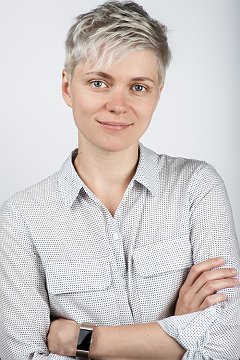
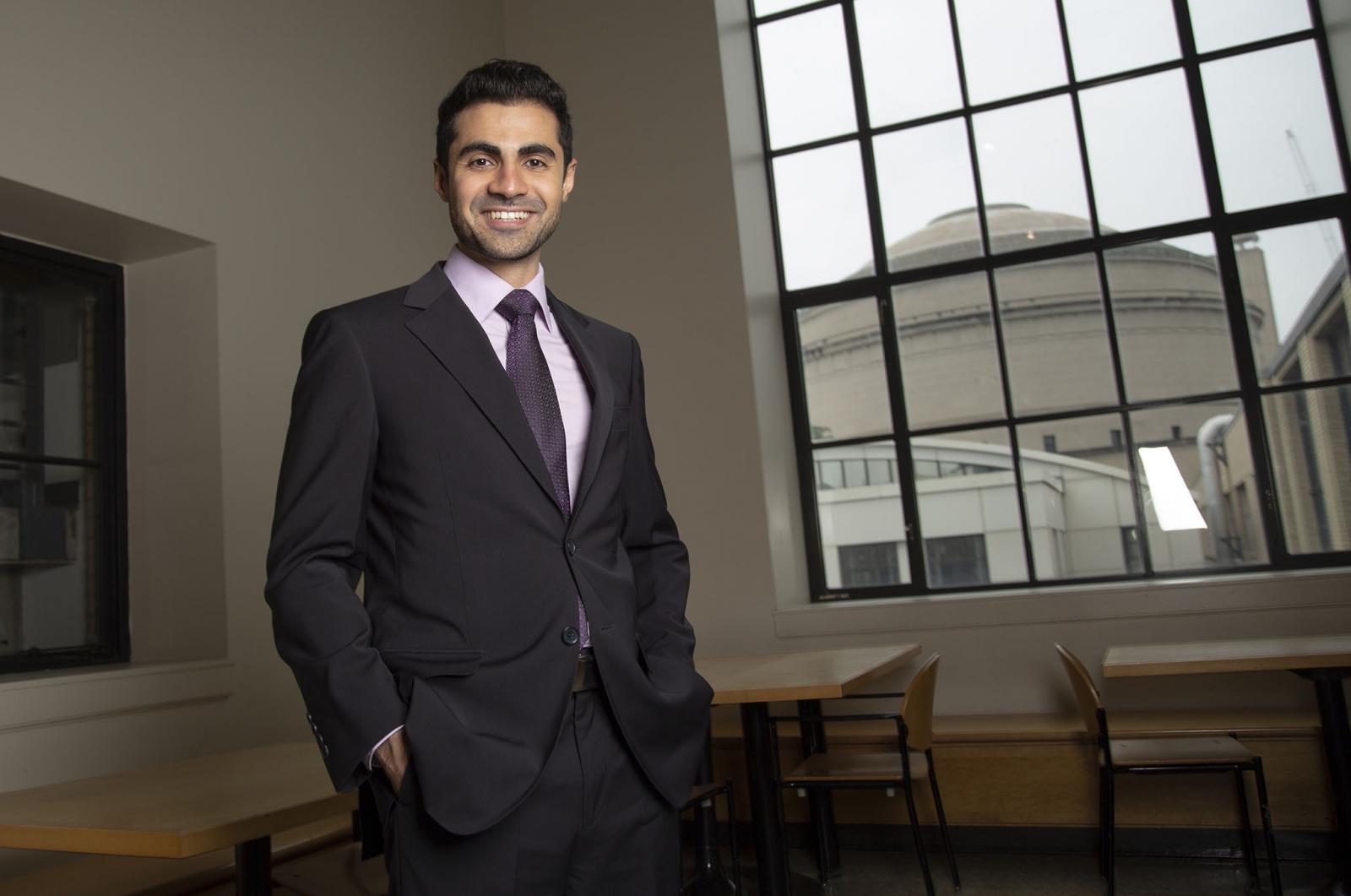
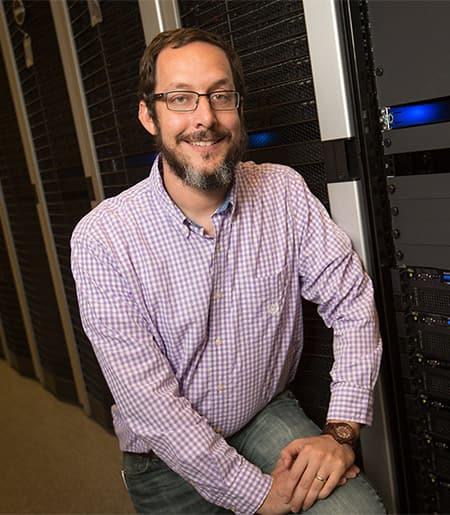
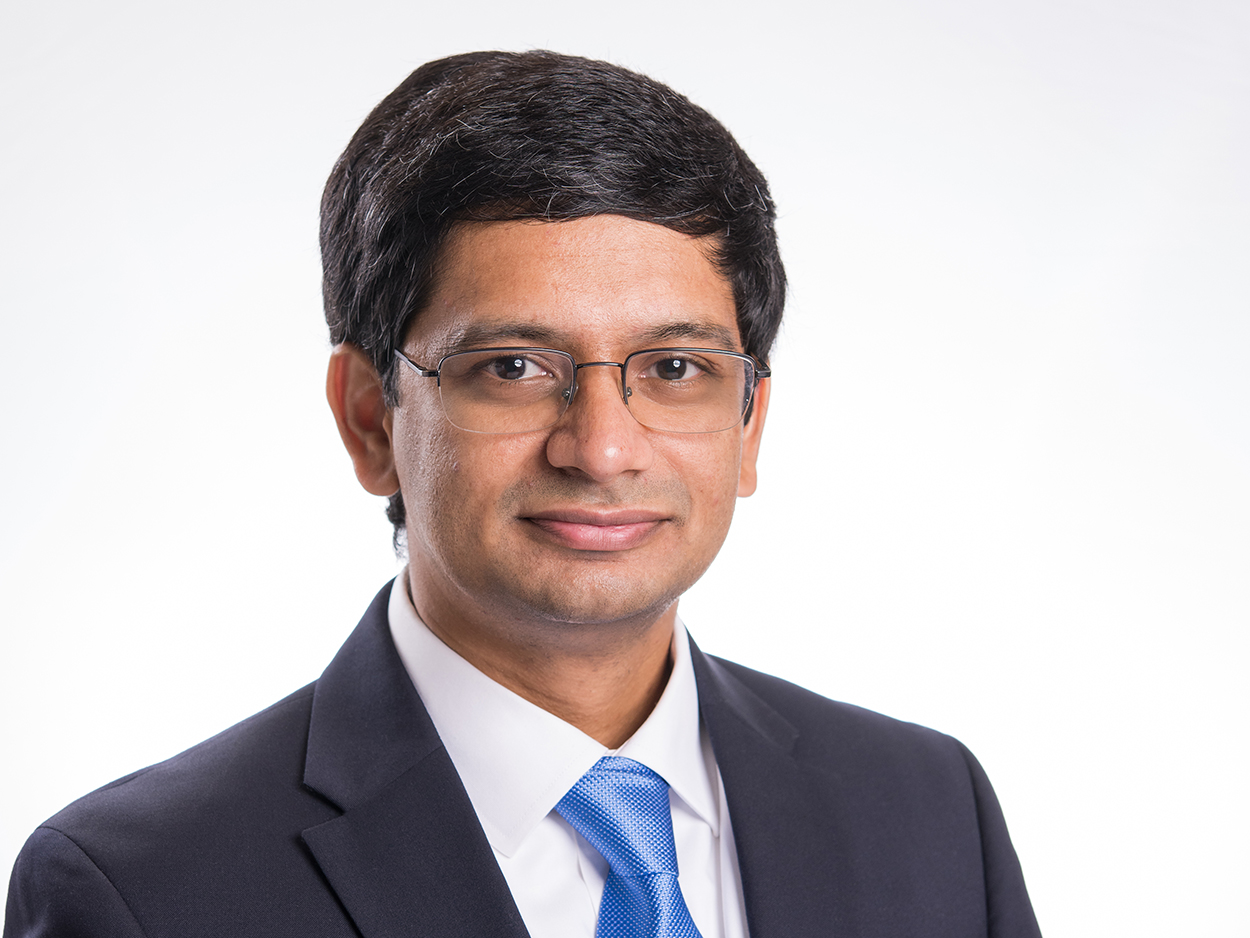
Eric Wong is an Assistant Professor in the Department of Computer and Information Science at the University of Pennsylvania, affiliated with the ASSET Center and leading the Brachio Lab. His research focuses on robust and reliable machine learning, including model debugging, adversarial robustness, and explainable AI. He holds a PhD from Carnegie Mellon University (CMU), advised by J. Zico Kolter, and completed a postdoc with Aleksander Madry. His work bridges theory and practice, addressing challenges in model interpretability, safety, and scalability. Teaching includes CIS 5200 (Machine Learning), CIS 3333 (Mathematics for Machine Learning), and a specialized course on debugging ML pipelines. Notable contributions include the FIX Benchmark for interpretable features and defenses against LLM jailbreaking attacks. He received an Amazon Research Award in 2024 and has published extensively in top conferences like ICML, NeurIPS, and ICLR. Affiliations: University of Pennsylvania (CIS), ASSET Center, Brachio Lab Education: PhD in Machine Learning (CMU), Postdoc at MIT Key Projects: FIX Benchmark, DOLPHIN framework, SmoothLLM defense Awards: Amazon Research Award (2024) Lab Focus: Safe AI, model debugging, neurosymbolic learning
Rajeev Alur is the Zisman Family Professor in the Department of Computer and Information Science at the University of Pennsylvania, leading the School of Engineering and Applied Science. He is the Founding Director of the ASSET Center for Trustworthy AI and a member of the PRECISE Center. His research focuses on formal methods for system design, integrating AI, cyber-physical systems, and machine learning with logical reasoning to ensure safety in autonomous systems. Alur has held leadership roles in major NSF projects like ExCAPE and has directed the Embedded and Multi-Scale Systems (EMBS) program. His research interests span formal verification, temporal logics, programming abstractions, and synthesis techniques. Notable contributions include the development of Nested Words (visibly pushdown languages), streaming string transducers, and tools like AutomataTutor for education. He has advised over 60 PhD students and postdocs, many of whom now hold academic and industry leadership positions. Alur’s awards include the 2024 Knuth Prize and the 2016 Alonzo Church Award. His work on Verisig and compositional verification of neural networks has advanced safety-critical AI applications. He teaches foundational courses like CIS 2620 and develops educational tools, emphasizing both theoretical rigor and practical impact. Key projects include the ASSET Center’s focus on trustworthy AI, integration of logical specifications in reinforcement learning, and formal verification of closed-loop systems with neural components. His publications span over 350 papers, with recent work addressing neurosymbolic learning, security in large language models, and efficient neural network verification.
Karthik R. Narasimhan is a Professor at Princeton University's School of Engineering and Applied Science in the Department of Computer Science. Previously, he earned his PhD from MIT under Regina Barzilay and served as a visiting research scientist at OpenAI during 2017-18. His research focuses on the intersection of language and decision-making, building autonomous agents that learn from both experience and human knowledge. His research spans multiple high-impact areas including language agents (Text-DQN, CALM, ReAct, Tree of Thoughts), reinforcement learning (h-DQN, Multi-Objective RL), and AI safety (Toxicity in ChatGPT, DataMUX). He has developed critical datasets and benchmarks such as WebShop, InterCode, SWE-bench, and SILG that have become standard evaluation tools in the field. Current work emphasizes agent capabilities, software engineering automation, and multimodal interaction. His publication trends show strong focus on practical agent deployment (SWE-agent, Tree of Thoughts), safety evaluation (Probing AI Safety), and efficiency improvements (DataMUX). Recent work increasingly addresses real-world challenges in software engineering, security, and human-AI collaboration through rigorous benchmarking. Co-author of foundational GPT (2018) paper Key developer of Text-DQN (2015), CALM (2020), ReAct (2022), Tree of Thoughts (2023) Creator of influential benchmarks: WebShop (2022), SWE-bench (2023), InterCode (2023) He actively advises students through Princeton's computer science program, with research supported by multiple grants focused on autonomous agent development and language-based decision systems. His GitHub repositories (nlp-datasets, text-world-player) demonstrate strong community engagement in open-source research tools. Current projects include advancing language agent capabilities through Reflexion (2023) and Tree of Thoughts (2023) frameworks while addressing critical safety and efficiency challenges.
Nate Foster is a Professor of Computer Science at Cornell University and currently serves as the Associate Dean for Research in the Ann S. Bowers College of Computing and Information Science. He is also a Visiting Researcher at Jane Street and served as a Visiting Professor at École Polytechnique Fédérale de Lausanne during the 2023-24 academic year. His research uses ideas from programming languages to solve problems in networking, databases, and security. BA in Computer Science, Williams College (2001) MPhil in History and Philosophy of Science, University of Cambridge (2008, all work completed in 2003) PhD in Computer and Information Science, University of Pennsylvania (2009) Foster's research focuses on developing languages and tools that make it easy for programmers to build secure and reliable systems. His current work centers on the design and implementation of languages and tools for programmable networks, particularly using the P4 language. His past work includes bidirectional languages (also known as 'lenses'), database query languages, data provenance, type systems, mechanized proof, and formal semantics. His research group at Cornell has made significant contributions to network verification, software-defined networking, and formal foundations for programmable data planes. Analysis of Foster's recent publications reveals a strong focus on network verification and programming language foundations for networking. His work consistently applies formal methods to practical networking problems, with a particular emphasis on the NetKAT and P4 languages. Over the past five years, his research has evolved toward more complex network verification techniques, including infinite state verification, active learning of network models, and dependently-typed approaches to network programming. His work bridges theoretical computer science with practical networking systems, making formal methods accessible to network engineers. ACM Fellow (2025) ACM SIGPLAN Robin Milner Award (2023) ACM SIGCOMM Rising Star Award (2018) NSF CAREER Award (2013) Alfred P. Sloan Fellowship (2012) Multiple distinguished paper awards across top conferences including POPL, PLDI, and SIGCOMM Foster has advised numerous PhD and Master's students who have gone on to prominent positions in both industry and academia, with many continuing work in programming languages and networking. He has led multiple significant research grants including an NSF CAREER Award and has been involved in the P4 Language Consortium, serving as Chair of the P4 Language Governing Board. His work has been supported by various organizations including NSF, DARPA, and industry partners like Intel and Jane Street. Foster is also active in the programming languages research community, serving on numerous program committees and as Vice Chair of DARPA's Information Science and Technology (ISAT) study group. Foster leads a vibrant research group at Cornell focused on programming languages for networks, with collaborators from academia and industry. His group has developed several influential tools and frameworks including NetKAT, Petr4, and KATch. They maintain strong connections with the P4 community and work closely with industry partners to ensure their research has practical impact on real-world networking systems.
James McCann is an Associate Professor at the Carnegie Mellon Robotics Institute, where he leads the Carnegie Mellon Textiles Lab. He has been a faculty member since May 2017 after working at Disney Research Pittsburgh. McCann's academic journey includes a PhD from Carnegie Mellon advised by Nancy Pollard, followed by a postdoc at Adobe Research and a period developing video games. McCann's research focuses on building creative tools that operate in real-time and build user intuition, with particular emphasis on textiles fabrication and machine knitting. His work spans computer-aided fabrication, simulation, graphics, and creative tools development. He has pioneered systems for machine knitting design, including compilers for knitting instructions and tools for automatic conversion of 3D meshes to knitting patterns. His recent publications demonstrate a strong trend toward computational textiles, with significant contributions to knitting semantics, deployable textile structures, and applications of machine knitting in healthcare and robotics. McCann's work bridges computer science, robotics, and textile arts, creating practical systems for once-off manufacturing with industrial knitting machines. McCann actively mentors students, with current PhD candidates working on solid knitting machines, knit calibration, and assistive devices. His teaching portfolio includes courses on Real-Time Graphics, Algorithmic Textiles Design, and Game Programming. He has taught at CMU since 2017, developing innovative courses that blend computer science with physical fabrication. As director of the Textiles Lab, McCann oversees research projects spanning machine knitting, robotic painting, and real-time graphics systems. His lab develops practical tools for creators, emphasizing intuitive interfaces and real-time feedback that lower barriers to advanced fabrication techniques.
Andrew Head is an Assistant Professor at the University of Pennsylvania in the Computer and Information Science department. His research focuses on human-computer interaction, programming, and reading, particularly in developing technology for interactive reading and reasoning. He advises PhD students Alyssa Hwang, Hita Kambhamettu, Litao Yan, Jeffrey Tao, and Jessica Shi, and co-leads the Penn Human-Computer Interaction (Penn HCI) group with Danaé Metaxa. His work is published in top venues like ACM CHI, UIST, and ICSE. Research Interests: Andrew's work bridges interactive systems with programming environments, aiming to enhance how scientists and programmers interact with their tools. Key areas include AI-assisted code understanding, math notation accessibility, and medical note interpretation through interactivity. He employs user studies to identify needs and builds interactive systems to address them. Recent Article Trends: His publications emphasize systems-centric HCI approaches, integrating AI into code and document interfaces. Topics span code explanation (e.g., Ivie), property-based testing (e.g., Tyche), math notation augmentation (e.g., FreeForm), and medical informatics (e.g., Explainable Notes). Recent work also explores notebook environments (e.g., Bolt-on, Tyche) and literate programming (e.g., Colaroid). Scientific Awards: Distinguished Paper Award, ICSE 2024 Best Paper Awards at CHI (2024, 2023, 2022, 2019), UIST (2023, 2018), and others. Nominated for Best Paper at CHI 2023 and VL/HCC 2015. Advising & Grants: Andrew advises multiple PhD students and has secured significant grants, including a $1M NSF award for 'Property-based Testing for the People' (2024). His group collaborates with Penn’s MindCORE center and teams like PLClub and PennNLP. Labs & Teams: He co-leads the Penn HCI group, which works closely with other Penn research teams and labs. The group focuses on creating interactive tools that enhance scientific and programming workflows, supported by grants and cross-institutional partnerships.
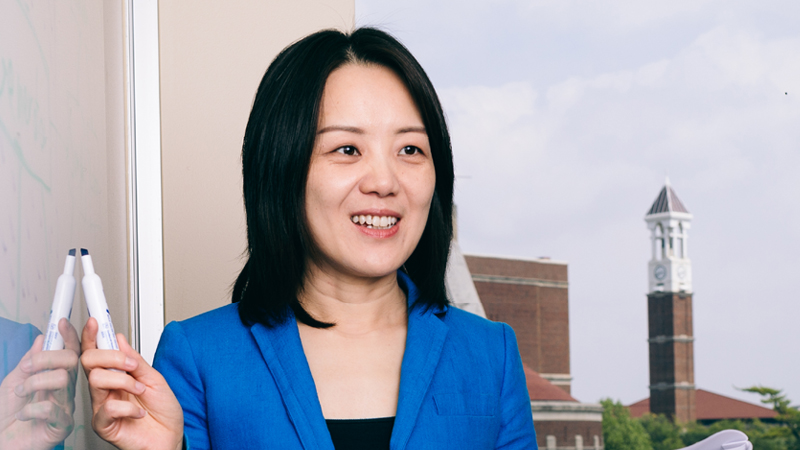
Lin Tan is a Professor of Computer Science at Purdue University , holding the Mary J. Elmore New Frontiers Professorship . She joined Purdue in 2019 after serving as a Canada Research Chair and associate professor at the University of Waterloo. She is an ACM Distinguished Member and IEEE Senior Member . Education: PhD in Computer Science, University of Illinois Urbana-Champaign BS in Computer Science and Technology, Zhejiang University Research Interests: Professor Tan’s research lies at the intersection of software engineering , artificial intelligence , and security . Her work focuses on software-AI synergy , software dependability , defect detection & repair , and software text analytics . She leverages machine learning and natural language processing to enhance software reliability, and conversely uses software techniques to improve the dependability of AI systems. Her recent projects include building binary foundation models (Nova), evaluating large language models for code generation and repair, and developing interactive debugging tools that reduce debugging time by one-third. She also explores robot task planning with LLMs and automated front-end development . Awards & Honors: Best Paper Award Finalist, ICRA 2025 ELATES Fellow, 2024-2025 ACM SIGSAC Distinguished Paper Award, CCS 2024 J.P.Morgan AI Faculty Research Awards (2020, 2021, 2022) ACM SIGSOFT Distinguished Paper Awards (ASE 2020, MSR 2018, FSE 2016) Canada Research Chair (2017) Ontario Early Researcher Award (2015) NSERC Discovery Accelerator Supplements Award (2015) Google Faculty Research Awards (2010, 2014) IEEE Micro Top Picks (2006) Advising & Funding: Professor Tan currently advises eight PhD students and has graduated 20+ PhD and Master’s students now thriving in academia (York University, Concordia University, University of Alberta) and industry (Microsoft, Meta, Amazon, Google). Her group is generously supported by NSF , Meta/Facebook Research Awards , J.P.Morgan AI Faculty Awards , and NSF REU programs. Labs & Teams: She leads the Software Reliability & AI Lab at Purdue, recruiting postdocs, PhD, MS, and undergraduate researchers year-round. Lab interests span binary recovery , LLM-based program repair , testing deep-learning libraries , and data-free model extraction .
Sebastian Raisch is a Full Professor of Strategic Management at the Geneva School of Economics and Management (GSEM), University of Geneva, where he also serves as Director of the Executive MBA program. He is affiliated with the Institute of Management and holds a Ph.D. from the University of Geneva. His academic work is deeply rooted in understanding how organizations balance stability and change, particularly in the face of digital transformation. Research Interests: His primary areas of expertise include strategic management, organizational ambidexterity, organizational paradox, artificial intelligence in organizations, and digital transformation. His research investigates the dynamics of corporate growth and decline, strategic renewal, and the integration of human and artificial intelligence in organizational decision-making. He is especially interested in how firms navigate tensions between competing demands such as exploration and exploitation, automation and augmentation, and stability and innovation. Publications and Trends: His recent publications (2023–2025) show a strong shift toward the role of artificial intelligence in management, with a focus on hybrid human-AI systems, ethical AI, and the strategic implications of AI adoption. Earlier works center on ambidexterity, paradox theory, and corporate turnaround, establishing him as a leading scholar in these domains. Scientific Awards: Strategic Management Society’s Best PhD Paper Award Emerald Publishing Group’s Citation of Excellence Award Journal of Management’s Scholarly Impact Award Editorial and Professional Service: Sebastian Raisch serves as Associate Editor at the Academy of Management Review and sits on the editorial boards of the Academy of Management Journal and the Strategic Management Journal . He has advised numerous doctoral students and supervised research projects on organizational innovation and digital strategy, though specific names are not listed in the provided materials. He has not received explicit mention of research grants, but his extensive publication record suggests active research funding. Labs and Research Teams: While no formal lab is mentioned, Raisch leads or contributes to research initiatives within the Institute of Management at GSEM, particularly in strategic management and digital innovation. He collaborates with scholars across Europe and the U.S., including notable co-authors like J. Schad, S. Krakowski, and M. Tushman.
Sam Staton is a Professor of Computer Science at the University of Oxford and Senior Research Fellow at Jesus College. He holds a Royal Society University Research Fellowship and leads the ERC-funded BLaSt project on probabilistic programming. His research focuses on programming language theory, particularly probabilistic and quantum programming, and category theory. Staton earned his PhD from the University of Cambridge in 2007, with prior roles as a lecturer and researcher at Cambridge, Paris, and Nijmegen. Research Interests: His work explores foundational aspects of programming languages, including semantics, algebraic effects, and applications to quantum computing and statistical modeling. Recent grants include the ARIA Safeguarded AI initiative and an AFOSR award. Education: PhD in Computer Science (2007), BA from Cambridge (2002). Students & Collaborators: Supervises multiple PhD students and postdocs, including those funded through his grants. Notable advisees include Swaraj Dash (now at Heriot-Watt) and Mathieu Huot (postdoc at MIT). Awards & Grants: Royal Society Fellowship, ERC Consolidator Grant (BLaSt), EATCS Best Paper Award, and Facebook Research Award. Labs & Teams: Leads the BLaSt project and collaborates on quantum programming via algebraic effects. Engaged in editorial roles for ACM Transactions on Quantum Computing and program committees for major conferences like POPL and LICS.
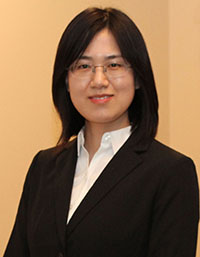
Ruihong Huang is an Associate Professor in the Department of Computer Science and Engineering at Texas A&M University, part of the College of Engineering. She holds a Ph.D. from the University of Utah (2014) and completed a postdoctoral fellowship at Stanford University. Her research focuses on Natural Language Processing (NLP) with emphasis on information extraction, event recognition, media bias analysis, and ethical AI applications. She teaches courses like Information Storage and Retrieval (CSCE 470), Natural Language Processing (CSCE 638), and has advised numerous PhD, Master’s, and undergraduate students. Key research contributions include work on event coreference resolution, discourse analysis, and detecting media bias through event relation graphs. Huang has developed benchmark datasets like UAL-Bench and EMONA, and her work spans applications in disaster management, fake news detection, and moral reasoning in LLMs. She is a recipient of the NSF CAREER Award and serves on program committees for top conferences like ACL and EMNLP. Her academic service includes roles as Area Chair for ACL 2024 and Senior Area Chair for EMNLP 2024. She maintains an active lab group focusing on NLP fundamentals and real-world applications, with projects involving propaganda identification, polarity calibration for opinion summarization, and multimodal dialog act classification. Huang has published over 80 papers in top-tier venues such as NAACL, EMNLP, ACL, and NeurIPS.
Nadia Polikarpova is an Associate Professor in the Department of Computer Science and Engineering at the University of California, San Diego . She earned her PhD from ETH Zurich in 2014 under Bertrand Meyer , followed by postdoctoral research at MIT CSAIL with Armando Solar-Lezama . Her academic contributions have been recognized with prestigious awards including the 2020 Sloan Fellowship , 2020 Intel Rising Stars Award , and 2020 NSF CAREER Award . Polikarpova's research focuses on program synthesis , program verification , and type systems . She leads the Programming Systems group at UCSD and contributes to the IFIP Working Group 2.8 on Functional Programming since 2022. Her work spans foundational research and practical tools, including projects like Synquid , SuSLik , and Laurel that combine formal methods with machine learning for code generation. Her recent publications in venues like OOPSLA , NeurIPS , and ICFP reveal trends in AI-assisted programming , live programming environments , and formal verification . She has advised numerous PhD and Master’s students including Shraddha Barke , Zheng Guo , and Tristan Knoth , many of whom have moved to prominent academic and industry positions. Notable artifacts from her lab include tools like ColDeco for spreadsheet inspection and Superfusion for eliminating intermediate data structures. 2020 : Sloan Fellow 2020 : Intel Rising Stars Award 2020 : NSF CAREER Award 2021 : Distinguished Paper at POPL 2023 : Distinguished Artifact at PLDI 2023 : Distinguished Paper at OOPSLA Polikarpova actively contributes to academic service, serving on program committees for PLDI , POPL , and OOPSLA , and co-chairing the OOPSLA Review Committee in 2023. She has delivered keynotes at APLAS'20 and PLDI'24 , emphasizing the integration of large language models with formal methods.
Navid Azizan is the Alfred H. (1929) and Jean M. Hayes Career Development Assistant Professor at Massachusetts Institute of Technology (MIT), holding dual appointments in the Department of Mechanical Engineering (in Control, Instrumentation & Robotics) and the Schwarzman College of Computing's Institute for Data, Systems & Society (IDSS). He is also a Principal Investigator in the Laboratory for Information & Decision Systems (LIDS), and a faculty member of the MIT Statistics and Data Science Center, the Center for Computational Science and Engineering, and the Operations Research Center. Dr. Azizan received his PhD in Computing and Mathematical Sciences from the California Institute of Technology (Caltech) in 2020, his MSc in Electrical Engineering from the University of Southern California in 2015, and his BSc in Electrical Engineering with a minor in Physics from Sharif University of Technology in 2013. Prior to joining MIT, he completed a postdoc at Stanford University's Autonomous Systems Laboratory and was a research scientist intern at Google DeepMind. His research spans the intersection of machine learning, systems and control, mathematical optimization, and network science. Dr. Azizan's work focuses on developing principled learning and optimization algorithms for reliable intelligent systems, with applications to autonomy and sociotechnical systems. His research has significant implications for creating trustworthy AI systems that can operate effectively in complex, uncertain environments. Dr. Azizan's recent publications demonstrate a strong focus on uncertainty quantification, reliable AI systems, constrained optimization, and control-oriented learning. His work bridges theoretical foundations with practical applications, particularly in autonomous systems where safety and reliability are paramount. His research group has made notable contributions to areas including neural network verification, multi-agent reinforcement learning, and adaptive inference techniques for large language models, with several papers featured on MIT News and selected for oral presentations at top conferences. Alfred H. (1929) and Jean M. Hayes Career Development Professorship (2025-present) Frank E. Perkins Award for Excellence in Graduate Advising (2025) List of Outstanding Academic Leaders in Data from the CDO Magazine (2024, 2023) Amazon Science Hub Research Award (2023) Outstanding UROP Faculty Mentor (2023) Esther and Harold E. Edgerton (1927) Career Development Chair (2022-2025) Information Theory and Applications (ITA) Gold Graduation Award (2020) Dr. Azizan has been recognized for his excellence in graduate advising, receiving the Frank E. Perkins Award for Excellence in Graduate Advising in 2025. During the pandemic, he founded and co-organized the 'Control meets Learning' virtual seminar series, connecting researchers across disciplines. His work has attracted significant research funding from industry partners including Google, Amazon, and MathWorks, supporting both fundamental research and practical applications in reliable intelligent systems. The Azizan Lab at MIT brings together researchers from mechanical engineering, computer science, and applied mathematics to tackle challenges at the intersection of learning and control. The lab emphasizes both theoretical foundations and practical implementations, with a particular focus on developing algorithms that provide guarantees of performance and safety. Current research directions include uncertainty quantification in AI systems, constrained optimization for neural networks, and control-oriented learning for autonomous systems, with applications spanning robotics, transportation, and complex sociotechnical systems.
Peter Selinger is a Professor in the Department of Mathematics and Statistics at Dalhousie University , with a cross-appointment in Computer Science. He specializes in mathematical methods in computer science, particularly quantum computing and combinatorial game theory . His work on quantum programming languages like Quipper and foundational research in category theory has garnered international recognition. Education : Ph.D. in Mathematics (University of Pennsylvania, 1997), undergraduate studies in Mathematics (Technische Universität Darmstadt). Research Interests span quantum computing, category theory, and combinatorial game theory. He has pioneered formalisms for quantum programming languages, developed categorical models for quantum mechanics, and analyzed game-theoretic structures in games like Hex. His recent work includes linear dependent type theory , quantum circuit synthesis , and combinatorial game classification . Publications demonstrate expertise in quantum programming languages, categorical semantics, and game theory. Key trends include Hamiltonian simulation , Clifford+T circuits , and monotone game realization . Scientific Honors include the Killam Professorship (2017–2022), Faculty of Science Award for Excellence in Teaching (2023), and fellowships from the Alfred P. Sloan Foundation and German National Scholarship Foundation . Students he has supervised include PhD graduates Xiaoning Bian , Francisco Rios , and Neil J. Ross , along with MSc students like Fahimeh Bayeh and Seth Greylyn . He has advised 16 postdoctoral researchers.
David Bindel is an Associate Professor in the Department of Mathematics at Cornell University, affiliated with the College of Arts and Sciences, College of Engineering, and Cornell Ann S. Bowers College of Computing and Information Science. He earned his Ph.D. in Mathematics from the University of California, Berkeley in 2006. His research focuses on applied numerical linear algebra, eigenvalue problems, and their applications in plasma physics, network analysis, and nonlinear systems. He develops methods for analyzing complex systems, including magnetic confinement in stellarators, stability of MHD systems, and community detection in networks. His work bridges theoretical foundations with practical computational tools, such as formal verification of linear algebra algorithms and scalable Gaussian process models. Bindel’s research explores the interplay between structure and computation, leveraging eigenvalue analysis to address challenges in computer vision, opinion dynamics, and engineering design. He has contributed to advancements in numerical methods for large-scale systems, including iterative solvers, spectral approximation techniques, and stochastic optimization. His interdisciplinary approach spans applied mathematics, computer science, and physics, with applications in fusion energy, machine learning, and network science. Recent work highlights include high-order expansions for magnetic confinement, adaptive filtering for dynamical systems, and Bayesian optimization strategies. His publications emphasize rigorous analysis alongside computational scalability, addressing both theoretical and practical aspects of modern scientific computing. Despite no explicitly listed awards, his contributions reflect significant impact in his fields.
Joydeep Biswas is an Associate Professor in the Computer Science Department at the University of Texas at Austin, where he serves as the Director of the Autonomous Mobile Robotics Laboratory (AMRL). He is also affiliated with Texas Robotics, the UT Machine Learning Laboratory, and UT Good Systems. Previously, he was an Assistant Professor in the College of Information and Computer Sciences at the University of Massachusetts Amherst. Dr. Biswas earned his PhD in Robotics from Carnegie Mellon University in 2014 and his B.Tech in Engineering Physics from the Indian Institute of Technology Bombay in 2008. His educational background has provided him with a strong foundation in both theoretical and applied aspects of robotics and artificial intelligence. Dr. Biswas's research focuses on enabling long-term autonomy for mobile robots operating in human environments. His work spans robot perception, motion planning, control systems, and AI, with the ultimate goal of creating self-sufficient autonomous mobile robots that can perform tasks accurately and robustly in real-world settings. He is particularly interested in perception, planning, and failure recovery for autonomous mobile robots, which supports his vision of having autonomous service mobile robots deployed at campus-to-city scale, both indoors and outdoors, performing assistive tasks over deployments spanning years. His IJCAI 2019 Early Career Spotlight talk summarizes much of his research to date and ongoing interests. His recent research has shown a strong trend toward social navigation, human-robot interaction, and the application of machine learning techniques to robotics problems. There's a clear progression from fundamental robotics research toward more complex, real-world applications that require robots to understand and navigate human social spaces effectively. His work increasingly integrates large language models and other advanced AI techniques with traditional robotics approaches, as evidenced by his recent publications on topics like preference-conditioned navigation, social navigation benchmarks, and instruction-following navigation systems. Dr. Biswas has received numerous prestigious awards including the NSF CAREER Award (2021), J.P. Morgan Faculty Research Award (2019), Amazon Research Award (2019), and a grant from Northrop Grumman Mission Systems (2018). These awards recognize his innovative contributions to the field of robotics and autonomous systems. As a dedicated educator and mentor, Dr. Biswas actively supervises PhD and master's students, with his PhD student Sadegh Rabiee winning the student poster award at the Northrop Grumman University Symposium 2019. He has secured significant grant funding from the National Science Foundation for projects including 'Introspective Perception and Planning for Long-Term Autonomy' and 'Interactive Synthesis and Repair For Robot Programs,' demonstrating his ability to secure competitive research funding and his commitment to advancing the field. Dr. Biswas leads the Autonomous Mobile Robotics Laboratory (AMRL), which serves as a hub for interdisciplinary research in mobile robotics. The lab has developed notable resources such as the UT Campus Object Dataset (CODA) for 3D perception research and SOCIALGYM, a framework for benchmarking social robot navigation. His team regularly deploys robots on the UT Austin campus and in urban environments to test and refine their approaches in realistic settings, bridging the gap between simulation and real-world application.