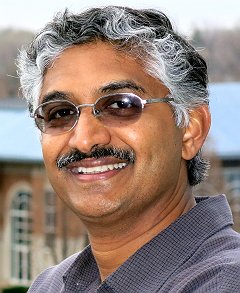
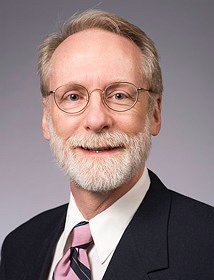
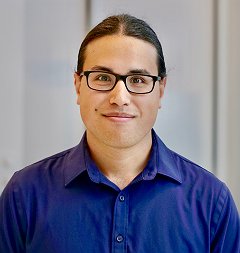
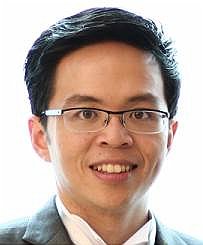
Jeffrey Horsburgh is a Professor in Civil and Environmental Engineering and a Water Researcher at the Utah Water Research Laboratory (UWRL) at Utah State University. His work focuses on hydroinformatics, environmental sensor networks, and watershed hydrology, integrating data models, cyberinfrastructure, and GIS for water quality and hydrology research. Professor, Utah State University (College of Engineering) Utah Water Research Laboratory Research Interests: Dr. Horsburgh develops technology for environmental observatories, emphasizing high-frequency sensor data, reproducibility, and cyberinfrastructure. His research spans watershed hydrology, surface water quality, human dimensions of water use, and standards-based data sharing through platforms like HydroShare and HydroServer. Notable Awards: 2024 USU Outstanding Researcher 2023 Reproducibility Author Award 2019 Outstanding Teacher 2014 Early Career Excellence Award (International Environmental Modelling & Software Society) Education: Ph.D., MS, and BS in Civil/Environmental Engineering from Utah State University (2009, 2001, 1999).
Professor Franz Berto holds the position of Professor of Logic and Metaphysics at the University of St Andrews, where he also serves as Director of the Arché Philosophical Research Centre for Logic, Language, Metaphysics and Epistemology. Additionally, he maintains an affiliation with the Institute for Logic, Language and Computation (ILLC) at the University of Amsterdam, where he has taught in the Master in Science of Logic program. His academic journey includes previous appointments at the University of Aberdeen, the Institute for Advanced Study at the University of Notre Dame, the Sorbonne-Ecole Normale Supérieure in Paris, and several Italian universities including Padua, Venice, and Milan-San Raffaele. Professor Berto's research spans multiple areas of philosophical inquiry with particular focus on non-classical logics, impossible worlds, and the philosophical implications of computation. His work demonstrates a distinctive approach that bridges analytic and continental traditions, with special interest in logical paradoxes and their metaphysical implications. He has made significant contributions to understanding how imagination functions in epistemic contexts and how counterfactual reasoning operates across different domains of inquiry. His recent publications reveal a consistent trajectory examining the intersection of logic, epistemology, and metaphysics, with increasing attention to hyperintensional approaches that go beyond traditional possible worlds semantics. The trend shows growing sophistication in modeling cognitive processes related to imagination, belief revision, and counterfactual reasoning, often incorporating insights from computer science and cognitive psychology. Fellow of the Royal Society of Edinburgh (FRSE, 2022) Honorary Chaire Mercier, Institut Supérieur de Philosophie, Université Catholique de Louvain (2020) José Gaos Honorary Chair, National Autonomous University of Mexico (UNAM, 2023) Professor Berto has successfully secured substantial research funding including an ERC Consolidator grant of €2,000,000 for 'The Logic of Conceivability' project (2016-2022), a Leverhulme Trust grant of £500,000 for 'What If? Knowing By Imagining [WIKI]' (2025-2028), and an AHRC Early Career Researcher grant of £240,000 for 'The Metaphysical Basis of Logic' (2013-2015). His supervision portfolio includes doctoral students working on diverse topics ranging from modal epistemology to the philosophy of computation, with several securing prestigious fellowships. As Editor-in-Chief of The Philosophical Quarterly since 2020, he plays a significant role in shaping contemporary philosophical discourse. Professor Berto leads research within the Arché Philosophical Research Centre at St Andrews, a world-renowned hub for work in metaphysics, epistemology, and philosophical logic. His current projects involve collaborations with researchers across Europe and North America, particularly focusing on the logical structure of imagination and counterfactual reasoning. The 'What If?' project brings together philosophers, cognitive scientists, and computer scientists to develop a comprehensive framework for understanding how imagination serves as a tool for knowledge acquisition.
Alina Arseniev-Koehler serves as Assistant Professor in the Department of Sociology at Purdue University, where she bridges computational methods with cultural sociology to investigate language, health, and social inequality. Her research clarifies how cultural meaning systems perpetuate disparities through stereotypes related to body weight, disease, and gender. Her academic background includes: B.A. in Sociology, University of Washington (2014) Master's and Ph.D. in Sociology, University of California, Los Angeles (2022) Dr. Arseniev-Koehler's methodological expertise centers on computational text analysis using word embeddings and machine learning to model cultural meaning in large datasets. She examines how language encodes moral judgments about obesity, stigmatizing disease narratives, and gender stereotypes in educational contexts. Her work demonstrates that computational methods require deep theoretical engagement with sociological concepts of meaning. Analysis of her recent publications (2021-2025) reveals three dominant research trajectories: (1) Methodological innovation in word embedding applications for cultural measurement, (2) Health disparity investigations using the All of Us Research Program and NVDRS data, particularly regarding obesity diagnosis and suicide patterns, and (3) Gendered analysis of mental health indicators and educational stereotypes through historical media analysis. No scientific awards were documented in the provided materials. Information regarding graduate student advising and external grant funding was not specified in the available sources. While no dedicated research lab is mentioned, her work consistently leverages interdisciplinary collaborations through access to national datasets like the National Violent Death Reporting System.
Nikolaos Papaspyrou is a Professor at the School of Electrical and Computer Engineering of the National Technical University of Athens (NTUA) and a member of the Software Engineering Laboratory . His research focuses on the theory and implementation of programming languages, including semantics, type systems, compilers, static analysis, and formal verification. Since October 2021, he has been on leave from NTUA, working as a Software Engineer for Google in the memory management team for the V8 JavaScript and WebAssembly engine. He previously served as Director of the Division of Computer Science (2017-2019) and was on sabbatical with Google's compiler group in Munich (2015-2016). His work includes the RELEASE project (EU FP7 STREP) for reliable large-scale server software and uncertainty handling in distributed databases (European Social Fund). Ph.D. and Diploma in Electrical and Computer Engineering from NTUA M.Sc. in Computer Science from Cornell University His research interests span programming languages , software engineering , and formal verification , with recent publications on coinductive proofs in Liquid Haskell, concurrency semantics, and quantum compilation. He has supervised over 50 diploma projects and mentored numerous students now at institutions like MIT, Princeton, and UC Berkeley. Awards include conference organizing and program committee roles, though no formal scientific prizes are listed.
Michael Kifer is a Professor in the Department of Computer Science at Stony Brook University . His research focuses on declarative languages, logic programming, semantic web, and integration of object-oriented and deductive paradigms. He has received multiple prestigious awards including three ACM-SIGMOD 'Test of Time' awards, SUNY Chancellor's Award, and Stony Brook's Research Excellence Award. Ph.D. in Computer Science, Hebrew University of Jerusalem (1985) M.S. in Mathematics, Moscow University (1976) Dr. Kifer's research interests span over 30 years, with major contributions to databases, knowledge representation, and semantic web technologies. He co-invented F-logic, HiLog, Annotated Logic, and Transaction Logic, which are widely cited in computer science literature. His recent publications focus on hybrid logic programming, multilevel modeling (MLM), and knowledge authoring systems like Flora-2. These works bridge rule-based reasoning, controlled natural language, and semantic web technologies. Scientific Awards : Department Research Excellence Award (2014) ACM-SIGMOD 'Test of Time' Awards (1999, 2002) SUNY Chancellor's & Stony Brook President's Awards (2008) Association for Logic Programming 'Test of Time' Award (2013) Plumer Fellowship at Oxford (2006) Dr. Kifer has served on editorial boards and chaired conferences in logic programming and semantic web. He developed the Flora-2 knowledge representation system and contributed to standards like RIF (Rule Interchange Format).
Alexander Alexandrovich Kharlamov serves as a Professor at the National Research University Higher School of Economics (HSE), specifically within the Faculty of Computer Science and Department of Software Engineering. He joined HSE in 2015 and has accumulated 42 years of scientific and teaching experience. His academic profile includes prominent identifiers such as ORCID: 0000-0003-2942-5101, ResearcherID: E-3760-2014, and Scopus AuthorID: 57193909855. He maintains an office at the Pokrovsky Boulevard campus (AUK "Pokrovsky Boulevard", Pokrovsky blvd, 11, office S913) and serves as the Editor-in-chief of the journal "Speech Technologies" since 2008. Doctor of Technical Sciences (2010) from Moscow State Institute of Electronics and Mathematics Candidate of Technical Sciences (1983) from Moscow State Technical University named after N.E. Bauman Postgraduate study (1980) at Moscow State Technical University named after N.E. Bauman Mathematics degree (1976) from Lomonosov Moscow State University Thermal Physics degree (1970) from Moscow Power Engineering Institute Professor Kharlamov's research focuses primarily on neuroinformatics, with significant contributions to neural networks, semantic representations, and intelligent information systems. His work bridges computational approaches with cognitive modeling, exploring how semantic networks can be used for text analysis, speech recognition, and situation monitoring. His research interests span both theoretical foundations of neuroinformatics and practical applications in areas such as social media analysis, smart city development, and digital transformation. He has developed the TextAnalyst technology for automatic semantic analysis of text and has made significant contributions to understanding how humans process information through neural network models. His recent scholarly output demonstrates a clear trajectory toward multimodal systems, digital transformation in urban environments, and advanced semantic analysis techniques. The publications reveal a consistent focus on applying neuroinformatics principles to real-world problems, particularly in analyzing social dynamics through digital footprints, developing intelligent monitoring systems, and creating semantic frameworks for information processing. His work increasingly addresses contemporary challenges such as pandemic response, social stress analysis, and digital conflict zones, showing adaptability to emerging societal needs while maintaining theoretical rigor. Corresponding Member of the International Academy of Informatization (1994) Professor Kharlamov has secured significant research funding through grants from the Russian Foundation for Basic Research (No. 14-06-00363) and the Russian Humanitarian Science Foundation (No. 15-03-00860). His research leadership spans decades, with documented projects from 1996 to present, covering areas such as neural network modeling, speech recognition systems, semantic analysis technologies, and intelligent information systems. He has served as principal investigator for numerous projects, often collaborating with institutions like IITP RAS and Bauman Moscow State Technical University. His teaching portfolio includes advanced courses in neuroinformatics, neuromathematics, and neural network theory for both bachelor's and minor programs at HSE. As Editor-in-chief of the journal "Speech Technologies" since 2008, Professor Kharlamov has shaped discourse in his field while continuing his own research on semantic networks and neural modeling. His work on homogeneous semantic networks represents a significant contribution to the field, providing frameworks for text analysis, situation monitoring, and knowledge representation. The integration of his theoretical work on neural networks with practical applications in information systems demonstrates a career-long commitment to bridging theoretical computer science with real-world implementation challenges.
Alexey Vladimirovich Khoroshilov is an Associate Professor at the Faculty of Computer Science of the National Research University Higher School of Economics (HSE), affiliated with the Basic Department "System Programming" of the Institute for System Programming named after V.P. Ivannikov of the Russian Academy of Sciences (ISP RAS). He joined HSE in 2015, bringing 20 years of scientific and teaching experience to his position. His academic background includes a Candidate of Physical and Mathematical Sciences degree (2006) and a specialty in Applied Mathematics and Computer Science from Moscow State University named after M.V. Lomonosov (2001), with the qualification of Mathematician and Systems Programmer. His primary research interests focus on formal methods of software engineering, particularly in the verification and validation of critical systems. He specializes in methods for designing and developing critical systems, formal verification techniques, model-based testing, and requirements analysis. His work has significant applications in operating systems security, real-time systems, and safety-critical software development. His recent publications demonstrate a strong focus on operating system verification, with particular emphasis on abstract model-based runtime verification, security policy integration, and multi-level requirements compliance. His research often combines theoretical formal methods with practical applications in operating system security and verification. The recurring themes across his work include component-based verification approaches, thread-modular analysis techniques, and formal modeling of security policies. Khoroshilov maintains a strong connection with the Institute for System Programming of the Russian Academy of Sciences, where he has worked since 1999 and held the position of leading research fellow as of 2014. He also teaches at Moscow State University's Department of System Programming within the Faculty of Computational Mathematics and Cybernetics since 2009. His teaching focuses on operating system development, particularly courses on the design of operating system kernels for both bachelor's and master's programs. His technical expertise includes verification of operating system components, security policy implementation, and requirements management for critical systems. He has contributed to significant projects related to aviation real-time operating systems, formal security models, and Linux kernel verification.
Federico D'Asaro is a researcher and PhD student at Politecnico di Torino, affiliated with the Department of Control and Computer Science (DAUIN) and the Computer Graphics & Vision Group (CGVG). He works as an external lecturer and teaching assistant for the Applied Data Science Project course in the Data Science and Engineering program. His research focuses on Vision-Language Models (VLMs), particularly addressing the Modality Gap in multimodal feature spaces and their applications in downstream tasks like semantic segmentation and speech emotion recognition. Education: Master's degree in Data Science and Engineering (2021), currently pursuing PhD in Computer and Systems Engineering (39th cycle, 2023-2026). His research at the intersection of Natural Language Processing and Computer Vision investigates how reducing the Modality Gap improves crossmodal performance. Recent work applies Large Speech Models (LSMs) to cross-lingual emotion recognition and non-verbal vocalization tasks. He collaborates with researchers like Andrea Bottino, Giuseppe Rizzo, and Juan José Márquez Villacis on projects involving multimodal deep learning and feature extraction. The trends in his publications highlight expertise in multimodal learning (Vision-Language Models, speech-text alignment), deep learning for segmentation and emotion recognition, and crossmodal adaptation in speech processing. His 2025 work focuses on contrastive alignment and non-verbal vocalization, while 2024 studies explore transfer learning of speech models across languages. Teaching Contributions External lecturer for Applied Data Science Project (2025/26) Course collaborator for Applied Data Science Project (2024/25) Federico is part of the Computer Graphics & Vision Group (CGVG) , contributing to interdisciplinary projects that bridge Computer Vision , Natural Language Processing , and Speech Emotion Recognition . His work emphasizes practical applications of multimodal models in real-world scenarios.
Tiark Rompf is an Assistant Professor at Purdue University , with research spanning programming languages, compilers, and systems. His work bridges domains including architecture, databases, machine learning, and AI through projects like Reachability Types and Rhyme. Co-director of the Purdue Center for Programming Principles and Software Systems (PurPL) Scientific Advisor at SambaNova Systems Previously a member of the Scala team at EPFL His research focuses on: Runtime code generation and advanced compiler technology Expressive data-centric query languages (Rhyme, Datalog) Reachability type systems for memory safety and effect handling Metaprogramming and logical relations for formal verification Recent publications highlight contributions to Datalog compilation (Flan), nested data structures (Rhyme), and polymorphic reachability types. He leads projects exploring: Compiler optimizations for emerging architectures (GPU, TPU, FPGA) ML-driven compiler improvements Secure multi-party computation via metaprogramming Scientific awards include: NSF CAREER Award (2016) Google Faculty Research Awards (2017, 2018) DOE Early Career Research Award (2017) ACM SIGPLAN PL Software Award (2019) GPCE Test of Time Award (2020) Students and alumni from his group have joined institutions like Databricks, DeepMind, Galois, and Meta. He teaches advanced compiler courses including: CS 590 - Advanced Topics in Compilers CS 352 - Compilers CS 502 - Graduate Compilers
Vikram S. Adve is a Professor in the Department of Computer Science at the University of Illinois at Urbana-Champaign. He co-founded and co-leads the Center for Digital Agriculture and directs the USDA-funded AIFARMS Institute , focusing on AI applications in sustainable agriculture. His research bridges compilers, parallel systems, and AI to address challenges in edge computing and digital farming. Research interests span compiler technologies (LLVM, HPVM), parallel programming models , software reliability , and AI-driven agriculture . Key projects include: CropWizard : Generative AI for agricultural decision-making. HPVM/ApproxHPVM : Compiler IR for edge devices. Hydride/MISAAL : Automated retargetable compiler construction. Recent publications (2018-2025) emphasize compiler optimizations, approximate computing, binary analysis, and AI for systems. Trends show convergence of compiler techniques , heterogeneous computing , and AI applications in agriculture and edge devices. Adve actively recruits students for projects funded by USDA, Intel, Amazon, and Illinois DPI. He leads the HPVM compiler team and digital agriculture initiatives , integrating cross-disciplinary research across CS, engineering, and agronomy.
Michael L. Scott is the Arthur Gould Yates Professor of Engineering in the Department of Computer Science at the University of Rochester's Hajim School of Engineering and Applied Sciences. He received his Ph.D. from the University of Wisconsin-Madison in 1985 and has been a faculty member at Rochester since 1985, serving as Department Chair multiple times (1996-99, 2007, 2017, 2020-2024). He is a Fellow of the ACM, IEEE, and AAAS, and recipient of numerous awards including the Edsger W. Dijkstra Prize in Distributed Computing. Dr. Scott's research focuses on parallel and distributed systems, with particular expertise in synchronization mechanisms, transactional memory, and persistent memory systems. His work spans theoretical foundations to practical implementations, with numerous influential publications and open-source systems like RSTM and Ralloc. His research has addressed critical challenges in concurrent programming, memory management, and system reliability. His publications show a consistent focus on improving the reliability and performance of concurrent systems, with recent work centered on persistent memory technologies. The trajectory of his research demonstrates a progression from fundamental synchronization algorithms to sophisticated systems addressing modern hardware challenges. His publications span top venues in systems, architecture, and programming languages. His scientific honors include: ACM Fellow (2006) IEEE Fellow (2010) AAAS Fellow Edsger W. Dijkstra Prize in Distributed Computing (2006) University of Rochester's Goergen Award for Teaching (2001) Hajim School Lifetime Achievement Award (2018) IEEE TCCA/HPCA Test of Time Award (2022) Dr. Scott has advised over 25 Ph.D. students who have gone on to successful careers in academia and industry at institutions including Lehigh University, Google, Intel, Facebook, and NVIDIA. His textbook 'Programming Language Pragmatics' is a standard reference in the field, now in its 5th edition. He also co-authored 'Shared-Memory Synchronization,' a comprehensive treatment of the field. He spent the 2014-2015 academic year as a Visiting Scientist at Google. His research group, the Rochester Concurrent Systems Group, has developed numerous influential systems including RSTM (a software transactional memory system), Ralloc (a persistent memory allocator), and Montage (a system for persistent data structures). His work often bridges theoretical correctness with practical performance considerations.
Adam Chuderski is an Associate Professor at the Jagiellonian University in Krakow, where he serves as Head of the Cognitive Science Department and Head of MA Programs in Cognitive Science within the Faculty of Philosophy. With a strong interdisciplinary background spanning computer science and psychology, he has established himself as a leading researcher in cognitive science with particular expertise in fluid intelligence, working memory, and relational reasoning. MA in Computer Science, University of Łódź, 1999 PhD in Psychology, Jagiellonian University, 2006 Habilitation in Psychology, Jagiellonian University, 2014 Chuderski's research focuses on the cognitive and neurophysiological mechanisms underlying relational reasoning and learning, with special emphasis on fluid intelligence and working memory. He employs diverse methodologies including behavioral experimentation, psychometric methods, eye-tracking, electroencephalography (EEG), and functional near-infrared spectroscopy (fNIRS). His work integrates computational modeling, structural equation modeling, and advanced signal analysis techniques to understand how neural oscillations relate to cognitive abilities. He is also deeply interested in foundational questions in cognitive science, particularly biologically-plausible cognitive architectures and emergentist theories of the human mind. His extensive publication record demonstrates a consistent focus on how working memory relates to fluid intelligence, with particular attention to how time pressure affects this relationship. Recent work has explored neural oscillations (particularly theta and gamma rhythms) as potential mechanisms underlying individual differences in reasoning ability, and how transcranial stimulation techniques might modulate these processes. Several Prizes for scientific achievements awarded by the Rector of Jagiellonian University (2013-2016) Best paper prize (with K. Andrelczyk & T. Smoleń), International Conference on Cognitive Modeling, Berlin (2012) Featured article on Scientific American website (2013) Chuderski has secured substantial research funding from Poland's National Science Center and Foundation for Polish Science, including multiple OPUS and SONATA grants totaling over 5 million PLN. His research on neural dynamics underlying relational reasoning (2020-2023) and oscillatory mechanisms of reasoning ability (2016-2018) represents some of his most significant contributions. He has mentored numerous students through the Cognitive Science Department's programs and collaborates extensively with researchers across multiple laboratories including the Brain and Cognition Lab and ERPinator Lab at Jagiellonian University. His work bridges theoretical cognitive science with practical applications in understanding individual differences in cognitive abilities, with implications for educational approaches and cognitive enhancement techniques.
Julia Lawall is a Senior Research Scientist (Directrice de Recherche) at Inria-Paris, where she leads research in the Whisper group. She has made significant contributions to the fields of programming languages, operating systems, and software engineering, with a particular focus on program transformation and Linux kernel development. Her work bridges theoretical computer science with practical software engineering challenges. Dr. Lawall's research primarily centers on the design and implementation of domain-specific languages for operating system problems, program transformation techniques, and automated software evolution. Her most notable contribution is the Coccinelle framework, which has been instrumental in automating the evolution of Linux device drivers for over a decade. Her work spans from theoretical foundations in optimal reduction of the lambda calculus to practical tools that address real-world software maintenance challenges in large-scale systems like the Linux kernel. Her publication record demonstrates consistent contributions across multiple domains, with recent work focusing on Android API evolution, Linux kernel bug detection, and program transformation techniques. The trajectory of her research shows a progression from theoretical programming language concepts to increasingly practical applications in system software maintenance and evolution. EuroSys Test of time award for 'Documenting and Automating Collateral Evolutions in Linux Device Drivers' at EuroSys 2008 Best paper award for 'Diagnosys: Automatic Generation of a Debugging Interface to the Linux kernel' at ASE 2012 Most Influential ICFP Paper Award for foundational work on lambda calculus Best Reviewer at GPCE 2020 and Distinguished Reviewer at ASE 2020 Dr. Lawall has been actively involved in the academic community, serving as program co-chair for numerous prestigious conferences including ASE 2019, FSE 2026, and EuroSys 2025. She has also contributed to community initiatives as the Linux kernel coordinator for Outreachy (2015-2018) and as a member of the advisory board for Software Heritage. Her leadership extends to editorial roles, including associate editor for Higher-Order and Symbolic Computation and membership on the editorial board of Science of Computer Programming. She leads the Whisper research group at Inria-Paris, which focuses on program transformation techniques and their applications to system software. The group has developed several influential tools including Coccinelle, Coccinelle4J, LiLiput, Prequel, and JMake, which have had substantial impact on both academic research and industrial practice in software maintenance and evolution.
Carlo Angiuli is an Assistant Professor of Computer Science at the Luddy School of Indiana University . He is a leading researcher in type theory , with a focus on its applications to programming language design and logic . His work bridges theoretical foundations and practical implementations, particularly through dependent types , proof assistants , and homotopy type theory . His research interests include: Type Theory (foundational systems for programs and proofs) Programming Language Foundations (formal semantics and reasoning) Homotopy Type Theory (higher-dimensional structures) Dependent Types (expressive type systems) Proof Assistants (formal verification tools) Computational Logic (algorithmic reasoning) Angiuli actively contributes to the programming languages community as a POPL Program Committee member and co-author of a forthcoming textbook on dependent type theory. His students include Johnson He, Huang Xu, Kelton OBrien, and Ian Ray , who joined in Fall 2025. He has received significant recognition, including the Best Paper Award at FSCD 2019 and the School of Computer Science Distinguished Dissertation Award from Carnegie Mellon University. His current work explores advanced type-theoretic frameworks and their implementation in proof assistants like the red* family of tools. Scientific awards: Best Paper Award, FSCD 2019 (Junior Researchers category) School of Computer Science Distinguished Dissertation Award, Carnegie Mellon University He teaches courses such as Modern Dependent Types (CSCI-B619), Programming Language Foundations (CSCI-B522), and Introduction to Computer Science (CSCI-C211).
David Lo is the OUB Chair Professor of Computer Science and the founding Director of the Center for Research in Intelligent Software Engineering (RISE) at Singapore Management University. He has held significant leadership roles including General Chair of MSR'22 and ASE'16, and Program Committee Co-Chair for ASE'20, FSE'24, and ICSE'25. Lo has championed the field of AI for Software Engineering (AI4SE) since the mid-2000s, demonstrating how data mining, machine learning, information retrieval, natural language processing, and search-based algorithms can transform software engineering data into actionable insights and automation. His research spans Mining Software Repositories (MSR), large language models for code, software testing, smart contract analysis, and developer tooling. His recent publications reveal a strong focus on the intersection of large language models and software engineering, with particular attention to code generation, evaluation, documentation, and the practical implications of AI tools for developers. His work increasingly addresses economic efficiency, privacy concerns, and human factors in AI-assisted development. Two Test-of-Time awards Eleven ACM SIGSOFT/IEEE TCSE Distinguished Paper awards ACM Fellow IEEE Fellow ASE Fellow National Research Foundation Investigator (Senior Fellow) Lo has supervised numerous students and collaborated extensively across the software engineering community. His work on Mining Software Repositories has led to practical tools and insights that have shaped the field. He regularly contributes to major conferences and has served in leadership roles across ASE, ICSE, and FSE communities. As founding Director of the Center for Research in Intelligent Software Engineering (RISE) at SMU, Lo leads a research group focused on advancing AI techniques for software engineering problems, with emphasis on practical applications that address real developer pain points.