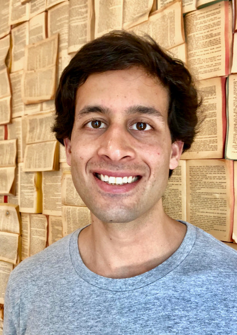
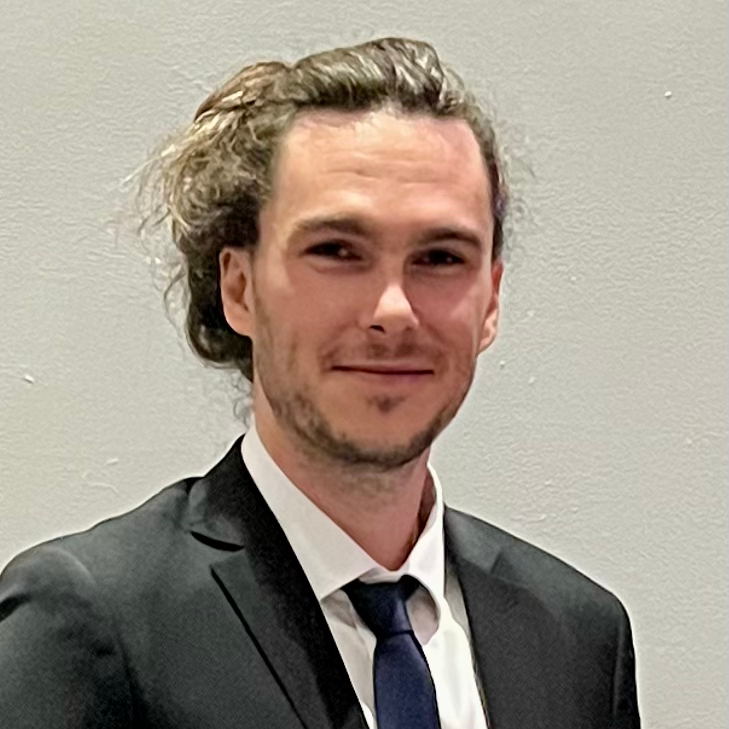
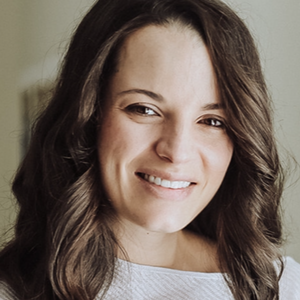
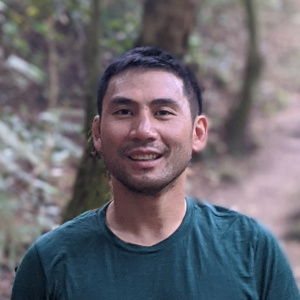
Giulia Toti is an Assistant Professor of Teaching in the Department of Computer Science at the University of British Columbia (UBC), part of the Faculty of Science. Her work focuses on computer science education, equity in curriculum design, and fostering inclusive learning environments. She teaches courses such as Applied Machine Learning (CPSC 330), Fairness, Accountability, Transparency, and Ethics (FATE) in Data Science (DSCI 430), and Computers and Society (CPSC 430). Her research explores diversity initiatives in CS education, mastery learning frameworks, and equitable grading practices. Notable contributions include studies on pandemic-era remote teaching impacts and the development of Agora, a tool for enhancing large-classroom engagement. Toti has received UBC Faculty Teaching Awards for her pedagogical innovations. Her interdisciplinary work spans machine learning applications in industry and healthcare, including semantic search systems for clinical data (SemEHR) and predictive analytics for energy production. She is affiliated with the ACE Lab and actively contributes to curriculum reforms addressing DEI (Diversity, Equity, Inclusion) challenges in STEM education. Grants/Awards: Faculty Teaching Awards Labs/Teams: ACE Lab (Advancing Computing Education) Advising: No explicit advisee listings found, but contributes to pedagogical research impacting teaching practices.
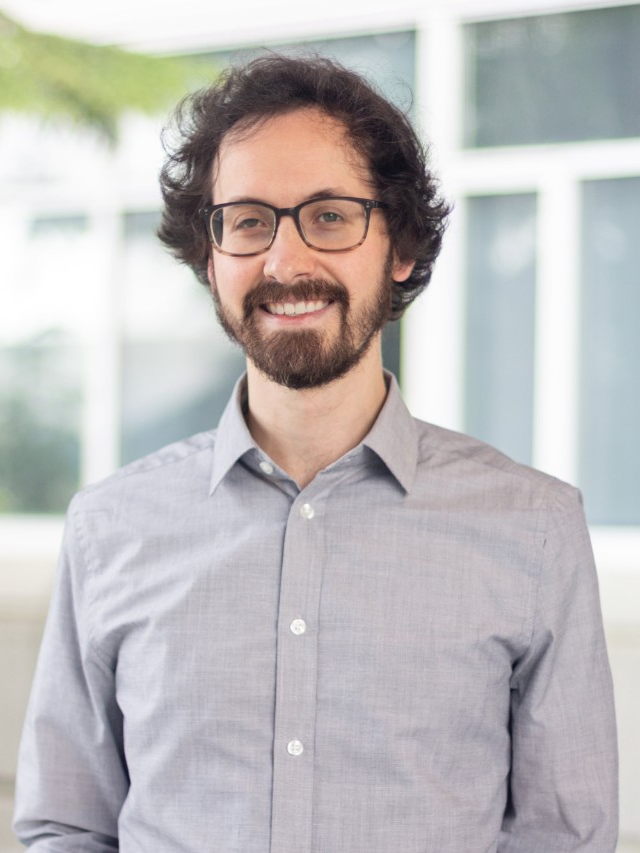
Rohan Alexander is an Assistant Professor jointly appointed in the Faculty of Information and the Department of Statistical Sciences at the University of Toronto. His research focuses on improving the trustworthiness of data science through rigorous workflows, including reproducibility and bias mitigation. He co-founded The Data Workshop, a platform for data science best practices, and authored Telling Stories With Data , a book emphasizing reproducible methods. Rohan holds a PhD in Economics from the Australian National University, specializing in economic history. Rohan’s academic roles include Assistant Director of CANSSI Ontario and Senior Fellow at Massey College. His teaching includes courses like Experimental Design for Data Science and Worlds Become Data . He actively contributes to interdisciplinary initiatives like the Schwartz Reisman Institute for Technology and Society. His research interests span quantitative social science, Bayesian methods, text analysis, and computational reproducibility. He emphasizes code transparency and testing in data science projects. Rohan’s work addresses challenges in data measurement, such as systematic missingness, and explores AI’s societal impacts through collaborative projects with academia and industry. Rohan is affiliated with the Data Sciences Institute and leads initiatives on reproducibility. His current supervision includes PhD student Ciara Zogheib. His institutional roles extend to strategic projects like the Climate Positive Energy initiative and School of Cities.
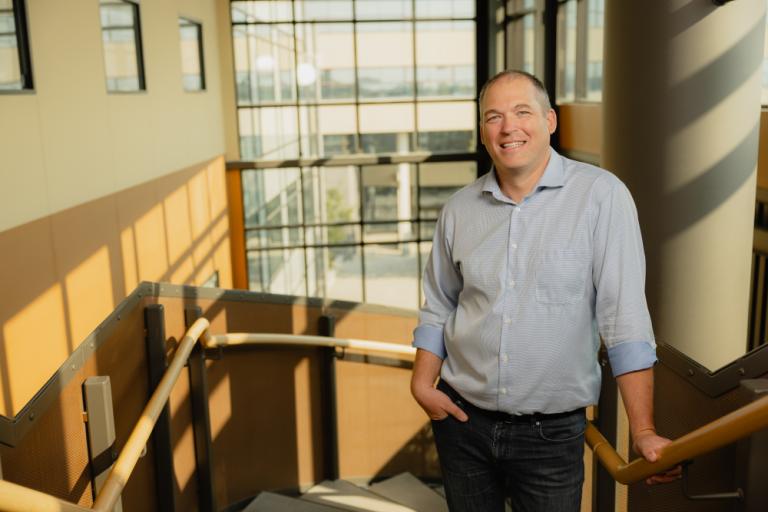
Henry Tang is an ATS Assistant Lecturer at the University of Alberta, affiliated with the Faculty of Science and Department of Computing Science. He specializes in software development education and foundational computing concepts. Courses Taught: CMPUT 174B (Introduction to the Foundations of Computation I), CMPUT 201 (Practical Programming Methodology), CMPUT 301 (Introduction to Software Engineering) His research interests focus on software engineering practices, including object-oriented design, Unix programming tools, C language methodology, and abstract data type implementations. Course descriptions highlight his expertise in software architecture, design patterns, and practical programming education. Contact: Email hktang@ualberta.ca for academic inquiries.
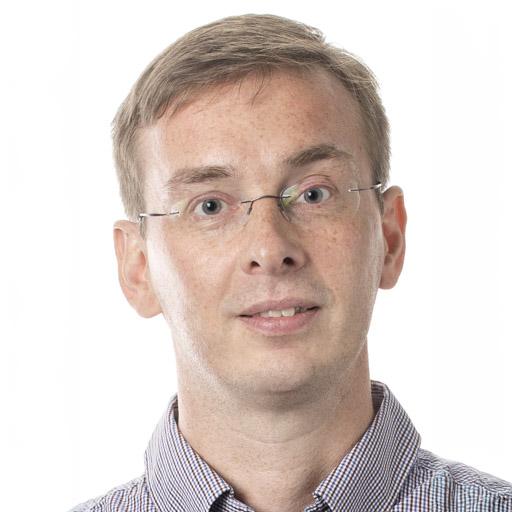
Yizhou Zhang is an Assistant Professor in the Department of Computer Science at the University of Waterloo. He holds a PhD and MS from Cornell University (2019 and 2016) and a BS from Shanghai Jiao Tong University (2012). His research focuses on programming languages, including design, implementation, and theory, with emphasis on formal methods, compiler optimization, and probabilistic programming. Education: PhD, Cornell University, 2019 MS, Cornell University, 2016 BS, Shanghai Jiao Tong University, 2012 Research interests span programming language theory, compiler construction, and formal verification. His work explores topics like certified compilers, effect handlers, and probabilistic program analysis. Recent publications emphasize formal models for memoization, nested family polymorphism, and bidirectional control flow. His publications reflect contributions to probabilistic programming semantics, compiler optimization techniques, and type systems. No scientific awards are explicitly listed. Advising and grant details are not provided in the text. Zhang’s research often intersects with formal methods and practical compiler implementation challenges.
Dr. Matt Amy is an Assistant Professor in the School of Computing Science at Simon Fraser University (SFU), holding the Canada Research Chair in Quantum Computing. His research focuses on quantum compilers, programming languages, and formal verification of quantum programs. He also explores quantum circuit optimization and models of quantum computation. Education: PhD in Computer Science (University of Waterloo, 2019), M.Math in Quantum Information (2013), and B.Math in Computer Science (2011), all from the University of Waterloo. Research Interests: Quantum compilers and languages, circuit optimization, formal verification, and quantum computation models. His work bridges theoretical foundations with practical implementations, emphasizing efficient quantum software development. Recent research trends include advancing quantum compilation techniques, exploring NP-hard optimization problems in quantum circuits, and developing formal methods for quantum program analysis. His work on symbolic synthesis and equational theories for quantum circuits demonstrates a focus on foundational algorithmic challenges. Scientific Awards: Canada Research Chair (2025–present) Advising and Grants: While no current advisees are listed, his research is supported by grants focused on quantum computing and formal methods. He collaborates with industry through SFU’s School of Computing Science. Labs and Teams: Involved with the Tangent Lab, a research group exploring quantum algorithms and software systems at SFU.
Dr. David Slomp serves as Associate Dean of Graduate Studies and Research and Professor in the Faculty of Education at the University of Lethbridge. Previously holding positions at the University of Ottawa and University of Alberta, he specializes in writing assessment and literacy education across educational levels. His leadership includes co-directing the MEd General program in Curriculum and Assessment and serving as Co-Editor-in-Chief of Assessing Writing . His educational background features a Master's degree in Teaching English as a Second Language and a PhD in Secondary Education focused on writing assessment. Key research interests include principled assessment design, ethics and validity in writing evaluation, and writing development across the lifespan. His work critically examines justice, fairness, and equity in literacy assessment practices. Recent publications (2019-2025) demonstrate consistent focus on workplace communication assessment, digital literacy frameworks, and dismantling anti-Black assessment practices. Key trends include sociocognitive construct development, equity-centered design, and big data implications for formative assessment. His scholarship bridges theoretical rigor with practical classroom applications. Dr. Slomp's scientific contributions have been recognized through prestigious awards: Graduate Student Teaching Award, University of Alberta Writing Program Certificate of Excellence, Conference on College Composition and Communication President's Achievement Award, University of Alberta Issak Walton Killam Memorial Scholarship Board of Governor's Teaching Chair, University of Lethbridge As Associate Dean and MEd program co-director, he mentors graduate students and shapes curriculum development. His editorial leadership at Assessing Writing significantly influences global assessment scholarship. Current projects address workplace English communication frameworks and equity-centered design principles through major collaborative research initiatives. Dr. Slomp actively contributes to scholarly communities through editorial work and professional organizations, advancing writing assessment theory and practice globally while addressing contemporary challenges in digital literacy and assessment justice.
Yann-Gaël Guéhéneuc is a Professor at Concordia University's Department of Computer Science and Software Engineering. He leads the Ptidej Team, focusing on software engineering methodologies, IoT systems, and game engine architecture analysis. His research emphasizes static/dynamic analyses, service-oriented architectures, and machine learning design patterns. Current Affiliations: Concordia University (Full-time Professor) Ptidiej Team Lead Research Interests: Specializes in IoT system testing, microservices architecture, game engine design patterns, and anti-pattern detection in multi-language systems. His work bridges theoretical software engineering principles with practical industrial applications, particularly in legacy system modernization and machine learning system design. Recent Trends in Publications: Focuses on IoT testing methodologies, machine learning architecture patterns, and service-oriented system transformations. His 2025 works advance IoT system taxonomy and game engine analysis techniques. Advising: Supervises MASc and PhD programs in Software Engineering and Computer Science Labs/Teams: Ptidej Team develops software tools for system analysis (e.g., Magnet, SyDRA)
Dr. Diane Tepylo is an Associate Teaching Professor at the Faculty of Education, Ontario Tech University. She is located at Charles Hall, Room 336 in the Downtown Oshawa campus. Her contact information includes the email diane.tepylo@ontariotechu.ca and phone number 905.721.8668 ext. 3768. Dr. Tepylo holds a PhD in Applied Psychology and Human Development from the Ontario Institute for Studies in Education (OISE), focusing on mathematics teaching and learning within STEM fields. Her research interests include Coding and K-12 education, Inclusive mathematics education (particularly for at-risk students, English language learners, and culturally responsive pedagogy), Learning through technology, Spatial reasoning in STEAM education, and STEAM teacher development for both pre-service and in-service educators. She emphasizes innovative pedagogical approaches, such as flipped classrooms and problem-solving challenges to enhance student engagement and learning outcomes. Dr. Tepylo teaches a diverse range of courses across multiple programs, including: Bachelor of Commerce: BUSI 1915U (Business Mathematics I) Bachelor of Education: EDUC 1311U and EDUC 2408U (Coding and Communication), CURS 4140U and CURS 4141U (Mathematics Curriculum Studies) Bachelor of Arts, Educational Studies: EDST 1000U (Foundations of Learning), EDST 1100U (Problem and Inquiry-Based Learning), EDST 3170U (Developing Numeracy), EDST 4000U (Inquiry and Professional Practice), EDST 4120U (Games and Simulations for Learning), EDST 4610U (Coding and Maker Pedagogies for Young Children) No scientific awards or grants are explicitly mentioned in the provided information. Her work focuses on bridging educational theory and practice, with a strong emphasis on student-centered learning and technology integration.
Cristiano Politowski is an Assistant Professor in the Department of Computer Science at Ontario Tech University's Faculty of Science. His research focuses on software engineering for video games, automated testing, AI4SE, and empirical studies. He holds a Ph.D. in Software Engineering from Concordia University (2022), an M.Sc. in Computer Science from Universidade Federal de Santa Maria (2017), and a B.Sc. in Computer Science from Universidade Regional do Estado do Rio Grande do Sul (2014). Prof. Politowski has extensive postdoctoral experience at Université de Montréal (GEODES group) and École de Technologie Supérieure (ÉTS), focusing on game engine architecture, requirements specification, and certifiable RTOS systems. He has organized workshops like ASE4Games 2021/2022 and FaSE4Games 2024, emphasizing game software engineering. His research interests span video game development challenges, software testing methodologies, and leveraging AI for software engineering. Notable projects include analyzing game engine subsystem coupling, assessing video game balance with autonomous agents, and curating datasets like PlayMyData. Prof. Politowski has secured $20K from MITACS for a 5G infrastructure project during the pandemic and received the Concordia Accelerator Award (2021). His work has been published in venues like MSR, ICSE, and IEEE Transactions.
Dr. Jessica V. Rich is an Adjunct Assistant Professor at Queen’s University’s Faculty of Education and a member of the Assessment and Evaluation Group (AEG). She holds a PhD in Measurement, Assessment, Policy, Leadership and Evaluation, complemented by extensive teaching qualifications in Biology, Chemistry, and Education. Her work focuses on competency-based education (CBE), programmatic assessment frameworks, and inclusive evaluation practices across postsecondary and professional education contexts. She actively contributes to the Scholarship of Teaching and Learning (SoTL) through research on feedback mechanisms and performance improvement strategies. Dr. Rich teaches courses such as PME 896 (Capstone), PME 894 (Educational Fieldwork), and GDE 828 (Program Evaluation), emphasizing practical application of assessment methodologies. She has pioneered educational development initiatives in simulated learning environments and workplace-based assessments. Her research examines the intersection between competency frameworks and real-world application, with particular attention to healthcare and engineering education reform. Current projects include evaluating transformative change models in medical education and exploring growth-oriented assessment strategies. She has collaborated with institutions to design competency frameworks for healthcare professions and contributed to knowledge translation tools for programmatic assessment implementation. Her publications span journals like Academic Medicine , Canadian Journal of Educational Administration , and Frontiers in Medicine , reflecting interdisciplinary engagement with assessment challenges in higher education. She maintains active Twitter and LinkedIn profiles to share insights on educational development and assessment innovation.
Souradeep Dutta is an Assistant Professor in the Department of Electrical and Computer Engineering within the Faculty of Applied Science at the University of British Columbia (UBC), joining in Fall 2024 after postdoctoral research at the PRECISE center, University of Pennsylvania. His academic credentials include a PhD in Electrical and Computer Engineering from the University of Colorado Boulder and a BE in Instrumentation and Electronics Engineering from Jadavpur University, India. Education: PhD, Electrical and Computer Engineering, University of Colorado Boulder BE, Instrumentation and Electronics Engineering, Jadavpur University, India Dr. Dutta's research centers on artificial intelligence with emphasis on reinforcement learning, cyber-physical systems, and formal methods. He investigates fundamental challenges in efficient data-driven learning and assurance techniques for learned models, targeting applications in robotics and medical devices. His work bridges theoretical guarantees with practical implementations for safe human-machine knowledge transfer. Analysis of his 15 most recent publications reveals dominant trends in robustness verification for learning-enabled systems, memory-based adaptation techniques, and distribution shift handling. His research consistently addresses safety-critical applications, particularly in medical diagnostics (e.g., ECG analysis, acne grading) and autonomous control systems, while maintaining strong theoretical foundations in formal methods. Awards: Recognition at top-tier conferences including ICLR, CORL, HSCC, ICCPS, ICAPS, NFM, L4DC, CHASE, and ADHS Dr. Dutta actively seeks graduate students for Fall 2025 and welcomes interdisciplinary collaborations. He serves on program committees for AAAI, ICCPS, ICML, and NeurIPS, and is available for undergraduate research supervision. His advising philosophy emphasizes safe and efficient transfer of human expertise to machine systems. He leads a research group at UBC focused on developing verifiable AI frameworks for cyber-physical applications, with current projects spanning medical device assurance and adaptive robotics control systems.
Gaang Lee is an Assistant Professor in the Department of Civil and Environmental Engineering at the University of Alberta's Faculty of Engineering, where he joined in 2022 after earning his Ph.D. from the University of Michigan. His research pioneers 'sympathetic' built environments that enhance safety, health, productivity, and comfort for workers and users through integration of wearable biosensors, AI, extended reality, and robotics with psychophysiological theories. Education: Ph.D in Civil and Environmental Engineering, University of Michigan, Ann Arbor (2022) - Emphasis: Construction Engineering and Management; Graduate Certificate in Computational Discovery and Engineering Graduate Certificate in Computational Discovery and Engineering, University of Michigan, Ann Arbor (2022) M.S. in Architectural Engineering, Yonsei University, South Korea (2012) - Emphasis: Construction Engineering and Management B.S. in Architectural Engineering, Yonsei University, South Korea (2010) Dr. Lee combats technological exclusion for marginalized groups (construction workers, older adults) by developing empathetic technologies for workplaces, buildings, and urban spaces. His work applies human sensing, AI, and digital twins to create environments that adapt to diverse human needs, with key projects spanning psychophysiological safety monitoring, human-robot collaboration, and inclusive urban design. He integrates psychophysiological and socio-cognitive theories to address real-world gaps in construction engineering and computer science. His recent publications (2023-2025) reveal strong trends in AI-driven safety hazard identification, biosensor-based stress/fatigue monitoring, and virtual reality for construction team dynamics. A critical emerging focus is equity-centered technology design, with increasing publications addressing inclusive built environments and technological access for vulnerable populations through graph-based algorithms, domain adaptation, and interpretable AI models. Scientific Awards: No awards mentioned in the provided text. Dr. Lee actively recruits students for his 'Empathetics' research group starting in 2026, prioritizing candidates with empathy, research motivation, and commitment to diversity and inclusion. While specific grants are not detailed, his research program receives institutional support from the University of Alberta and likely external funding given its interdisciplinary scope and industry relevance. He leads the 'Empathetics' research group (part of Attentive Hub) which emphasizes diversity as fundamental to innovation. Current projects include psychophysiological monitoring for occupational safety, trustable human-robot collaboration systems, and extended reality frameworks for empathetic built environments. The group collaborates with IHT LAB (https://www.iht-lab.com/) and focuses on deploying technologies that make daily surroundings safe, healthy, and truly inclusive for all individuals.
Douglas D. Karrow is an Associate Professor in the Department of Educational Studies at Brock University’s Faculty of Education. His research focuses on Environmental and Sustainability Education (ESE) in teacher education, curriculum design, pedagogy, and policy. He integrates continental philosophy, particularly Martin Heidegger’s work, into educational theory and practice. Karrow is affiliated with the EECOM Standing Committee on ESE-Teacher Education and has guest-edited for the Journal of the Canadian Association for Curriculum Studies. Education: PhD MEd BEd BSc Research Focus: Karrow examines ESE’s role in K-12 education and teacher training, emphasizing curriculum integration and policy analysis. His current projects include a national survey on ESE in Canadian teacher education and an international literature review. He is author of the upcoming book An Ethos of Mystery for Education Theory and Practice , exploring ‘mystery’ as a foundational concept in education. Funding & Grants: Recipient of multiple Research & Development Committee grants for data visualization, book editing, and literature review analysis. 2022: $1,700 for scoping review data analysis. 2019: $2,000 Brock Research Initiative Award for SSHRC application support. Awards & Affiliations: Member: North American Association for Environmental Education (NAAEE) Member: Canadian Network for Environmental Education and Communication (ECOom) Member: Canadian Association for Teacher Education (CATE) Teaching: Leads courses in educational research, curriculum design, and outdoor/environmental education. Supervises graduate students in M.Ed. and PhD programs.
Ondřej Lhoták is a Professor and Director of Undergraduate Studies at the Cheriton School of Computer Science, University of Waterloo. He holds a Ph.D. and M.Sc. from McGill University, and a B.Math from the University of Waterloo. His research focuses on: Programming language design and implementation Compiler optimization techniques Static and dynamic program analysis Object-oriented language semantics Scala programming ecosystem development As Director of Undergraduate Studies, he oversees academic programs and curriculum development for computer science students. His office is located in the Davis Centre (DC 2520) on the Waterloo campus.
Patrick Lam is an Associate Professor in the Department of Electrical and Computer Engineering at the University of Waterloo, with a cross-appointment to the Cheriton School of Computer Science. His research focuses on applications of programming languages and static analysis to software engineering challenges, emphasizing verifiable software specifications and program understanding. Dr. Lam has held significant grants from NSERC and is recognized for his impactful work, including the First Decade High Impact Paper award for his Soot framework. Education: Doctorate in Computer Science, Massachusetts Institute of Technology, 2007 Master's in Computer Science, McGill University, 2000 Bachelor's in Joint Honours Mathematics and Computer Science, McGill University, 1999 Research Interests: His primary areas include static program analysis, verifiable software specifications, and compiler design, with a focus on linking high-level software designs to low-level implementations. He explores techniques like lightweight specifications and domain-specific languages to enhance software reliability and efficiency. Recent work also addresses empirical studies of programming practices and security through modularization. Publications: Dr. Lam's recent publications span advancements in static analysis tools (e.g., WasmWalker for WebAssembly), formal verification of code generated by AI tools like GitHub Copilot, and empirical studies on C++ immutability usage. His work bridges theoretical programming language research with practical software engineering applications, emphasizing tools for developer productivity and code reliability. Awards and Recognition: First Decade High Impact Paper recognition for "Soot – A Java Optimization Framework" (2010) Teaching and Grants: He has taught courses such as CS 447, ECE 453, and ECE 459 on software testing and performance programming. Active in grant-funded research, he secured NSERC Engage Grant (2013) and an ongoing NSERC Discovery Grant (2013–2018). Lam has also advised graduate students and contributed to the Software Engineering Program at Waterloo as its Director (2016–2019). Labs and Teams: His research group explores topics in program analysis and software engineering, with collaborations on projects like abstract debugging tools (GobPie) and static analysis frameworks (Soot). He maintains an open-source repository on GitHub, contributing to educational materials and research tools.