Mariano Scazzariello is a Lecturer at KTH Royal Institute of Technology, Sweden, affiliated with the School of Electrical Engineering and Computer Science and the Department of Network and Systems Engineering. He teaches the course 'Network Systems with Edge or Cloud Datacenters (IK2227)'. His research focuses on advanced networking topics including machine learning in networks, high-speed packet processing, network emulation, and software-defined networking innovations. His work spans contributions to network emulation tools like Kathará and Megalos, stateful packet processing at terabit scales, and leveraging large language models (LLMs) for network configuration and vulnerability detection. Recent research emphasizes low-latency protocols (e.g., SRv6/DetNet integration) and GPU-centric networking on commodity hardware. Mariano’s publications (2020–2025) highlight expertise in network function virtualization, ASIC-based switching, and optimizing network configurations through AI-driven approaches. He has pioneered frameworks for evaluating routing protocols and virtualizing large network scenarios at scale.
Henrik Boström is a Professor of Computer Science specializing in Data Science Systems at the Division of Software and Computer Systems, KTH Royal Institute of Technology. His research focuses on trustworthy machine learning , with emphasis on conformal prediction (for confidence-calibrated predictions) and explainable AI . He is the developer of Python packages crepes (conformal classifiers/regressors) and xrf (explainable random forests). His primary research domains include: Developing robust methods for uncertainty quantification in predictive models Creating interpretable machine learning frameworks Optimizing ensemble techniques for high-dimensional data Applying ML to healthcare informatics and industrial diagnostics Analysis of his recent publications reveals strong emphasis on: (1) advancing conformal prediction theory for trustworthy AI, (2) enhancing interpretability of complex models like random forests and GNNs, and (3) developing efficient algorithms for uncertainty-aware learning in domains including healthcare, graph data, and high-dimensional regression. He serves as examiner for multiple degree projects and teaches courses including Programming for Data Science (ID2214) and Research Methodology and Scientific Writing (II2202) . He leads development of open-source tools for conformal prediction and model interpretation.
Magnus Dahlstedt is Professor of Social Work at Linköping University's Department of Culture and Society (IKOS) since 2019, previously holding the same position at ISV (Institution for Social and Welfare Studies) from 2015-2019. He has been responsible for the research environment and doctoral education in Social Work at Linköping University from 2016 to 2023. His academic journey began with a PhD in Ethnicity from Linköping University in 2005, followed by becoming a docent (associate professor) in 2009 and a biträdande professor (associate professor) in 2014 before achieving full professorship in 2015. Dahlstedt's research centers on citizenship formation in contemporary society shaped by welfare policy transformations and international migration. His work examines how citizenship is concretely formed in segregated urban environments, focusing particularly on the gap between formal rights and substantive living conditions. He investigates social pedagogical efforts across public policy, education, and the non-profit sector, with special attention to vulnerable groups including young people with foreign backgrounds in urban peripheries. His methodological approach is interdisciplinary, grounded in critical power analysis, discourse analysis, and ideological critique, often involving cross-disciplinary research collaborations. His recent publications reveal consistent thematic focus on migration, social inclusion, and urban segregation, with particular emphasis on how sports can serve as tools for social purposes in marginalized communities. The research shows increasing attention to longitudinal studies of migrants' trajectories and the role of different educational contexts (high school, folk high schools, study associations) in integration processes. Dahlstedt's work demonstrates strong policy relevance, with findings frequently presented in government agency reports and informing public debate on segregation and inclusion. Researcher at Center for Community Strategies Research (2018-2021) Member of Mimerrådet, National Program for Folk Education Research (since 2014) Department Head at Remeso, Linköping University (2012-2015) Dahlstedt actively contributes to public discourse through media appearances, public lectures, and alternative writing projects including the anthology 'Brandtal' (2023) and 'Hårdare kan ingen vara' (2023), while preparing 'En professors dagbok' for publication in fall 2024. His research is funded by multiple agencies including Vetenskapsrådet, Norrköping Research and Development Fund, and the Swedish Crime Prevention Council.
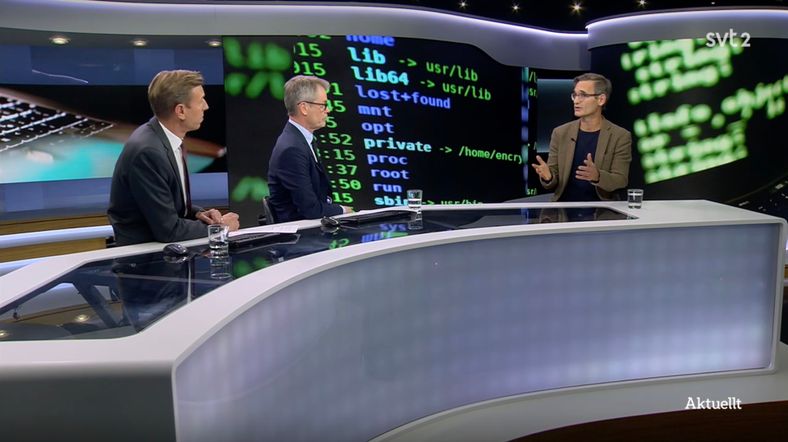
Pontus Johnson is a Professor at the KTH Royal Institute of Technology in Stockholm, Sweden. He leads the Center for Cyber Defense and Information Security (collaborating with Swedish Armed Forces, FRA, MSB, FOI, FHS) and serves as vice director of Cybercampus Sweden since 2024. His research focuses on cybersecurity , enterprise architecture analysis , and probabilistic threat modeling , particularly through his development of the Meta Attack Language (MAL) for simulating cyber attacks on networked systems. Education: MSc in Computer Science, Lund Institute of Technology (1997) PhD in Computer Science, KTH (2002) Docent title, KTH (2007) Leadership Roles: Director, Center for Cyber Defense and Information Security (2013–present) Vice Director, Cybercampus Sweden (2024–present) Board Member, Swedish Research Council (2025–present) Deputy Chair, Swedish Royal Academy of Engineering Sciences (IVA) Board (2024–present) His work spans cybersecurity research , attack simulation methodologies , and enterprise architecture frameworks . He has developed tools like securiCAD (acquired by Google) and pwnPr3d for probabilistic threat modeling. His 15 most recent publications highlight advancements in graph-based attack simulations , automated security assessments , and AI applications in cyber defense . Scientific recognition includes: Listed among Tech Awards Sweden's 50 Most Influential People in Swedish Tech (2022, 2023) Discovery of vulnerability in the Universal Turing Machine (2021) He supervises 16 PhD students and alumni (2005–2024), including Simon Gökstorp , Jakob Nyberg , and Sotirios Katsikeas . His academic service includes over 50 program committee roles and leadership positions in international conferences. He contributes to both academic and public domains through media appearances (SVT, Aftonbladet), courses in ethical hacking , and industry collaboration via his role at Google (20% of his time). His research group Software Systems Architecture and Security (SSAS) focuses on predictive security frameworks and system-of-systems analysis.
Susanne Iwarsson is a Professor in Gerontology and Care for Older People at Lund University's Faculty of Medicine, holding the Mary and Seved Ribbing Professorship since 2005. She also serves as Director of the Centre for Ageing and Supportive Environments (CASE) and Coordinator of the Swedish National Graduate School for Competitive Science on Ageing and Health (SWEAH). Her academic journey includes a PhD in Medical Science (1997) and promotions to Associate Professor (1999) and Professor (2003). She has held leadership roles such as Pro-dean of the Faculty of Medicine (2006-2011) and Coordinator of the strategic research area MultiPark (2012-2014). Her research focuses on environmental gerontology, housing accessibility, and proactive ageing strategies. Key contributions include the Housing Enabler assessment tool and studies on ageing populations' participation in society. She has supervised 18 PhD students and 6 licentiates, with ongoing supervision of 4 current PhD candidates. Major projects include the Home, Health and Disability longitudinal study (2002-present) and the UserAge program exploring user participation in ageing research. Awards include the Excellent Teaching Practitioner title (2010) and Doctor Honoris Causa. Her work addresses UN Sustainable Development Goals related to health, sustainable cities, and reduced inequalities. Collaborations span universities in Sweden, Finland, Latvia, and the U.S., with partnerships in healthcare and municipal sectors.
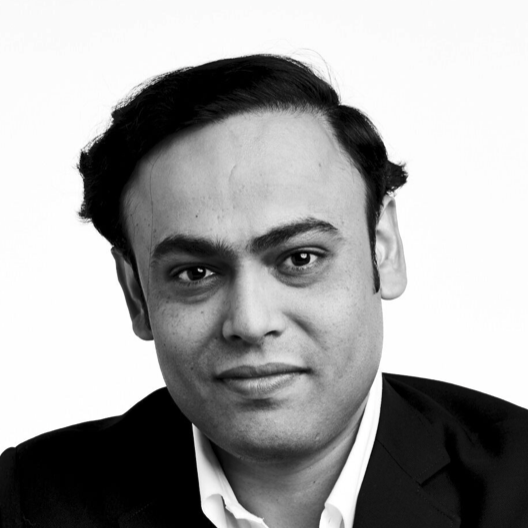
Saurabh Amin is a Professor in the Department of Civil and Environmental Engineering at the Massachusetts Institute of Technology (MIT), where he also serves as the Edmund K. Turner Professor and Undergraduate Officer. He is a Principal Investigator at the Laboratory of Information and Decision Systems and holds affiliations with the Operations Research Center and the Center for Computational Science and Engineering. His educational background includes: B.Tech. 2002, Indian Institute of Technology (IIT) Roorkee M.S. 2004, University of Texas (UT) Austin Ph.D. 2011, University of California (UC) Berkeley Saurabh Amin's research focuses on the design and control of infrastructure systems using game theory and optimization in networks. His work spans three main areas: resilient network control, information systems and incentive design, and optimal resource allocation in large-scale infrastructure systems. By concentrating on critical infrastructure domains including highway transportation, electric power distribution, and urban water networks, his research develops innovative theory and tools to enhance system performance against both stochastic and adversarial disruptions. His approach involves modeling cyber-physical interactions in infrastructures to assess vulnerabilities, developing detection and response tools for failures at various scales, and designing economic incentive schemes that improve aggregate public good while accounting for dependencies and private information among strategic entities. Amin's work bridges mathematical systems theory with practical civil engineering applications, creating a rigorous theoretical foundation for infrastructure resilience that addresses diverse failure mechanisms from natural disasters to deliberate malicious actions. His recent publications demonstrate a strong focus on decarbonization of energy systems, resilient infrastructure planning under climate uncertainty, optimization methods for complex networked systems, and game-theoretic approaches to sustainable infrastructure management. His work increasingly integrates artificial intelligence and machine learning techniques with traditional control theory to address contemporary challenges in infrastructure resilience and sustainability. The research shows a clear trajectory toward addressing climate change impacts on infrastructure systems while maintaining economic efficiency and operational reliability. Professor Amin has received numerous prestigious awards and honors: Common Ground Excellence in Teaching Award, 2025 HSCC Test-of-Time Award, 2024 MIT CEE, Distinguished Service and Leadership Award, 2023 Samuel M. Seegal Prize (SoE) – inspiring students in pursuing and achieving excellence, 2022 Earll M. Murman for Excellence in Undergraduate Advising, 2022 C3.ai Digital Transformation Institute Research Award, 2020 MIT, Ole Madsen Mentoring Award, 2020 MIT, Energy Initiative Research Award, 2020 National Academy of Engineering, China-America Frontiers of Engineering Symposium speaker, 2019 MIT, Robert N. Noyce Career Development Professor, 2015-2018 Google Faculty Research Award, 2015 National Science Foundation CAREER Award, 2015 Siebel Energy Institute Research Award, 2015 MIT, Solomon Buchsbaum AT&T Research Fund Award, 2012 Professor Amin has been actively involved in significant research projects including the C3.ai DTI project on Causal Reasoning for Real-Time Attack Identification in Cyber-Physical Systems and another on Learning in Routing Games for Sustainable Electromobility. He serves as the chief scientist on multi-institutional NSF grants, including the $9 million Foundations of Resilient Cyber-Physical Systems (CPS) project. His teaching portfolio includes courses such as 1.008 Engineering for a Sustainable World, 1.104 Sensing and Intelligent Systems, 1.020 Engineering Sustainability: Analysis and Design, and 1.208 Resilient Networks. As Undergraduate Officer, he plays a key role in shaping the educational experience for civil and environmental engineering students at MIT. Professor Amin leads the Resilient Infrastructure Networks Lab at MIT, where his team develops theoretical foundations and practical tools for infrastructure resilience. The lab focuses on the intersection of control theory, game theory, and optimization applied to cyber-physical infrastructure systems. Current research directions include pandemic-resilient urban mobility and hurricane-resilient smart grid operations, reflecting the lab's commitment to addressing pressing societal challenges through rigorous systems engineering approaches.
Cyrille Artho is an Associate Professor in the Division of Theoretical Computer Science at KTH Royal Institute of Technology, actively contributing to research in formal methods, software testing, and cybersecurity. His work spans model checking, smart contract security, and concurrent systems verification, with significant contributions to tools like Java Pathfinder and Modbat. PhD from ETH Zurich (2005) with dissertation on multi-threading fault detection Teaches Software Safety and Security, Software Engineering Fundamentals, and supervises degree projects His research focuses on developing formal techniques for safety-critical systems, particularly in blockchain security and distributed applications. Recent work emphasizes smart contract verification, anomaly detection in microservices, and trusted execution environments for secure cloud analytics. The 15 most recent publications reveal a strong trend toward blockchain security (6 articles), formal verification of distributed systems (5), and novel testing methodologies (4), with increasing integration of machine learning for vulnerability detection. As chair of the FTSCS workshop series and contributor to major conferences like ASE and ICST, Artho has significantly shaped the formal methods community. His leadership in organizing workshops demonstrates commitment to advancing safety-critical systems research. Principal investigator for C3.ai DTI Cyber Safety Cage for Networks project Develops Modbat framework for model-based API testing Active in Digital Futures research initiative at KTH
Malgorzata Blicharska is a Senior Lecturer in Sustainable Development at Uppsala University, affiliated with the Department of Geosciences and the Institute for Research on Conflicts of Interest in Sustainable Social Transformation. Her work spans multiple research domains focused on sustainable natural resource management and policy implementation. Dr. Blicharska's research focuses on sustainable development with expertise in ecosystem services, biodiversity conservation, climate change governance, and the Water-Energy-Food-Ecosystem (WEFE) nexus. She integrates social science perspectives with environmental management, examining policy implementation and stakeholder engagement in conservation initiatives. Her work includes extensive research on urban ponds, recreational fisheries, and nature-based solutions, particularly focusing on ponds and wetlands as key components of sustainable landscape management. Her recent publications reveal a strong emphasis on transdisciplinary approaches to environmental challenges, with growing focus on nature-based solutions, drought vulnerability in forested regions, and governance aspects of implementing the WEFE nexus concept. Her work increasingly addresses justice dimensions in environmental management and stakeholder engagement in policy implementation. LANDPATHS: Swedish Environmental Protection Agency-funded program on multifunctional landscapes (coordinator) PONDERFUL: Horizon 2020 project on pond biodiversity and ecosystem services (WP lead) NEXOGENESIS: Horizon 2020 project on WEFE nexus policy integration (WP lead) Wet-Kit: Swedish Environmental Protection Agency project on wetland optimization PUDDLE-JUMP: Formas-funded project on small artificial waterbodies
Olof Bälter is a Professor in Computer Science at KTH Royal Institute of Technology, affiliated with the Division of Media Technology and Interaction Design within the School of Electrical Engineering and Computer Science. He is the founder of the Technology-Enhanced Learning research group and holds a focus on learning engineering and human-computer interaction. His research interests center on technology-enhanced learning , question-based learning , learning analytics , AI in education , and inclusive pedagogy . A consistent theme in his work is improving efficiency in education and daily life through digital tools. He developed the Pure Question-Based Learning (Pure QBL) methodology, a digital Socratic approach that enhances student engagement and learning outcomes. His work extends to wellness in education through initiatives like walking seminars, and he investigates digital interventions for mental health, such as online Cognitive Behavioral Therapy (CBT) courses. His recent publications highlight trends in AI-generated educational content , learning efficiency , digital pedagogy , and inclusive course design , with applications in computer science education, language instruction, and global development. His research often employs experimental and data-driven methods, including randomized controlled trials and learning analytics. Teacher of the Year at the Surveying program KTH's Pedagogical Prize Higher Education Hero STINT Excellence in Teaching Scholarship (2008 and 2013) Olof Bälter has supervised numerous courses in programming, computer science, media technology, and learning engineering. He has collaborated with institutions such as Stanford University, Williams College, Region Stockholm, Stockholm University, and organizations like Promobilia and Begripsam. His projects aim to scale effective learning methods globally and make education more accessible and efficient. He leads research on the effectiveness of Pure QBL for students with ADHD and is involved in developing digital tools for health literacy and professional development in Ethiopia and Rwanda. His work bridges theory and practice, aiming to transform educational delivery through innovation and evidence-based design.
Yael Feldman Maggor is a Postdoctoral Fellow at KTH Royal Institute of Technology, affiliated with the Media Technology & Interaction Design Division and the Digital Futures research center. Her work bridges educational technologies, artificial intelligence, and science education, with a focus on enhancing pedagogy through innovative tools. Research Themes: Generative AI in education, self-regulated learning, learning analytics, chemistry education, and ethical considerations in AI integration. Key Projects: Contributions to the International Journal of Science Education, development of AI-driven evaluation frameworks, and pandemic-era online teaching analysis. Methodologies: Expertise in quantitative and qualitative research, educational data mining, and design of interactive learning platforms. Recent publications emphasize cross-cultural trust in AI, generative AI applications in chemistry education, and explainable AI for teacher professional development. She co-authored studies on nanotechnology courses for educators and self-regulation strategies in online learning environments.
Anh Tuan Le is an Associate Professor at the Department of Electrical Engineering, Chalmers University of Technology. He holds a PhD in Power Systems from Chalmers (2004) and a Master's in Energy Economics from the Asian Institute of Technology (1997). Specializes in power grid planning, electricity market modeling, and renewable energy integration Active in electric vehicle-grid interaction and battery storage systems Develops voltage stability solutions and decentralized control strategies His recent research focuses on: Flexibility markets for congestion management Machine learning applications in load forecasting Real-time security margin control using AI Key projects include: DigiRES (2024-2027): Digital integration of multi-energy flexibility POTENT-X (2024-2027): Port energy transition hubs FLEXIGRID (2019-2023): Distribution grid flexibility solutions
Urban Johnson is a Professor at Halmstad University's School of Health and Welfare, specializing in sports psychology with a focus on sustainable participation in sports, health, and physical activity. His research examines psychological aspects of sports injury (pre- and post-injury) and healthy athletic engagement, particularly through pandemic-era studies of Swedish upper secondary sport students. Johnson's research interests center on: Psychological mechanisms in sports injury rehabilitation and prevention Adolescent athlete mental health and dropout dynamics Pandemic impacts on sport education systems Gender-specific responses to athletic challenges Longitudinal behavioral patterns in youth sports His work integrates qualitative analysis of student-athlete experiences with clinical psychology frameworks. His publication trends reveal intense focus on pandemic-related disruptions (2020-2025), with 12 of 15 recent articles examining COVID-19's impact on student-athletes, teachers, and sports systems. Key thematic clusters include: Sport injury psychology (ACL re-ruptures, prevention) Adolescent mental health during crises Fun/motivation dynamics in youth sports Cross-contextual leadership challenges Johnson actively supervises students at basic, advanced, and doctoral levels while teaching methodology courses. His collaborative projects include the Karolinska Football Injury Cohort Study and consensus statements on sport injury psychology. Current work emphasizes cocreation of injury prevention programs and psychological support services for elite handball.
Elina Rönnberg is a Professor and Deputy Head of Department at the Department of Mathematics, Linköping University, where she leads research in discrete optimisation and intelligent decision-making. Her work bridges theoretical method development and real-world applications in sectors such as healthcare, aviation, mining, and transportation. She is actively involved in the Wallenberg AI, Autonomous Systems and Software Program (WASP) and has collaborated with industry leaders like Saab and Scania. Her research focuses on advanced optimisation techniques including Dantzig-Wolfe decomposition, Lagrangian relaxation, column generation, branch-and-price, and logic-based Benders decomposition. She also explores hybrid methods combining mathematical programming with constraint programming and machine learning. Applications span nurse rostering, electric vehicle routing, aircraft arrival scheduling, and underground mine planning. Recent publications highlight a strong trend toward integrating AI and machine learning—particularly graph neural networks—with classical optimisation frameworks to accelerate solution methods. Her work emphasizes practical impact, robustness, and scalability in solving complex scheduling and resource allocation problems. Nurse Rostering with Strategic Planning of Skills for Sick-Leave Robustness (2024) Pricing for the EVRPTW with Piecewise Linear Charging (2024) Speeding Up Logic-Based Benders Decomposition with Graph Neural Networks (2024) Elina supervises several PhD students and has co-supervised doctoral research at international institutions including Makarere University (Uganda) and the University of Exeter (UK). She has contributed to applied projects through student theses in collaboration with Scania and Saab, focusing on electric vehicle routing and search-and-rescue optimisation. She previously served as a Specialist in Optimisation at Saab Aeronautics (2014–2020) and co-founded Schemagi, a scheduling tool aimed at improving quality in healthcare. She teaches courses such as Introduction to Optimization (TAOP07) and Project - Applied Mathematics (TATA62). Her research group, 'Mathematics and algorithms for intelligent decision-making,' operates within the Division of Applied Mathematics (TIMA) at the Department of Mathematics. The team develops decision support tools that enhance efficiency and sustainability in complex systems, particularly under the growing demands of electrification and digitalisation in transport and logistics.
Johan Eriksson is an Associate Professor and Senior Lecturer at Uppsala University's Department of Art History, serving as Head of Department and Program Manager for the Master's Program in Digital Art Studies. His work integrates traditional art historical scholarship with cutting-edge digital methodologies, focusing on cultural heritage reconstruction and virtual museum development. His research spans digital art history , visual communication , and Renaissance studies , with specialized expertise in Italian and Japanese art traditions. Eriksson pioneers digital pedagogy through projects like The Digital Seminar 2.0 , examining how virtual reconstructions of historical sites (e.g., Royal Palace Stockholm) transform art historical methodology and public engagement with cultural heritage. His scholarship reveals strong interdisciplinary connections between art history, computer science, and urban studies. Eriksson's publication trends demonstrate consistent focus on virtual museum development as both research tool and preservation strategy, with growing emphasis on cross-cultural exchange (particularly Sweden-Japan collaborations) and sustainable heritage tourism. His work bridges technical innovation with deep art historical analysis, notably in reconstructing historical display contexts and examining visual rhetoric in Renaissance courts. No scientific awards are documented in the provided materials. As Program Manager for the Master's Program in Digital Art Studies and Chair of JSPS SAC, Eriksson actively mentors graduate students while securing research funding for major projects including The Virtual Museum and Visual Communication in Early Modern Japan . His grant portfolio reflects strong institutional support for digital humanities initiatives at Uppsala University. Through leadership of JSPS SAC and project teams like Renaissance Rooms , Eriksson coordinates international research networks focused on digital reconstruction methodologies. His current initiatives emphasize collaborative development of virtual environments that integrate art historical research with immersive technologies for both scholarly and public applications.
Pierre Flener is a Professor at the Department of Information Technology, Division of Computing Science at Uppsala University. He leads the Optimisation Group and is a member of the Centre for Interdisciplinary Mathematics. His work focuses on constraint programming and discrete optimization, addressing complex scheduling, routing, and resource allocation challenges. Flener is an Officer of the Order of Merit of Luxembourg and co-founder of NordConsNet, the Nordic Network for Constraint Programming researchers. Research Interests: Flener’s research spans constraint programming, combinatorial optimization, and algorithm design. He develops models and tools for automated decision-making in domains like air traffic management, sensor networks, and industrial robotics. His work emphasizes practical applications, leveraging constraint satisfaction techniques to solve real-world puzzles such as vehicle routing and personnel allocation. Key Contributions: Flener has authored over 100 publications on constraint solving, symmetry breaking, and CP-based approaches to industrial problems. Notable projects include airspace sectorization optimization, energy-efficient sensor networks, and financial portfolio design. He has led initiatives like Auto-Tabling for MiniZinc and collaborated on CP applications in bioinformatics and image processing. Labs & Teams: He heads the Optimisation Group at Uppsala, fostering research in CP and its applications. NordConsNet, co-founded by Flener, connects Nordic researchers and practitioners in constraint technology.