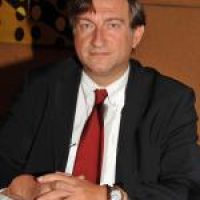
Panagiotis Katsaros is an Associate Professor at the Department of Informatics, Aristotle University of Thessaloniki. His research spans formal verification, model-based system design, dependability, security, and simulation-based performance analysis. He contributes to rigorous methods for embedded systems, IoT, and fault-tolerant computing. His work focuses on Formal verification and model checking Model-based design for multi-core and embedded systems Dependability and security of distributed systems Probabilistic analysis of security risks He has published extensively on these topics, with recent works addressing reactive streaming software, IoT systems, and cloud elasticity. His research often bridges theoretical rigor with practical applications in real-time and safety-critical domains. Scientific awards include BEST PAPER AWARD at 17th Panhellenic Conference on Informatics (PCI 2013) BEST PAPER AWARD at 15th Panhellenic Conference on Informatics (PCI 2011) He collaborates with international institutions and has supervised students in software verification and distributed systems. His contributions to conferences like ETAPS, DSN, and COMPSAC highlight his expertise in systems analysis and software reliability.
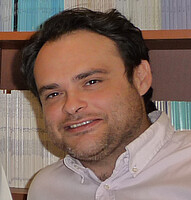
Konstantinos Prousalis serves as a Postdoctoral Fellow in the Department of Informatics at Aristotle University of Thessaloniki, actively contributing to undergraduate education through multiple course offerings across semesters. His research profile centers on advanced computing disciplines including Systems Architecture, Quantum Computing, and Communication Networks, with demonstrated expertise in both theoretical frameworks (Numerical Analysis) and practical implementations (Digital Design, Object-Oriented Programming). This interdisciplinary focus bridges foundational computer science principles with emerging technological applications in hardware and network systems.
Apostolos Tsiakalos is a Laboratory Teaching Staff member at the Aristotle University of Thessaloniki's School of Informatics, Department of Informatics. He teaches undergraduate courses such as Discrete Mathematics, Programming Principles, Databases, Operating Systems, Data Structures, and Algorithms. His research interests include theoretical computer science, algorithmic design, and cybersecurity. Key Activities: Lecturing in core computer science disciplines (2024–25 academic year) Participant in AUTh Cybersecurity Seminars (2024–2027) Involved in academic teaching experience programs for young scientists (2022–2023)
Socrates Katsikas is a Professor at the Department of Digital Systems of the University of Piraeus. He holds significant leadership positions including membership in the expert group of the European University Association (EUA) university evaluation program and Presidency of the Steering Committee of the same program. His extensive career includes high-level administrative roles at multiple academic institutions and government bodies. Dr. Katsikas earned his educational credentials from prestigious institutions: a Diploma in Electrical Engineering from the University of Patras (1982), a Master of Science in Electrical & Computer Engineering from the University of Massachusetts at Amherst, USA (1984), and a PhD in Computer Engineering & Informatics from the University of Patras (1987). His academic journey has positioned him as a leading figure in information security and related fields. His primary research focuses on information and communication systems security and the applications of estimation theory. His work spans intrusion detection systems, privacy in social networks, cryptographic protocols, and security frameworks for critical infrastructure. Dr. Katsikas has made substantial contributions through his extensive publication record and leadership in numerous research initiatives. His research demonstrates both theoretical depth and practical applications for real-world security challenges. Analysis of his recent publications reveals consistent focus on practical security solutions for emerging technologies. His work addresses critical challenges in intrusion detection, privacy management in social networks, security for wireless sensor networks, and log management systems. The interdisciplinary nature of his research connects computer science with practical applications in telecommunications, healthcare information systems, and critical infrastructure protection, demonstrating his ability to bridge theoretical concepts with real-world implementations. Dr. Katsikas has participated in more than 60 European and national Research and Development programs, serving in various capacities including researcher, scientific director, and program manager. He has authored or edited 33 books and has participated in or chaired scientific committees of more than 400 international scientific conferences. His expertise is further recognized through his participation in the scientific review committees of several prominent scientific journals. Throughout his distinguished career, Dr. Katsikas has advised numerous graduate students and has secured significant research funding through European and national programs. His leadership extends beyond academia into national policy, having served in various governmental roles including Secretary General of Telecommunications and Posts, Chairman of the Council of Higher University Education, and Chairman of the National Council of Education. Dr. Katsikas is actively involved in research teams focusing on digital security, privacy-enhancing technologies, and cybersecurity frameworks. His laboratory work emphasizes practical implementations of security protocols and systems for real-world applications, particularly in the domains of critical infrastructure protection and secure communications.
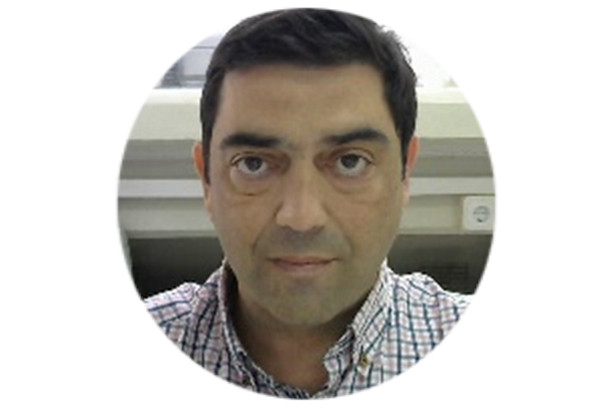
Professor Ioannis P. Trougakos serves as faculty at the National and Kapodistrian University of Athens (NKUA) within the Faculty of Biology, Department of Cell Biology and Biophysics. He leads the "Ageing and Age-Related Diseases" (AArD) research group and directs three MSc programs: "Bioinformatics – Computational Biology", "Applications of Biology in Medicine", and "Didactics of Biology". Additional roles include Adjunct Professor of Systems Biology of Ageing and Cancer at the European University of Cyprus and Vice Chairman of NKUA's Faculty of Nutrition & Dietetics. His educational foundation includes a Ph.D. in Cellular-Developmental Biology from NKUA, complemented by research positions at EMBL (Germany), Centro De Biologia Molecular "Severo Ochoa" (Spain), and the National Hellenic Research Foundation. Research centers on molecular-cellular mechanisms of ageing and age-related pathologies, with cancer as primary disease focus. His work integrates bioinformatics, computational biology, and systems biology to investigate natural compound/drug screening for anti-ageing and anti-cancer applications, leveraging expertise from EU-funded projects and industry partnerships. Key recognitions include: EU Post-doctoral Fellowship Hellenic State Scholarship Foundation Fellowship Funding and academic leadership: His AArD group secures industry contracts (US/EU/Greek pharmaceutical/cosmeceutical firms) and public grants (GSRT, HFRI, EU programs including COST/FP7/H2020). He mentors graduate students through NKUA's MSc/PhD programs and serves on editorial boards, journal review panels, and Hellenic/EU funding committees. The AArD laboratory maintains specialized capabilities in physiological compound screening, with documented "success stories" in identifying anti-ageing and anti-cancer agents through collaborations with Empirikion and Bodosakis foundations.
Xenos Panagiotis serves as an Assistant Professor of Actuarial Science within the Department of Statistics and Actuarial Science at the University of Piraeus. He earned his PhD from the University of Piraeus, completed postgraduate studies at Brandeis University and Boston University in Massachusetts, USA, and attended specialized workshops at York University in the UK. His primary research interests encompass Insurance and Health Economics, Social Insurance, Private Insurance, and the Productivity and Efficiency of Health and Insurance Organizations. His scholarly work investigates the efficiency and productivity of public and private insurance and health institutions, compensation methods for medical professions, management of morbidity risks, sustainability of social security systems, and solvency of insurance portfolios. Dr. Xenos has published extensively in prestigious Greek and international scientific journals and presented his research at conferences across Europe, Asia, and Australia. Notably, he participated in the World Health Organization conference in Barcelona in 2015 on health system financing. He serves as a reviewer for scientific journals and is an active member of various scientific societies. His teaching responsibilities include undergraduate courses in 'Introduction to Insurance,' 'Business Insurance,' and 'Personal Insurance.' At the graduate level, he teaches 'Health Insurance' in the Actuarial Science and Risk Management Master's program, 'Contemporary Issues in Commercial and Insurance Law' in the Law & Economics program, and contributes to the Healthcare Unit Management program at the Hellenic Open University. Dr. Xenos has participated in significant research programs including Greece's 'Excellence II' and 'Support for Researchers' initiatives, as well as European Commission-funded projects through Fondazione Giacomo Brodolini. His research portfolio demonstrates a strong focus on health economics, insurance systems, and quantitative analysis of healthcare delivery and financing in Greece and internationally.
Antonakos Georgios is a Teaching Staff member at the Thermal Engineering Section of the School of Mechanical Engineering, National Technical University of Athens (NTUA). He holds a PhD in Thermal Engineering from NTUA (2013), a Master’s in Applied Mechanics (2002), and a Diploma in Mechanical Engineering (2001). Teaching areas: Applied Thermodynamics, Heat Transfer, Industrial Cooling Systems Research focus: Thermodynamics of pure substances, heat transfer, cogeneration systems, heat exchangers Administrative roles: Secretary of NTUA’s Energy Management Sustainability Committee Participation in Erasmus+ programs and European Solidarity Corps projects His scientific work includes publications on Stirling engines, organic Rankine cycles, and energy recovery systems. He has contributed to national and European research projects, including NRG4CAST and GREEN HEAVY DUTY ENGINE. Books authored/co-authored: Thermodynamic Analysis of the Stirling Engine (2014), Refrigeration – Air Conditioning (2023).
Arvanitis Christos is a Lecturer at the School of Electronic & Computer Engineering of the Technical University of Crete . He holds a PhD in Mathematics (2002) and a Master's in Computational & Applied Mathematics (1997) from the University of Crete, alongside a 2-year military service (1995–1997). His academic career includes teaching roles at multiple universities (2002–2008), a hiatus in Secondary Education (2008–2017), and current research-teaching activities since 2017. Education: PhD in Mathematics (2002) Master's in Computational & Applied Mathematics (1997) BSc in Mathematics (1992) His research spans Numerical Analysis and Computer Science , focusing on automatic spatial partitioning in numerical differential equation solutions , with applications in Neural Networks , Human-Machine Interfaces , GPU Computing , and Machine Vision . His 5 publications in reputable journals highlight these interdisciplinary themes. He has participated in applied research programs such as Symmetries in Neural Networks , Underwater Acoustics , and Adaptive Algorithms for Optical Flow , demonstrating expertise in both theoretical and computational domains. Technical Skills: CPU/GPU Programming Distributed Computing GUI Development
Argyropoulos Spyridon is a Research Fellow at the Intelligent Computing Systems Programming and Technology Laboratory within the School of Electrical and Computer Engineering at the Technical University of Crete. He holds a Diploma in Computer Engineering and Informatics from the University of Patras (1990) and a Master's in Computer Science from the Technical University of Crete (1994). His career spans roles in IT management, government service in the Ministry of Finance, and over two decades of research contributions. Education: Diploma in Computer Engineering and Informatics (1990) Masters in Computer Science (1994) Research Focus: Information Systems Databases Internet Technologies Professional Roles: Research Fellow since 2002 Former IT Technician in TAXISnet Service Commercial Department Manager in internet access companies
Vasilis Diakoloukas is a Lecturer at the School of Electronic & Computer Engineering, Technical University of Crete, specializing in laboratory teaching and research. He holds a PhD in Electronic & Computer Engineering from the same institution and has been a member of the Information & Networks laboratory since 2003. PhD, School of Electronic & Computer Engineering, Technical University of Crete (2000) MSc in Electrical Engineering, Durham University (1996) Degree in Physics, University of Crete (1994) His research focuses on speech recognition , voice synthesis , signal processing , and NLP systems , with applications in telecommunications. He has contributed to numerous National and European research programs. He received the IEEE Signal Processing Society Young author best paper award in 2000 for his work in an IEEE journal. His memberships include IEEE Signal Processing Society and ISCA. Supports diploma/postgraduate theses Teaches laboratory courses: Signals and Systems, Probability and Random Signals, Pattern Recognition, Telecommunications Systems I, Speech Processing, NLP Systems He works at the Information & Networks laboratory in the Telecommunications sector of the School of Electronic & Computer Engineering.
Nathanael Kortsalioudakis serves as Laboratory Teaching Staff (EDIP) at the School of Electronic and Computer Engineering, Technical University of Crete, specializing in laser technology and optoelectronics within the Electronics Laboratory. He teaches core laboratory courses including Physics I, Physics II, Electronics I, Electronics II, and Optoelectronics for undergraduate students. Education: Doctoral Degree in Physics, Technical University of Crete (2006) Postgraduate Diploma in Applied and Technological Physics and Laser Technology, Technical University of Crete (2000) Degree in Physics, University of Crete (1997) Research Interests: His expertise centers on laser-matter interaction and optoelectronic systems , with significant contributions to nonlinear optical phenomena in gases/solids, high-power short-pulse laser technology, and UV-Vis spectroscopic device design. His work extends to spectral imaging systems, diagnostic instrumentation, and interferometry applications, bridging fundamental physics with practical engineering solutions. Scientific Awards: Foundation for Technology and Research (F.T.E.) scholarship for undergraduate thesis State Scholarships Foundation (I.K.Y.) scholarship for top postgraduate performance Dr. Kortsalioudakis has taught physics laboratories across TUC's engineering schools since 2002 and led specialized courses at TUC-Paratima (2003-2011). His research integrates participation in national/European programs with peer-reviewed publications and conference presentations, focusing on advancing laser diagnostics and optoelectronic instrumentation. He maintains active roles in curriculum development and laboratory instruction within the Electronics Laboratory framework.
Lagoudakis Michael is a Professor at the School of Electronic & Computer Engineering of the Technical University of Crete since 2005. His academic journey includes a PhD in Computer Science from Duke University (2003), a Master's from the University of Louisiana, Lafayette (1998), and a Diploma in Computer Engineering and Informatics from the University of Patras (1995). Education: PhD in Computer Science, Duke University, 2003 MSc in Computer Science, University of Louisiana, Lafayette, 1998 Diploma in Computer Engineering and Informatics, University of Patras, 1995 Research interests span Machine Learning, Reinforcement Learning, Decision Making under Uncertainty, Multi-Agent Systems, Robotics (particularly robotic team coordination), Complex Systems, and DNA Computing. His work has produced significant publications in top venues like Robotics: Science and Systems , IEEE IROS , Journal of Machine Learning Research , and NIPS . He has contributed to projects such as EURECA-PRO (2020–present), DialogRL (2016–2020), and LSPI (2000–2003). Scientific awards include the Outstanding Dissertation Award from Duke University's Department of Computer Science and the Outstanding Teaching Assistant Award received twice. He is a member of AAAI, IEEE, and ACM.
Moumoutzis Nektarios is a Lecturer at the School of Electronic & Computer Engineering at the Technical University of Crete , affiliated with the Distributed Information Systems and Applications Laboratory (TUC/MUSIC) . His work bridges the gap between technology, education, and the arts. Email: nmoumoutzis@tuc.gr Office: 141B-65, Science Building/IMMY (L), 1st Floor Phone: 282103 7395 His research focuses on technology-enhanced learning , digital storytelling , and serious games , with a strong emphasis on interdisciplinary approaches that combine design thinking , digital technologies , and arts to create innovative educational experiences. His projects often target diverse audiences, including K-12 students , young children , and children with ADHD . In recent years, his work has explored block-based programming tools , gamification of learning , and collaborative learning environments . Notable contributions include the development of eShadow+ for mixed-reality storytelling, Block-C for teaching C programming, and ViSTPro for spatiotemporal process visualization in education. He has also contributed to frameworks for digital competency , interoperability of e-learning systems , and personalized learning experiences . His work aligns with the European and National Curricula and emphasizes project-based learning and community-driven education .
Bouros Sotirios is a Lecturer in the School of Electrical & Computer Engineering at the Technical University of Crete . Since 1990, he has served as a member of the Laboratory Teaching Staff (EDIP) in the Information and Networks Laboratory. His role includes applied teaching, thesis supervision, technical support for computer systems/networks, and participation in EU/Greece-funded research programs. Education: Postgraduate Diploma from Technical University of Crete, Diploma in Computer Engineering and Informatics from University of Patras Research Focus: Broadband communication networks, data security, and applied network services Teaching: Computer Networks I & II, Telecommunications Systems II Contact: Office 141A-20, Science Building/IMMY, 1st Floor, Chania, Crete. Telephone +30 28210 37391, Fax +30 28210 37542.
Koutsikopoulos Konstantinos is a Professor at the Department of Animal Biology within the Department of Biology at the University of Patras, Greece. His academic career spans decades of research and teaching in marine ecology and fisheries science. He is based on the Rio Campus and can be contacted via office phone lines or at ckoutsi@upatras.gr . Teaching courses: Ecology I, Marine Ecology, Sampling theory and data analysis, Ecological models, Fish population dynamics and catch management Research areas: Marine ecology, aquatic ecosystems, fish stock monitoring, and physical-biological process interactions His research focuses on marine ecosystem dynamics, particularly examining the coupling between physical oceanographic processes and biological systems. Key areas include fish population dynamics, ecological modeling, and the management of aquatic resources. His work has significantly contributed to understanding larval dispersion, stock assessment, and environmental impacts on fisheries. Recent publications highlight his expertise in Mediterranean fisheries management, with studies on glass eel migration patterns, anchovy population modeling, and aquaculture-wild stock interactions. Collaborative works also explore small-scale fisheries across Europe and hydrological conditions affecting semi-enclosed embayments. As a faculty member, he contributes to the Erasmus+ program and maintains laboratory course schedules for students.