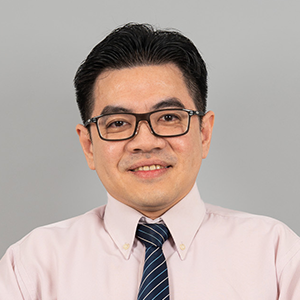
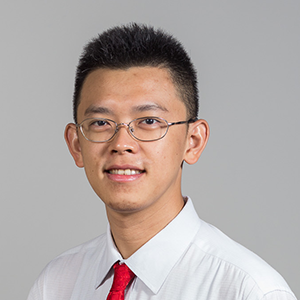
Trevor E. Carlson is an Assistant Professor at the School of Computing, National University of Singapore (NUS), focusing on high-efficiency microarchitectures, hardware/software co-design, and secure chip design for IoT and server applications. He earned his Ph.D. in Computer Science from Ghent University (2014) and B.Sc./M.Sc. in Electrical & Computer Engineering from Carnegie Mellon University (2002/2003). Research Interests include energy-efficient processors, secure computing platforms, neuromorphic accelerators, and fast simulation methodologies. He co-developed the Sniper Multi-Core Simulator used globally for performance/power evaluation. Scientific Awards : Best Paper Award, International Conference on Embedded Computer Systems (2016) Best Paper Award, International Symposium on Performance Analysis of Systems and Software (2013) Heidelberg Laureate Forum participation (2015) HiPEAC Technology Transfer Award for Sniper Simulator (2013) Current Research involves secure Systems-on-Chip (SOCure project), hardware security for IoT, and simulation methodologies. He leads a lab with researchers working on topics like Capstone for trustless secure memory access and LABS for laser fault injection benchmarks.
Kenneth BENOIT is the Dean and Full-time Professor of Computational Social Science at the School of Social Sciences, Singapore Management University (SMU). Previously, he served as Director of the Data Science Institute at the London School of Economics (LSE) from 2020 to 2024. He holds a PhD in Government from Harvard University, specializing in statistical methodology. His research focuses on computational methods for analyzing textual data, particularly political texts and social media. Key areas include text-as-data techniques, natural language processing, and the application of large language models in social sciences. He has pioneered methods combining machine learning with crowd-sourced coding to improve the accuracy of political text analysis. Ken’s work emphasizes the analysis of big data, electoral systems, and comparative party competition, with notable contributions to the European Parliament and policy positioning studies. His expertise extends to software development, including R packages like quanteda and spacyr , which are widely used in text analysis. His articles and publications span methodological innovations, policy analysis, and interdisciplinary applications. Notable projects include scaling political party positions and examining the role of AI in public policy. He is actively involved in academic leadership, having served on editorial boards and organized collaborative research initiatives like the CIVICA research hackathon. Beyond SMU, he maintains professional profiles on LinkedIn and GitHub , reflecting his commitment to open-source tools and scholarly collaboration.
Natalie Agus is a Senior Lecturer at the Singapore University of Technology and Design (SUTD), specifically within the ISTD (Information Systems Technology and Design) pillar. Her office is located at 1.402.28. She specializes in teaching undergraduate computing courses, including programming languages such as Python, Java, C#, and C/C++. Agus is dedicated to innovating teaching methods to enhance student engagement with academic materials. Her research focuses on room acoustics and music information retrieval, with a particular emphasis on binaural audio processing. Her doctoral work centered on developing perceptually realistic real-time binaural room reverberation algorithms. Agus holds a B.Eng. (Robotics, 2015) and a Ph.D. (Digital Audio Signal Processing, 2018), both from SUTD. Her recent publications explore topics such as binaural room modeling, perceptual evaluation of spectral variance, and energy-based acoustic simulation techniques. She actively participates in collaborative research projects within the audio engineering domain.
Chen Zhi is an Assistant Professor in the Department of Analytics and Operations at the NUS Business School, National University of Singapore, where he has been employed since July 2020. His academic work focuses on operational challenges in innovation-driven value chains, with particular expertise in new product development, innovation sourcing, AI economics, and wisdom of crowds methodologies. Dr. Chen received his Ph.D. in Management (Decision Sciences) from INSEAD (2014-2020) and his B.E. with First Class Honors in Industrial and Systems Engineering from the National University of Singapore (2009-2013). During his academic journey, he completed an overseas exchange at the Georgia Institute of Technology and a research internship at École Polytechnique in France. Chen's research spans two primary streams. The first addresses R&D phase challenges in new products, examining how firms can optimally design supplier bases and informational policies to procure innovation from suppliers, with recent focus on policy impacts on AI-based product development such as autonomous vehicles. The second stream investigates demand forecasting for new products, exploring how to aggregate diverse expert insights into consensus forecasts and quantify underlying uncertainty through obtained forecasts. His publication record demonstrates a strong trajectory in top-tier operations and management journals, with recent work appearing in Management Science, Manufacturing & Service Operations Management, and International Journal of Forecasting. Chen's research shows increasing focus on AI development challenges, uncertainty quantification in forecasting, and strategic approaches to innovation sourcing in complex technological environments. At NUS Business School, Chen teaches Managerial Operations and Analytics for the MBA program and Decision Analytics Using Spreadsheets for undergraduate students. Previously at INSEAD, he taught tutorials for Uncertainty, Data and Judgment, and Production and Operations Management courses.
Quan Quan Tan is a Research Fellow at Nanyang Technological University (NTU), Singapore, specializing in symmetric-key cryptanalysis and automation tools. He previously served as a Cybersecurity Engineer at CSIT, Singapore for nearly two years. His educational background includes: Ph.D. in Mathematical Sciences from NTU (2023) under Prof. Thomas Peyrin. Thesis: "Cryptanalysis of Lightweight Symmetric-Key Cryptographic Algorithms" M.Sc. in Mathematical Sciences from NTU, with research on optimization techniques for block cipher hardware implementations B.Sc. in Mathematical Sciences from NTU Dr. Tan's research focuses on automation in cryptographic design and analysis, emphasizing secure symmetric-key primitives and advanced cryptanalysis tools. His work bridges theoretical cryptography with practical security engineering through algorithm development and vulnerability assessment. Analysis of his 2020-2025 publications reveals dominant themes in symmetric-key cryptanalysis, including innovative meet-in-the-middle attacks, differential cryptanalysis frameworks, and automated verification systems. His contributions span attack methodologies (e.g., higher-order differential-linear techniques), tool development (Trail-Estimator), and novel cipher design (uKNIT-BC), demonstrating consistent advancement in lightweight and low-latency cryptographic systems.
Benjamin William Cashore is the Li Ka Shing Professor in Public Management and Director of the Institute for Environment and Sustainability (IES) at the National University of Singapore's Lee Kuan Yew School of Public Policy. Previously, he spent 18 years at Yale University as a professor of environmental governance and political science, where he directed the Governance, Environment and Markets (GEM) initiative and the Yale International Fox Fellows exchange program from 2014-2019. PhD from University of Toronto Postdoctoral research at Harvard University and University of British Columbia Former policy advisor to the leader of the Canadian New Democratic Party Expertise spans Southeast Asia, North America, Latin America and Europe Cashore specializes in global and multi-level environmental governance, comparative public policy and administration, and transnational business regulation/corporate social responsibility. His research focuses on climate policy, biodiversity conservation/land use change, and sustainable environmental management of forests and related agricultural sectors. Theoretically, he examines the legitimacy requirements of non-state market driven (NSMD) global governance, the influence of economic globalization on domestic environmental policies, and anticipatory policy design for addressing 'super wicked' environmental problems. His work integrates around developing multi-stakeholder policy learning processes and nurturing multiple step policy pathways. His recent scholarship demonstrates consistent engagement with climate change governance, forest policy, and the intersections between private regulation and public policy. Cashore's publications reveal a strong focus on identifying effective governance mechanisms for addressing complex environmental challenges through both state and non-state approaches. Author of two influential books: 'Global Environmental Forest Policies: An International Comparison' (2010) and 'Governing Through Markets: Forest Certification and the Emergence of Non-State Authority' (2004) Extensive publication record in top journals across political science, environmental policy, and governance fields Cashore has developed significant expertise in designing stakeholder learning dialogues and identifying policy pathways for addressing complex environmental governance challenges. His work bridges theoretical insights with practical policy applications across multiple continents and governance contexts.
Irving Chan Johnson is an Associate Professor in Southeast Asian Studies at the National University of Singapore. A graduate of the Southeast Asian Studies Programme (now Department) in 1996, he earned his PhD from Harvard University in 2004. His academic journey has focused on cultural dynamics of borderland communities, particularly Thai Buddhist communities in Malaysia's Kelantan state, examining how they navigate identity at the intersection of Buddhist and Muslim traditions. Dr. Johnson's research spans social anthropology, visual arts, and cultural studies with particular focus on: Social anthropology of Southeast Asia Visual arts and traditional performance Buddhist communities in borderland regions Cultural identity and marginality Traditional dance and mask traditions in Bali Thai mural painting traditions His scholarly work reveals a consistent thread examining how cultural communities maintain identity through artistic expression, religious practice, and historical narrative. Early publications focused on Malaysian-Thai borderlands, while recent work has expanded to Balinese performance traditions, particularly mask-related arts. His 2013 book The Buddha on Mecca's Verandah represents a significant contribution to understanding cultural identity formation in border regions. As an active cultural practitioner, Dr. Johnson founded Eka Suwara Santhi, Singapore's only Balinese dance group, and volunteers painting Buddhist murals at Wat Uttamayanmuni, a Thai temple in Singapore. His teaching philosophy emphasizes experiential learning, incorporating field trips to Thailand and Bali where students engage directly with cultural contexts through his specialist classes on Thai traditional art (SE3224) and traditional dance in Southeast Asia (SE2224).
Eugene TAN Kheng Boon is an Associate Professor of Law at the Yong Pung How School of Law, Singapore Management University (SMU), where he has served since 2013. He holds a JSM from Stanford University (2004), an MSc in Comparative Politics from the London School of Economics (1998), and an LL.B. from the National University of Singapore (1995). His academic roles have included Co-Director of the Centre for Scholars' Development (2012–2017) and earlier positions as Assistant Professor, Lecturer-in-Law, and Senior Tutor. His research focuses on constitutional law, public policy, business ethics, and governance in Singapore. He explores themes such as ethnic relations, corporate social responsibility, and the intersection of law with societal values. Notable projects include studies on Singapore’s management of immigration, religious regulation, and the ASEAN Charter’s implications. Tan’s publications span constitutional law treatises, counter-terrorism policy analyses, and critiques of Singapore’s legal traditions. His work often emphasizes Singapore’s unique blend of pragmatic governance and ethical considerations. He has contributed to international discussions on corporate responsibility in Asia and the evolution of pluralist legal systems. Awarded fellowships from Stanford and the Fulbright Program, Tan has also engaged in public service as a Nominated Member of Parliament (2012–2014) and held roles in bodies like the Singapore Compact for Corporate Social Responsibility. His interdisciplinary approach bridges legal scholarship with real-world governance challenges.
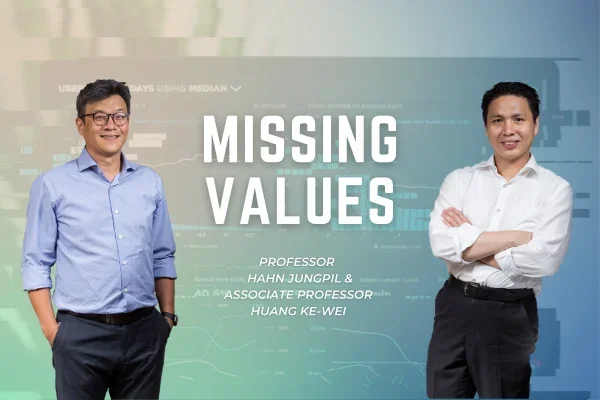
Ke-Wei Huang is an Associate Professor at the Department of Information Systems and Analytics, National University of Singapore (NUS), and Executive Director of the Asian Institute of Digital Finance (AIDF). He joined NUS in 2007, holding prior roles including Assistant Dean of Graduate Studies and founding director of NUS's FinTech MSc/PhD programs. Huang holds a PhD from NYU Stern and degrees from National Taiwan University. His research focuses on machine learning for social science, FinTech, data mining in finance, and IT labor economics. Notable works include studies on hierarchical forecasting, AI's impact on jobs, and pricing strategies for digital goods. Education: PhD in Information Systems, NYU Stern (2007) MSc in Information Systems, NYU Stern (2002) MBA in Finance, National Taiwan University (1997) BSc in Electrical Engineering, National Taiwan University (1995) Research Interests: Machine Learning applications in FinTech, data science for financial forecasting, labor economics of IT professionals, and pricing models for digital goods. His work bridges econometrics and computational methods, addressing challenges like missing data, measurement bias, and hierarchical variable decomposition. Awards & Grants: $1.6M Singapore NRF Grant (2020) for AI-driven financial text analysis Multiple teaching excellence awards (2013–2016) Best paper nominations at ICIS, WITS, and CSWIM Advising & Labs: Advised 8 PhD graduates, including faculty at Chinese University of Hong Kong and South China University of Technology. Active in FinTech education, leading courses like Machine Learning for Finance and Risk Analytics. Research teams focus on AI's societal impact, financial innovation, and data-driven decision-making.
Dr. TAN Wee Kek is an Associate Professor (Educator Track) in the Department of Information Systems and Analytics at the National University of Singapore's School of Computing. He served as Assistant Dean in the School's Office of Student Life from 2019 to 2024 and has been a Fellow of the NUS Teaching Academy since 2017. He holds a Doctor of Philosophy in Information Systems and Bachelor of Computing in Information Systems (First Class Honours) from NUS, and previously earned a Diploma in Computer Information Systems from Singapore Polytechnic. His research focuses on Technology-Enhanced Learning (TEL), particularly artificial intelligence applications in education, and consumer-based information technology including online decision aids, social computing, virtual worlds, and consumer cloud services. His methodological approach primarily employs design science paradigms. Publication analysis reveals his scholarly work spans educational technology, e-commerce systems, human-computer interaction, and information systems pedagogy, with recent emphasis on learning analytics and AI-enhanced educational frameworks. Major Honors: Commendation Medal from Singapore's President (2017) Multiple Annual Teaching Excellence Awards (2009-2024) Crystal Service Award, WorldSkills Singapore Council (2018) Lee Kuan Yew Award for Mathematics and Science (2001)
Supriyo Ghosh is a Senior Researcher at Microsoft Research, India. Prior to this role, he held positions at IBM Research AI Lab (2019–2021) and the Institute of Infocomm Research (I2R), A*STAR. He completed his PhD in Information Systems at Singapore Management University (2017) under Prof. Pradeep Varakantham and conducted postdoctoral research at MIT's SMART and LIDS centers (2016–2017). His research focuses on data-driven decision analytics, including algorithmic optimization, reinforcement learning, urban logistics, and network resilience in cyber-physical systems. His work has addressed cloud incident management, proactive decision-making under uncertainty, and applications of large language models (LLMs) in system reliability. Notable contributions include developing automated root-cause analysis frameworks and improving incident response strategies in large-scale cloud environments. He has also explored reinforcement learning applications in healthcare treatment optimization and air traffic control systems. Award-winning research includes the Best Paper Award at ACM SoCC'22 for an empirical study on high-severity cloud service incidents. He actively serves as a PC member for top conferences like AAAI, NeurIPS, and ICML, demonstrating his leadership in advancing AI and optimization fields. His academic background includes a graduate exchange at Carnegie Mellon University (CMU) and collaborations with MIT faculty like Prof. Patrick Jaillet. His work bridges theoretical foundations with real-world applications in transportation, cybersecurity, and enterprise systems.
CHONG Ket Fah serves as a Senior Lecturer on the Educator Track at the Department of Computer Science, School of Computing, National University of Singapore (NUS). He specializes in teaching foundational programming courses including CS1010E, focusing on undergraduate computer science education. He earned his Ph.D. in Computer Science from the National University of Singapore in 2011 under the supervision of Associate Professor Leong Hon Wai. His academic journey is deeply rooted in NUS, where he continues to shape introductory computing curricula. His research and teaching interests center on Computer Science Education with specific emphasis on introductory programming methodologies and student engagement in foundational courses. He actively develops pedagogical approaches to enhance learning outcomes for beginners in computer science. As an educator on the dedicated teaching track, he concentrates on classroom instruction and curriculum design rather than research supervision. His work directly impacts NUS's core computing education framework for first-year students.
Marcel Böhme is a faculty member at the Max Planck Institute for Security and Privacy (MPI-SP) , leading the Software Security research group. His work focuses on foundational advancements in fuzzing , statistical program analysis, and scalable vulnerability discovery. Education: PhD from National University of Singapore (NUS) Research interests span: Statistical and causal frameworks for software testing Efficiency/Scalability of automated testing Fundamental limits of vulnerability detection Practical fuzzing technology (e.g., Entropic in LibFuzzer) Recent publications highlight trends in: Machine learning for security analysis Privacy-preserving statistical methods Future-proof security frameworks Protocol fuzzing with large language models Scientific accolades include: ERC Consolidator Grant (2024) NUS Outstanding Young Alumni Award (2022) ARC DECRA (2019) Multiple ACM Distinguished Paper Awards He serves as: Spokesperson for Research Group Leaders at Max Planck Society Guest Editor-in-Chief for ACM TOSEM PC Chair for ASE'25 and ISSTA'26
Steven Halim is an Associate Professor (Educator Track) in the Department of Computer Science at the School of Computing, National University of Singapore (NUS). He has been a full-time educator since 2007, teaching a wide range of courses including Data Structures and Algorithms, Competitive Programming, and Design and Analysis of Algorithms. He currently serves as the Director of the Centre for Nurturing Computing Excellence (CeNCE) and is a Fellow of the NUS Teaching Academy. Ph.D. in Computer Science, National University of Singapore B.Sc. in Computer Science, National University of Singapore His research and teaching interests focus on algorithms, competitive programming, visualization, and optimization. He is renowned for creating VisuAlgo , an interactive online platform that visualizes data structures and algorithms, used by students and educators worldwide. He is also the co-author of the widely acclaimed book "Competitive Programming" , now in its fourth edition, which is a key resource for programming contest preparation. His recent scholarly work centers on pedagogical innovations in computer science education, particularly algorithm visualization and competitive programming methodologies. Earlier publications from his PhD work focused on stochastic local search, metaheuristics, and algorithm tuning through visualization. The articles span topics from educational technology to combinatorial optimization, reflecting a transition from research in algorithm engineering to leadership in computing education. Commendation Medal (Pingat Kepujian), National Day Awards 2018 NUS Annual Teaching Excellence Award (ATEA) 2014/15, 2017/18, 2018/19 (with Honour Roll) Faculty Teaching Excellence Award (FTEA) 2011/12, 2012/13, 2014/15 (with Honour Roll) Best Teaching Assistant Award 2007/08 Steven Halim has advised numerous students through his courses and competitive programming teams. He has served as the head coach for NUS ICPC teams since 2008 and team leader for Singapore IOI teams since 2009, leading them to multiple international medals. He has also held leadership roles in major international competitions, including Deputy Director for IOI 2020 and 2021, and Regional Contest Director for ICPC Asia Singapore 2015 and 2018. He was a Resident Fellow at NUS Sheares Hall for nine years, deeply engaging with student life. He leads the Centre for Nurturing Computing Excellence (CeNCE), where he manages programming competition activities for both NUS and Singapore national teams. His work integrates education, competition, and mentorship, creating a synergistic environment that has significantly elevated Singapore's performance in international informatics olympiads.
Jinba Tenzin is an Associate Professor in the Department of Sociology and Anthropology at the National University of Singapore. Born in Gyalrong on the Tibetan Plateau, his research explores borders, state-society dynamics, and cultural resilience. He holds a PhD in Anthropology from Boston University and completed postdoctoral research at Yale University's Program in Agrarian Studies. His interdisciplinary research spans: Medical and environmental anthropology Sociology of knowledge and critical theory China, Inner Asia, and Himalayan studies Borderland politics and oral traditions He serves on editorial boards for American Ethnologist , American Behavioral Scientist , and the European Bulletin of Himalayan Research . His publications critically examine academic dependency, postcolonial knowledge systems, and Tibetan cultural resilience, with recent work focusing on China's intellectual decolonization. He mentors Honours, MA, and PhD students in social theory, medical anthropology, and environmental studies, emphasizing critical perspectives.