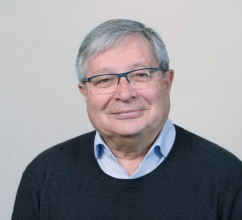
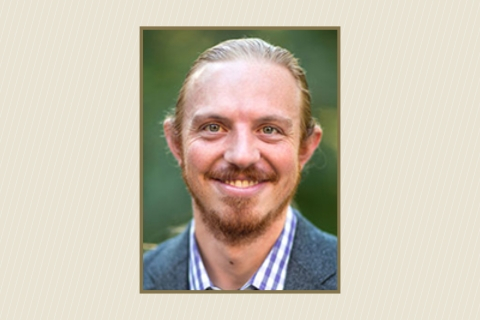
Leon Culbertson is the Dean of the Graduate School, overseeing academic research and postgraduate programs. His work focuses on intersections of philosophy, sport ethics, and educational theory. He has published extensively on topics like performance enhancement, aesthetics, and Wittgensteinian philosophy. Research Interests: Philosophy of Mind, Ethics in Sport, Analytic Philosophy Notable Contributions: Critiques of scientism in athlete welfare, explorations of aesthetic concepts in drama His recent publications address academic quality metrics and the philosophical underpinnings of understanding/learning processes. Active in collaborative research across multiple countries, though specific partnerships remain unspecified.
Stan Matwin is a Professor and Director of the Institute for Big Data Analytics at the Faculty of Computer Science, Dalhousie University. He is also affiliated with the Institute for Computer Science of the Polish Academy of Sciences. Previously, he was a Distinguished University Professor at the University of Ottawa and has held academic positions at Warsaw University, University of Guelph, Acadia University, and visiting roles across the U.S., Europe, and Latin America. His educational background includes a Ph.D. from Warsaw University (1977) and a D.Sc. (habilitation) from the Polish Academy of Sciences (2010). Stan Matwin's research focuses on Artificial Intelligence , Machine Learning , Data Mining , Text Mining and Analytics , Big Data , and Data Privacy . He is internationally recognized for pioneering work in visual text analytics and the application of machine learning to real-world data challenges. His work bridges academic research and industrial innovation, particularly in technology transfer and data-driven applications. The publications linked from his profile are inaccessible due to a server restriction (403 Forbidden), but he is known to have authored or co-authored over 250 research papers in top-tier venues. Scientific Awards and Honors: Canada Research Chair (Tier 1) in Visual Text Analytics Fellow of the European Coordinating Committee on Artificial Intelligence (ECCAI) Fellow of the Canadian Artificial Intelligence Association (CAIAC) Ontario Champion of Innovation Stan Matwin has secured significant research funding from organizations including the Canada Research Chairs program, Canada Foundation for Innovation (CFI) , NSERC , Ontario Centres of Excellence , and the Canadian Bureau for International Education . He has supervised numerous graduate students and led major research initiatives. He was former president of the Canadian Artificial Intelligence Association (CAIAC) and IFIP Working Group 12.2 on Machine Learning. He is also an active innovator, co-founding technology companies such as Distil Interactive Inc. and Devera Logic Inc. He leads the Big Data Analytics, AI & Machine Learning research cluster at Dalhousie and continues to be a key figure in advancing data science research and training through the Institute for Big Data Analytics.
Dr. Ahmed Mohammed is an Associate Professor in Supply Chain Management and Programme Director for the MSc Supply Chain Management at the University of Birmingham, Dubai Campus. He is affiliated with the Management Department and brings over 13 years of combined academic and industrial experience from the UK and the Middle East. Educational Background: Ph.D. in Engineering, University of Portsmouth, UK (2017) MSc in Communication Network Planning and Management, University of Portsmouth, UK (2010) Lean Six Sigma – Black Belt (2022) Fellow, Higher Education Academy, UK (2022) Dr. Mohammed's research focuses on the modeling and optimization of supply chains with an emphasis on sustainability and resilience. His work spans areas such as multi-tier supplier selection, circular economy, food waste management, Industry 4.0 integration, and last-mile logistics. He employs advanced methodologies including multi-criteria decision-making (MCDM) techniques like AHP, TOPSIS, and VIKOR, and develops hybrid optimization models for complex supply chain challenges. His recent publications, spanning from 2021 to 2023, reflect a strong trend in resilient and sustainable supply chain network design, pandemic-related disruptions, digital sourcing, and risk modeling under uncertainty. These works appear in high-impact journals such as International Journal of Production Research , Transportation Research Part E , Computers & Industrial Engineering , and Expert Systems with Applications . Scientific Awards and Recognitions: Fellow, Higher Education Academy, UK (2022) Lean Six Sigma Black Belt (2022) Fellow Member, Chartered Institute of Logistics and Transport (CILT) Member, MCDM Society Dr. Mohammed has secured multiple research grants from MOHERI, Oman, including projects on last-mile logistics sustainability, supply chain resilience, and online food waste management. He actively supervises research students and serves as a reviewer for leading journals including International Journal of Production Economics (IJPE) , Transportation Research Part D (TRD) , Omega , and International Journal of Production Research (IJPR) . He is also an external academic program reviewer for logistics-related programs and contributes to the academic community through peer review and collaborative research.
Julia Affolderbach serves as Professor for Sustainability Transitions at the University of Trier's Faculty of Spatial and Environmental Sciences since 2023, leading the Sustainable Regional and Urban Development department. Previously, she held Assistant Professor positions at Trier (2020-2023) and Lecturer/Senior Lecturer roles at the University of Hull (2014-2020), following postdoctoral work at the University of Luxembourg (2009-2014). Her educational foundation includes a PhD in Geography from Simon Fraser University (2003-2009) and a Diploma in Geography, Botany, and Geology from the University of Cologne and Simon Fraser University (1995-2002). Prof. Affolderbach's research centers on sustainability transitions through urban and regional development lenses, with critical focus on green building , plastics/waste management , and lived sustainabilities . Her methodological approach integrates political economy and environmental economic geography frameworks to examine how global sustainability discourses interact with local practices across Europe, North America, and Australia. This work emphasizes transformative science applications in real-world contexts. Her extensive publication record demonstrates consistent evolution from foundational work on environmental bargaining (2011-2012) toward contemporary analyses of circular economy justice (2021-2024), with green building transitions remaining a central thread. Recent scholarship increasingly addresses plastic crises through educational frameworks and examines digital sharing economies' role in just transitions. Prof. Affolderbach actively shapes academic discourse through committee leadership including Trier University's Senate Committee for Quality Management and Center for European Studies Steering Committee. Her research program attracts significant international funding from Dutch Research Council, ESRC UK, German Research Foundation, and NSF USA grants. She teaches core courses including Transitions: Geography and Education for Sustainable Development: Plastics while supervising graduate theses. She directs the Sustainable Regional and Urban Development research team, fostering interdisciplinary collaboration on sustainability challenges through interactive knowledge generation approaches that bridge academic and practical domains.
Rüdiger Lunde is a Professor at Technische Hochschule Ulm , currently serving as Dean of Studies for Information Systems since September 2019. He previously chaired the Examination Board for programs including INF, CTS, TI, ICS, DSM, MD, and IS from 2014 to 2019. His primary research areas include Software Engineering , Intelligent Systems , and Model-Based Systems Engineering , with a focus on automated safety analysis and technical system simulation. Current Role: Dean of Studies for Information Systems Prior Role: Chair of Examination Board (2014–2019) His research leverages the smartIflow framework for safety tasks such as Failure Mode and Effects Analysis (FMEA) and Fault Tree Analysis (FTA). He has contributed to formal verification methods using Computation Tree Logic (CTL) and explored temporal reasoning across varying time scales. Recent trends in his work include: Automated safety analysis in technical systems Integration of SysML for artifact generation Model decomposition techniques for complex systems Scientific awards: Best Paper Award at International Workshop on Applications in Information Technology (IWAIT-2015) Contact: Ruediger.Lunde@thu.de | Room: A306a | Consultation hours: By appointment via email.
Debbie Becher is an Associate Professor of Sociology at Barnard College, Columbia University, with a research focus at the intersection of economic sociology, the sociology of law, and urban and rural sociology. She is affiliated with the Institute for Social and Economic Research and Policy (ISERP) and the Barnard Center for Research on Women, and teaches courses in law and society, urban inequality, social theory, and social justice. Her research centers on private property, particularly the social and institutional dynamics of land ownership, eminent domain, and resource extraction. She explores how property rights are constructed, contested, and valued in both urban and rural contexts, emphasizing the role of emotional, financial, and cognitive investment in shaping property claims. Author of Private Property and Public Power: Eminent Domain in Philadelphia (Oxford University Press, 2014) Current book project: A Fractured Nation (under contract with Oxford University Press), examining property rights in oil extraction zones in the Northern Plains Research investigates how institutions enforce a 'logic of investment' in property, shaping legitimacy and claims of injustice Focus on how power imbalances and uncertainty affect property negotiations in energy development Her recent publications analyze land inequalities, property and identity, race in eminent domain, and the valuation politics of privatization. The articles reflect a consistent engagement with legal institutions, social justice, and the lived experience of property. Zelizer Award for Best Book in Economic Sociology (2016, Co-Winner) Hart Socio-Legal Prize for Early Career Academics (2015) National Science Foundation Grant (2015) Visiting Scholar, American Academy of Arts and Sciences (2009–10) Fellow, Brookings Institution, AAUW, Princeton University programs Debbie Becher has advised numerous students and contributed to public discourse through interviews, podcasts, and book reviews. Her work is supported by competitive grants and fellowships, reflecting its interdisciplinary reach and scholarly impact. She is actively engaged in mentoring and public sociology, connecting academic research to broader social issues. She is involved in interdisciplinary research teams through ISERP and the Barnard Center for Research on Women, contributing to collaborative projects on urban citizenship, social inequality, and legal sociology.
Marianna Nicolosi Asmundo is an Associate Professor of Mathematical Logic (MAT/01) at the Department of Mathematics and Computer Science (DMI) of the University of Catania. She earned her PhD from the same university in 2003 and serves as a proposing member of CINUM - Interdepartmental Center for Humanistic Computing. Teaches undergraduate and graduate programs in Mathematics Master's Degree Programs in Computer Science Textual Sciences for Digital Professions (Department of Humanities) Her research spans automatic deduction, tableaux-based deductive systems, decision procedures in elementary set theory and non-classical logic, interactive theorem proving, knowledge bases, ontologies, and reasoning services for the semantic web. Recent publications emphasize ontology interoperability, blockchain-based knowledge representation, and set-theoretic reasoning frameworks. She contributes to ontologies for cultural heritage (Saint Gall monastery modeling, archaeological Sicilian landscapes) and blockchain applications. Collaborates extensively with researchers like D. Cantone and D.F. Santamaria on description logic systems. Active member of CINUM - Interdepartmental Center for Humanistic Computing Supervises thesis projects on semantic web and blockchain ontologies
Yiannis Giannakopoulos is a Senior Lecturer (equivalent to Associate Professor) in Algorithms and Complexity at the University of Glasgow and a Turing Fellow. He previously held faculty positions at FAU Erlangen-Nürnberg and TU Munich, and was a postdoctoral researcher at TU Munich and the University of Liverpool. PhD (DPhil) in Computer Science, University of Oxford, advised by Elias Koutsoupias MSc in Logic, Algorithms and Computation (MPLA), University of Athens BSc in Mathematics, University of Athens His research centers on algorithms, complexity, and optimization, with a strong emphasis on algorithmic game theory. Key topics include auction design, mechanism design, equilibrium computation, congestion games, and computational economics. His work bridges theoretical computer science and economic theory, focusing on the algorithmic aspects of strategic behavior. The recent publications highlight a consistent focus on equilibrium computation in auctions and congestion games, optimal mechanism design, and complexity analysis. Trends include smoothed complexity, approximation algorithms for equilibria, robust revenue maximization, and structural analysis of inefficiency in games. His work frequently appears in top venues such as EC, SAGT, ICALP, SICOMP, and MOR. Scientific Awards: Best Paper Award at ICALP 2015 for 'Selling Two Goods Optimally' He is actively supervising PhD students, including Johannes Hahn, and has mentored several others such as Charalampos Kokkalis and Alexander Grosz. He is involved in academic service, including organizing the 1st UK Workshop for Junior Researchers in Economics and Computation (2025) and serving on the program committee of SAGT 2025. PhD positions are currently available with funding for UK students. He is affiliated with research groups in Algorithms & Complexity and has collaborated extensively with leading researchers in the field, including Aris Filos-Ratsikas, Elias Koutsoupias, and Diogo Poças. His work is supported by institutions such as the Simons Foundation.
Matteo Acclavio is an Assistant Professor in Computer Science at the School of Engineering and Informatics, University of Sussex, affiliated with the Foundations of Software Systems (FoSS) research group. A logician specializing in proof theory and its applications to computer science, his work bridges mathematical logic with concurrency theory and process calculi. Education: PhD in Mathematics, Aix-Marseille University, France Master in Discrete Mathematics and Foundations of Theoretical Computer Science, Aix-Marseille University Master in Mathematics, Roma Tre University, Italy Bachelor in Mathematics, Roma Tre University His research focuses on graphical proof systems, linear logic, modal logic, and concurrency theory. Publications highlight contributions to deep inference, sequent calculus, and the intersection of logic with distributed systems. Recent work explores logical frameworks for concurrency, such as choreographic programming, and graphical models for proof systems. He teaches courses like Operating Systems and maintains active collaborations in theoretical computer science.
Khalil Esper is a Researcher at the Department of Computer Science, Faculty of Engineering, Friedrich-Alexander-University Erlangen-Nuremberg (FAU), where he works at the Chair of Computer Science 12 (Hardware-Software Co-Design). His research focuses on verification, energy optimization, and runtime requirement enforcement in embedded systems and MPSoCs. His educational background includes: Informatics Engineering from Aleppo University, Syria (2010-2015) European Master in Embedded Computing Systems (EMECS) from Rhineland-Palatinate University of Technology Kaiserslautern-Landau (Germany) and Norwegian University of Science and Technology (Norway) (2017-2019) Esper's research interests center around verification and model checking, energy optimization on MPSoC, real-time systems and embedded systems, and autonomic computing. His work particularly focuses on runtime requirement enforcement mechanisms for non-functional properties in multi-processor systems-on-chip, with applications extending to medical devices and human-robot interaction systems. He has developed approaches using finite state machines, reinforcement learning, and evolutionary algorithms to ensure system properties are maintained during execution. His publication record shows a strong trend toward applying formal methods and runtime enforcement techniques to increasingly complex systems, with recent work expanding into safety-critical applications like orthoses and human-robot interaction. The interdisciplinary nature of his research bridges computer science, embedded systems engineering, and biomedical applications. Esper has supervised multiple theses including: Sascha H.: Runtime Requirement Enforcement of Non-Functional Requirements on MPSoCs Using Fuzzy Logic (2022) Iana S.: Feedback-Based Control of Non-functional Program Execution Properties on Linux (2023) Philipp L.: Runtime Requirement Enforcement of Functional and Non-Functional Requirements of a Knee Orthosis Based on a Digital Twin (2024) Avinash N.: Runtime Requirement Enforcement of Safety Properties of an Ankle Orthosis Based on a Digital Twin (2024) Zhiyi T.: Generation of Environment FSMs Using Machine Learning Techniques (2025) Moustafa A.: Runtime Requirement Enforcement of Safety Properties of Human-Robot Interaction Based on a Digital Twin (2025) Florian K.: Runtime Requirement Enforcement of Safety Properties of Human-Robot Interaction (2025) He has been actively teaching courses on Approximate Computing and Embedded Systems since the 2021/2022 academic year, demonstrating his commitment to academic instruction alongside his research activities. Esper is involved in the InvasIC research project, part of the DFG Transregional Collaborative Research Center 89 on Invasive Computing, which explores novel approaches to resource management in parallel computing systems.
Henning Basold is affiliated with ENS Lyon , where he contributes as a Researcher . His work centers on theoretical computer science, particularly coinductive logic and corecursive proof search in programming languages and formal methods. In 2019, he authored two pivotal publications at ETAPS 2019 conferences: Coinduction in Uniform: Foundations for Corecursive Proof Search with Horn Clauses (ESOP 2019) Coinduction in Uniform: what's next? (HCVS 2019) These works explore coinductive techniques, Horn clauses, and future directions in formal verification and proof theory.
Vera Tripodi is an Associate Professor at the Department of Electronics and Telecommunications (DET) at Politecnico di Torino. Her academic career spans multiple institutions including the University of Milan 'La Statale,' University of Turin, University of Barcelona, University of Oslo, and Columbia University. She serves on the Single Guarantee Committee and is actively involved in gender equality initiatives. Dr. Tripodi earned her PhD in Logic and Epistemology from Sapienza University of Rome. Her academic journey includes postdoctoral research positions at prestigious international institutions and a research position at the University of Milan from July 2021 to March 2022. Her research focuses on the intersection of philosophy, technology, and gender. She specializes in bioethics, ethics of technology, feminist philosophy and ethics, and social ontology. Her work addresses critical contemporary issues including climate change ethics, reproductive technologies, AI ethics, and gender equality in philosophy and academia. She has made significant contributions to understanding the ethical dimensions of emerging technologies and their social implications. Dr. Tripodi's publication record demonstrates a consistent focus on ethical frameworks for technological development, gender issues in philosophy and society, and the philosophical implications of medical and technological innovations. Her work bridges theoretical philosophy with practical ethical concerns in rapidly evolving technological landscapes. Vice President of SWIP Italia (Society for Women in Philosophy) for two terms (2018-2021, 2021-2024) Member of the Bioethics Committee since 2019 Member of SIFA (Italian Society of Analytical Philosophy) since 2008 Associate Editor of AESTHETICS MAGAZINE since 2022 Member of the APHEX editorial board since 2010 Dr. Tripodi advises PhD students in philosophy programs at the University of Pavia and University of Eastern Piedmont. She teaches courses on Research Ethics in Dual-Use Technology, Gender and Diversity in Research, Ethics of Technology, and Bio- and Nanotechnologies in Medicine across various engineering programs at Politecnico di Torino. She also serves on course committees for Biomedical Engineering and Electronic, Telecommunications and Physics Engineering programs. She leads the NOW research project (2023-2025) titled 'Understanding Natural History: Nature, Evolution and Human Beings. A New Philosophical Framework' funded through the National Research PRIN program.
Ross Horne is a Senior Lecturer in the Department of Computer & Information Sciences at the University of Strathclyde, Glasgow, United Kingdom. He is a member of the StrathCyber and Mathematically Structured Programming research groups. Education: PhD (University of Southampton, 2012), BA (Oxford University, 2005) Prior Appointments: Research Fellow at University of Luxembourg (2018-2023), Senior Research Fellow at Nanyang Technological University (2015-2018), Associate Professor at Kazakh-British Technical University (2012-2015) Research Interests: Dr. Horne's work focuses on security and privacy protocols for digital systems, particularly addressing threats in payment technologies, ePassports, and decentralized identity management (e.g., Solid protocol). His theoretical contributions bridge concurrency theory, proof theory, and logic through applications to security verification and process calculi. Developed formal models for unlinkability in EMV payment protocols Created intuitionistic logical frameworks for process equivalence Explored graphical proof systems beyond formulaic representations Investigated legal-compliant AI for space systems (CubeSat anomaly detection) Scientific Contributions: He has published extensively in top venues including ACM CCS, IEEE CSF, LICS, and CONCUR. His 2017 CONCUR best paper introduced intuitionistic characterizations of bisimilarity. Principal Investigator for EU COST Action on Distributed Knowledge Graphs Co-developed privacy models adopted in Luxembourg parliamentary responses Advising: Currently accepting PhD students with strong mathematical and computer science skills for research in security/privacy of emerging systems. Former student Semen Yurkov completed a thesis on privacy-preserving smart card payments. Interdisciplinary Work: Collaborates with space lawyers through the Interdisciplinary Master Program in Space Resources. Projects include AI for CubeSat reliability and legal-compliant software certification frameworks.
Jens Michaelis is a Professor at the Faculty of Linguistics and Literary Studies, Bielefeld University, specializing in Computational Linguistics, Text Technology, and Linguistic Creativity. He serves as Deputy Head of the Department of Linguistics, Clinical Linguistics, Text Technology and Computational Linguistics, and provides academic advising for Computational Linguistics programs. His office is located at UHG U5-231, with contact details including telephone +49 521 106-6915 and email jens.michaelis@uni-bielefeld.de . Maintaining active research roles, he leads project B01 'Coercion as a creative mechanism in compositional interpretation' within the SFB 1646: Linguistic Creativity in Communication. His teaching responsibilities span modules like 23-CL-BaCL2.1 Selected methodological aspects 23-CL-BaCL5 Advanced Module 23-CL-BaCL6 Project Module 23-LIN-Ma3.1 Basics of Computational Linguistics 23-MeWi-HM3a_a Mathematical-linguistic language modeling across both undergraduate and graduate programs. His scholarly work focuses on formal grammar properties, syntactic mechanisms, and computational modeling of language. As an ordinary member of the Faculty Conference and Habilitation Committee, he contributes to academic governance while maintaining an extensive publication record in mathematical linguistics, minimalist grammars, and formal language theory.
Cole A. DeForest is a Weyerhaeuser Endowed Professor and Associate Professor in the Department of Chemical Engineering at the University of Washington, where he also serves as Associate Chair for Graduate Studies. Additionally, he holds appointments as Associate Professor in Bioengineering and Adjunct Associate Professor in Chemistry, and is the Director of Education at the Molecular Engineering & Sciences Institute and a Core Faculty member at the Institute for Stem Cell & Regenerative Medicine. Dr. DeForest earned his Ph.D. in Chemical and Biological Engineering from the University of Colorado, Boulder in 2011 and completed postdoctoral training at Caltech before joining the UW faculty in 2014. His research focuses on developing user-programmable hydrogels with tunable biochemical and biophysical properties, utilizing cytocompatible bioorthogonal chemistries, particularly those initiated with light. His work spans several key areas including User-Programmable Biomaterials for Directing Dynamic Stem Cell Fate, Biomolecular and Tissue Engineering, Controlled Delivery of Therapeutics to Treat Disease, and Tool Development for Enhanced Proteomic Studies. His publication record demonstrates consistent high-impact contributions to biomaterials science, with numerous papers in Nature family journals, JACS, and Advanced Materials. His research approach integrates principles of rational design with fundamental concepts from material science, synthetic chemistry, and stem cell biology to create next-generation materials addressing health-related problems. UW College of Engineering Junior Faculty Award (2020) Society for Biomaterials Young Investigator Award (2020) Society for Biomaterials Mid-Career Award (2025) NSF CAREER Award (2017) UW Presidential Distinguished Teaching Award (2016) 35 Under 35 Award, AIChE Bioengineering Category (2017) Dr. DeForest has mentored numerous graduate students, postdocs, and undergraduates, many of whom have received prestigious fellowships including NSF GRFP, NIH F30, and HHMI Gilliam Fellowships. His lab has secured significant funding including collaborative grants from the Institute for Translational Health Sciences, the Institute for Stem Cells & Regenerative Medicine, and the Allen Institute for Brain Science. His educational leadership extends to directing the MolES Education program and teaching courses including Biological Frameworks for Engineers and Biomaterials Seminar.