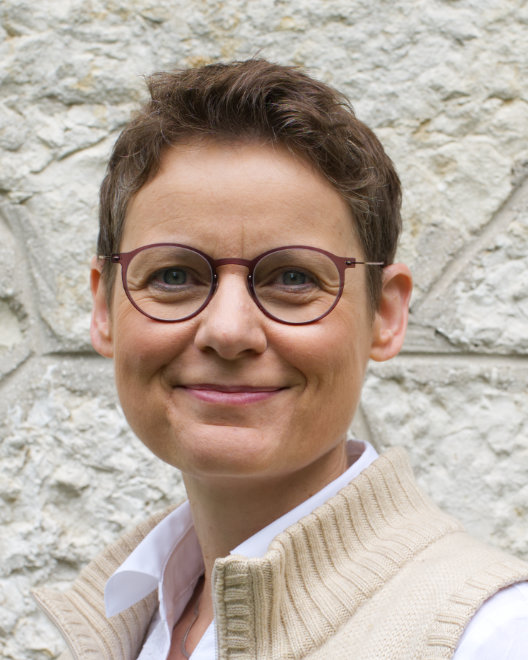
Katia Saporiti is a Full Professor of Philosophy with a focus on the History of Philosophy at the University of Zurich since 2011. She serves as Program Director and Deputy Head of the Department of Philosophy. Her research spans early modern and 20th-century philosophy, particularly epistemology, philosophy of language, and philosophy of mind, engaging with thinkers such as Descartes, Leibniz, Spinoza, Locke, Hume, Reid, Kant, and Wittgenstein. Full Professor, University of Zurich (2011–present) Research Councilor, Swiss National Science Foundation (2008–2015) Extraordinaria, University of Zurich (2004–2010) Her current research explores the relationship between ideas, images, and metaphors in early modern theories, the concept of res cogitans, and Berkeley’s argument for idealism. She also investigates tensions between first-person authority and skeptical/externalist positions in epistemology and philosophy of language. Recent publications address topics like Berkeley’s idealism, Locke’s empiricism, and the role of memory and representation in philosophy. Her work connects historical analysis with contemporary debates, emphasizing the contingency of philosophical problems and the utility of historical inquiry. Katia Saporiti teaches courses in epistemology, metaphysics, philosophy of language, and history of philosophy (17th–20th centuries). She holds a PhD and MA from Ludwig Maximilian University (LMU) Munich and has been an active academic since the 1990s.
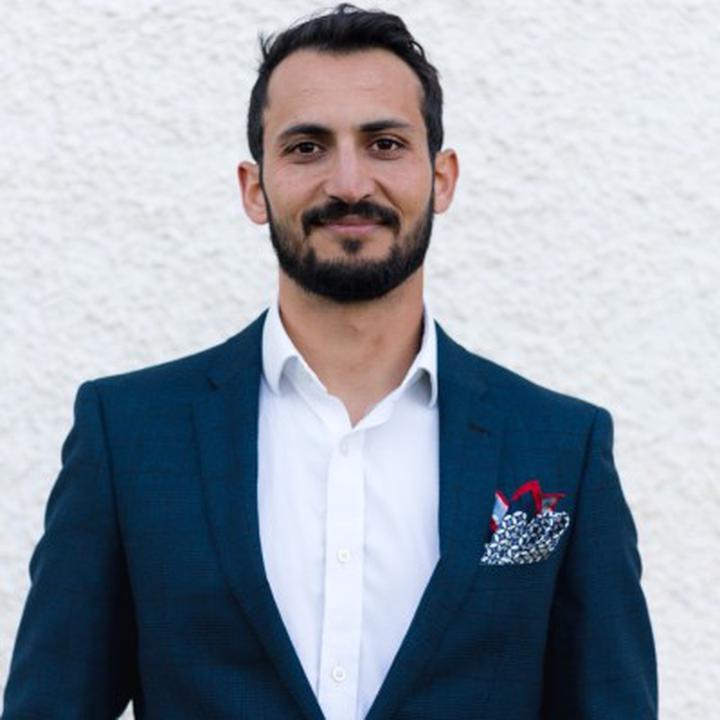
Juan Carlos Farah serves as both a Scientific Collaborator and Lecturer at the Fribourg School of Engineering and Architecture, part of the University of Applied Sciences and Arts of Western Switzerland (HES-SO). His academic appointments indicate an active role in both research and teaching within the institution's engineering and technology programs. Dr. Farah holds a PhD in Robotics, Control, and Intelligent Systems from the École Polytechnique Fédérale de Lausanne (EPFL), a Master of Science in Computing from Imperial College London, and a Bachelor of Arts in Economics from Harvard University. This interdisciplinary background spans computer science, engineering, and economics, providing a strong foundation for his current research endeavors. His research focuses on the intersection of human-computer interaction, social neuroscience, and information theory, with particular emphasis on how artificial intelligence with anthropomorphic traits affects human behavior and learning. Farah has made significant contributions to educational technology, especially in the development and evaluation of conversational agents for learning environments. His work examines how chatbots and large language models can be effectively integrated into educational contexts to support students while maintaining pedagogical integrity. An analysis of his recent publications reveals a strong trajectory in human-AI interaction within educational settings, with increasing focus on large language models since their emergence. His research spans multiple dimensions of educational technology including code review systems, computational thinking development, and the psychological impacts of technology on learners. The interdisciplinary nature of his work connects computer science, cognitive science, and educational theory. While no specific scientific awards are mentioned in the provided documentation, Dr. Farah's research has been published in reputable journals and presented at significant international conferences in educational technology and human-computer interaction. His research methodology combines both qualitative and quantitative approaches, often conducting controlled experiments with student populations to evaluate the effectiveness of educational technologies. Farah frequently collaborates with colleagues from multiple institutions, suggesting strong interdisciplinary research networks. His work appears to focus on practical applications of technology in real educational settings rather than purely theoretical investigations. Dr. Farah's research program appears centered around developing frameworks and tools for educational technology, with particular attention to how conversational agents can be designed to support specific learning objectives. His TRACE model for educational chatbot design and work on code review notebooks represent structured approaches to integrating AI technologies into pedagogical practices while addressing the unique challenges of educational contexts.
Matthias Stürmer serves as a Professor at Bern University of Applied Sciences (BFH) within the School of Management and Head of the Institute for Public Sector Transformation (IPST). He concurrently holds a lecturer position at the University of Bern. His professional identity centers on Swiss digital governance initiatives, with active leadership roles in @Parldigi, @DigitalImpactCH, @CH_Open, and @OpendataCH advocating for open source, open data, and transparent public sector innovation. His research program bridges legal technology and digital governance, specializing in multilingual (German/French/Italian) processing of Swiss jurisprudence. Core focus areas include developing AI systems for judicial summarization and criticality prediction, advancing digital sovereignty frameworks, and analyzing sustainable public procurement practices. He investigates the tension between open justice principles and privacy preservation in court documentation, while pioneering methods for anonymizing legal texts against re-identification threats from large language models. Stürmer's publication trajectory reveals a strategic shift toward legal AI applications since 2020, with 12 of his 15 most recent works addressing multilingual legal processing challenges. His scholarship consistently targets Swiss institutional contexts, creating specialized datasets like Multilegalpile and Lextreme while examining practical implementation barriers for open source adoption in public administration. As director of IPST at BFH, he leads institutional efforts to transform public sector services through open standards and collaborative governance models. His team develops practical frameworks for digital sovereignty implementation and sustainable ICT procurement, directly influencing Swiss federal policies on open data and public sector technology adoption.
Colin Porlezza is Associate Professor of Digital Journalism and Director of the Institute of Media and Journalism (IMeG) at the Università della Svizzera italiana (USI), Faculty of Communication, Culture and Society. He also leads the European Journalism Observatory (EJO) and holds an Honorary Senior Research Fellow position at City, University of London. Previously, he was a Research Fellow at Columbia University’s Tow Center for Digital Journalism. PhD in Communication Sciences – Università della Svizzera italiana Licentiate (BA/MA) in Communication Sciences – USI, specialization in Mass Communication and New Media Work experience at University of Zurich and University of Neuchâtel His research centers on digital journalism, with emphasis on automated journalism, artificial intelligence, datafication, disinformation, and journalistic ethics. He investigates how digital technologies reshape journalistic roles, norms, and practices, particularly in public service and hybrid news environments. His work bridges technical innovation with ethical and societal implications. The 15 most recent articles highlight a consistent trajectory in AI and journalism, focusing on automation, accountability, verification tools, and innovation. Keywords span communication, AI, ethics, and media policy, while subfields include algorithmic transparency, hybrid workflows, fact-checking, and value-sensitive design—reflecting a strong interdisciplinary focus on responsible technological integration in newsrooms. Knight News Innovation Fellowship Prof. Porlezza has secured major research grants from the Swiss National Science Foundation, Horizon 2020, Google Digital News Initiative, and OFCOM. He leads the JoIn-DemoS and Diacomet projects and previously directed Designing Hybrid Journalism and DMINR. He advises PhD students as Director of the PhD Program and collaborates with media organizations like SRG SSR and Tamedia. His advisory roles include the Austrian National Journalists' Study and Innovamedia network. He leads the Institute of Media and Journalism (IMeG) and the European Journalism Observatory (EJO), fostering collaborative research across Europe. These units serve as hubs for innovation, policy dialogue, and knowledge transfer between academia and professional journalism.
Patrick Eugster is a full professor at the Università della Svizzera italiana (USI) and leads the Software Systems (SWYSTEMS) group within the Computer Systems Institute . He has held academic positions at Purdue University, TU Darmstadt, and MIT as a visiting faculty. His research focuses on distributed software systems , addressing challenges in consistency, efficiency, and security in decentralized environments. Current affiliation: USI Faculty of Informatics Prior affiliations: Purdue University (2005-2016), TU Darmstadt (2014-2017), MIT (2012/2013) Research Interests Distributed Systems : Investigating reliable failure detection, deterministic data paths for 6G, and hybrid synchronous/asynchronous architectures. Network Innovation : Optimizing TCAM encoding, analyzing microbursts, and developing quantum network protocols. Security & Verification : Creating confidentiality-preserving mechanisms and formal verification approaches for distributed software. Scientific Contributions 2025: Best paper at TACAS on Horn clause validation 2025: IFIP Jean-Claude Laprie Award for dependable computing 2024: Key papers at IEEE Network, ACM PLDI, and IEEE INFOCOM Funding & Collaborations Swiss National Science Foundation grants #200021_197353 and #200021_192121 EU Horizon Europe MSCA staff exchange project CloudStars Industry partners: Cisco, Amazon AWS, Facebook Research, SAP, Northrop Grumman Cybersecurity Research Consortium Labs & Teams Directs the SWYSTEMS group, which includes postdocs like Sina Darabi and Shamiek Mangipudi, PhD students such as Anita Buckley and Jérôme Graf, and alumni who have become faculty at institutions like Télécom Paris and University of Southern California.
Ilija Bogunovic is an Assistant Professor (UK Lecturer) in the Department of Electronic and Electrical Engineering at University College London (UCL), Faculty of Engineering Sciences. His research focuses on algorithmic sequential decision-making for robust, reliable, and safe artificial intelligence, with applications in large language model alignment, reinforcement learning, and human feedback integration. His research interests lie at the intersection of machine learning, optimization, and decision theory. He investigates robustness in Bayesian optimization, bandits, and reinforcement learning under adversarial attacks, model misspecification, and distributional shifts. His work spans both theoretical foundations and real-world applications in energy systems, mobility, and AI safety. A central theme is developing algorithms that are provably robust and efficient in uncertain and potentially corrupted environments. The recent publications highlight a strong trend in robust decision-making, particularly in reinforcement learning and preference optimization. Key themes include adversarial robustness in large models, distributional robustness in RL, safe multi-agent systems, and robust Bayesian optimization. The work frequently involves theoretical analysis of regret and sample complexity, combined with practical algorithm design for high-impact applications. Scientific Awards: Google Research Scholar Program Award (Machine Learning & Data Mining), 2023 EPSRC New Investigator Award, 2023 Ilija Bogunovic actively supervises PhD and MSc students, with several of his advisees leading papers accepted to top venues like NeurIPS and ICLR. He has secured competitive research grants, including the EPSRC New Investigator Award, to support his work on robust decision-making. He is building a research team focused on robust and safe AI. He leads a research team and has initiated an online reading group on modern adaptive experimental design and active learning, fostering a collaborative research environment.
Michel Schinz serves as a Lecturer at École Polytechnique Fédérale de Lausanne (EPFL) in the School of Computer and Communication Sciences, holding dual affiliations with the Department of Systems and Networking (SIN) and Department of Software and Systems Engineering (SSC). His roles include teaching responsibilities in SIN-ENS and SSC-ENS units, and scientific duties within the SIN-GE administrative division at BC 140, Station 14, Lausanne. His pedagogical focus centers on core software development methodologies, particularly evident in his courses Practice of object-oriented programming—where students implement Java projects exploring collections and design patterns—and Advanced compiler construction, which covers implementation techniques for functional programming languages through hands-on compiler development. These offerings highlight his expertise in programming language theory and practical software engineering. No information regarding academic advising, research grants, laboratory leadership, or scientific awards is available in the provided materials, as the profile emphasizes teaching and administrative functions without research output documentation.
Jean-Cédric Chappelier is a Senior Lecturer and Researcher at École Polytechnique Fédérale de Lausanne (EPFL) in the School of Computer and Communication Sciences. He works in computational linguistics and natural language processing, with a focus on robust parsing techniques, semantic indexing, and clustering algorithms. His research interests span computational linguistics, natural language processing, machine learning, tree substitution grammars, and semantic indexing. His publications from 2000-2006 demonstrate expertise in stochastic parsing, ontology-based indexing, and community structure analysis in complex networks. He has supervised multiple EPFL PhD students including Florian Seydoux and Emmanuel Eckard. Jean-Cédric holds an Ms.Sci. and Ph.D. in Computer Science from École Nationale Supérieure des Télécommunications de Paris. He teaches courses on object-oriented programming, computer systems, and natural language processing at EPFL.
Sebastian Probst is a Professor at the Geneva School of Health (Haute école de santé - Genève) within the Health faculty and Nursing department, with additional affiliation at the University of Geneva Medical Faculty. His primary research focuses on wound care, particularly venous leg ulcers, chronic wound management, and patient education. His research interests include qualitative and mixed-methods approaches to understanding patient experiences with chronic wounds, empathy in healthcare delivery, and the development of interdisciplinary educational interventions to improve therapy adherence. He has led multiple significant research projects including the development of an interdisciplinary education intervention for leg ulcer patients (2016-2027), an AI-powered mobile application for wound care monitoring (2022-2024), and a multicenter randomized controlled trial on the impact of pluridisciplinary education programs on venous leg ulcer size reduction (2020-2024). Probst's recent publications (2024-2025) demonstrate a strong focus on patient-centered care, with particular emphasis on empathy in wound care, pain management for venous leg ulcer patients, and innovative approaches to chronic wound management. His work spans clinical research, technology integration, and theoretical development in nursing science. 2025: Published 15 significant papers including thematic analyses of patient pain experiences, studies on empathy's role in wound care, and systematic reviews on mobile applications for wound management 2024: Contributed to consensus documents on venous and arteriovenous leg ulcer management and co-created algorithms for wound care mobile applications targeting new graduate nurses His research portfolio includes substantial funding from organizations including EBNET-STIFTUNG, InnoSuisse, IMITO AG, and the HES-SO Rectorat, with project amounts ranging from 3,300 CHF to over 1.2 million CHF.
Fazl Barez is a Senior Research Fellow at the University of Oxford leading research on Technical AI Safety and Governance. He is also affiliated with Cambridge's CSER, NTU's Digital Trust Centre, Edinburgh's Informatics, and is a member of ELLIS. Previously, he was a researcher at Amazon and Huawei, and Co-director and Head of Research at Apart Research. He currently serves as an advisor to Martian and has worked with Anthropic's Alignment team (2024-2025). University of Oxford: Senior Research Fellow Cambridge CSER: Affiliate NTU Digital Trust Centre: Affiliate Edinburgh Informatics: Affiliate ELLIS: Member Anthropic: Alignment Team Collaborator (2024-2025) Martian: Advisor Dr. Barez's research focuses on ensuring AI systems remain safe, interpretable, and beneficial as they grow in capability. His work spans four interconnected areas: Interpretability (developing methods to reveal how AI models process information internally), Safety and Alignment (creating tools to detect and address deceptive behaviors), Technical Governance (translating technical insights into governance frameworks), and Societal Impact (examining broader implications of AI on society). His research is funded by OpenAI, Anthropic, Schmidt Sciences, Future of Life Institute, and NVIDIA. The trends in Dr. Barez's publications show a consistent focus on making AI systems more transparent and safer. His recent work explores mechanistic interpretability techniques like sparse autoencoders, investigates how language models relearn removed concepts, examines machine unlearning for safety applications, and develops frameworks for value alignment measurement. His publications appear in top venues including NeurIPS, ICML, ICLR, ACL, and EMNLP, reflecting his significant contributions to both theoretical and practical aspects of AI safety. Future of Humanity Institute PhD Affiliate (2022-2024) EPSRC PhD Student Scholarship (2019-2023) MSc Scholarship (2017-2018) BA (Hons) Sports Performance Scholarship (2013-2017) Dr. Barez has mentored numerous students who have gone on to prominent positions at organizations like Microsoft Research, DeepMind, and Martian. His research is generously funded by major AI organizations including OpenAI, Anthropic, Schmidt Sciences, Future of Life Institute, and NVIDIA. He has served as an Area Chair for ACL 2025 and on program committees for major conferences including ECAI 2024. His work has practical impact, with algorithms like N2G adopted by OpenAI to evaluate sparse autoencoders for interpretability. Dr. Barez leads research at the intersection of technical AI safety and governance. His work connects with multiple research groups including the UK AI Security Institute, Alan Turing Institute, and various university centers. He has co-organized workshops such as the first Mechanistic Interpretability workshop at ICML 2024 and actively collaborates with researchers across the AI safety ecosystem. His research bridges the gap between theoretical safety research and practical implementation in real-world AI systems.
Elizabeth M. Daly is a Research Scientist at IBM Research Laboratory, Dublin, and an Adjunct Assistant Professor at Trinity College Dublin's School of Computer Science and Statistics. Her work focuses on interactive AI , human-centered design , and fairness in algorithmic systems . She contributes to AI governance and LLM safeguarding through projects like AutoFair and Granite Guardian. Ph.D. in Computer Science (2007), Trinity College Dublin Thesis: Social Network Analysis for Routing in Disconnected Delay-Tolerant MANETs Her research interests span: Interactive AI : Facilitating AI-human negotiation for common objectives Trustworthy AI : Addressing fairness, accountability, and transparency in industrial applications Explainable AI : Developing tools like AIMEE for model exploration and editing She serves on the program committees of top conferences (RecSys, IUI, WWW, UMAP, ICWSM) and the Royal Irish Academy’s committee on Engineering and Computer Science. Notable scientific award: ACM Distinguished Member . Projects: AutoFair : Human-compatible automation of fairness in AI AIMEE : AI model explorer and editor tool Usage Governance Advisor : Translating AI intent into governance frameworks She leads the Interactive AI Group at IBM Research Europe - Ireland.
Dr. Andrea B. Horn is a researcher at the University of Zurich, affiliated with the Faculty of Arts and Social Sciences and the Center for Gerontology. She leads the research group CoupleSense: Health and Interpersonal Emotion Regulation within the University Research Priority Program Dynamics of Healthy Aging , focusing on how daily social processes shape health through momentary assessment, mobile sensing, and psychological language analysis. PhD in Psychology (Tübingen, 2004), with expertise in health psychology and emotion regulation Licensed health psychologist (Switzerland, 2010) and psychotherapist (Germany, 2005) Her research spans life span psychology , trauma studies , and digital health , emphasizing dyadic interactions and unstructured data analysis. Recent work examines language markers in aging, mental health diagnostics, and cross-cultural pandemic responses. Key collaborations include the European Health Psychology Society and International Association for Relationship Research . She contributes to educational programs as head of continued education at the Center for Competence in Gerontology and mentors peers in dyadic data analysis.
Nina Zimnik is a Professor at the University of Applied Sciences Lucerne (School of Engineering and Architecture), specializing in comparative literature, film studies, and media education. She holds a Ph.D. in Comparative Literature from SUNY Buffalo and has held visiting roles at institutions such as ESILV Paris and Regis College, Boston. Her research focuses on feminist theory, postcolonialism, and cultural studies, with notable work on Leni Riefenstahl, Kara Walker, and film aesthetics. She co-founded Wagadu , a transnational journal of gender studies, and chairs the CAS Diversity Management program. Awards include grants from the Friedrich Ebert Foundation and the National Endowment for the Humanities. Zimnik serves on boards of the Musée Visionnaire and The Journey Project Bahamas, advocating for mental health and cultural preservation. Her academic career spans over 30 years, including roles at Zurich University of Applied Sciences and Teacher Training Colleges. She has authored/co-edited books such as Die andere Hälfte der Globalisierung and published extensively on film, literature, and media. Notable articles include analyses of Blade Runner , Jackie Brown , and Leni Riefenstahl’s Olympia . Her teaching emphasizes intercultural communication, 'Swissness,' and critical media literacy. Zimnik’s work bridges theory and practice, including film production (e.g., Musée Visionnaire ) and advocacy for diversity education. Her recent projects include developing a master-level diversity management program and researching addiction narratives. She remains active in academic conferences, lecture series, and editorial roles across disciplines.
Jean D'Aspremont is a Professor of International Law and International Legal Theory at Sciences Po Law School and the University of Manchester. He holds the title of Visiting professor within the MINT program. He serves as Director of Oxford International Organizations (OXIO) and is a General Editor for the Cambridge Studies in International and Comparative Law, as well as the Melland Schill Series in International Law. His research focuses on the history of ideas, critique of modernity in international law, post-structuralist philosophy, approaches to textuality, and intersections between international law and literature. He has produced over 20 books and 180 articles, widely translated into multiple languages including Spanish, Portuguese, Mandarin Chinese, and Persian. He maintains dual academic affiliations, leading international legal scholarship across institutions. His work critically engages with foundational concepts in international law through interdisciplinary lenses.
Gail Weiss is a Lecturer and Post-Doctoral Researcher at École Polytechnique Fédérale de Lausanne (EPFL), affiliated with the Natural Language Processing Laboratory (NLP) within the School of Computer and Communication Sciences. She holds dual roles in research and teaching, contributing to both academic research and coursework in natural language processing and formal methods. Her research focuses on the intersection of formal language theory and machine learning, particularly exploring the capabilities of neural networks such as recurrent neural networks (RNNs) and transformers in recognizing formal languages. Recent work examines the vulnerability of higher education to AI tools and advances methods for extracting formal models from neural architectures. Teaching includes courses like 'Topics in Natural Language Processing' and contributes to the EDIC academic program. Her research has been published in top venues, addressing theoretical foundations of neural networks and practical applications in knowledge representation. She is based at INR 240 in Lausanne.