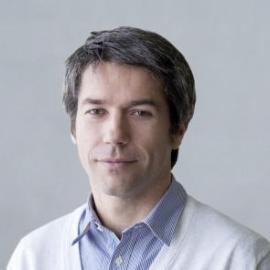
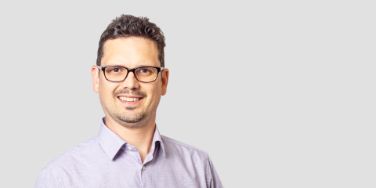
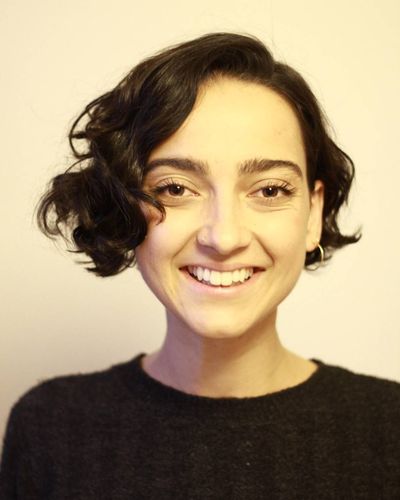
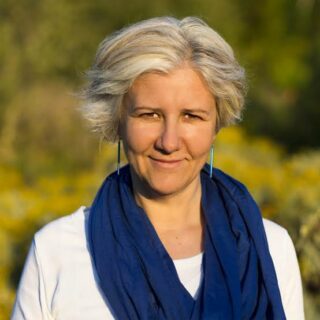
Dr. Anik Debrot is a Senior Lecturer and researcher at the LIVES Centre, University of Lausanne. Her work focuses on grief counseling, interpersonal touch dynamics in relationships, and digital health interventions. Senior Lecturer, LIVES Centre, University of Lausanne Research on touch in bereavement, couple relationship quality, and internet-based therapeutic programs Research Interests: Debrot's studies explore the intersection of touch physiology and emotional regulation in couples, with special attention to trauma recovery , attachment theory , and digital mental health applications. Publication Trends: Recent work includes Randomized controlled trials of grief interventions Dyadic trauma response studies Touch as a stress-buffering mechanism Design of multilingual internet-based therapies Collaborations: Debrot works with institutions in Switzerland on digital health protocols and cross-cultural adaptation of therapeutic tools.
Rafael Lalive is a Professor at the University of Lausanne's Faculty of Business and Economics and a core member of the LIVES Centre, a Swiss National Centre of Competence in Research. Based at the Internef Building in Lausanne, he leads interdisciplinary research on labor market dynamics and social policy evaluation. His research spans Labor Economics, Gender Economics, and Public Policy, with specialized focus on job search behavior, unemployment insurance systems, gender diversity in workplaces, and family policy impacts. He employs causal inference methods using natural experiments like the Swiss language border to isolate cultural effects on economic decisions, and analyzes policy interventions through quasi-experimental designs. Recent publications reveal strong trends in gender economics (examining vacancy preferences and workplace diversity) and family economics (assessing maternity leave mandates and fertility outcomes). His work increasingly integrates crisis response analysis, including pandemic effects on youth mental health and consumption patterns, while maintaining methodological rigor through randomized trials and large-scale data. As part of the LIVES Centre's leadership team, Professor Lalive coordinates a multidisciplinary network studying life course inequalities, collaborating with researchers across the University of Lausanne and University of Geneva to translate empirical findings into evidence-based social policies.
Anina Schwarzenbach is a political sociologist and criminologist at the Institute of Penal Law and Criminology , University of Bern, and a research associate at the Institute of Sociological Research , University of Geneva. She explores the intersection of social identities, social norms, and digital technologies in shaping migration, discrimination, and violence in democratic societies. Current affiliations: University of Bern (Department of Law), University of Geneva (IRS) Former affiliations: Harvard Kennedy School’s Cyber Project, Belfer Center (International Security Program), University of Maryland (Criminology and Criminal Justice), Max-Planck Institute for Foreign Criminal Law and Criminology Research Themes Her research integrates theoretical insights with computational methods to analyze: Social identity representation : Dynamics of identity construction in digital discourse around extremism. Democratic norms and AI : Societal adaptation to AI and its impact on democratic institutions. Networks of political violence : Structural analysis of extremist group coordination. Recent Article Trends Her recent work focuses on social network analysis of Islamist co-offending, homophily, and transitivity in extremism. Grants and Fellowships Swiss National Science Foundation (SNSF) University of Bern Fondazione Leonardo Belfer Center’s International Security Program (Harvard) Harvard Kennedy School’s Cyber Project Collaborations and Networks Affiliated with the Swiss Centre of Expertise in Life Course Research (LIVES), Digital Society Initiative (University of Zurich), Global Young Academy (200 elected members), and Board Member of the Academy of Sociology.
Dominik Schöbi serves as Full Professor in the Department of Psychology and Dean of the Faculty of Letters and Human Sciences at the University of Fribourg, Switzerland. His academic leadership extends across multiple research teams including Clinical Psychology and Psychotherapy, Kognitive Biopsychology and Methods, and Clinical and Health Psychology. With 74 publications spanning two decades, his scholarly impact is evident across relationship science and clinical psychology domains. Dr. Schöbi's research expertise centers on emotional dynamics in intimate relationships, employing ambulatory assessment methods to capture real-time couple interactions across diverse cultural contexts. His work examines how daily stressors, communication patterns, and emotional regulation impact relationship quality and individual well-being. Key research themes include relationship satisfaction, dyadic coping mechanisms, cross-cultural variations in relationship dynamics, and the neural correlates of relationship processes. His methodological approach integrates daily diary studies, ecological momentary assessment, and neuroimaging techniques to provide comprehensive insights into relationship functioning. Analysis of his recent publications (2020-2025) reveals a strategic expansion into contemporary relationship challenges including technoference during the pandemic, cultural diversity within couples, and the integration of physiological measures with self-report data. His work consistently bridges clinical and social psychology perspectives, examining both normative relationship processes and clinical applications for couples therapy. The international scope of his research is evident through collaborations across Europe, Iran, Malaysia, and other cultural contexts. As Dean of the Faculty of Letters and Human Sciences, Dr. Schöbi oversees academic programs across multiple disciplines including psychology, history, languages, and philosophy. His leadership extends to mentoring junior faculty and graduate students in psychology and related fields. His editorial contributions to influential volumes such as 'New Directions in the Psychology of Close Relationships' (2019) and 'Interpersonal Emotion Dynamics in Close Relationships' (2018) have helped shape contemporary understanding of relationship science. Dr. Schöbi maintains an active research program with publications appearing in top journals including Journal of Personality and Social Psychology, Emotion, and Personal Relationships.
Zurich University of Applied Sciences (ZHAW)Switzerland
Prof. Dr. Kurt Stockinger is a Professor of Computer Science at ZHAW School of Engineering and holds a doctorate at the University of Zurich . He serves as Head of the MAS Data Science program and co-leads the ZHAW Datalab . His research focuses on Intelligent Information Systems , bridging information systems, natural language processing, and machine learning. Affiliated with the University of Zurich, he contributes to Quantum Machine Learning and Open Data Exploration initiatives. Stockinger's educational background includes a PhD in Computer Science (University of Vienna & CERN), a Master in Business Informatics (University of Vienna), and a CAS in Didactics & Methodology (ZHAW). He has taught courses in Quantum Computing , Big Data for Natural Sciences , and Data Science programs at ZHAW and University of Zurich. His research spans Data Science , Big Data , Natural Language Query Processing , Knowledge Graphs , and Quantum Machine Learning . Recent publications focus on quantum autoencoders , hybrid quantum neural networks , and prompt engineering for knowledge graph question answering. He has developed frameworks like ScienceBenchmark for real-world NL-to-SQL evaluation and NQuest for natural language query exploration. Scientific awards include the Best Paper Award at 7th Swiss Conference on Data Science (2020) He leads major projects such as DataGEMS (Data Discovery Platform, Horizon Europe) Digital Health Zurich (Clinical Innovation Lab) INODE4StatBot.swiss (NL-to-SQL Translation) GraphQueryML (Graph Database Optimization) ScienceBenchmark (NL-to-SQL Evaluation) Stockinger's work intersects with computer vision , biomedical data , and industrial applications , demonstrated through collaborations with institutions like Lawrence Berkeley National Laboratory, CERN, and University of Washington. He has contributed to establishing QuantumBasel and ZHAW Datalab as research hubs.
Dr. Sébastien Boillat serves as a Senior Researcher at the Bern University of Applied Sciences within the School of Agricultural, Forest and Food Sciences (HAFL), Department of Forest Sciences in Zollikofen, Switzerland. His institutional roles include: Minor KW program coordinator Active member of the Forest Policy and International Forest Management research group His research focuses on comparative forest governance systems with particular expertise in tropical forestry and sustainable resource management across developing regions. Dr. Boillat's work examines policy frameworks in contexts where indigenous knowledge intersects with modern forest management practices, emphasizing socio-ecological resilience in vulnerable ecosystems. His geographic scope spans critical forested regions across South America, Africa, and Southeast Asia. Fluent in five languages with native proficiency in French and Spanish, Dr. Boillat maintains exceptional capacity for field research and policy engagement in multilingual environments. His linguistic versatility (French, Spanish, English, German, Portuguese, Quechua) directly supports collaborative work with communities in Bolivia, Peru, Brazil, Senegal, Kenya, and Laos, where he investigates context-specific forest governance challenges.
Giovanni Piantanida is an Assistant Professor and Research Collaborator at the Chair of Italian Linguistics, University of Basel, since August 2025. He previously worked as a doctoral student (2020–2024) on a Swiss National Science Foundation-funded project and as a Research Fellow at Ca' Foscari University of Milan (2024–2025) on the DIA project (Dictionary of Academic Italian). His research focuses on textual linguistics, pragmatics, and the clarity of Italian texts in institutional contexts. Bachelor's degree in Literature, University of Milan Master's degree in Theoretical, Applied, and Modern Language Linguistics, University of Pavia His expertise spans legal/administrative language, punctuation in contemporary Italian, and linguistic diversity in the Italian peninsula. He collaborates with the Seminar für Italianistik, contributing to doctoral programs and joint courses in Italian literature and linguistics.
Laura Bäumel is a Lecturer and Research Assistant (Doc) at the Department of Popular Cultures (ISEK) at the University of Zurich. Her scholarly work focuses on worker cultures, gender studies with emphasis on materialist feminisms, authoritarianism and the shift to the right, and critical education. She has maintained an active research profile with publications extending to 2025 and presentations scheduled through mid-2025. Since 2021: Assistant at the Department of Popular Cultures, University of Zurich November-December 2024: Visiting Researcher at the Cornelia Goethe Center for Gender Studies, Frankfurt am Main 2019-2022: Director of Kontra.Punkt – Association for Critical Education in Graz 2017-2021: Speaker of ARGE Youth against Violence and Racism in Graz Bäumel earned her MA in European Ethnology from KFU Graz and HU Berlin (2018-2021), a BA in Sociology from KFU Graz (2017-2021), and a BA in European Ethnology from KFU Graz (2015-2018). Her academic journey reflects a consistent interdisciplinary approach to cultural analysis. Her research explores the intersections of gender, class, and political ideology through ethnographic methods. Bäumel examines how factory workers navigate pandemic conditions, how mothers balance reproductive and productive labor under contemporary capitalism, and how authoritarian tendencies manifest in everyday life. Her work often centers on marginalized perspectives, particularly working-class women and their experiences with right-wing populism. Bäumel's publication record reveals a consistent thematic focus on worker cultures, gender dynamics, and right-wing populism across multiple formats including academic journals, book chapters, reviews, and media contributions. Her collaborative work with scholars like Gregor Berger and Asiyeh Panahi demonstrates a commitment to interdisciplinary approaches to critical social issues. Board Member of Empirical Cultural Studies Switzerland (EKWS) – Zurich Section Member of the Institute for Protest and Movement Research (ipb) Member of the German Society for Empirical Cultural Studies (DGEKW) Member of the Swiss Society for Gender Studies (SGGF) Bäumel has served in editorial roles for publications including kuckuck. Notes on Everyday Culture (2017-2020) and Gewitter Journal (2020-2021). Her academic contributions extend to radio programs on Radio Helsinki and public lectures addressing contemporary social issues, reflecting her commitment to bridging academic research with public discourse.
Cesca Ombretta serves as an Assistant Professor with Conditional Pre-Tenure at the University of Lausanne, holding concurrent appointments across the Faculty of Letters, Institute of Archaeology and Ancient Sciences, and Center for Theater Studies. Her scholarly work centers on Ancient Greek language, literature, and cultural frameworks, with emphasis on Homeric epics and ritual-divine interplay. Her research program spans: Greek Literature and Ancient Languages Homeric Poems and Oral Tradition Mechanics Media Systems in Ancient Greece Ritual Practices and Divine Power Structures Her 2022 publication analyzes narrative techniques in the Iliad, revealing how repetition functions as a sophisticated mechanism for remote verbal communication within Homeric epic tradition, demonstrating her methodological focus on textual structures in ancient performance contexts. Scientific recognition includes: Constantin Valiadis Prize (2018) No current graduate students or research grants are publicly documented in available sources. Her institutional affiliations indicate active cross-disciplinary engagement between archaeology, ancient sciences, and theater studies without dedicated laboratory facilities specified.
University of Applied Sciences and Arts LucerneSwitzerland
Daniel Albert serves as a Lecturer at the Lucerne University of Applied Sciences and Arts (HSLU) within the Business school, specifically at the Institute for Communication and Marketing (IKM) and the CC Communication Management group. He has held this position since 2003 while concurrently operating his own public relations and media consulting firm, ALBERT Communication, established in 2002. Education: Graduate journalist and communication scientist, University of Fribourg EM of Corporate Communication Management, University of Applied Sciences Northwestern Switzerland Daniel Albert's research centers on corporate communication, public relations, and media studies. He has pioneered work on internal communication strategies for Swiss enterprises, notably through his research project "Strategies for future-oriented internal communication in Swiss companies" and the development of the Customer Centricity Score. His expertise spans event communication, advertising language, and media theory, reflecting deep practical industry engagement alongside academic rigor. His 2011-2014 publications demonstrate interdisciplinary breadth across Swiss organizational contexts, combining communication theory with historical, sociological, and cultural analyses. Key trends include practical frameworks for event communication channels (2014), investigations of local governance and religious institutions (2011-2012), and foundational educational materials on media theory and advertising (2012-2013), consistently bridging academic concepts with real-world applications. Scientific Awards: No scientific awards or fellowships are documented in the available information Advising and Grants: The provided information does not specify student advising roles or research grants. Albert's professional focus centers on project-based consultancy and educational program leadership rather than traditional academic mentoring or external grant acquisition. Labs and Teams: Albert is embedded within HSLU's Institute for Communication and Marketing (IKM), contributing to the CC Communication Management group. He leads the Certificate of Advanced Studies (CAS) in Corporate Communication program and serves on the jury for the SVIK-Rating, which evaluates internal and integrated communication practices across Swiss and European organizations.
University of Applied Sciences and Arts LucerneSwitzerland
Verena Batt serves as a Lecturer and Project Manager at the Institute for Business and Regional Economics (IBR) within the Business School of Lucerne University of Applied Sciences and Arts (HSLU). Her academic journey began with studies in business administration, French, and Spanish at the University of Mannheim, followed by doctoral research at the University of Basel on "Quality of Internal Brand Management." Prior to joining HSLU, she held positions as a postdoctoral researcher at the University of Basel and junior professor of business administration with a focus on marketing at Leuphana University Lüneburg. Dr. Batt's educational background includes a comprehensive business administration degree complemented by studies in Romance languages. She earned her doctorate from the University of Basel with research focused on internal brand management and employee behavior. Her academic path reflects a strong foundation in both theoretical business concepts and practical applications across multiple industries including consulting, IT, and chemistry. Her research primarily centers on marketing with a specialized focus on employer branding, consumer behavior, and brand management. Batt investigates how employer brand personality influences job application intentions, develops measurement scales for employer branding, and examines the relationship between corporate social responsibility and brand credibility. Her work bridges theoretical marketing concepts with practical applications in business settings, particularly examining how brands can effectively engage both consumers and employees. She has published extensively in marketing journals and presented at major international conferences including EMAC and AMA. Dr. Batt's publication record demonstrates consistent research output with a clear trajectory from foundational work on brand management and consumer behavior toward more specialized topics in employer branding and digital marketing innovations. Her 15 most recent publications reveal a strong emphasis on employer branding measurement and applications, while also exploring emerging areas such as NFTs in luxury branding and generative AI in language education. Teaching Award from the Faculty of Business and Economics at Leuphana University Lüneburg for Communication Management in the Age of Social Media (2018) Most Outstanding Reviewer, Track Services Marketing for Review Conference Papers (2017) Brand Association Science Award for Dissertation (2014) As a reviewer for academic journals including "Die Unternehmung" and the Open Education Platform for Management Schools, and as a member of the European Marketing Academy and the Association of University Professors of Business Administration, Batt contributes significantly to the academic community. Her teaching responsibilities at HSLU span Business Psychology and Business Administration programs, covering marketing, statistics, and methodology courses. She leads multiple research projects including Automated Talent Recruiting, Psychosocial healthcare for refugees, and Time Banks as retirement provision in Switzerland, demonstrating her commitment to both theoretical research and practical applications that address contemporary business challenges.
Teresa Galí-Izard is a Professor at ETH Zurich where she directs the Being Alive Chair within the Institute of Landscape and Urban Studies (LUS) in the Department of Architecture. She also serves as director of the Master's program in Landscape Architecture at ETH Zurich and is a director at Arquitectura Agronomia, a landscape architecture firm based in Barcelona. As a trained agronomist from the Technical University of Catalonia, she brings interdisciplinary expertise to her work bridging landscape architecture, ecology, and agricultural science. Her research focuses on translating the hidden potential of landscapes through understanding climate and geology as foundational elements for design. She has developed innovative methodologies including the BeingAliveLanguage software integrated with Rhino/Grasshopper that revolutionizes visualization of soil-centric information. Her work emphasizes fieldwork as essential practice, with particular attention to soil systems, geological conditions, and climate patterns as primary matter for landscape design. Professor Galí-Izard leads the global Garden of the XXI Century project with installations in Spain, Switzerland, USA, and Chile, exploring regenerative landscape cultivation and experimental gardening practices. Her publications and research demonstrate a consistent focus on translating landscapes through drawing, cartography, and digital tools while maintaining deep engagement with living systems and their evolutionary processes. Nominated for Schelling Architecture Prize (2024) for revolutionary contributions to landscape architecture understanding President of the Jury of the European Prize for Urban Public Space (2022) Member of the Oberlander Prize Jury She actively supervises student work through foundation studios and seminars at ETH Zurich, with recent projects including 'Regenerative Practices for Exhausted Landscapes' and 'Slow Water: Exploring Keyline Design in Switzerland.' Her Being Alive Chair functions as a laboratory for developing new approaches to landscape architecture that emphasize care, translation, and understanding of living systems. The chair organizes fieldwork weeks, research colloquia, and public lectures that foster interdisciplinary dialogue about landscape practices in the Anthropocene.
University of Applied Sciences and Arts LucerneSwitzerland
Monica Gaspar is a Lecturer at Lucerne University of Applied Sciences and Arts (HSLU), specifically within the Lucerne School of Design, Film and Art. She works as a lecturer in the BA Product Design program and serves as a mentor for BA thesis in product design (object, jewelry, textile, spatial) and supervisor for Master Research Thesis in Design. Her professional profile extends beyond academia as she is also an active freelance curator and author with international recognition. Universitat de Barcelona (Art History) Zurich University of the Arts (Cultural and Gender Studies) Escola Massana Barcelona (Jewelry Design) Academy of Fine Arts Vienna (Doctoral candidate) Gaspar's research focuses on redefining the "applied" as an experimental and socially relevant field of action. Her work explores design cultures, craftsmanship as critical practices, cultures of wearing (bodies, objects and identity), exhibitions as research devices, and intersectional and decolonial perspectives in design and art. She has developed a distinctive approach that bridges art, design, and activism through curated exhibitions and theoretical contributions. Her recent publications demonstrate a consistent trajectory exploring the intersections between material culture, critical theory, and social practice. Gaspar's work increasingly engages with decolonial perspectives, examining how design practices can challenge dominant narratives and power structures. She has developed innovative methodologies that position exhibitions themselves as research devices for investigating cultural interstices. Editorial Advisory Board Member, Journal for Jewellery Research (2017-present) Board Member, NDG Network for Design History (2019-present) Peer Reviewer, ICDHS International Committee for Design History and Design Studies (2018-present) Foundation Board Member, FHD Design History Foundation Barcelona (2016-present) Co-Convenor, DHS2021 Design History Society Annual Conference (2020) Gaspar has shaped teaching at the interface between theory and practice through collaborations with art and design universities across Scandinavia, England, the Netherlands, and the USA. Her research projects include "Accelerating the pursuit of the SDGs in Swiss design education: Design Action Labs" and "Craft Round Tables: Shaping of digital transformation of work environments through human-centered craft competences." She previously served as a research associate at the Institute for Theory at Zurich University of the Arts (2013-2016) for the research project "Aesthetic Practices."