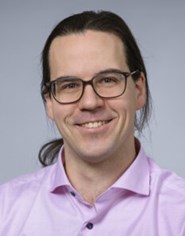
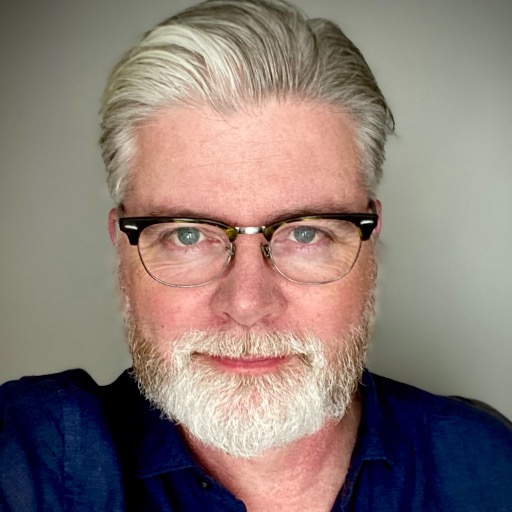
Robin Adams is a Lecturer at Chalmers University of Technology, affiliated with the Logic and Types research group in Gothenburg, Sweden. Their work focuses on theoretical aspects of computer science, particularly in logic, type theory, and programming language foundations. Their research interests include: Logic in computer science Type systems and theory Programming language semantics Formal methods Theoretical computer science Robin Adams can be contacted via email at robinad@chalmers.se. The visiting address is Rännvägen 6 B, 412 58 Gothenburg, with postal address Box 100, 412 96 Gothenburg. As a member of the Logic and Types research group, Robin Adams contributes to Chalmers' strong tradition in theoretical computer science research, which has been internationally recognized for work in areas such as type theory and formal verification.
Eric Cullhed is Professor of Greek at Uppsala University's Department of Linguistics and Philology within the Faculty of Languages. Previously, he served as Senior Lecturer in Greek (2021-2024) and held a Pro Futura Scientia XIII Research Fellowship at the Swedish Collegium for Advanced Study (2019-2024). His academic journey includes a Bachelor's degree in Latin from Stockholm University (2007), Bachelor's and Master's degrees in Greek from Uppsala University (2009), coursework at Scuola Normale Superiore di Pisa (2009-2010), PhD in Greek from Uppsala University (2014), and Docent in Greek (2018). Cullhed's research spans Ancient Greek literature, particularly the Homeric epics and their 2700-year reception history, with innovative explorations in Latin American poetry, aesthetics, philosophical psychology, and digital humanities. He has pioneered the application of machine learning models to restore ancient papyrus fragments, demonstrating his commitment to methodological innovation. His scholarly focus on Greek emotion theory, aesthetic normativity, and world literature reveals a scholar deeply engaged with both classical texts and contemporary theoretical frameworks. His publications show remarkable thematic diversity while maintaining a coherent scholarly trajectory. The most recent works explore poignancy, aesthetic experiences, and emotional depth, alongside critical editions of Byzantine commentaries on Homer. His research demonstrates how ancient texts continue to resonate in modern intellectual discourse across multiple disciplines. Cullhed actively engages with the public through media appearances on P1 Talk Show, Humarena's podcast, and other Swedish cultural programs, discussing topics ranging from ancient Greek dance to emotional expression in literature, making classical scholarship accessible beyond academic circles. His academic contributions extend to editorial work on 'Eranos. Acta philologica Suecana' and translations of classical works into Swedish, including Cicero's letters, reflecting his commitment to bridging historical scholarship with contemporary readership.
Erik Elgh is a Researcher in linguistics at Uppsala University's Department of Linguistics and Philology, specializing in historical and computational approaches to language evolution and documentation. His work bridges theoretical frameworks with empirical data from diverse language families. His research program integrates three core pillars: Historical Linguistics : Reconstructing language phylogenies through computational modeling, with case studies on Torricelli and Germanic languages. Computational Linguistics : Developing holistic methodologies for analyzing dialect chains and language change dynamics. Descriptive Linguistics : Field-based documentation of endangered languages in Melanesia (Au, Olo) and Indonesia (Elkei). Publication trends (2019-2025) reveal a strategic shift toward unifying computational tools with traditional comparative methods, particularly in phylogenetic analysis and dialectology. His 2025 doctoral thesis establishes a comprehensive framework for modeling language evolution from data collection through classification, emphasizing interdisciplinary integration.
Vanda Faria is a Researcher at the Department of Psychology specializing in Emotion Psychology at Uppsala University. Her work focuses on understanding the neural and psychological mechanisms underlying social anxiety disorder, placebo effects, and sensory processing disorders through advanced neuroimaging techniques and clinical trials. She maintains an active research program with publications extending through 2025. Dr. Faria's research interests span several interconnected domains in psychology and neuroscience. Her primary focus is on social anxiety disorder, where she investigates neural mechanisms, treatment responses, and the role of expectancy effects in therapeutic outcomes. She has made significant contributions to placebo research, examining how psychological factors influence physiological responses in various conditions. Another major area of her work involves olfactory function and its relationship to neurological and psychological conditions, particularly migraines and headache disorders in both adult and pediatric populations. Her research often employs multimodal approaches combining neuroimaging, behavioral assessments, and clinical interventions. Analysis of Dr. Faria's publication record reveals a clear evolution in her research focus. Early work centered on neuroimaging studies of social anxiety disorder, particularly examining amygdala reactivity and neural responses to emotional stimuli. Over time, her research expanded to include placebo mechanisms, pediatric applications, and sensory processing disorders. Recent publications show increasing methodological sophistication, moving from basic neuroimaging studies to complex clinical trials and meta-analyses. Her work demonstrates growing interdisciplinary collaboration, particularly between psychology, neurology, and pain medicine. Dr. Faria has established herself as a significant contributor to the understanding of how psychological factors influence physiological responses, particularly in anxiety disorders and pain conditions. Her research on the intersection of olfaction and neurological disorders represents a unique niche within her broader research program. While specific grant information isn't detailed in the available materials, her extensive publication record suggests successful funding for multiple research projects. Her collaborations span multiple institutions, indicating an active research network focused on advancing clinical applications of psychological and neuroscientific principles.
Caitlin Lamb serves as a Lecturer and Director of Studies for undergraduate and advanced level studies at the Department of English, Uppsala University. Her primary responsibilities include teaching English didactics courses within primary and upper secondary teacher training programs, alongside instruction in grammar, oral/written proficiency, and social studies education. Lamb specializes in English language teacher education with concentrated expertise in pedagogical methods for grammar instruction, oral communication development, written expression techniques, and interdisciplinary integration of social studies content. Her work focuses on preparing future educators for practical classroom implementation across primary and secondary educational contexts through evidence-based language teaching frameworks. In her administrative capacity as Director of Studies, Lamb oversees academic program coordination, curriculum development, and student academic guidance for English teacher training pathways. She maintains active involvement in shaping pedagogical standards and program quality assurance for both undergraduate and advanced-level English education initiatives at the department.
Johan Henriksson is Associate Professor at Umeå University, Sweden, where he leads the Johan Henriksson Group within the Department of Molecular Biology and the Laboratory for Molecular Infection Medicine Sweden (MIMS), a node of the Nordic EMBL Partnership for Molecular Medicine. He is also affiliated with UCMR (Umeå Centre for Microbial Research) and IceLab (Integrated Science Lab), emphasising cross-disciplinary collaboration. Research in a nutshell. Henriksson’s team explores how T cells function in health and disease, with a special emphasis on cancer and CAR T-cell immunotherapy. By integrating single-cell multi-omics, pooled CRISPR screens, synthetic biology, and machine learning, the group maps gene-regulatory networks that control T-cell identity and anti-tumour activity. They develop wet-lab protocols (e.g., molecular inversion probes for unbiased quantification) and open-source computational tools—including the Nando framework for gene-expression prediction and high-performance pipelines written in Rust—to extract robust biological knowledge from very large datasets. Major research directions. Discovery of a novel JUNB + CD4 T-cell state linked to memory formation, circadian rhythm, and CAR T-cell exhaustion. Single-cell telomere measurements for early cancer detection, particularly pancreatic cancer. Pooled CRISPR screening in primary human T cells and in Plasmodium falciparum to uncover essential regulators. Extension of single-cell technologies to microbial systems in collaboration with Laura Carroll, Kemal Avican, and Linas Mažutis. Development of the Bascet/Zorn pipeline for reference-free comparative genomics across mixed microbial communities. Advocacy and engineering of the Rust programming language for safe, high-performance bioinformatics. Collaborative network. Henriksson actively collaborates with experts who contribute complementary biological insight: Isabelle Magalhães (CAR T-cell therapy), Nicole Boucheron (T cells in allergic asthma), Mattias Forsell (B-cell responses), Anna Överby (tick-borne encephalitis), Annasara Lenman (SARS-CoV-2), Tommy Löfstedt (machine-learning latent-space models), Ellen Bushell ( Plasmodium gene essentiality), and many others. Training & mentorship. The group currently hosts PhD students (e.g., Ionut Sebastian Mihai) and welcomes additional students and postdocs interested in combining wet-lab immunology with computational innovation, especially those eager to adopt Rust for large-scale data analysis.
Ann-Sofie Persson is an Associate Professor and Senior Lecturer at Linköping University, affiliated with the Department of Communication, Literature and Swedish (KLS) within the Department of Culture and Society (IKOS). She is an active member of the Research Environment for Language and Culture, focusing on the interplay between language and culture in various contexts. Her educational background includes a Magisterexamen in Literary Studies from Sorbonne Nouvelle in Paris (1995) and a PhD in French with a literary focus from Ohio State University (2001). She earned her Docent (Associate Professor) qualification in Language and Culture in 2015. Dr. Persson's research centers on the ideological dimensions of fiction from postcolonial, ecocritical, and gender perspectives. She has extensively studied autobiographical writing, particularly by female authors from the French-speaking Caribbean and North Africa, including Nina Bouraoui, Fabienne Kanor, Leïla Sebbar, Yanick Lahen, Maryse Condé, and Gisèle Pineau. Her work also explores horse books through ecocritical and posthumanist lenses, examining how horses are portrayed with human characteristics or as fundamentally different from humans. She has co-founded research projects on human-animal relations in children's cultures and has conducted interview studies with high school students about fan fiction practices. Her recent publications reveal a strong focus on mothering variations in horse book series, fan fiction in literature education, and auto-fictional practices in Caribbean literature. The research shows consistent engagement with narrative voice, identity construction, and the intersection of human-animal relationships in literary contexts. As an educator, she has developed and taught numerous courses including Autobiographical Texts, Literature and Gender, Postcolonial Literature, Gender in Literature and Film, Ecocritical Perspectives on Contemporary Novels, and the newly launched 'Fandom and Fan Cultures.' She also teaches in the Bachelor's program in Global Studies of Culture and Society, offering 'World Literature and Global Narrative.' Dr. Persson is actively involved in the Literature Didactics Network (LDN) steering group and has co-organized conferences on human-animal relations in children's cultures, funded by Riksbankens Jubileumsfond. She collaborates extensively with Helen Asklund (MiUn) and Lena Manderstedt (LTU) on multiple research projects related to horse literature and human-animal relationships.
Kajsa Thyberg is a Lecturer at Linköping University, affiliated with both the Department of Communication, Literature and Swedish (KLS) and the Department of Culture and Society (IKOS). She holds a PhD in Nordic languages and specializes in Swedish language instruction with a focus on grammar and text. Her research interests center on language didactics and linguistics, particularly how grammar can be integrated into different parts of the Swedish subject and teacher education. She has expertise in systemic-functional theory (SFG) and has developed courses introducing SFG basics. In October 2020, she defended her thesis on Swedish det constructions, which connects grammar and text based on systemic-functional theory. Dr. Thyberg's publications demonstrate her focus on the intersection of linguistic theory and practical teaching applications. Her 2022 article analyzes the semantic potential of Swedish det constructions, while her 2021 popular science article explores vocabulary acquisition in Swedish language learning. She is active in the PASL research environment (Pedagogical work with a focus on language and literature didactics), a multidisciplinary research area addressing issues relevant to school and teacher education practices. Her teaching includes courses in the Swedish language that are part of the Language, Literature and Media program and the subject teacher program, as well as independent courses and master's courses focusing on grammar, text, linguistic theory, and method.
Julien Renard serves as a University Lecturer at Linköping University within the Department of Culture and Society (IKOS) and the Department for Language, Culture and Interaction (SKI), where he holds the leadership position of Head of the Unit for Modern Languages. His role encompasses oversight of modern language education programs and academic initiatives across the institution. His scholarly focus centers on language-culture dynamics, with primary research domains including: Modern Languages Language Pedagogy Cultural Studies Applied Linguistics Intercultural Communication Language Policy In his administrative capacity, Renard directs curriculum development and faculty coordination for language instruction. No verifiable information exists regarding graduate student supervision, research grants, or scientific awards in the provided institutional records.
Joakim Öhlen serves as Professor of Nursing at the University of Gothenburg's Sahlgrenska Academy and University Hospital Head Nurse at Sahlgrenska University Hospital's Palliative Center. He directs the Center for Person-Centered Care (GPCC) while leading the Care for Long-Term Conditions Research Group focused on pediatric, neurological and palliative nursing. His institutional affiliations include: Scientific Advisor for SHIFT CARE Graduate School (Gothenburg, Borås, Skövde, Väst collaboration) Scientific Advisor to Swedish Nurses' Association Executive Committee Member, International Philosophy of Nursing Society Former Ersta Diakonis Professor at Marie Cederschiöld University College Professor Öhlen's research program examines palliative care implementation through person-centered frameworks, with special emphasis on communication strategies for families and grief support. His work integrates phenomenological and hermeneutic methodologies with large-scale registry analyses to address healthcare disparities. Current projects investigate ALS family dynamics, migrant-inclusive care models, and digital QOL assessment systems across Scandinavian healthcare contexts. Analysis of his 15 most recent publications (2024-2025) reveals three dominant trends: rigorous registry-based examinations of end-of-life care inequities, innovative implementation science approaches for person-centered care frameworks, and nuanced qualitative studies of grief experiences across diverse populations. His work consistently bridges theoretical nursing philosophy with practical healthcare solutions. Scientific recognition includes: University of Gothenburg's Excellent Teacher Award Principal Investigator for 37M SEK Swedish Research Council grant Key contributor to national palliative care policy documents Professor Öhlen actively supervises doctoral candidates through SHIFT CARE graduate school while developing postgraduate education in palliative care. His GPCC leadership facilitates collaborations with Sahlgrenska University Hospital's clinical units and international networks including EAPC and IPONS. Current funding supports pragmatic trials of digital QOL systems and multi-country studies on family carer research methodologies. The Center for Person-Centered Care (GPCC) under Professor Öhlen's direction operates as an interdisciplinary hub connecting nursing researchers, clinicians, and policymakers. The Care for Long-Term Conditions Research Group fosters synergies between pediatric, neurological and palliative nursing specialties, with regular seminars translating findings into clinical practice through GPCC's implementation framework.
Reili Argus is a Professor at Tallinn University's School of Humanities, specializing in Estonian linguistics and first language acquisition. With a career spanning over two decades, she previously served as Director of the Institute of Estonian Language and Culture and holds leadership roles in international organizations including the Executive Committee of the International Association for the Study of Child Language (IASCL). Her research explores: First language acquisition mechanisms in Estonian-speaking children Cross-linguistic studies of bilingualism (e.g., English-Estonian code-switching) Educational linguistics and language policy reform in multilingual classrooms Development of teaching methodologies for Estonian as a second language Analyses of her 134 publications reveal strong emphasis on: Longitudinal studies of grammatical/vocabulary development Comparative Finno-Ugric language acquisition Classroom applications of linguistic theory Awards include: Lecturer of the Year (Tallinn University, 2010/2017/2019) Best Poster Award, SLE Conference (2019) Keeletegu Grand Prix (2013) She leads significant projects like the NorPhLex initiative and COST Action IS1406, focusing on interventions for children with language acquisition difficulties across Europe. As head of Tallinn University's MA program for Language Editors, she actively shapes pedagogical training.
Per Alstergren serves as Professor, Senior Dental Officer, and Dean at Malmö University's Faculty of Odontology. His academic leadership extends across dental education and research initiatives at the institution. Faculty of Odontology, Malmö University (current) Senior Consultant specializing in Orofacial Pain and Jaw Function Active researcher with multiple 2025 publications His research program focuses on three interconnected domains: TMJ pain and inflammation with emphasis on rheumatic diseases across age groups, brain morphology and function in chronic pain conditions, and advanced chronic pain diagnostics. This work bridges clinical dentistry with neurology and rheumatology to develop more effective treatment protocols. Dr. Alstergren's recent scholarly output demonstrates strong international collaboration and addresses critical issues in orofacial pain management, temporomandibular disorders, and diagnostic criteria validation across diverse populations. His research contributes significantly to understanding the connections between oral health and systemic conditions. Current Dean of Faculty of Odontology ORCID: 0000-0002-8539-7742 Active participant in Advancing Oral Health research profile As part of Malmö University's Advancing Oral Health initiative, Dr. Alstergren contributes to research aimed at improving precision in oral healthcare, promoting sustainable oral health practices, ensuring equitable access to dental services, and implementing eHealth solutions for cost-effective care delivery.
Johnny Panrike is a Lecturer at KTH Royal Institute of Technology working in the Division of Health Informatics and Logistics. He holds an MSc in Mathematics and Computer Science with extensive teaching experience across both disciplines and currently pursues advanced studies in real analysis. Education: MSc in Mathematics and Computer Science Currently enrolled in Advanced Real Analysis I at KTH/SU Research Focus: His core expertise centers on Discrete Mathematics and Cryptography, evidenced by authoring a specialized textbook. Current mathematical interests include deepening knowledge in Measure Theory, Integration Theory, and Functional Analysis through active coursework. In computer science, he specializes in low-level programming instruction (C/C++ systems programming) and object-oriented paradigms across multiple languages. His pedagogical innovations include virtual machine deployment to streamline software installation for students, while development cooperation work with Sri Lanka's Sarvodaya NGO reflects applied intercultural engagement. Professional Activities: He has supervised numerous thesis projects and course-based student work. Career interludes include professional training as a breathwork therapist in Denmark and alternative pedagogy studies in India. His teaching portfolio spans foundational mathematics courses (analysis, linear algebra, combinatorics) and comprehensive computer science instruction from introductory to advanced levels. Additional Context: Acknowledges statistics and networking as technical weak spots while maintaining active involvement in both teaching and personal academic development.
Ulrika Löfkvist serves as a Senior Lecturer at Uppsala University's Department of Public Health and Care Sciences; Speech Therapy, focusing on speech therapy interventions for children with hearing impairments and cochlear implants. Her research spans Speech Therapy , Hearing Impairment , Cochlear Implants , and Child Language Development , emphasizing longitudinal outcomes in language acquisition, literacy, and cognitive skills. She validates assessment tools like LENA and PEACH+ across cultural contexts and investigates public health initiatives including cytomegalovirus prevention and early hearing loss screening protocols. Analysis of her 2022-2025 publications reveals dominant themes in cochlear implant outcomes, particularly age-at-implantation effects on metaphor comprehension and reading development. Cross-cultural validation studies in Nordic/Brazilian populations and multidisciplinary approaches to hearing loss management form recurring methodological threads. Dr. Löfkvist collaborates with international teams across audiology, speech-language pathology, and public health, notably in Sweden, Norway, and Brazil. No scientific awards, student advising records, or grant details were documented in the source material.
Pelle Sjöholm serves as a Part-time fixed-term lecturer in the Department of English at Uppsala University, Sweden, actively contributing to teaching and academic initiatives within the institution. His position reflects ongoing engagement with the university's language and literature programs. His scholarly work centers on English language studies, with primary research interests spanning: English Language structure and pedagogy Theoretical and descriptive Linguistics Literary analysis and criticism Second Language Acquisition methodologies Applied Linguistics in educational contexts Sociolinguistic variations of English No scientific awards or honors are documented in the available institutional records. Current information does not specify student advising responsibilities, research mentorship, or grant-funded projects under his supervision. There are no references to laboratory affiliations, research teams, or collaborative initiatives in the provided institutional profile.