Andrej Bauer is a Professor currently collaborating at an unspecified Faculty. He teaches courses including Principles of Programming Languages , User Application Software Programming 2 , and Topics in Computational Mathematics . His research interests span Computer Science , Programming Languages , Computational Mathematics , Software Engineering , and related theoretical/applied disciplines. The faculty affiliation and specific department remain undisclosed in the provided text.
Aleš Jaklič is an Assistant Professor affiliated with the Computer Vision Laboratory . His work spans computer vision, 3D reconstruction, and educational technologies, with a focus on practical applications in archaeology, meteorology, and STEM-C education. Research interests include: 3D modeling from point clouds Superquadric parameter prediction from depth images IoT-based educational tools for computer science Historical artifact digitization Image processing algorithms His publications since 2000 demonstrate expertise in geometric modeling, computer vision, and educational technology. Highlights include work on superquadric recovery (2000, 2003), archaeological modeling (2015), and IoT education frameworks (2020). Recent research (2021) explores neural network approaches to depth image analysis. Active in research programs funded by the Slovenian Research Agency (ARRS) since 2009, including the ongoing P2-0214 - Computer Vision program (2019-2024). He has also contributed to the ŠIPK 5 project on IoT education (2020).
Tadej Škvorc is an Assistant Professor at the Department of Intelligent Systems, Faculty of Computer and Information Science, University of Ljubljana. He is a member of the Laboratory for Machine Learning and Language Technologies and actively engages in research projects related to media applications. Current affiliation: Department of Intelligent Systems, Faculty of Computer and Information Science, University of Ljubljana His research focuses on machine learning and language technologies, particularly vector embeddings for media applications. He contributes to projects such as ARRS (L2-50070) from 2023 to 2026. Research areas: Machine learning, NLP, media technologies As of the latest information, no scientific awards have been specified in his public profile. He is involved in teaching and laboratory activities, including classes on Intelligent Systems Programming and Databases. His office is located in Room R2.26 at the Laboratory for Machine Learning and Language Technologies.
Jana Faganeli Pucer is an Assistant Professor at the Faculty of Computer and Information Science, University of Ljubljana, Slovenia. She is affiliated with the Laboratory for Machine Learning and Language Technologies, where she contributes to research and teaching in computational methods and data analysis. Teaching: Programming 2, Big Data Research Focus: Machine learning algorithms, statistical analysis, and language technologies Her work spans interdisciplinary applications, including medical data analysis and environmental monitoring. She has participated in multiple Slovenian Research Agency projects (2016–2022) such as: BI-RS/16-17-052: Ischemia detection via data mining L1-7542: Computationally intensive statistical methods J3-9264: Cognitive mechanisms in working memory J1-1716: Environmental pollutant tracking
Jure Demsar is an Assistant Professor and researcher at the Faculty of Computer Science and Informatics, University of Ljubljana . He collaborates internationally with institutions including Washington University (Human Connectome Project), Yale University (Anticevic Lab), Harvard University (Applied Neuroimaging Statistics Lab), and multiple Slovenian faculties. Research visits: Yale University (2 months), Newcastle University (3 months), Groningen University (3 months), University of Houston (1 month) His research bridges neuroinformatics and computational modeling , focusing on: Brain dynamics and behavior EEG and fMRI data analysis Group behavior simulations Computer game development Recent publications highlight interdisciplinary applications of data science in neuroscience and psychology, with tools like bayes4psy for Bayesian analysis. Awards include recognition for pedagogical excellence and research achievements (2017/2018).
Luka Fürst is an Assistant Professor affiliated with an academic institution, specializing in Computer Science and Software Engineering . His work spans theoretical and applied domains, including Graph Theory , Programming Pedagogy , and Machine Learning . Teaches courses: Programming 2 , Programming 1 , Algorithms and Data Structures 2 , Computability and Computational Complexity Active in the Software Engineering Laboratory as a member Research Focus : Luka Fürst explores graph grammar induction , feature selection in object detection , and innovative programming education methods . His projects include KATARINA (promoting foundational computing knowledge) and legacy work on Computer Vision and Visual Assistant systems. Publications reveal a trajectory centered on formal language processing , machine learning techniques , and interactive educational tools , with recurring themes in software engineering and algorithm design .
Nikola Ljubešić is an Assistant Professor at the Faculty of Computer and Information Science, University of Ljubljana. He is a member of the Machine Learning and Language Technologies Laboratory (LKM Laboratory), where he contributes to research in computational linguistics and language technology development. Slovenian language resource creation NLP-focused machine learning Language technology infrastructure He is currently involved in the Slovenian Research Agency's program P6-0411 (2019-2024), focusing on language resources and technologies for the Slovenian language.
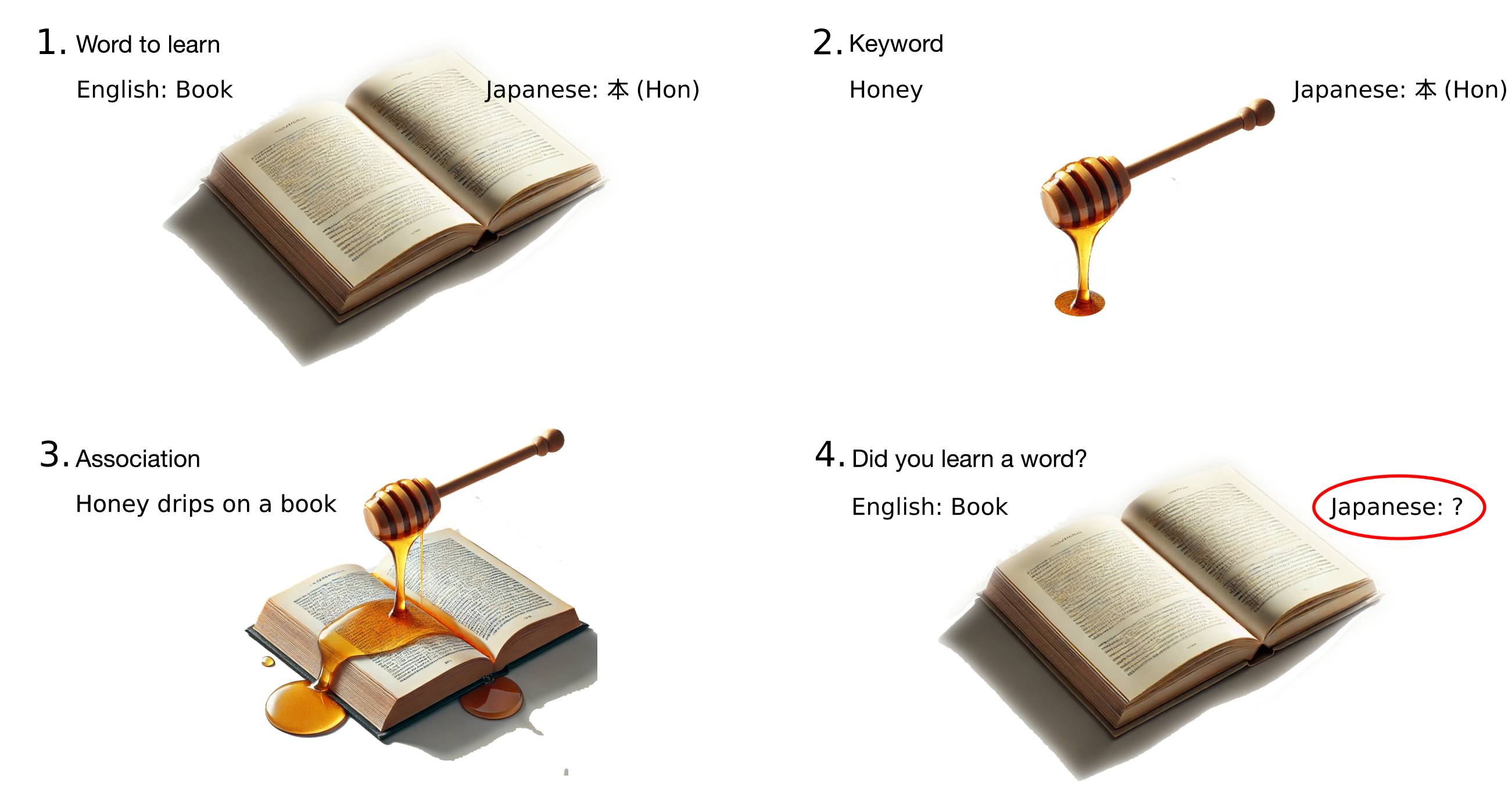
Dr. Klen Čopič Pucihar serves as Associate Professor at the Faculty of Mathematics, Natural Sciences and Information Technologies (FAMNIT) at the University of Primorska in Koper, Slovenia. He holds multiple leadership roles including Department Chair of Information Sciences and Technologies, Deputy Chair of HICUP Lab, and Study Programme Coordinator for the Doctoral Computer Science program. His research centers on Human-Computer Interaction with particular emphasis on: Augmented, Mixed, and Virtual Reality systems Micro-gesture recognition using radar sensing (e.g., Google Soli) Paper interfaces and augmentation of physical media AR for educational applications, particularly vocabulary learning Addressing the 'dual-view problem' in handheld AR systems Dr. Čopič Pucihar's work is driven by the vision to 'unclog the bottleneck' between humans and digital information. His recent publications (2019-2025) show a strong trajectory from theoretical interaction techniques toward practical educational applications and novel input methods using radar sensing, with consistent output in top venues including CHI, ISS, MobileHCI, and ISMAR. His notable achievements include: Best Paper Award at ACM IUI 2025 Honorable Mentions at ACM EICS 2022 and ACM ISS 2022 Best Poster Award at ISMAR Multiple hackathon victories including at Columbia University As Study Programme Coordinator for Doctoral Computer Science, Dr. Čopič Pucihar mentors graduate students and shapes research directions. His HICUP Lab hosts an international research group focused on making digital interfaces more intuitive and effective for human use through advanced sensing methods and personalized services. HICUP Lab leverages techniques from data mining, machine learning, computer vision, and human perception to develop interfaces that function as extensions of human minds, bodies, and behavior, with the ultimate goal of enabling 'digital augmentation of human abilities to its fullest potential.'
Hana Kuhar serves as a Language Instructor (English) and Assistant in Tourism at the University of Maribor's Faculty of Tourism. Holding an MA in English and Russian, she teaches specialized courses including Intercultural Communication and Ethics in Tourism, Digital Communication in Tourism, Rhetorics for Tourism Workers, and multi-level English for Tourism programs at undergraduate and master's levels. Her research centers on foreign language pedagogy within tourism contexts, with strong emphasis on innovative teaching methodologies and inclusion. Key interests include Language for Specific Purposes (LSP), cultural discourses in tourism education, and accessibility frameworks for diverse learners. Recent publications examine historical adult education models in Slovenia, communicative competence development for deaf language learners, and gender dynamics in tourism leadership. Dr. Kuhar's teaching philosophy prioritizes active student co-creation of lessons, transferring innovative techniques from primary/secondary education to higher education settings. She integrates practical tourism industry requirements with language instruction to develop students' cross-cultural communication competencies for global hospitality careers.