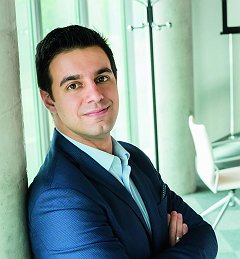
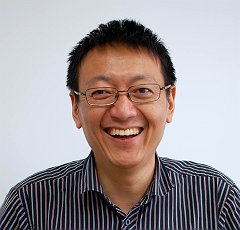
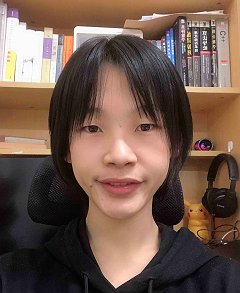
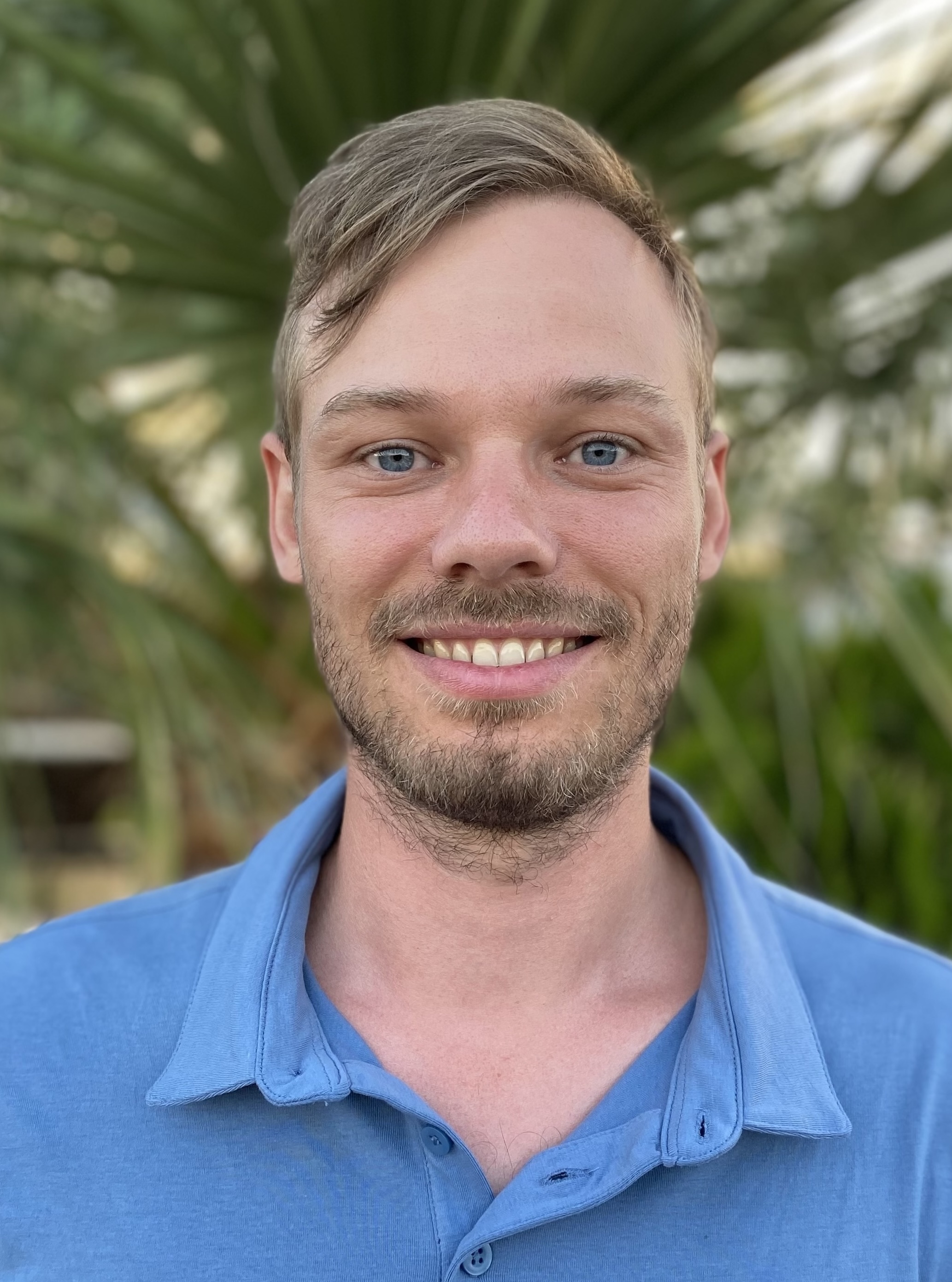
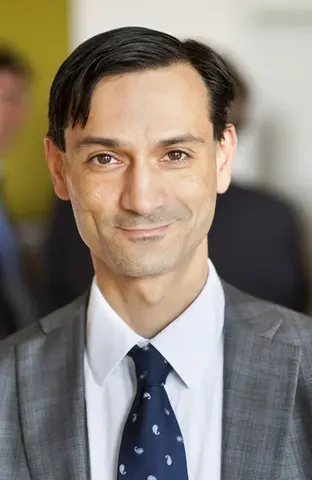
Prof. Axel Fanego Palat Fleisch holds the Chair of African Studies at Goethe University Frankfurt since 2018. As Managing Director of the Institute, he focuses on linguistic research with expertise in Bantu languages, migration linguistics, and African cultural studies. His career includes positions at the University of Helsinki (2008–2018), Leipzig, and Berkeley. He completed his PhD (2000) on Lucazi, an Angolan Bantu language, at Cologne University, followed by postdoctoral research in California. Research Interests: Language & Identity, Migratory Linguistics, Postcolonial Discourse Analysis Regional Specializations: Southern Africa, Portuguese-speaking Africa, Morocco/Kenya/Ethiopia Current projects include LOEWE-funded minority studies (2020–2023) examining Berber speakers in the Rhine-Main region, and a DAAD-partnered linguistic development initiative with Addis Ababa University. He co-leads the 'Africa makes schools' outreach program and participates in interdisciplinary networks like ZIAF. Key publications explore conceptual history in Africa, Amazigh linguistic repertoires, and Ndebele language diversity. His work bridges descriptive linguistics with critical social theory, addressing media representations and academic discourses about Africa.
Dr. Andreea Kaltenbrunner serves as an Academic Councillor at the Chair of Southeast and Eastern European History and coordinates the Bachelor's program in Southeast European Studies at the University of Regensburg since September 2023. Previously, she was a Postdoctoral Researcher at the University of Vienna (2021-2023) and a Doctoral Student there (2016-2019). PhD in Eastern European History (2019), University of Vienna Master's in Eastern European History (2015), University of Vienna Bachelor's in History (2013), University of Vienna Her research focuses on transnational antisemitism in 19th-20th-century Eastern Europe, post-imperial nation-building, and refugee movements after 1918. She examines how antisemitic discourses evolved across the Russian Empire, Austria-Hungary, and Romania, with particular attention to political strategies and Jewish community responses. Recent publications include a monograph on Romanian Old Calendarism and peer-reviewed analyses of antisemitic violence, literary historiography, and interwar governance. Her "Beyond Vienna" habilitation project traces Karl Lueger's transnational antisemitic networks. She actively participates in academic forums like Seeffield and SNAKLAB , co-organizing panels on topics such as digital humanities and junior scholar career trajectories. Her teaching includes seminars on post-imperial transformations and antisemitism in mass politics.
Sabine Wallmann is a Lecturer in Dutch Language and Culture at the Faculty of Humanities, University of Duisburg-Essen. Her contact details include an office address at Universitätsstraße 12, 45141 Essen, and phone coordination via the secretariat. She is affiliated with the Department of Dutch Studies, contributing to programs such as the 2-Subject Bachelor and Master's degrees in Dutch Studies, as well as Cultural Management Dutch. Her research and teaching focus on Dutch language pedagogy, contemporary Flemish literature, and interdisciplinary approaches within German and Dutch cultural studies. She has coordinated courses like Hedendaagse Vlaamse literatuur (Contemporary Flemish Literature) and taught foundational Dutch language courses (A1 level) across multiple semesters.
Prof. Dr. Karolin Schäfer serves as a full-time Professor at the University of Duisburg-Essen within the Faculty of Humanities and Institute for Special Education. Her office is located at Berliner Platz 6-8, WST-A.11.13b, 45127 Essen, with contact details including phone +49 201 183-7626 and email karolin.schaefer@uni-due.de. She leads the Working Group on Pedagogy and Didactics in the Special Needs Area of Hearing and Communication (HuK). Her research centers on specialized educational frameworks for hearing and communication impairments, emphasizing pedagogical strategies and assessment tools. The HuK working group maintains a dedicated Test Library for this focus area, indicating applied research in developing diagnostic resources for individuals with auditory and communicative disabilities. Her work bridges theoretical special education with practical classroom interventions. Prof. Schäfer oversees teaching and examinations for bachelor's and master's degree programs in special education. While the text confirms her advisory role through academic responsibilities, no specific students or grant details are listed. Her active engagement in research projects and team leadership suggests ongoing funded initiatives within the institute. The institute's structure includes three working groups: Emotional and Social Development, Language, and Hearing and Communication. Prof. Schäfer's team specifically develops methodologies for auditory impairment education, operating from the Institute for Special Education headquarters at Berliner Platz 6-8.
Kerstin Schneider is a full-time Professor for Databases at Harz University of Applied Sciences since 2007. She operates within the Faculty of Automation and Informatics , focusing on database theory, data engineering, and AI-driven educational technology solutions. Current research emphasizes adaptive e-learning platforms (ALEA system) Interdisciplinary projects in AI Engineering (AiEng 2021-2025) Custom database applications for SMEs (TEA project) Her research interests span: Reliable workflow execution in distributed systems Multimedia information systems Semantic data recommendations Temporal XML database models Recent publications (2021–2017) highlight trends in: Academic database foundations Intelligent e-learning architectures Life science data analytics Historical data visualization Scientific Awards : 2004 Research and Innovation Award of the Rhine-Neckar Triangle Foundation She contributes to academic governance through roles in: Steering Committee for Fundamentals of Databases Examination Board AI Engineering Senate Deputy at Harz University Equal Opportunities Officer for AI Department Key collaborative projects include: APRICOTS (CORBA-based workflow systems) GEIST (Intelligent History Information Systems) Team projects with international universities Open Educational Resources (OER) development
Marco Guarnieri is an Associate Professor at IMDEA Software Institute in Madrid, Spain. His research focuses on the design, analysis, and implementation of practical systems for securely storing and processing sensitive data, with particular emphasis on security at the hardware-software boundary and microarchitectural attacks and defenses. Guarnieri received his PhD in Computer Science in 2017 from ETH Zurich's Institute of Information Security, following an MSc (2012) and BSc (2010) in Computer Engineering from Università degli Studi di Bergamo. His research spans security and privacy, program verification, programming languages, and formal methods. Guarnieri's work has particularly focused on addressing vulnerabilities related to speculative execution (Spectre attacks), side-channel analysis, hardware-software security interfaces, and leakage contracts. His approach often combines formal verification techniques with practical system implementation to develop robust security solutions. Guarnieri's publications reveal a strong focus on microarchitectural security, with recent work addressing secure speculation countermeasures, compiler security guarantees against Spectre attacks, side-channel security of cryptographic implementations, and hardware-software leakage contracts. His research shows a progression from database security early in his career to the hardware-software security boundary that characterizes his current work. Among his notable achievements are a Best Paper Award at CCS 2024 and Distinguished Paper Awards at CCS 2023 and CCS 2022. His paper 'Hardware-Software Contracts for Secure Speculation' also received a Best Paper Award. Guarnieri actively contributes to the academic community through program committee roles, including the PriSC Steering Committee, and has organized events such as PLMW@PLDI 2023. He is seeking talented researchers (interns, PhD students, and postdocs) to join his group at IMDEA Software Institute to work on security at the hardware-software interface.
Matthew J. Parkinson is a Principal Researcher at Microsoft Azure Research in Cambridge, UK. His work focuses on memory and concurrency safety , with significant contributions to formal verification , systems programming , and language design . He actively participates in academic communities as a session chair and committee member for conferences like OOPSLA , PLDI , and ISMM . Research Trends : His recent publications (2023-2025) emphasize dynamic region ownership , wait-free reference counting , and allocator optimization for concurrent systems. These works span systems programming , formal verification , and domain-specific language tools , reflecting his interdisciplinary approach. Conference Contributions : Parkinson has served as session chair for tracks including MPLR Session 2 (2023) and PLDI: Memory Models & Program Logics (2023). He has also contributed to program committees for POPL , IWACO , and The Future of Weak Memory (2024).
Xiaoxing Ma is a Professor at the State Key Laboratory for Novel Software Technology , Nanjing University , focusing on Software Engineering , Self-adaptive Software Systems , and Software Engineering for Machine Learning . His recent work bridges neuro-symbolic reasoning and formal verification. Key research areas: Software Engineering, Self-adaptive Systems, Neuro-symbolic AI Awards: China National Awards (2006, 2011), MOE Award (2010), CVIC SE Award (2009) His 2023-2024 publications emphasize: Formal semantics for hardware description languages (Verilog) Neuro-symbolic frameworks for mathematical reasoning Dynamic update verification and CRDT model checking LLM-driven API migration and traceability recovery He serves as Program Co-Chair for SEAMS 2024 and contributes to major software engineering conferences (ICSE, ASE, FSE, PLDI).
Lingkun Kong is a researcher at Rice University, United States, actively contributing to programming languages, compiler optimization, and high-performance computing. His work focuses on regular expression matching, bit-parallel algorithms, and hardware-software co-design. Recent Research Trends: Analysis of automata-based regex engines, GPU acceleration for pattern matching, and domain-specific languages for streaming data. Publications span venues like SPLASH, PLDI, and OOPSLA tracks.
Wenhao Tang is a researcher affiliated with The University of Edinburgh in the United Kingdom. Active in programming languages and type theory research, he has contributed to conferences including POPL, ICFP, and SPLASH. His work focuses on foundational programming language design, effect systems, and bidirectional programming.
Julia Merrill serves as Adjunct Professor at the University of Kassel's Institute of Music and Senior Research Fellow in the Music Department at the Max Planck Institute for Empirical Aesthetics since 2014. Her academic journey includes a Habilitation in Musicology (2018, University of Kassel), PhD in Cognitive Science (2013, University of Potsdam), Diploma in Speech Science (2010, Martin Luther University Halle-Wittenberg), and Diploma in Church Music (2004, University of Church Music Heidelberg). Habilitation in Musicology, University of Kassel (2018) PhD in Cognitive Science, University of Potsdam (2013, summa cum laude) Diploma in Speech Science, Martin Luther University Halle-Wittenberg (2010) Diploma in Church Music, University of Church Music Heidelberg (2004) Merrill's research centers on the psychological and physiological dimensions of musical aversion, with groundbreaking work on disliked music's emotional and bodily impacts. Her concert research examines physiological synchrony during live performances, while vocal studies explore the speech-song boundary and aesthetic evaluation of voices. Current projects include investigating perceived versus felt emotions in music and analyzing pandemic-era shifts in musical engagement. Her publication trends reveal a methodological evolution from lesion studies and fMRI toward ecological concert research and psychophysiological measurement. Recent work emphasizes mixed-methods approaches combining self-report with cardiac/respiratory monitoring, particularly regarding musical dislikes and live audience experiences. No scientific awards are explicitly documented in available materials. Merrill has served as guest professor at Martin Luther University Halle-Wittenberg (2015-2016) and edited conference proceedings for the International Association for the Study of Popular Music. Current externally funded work includes the INHABIT Artist-in-Residence program at the Max Planck Institute. She collaborates extensively on interdisciplinary projects spanning music cognition, neuropsychology, and empirical aesthetics. Her laboratory work focuses on the Music Department at the Max Planck Institute for Empirical Aesthetics, where she leads research on disliked music and concert experiences. Current team initiatives include the Musicovid international research network examining pandemic impacts on musical behavior and projects studying physiological synchrony during ensemble singing.
Dr. Lars Schütze is a researcher at the Chair for Compiler Construction within the Faculty of Computer Science at Dresden University of Technology (TU Dresden). Holding a PhD in Computer Science from TU Dresden, he currently serves as a PostDoc specializing in domain-specific compilers for verifiable Full Homomorphic Encryption (vFHE) and hybrid quantum-classical computing systems. His academic credentials from TU Dresden include: Bachelor's degree in Computer Science Master's degree in Computer Science PhD in Computer Science (awarded February 2025) Schütze's research centers on advanced compiler design for emerging computational paradigms. His foundational work explores context-oriented and role-based programming languages, focusing on runtime optimization and dispatch mechanisms. Recent efforts pivot toward post-quantum security through homomorphic encryption compilers and hybrid quantum-classical computing frameworks. His research bridges theoretical language design with practical compiler implementation, emphasizing verifiable security and performance efficiency in next-generation computing environments. Publication analysis reveals a clear evolution from context-oriented programming (2017-2020) toward cryptographic compiler development (2022-2025). Early work optimized role-based dispatch systems, while recent publications establish compiler frameworks for Fully Homomorphic Encryption using MLIR infrastructure. His research consistently addresses performance bottlenecks in dynamic language features while transitioning toward quantum-resistant cryptography solutions. Scientific Awards: No awards documented in source materials Dr. Schütze supervises student theses in Homomorphic Encryption and Quantum-Classical Computing frameworks, offering projects spanning Bachelor to Master levels. His research is funded through institutional projects including (verifiable) Full Homomorphic Encryption and Hybrid Quantum-Classical Computation, though specific grant details remain undisclosed. He actively develops compiler infrastructure for encrypted computation and quantum-classical orchestration. As core personnel in TU Dresden's Chair for Compiler Construction, Schütze contributes to the RoSI project (role-based software infrastructures) and leads current initiatives in vFHE. His team collaborates on building domain-specific compiler toolchains that address quantum computing threats through post-quantum cryptographic solutions while advancing hybrid execution models for emerging hardware architectures.
Dr. Diemut Koenig is a Research Associate at the Faculty of Social Sciences, Saarland University of Applied Sciences, specializing in children/youth work, memory education, and ethnographic methods. She leads projects under Prof. Dr. Charis Förster and collaborates with institutions like Goethe University Frankfurt and PH Karlsruhe on international youth encounters and identity formation. Current role: Research Associate (since 2024) Key projects: State Program "Language Daycare Centers" (2023-present); FGTS Afternoon Care (2020-2024) Doctoral research: "International Youth Encounters and National Identity" (2015-2023) Her scholarly work focuses on: Memory education through international youth programs Extracurricular learning environments German-French intercultural analysis Conflict-based identity construction Ethnographic studies of pedagogical frameworks Recent publications analyze Franco-German educational models, memory dynamics in WWI centenary programs, and pedagogical approaches to post-war identity. She also contributes to systemic therapy training and evaluates state-funded educational initiatives.
Prof. Dr. Christiane Maaß is a Professor of Media Linguistics at the University of Hildesheim, where she has been a faculty member since 2011. She is the founding director of the Research Center for Easy Language (established in 2014) and leads the Master’s program in Accessible Communication since 2018. She is affiliated with the Institute for Translation Studies & Specialized Communication within the Department of Linguistics and Information Sciences. Her leadership extends to national and institutional roles, including serving as a federal expert on digital accessibility and leading the Accessible Health Communication division of the German Health Literacy Network. University: University of Hildesheim School: Department of Linguistics and Information Sciences Department: Institute for Translation Studies & Specialized Communication Academic Rank: Professor Email: maassc@uni-hildesheim.de Her research focuses on accessible communication, particularly Easy and Simple Language, with applications in media, healthcare, public administration, and digital services. She investigates how linguistic simplification, multimodal formats, and translation practices can enhance understanding for people with cognitive, sensory, or linguistic challenges. Her work combines theoretical linguistics with practical translation and policy implementation. The recent publications reflect a strong trend toward health communication, AI-assisted translation, and digital accessibility. Projects like KI-GesKom explore the use of artificial intelligence to generate medically accurate texts in Easy Language, ensuring both clarity and scientific validity. Other works address subtitling, inclusive theater, and public service communication, demonstrating a consistent commitment to social inclusion through language. Prof. Maaß actively supervises doctoral research, including a group on Accessible Health Communication funded by the Robert Bosch Foundation. She has led numerous externally funded projects, including EU-supported initiatives like EASIT. Her academic service includes roles on the university Senate, examination boards, ethics committees, and quality commissions. Co-editor, Handbook of Accessible Communication (2019, 2024) Co-editor, book series "Easy – Plain – Accessible" (Frank & Timme) Federal government expert on digital accessibility Leader, Research Center for Easy Language Principal investigator, multiple third-party funded research projects She mentors students and early-career researchers in translation, accessibility, and health communication. Her lab, the Research Center for Easy Language, conducts practice-oriented research in collaboration with public institutions, media organizations, and healthcare providers. Current initiatives include developing AI tools for accessible health texts and improving digital government services. Future work is expected to expand into multimodal communication, cross-linguistic accessibility, and international policy frameworks.
Professor Till Talaulicar holds the Professorship for Organization and Management at the Faculty of Political Science, University of Erfurt. He has established himself as a prominent scholar in corporate governance, organization design, and corporate ethics, with extensive publications in leading academic journals and edited volumes. His work bridges theoretical frameworks with practical applications in corporate management and governance. Professor Talaulicar's research focuses span three primary domains: Corporate governance : Examining regulatory frameworks for company management and supervision, top-level organizational structures across different legal forms, international standards adoption, and governance of newly listed companies (IPOs) Organization design : Conducting action-theoretically based studies on management organization alternatives, behavioral analyses of governance body interactions, and developing structural measures to enhance organizational adaptability Corporate ethics : Investigating norm and organizational theory-based implementation of ethics, design dimensions of ethics codes, and social responsibility of global corporations His publication record demonstrates a consistent focus on the intersection of corporate governance and business ethics, with recent work expanding to examine business ethics teaching, research, and training across Germany, Austria, and Switzerland. Talaulicar has served as Editor-in-Chief of Corporate Governance: An International Review (2019-2024) and Senior Editor of Management and Organization Review, significantly influencing scholarly discourse in his fields. Professor Talaulicar has contributed extensively to academic discourse through numerous publications including monographs, edited volumes, journal articles, and book chapters. His collaborative work with scholars such as Axel v. Werder, Konstantinos Stathopoulos, and others demonstrates his commitment to advancing knowledge through scholarly partnerships.