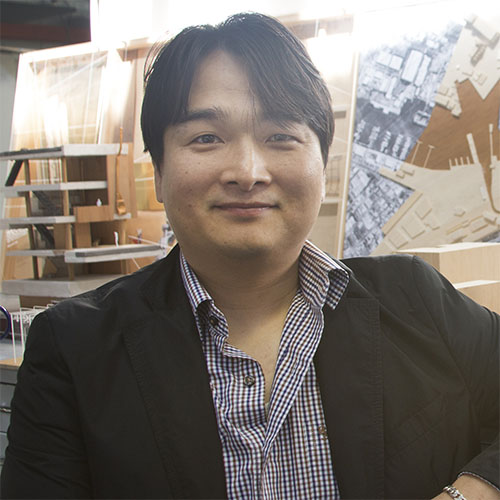
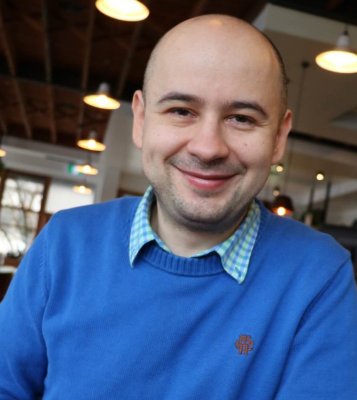
Dr. Liam O'Connor-Davis is a Senior Lecturer in the School of Computing at The Australian National University (ANU). He holds a PhD and BSc (Hons) in Computer Science from the University of New South Wales (UNSW), awarded in 2019 and 2013, respectively. His research interests include type systems, formal methods, and systems programming, as evidenced by his doctoral work on 'Type Systems for Systems Types' and his undergraduate project 'Formalising GHC's Type System'. He has held an external affiliation as a Lecturer at the University of Edinburgh until July 2024. His academic background emphasizes foundational aspects of programming languages and software engineering. Despite no explicit publications listed here, his educational focus suggests contributions to theoretical computer science and practical system implementations.
Dr. Feras Dayoub is a Senior Lecturer at the School of Computer and Mathematical Sciences (Faculty of Sciences, Engineering and Technology) at the University of Adelaide , specializing in Embodied AI and Robotic Vision within the Australian Institute for Machine Learning (AIML) . He co-directs the CROSSING French-Australian laboratory for human-autonomous agent teaming and holds an Adjunct position at the Queensland University of Technology (QUT) , serving as an Associate Investigator at its Centre for Robotics . Previously, he was a Chief Investigator at the ARC Centre of Excellence for Robotic Vision . His research focuses on advancing reliable deployment of computer vision and machine learning on mobile robots in real-world environments. Applied projects include agricultural automation , environmental conservation , and autonomous infrastructure monitoring . He has published extensively on topics like object detection , domain adaptation , 3D representation learning , and vision-language navigation , with a particular emphasis on robustness in dynamic and partially observed environments. Dr. Dayoub is also an educator specializing in programming , computer vision , and robotic perception . He contributes to open-source robotics research through tools like AARK (Autonomous Racing Toolkit) and has led teams developing solutions for precision agriculture (e.g., Deepfruits fruit detection system) and environmental monitoring (e.g., Crown-Of-Thorns starfish detection ). Key Collaborations : CROSSING Lab, QUT Centre for Robotics Research Themes : Embodied AI, Robust Perception, Domain Adaptation
Professor Heiko Spallek is Head of School and Dean at the University of Sydney’s Sydney Dental School, leading the school’s integration with the Faculty of Medicine and Health. He also serves as Academic Lead for Digital Health and Health Service Informatics at the faculty level. His research focuses on advancing dental informatics, teledentistry, and evidence-based practice, while advocating for improved oral health policy and public health initiatives. He holds roles including director at Community Connections Australia and membership in the Charles Perkins Centre. Education: DMD, Dr. med. dent., MSBA(CIS), FACD, FAIDH Leadership: Oversees Sydney Dental School’s academic and clinical programs, emphasizing interprofessional education and digital health innovation. Research interests include leveraging big data and machine learning in dentistry, improving access to oral healthcare through teledentistry, and addressing systemic issues in dental education and policy. He has led projects on laser dentistry applications, dental caries prevention, and healthcare workforce regulation. Notable contributions include the OpenWide conference series, the BigMouth dental data repository, and advocacy for equitable dental funding in Australia. Grants include initiatives on oral hygiene in aged care and analysis of healthcare advertising perceptions. Media engagements highlight his role in public discourse on dental access and policy, including commentary on Australia’s dental crisis and aged care reforms. He actively promotes interdisciplinary collaboration through platforms like the Dental Informatics Online Community. Labs/Teams: Directs the Sydney Dental School’s research programs in informatics and public health, collaborating with national and international networks such as the National Dental PBRN.
Kerry Taylor is an Associate Professor (Data Science) at the School of Computing, Australian National University (ANU). She holds visiting roles at the University of Surrey (UK) and University of Melbourne. Her career spans 20 years at CSIRO, UN big data projects with ABS, and interdisciplinary research in data management, IoT, and semantic technologies. She lectures in data mining and convenes ANU's postgraduate applied data analytics programs. Education includes a BSc (Hons 1) in Computer Science from UNSW (1983) and a PhD in Computer Science and Technology from ANU (1996). She co-chaired the W3C/OGC Spatial Data on the Web working group (2015-2017) and serves on editorial boards for Knowledge-Based Systems and International Journal of Distributed Sensor Networks . Research focuses on ontologies, semantic web, machine learning in IoT, and spatial data systems. Active projects include government information frameworks, distributed IoT facilities, and sensor data integration. Her work emphasizes interdisciplinary applications of logic-based and semantic approaches to data challenges.
Richard Garner is a lecturer at Macquarie University's School of Mathematical and Physical Sciences, Faculty of Science and Engineering. He specializes in teaching mathematics to engineering and computing students in units like MATH2055 and MATH1007, focusing on problem-solving and real-world applications. His teaching philosophy emphasizes authentic mathematical experiences, blending abstract concepts with practical examples, such as connecting multivariable calculus to AI technologies. School: School of Mathematical and Physical Sciences University: Macquarie University Teaching Areas: Mathematics for engineering and computing, convolution, multivariable calculus Richard won a Student Nominated Award in the 2023 Vice Chancellor’s Learning and Teaching Awards, reflecting his commitment to student-centered education. He prioritizes clarity in course design, using visual tools and accessible materials to enhance learning, and fosters a supportive environment where students feel comfortable asking questions. Key Teaching Strategies Organized iLearn layouts following Macquarie University's standards Multiple formats for lecture materials (diagrams, color-coded slides) Weekly task clarity and real-world problem framing Live worked examples and transparent success criteria His research spans category theory, computational effects, and homotopy theory, with publications on topics like comodels, monoidal bicategories, and enriched categories. Richard's work bridges abstract mathematics with applications in computer science and logic. Scientific Awards 2023 Vice Chancellor’s Learning and Teaching Award (Student Nominated) Students praise his ability to make complex concepts intuitive, his enthusiasm for mathematics, and his dedication to explaining the 'why' behind the subject. His teaching design, including time-sensitive banners and structured weekly content, has been highlighted as exemplary.
Minh Hue Nguyen is a Senior Lecturer in EAL/TESOL Teacher Education at Monash University's School of Curriculum, Teaching and Inclusive Education within the Faculty of Education. She holds a PhD in Education (TESOL focused) from Monash University and has taught at Vietnam National University, Deakin University, and the University of Melbourne. Her educational background includes: PhD in Education (TESOL focused), Monash University (2015) MA in Applied Linguistics, Victoria University of Wellington (2008) BA in English Language Teaching, Vietnam National University (2003) Nguyen's research centers on teachers' professional learning, curriculum, and pedagogy in TESOL and EAL contexts, with specific focus on emotional experiences, identity development, mentoring, agency, and collaboration. She explores sociocultural contexts of teacher development through activity theory and sociocultural perspectives, examining how institutions support teachers' learning journeys from preservice to in-service stages. Recent work investigates professional learning for teacher educators and implementation of the Victorian EAL Curriculum. Her 15 most recent publications (2024-2025) reveal a strong thematic focus on language teacher agency, identity negotiation, and multilingual pedagogies. The research increasingly examines emotional dimensions of teaching, cross-cultural identity tensions, and collaborative models between EAL and content teachers, with significant contributions to understanding how teachers navigate complex educational contexts while developing professional identities. Her scientific recognition includes: Penny McKay Award Special Commendation Monash Education Research Community's Publication Award ATEA/Kay Martinez Award for Best Paper Monash Dean of Education’s ECR Project Award Advancing Women's Research Success Grant Vietnamese Government Merit-based Scholarships Nguyen actively supervises PhD research in TESOL teacher professional learning, teacher identity, and curriculum development, though is currently unavailable for new PhD students until 2027. She contributes to editorial boards for Teaching and Teacher Education, Second Language Teacher Education, and System journals, and serves on the Australian Teacher Education Association. Her work supports UN Sustainable Development Goal 4 (Quality Education) through inclusive pedagogical frameworks. She leads research projects including 'Elucidating practices to assist EAL learners to acquire specialised science vocabulary' and 'Establishing an online community-of-practice model for learner agency during work placements,' demonstrating commitment to practical educational innovations.
Dr. Liyi Zhou is a Lecturer in the School of Computer Science at the University of Sydney, specializing in systems security, blockchain, and AI. His research focuses on developing automated and adaptive security tools using machine learning and reinforcement learning. He co-founded D23E.ch, a platform addressing blockchain security and privacy challenges. Research interests include AI-driven vulnerability detection, large security models, real-time intrusion prevention, advanced program analysis (fuzzing/symbolic execution), and privacy-preserving systems. He actively recruits PhD students for projects advancing AI in cybersecurity. Notable achievements include pioneering 'sandwich attacks' discovery in DeFi protocols, contributing to Ethereum Foundation grants, and receiving bug bounties from Flashbots and Ethereum Foundation for vulnerability disclosures. His work has been published in venues like IEEE S&P, USENIX Security, and SIGMETRICS. Teaching includes the course INFO2222. He seeks collaborations and funding to bridge academic research with real-world industry problems, emphasizing practical impact.
Dr. Michelle Townsend is a Senior Research Fellow at the University of Wollongong's School of Psychology and a Senior Lecturer in the Public Health Discipline within the School of Health and Society. With over two decades of expertise in responding to adverse childhood experiences, her research bridges psychology and public health, focusing on child maltreatment, mental health disorders, self-harm, suicide prevention, and improving outcomes for vulnerable children and families. Her work emphasizes collaboration with clinicians, educators, government agencies, and communities to develop impactful interventions and policies. Notable contributions include the Project Air Strategy for Schools and research on child-to-parent violence, caregiver experiences, and e-therapy for adolescents with borderline personality disorder. Dr. Townsend holds dual roles, combining research leadership with teaching in public health and psychology, and actively supervises PhD students in areas like narrative therapy and suicide risk assessment. Her funding includes grants from NSW Department of Education and the Mental Health Commission of NSW, supporting initiatives such as early intervention in schools and peer support programs for personality disorders. She also contributes to editorial roles and peer review for journals like BMC Psychology and Clinical Psychologist. Through co-design approaches, her research prioritizes ethical principles and community impact, addressing critical societal challenges in mental health and child welfare.
Associate Professor Helen Adam is a leading academic in the School of Education at Edith Cowan University (ECU), specializing in culturally responsive pedagogy and the role of children’s literature in fostering equity and inclusion. She holds a PhD in Early Years Education (2019) and has extensive experience in primary education and literacy research. Her career includes roles as a teacher, researcher, and leader in teacher education, particularly in addressing systemic inequities through literature. She is Board President of the Primary English Teaching Association of Australia (PETAA) and actively contributes to national and international educational initiatives. Research interests focus on diverse children’s literature, social-emotional development, and dismantling prejudice through books. Notable projects include a Churchill Fellowship (2022) exploring global practices in children’s literature and equity-driven education. Her work has been recognized with awards such as the 2023 Churchill Fellowship and multiple ECU research accolades. Helen supervises postgraduate research in literacy and diversity, including projects on postmodern picturebooks and culturally diverse family representation. She collaborates with institutions like ECU’s Kurongkurl Katitjin Centre for Indigenous Education, emphasizing allyship and support for marginalized groups.
Amanda Berry is a Professor of STEM Education and Deputy Dean (Research & Innovation) in the School of Education at RMIT University, Australia. Her research focuses on science education, teacher education, and methodologies for capturing classroom practices. She leads initiatives to develop tools for representing teachers' pedagogical expertise and has contributed to frameworks like the refined consensus model of pedagogical content knowledge (PCK). Her work emphasizes teacher professional development, particularly for highly accomplished educators, and explores adaptive expertise in interdisciplinary teaching. She actively supervises postgraduate research students and collaborates internationally on projects like the Sharing Knowledge Project in inquiry-based teaching. Key research themes include STEM integration, teacher educator professionalism, and the role of student voice in assessment reform. Her interdisciplinary approaches bridge theory and practice, influencing both policy and classroom strategies in science and mathematics education.
JuHyun Lee is an Associate Professor of Architecture and Computational Design in the School of Built Environment at the Faculty of Arts, Design and Architecture (ADA), University of New South Wales (UNSW) Sydney, where they also hold the prestigious title of Scientia Academic. With a professional background in architecture and construction (1998-2002), they have held academic positions across Australia including a five-year post-doctoral fellowship at the University of Newcastle (2012-2017) and a senior research fellowship at the University of South Australia (2018), following earlier research and teaching roles in South Korea (2003-2011). Lee specializes in architectural design computing, design cognition, and urban complexity, integrating computational methods, cognitive science, and architectural theory to advance architectural intelligence and human-centered design. Their research spans architectural visualization, analysis and design methods, algorithm/protocol design, and data visualization with computational approaches. They have established a strong research program examining the intersection of language, culture, and design cognition, particularly focusing on cross-cultural design communication between Australia and Korea. Lee's recent publications demonstrate a clear trajectory toward increasingly sophisticated integration of computational methods with architectural design theory, particularly in the areas of shape grammar, space syntax, and machine learning applications. Their work shows consistent focus on practical applications of computational design methods to real-world architectural problems, with growing emphasis on cross-cultural collaboration and intelligent design systems. The research portfolio reveals a deepening engagement with AI and machine learning techniques applied to architectural design assessment and generation. Scientia Academic at UNSW Sydney Associate Fellow of the Higher Education Academy (AFHEA, 2020) As an educator, Lee develops cutting-edge courses in computational design and Building Information Modeling (BIM), integrating experiential learning and industry engagement. They have secured over $11 million in research funding, including multiple ARC Discovery Projects and an Australia-Korea Foundation grant. Lee co-directs the Advanced Architectural Analytics Laboratory (A 3 LAB), leading interdisciplinary research on design automation, spatial analysis, and machine learning applications in architecture, while also leading cross-cultural initiatives like the Australia-Korea Architects' Network (AKAN). Lee supervises multiple HDR students working on culturally sustainable urban design, socio-spatial patterns in public housing, and computational layout generation. Their research has significant implications for improving design communication across cultural boundaries and developing more coherent, clear, and accessible built environments through computational design approaches.
Professor Jon Eugene von Kowallis is Professor of Chinese Studies in the School of Humanities and Languages at the University of New South Wales (UNSW), Sydney. He has held this position while also serving as President of the Australian Society for Asian Humanities and as a Fellow of both the Australian Academy of the Humanities and the Royal Asiatic Society (London). His academic career spans multiple institutions including Berkeley, UCLA, Oregon, Williams College, Karlova (Prague), and the University of Melbourne prior to UNSW. Professor von Kowallis earned his BA from Columbia University, MA in Chinese literature from the University of Hawaii, and PhD in Oriental Languages (specializing in Chinese literature) from the University of California, Berkeley. He also studied at National Taiwan University and Beijing University. His educational background reflects his deep engagement with Chinese language and literature across multiple academic traditions. His research focuses on Chinese literature, particularly modern Chinese literature, classical Chinese poetry, and Lu Xun studies. He has pioneered work on the role of classical Chinese poetry during China's modern era, challenging dominant paradigms in Chinese literary history. His book The Subtle Revolution: Poets of the 'Old Schools' in late Qing and early Republican China has been recognized as ground-breaking and has influenced an entire field of scholarship. He is also internationally acknowledged as an authority on Lu Xun, particularly for his monograph The Lyrical Lu Xun: a Study of his Classical-style Verse . His recent publications demonstrate consistent engagement with Lu Xun studies, classical Chinese poetry in modern contexts, Chinese cinema, and contemporary Chinese theatre. His work spans traditional literary scholarship, archival research on manuscripts, and analysis of contemporary cultural productions. The articles show a trajectory from early foundational work on historical literary figures to current research on contemporary adaptations and performances of Chinese literary works. Goldstar Award for research (UNSW, 2008) Ministry of Education of the People's Republic of China Prize (2014) Publication grant from Ministry of Culture of PRC (2016) Zhifang Distinguished Professor, Fudan University (2018) Fellow of the Australian Academy of the Humanities (2020) US-China Scholars Program Fellowship (2021-2022) Professor von Kowallis actively supervises graduate students working on Lu Xun's Gushi Xinbian, Shen Congwen's short stories, and classical-style verse in modern contexts. His ARC Discovery Project "The Young Lu Xun and His Early Work Written in Japan" has deepened understanding of Chinese intellectual relations with the West and Japan. He has established significant research partnerships with Chinese institutions including Beijing Lu Xun Museum, Peking University, and Fudan University, where he conducted research at Theatre Above in Shanghai, the Wuzhen Theatre Festival, and Huichang Theatre Village in Jiangxi Province (2024-5).
Julian Millie is a Professor in Indonesian Studies at Monash University, Faculty of Arts, where he coordinates and teaches in the Indonesian Studies program. His academic work bridges anthropology, religious studies, and Southeast Asian studies, with a focus on the social and political dimensions of Islamic practice in Indonesia. His research centers on embodied Islamic routines, including preaching, ritual, and commemoration of regional Islamic figures. He has led major ARC-funded projects such as Preaching Islam: politics, performers and publics and Glocalisation and sub-national Islams , and currently leads the international project Islamic Bureaucracies and Pious Publics in Turkey and Indonesia . Anthropology of Indonesia Islamic Culture and Society Ritual and Religion Public Islam and Preaching Social Change in Muslim Societies Political Anthropology His recent publications (2023–2024) reveal a continued focus on Islamic consumerism, reformist critiques of consumption, ritual embodiment, and the politics of Islamic education. These works span journals like Asian Studies Review and edited volumes on preaching and Malay-Indonesian Islamic studies, showing strong interdisciplinary reach into sociology, cultural studies, and education policy. Julian Millie has contributed to scholarly discourse through editorial roles, including guest editorships for Asian Studies Review (2023) and International Journal of Cultural Studies (2013). His media engagements highlight his commitment to public anthropology, commenting on the state of Indonesian studies in Australia and Islamic education policy. He is actively involved in research grants, including current funding from 2020 to 2025, and has collaborated with scholars across Australia, Indonesia, and Turkey. While no formal advisees are listed, his leadership in research projects suggests mentorship and team coordination. He is a central figure in the study of contemporary Indonesian Islam, contributing to both academic and public understanding.
Piotr Koniusz is a Principal Research Scientist at Data61/CSIRO and an Honorary Associate Professor at the Australian National University (ANU), with an Adjunct role at UNSW. He holds a PhD in Computer Vision from the University of Surrey (2013) and a BSc from Warsaw University of Technology (2004). His research focuses on Foundation Models, Representation Learning, and Few-shot Learning, with contributions to Graph Neural Networks and Adversarial Robustness. Key roles include Program Chair for NeurIPS’25, Senior Area Chair for ICML’25 and ICLR’25, and Workshop Co-Chair for WWW’25. Awards include the Sang Uk Lee Best Student Paper (ACCV’22) and recognition as an Outstanding Area Chair (ICLR 2021–2023). Research interests span Vision-Language Models (VLMs), Generative Adversarial Networks (GANs), and Domain Adaptation. He supervises PhD students at ANU and collaborates with industry on projects like traffic forecasting and ecotoxicology prediction.
Associate Professor Sunny-Boy Ahmar Mahboob is a distinguished linguist at the University of Sydney, where he serves as Degree Coordinator for the Master of Crosscultural and Applied Linguistics program within the Department of Linguistics, Faculty of Arts and Social Sciences. With extensive experience in applied linguistics and language education, Dr. Mahboob has established himself as a leading expert in World Englishes, TESOL, and language variation research, both nationally and internationally. Dr. Mahboob's educational background includes: BA from Karachi MA from Karachi MA from Indiana University MEd from Sydney PhD from Indiana University (2003) Dr. Mahboob's primary research focuses on language variation in global contexts, with particular attention to World Englishes, the NNEST (Non-Native English Speaking Teachers) movement, language policy, and decolonial approaches to linguistics. His work critically examines how language policies and practices affect educational outcomes and social justice, especially in postcolonial contexts like Pakistan and the Middle East. He pioneered 'appliable linguistics' - an approach that bridges theoretical linguistics with practical applications in education and policy, emphasizing the need for linguistic theories to address real-world problems. His recent publications reveal a strong trajectory toward decolonial linguistics, with increasing focus on subaltern perspectives, environmental connections to language diversity, and critical examinations of colonial legacies in language education. Dr. Mahboob's work consistently addresses power dynamics in language teaching and the need for more inclusive approaches that value linguistic diversity across educational contexts from primary schools to universities. Dr. Mahboob has received numerous prestigious awards: 2019: Australia's Research Field Leader in English Language and Literature (The Australian's Research magazine) 2012: Fellow of the National Talent Pool; President's Programme for Highly Qualified Overseas Pakistanis 2006: Faculty of Arts and Social Sciences Teaching Award, University of Sydney 2005: Teaching Initiative Award and Fellow of the Association of Pacific Rim Universities 2004: ECU Research and Creativity Award 2002: 'Distinguished President Award' from INTESOL, Indianapolis As an academic mentor, Dr. Mahboob supervises research students including Ruohong CAO (Developing Mandarin Learning Materials for Young Learners in Australia through Positive Discourse Analysis) and Tracy GAO (Evaluating Chinese Language Textbooks: A Sociosemiotic Perspective). His editorial work includes serving as Editor of TESOL Quarterly (2014-2017) and Associate Editor for multiple linguistics journals. Dr. Mahboob has secured significant research funding for projects including the SLATE (Scaffolding Literacy in Academic and Tertiary Environments) project and indigenous language funding initiatives in Australia. Dr. Mahboob founded and leads the International Free Linguistics Conference series, which has become an important platform for critical and alternative approaches to linguistics. His 'SLATE project' focuses on genre-based pedagogy for academic writing, and he actively collaborates with researchers across multiple continents through the World Englishes research network. His recent work increasingly explores the connections between language diversity and environmental sustainability, positioning linguistic ecology as a critical component of broader ecological concerns.