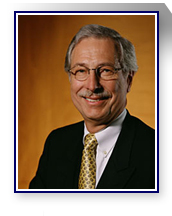
Achuta Kadambi, Ph.D., is an Associate Professor at UCLA in Electrical Engineering and Computer Science, leading an interdisciplinary research group focused on AI, computational imaging, and bias mitigation in medical technologies. He recruits PhD students from EE, CS, and Bioengineering departments and has commercialized research through two California-based companies. His research investigates the intersection of physics and artificial intelligence, with a focus on unbiased low-level vision systems. Current projects explore how light transport interacts with human skin variations to identify and correct imaging biases in facial recognition and medical devices. His work has produced over 70 patents, with 30+ issued, and a textbook Computational Imaging (MIT Press, 2022). NSF CAREER Award (2021) for light transport bias research DARPA Young Faculty Award (2021) for AI and medical imaging innovations ARO Young Investigator Program (2021) for computational sensing IEEE-HKN Under 35 Award (2022) for inclusive EECS inventions Forbes 30 Under 30 recognition His recent publications focus on polarization imaging, 3D Gaussian splatting, synthetic data generation for healthcare, and bias mitigation in machine learning. Collaborations with UCLA medical school faculty, including Dr. Laleh Jalilian, aim to deploy these innovations in clinical settings. Current teaching includes ECE 149: Foundations of Computer Vision (Fall 2024, Spring 2025) and ECE 102: Signals and Systems (Winter 2024).
Tzu-Mao Li is an Assistant Professor in the Department of Computer Science and Engineering (CSE) at the University of California, San Diego (UCSD), affiliated with the Center for Visual Computing. His research focuses on differentiable graphics algorithms, combining classical visual computing with modern machine learning techniques. He holds a Ph.D. from MIT CSAIL under Frédo Durand and a postdoc at MIT and UC Berkeley with Jonathan Ragan-Kelley. His work spans rendering, programming languages for graphics, Monte Carlo methods, and inverse problems. Education: B.S. and M.S. from National Taiwan University (2011-2013), advised by Yung-Yu Chuang. Ph.D. from MIT CSAIL (Computer Graphics Group), advised by Frédo Durand. Postdoctoral research at MIT and UC Berkeley with Jonathan Ragan-Kelley. Research Interests: Differentiable rendering, Monte Carlo integration, programming language design for visual computing, physical simulation, adversarial machine learning, and applications in computer vision and robotics. Key areas include rendering algorithms (path tracing, bidirectional methods), optimization techniques (MCMC, gradient-based), and neural representations (SDFs, neural fields). Publications focus on advancing rendering algorithms, differentiable systems, and applications in inverse problems. Notable contributions include edge sampling for differentiable rendering, warped-area sampling, and diffusion models for BSDF sampling. Awards: ACM SIGGRAPH 2020 Outstanding Doctoral Dissertation Award, multiple Best Paper Awards at SIGGRAPH, and oral presentations at ICCV. Teaching: Courses include CSE 167 (Computer Graphics), CSE 168 (Rendering), and CSE 272 (Advanced Image Synthesis), emphasizing physically-based methods and programming.
James McCann is an Associate Professor at the Carnegie Mellon Robotics Institute, where he leads the Carnegie Mellon Textiles Lab. He has been a faculty member since May 2017 after working at Disney Research Pittsburgh. McCann's academic journey includes a PhD from Carnegie Mellon advised by Nancy Pollard, followed by a postdoc at Adobe Research and a period developing video games. McCann's research focuses on building creative tools that operate in real-time and build user intuition, with particular emphasis on textiles fabrication and machine knitting. His work spans computer-aided fabrication, simulation, graphics, and creative tools development. He has pioneered systems for machine knitting design, including compilers for knitting instructions and tools for automatic conversion of 3D meshes to knitting patterns. His recent publications demonstrate a strong trend toward computational textiles, with significant contributions to knitting semantics, deployable textile structures, and applications of machine knitting in healthcare and robotics. McCann's work bridges computer science, robotics, and textile arts, creating practical systems for once-off manufacturing with industrial knitting machines. McCann actively mentors students, with current PhD candidates working on solid knitting machines, knit calibration, and assistive devices. His teaching portfolio includes courses on Real-Time Graphics, Algorithmic Textiles Design, and Game Programming. He has taught at CMU since 2017, developing innovative courses that blend computer science with physical fabrication. As director of the Textiles Lab, McCann oversees research projects spanning machine knitting, robotic painting, and real-time graphics systems. His lab develops practical tools for creators, emphasizing intuitive interfaces and real-time feedback that lower barriers to advanced fabrication techniques.
Andrew Head is an Assistant Professor at the University of Pennsylvania in the Computer and Information Science department. His research focuses on human-computer interaction, programming, and reading, particularly in developing technology for interactive reading and reasoning. He advises PhD students Alyssa Hwang, Hita Kambhamettu, Litao Yan, Jeffrey Tao, and Jessica Shi, and co-leads the Penn Human-Computer Interaction (Penn HCI) group with Danaé Metaxa. His work is published in top venues like ACM CHI, UIST, and ICSE. Research Interests: Andrew's work bridges interactive systems with programming environments, aiming to enhance how scientists and programmers interact with their tools. Key areas include AI-assisted code understanding, math notation accessibility, and medical note interpretation through interactivity. He employs user studies to identify needs and builds interactive systems to address them. Recent Article Trends: His publications emphasize systems-centric HCI approaches, integrating AI into code and document interfaces. Topics span code explanation (e.g., Ivie), property-based testing (e.g., Tyche), math notation augmentation (e.g., FreeForm), and medical informatics (e.g., Explainable Notes). Recent work also explores notebook environments (e.g., Bolt-on, Tyche) and literate programming (e.g., Colaroid). Scientific Awards: Distinguished Paper Award, ICSE 2024 Best Paper Awards at CHI (2024, 2023, 2022, 2019), UIST (2023, 2018), and others. Nominated for Best Paper at CHI 2023 and VL/HCC 2015. Advising & Grants: Andrew advises multiple PhD students and has secured significant grants, including a $1M NSF award for 'Property-based Testing for the People' (2024). His group collaborates with Penn’s MindCORE center and teams like PLClub and PennNLP. Labs & Teams: He co-leads the Penn HCI group, which works closely with other Penn research teams and labs. The group focuses on creating interactive tools that enhance scientific and programming workflows, supported by grants and cross-institutional partnerships.
Dr. Arno Solin is a tenured Associate Professor in Machine Learning at Aalto University's Department of Computer Science and an Academy of Finland Research Fellow . He leads the Aalto machine learning research group and serves as Director of the Finnish Doctoral Program Network in AI (AI-DOC) . His work bridges probabilistic modeling with practical applications in sensor fusion and real-time inference. ELLIS Scholar (European Laboratory for Learning and Intelligent Systems) Adjunct Professor at Tampere University Member of Young Academy Finland (2021–2025) Research Interests focus on data-efficient machine learning with probabilistic methods for real-time inference and sensor fusion. Key areas include Gaussian processes, diffusion models, stochastic differential equations, and uncertainty quantification in deep learning. His group develops methods that combine structural constraints with adaptive learning for deployment on resource-limited hardware. Publication Trends show consistent output in top venues (NeurIPS, ICML, ICLR, AISTATS) with emphasis on diffusion models , 3D scene reconstruction , and real-time probabilistic modeling . Recent works explore physics-informed learning, heterophily-aware graph models, and compressed representations for world models in reinforcement learning. Scientific Recognition : Awarded AI Researcher of the Year 2024 by AI Finland Teacher of the Year 2023 at Aalto CS ISIF Jean-Pierre Le Cadre Best Paper Award (2018) MLSP Schizophrenia Classification Challenge Winner (2014) NeurIPS/ICML Reviewer Awards Research Leadership includes coordinating Finland's AI Center of Excellence program and directing the Finnish Doctoral Program Network in AI (AI-DOC). He supervises 15+ doctoral/postdoctoral researchers and has spun off Spectacular AI , a company commercializing sensor fusion technology.
Erik B. Sudderth is a Professor of Computer Science and Statistics and Chancellor's Fellow at the University of California, Irvine (UCI). He leads the Learning, Inference, & Vision Group and directs multiple research centers, including the UCI Center for Machine Learning and Intelligent Systems and the HPI Research Center in Machine Learning and Data Science. He previously served as an Associate Professor at Brown University. Education: B.S. (summa cum laude) in Electrical Engineering from UC San Diego (1999), M.S. and Ph.D. in EECS from MIT (2002, 2006). His research focuses on statistical methods for scalable machine learning, Bayesian nonparametrics, probabilistic graphical models, and applications in computer vision, AI, and environmental science. Key areas include nonparametric clustering, deep generative models, and particle-based inference algorithms. Research interests span diverse topics: advancing Bayesian nonparametric models for medical time series, scalable variational inference, and AI ethics. Notable contributions include the NET-VISA seismic monitoring system (ISBA Mitchell Prize, 2014), the BNPy toolbox (NSF CAREER Award), and work on diverse particle max-product algorithms for continuous inference. Scientific awards include the NSF CAREER Award, ISBA Mitchell Prize, and recognition as one of "AI's 10 to Watch" (IEEE). He has served as editor for top journals (JMLR, IEEE PAMI) and conference chairs (NeurIPS, CVPR). His work bridges theory and practice, with applications in robotics, climate science, and healthcare. Labs/Teams: UCI Learning, Inference, & Vision Group; UCI Center for Machine Learning; CREATE Technology Center. Grants include NSF funding for visually impaired collaboration tools and soil biogeochemical modeling.
Andreas Geiger is a Professor and Head of the Department of Computer Science at the University of Tübingen, Germany. He leads the Autonomous Vision Group (AVG) within CyberValley and is a core faculty member of the Tübingen AI Center. His roles also include PI in the ML in Science Excellence Cluster and the CRC Robust Vision, as well as ELLIS Fellow and coordinator of the ELLIS PhD program. He specializes in machine learning models for computer vision, robotics, and autonomous systems, with applications in self-driving cars, VR/AR, and scientific document analysis. Educational background: While not explicitly detailed, his positions imply a Ph.D. in Computer Science or related field. His work spans interdisciplinary collaborations with institutions like ETH Zürich, Microsoft, and the University of Bonn. Research focuses on 3D scene understanding, Gaussian splatting, generative models, and reliable autonomous systems. Notable contributions include the KITTI dataset and foundational work in neural radiance fields. Awards include the Sage 10-Year Impact Award (2024), ERC Starting Grant (2019), and IEEE PAMI Young Researcher Award (2018). Key projects include the Scholar Inbox paper recommender platform, ReSim (reliable world simulation), and advancements in 3D scene generation (e.g., UrbanCAD, PrITTI). His lab maintains a strong focus on open-source tools and datasets, such as the CARLA Route Generator. Grants and funding include support from Vector Stiftung (MINT innovation program) and EU initiatives like the ML in Science Cluster. His team collaborates internationally, with recent work presented at CVPR, SIGGRAPH, and NeurIPS.
Adriana Schulz is an Assistant Professor in the Department of Computer Science & Engineering at the University of Washington's College of Engineering. She leads a research group focused on computational design, computer-aided design (CAD), and digital fabrication. Her work bridges computer science with practical applications in manufacturing, robotics, and sustainable design. Dr. Schulz received her Ph.D. in Computer Science from MIT in 2018 under the supervision of Professor Wojciech Matusik. Prior to her doctoral studies, she earned a Master's degree in Mathematics from IMPA (Instituto Nacional de Matemática Pura e Aplicada) in Rio de Janeiro, where she worked with Professor Luiz Velho, and a Bachelor's degree in Electronics Engineering from UFRJ (Federal University of Rio de Janeiro). Her research interests center around computational tools that enhance design and manufacturing processes. She develops novel algorithms for CAD systems, computational fabrication techniques, and sustainable design approaches. Her work spans multiple domains including robotics, textiles, electronics, and architecture, with a strong emphasis on creating practical tools that designers and engineers can use in real-world applications. She explores how machine learning, particularly neurosymbolic approaches, can improve design workflows and enable new capabilities in computational design systems. Analysis of her recent publications reveals a strong trend toward more intelligent and user-centered design tools. Her research increasingly integrates machine learning with traditional CAD systems to create more intuitive interfaces, supports sustainable design practices with computational tools, and develops novel fabrication techniques that push the boundaries of what's possible with digital manufacturing. She has made significant contributions to zero-waste fashion design, immersion cooling for high-performance computing, and CAD program understanding through novel representation learning techniques. Innovators Under 35 - MIT Technology Review Bolsa Aluno Nota 10 from FAPERJ Engineer 20000 award Dr. Schulz actively mentors several PhD students and postdoctoral researchers, including Haisen Zhao, Ben Jones, Yuxuan Mei, and others, often in collaboration with colleagues across different departments. Her research has attracted significant media attention, with coverage in major outlets including MIT News, BBC, IEEE Spectrum, Wired, and TechCrunch. Her work on Interactive Robogami was noted as the most read article in the International Journal of Robotics Research in its publication year. She leads a vibrant research group at the University of Washington that focuses on computational design systems, with particular emphasis on creating tools that bridge the gap between digital design and physical fabrication. Her team develops novel algorithms for CAD systems, computational fabrication techniques, and sustainable design approaches that have practical applications across multiple industries.
David Bindel is an Associate Professor in the Department of Mathematics at Cornell University, affiliated with the College of Arts and Sciences, College of Engineering, and Cornell Ann S. Bowers College of Computing and Information Science. He earned his Ph.D. in Mathematics from the University of California, Berkeley in 2006. His research focuses on applied numerical linear algebra, eigenvalue problems, and their applications in plasma physics, network analysis, and nonlinear systems. He develops methods for analyzing complex systems, including magnetic confinement in stellarators, stability of MHD systems, and community detection in networks. His work bridges theoretical foundations with practical computational tools, such as formal verification of linear algebra algorithms and scalable Gaussian process models. Bindel’s research explores the interplay between structure and computation, leveraging eigenvalue analysis to address challenges in computer vision, opinion dynamics, and engineering design. He has contributed to advancements in numerical methods for large-scale systems, including iterative solvers, spectral approximation techniques, and stochastic optimization. His interdisciplinary approach spans applied mathematics, computer science, and physics, with applications in fusion energy, machine learning, and network science. Recent work highlights include high-order expansions for magnetic confinement, adaptive filtering for dynamical systems, and Bayesian optimization strategies. His publications emphasize rigorous analysis alongside computational scalability, addressing both theoretical and practical aspects of modern scientific computing. Despite no explicitly listed awards, his contributions reflect significant impact in his fields.
Zhiyong Huang is an Associate Professor at the National University of Singapore (NUS) School of Computing. He holds multiple leadership roles, including Deputy Director of the NUS Business Analytics Centre, Director of the Computing Translational Research & Development (C-TReND) Centre, and Assistant Dean (Industry Relations). He is also a Senior Principal Investigator at the NUS Chongqing Research Institute. Education: PhD in Computer Science from École Polytechnique Fédérale de Lausanne (EPFL), MEng and BEng in Computer Engineering from Tsinghua University. Leadership: Senior Member of ACM and IEEE, Pioneer Member of ACM SIGGRAPH, and Chair of the Singapore ACM SIGGRAPH Chapter. Research Interests: His work spans Data Analytics, Machine Learning, Computer Vision, Human-Robot Interaction, and Computer Graphics. Key projects include the NUS Digital Twin initiative and secure data analytics pipelines. Article Trends: Recent publications focus on time series generation, cryptocurrency benchmarks, medical image registration, and phishing detection. These works integrate machine learning, computer vision, and multimodal systems. Scientific Awards: Finalist, World Technology Summit & Awards (Entertainment, 2010) Bronze, National Science and Technology Progress Award (1992) Tsinghua 12.9 Distinguished Young Teacher Award (1989) Grants & Service: Extensive involvement in Singapore's IT Standards Committee, review panels for EDB SIIRD projects, and editorial roles. He has served as PC co-chair, local chair, and reviewer for numerous conferences and journals.
Dr. Sara Caputo is a British Academy Postdoctoral Fellow at the Department of History and Philosophy of Science and an Affiliated Lecturer at the Faculty of History, University of Cambridge. She serves as Director of Studies in History, History and Politics, and History and Modern Languages at Magdalene College. Her research spans transnational maritime history, the history of medicine, cartography, and imperial history. Education: PhD in History from the University of Cambridge (Robinson College), MSc in History from the University of Edinburgh, BA (Hons) in History from Cardiff University. Career Highlights: Lumley Junior Research Fellow (2019–2022), Senior Research Fellow (2022–present) at Magdalene College, Scouloudi Fellow (2018–2019), Lewis-AHRC Scholarship (2015–2018), Honorary Vice-Chancellor’s Scholar (2015–2018). Research Focus: Dr. Caputo explores maritime mobilities, knowledge exchange, and the instability of national boundaries in the British and European navies. Her work integrates transnational perspectives into the study of a quintessentially national institution, challenging notions of Britishness and foreignness. She combines qualitative and quantitative methodologies to analyze legal, social, and cultural contexts of naval service and cartographic practices. Notable Articles: Recent publications include studies on British naval medicine, the evolution of ship tracks into surveillance tools, and the transnational dimensions of naval exploration. Her articles span journals like Past & Present , English Historical Review , and Social History of Medicine , with chapters in edited volumes on transport history and postwar naval recruitment. Scientific Awards: Royal Historical Society Whitfield Prize (2024) British Commission for Maritime History Boydell & Brewer Prize (2020) Fachverband Medizingeschichte wissenschaftlichen Förderpreis (2022) International Committee for History of Technology Maurice Daumas Prize (2021) Scottish History Society Rosebery Prize (2020) Teaching and Outreach: Dr. Caputo teaches courses on the Global Eighteenth Century, Union and Disunion in Britain, and Mediterranean history. She actively participates in outreach programs with the Cambridge University Admissions Office and The Brilliant Club, focusing on widening participation in history education.
Matthew Kay is an Associate Professor in the Department of Communication Studies at Northwestern University's School of Communication, with a secondary appointment in Computer Science. He serves as Co-Director of Graduate Studies for the PhD in Technology and Social Behavior program. His research focuses on human-computer interaction and information visualization, specializing in uncertainty communication, usable statistics, and personal informatics. He employs mixed-method approaches including behavioral analysis, interactive system development, and visualization technique evaluation to address real-world data interpretation challenges. Analysis of his recent publications reveals dominant themes in visualization literacy development, uncertainty representation for decision-making, and health informatics applications. His work consistently bridges theoretical frameworks with practical implementations, particularly in educational assessment tools and election forecast visualizations. Professor Kay co-directs the Midwest Uncertainty Collective (MU collective), a research group advancing uncertainty communication methodologies. Previously faculty at the University of Michigan School of Information, he maintains active contributions to visualization tool development including the ggdist R package for uncertainty visualization.
Dr. James D. Foley is a Professor in the College of Computing and the School of Electrical and Computer Engineering at Georgia Institute of Technology. He holds the Stephen Fleming Chair in Telecommunications. He earned his Ph.D. in Computer Information and Control Engineering from the University of Michigan and a BSEE from Lehigh University, where he was inducted into Phi Beta Kappa, Tau Beta Pi, and Eta Kappa Nu. Founded the Graphics, Visualization & Usability (GVU) Center at Georgia Tech, ranked #1 in graphics and user interaction. Directed Mitsubishi Electric Research Lab and later served as CEO of Mitsubishi Electric ITA. Executive Director of Yamacraw, Georgia's broadband development initiative. His research focuses on computer graphics, human-computer interaction (HCI), visualization, and user interface design. He co-authored foundational textbooks like Interactive Computer Graphics , translated into multiple languages. Professional leadership includes Chair of the Computing Research Association (CRA), Fellowships with ACM and IEEE, and the ACM/SIGGRAPH Stephen Coons Award. He advised over 30 graduate students and led numerous conferences, panels, and editorial roles in top journals. Contributions span academia and industry, including roles in NSF workshops, JTEC studies on HCI in Japan, and advisory boards for institutions like MIT and Lehigh University.
Soumya Dutta is an Assistant Professor in the Department of Computer Science and Engineering at the Indian Institute of Technology Kanpur (IITK), where he leads the INSIGHT: Intelligent Scientific and Visual Computing of Big Data Research Group. He joined IIT Kanpur in October 2022 after working as a Scientist II at Los Alamos National Laboratory (LANL) from July 2019 to August 2022, and previously as a Postdoctoral Research Associate at LANL from June 2018 to July 2019. His educational background includes a Ph.D. and M.S. in Computer Science and Engineering from The Ohio State University (2011-2018), where he was part of the GRAVITY research group, and a B.Tech. in Electronics and Communication Engineering from West Bengal University of Technology, India (2005-2009). Research Interests: Dr. Dutta's research focuses on the intersection of machine learning, visual computing, big data, and high-performance computing. His primary research areas include Machine Learning for Visual Computing and Image Analysis, Big Data Visualization and Analytics, Data Science and HPC, Machine Learning for Scientific Computing, and Explainability and Interpretability of AI Models. His work addresses various big data characteristics including the 5 Vs: Volume, Velocity, Variety, Veracity, and Value. He develops techniques that make complex machine learning models more interpretable and explainable, enabling their effective adoption in real-life applications across scientific domains, social media, IoT, healthcare, and industry applications. Dr. Dutta's research group has secured multiple funded projects including: DAVi: An Intelligent Data Analytics and Visualization Framework (funded by ISRO), Intelligent Visual Computing of Extreme-scale Data for Accelerating Scientific Discovery (IIT Kanpur Initiation Grant), Enabling Interactive Big Data Analytics and Visualization at Exascale (SERB), Development of AI-Enabled National Portal for Efficient Search of Missing People (C3iHub), and Proactive and Generalized Deepfake Defense Mechanisms (C3iHub). Best Reviewer, Honorary Mention Award for IEEE Transactions on Visualization & Computer Graphics (TVCG), 2021 Best Paper Award at ISAV 2021, co-located with Supercomputing (SC) LAAP Award at Los Alamos National Laboratory, 2021 Best Paper Award at TopoInVis 2019 Best Paper Award at ISAV 2018, co-located with Supercomputing (SC) Best Poster Award in 12th Annual CSE Student Poster Exhibition, The Ohio State University, 2018 Best Poster Award in 11th Annual CSE Student Poster Exhibition, The Ohio State University, 2017 Best Paper Honorable Mention Award at IEEE Visualization Conference (IEEE VIS) 2016 Dr. Dutta actively mentors a large group of students including Ph.D., M.Tech., and B.Tech. students. His current Ph.D. students include Shanu Saklani, Sankhadeep Bhowmick, Ananya Chaturvedi, Arpita Santra, Anubhav Dixit (co-supervised), and Robin Shah. He has supervised numerous M.Tech. students with thesis topics ranging from uncertainty-aware neural networks to deepfake detection. Dr. Dutta currently teaches courses including CS360 - Introduction to Computer Graphics and CS661 - Big Data Visual Analytics. The INSIGHT research group collaborates internationally with researchers from Meta, Oak Ridge National Laboratory, and National Taiwan Normal University. The group's work focuses on building machine learning and data science-based solutions to analyze large-scale multifaceted data in a scalable way, enabling interactive and interpretable analytics of complex data from scientific simulations, social media, IoT, healthcare, and other application domains.
Olga Fink is a Tenure Track Assistant Professor at the École Polytechnique Fédérale de Lausanne (EPFL), affiliated with the Department of Intelligent Maintenance and Operations Systems (IMOS) within the School of Architecture, Civil and Environmental Engineering (ENAC). She also holds roles in PhD program committees for Civil and Environmental Engineering (EDCE) and Robotics, Control, and Intelligent Systems (EDRS). Her research focuses on machine learning for infrastructure monitoring, predictive maintenance, and physics-informed AI models. She teaches courses on machine learning, data science for infrastructure, and advanced deep learning topics. Fink advises multiple PhD students and is involved in interdisciplinary projects such as ThermoNeRF (multimodal 3D thermal modeling) and physics-informed neural networks for fault diagnostics. Her work bridges AI and engineering with applications in smart infrastructure, energy systems, and industrial IoT. Education: PhD in Engineering (inferred from role) Affiliations: IMOS Lab, ENAC-SGC, EPFL PhD Committees (EDCE, EDRS) Key Research Themes: Explainable AI, Digital Twins, Structural Health Monitoring, Domain Adaptation Her publications (2023–2025) emphasize robust AI for industrial systems, including fault detection in high-voltage equipment, multimodal data fusion, and physics-consistent models. She collaborates on EU and industry-funded projects, focusing on real-world applications like predictive maintenance and energy efficiency.