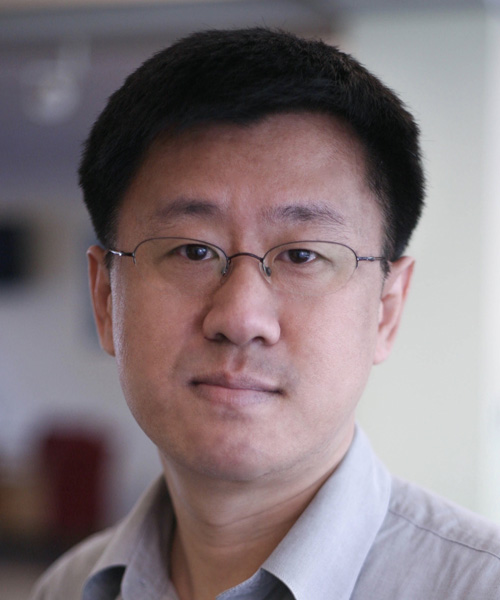
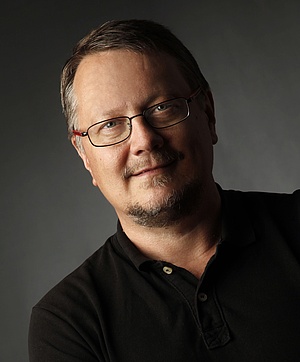
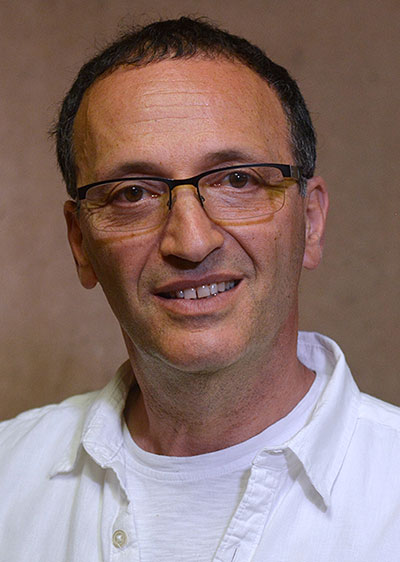
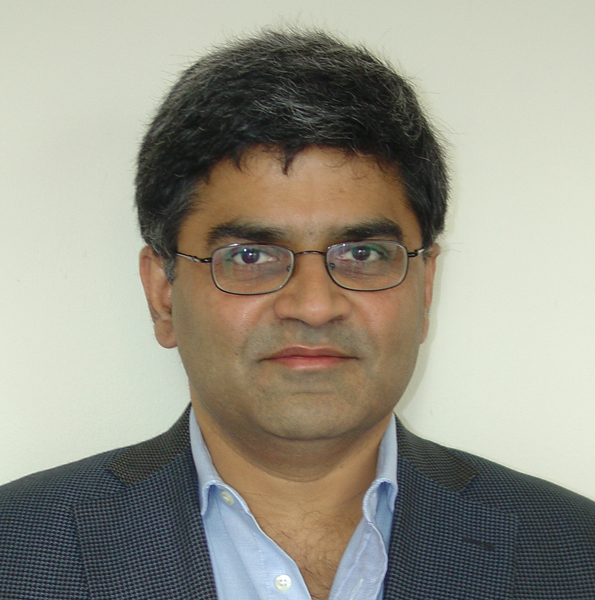
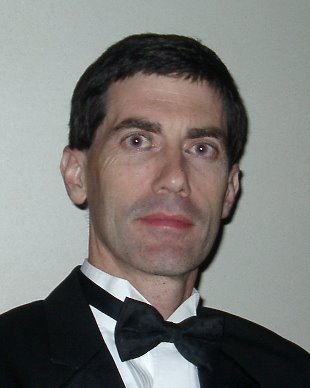
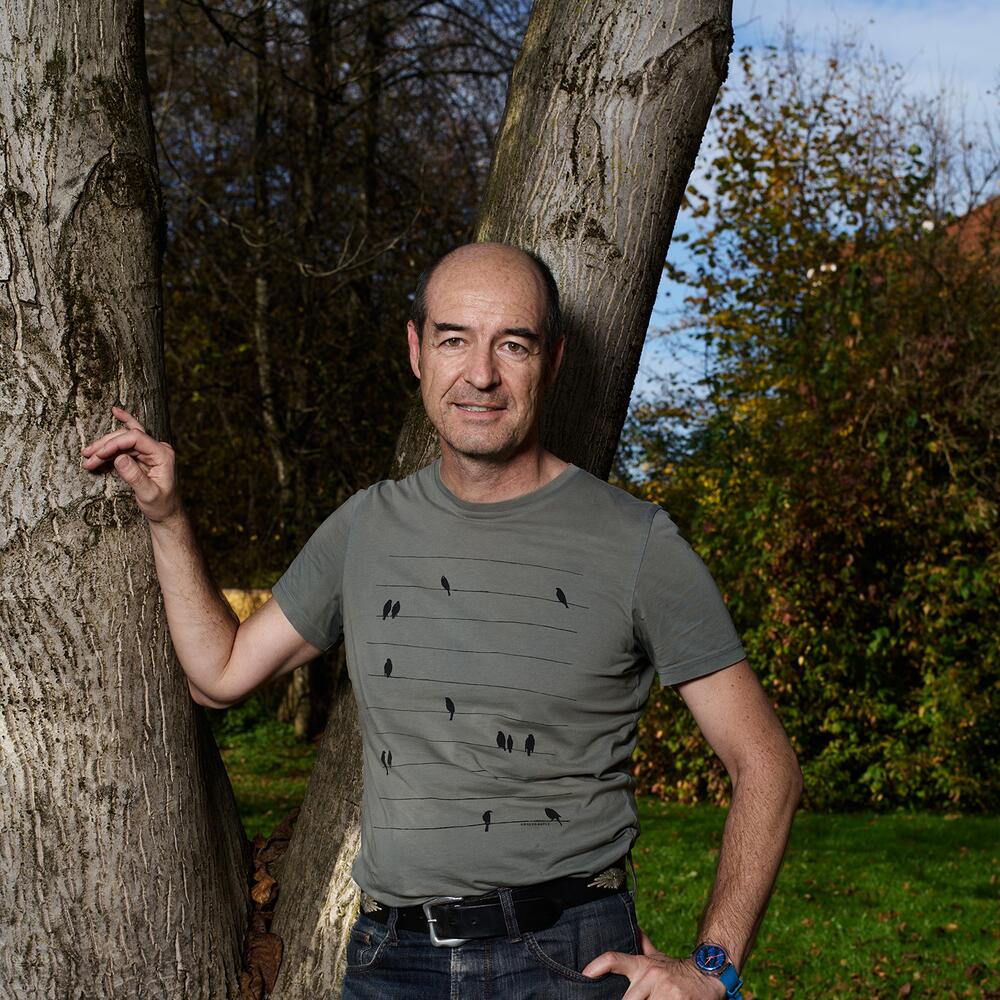
Christoph Koch is a Full Professor in the School of Computer and Communication Sciences at EPFL (Ecole Polytechnique Federale de Lausanne) , Switzerland. He has held academic positions at Cornell University (2007-2010, 2006), Saarland University (2005-2007), and TU Vienna (2001-2005). His research focuses on database systems, logic, programming languages, and data management.
M. Anton Ertl is an Associate Professor at TU Wien's Faculty of Informatics, Department of Compilers and Languages. His roles include teaching courses such as 'Compilers,' 'Efficient Programs,' and 'Stack-based languages.' He specializes in compiler back-ends, Forth, interpreters, programming languages, operating systems, and computer architectures. Ertl's research focuses on optimizing interpreters, compiler design, and hardware security, particularly addressing vulnerabilities like Spectre. His research interests span interpreter performance, compiler optimization, and Forth language evolution. Recent work includes exploring hardware-based Spectre mitigation, decompilers for Gforth, and stack-based language efficiency. He actively contributes to the EuroForth conferences as an editor and presenter. Ertl supervises students on topics like compiler construction, reverse engineering, and interpreter optimization. His academic contributions include over 50 publications, with a focus on virtual machine performance, compiler back-ends, and Forth-related advancements. He is a key figure in the Gforth project and regularly teaches advanced courses on programming languages and computer systems.
Dr. Vincenzo De Maio is a PostDoc Researcher at the Department of Computational Sustainability, Faculty of Informatics, Technische Universität Wien. His research spans quantum computing, edge computing, distributed systems, and sustainable computing, with a focus on hybrid quantum-classical systems and edge AI applications. Current projects: HPQC (2023–2025), ThEMIS FWF (2024–2027), TRITON FWF (2023–2027) Previous projects: RUCON (2016–2023), SWAIN (2021–2024) His research explores the integration of quantum computing with classical systems, particularly in software engineering, workflow decomposition, and hyperparameter optimization. He also works on edge computing for smart cities, environmental monitoring, and traffic safety applications. Recent publications analyze quantum compilation bottlenecks, hybrid quantum-classical workflow orchestration, and quantum neural network optimization. He supervises master's theses on topics like quantum edge benchmarking and hyperparameter tuning. Key collaborations with Prof. Ivona Brandic and others Active in IEEE/ACM conferences and Springer publications
Dr. Zhendong Su is a Professor at the Department of Computer Science, ETH Zurich (since 2018), and previously a Professor (2011-2019) and Adjunct Professor (since 2019) at the Department of Computer Science, University of California, Davis. His academic career includes Associate Professor (2007-2011) and Assistant Professor (2002-2007) positions at UC Davis. Ph.D. in Computer Science (minor in Mathematics), University of California, Berkeley (2002) M.S. in Computer Science, University of California, Berkeley (1997) B.A. in Mathematics (Highest Honor), University of Texas at Austin (1995) B.S. in Computer Science (Highest Honor), University of Texas at Austin (1995) Dr. Su's research focuses on Programming Languages and Compilers , Software Engineering , and Computer Security , with recent emphasis on Deep Learning methodologies for improving software quality and programmer productivity. His EdTech research explores transformative technologies for K-12 and college education. Awarded prestigious honors including the NSF CAREER Award (2006), multiple ACM SIGSOFT Distinguished Paper Awards , and faculty research awards from Google, Microsoft, IBM , and other industry leaders. Advisor to 18 doctoral/postdoctoral students, including tenure-track/tured academics at UCL, Waterloo, and GaTech Extensive service as Associate Editor, Program Chair, and Steering Committee member for major software engineering conferences
Franz Wotawa is a Professor of Software Engineering at Graz University of Technology. He holds a M.Sc. (1994) and PhD (1996) from Vienna University of Technology. He has served as head of the Institute for Software Technology from 2003–2009 and since 2020. His research focuses on model-based reasoning, software testing, autonomous systems, and diagnosis, with over 390 peer-reviewed publications. He founded Softnet Austria (2006) to bridge research and industry. He leads the Christian Doppler Laboratory for Quality Assurance Methodologies for Autonomous Cyber-Physical Systems since 2017 and has supervised 90+ master and 36+ PhD students. His awards include the 2016 Lifetime Achievement Award from the International Diagnosis Community. He is a member of Academia Europaea, IEEE, and AAAI. **Education**: M.Sc. in Computer Science, Vienna University of Technology, 1994 PhD, Vienna University of Technology, 1996 **Research Interests**: Model-based reasoning, qualitative reasoning, theorem proving, mobile robotics, verification/validation, software testing/debugging, AI, and autonomous systems. **Notable Projects**: A-IQ Ready (2022–2026): Quantum sensing for autonomous systems. ALFA (2024–2027): AI for smart diagnosis in building automation. Bilateral AI (2024–2029): Combining symbolic and sub-symbolic AI. VARCOS (2025–2028): Vehicle-road cooperative systems for autonomous driving. **Awards & Memberships**: Lifetime Achievement Award (2016, International Diagnosis Community) Senior Member, AAAI Member of Academia Europaea, IEEE, ACM, and Austrian Computer Society **Labs/Teams**: Christian Doppler Laboratory for Quality Assurance Methodologies (since 2017). Active in Cluster of Excellence “Bilateral AI” at TU Graz.
Christoph Kirsch is a Professor and Chair of the Department of Computer Science at the University of Salzburg. He also serves as Chair of the Programming Research Laboratory at the Faculty of Information Technology, CTU Prague. His research focuses on systems, concurrency, memory management, and formal methods, with notable contributions including the Selfie educational software project and work on symbolic execution. He is a prolific author with over 50 publications in top venues like LCTES and EMSOFT. Education: Ph.D. in Computer Science (details not specified). His teaching includes courses on elementary computer science concepts and curricula development. He advises students such as Anna Bolotina and has graduated over a dozen PhD students. Research highlights include the Selfie system (self-referential C compiler and emulator), work on concurrency primitives like Scal and Timestamped Stack, and contributions to real-time systems (Logical Execution Time, Variable-Bandwidth Servers). His recent focus includes teaching digital thinking and evaluating eval in R programs. He has organized conferences like MPLR’24 and served on program committees for EuroSys and RTNS. His book Elementary Computer Science emphasizes foundational concepts for broad audiences.
Jürgen Cito is an Associate Professor in the Department of Software Engineering at the Faculty of Informatics, TU Wien, where he leads research in probabilistic programming, security, and configuration management. His work is supported by major grants from the Austrian Science Fund (FWF), European Commission, and Meta Platforms, Inc., with active projects spanning 2022-2027. His research focuses on the intersection of software engineering and machine learning, particularly in static analysis of probabilistic programs, AI-driven penetration testing, and infrastructure security. Key contributions include identifying secret exposure in configuration files, grammar inference for ad hoc parsers, and performance prediction from source code, often combining empirical studies with tool development. Analysis of his 15 most recent publications (2020-2024) reveals three dominant trends: (1) Security vulnerabilities in configuration management systems, especially secret leakage in dotfiles; (2) Application of large language models to offensive security testing; and (3) Machine learning techniques for performance prediction and AutoML optimization in software contexts. Cito has supervised 22 Master's students on cutting-edge topics including AI security, infrastructure as code, and program analysis. His current research portfolio includes: Types4Strings (FWF, 2024-2027): Type systems for string processing Cloud Open Source Research Mobility Network (EU, 2023-2026): Open-source cloud infrastructure Software Assistants for Probabilistic Programming (Meta, 2022-2026): AI tools for probabilistic code He is embedded in TU Wien's Institute of Software Technology and Interactive Systems (E194), collaborating on cross-institutional projects focused on software security and developer tooling, with particular emphasis on empirical validation of security practices and configuration management systems.
Alexandru Nicolau is a Distinguished Professor and Chair of the Department of Computer Science at the University of California, Irvine (USA), where he has worked since 1992. He previously held positions as Associate Professor (1988–1992) and Assistant Professor (1984–1988) at UC Irvine and Cornell University, respectively. Education : B.A., Brandeis University (1980) MS (1981), Ph.D. (1984), Yale University Research Interests : A leading expert in parallelizing compilers , high-performance computing , and software-hardware co-design , Nicolau pioneered foundational techniques like Percolation Scheduling and Optimal Loop Parallelization . His work enables efficient exploitation of instruction-level parallelism in general-purpose programs, with applications in embedded systems , matrix algorithms , and GPU-based neural networks . He has also contributed to Electronic Design Automation (EDA) and lightweight synchronization protocols . Scientific Awards : IEEE Fellow (2014) ACM SIGPLAN Most Influential Paper (PLDI 20 years) EDAA/IEEE/ACM DATE Most Influential Paper (10 years) ACM ICS Most Influential Paper (25 years) 4 Best Paper awards (VLSI design 2003, ISHPC 2005, CASES 2008, IJCNN 2009) Advising & Grants : He has mentored notable scholars now at Stanford, McGill, and Google, and secured over $20M in funding from NSF , DARPA , and industry leaders like IBM and Intel . His professional service includes chairing ACM ICS’09 and PPOPP’13, and serving on steering committees for LCPC and ICS. Labs & Collaborations : His techniques have been adopted by IBM Watson, Siemens Munich, Fujitsu Labs Japan, and the open-source GCC compiler.
Dr. Keshav Pingali is the W.A. 'Tex' Moncrief Chair of Computing and Professor of Computer Science at The University of Texas at Austin, where he also directs the Center for Grid and Distributed Computing at the Oden Institute. Previously, he held the India Chair of Computer Science at Cornell University (2003–2006) and served as a professor in Computer Science and Electrical Engineering at Cornell (1999–2006). He completed his B.Tech. at IIT Kanpur (1978), followed by S.M., E.E., and Sc.D. degrees from MIT (1983, 1986). Research Interests: Focuses on programming languages, compilers, and runtime systems for parallel computing, with emphasis on optimizing irregular applications in domains like graphics and data mining. His work addresses challenges in high-performance computing and multicore processor programming methodologies. Awards & Honors: ACM SIGPLAN Programming Languages Achievement Award (2024) ACM/IEEE CS Ken Kennedy Award (2023) IEEE Charles Babbage Award (2023) Foreign Member of Academia Europaea (2020) Fellow of ACM (2012), AAAS (2010), and IEEE (2010) NSF Presidential Young Investigator Award (1989–1994) President’s Gold Medal, IIT Kanpur (1978) Professional Activities: Keynote speaker at major conferences like ACM PACT (2018), HPCA/PPoPP/CGO (2016), and HIPEAC (2012). Served as editor-in-chief of ACM TOPLAS (2007–2010) and on NSF advisory committees. Currently teaches courses on compiler optimization and performance programming.
Jens Knoop is a Full Professor at TU Wien, leading the Department of Information Systems Engineering (E194) and the Research Unit Compilers and Languages (E194-05). His roles include Head of Institute for Information Systems Engineering and membership in the Curriculum Commission for Informatics. He specializes in compiler design, program analysis, and embedded systems, with a focus on worst-case execution time (WCET) analysis and formal methods. His research interests span optimizing compilers, programming languages, and real-time computing. Notable contributions include the Platin tool suite for WCET analysis and contributions to the T-CREST project on time-predictable multi-core architectures. He has authored and edited multiple influential publications, including proceedings of international conferences such as Code Generation and Optimization (CGO) and ARCS. Professor Knoop has supervised numerous theses, including works on effect systems in Haskell, mutation testing in Rust, and robotic systems. He has received the Most Influential PLDI Paper Award (2002) for foundational work in compiler optimization.
Dr. Daniel Page is a Senior Lecturer in Computer Science at the University of Bristol, specializing in Cryptography and Information Security. His research bridges cryptographic engineering, hardware/software security, and programming language design. Research interests: Cryptographic engineering (hardware and software implementation of cryptographic primitives), side-channel attacks, fault attacks, secure processor architectures, domain-specific compiler optimizations for cryptography (e.g., AES, ECC), and cross-disciplinary studies in software defects and game glitch analysis. Recent research trends focus on hardware/software co-design for security, including novel instruction set extensions (ISEs) to mitigate leakage in masked implementations and protect against cache-based side-channel attacks. His work spans both theoretical and applied domains, with collaborations in digital security policy and embedded systems. Projects include DiScriBe (Digital Security by Design Social Science Hub, 2020–2024) and EPSRC-funded initiatives (2019–2022/2023). He has contributed datasets like GMOPST14 (University of Bristol, 2014).
Thomas W. Reps is a Professor in the Department of Computer Science at the University of Wisconsin, holding the position since 1985. He has served as President and Co-founder of GrammaTech, Inc. since 1988, and held visiting roles including Guest Professor at the University of Paris 7 (2007-08), Visiting Researcher at CNR in Pisa, Italy (2000-01), and Guest Professor at the University of Copenhagen (1993-94). He previously served as Associate Chairman of the Computer Sciences Department at Wisconsin (1990-93) and held postdoctoral roles at Cornell University and INRIA. Reps' research spans programming languages, software engineering, and computer security, with a focus on static program analysis, machine-code analysis, and program slicing. His work in model checking, software maintenance, and analysis techniques for information security has significantly impacted the field of computer science. 2017 ACM SIGPLAN Programming Languages Achievement Award 2015 WARF Named Professorship 2005 ACM Fellow 2000 Guggenheim Fellowship 1986 NSF Presidential Young Investigator Award Reps' publications highlight advancements in interprocedural dataflow analysis, weighted pushdown systems, and symbolic computation. His work bridges theoretical foundations with practical applications in software verification and security, creating tools that have shaped modern program analysis techniques. He has collaborated extensively with researchers like Somesh Jha, Mooly Sagiv, and Gogul Balakrishnan across institutions in Europe and the U.S.
Marcel Cornis-Pope is a renowned Professor of English and Media Studies at Virginia Commonwealth University (VCU), where he has held various leadership roles including Department Chair and Director of the PhD Program in Media, Art, and Text. His academic journey includes professorships in Romania (University of Timişoara) and research fellowships at Harvard University and the University of Northern Iowa. He is an elected member of the Academy of Europe (2012) in the Literary & Theatrical Studies section. His research focuses on British Victorian/20th-century literature, narrative theory, and the intersection of literature with media and cultural studies. Key contributions include seminal works like History of the Literary Cultures of East Central Europe and Narrative Innovation and Cultural Rewriting in the Cold War Era . Education: Early career in Romania, with degrees from the University of Timişoara; extended academic exchanges via British Council Fellowships (Oxford, Birmingham). Awards: Includes the 1996 Phoenix Award, VCU Excellence Awards, and Romanian Writers' accolades for translation and criticism. His scholarly leadership spans editorial roles, international academic collaborations, and contributions to postmodern literary discourse. He has advised numerous academic programs but no specific student names are listed in available texts.
Erik Esterbauer is an Associate Professor at the Mozarteum University's Department of Elemental Music & Dance Education – Orff Institute, specializing in inclusive music and dance education. His academic roles include leadership in the Music and Dance in Inclusion and Diversity (MTID) program and contributions to transdisciplinary research at the School of Music & Art Education (SOMA). He holds a doctoral degree in psychology and a master's in elemental music pedagogy, with post-doctoral work focusing on inclusive education frameworks. Professorial Position: Associate Professor since 2023 Key Affiliations: Orff Institute, SOMA, and EBQ Alumni Network Research Focus: Inclusive education, qualitative assessment tools (EBQ-P Instrument), and art-based pedagogy His research emphasizes relationship quality in educational settings, reflected in his habilitation thesis on the EBQ-P instrument. He has published extensively on inclusive methodologies in music and dance, qualitative research in artistic fields, and the intersection of psychology and art education. Esterbauer's professional background spans clinical psychology (20+ years) and music education, with roles at institutions like the Zentrum ELF and Mobile Aid Service GmbH. He is a founding member of Interest Group Music Inclusive Austria (IGMI) and actively participates in international conferences (ISME, EAS). Awards include the Austrian Social Forum Research Award (2003) for work on stress and stroke risk factors. His teaching integrates creative processes with social work, emphasizing collaborative and inclusive practices. Key projects include the 'Young Art' initiative (2024) with Paracelsus Medical University and the 'Play Space Music' program promoting inclusive artistic collaboration.
Francisco Tirado is a Full Professor of Computer Architecture at Complutense University of Madrid since 1986. He has held leadership roles including Vice-Chancellor for Research (2012-2015), Dean of the Faculty of Physics (1994-2002), and Director of the Complutense Supercomputing Center (2002-2007). He is a founding member of the Spanish Society for Computer Science (SCIE) and Spanish Society for Computer Architecture (SARTECO). His research focuses on power-aware computing, heterogeneous systems, bioinformatics, and hardware design automation. He has authored over 242 publications and supervised 15 PhD theses. His professional service includes chairing 138 international conferences and serving on numerous committees for EUROMICRO, IEEE, and national research agencies. Education: No explicit details provided, but has been active at Complutense University since 1978. Affiliations: Member of COSCE Executive Board (2012), IEEE Senior Member (2005), and EUROMICRO Board (1991-2004). Research Interests: - Optimizing energy efficiency in high-performance computing systems - Design of heterogeneous architectures and accelerators - Bioinformatics applications through hardware/software co-design - Parallel programming models for emerging architectures - Automation tools for FPGA and embedded systems development Conference Contributions: Played multiple roles (General Chair, Program Chair) for major events like ParCo, HPCA, and EUROMICRO PDP conferences. Delivered 64 keynote/plenary lectures globally. Scientific Awards: Doctor 'Honoris Causa' from universities in Spain, Paraguay, and Peru 2013 National Computer Science Award IEEE Senior Membership Advising: Supervised 15 PhD students. Active in technology transfer contracts with industry. Labs/Teams: Founder and leader of the ArTeCS research group at Complutense University, specializing in computer architecture and high-performance computing innovations.