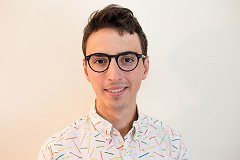
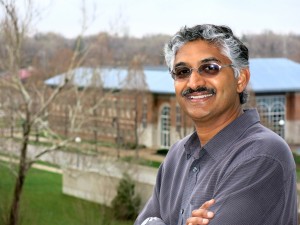
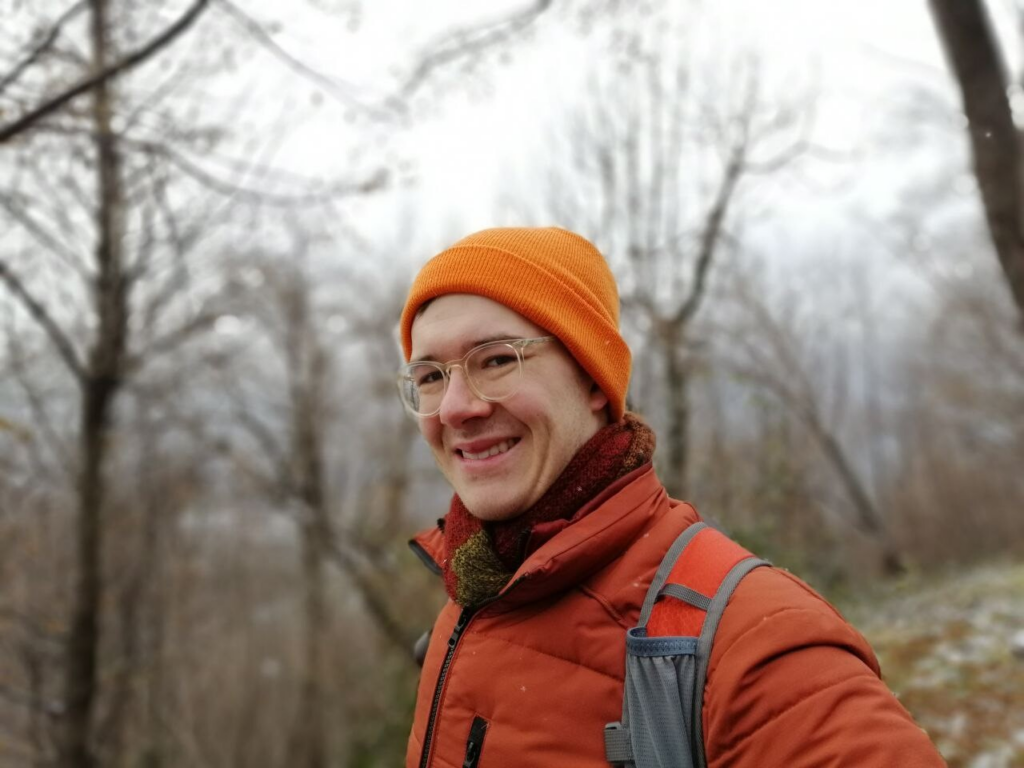
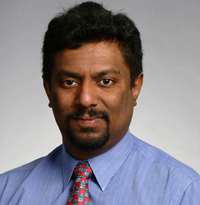
Michael B. James is a researcher at the University of California at San Diego, focusing on Programming Languages , Program Synthesis , and Human-Computer Interactions . He serves on organizing and review committees for conferences like PLDI and SPLASH. Research Interests: Programming Languages, Program Synthesis, Human-Computer Interactions, Functional Programming Conference Roles: PLDI 2023/2024 Volunteers Co-Chair, SPLASH 2023/2021/2020 author, POPL 2020 committee member His recent work explores how programmers interact with code-generating models and leverages type systems for synthesis tasks. Articles span API discovery in Haskell, abstraction refinement, and refinement types for program synthesis. As a GitHub contributor, he maintains the Academic Pages template , demonstrating technical proficiency in web-based academic outreach.
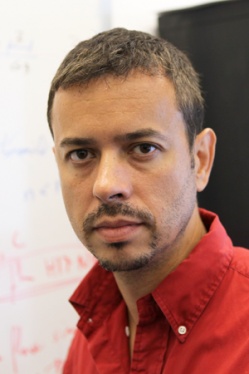
Raul Rabadan is a Professor at Columbia University, holding appointments in the Departments of Systems Biology, Biomedical Informatics, and Surgery. He directs the Program for Mathematical Genomics (PMG) and the Center for Topology of Cancer Evolution and Heterogeneity, fostering interdisciplinary collaboration to decode biological complexity. Key Affiliations: Vagelos College of Physicians and Surgeons, Institute for Cancer Genetics Research Focus: Evolution of biological systems (RNA viruses, cancer), computational modeling of tumor heterogeneity, and AI-driven genomic analysis His recent work explores cancer evolution through spatial transcriptomics, immune checkpoint blockade efficacy, and the role of noncoding elements in tumorigenesis. Articles highlight applications of machine learning in oncology and virology. Scientific Awards: Popular Science’s Brilliant 10 (2010) Stewart Trust Fellow (2013) Harold and Golden Lamport Award (2014) Rabadan established PMG in 2017 and has held prestigious roles at CERN, the Institute for Advanced Study, and the Simons Center for Systems Biology.
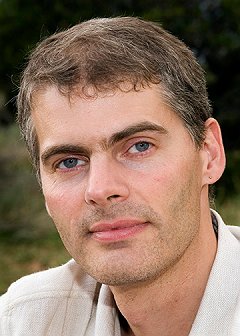
Manuel Rigger is an Assistant Professor at the National University of Singapore's School of Computing, Department of Computer Science. He leads the Trustworthy Engineering of Software Technologies (TEST) Lab, focusing on improving data-centric systems' reliability. Prior to joining NUS, he was a postdoctoral researcher at ETH Zurich and completed his PhD at Johannes Kepler University Linz. His research centers on database systems reliability, software testing, and program analysis. Rigger's work has uncovered over 1,000 unique bugs in critical systems, significantly enhancing real-world software reliability. His research spans automated testing techniques, logic bug detection, query optimization, and compiler technologies, with strong practical impact through widely adopted tools like SQLancer. Rigger's publication record shows consistent high-impact contributions, with recent work focusing on database isolation levels, cardinality estimation testing, and query plan guidance. His research bridges theoretical foundations with practical applications, addressing fundamental challenges in data management systems. The TEST Lab's approach combines traditional testing methods with innovative learning-based techniques to automate database validation at scale. He has received numerous accolades including the EuroSys 2024 Best Paper Award, ICSE 2023 Distinguished Paper Award, and multiple Distinguished Artifact Awards. His work has been recognized with prestigious awards from Amazon Research, Google, and the Singapore government. EuroSys 2024 Best Paper Award for 'Validating Database System Isolation Level Implementations with Version Certificate Recovery' ICSE 2023 ACM SIGSOFT Distinguished Paper Award ASPLOS 2022, OSDI 2020, and OOPSLA 2020 Distinguished Artifact Awards AWS Database Services Amazon Research Award 2024 Singapore Open Research Award 2024 Rigger actively mentors students at all levels, with numerous Master's and Bachelor's theses supervised. His teaching includes courses on software engineering foundations and advanced software testing. He serves on program committees for major conferences including PLDI, ISSTA, and ASPLOS, and organizes workshops like the Fuzzing and Software Security Summer School. His research has practical industry impact with tools like SQLancer being widely adopted in the database community.
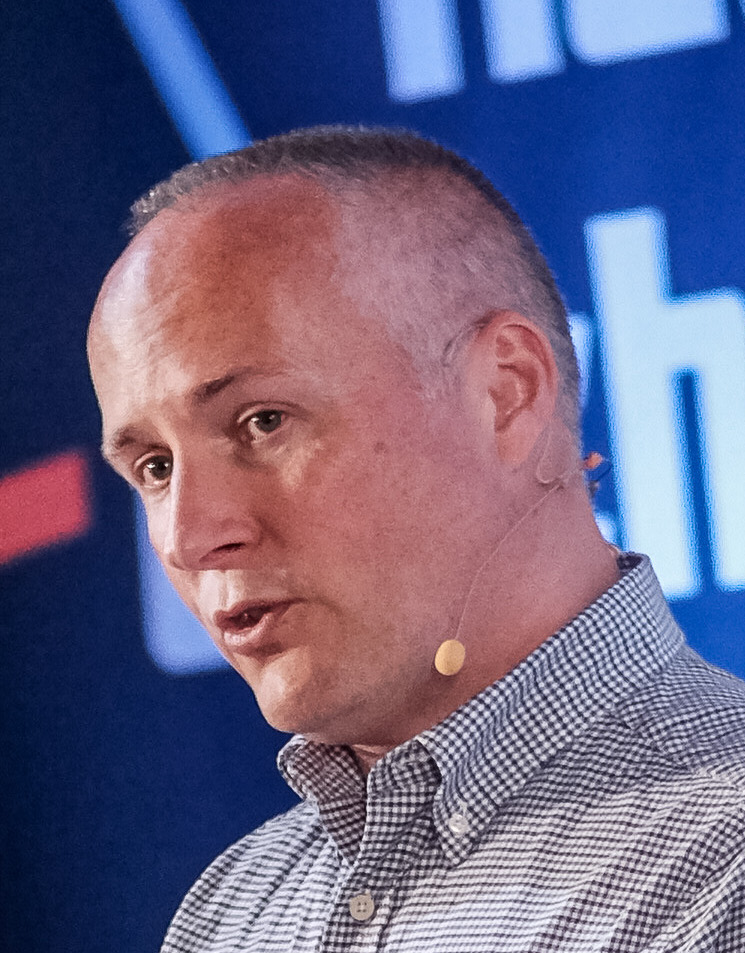
Marc Denecker is a Professor at the Department of Computer Science, KU Leuven, affiliated with the Faculty of Engineering Science and the Declarative Languages and Artificial Intelligence (DTAI) research group. He contributes to KU Leuven's Institute for Artificial Intelligence (Leuven.AI). Current promotor for projects like A Category-Theoretic Perspective on Approximation Fixpoint Theory (2024-2028) and Proof systems for first-order logic extended with inductive definitions (2023-2027). Co-promotor for AI in Industry: Learning and Reasoning for Automation (2021-2025) and IMPULS-AI-2021 (2021-2024). His research focuses on formal logic, knowledge representation, and artificial intelligence. Recent work includes epistemic logic for decision-making under uncertainty, approximation fixpoint theory, justification theory, and symmetry-based satisfiability optimization. Publications span venues like AAAI, SAC, and LPNMR conferences, as well as journals such as Artificial Intelligence . Key subfields include logic programming, inductive definitions, model expansion, and constructive knowledge formalization. His teaching involves courses on complex systems (G0B23A/H0N05A), knowledge representation (H02C3A), automata (G0P84A), and logic for computer science (G0T42D).
Dominique Devriese is an Associate Professor at the Department of Computer Science , Faculty of Engineering Science , KU Leuven . They serve as a promotor for multiple research projects focused on type theory, formal verification, and secure software systems. Faculty: Engineering Science Department: Computer Science Academic Rank: Associate Professor Their research explores multimodal dependent type theory , parametricity , logical frameworks like Agda, and secure compilation principles. Projects include formalizing RISC-V security guarantees, developing BiSikkel for multimode logic, and advancing substitution algorithms for type systems. Recent work demonstrates trends in formal methods , programming language theory , and hardware-supported security , with a strong emphasis on mathematical foundations and tool implementation. PhD Student Supervision: Joris Ceulemans Collaborations: Andreas Nuyts, Loes Deferme Active in academic governance, Dominique is a member of the Council of the Faculty of Engineering Science and POC Computerwetenschappen.
Yuting Wang is a Tenure-Track Associate Professor at Shanghai Jiao Tong University , specifically affiliated with the John Hopcroft Center for Computer Science. Their research focuses on Formal Verification , Programming Languages , and Logical Frameworks , with significant contributions to verified compilation of system software. Core developer of the Abella theorem prover for higher-order reasoning Lead developer of Stack-Aware CompCert extensions Committee member for conferences like C++ (CPP), Programming Language Foundations in Software Engineering (PLDI), and Practical Aspects of Declarative Languages (PADL) Current research includes verifying compilers for concurrent systems, designing secure programming languages, and developing compositional verification frameworks. Collaborations with institutions like Yale University and the University of Minnesota under notable advisors Zhong Shao and Gopalan Nadathur have produced 15+ peer-reviewed publications. Their work on CompCertOC demonstrates verified compositional compilation for multi-threaded programs, while their contributions to the Abella system enhance schematic polymorphism and higher-order abstract syntax support. Yuting Wang actively advises a team of 5 current Ph.D. and M.S. students, with alumni placed at organizations like Tencent and AMD. They maintain a public ORCID profile and welcome prospective students interested in formal methods and systems verification.
Benjamin C. Pierce is the Henry Salvatori Professor of Computer and Information Science at the University of Pennsylvania. He is a Fellow of the ACM and lead designer of the Unison file synchronizer. His research spans programming languages, type systems, security, formal verification, differential privacy, and synchronization technologies. He has authored influential textbooks including Types and Programming Languages and Software Foundations , and has held editorial positions at Journal of Functional Programming, Logical Methods in Computer Science, and ACM TOPLAS. Professor Pierce is active in programming language communities, serving on committees for POPL, ICFP, PLDI and co-developing the Clowdr virtual conference platform. Scientific Awards: ACM Fellow
Graham Hutton is a Professor of Computer Science at the University of Nottingham , where he leads the Functional Programming Lab and serves as Director of the Midlands Graduate School . He co-founded the Quotient Haskell project and maintains key roles in Journal of Functional Programming editorial work and Haskell Foundation governance. Co-leader, Functional Programming Lab (2008–date) Director, Midlands Graduate School (2023–date) ACM Distinguished Scientist Principal investigator for £912k EPSRC project (2024–2027) His research focuses on mathematical approaches to program construction , particularly through functional languages like Haskell and Agda . He develops techniques for compiler correctness , type system design , and program optimization , with recent work on quotient polymorphism and denotational cost models . Key article themes include: Compiler derivation from formal semantics Effect handling in functional languages Graph-based code generation over traditional tree structures Quotient type systems with SMT solver integration Concurrency semantics using choice trees Operational improvement with parametric polymorphism Scientific awards include: ACM Distinguished Scientist (2013) Best Paper & Best Student Paper (2018) EPSRC funding for compiler correctness projects He advises current PhD students in compiler calculation and memory safety , while maintaining extensive educational contributions through his widely-used textbook Programming in Haskell and open course materials.
Vikram Adve is the Donald B. Gillies Professor of Computer Science at the University of Illinois at Urbana-Champaign, with appointments in both the Computer Science Department and the Center for Digital Agriculture. He co-founded and co-leads the Center for Digital Agriculture and serves as the director of AIFARMS, a $20M National Artificial Intelligence Research Institute funded by USDA NIFA and NSF. Adve has been a professor at UIUC since August 2011 and previously served as Interim Head of the Computer Science Department from 2017 to 2019. Adve received his Ph.D. in Computer Science from the University of Wisconsin-Madison in 1993. His academic journey has been marked by significant contributions to compiler infrastructure and computer systems research, culminating in his current distinguished professorship at one of the world's leading computer science departments. Adve's research spans multiple cutting-edge domains in computer systems. His work on the LLVM Compiler Infrastructure has revolutionized how software is compiled and optimized across diverse hardware platforms. Currently, his research focuses on three primary thrusts: Digital Agriculture and AI : Through the Center for Digital Agriculture and AIFARMS Institute, he's developing AI solutions for agricultural challenges, including the CropWizard system for generative AI in farming Edge Computing : His HPVM, ApproxHPVM, and ApproxTuner projects address the programming challenges of heterogeneous computing at the network edge Compiler Innovation : His Hydride and MISAAL projects use program synthesis to automatically build compilers for complex hardware architectures His work bridges theoretical compiler research with practical applications in agriculture, autonomous systems, and distributed computing. Adve's publication record demonstrates a consistent trajectory from foundational compiler research to applied AI systems. Early work focused on memory safety (SAFECode), deterministic parallel programming (DPJ), and the LLVM infrastructure. More recently, his publications reflect a strategic pivot toward agricultural AI and edge computing, with significant contributions to generative AI applications, compiler techniques for heterogeneous systems, and multimodal data processing for precision agriculture. His work maintains strong theoretical foundations while addressing real-world challenges in resource-constrained environments. Adve's scientific recognition includes numerous prestigious awards: ACM Software System Award (2012) for LLVM ACM Fellowship (2014) NSF CAREER Award (2001) Multiple best paper awards at top conferences including PLDI 2005, SOSP 2007, and CGO 2004 (retrospective) University Scholar designation at UIUC (2015) Donald B. Gillies Professorship (2018) Distinguished Alumnus Award from IIT Bombay (2023) As an advisor, Adve has mentored numerous successful students, including Chris Lattner (co-creator of LLVM), Robert Bocchino (ACM SIGPLAN Outstanding Dissertation Award winner), and John Criswell (ACM Doctoral Dissertation Award Honorable Mention). His research group has secured significant funding from diverse sources including USDA NIFA, NSF, Intel Corporation, Amazon-Illinois AICE Center, and the state of Illinois through the Discovery Partners Institute. Current projects include the $20M AIFARMS institute and multiple edge computing initiatives focused on agricultural robotics and distributed AR/VR systems. Adve leads the Programming Languages, Systems, and Networking research group at UIUC, which maintains strong connections with industry partners. His group's work on LLVM has had widespread industry impact, with applications in Apple's iOS ecosystem, Android, NVIDIA GPUs, and numerous other commercial products. The group's current focus on agricultural AI through the Center for Digital Agriculture represents a strategic expansion into domain-specific applications of systems research.
Professor Georg Struth is a faculty member at the School of Computer Science , University of Sheffield. He serves as Head of the Foundations of Computation research group. Research Interests include logical and algebraic methods in computer science, formalised mathematics with interactive theorem provers, program verification, and hybrid systems. His work bridges foundational algebra (Kleene algebras, quantales, catoids) with practical verification tools in Isabelle/HOL. Recent Publications focus on higher-dimensional automata, modal algebras, and convolution-based concurrency models. Grants include EPSRC funding for hybrid system verification and concurrent algorithms. Teaching covers Hardware and Software Verification and formalised mathematics.
Dr. Wouter Swierstra is an Associate Professor in the Software Technology group within the Faculty of Science at Utrecht University. His research focuses on functional programming, type theory, and program verification, with particular expertise in dependently typed programming languages like Agda. His research interests span several key areas in programming language theory and implementation: Functional programming language design and implementation Dependent types and formal verification Program transformation and derivation Generic programming techniques Formal methods for blockchain and smart contracts Hardware verification using domain-specific languages Swierstra's recent work shows a strong trend toward applying formal methods to practical problems, particularly in the areas of blockchain technology and hardware verification. His publications demonstrate expertise in both theoretical foundations of programming languages and their practical applications. He has made significant contributions to the understanding of data structures in functional settings, program derivation techniques, and verification methodologies. Dr. Swierstra teaches courses related to functional programming, including "Advanced functional programming" and "Logic for Computer Science," helping to train the next generation of programming language researchers and practitioners.
Morgan Rogers is an Associate Professor specializing in category theory, with a focus on abstractions that isolate essential problem-solving features. His research centers on toposes of actions of monoids and expanding mathematical toolkits. His work bridges mathematical logic, algebraic structures, and theoretical computer science, developing frameworks for understanding complex systems through categorical approaches. His research interests include category theory, topos theory, and algebraic structures, with applications in lambda calculus, linear logic, and topological dynamics. Recent publications explore geometric theories, endomorphism monoids, and factorization systems in categorical frameworks. Rogers' articles demonstrate consistent focus on categorical foundations of algebra and logic, with innovations in modeling computational systems and topological representations. Theoretical contributions advance understanding of monoid actions and their categorical representations.
Professor Saman Amarasinghe is a leading academic in the MIT Electrical Engineering and Computer Science Department, specializing in compiler design, high-performance computing, and programming languages. His research bridges theoretical computer science with practical applications, focusing on optimizing compilers for modern hardware architectures. He holds a professorship within the School of Engineering at MIT. His research interests span artificial intelligence, machine learning integration into compilers, sparse tensor algebra optimizations, and domain-specific languages (DSLs) for high-performance computing. He has pioneered frameworks like TACO (Tensor Algebra Compiler) and GraphIt, which enable efficient handling of complex data structures across diverse computational domains. Recent work emphasizes compiler-driven optimizations for sparse data formats, machine learning models for code optimization, and unified interfaces for large language models. His projects often address scalability challenges in exascale computing and bioinformatics applications. Publications highlight advancements in compiler techniques for sparse tensor operations, graph analytics, and memory-efficient algorithms. His contributions to Halide, Simit, and Weld further demonstrate his impact on DSLs for image processing and physical simulation. Awards and recognitions are integral to his career, though specific personal accolades are not detailed here. His work is characterized by a strong focus on practical compiler solutions for emerging computational challenges.
Deepak Garg is a tenured faculty member at the Max Planck Institute for Software Systems and an Honorary Professor of Computer Science at Saarland University. His research focuses on programming languages, software security, formal verification, and information flow control. Research Interests: Programming Languages and Type Theory Software Security and Secure Compilation Information Flow Control and Access Control Formal Verification of Low-Level Programs Probabilistic Programming and Security Compiler Correctness and Runtime Systems Scientific Contributions: He has authored over 40 publications with notable awards including the Dr.-Eduard-Martin-Prize for thesis supervision, Distinguished Paper and Distinguished Artifact awards at PLDI 2021, and the Internet Defense Prize for ERIM 2019. His work spans foundational research (e.g., logics for authorization) and practical systems (e.g., Groundhog, RefinedC, ERIM). Advising: Supervised 12 PhD students to completion and currently advising 7 PhD candidates across institutions like Saarland University, MPI-SWS, and Penn State University. His group includes co-advised students with researchers such as Derek Dreyer and Peter Druschel. Service: Active in program committees for top conferences including CSF , LICS , and OOPSLA , with leadership roles in workshops like PLMW and Dagstuhl Seminars on Secure Compilation.
Nina Rottmann is an Associate Professor in Community Psychology at the Department of Psychology, University of Southern Denmark, with clinical expertise in health and rehabilitation psychology. Her research focuses on psychosocial and existential adaptation to life-threatening/chronic illnesses (cancer, heart disease, COVID-19) and support for patients/relatives. Key research themes: dyadic coping, meaning in life, couple dynamics in illness contexts Methodological expertise: mixed-methods, qualitative, and quantitative approaches Current projects: intervention development for cardiac/cancer rehabilitation Her 15 most recent publications address digital health innovations, psychosocial mechanisms in chronic disease, and existential rehabilitation programs. She has received grants from the Danish Heart Foundation and Børnehjertefonden, with media recognition for her clinical research. Scientific awards: Danish Heart Foundation grant (2024), Børnehjertefonden grant (2024) Media appearances: Interviewed on cancer-related language, alternative care funding, and heart research recognition