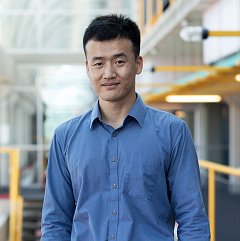
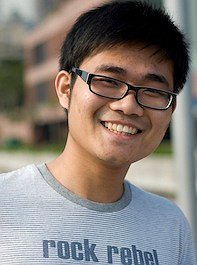
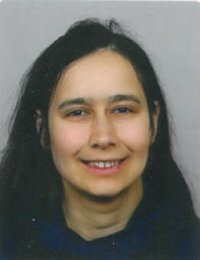
Chengnian Sun is an Associate Professor at the Cheriton School of Computer Science , University of Waterloo, Canada. His research focuses on software engineering and programming languages with an emphasis on software reliability and programming productivity. Education : Ph.D. in Computer Science from National University of Singapore (2013) His work spans compiler testing (EMI, Dfusor, Kitten), program reduction (Perses, Vulcan, PPR), Android testing, and DNN testing. He has received multiple grants including Google Research Scholar Program (2025) and NSERC Discovery Grants (2024-2029). His recent publications focus on LLM-based compiler testing, weighted delta debugging, and ransomware resilience. Scientific Awards : Most Influential Paper Award at SANER (2022) NUS Research Scholarship (2008-2012) ACM SIGSOFT Distinguished Paper Award at ASE (2012) IBM Cup Campus Innovation Contest First Prize (2005) He advises Ph.D. and MMath students in software engineering, compiler testing, and program analysis, including several who have contributed to top-tier conferences like ICSE, ISSTA, and ASPLOS. His service includes program committee roles in ICSE, OOPSLA, and ISSTA.
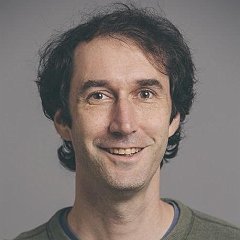
Vojtěch Havlena is a researcher affiliated with the Brno University of Technology . His work focuses on formal methods in computer science, particularly in string constraint solving and automata theory. Research Interests : Formal verification, automata theory, constraint solving algorithms. Conference Contributions : Published in PLDI (2025), SPLASH (2023), APLAS (2020, 2019).
Chris Hawblitzel is a Senior Principal Researcher at Microsoft Research , affiliated with the Systems Research Group – Redmond . His work bridges programming languages, operating systems, verification, and security, emphasizing the integration of safe programming language features into systems development. Research interests include: Programming Languages and Type Systems Formal Verification of Systems Software Language Design for Security and Safety Systems and Networking Recent publications highlight advancements in Rust verification, linear types for systems, proof automation in F*, assembly language verification, and tactic languages. Key trends involve leveraging type systems for safety, SMT-based automation, and cross-layer formal methods. He has contributed to academic communities as a committee member for conferences such as PLDI 2025 , OOPSLA 2023 , and CPP 2019 , alongside session chair roles.
George Lamont is an Associate Professor in the Faculty of Arts at the University of Waterloo, specializing in teaching-focused roles. He holds a PhD and MA from the University of Toronto, and a BA and BEd from the University of British Columbia. His work bridges literature, rhetoric, and communication pedagogy across disciplines. PhD: University of Toronto MA: University of Toronto BA: University of British Columbia BEd: University of British Columbia His research spans three key projects: transforming dissertation work into a book on authorship attribution, analyzing Shakespeare's use of etymological sources for emotional shifts, and developing assessment frameworks for communication skill outcomes. Publications focus on engineering education, information literacy, and pedagogical innovations. Recent publications (2019-2022) reveal expertise in: technical writing pedagogy, information-seeking behavior analysis, problem-based learning frameworks, interdisciplinary communication models, and digital learning adaptation. Collaborative works with Kate Mercer, Kari Weaver, and colleagues demonstrate cross-disciplinary applications. President's Excellence in Teaching (2021) Faculty of Arts Teaching Excellence Award (2020) University of Toronto TATP Teaching Excellence Award Outstanding Teaching Assistant Award (University of Toronto English Department) Ontario Graduate Scholarship University of Toronto Fellowship As Director of the Undergraduate Communication Requirement Group, he oversees communication skill development across programs. His teaching experience spans English literature, language studies, and specialized communication training for business and STEM students. Office location HH 156 (University of Waterloo), extension 46875.
Viviana Mascardi serves as an Associate Professor within the Department of Computer Science, Bioengineering, Robotics, and Systems Engineering (DIBRIS) at the University of Genoa. Her teaching responsibilities encompass core computer science courses such as Algorithms and Data Structures for the undergraduate program, and advanced topics including Natural Language Processing and Symbolic and Distributed Artificial Intelligence for master's students. Dr. Mascardi's research spans several key areas in Artificial Intelligence. She specializes in Multi-Agent Systems, where she develops frameworks for intentional dialogue systems and investigates agent deployment strategies. Her work in Natural Language Processing focuses on integrating ontologies with cognitive conversational agents. Additionally, she contributes to software engineering through runtime verification techniques for object-oriented programming constructs. Analysis of her recent publications (2023-2024) reveals consistent contributions across three primary domains: multi-agent architectures, natural language processing systems, and software verification methodologies. Her research demonstrates a strong interdisciplinary approach, connecting theoretical computer science with practical applications in virtual environments and conversational AI. No scientific awards were mentioned in the available information. Similarly, details regarding student advising, research grants, laboratory facilities, or collaborative research teams were not provided in the source material.
Kihong Heo is an Associate Professor at the School of Computing, Korea Advanced Institute of Science and Technology (KAIST), where he leads the Programming Systems Laboratory. He received his Ph.D. in Computer Science & Engineering from Seoul National University and previously served as an Assistant Professor at KAIST (2017-2019) and a Post-doctoral Researcher at the University of Pennsylvania (2009-2017). His research focuses on developing program reasoning systems for safe and reliable software, with three main thrusts: AI-based program analysis systems for detecting deep semantic software bugs, general-purpose program simplification systems for secure and efficient software, and scalable program synthesis systems for automatic software generation and repair. His work bridges formal methods, programming languages, and machine learning to address critical challenges in software reliability and security. Prof. Heo's recent publications demonstrate a strong trend toward integrating machine learning techniques with traditional program analysis and verification methods. His research spans compiler correctness (particularly for JavaScript engines), mobile security verification, and automated program transformation. The work on 'Safeguarding Mobile GUI Agent via Logic-based Action Verification' (MobiCom 2025) and 'Optimization-Directed Compiler Fuzzing for Continuous Translation Validation' (PLDI 2025) exemplifies his focus on practical verification techniques for real-world systems. ACM SIGSOFT Distinguished Paper Award (FSE 2025) Amazon Research Award (2024) The Soo-Young Lee Teaching Innovation Award, KAIST (2024) Prize for Excellence in Teaching, KAIST (2024) Best Artifact Award, ICSE (2022) ACM SIGPLAN Distinguished Paper Award, PLDI (2019) Prof. Heo actively mentors graduate students, currently advising three Ph.D. students (Yeonhee Ryou, Taeeun Kim, Sujin Jang) and four Master's students. He serves on program committees for major conferences including ICSE, PLDI, OOPSLA, and SAS, and is an Associate Editor for ACM Transactions on Software Engineering and Methodology (TOSEM). His Programming Systems Laboratory develops tools like Sparrow, a state-of-the-art static analyzer for C programs that applies abstract interpretation techniques to verify the absence of fatal bugs.
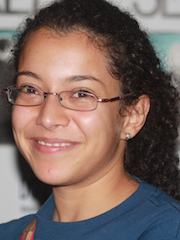
Christine Rizkallah is a Senior Lecturer in the School of Computing and Information Systems at the University of Melbourne, Australia. She joined the university in December 2021 after serving as a Lecturer at the University of New South Wales (UNSW) from April 2018 to December 2021. Her research focuses on interactive theorem proving, formal verification, programming languages, and systems, with an emphasis on building practical tools for high-assurance software development. She leads a research group working on the Cogent and Dargent languages, aiming to reduce the burden of formal verification in systems programming. Education: PhD in Computer Science, Universität des Saarlandes and Max-Planck-Institut für Informatik, Germany (2015), thesis: Verification of Program Computations , supervised by Prof. Dr. Kurt Mehlhorn. MSc in Computer Science, Universität des Saarlandes, Germany (2009), thesis: Proof Representations for Higher Order Logic , supervised by Prof. Dr. Gert Smolka and Dr. Chad E. Brown. BSc in Computer Science, German University in Cairo, Egypt (2007), thesis: X2-Planner: A Hierarchical Task Network Planner for Real Time Gaming Applications , supervised by Prof. Dr. Slim Abdennadher and Dr. Thorsten Maier. Her research interests lie at the intersection of programming languages and formal methods. She develops domain-specific languages with strong type systems and verified compilers to enable trustworthy software systems. Her work spans algorithms, logic, security, and social choice theory, reflecting a strong interdisciplinary approach. She has published extensively in top venues such as POPL, ICFP, ASPLOS, JAR, and PACMPL, with a focus on certifying compilation, refinement verification, and mechanized reasoning. Her recent publications reveal a consistent focus on formal verification of systems software, particularly through the Cogent language and its ecosystem. Key themes include verified data layout refinement (Dargent), property-based testing, termination analysis, cost modeling, and integration with foreign functions. Her work combines theoretical rigor with practical implementation, often involving mechanized proofs in Isabelle/HOL and Coq. Scientific Awards and Recognition: Distinguished Artefact Award at SLE'22 (awarded to Zilin Chen for work under her supervision). First Prize, SPLASH'22 Student Research Competition (undergraduate), won by Raphael Douglas Giles. Second Prize, ACM-wide Student Research Competition (undergraduate, 2023), won by Raphael Douglas Giles. She has supervised numerous PhD, Masters, and Honours students, many of whom have continued in academia or industry research roles. She has received research funding through institutional support and collaborative grants, though specific grants are not detailed in the provided text. She is actively involved in the programming languages community, serving on program committees for POPL, ICFP, CPP, PLDI, and others, and holding leadership roles such as Program Chair for FUNARCH'25 and Diversity and Inclusion Co-Chair for PLDI'25. She teaches core courses including Declarative Programming and Models of Computation at the University of Melbourne. She leads a vibrant research team and collaborates widely across institutions including UNSW, University of Pennsylvania, and international partners. Her lab focuses on building verified systems using functional programming and formal methods, with strong ties to the DeepSpec project and the Isabelle/HOL community.
Anders Møller is a Professor and Vice Head of Department at the Department of Computer Science, Aarhus University, Denmark. He is a leading researcher in programming languages and software engineering, with a primary focus on static and dynamic program analysis. He serves as Chairman of the PhD Committee and holds leadership roles in the international research community, including Vice-Chair of ACM SIGPLAN and Associate Editor for ACM TOPLAS and ACM TOSEM. His research interests include programming languages, software engineering, static and dynamic analysis, program verification, and security. His work bridges theoretical foundations and practical applications, particularly in improving software reliability and security through advanced analysis techniques. The trends in his recent publications reflect a strong emphasis on static analysis for security, scalability, and real-world impact—especially in web applications, smart contracts, and open-source software supply chains. His research has evolved toward practical deployment, demonstrated by the founding and acquisition of Coana by Socket in 2025 for enhanced vulnerability detection. Recipient of the Danish Elite Research Prize 2020 ACM Distinguished Member He actively mentors students and contributes to the academic community through conference leadership (e.g., OOPSLA, PLDI, ICSE). He also co-authored the widely used textbook Static Program Analysis with Michael I. Schwartzbach. His work is deeply integrated into both academic and industrial advancements in software analysis and security.
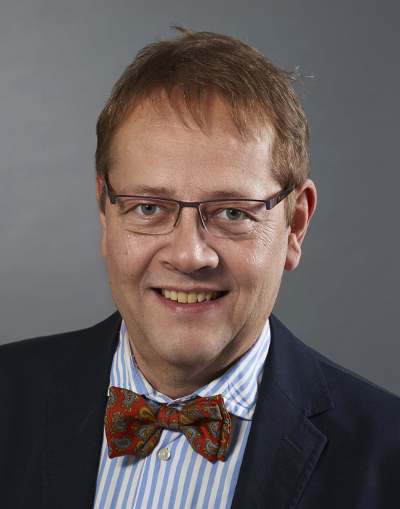
Gregor Snelting is a Professor and head of the Chair of Programming Paradigms at the Karlsruhe Institute of Technology (KIT), Faculty of Computer Science, Institute for Programming Languages and Compiler Construction. His research focuses on compiler construction, program analysis, software security, and verification. His primary research interests include programming languages, compiler design, program analysis, software security, information flow control, formal verification, object-oriented and concurrent programming, and software reengineering using concept analysis. His work aims to provide solid theoretical foundations and empirical validation. The research output, particularly the 15 most recent articles, shows a strong emphasis on software security and program analysis, with a focus on information flow control in Java using the JOANA tool. There is also a significant thread on invasive computing and resource-aware parallel programming. The work combines deep theoretical contributions, such as formal semantics and correctness proofs, with practical tool development and empirical validation. Faculty Teaching Award for the course 'Practice in Software Development' Snelting leads a research group that has developed several significant tools, including JOANA for security analysis, the Praktomat system for automated grading of programming assignments, and contributions to the libFirm compiler framework. His group is a key participant in major research initiatives like the DFG Collaborative Research Center InvasIC and the DFG Priority Program RS3. He advises students and supervises theses, fostering research in programming paradigms and software security. The group is involved in several key research projects: JOANA for information flow control in Java, InvasIC for invasive computing and dynamic parallelism, Quis-Custodiet for machine-checked correctness proofs of security analyses, and the development of the libFirm compiler framework.
Jeff Huang is an Associate Professor in the Department of Computer Science and Engineering at Texas A&M University, specializing in programming languages and software engineering with a focus on concurrency and runtime verification. His research develops advanced program analysis techniques and tools to enhance software performance and reliability. Programming Languages Software Engineering Concurrency Runtime Verification His work has been recognized with prestigious awards including the ACM SIGSOFT Early Career Researcher Award, NSF CAREER Award, Google Faculty Research Award, and DARPA Young Faculty Award. Notably, his research has earned multiple SIGPLAN Research Highlights and PLDI Distinguished Paper Awards. ACM SIGSOFT Early Career Researcher Award NSF CAREER Award Google Faculty Research Award Mozilla Research Award Facebook Research Award DARPA Young Faculty Award ACM SIGSOFT Outstanding Dissertation Award ACM SIGPLAN PLDI Distinguished Paper Award SIGPLAN Research Highlights Jeff Huang actively contributes to academic communities as a committee member in venues like SPLASH, ICSE, ISSTA, and PLDI. He has authored influential papers on concurrency bug detection, pointer analysis, and language translation tools, spanning both theoretical foundations and practical implementations.
Mariagrazia Graziano is an Associate Professor at the Department of Applied Science and Technology (DISAT) at Politecnico di Torino, where she also serves as Director of the Teaching and Language Lab (TLLab). Her academic career spans multiple institutions, including her involvement with doctoral colleges at the University of Palermo for 'Technologies and Methods for University Education' from 2022-2025. Her research interests are at the forefront of nanotechnology and quantum computing, focusing on areas including: Molecular field-coupled nanocomputing Logic-in-memory computing architectures Quantum hardware design and optimization Single-molecule devices for logic and memory applications Nanomagnetism and spintronics Micro-for-Nano (M4N) Systems for Single Molecule Sensors Dr. Graziano's work bridges fundamental physics with practical applications in electronics, with particular emphasis on next-generation computing paradigms that address the memory-wall problem and explore alternatives to traditional von Neumann architectures. Her research has significant implications for fields ranging from molecular electronics to quantum information processing. Her recent publications demonstrate a strong focus on molecular field-coupled nanocomputing, quantum optimization techniques, and single-molecule device modeling. These works reveal a consistent research trajectory toward developing novel computing architectures that leverage quantum effects and molecular-scale phenomena to overcome limitations of conventional semiconductor technology. Dr. Graziano has received notable recognition including the prestigious Marie Curie Intra-European Fellowship for Career Development from the European Commission (2014). She serves as Associate Editor for FRONTIERS IN ELECTRONICS (since 2022) and JOURNAL OF COMPUTATIONAL ELECTRONICS (since 2019), and has participated in program committees for major conferences including the IEEE Design Automation and Test Conference Europe. As an advisor, Dr. Graziano mentors numerous PhD students working on cutting-edge research in quantum computing, molecular electronics, and nanotechnology. Her supervision spans multiple doctoral programs at Politecnico di Torino, with students exploring topics from quantum algorithms for urban traffic optimization to single-molecule junctions for next-generation electronics. Additionally, she leads several research projects including TENS (Toward Excellence in Nanocharacterisation of single-molecule Sensors) and previously served as Scientific Leader for the Quantum Computing e Quantum Networking project. Dr. Graziano is actively involved in the VLSILAB research group, where she contributes to advancing the state-of-the-art in electronic design and nanoscale computing technologies. Her work on patents, particularly the 'Device for Realizing Boolean Logic Functions XOR XNOR Inside Racetrack Memory,' demonstrates her commitment to translating theoretical research into practical technological innovations.
Andrew Pitts is a Professor at the University of Cambridge Computer Laboratory, specializing in the theory and semantics of computation, with a focus on nominal sets and dependent type theory. He is a Fellow of the Royal Society (FRS) and has made significant contributions to the mathematical foundations of programming languages. Research Interests: His work bridges theoretical computer science and mathematical logic, emphasizing nominal techniques, category theory, and homotopy type theory. He explores abstract syntax, inductive types, and the formal verification of computational models. Key Trends in Recent Publications: Recent articles emphasize category theory, type theory, and formal methods, with specific attention to quotient types, modal type theory, and cubical type theory. These works often involve collaborations with researchers in programming language foundations and mathematical logic. Scientific Awards: Fellow of the Royal Society (FRS)
Professor Clemens H. Cap is a Full Professor with tenure and Chair for Information and Communication Services at the University of Rostock, Germany, where he has held his position since 1997. He maintains leadership of the Information and Communication Services research group and has previously held academic appointments at the University of Zurich (including an adjunct professorship until June 2023) and the University of Mannheim. University of Rostock: Full Professor (1997-present) University of Zurich: Adjunct Professor (2004-2023) University of Zurich: Assistant Professor (1992-1995) University of Mannheim: Associate Professor (1994) Professor Cap's research focuses on distributed systems, system security, Internet applications, and social problems in computer science. His work demonstrates an evolution from early research on workstation clusters to contemporary investigations of blockchain technology, classroom response systems, and the social implications of digital technologies. His research interests encompass system architecture for distributed and ubiquitous applications, Internet services, system security, and applications of formal specification techniques. His work has been supported by the German Research Foundation (DFG), the Federal Ministry of Education and Research (BMBF), and the European Union, including participation in the European Fifth Framework Research Program. His recent publications (2014-2022) reveal a strong focus on blockchain applications, security management, and educational technologies, particularly classroom response systems. His research shows consistent thematic development with security, distributed systems, and the social impact of technology as throughlines. Professor Cap regularly gives guest lectures in the Baltic States and Switzerland, demonstrating international engagement. Honorary doctoral degree 'sub auspiciis praesidentis' by Austrian president (1989) Professor Cap is active in academic self-administration as a member of the board of the interdisciplinary research department 'Knowledge - Culture - Transformation' and as Head of the ICT Science Confederation. His teaching portfolio includes Computer Networking, Data Security, Architecture of network services, Methodology of Scientific Research, Software Development Project Distributed Systems, Research Topics in Internet Technology, Computer Science and Society, and Social Impact of IT. He has developed numerous modules that are part of summer schools and international cooperations (BaSoTI). His teaching languages are German and English, and his courses are available for continuous education programs and in-house seminars for companies.
Aniello Murano is a Professor in Computer Science at the Department of Electrical Engineering and Information Technology of the University of Naples Federico II. He serves as Scientific Director of the ASTREA (Automated Strategic REAsoning) Laboratory and has been actively involved in numerous research projects including H2020-MSCA project SEAL as Principal Coordinator and PNRR Research Unit Coordinator on Resilient Strategic Reasoning in AI (2023-2025). His primary research interests focus on Artificial Intelligence, Formal Aspects for Strategic Reasoning in Multi-Agent Systems under Perfect and Imperfect Information, Specification, Verification, and Synthesis of Reactive Systems, Model Checking and Module Checking, Formal Languages, Automata Theory, Real-time Systems, Pushdown and Hierarchical Systems, Temporal and Modal Logics, Logics for Strategic Reasoning in AI, Game Theory, Parity Games, Solution Concepts, and Automated Mechanism Design. His work bridges theoretical computer science with practical applications in AI systems. Murano has published extensively in top-tier venues, with recent publications spanning KR, IJCAI, AAAI, AAMAS, and other premier conferences. His research shows strong trends in strategic reasoning frameworks, verification techniques for multi-agent systems, and applications of game theory to mechanism design. He has made significant contributions to Strategy Logic and its extensions. JPMorgan Faculty Research Award 2022 Best Paper Award PRIMA 2015 Vigevani Research Project Prize 2010 In KR Top 100, best AI-2000 world researchers Italian Scientific Abilitation as Full Professor in Engineering Computer Science (March 2018) Italian Scientific Abilitation as Full Professor in Computer Science (April 2017) Royal Society Award 2016 Murano has supervised numerous PhD students including Silvia Stranieri, Antonio Di Stasio, Vadim Malvone, and Giuseppe Perelli. He has served as Program Chair for major conferences including ECAI 2025 (Program co-chair), KR 2024 (Area chair), and CSL 2024. His research has been supported by significant grants including Horizon 2020 projects, JPMorgan funding, and Italian national research programs. He leads the ASTREA Laboratory focused on automated strategic reasoning and has been instrumental in establishing collaborative research initiatives with institutions worldwide.
Cynthia Kop is an Associate Professor in the Software Science group at Radboud University Nijmegen's Institute for Computing and Information Sciences. She holds a prominent position in the academic community with significant contributions to term rewriting systems and their applications in computer science. Her research interests span several interconnected areas of theoretical computer science: Term rewriting systems (both first and higher-order) Implicit computational complexity Program verification and equivalence Constrained rewriting systems Automated reasoning techniques Her recent work demonstrates a clear trajectory toward applying term rewriting techniques to solve practical problems in program verification and complexity analysis. The three most recent publications from 2019 show her focus on constrained rewriting for program equivalence, higher-order dependency frameworks, and cons-free rewriting for implicit complexity characterization. These works represent the intersection of theoretical foundations with practical applications in software verification. Dr. Kop has secured significant research funding through competitive grants including: NWO VIDI project CHORPE (2021-2026): Constrained Higher-Order Rewriting and Program Equivalence NWO TOP project ICHOR (2019-2023): Implicit Complexity through Higher Order Rewriting Marie Curie project HORIP (2015-2017): Higher Order term Rewriting for Intensional Properties She actively supervises PhD students including Liye Guo, Kasper Hagens, and Deivid do Vale, and has developed several influential tools for the rewriting community: WANDA (termination analysis), CTRL (constrained rewriting), and Cora (comprehensive rewriting analysis framework). Her professional service includes chairing the IFIP working group 1.6 on rewriting and serving on numerous program committees for major conferences in her field.