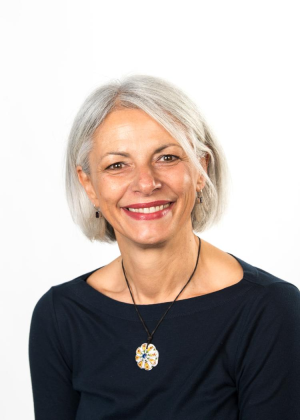
Ros McLellan is an Associate Professor in Teacher Education and Development at the University of Cambridge's Faculty of Education , concurrently serving as Director of Learning & Teaching . She holds a PhD in Science Education (King's College London), MPhil in Psychology of Education (Cambridge), and PGCE in Secondary Mathematics. Her research focuses on student wellbeing, motivation, mathematics anxiety, and teacher learning, with a psychological lens. Research Interests: Student motivation, wellbeing, mathematics anxiety, teacher professional development, gender and achievement disparities, creativity in education. Collaborations: Leads school-university partnerships in Kazakhstan and the UK, including projects on student well-being and education transitions. Professional Roles: British Educational Research Association (BERA) Council member and Chair of its Publications Committee; co-convenes the European Educational Research Association's Health and Wellbeing Education network. Her recent work explores mindfulness-based interventions, bullying victimization across nations, and the impact of SEL programs on adolescent behavior. Over 50 peer-reviewed publications span journals like Frontiers in Education , Child Indicators Research , and Journal of Adolescence . Current projects include analyzing UKSA program impacts and Kazakhstan school well-being initiatives. She advises doctoral students focusing on psychological perspectives of education-related research topics.
Suzy Anger serves as an Associate Professor and MA Advisor in the Department of English Language and Literatures within the Faculty of Arts at the University of British Columbia. Her academic work bridges literary studies with the history of science, focusing on how Victorian literature engaged with contemporary scientific thought. Dr. Anger received her BA from the University of California, Berkeley, followed by her MA and PhD from the University of Washington. Her educational background established the foundation for her interdisciplinary approach that connects literary analysis with scientific and philosophical inquiry. Her research primarily explores Victorian literature in relation to nineteenth-century science, psychology, and philosophy. Currently, she investigates Victorian fiction and nineteenth-century theories of consciousness, examining novels by Thomas Hardy, Charles Dickens, George Gissing, and Sarah Grand across genres including ghost fiction and scientific romance. Her scholarly work demonstrates how literary texts engaged with emerging scientific concepts of the period, particularly in the areas of mind sciences, hermeneutics, and technological understanding. She has particular expertise in how literary works processed scientific developments related to consciousness, automatism, and the relationship between humans and machines. Her publication record reveals a consistent trajectory of scholarship examining the intersection of Victorian literature and scientific thought, with recent work increasingly focused on theories of consciousness, literary automatism, and the philosophical implications of scientific developments in the nineteenth century. Her research demonstrates how literary works served as laboratories for exploring complex scientific concepts before they were fully developed in scientific discourse. Sonya Rudikoff Prize for the best first book in Victorian Studies (2006) Killam Teaching Prize, University of British Columbia (2018) Newhouse Center Faculty Fellowship, Wellesley College (2006-2007) SSHRC Faculty Research Grant (2005-2008) American Council of Learned Societies Fellowship (2000-2001) National Endowment for the Humanities Stipend (1999) As an academic leader, Dr. Anger has served as president of the Northeast Victorian Studies Association and was former co-chair of UBC's interdisciplinary graduate program in Science and Technology Studies. Her research has been supported by multiple prestigious fellowships and grants from major funding bodies including the American Council of Learned Societies, the National Endowment for the Humanities, and the Social Sciences and Humanities Research Council of Canada. Her editorial work on collections like 'Victorian Science as Cultural Authority' and 'Victorian Automata' has helped shape contemporary scholarship in the field. Through her editorial projects and interdisciplinary collaborations, Dr. Anger has been instrumental in developing the field of Science and Technology Studies within literary scholarship. Her work with colleagues across disciplines has created important spaces for examining how literature processes scientific and technological change, particularly in historical contexts where such changes were rapidly transforming society's understanding of itself.
Professor Lisa Kervin is a leading academic in early childhood education at the University of Wollongong (UOW), serving as Director of Early Start Research and holding a Professorial appointment in the School of Education. Her research focuses on young children’s literate practices, play-based learning, and digital technology integration in education. She leads the ARC Centre of Excellence for the Digital Child and has secured significant funding, including a 2025 ARC Future Fellowship exploring intergenerational play. Kervin was honored as a Member of the Order of Australia (AM) in 2024 for contributions to early childhood digital literacy research. She has supervised over 35 research students, many now in academic and leadership roles, and currently oversees seven doctoral candidates. Her work bridges theory and practice through collaborations with educators and industry partners, emphasizing interdisciplinary approaches to child development and policy influence globally. Education: PhD in Language and Literacy from UOW (2001–2004). Professional roles include Principal Fellow of the Australian Literacy Educators’ Association and Director qualifications from the Australian Institute of Company Directors. Her research spans digital childhood ethics, play pedagogy, and literacy curriculum design, with outputs impacting government policies and international educational frameworks. Ongoing projects include the ‘DigIQ’ program promoting digital literacy and ‘Playgroups for All Ages’ fostering intergenerational engagement. Grants and collaborations involve partnerships across six universities and 33 global organizations. Her teaching innovations include the Early Childhood Elevate Mentoring Program to support educators’ academic progression. Kervin’s work addresses critical issues like screen time impacts, STEAM education, and culturally responsive pedagogies, positioning her as a key voice in 21st-century early childhood education.
Jonathan E. Abel is a Professor of Comparative Literature and Asian Studies at Pennsylvania State University, specializing in Japanese media, film, and literature. He currently serves as Associate Director of the Center for Humanities and Information. His research focuses on global modernism, translation studies, and media theory, with notable works like *The New Real* (2023) and *Redacted* (2012). Abel has held leadership roles, including Director of Penn State’s Global and International Studies Program (2016-2022). He is a co-translator of Karatani Kōjin’s *Nation and Aesthetics* and Azuma Hiroki’s *Otaku*. Awards include the Weatherhead East Asia Institute First Book Award and the Erasmus Award for Excellence in Mentoring. Education: PhD in Comparative Literature (Princeton University, 2005); MA (Columbia University, 1997); BA (University of Pennsylvania, 1993). Research interests include media studies, cultural theory, and digital humanities. Projects like CINEmap visualize film locations to explore spatial narratives. Current work examines social media fiction and fake news policies. Abel has authored/co-edited over 50 articles, books, and special journal issues, including work on emoji, Meiji print culture, and post-disaster media.
Dr. M.Z. Naser is an Assistant Professor in the Glenn Department of Civil Engineering at Clemson University. His research focuses on causal and explainable machine learning methodologies applied to structural engineering, materials science, and fire safety. He holds a PhD from Michigan State University and an M.S. from the American University of Sharjah. Naser teaches courses such as Machine Learning for Civil Engineers and Structural Fire Engineering, emphasizing interdisciplinary innovation. His work bridges data-driven analysis with domain-specific knowledge to address challenges in resilient infrastructure design, including fire-resistant materials, structural retrofits, and AI-driven decision-making. Education: PhD, Michigan State University; M.S., American University of Sharjah Research Themes: Explainable AI, Fire Engineering, Structural Materials, Causal Inference Key Projects: Developing SPINEX framework, wildfire classification models, and cognitive infrastructure systems Recent publications analyze over 1000 fire tests to uncover spalling mechanisms, explore synthetic fire tests via GANs, and benchmark automated ML platforms. His work on causal diagrams for civil engineers and firefighter algorithms highlights contributions to both theory and practical applications. Naser also advocates for integrating AI into engineering education, emphasizing ethical and transparent model deployment.
Dr. Alexander Mantzaris is an Associate Professor in the Department of Statistics & Data Science at the University of Central Florida, College of Sciences. His research bridges physics and sociology through Social Physics frameworks, focusing on statistical mechanics and thermodynamic analogies to model social phenomena. Current research explores criticality points in social systems Developing computational tools for NLP and big data Former work on Graph Convolutional Networks in social analysis Specializes in entropy-based modeling of polarization and segregation His publications emphasize interdisciplinary approaches combining network science, computational modeling, and sociological dynamics. Recent articles address thermodynamic formulations of political cycles, energy states in Schelling models, and memory-efficient data processing algorithms. Dr. Mantzaris teaches graduate courses in big data analytics and statistical learning theory. He maintains active research in computational social science with applications to political dynamics, media influence, and complex systems analysis.
Dr. Maile Arvin is an Associate Professor of History and Gender Studies at the University of Utah, and the founding director of the Center for Pasifika Indigenous Knowledges. She specializes in histories of race, Pacific studies, gender history, and Indigenous methodologies. Her work critically examines settler colonialism, scientific racism, and Indigenous sovereignty, particularly in Hawaiʻi and Oceania. Arvin holds a BA in English from Swarthmore College, and an MA and PhD in Ethnic Studies from the University of California, San Diego. She is fluent in Hawaiian, reading, writing, and speaking the language. Her research includes the Nā Lei Poina ʻOle project, a community-engaged history initiative addressing reformatories and industrial schools in Hawaiʻi, supported by NEH and ACLS grants. She has authored Possessing Polynesians: The Science of Settler Colonial Whiteness and contributes to decolonizing frameworks in Pacific Studies. Arvin’s academic leadership includes directing the University of Utah’s Pacific Islands Studies and Gender Studies programs. Her work bridges Indigenous data sovereignty, youth studies, and feminist critiques of colonial systems.
Professor Kirk R. Pruhs is a full Professor in the Department of Computer Science at the University of Pittsburgh's School of Computing and Information. He holds editorial roles at journals such as the Journal of Scheduling and ACM Transactions on Algorithms. His research focuses on algorithmic problems in green computing, scheduling, online optimization, and resource management. Pruhs has advised numerous PhD students and has a strong publication record in top venues like SODA, STOC, and FOCS. His work often addresses energy-efficient algorithms and computational resource management. Notable contributions include studies on stochastic scheduling, energy-efficient routing, and competitive analysis of online algorithms. Education: BS in Mathematics and Computer Science from Iowa State University (1984), PhD in Computer Science from University of Wisconsin-Madison (1989). Research Interests: Algorithmic challenges in green computing, fair allocation mechanisms, scheduling under uncertainty, and online optimization techniques. He explores how computational methods can improve energy efficiency and resource allocation in distributed systems. Recent articles focus on robust scheduling strategies, stochastic systems, and algorithmic approaches to network design and resource optimization. His work bridges theoretical computer science with practical applications in sustainable computing. Students: Includes Jonathan Beaver (2006), Mohamed Aly (2008), Christine Chung (2009), Daniel Cole (2013), Neal Barcelo (2015), Michael Nugent (2015), and Alireza Samadian Zakaria (2021). Labs/Teams: Engaged in algorithm design and analysis within the Department of Computer Science, contributing to initiatives in computational sustainability and high-performance computing.
Cristiano Politowski is an Assistant Professor in the Department of Computer Science at Ontario Tech University’s Faculty of Science. His research focuses on applying software engineering principles to video game development, with particular emphasis on software testing, artificial intelligence for software engineering (AI4SE), deep reinforcement learning, and empirical software engineering. Education includes a PhD in Computer Science and Software Engineering from Concordia University (2022), supervised by Professors Yann-Gaël Guéhéneuc and Fabio Petrillo. Prior to his current role, he held postdoctoral positions at Université de Montréal and École de Technologie Supérieure in Montréal, Canada. Research interests span game engine architecture analysis, automated testing methodologies for games, and bridging gaps between academic theory and industry practices in software engineering. His work often involves empirical studies on software quality, framework impacts, and event-driven systems. Publications reflect a focus on game development challenges, including studies on API compatibility, subsystem coupling visualization, and AI-driven game balance assessment. He actively contributes to the understanding of software processes in the video game industry through surveys and dataset curation initiatives like PlayMyData.
Bryan A. Brown is the Kamalachari Professor of Science Education and Senior Associate Vice Provost at Stanford University’s Graduate School of Education. His work focuses on science education in urban contexts, emphasizing discourse, identity, and equity. He holds administrative roles including College Director of Freshman Sophomore College and oversees the Stanford Provostial Fellows Program. Education: BS in Biology (Hampton University, 1996), MA and PhD in Science Education (UC Santa Barbara, 1999–2002). Research Interests: Student identity, classroom discourse, urban STEM equity, college access, and culturally relevant pedagogy. Advisees: Supervises doctoral students including Kendra Sobomehin, Brandi Cannon, and Derric Heck. Dr. Brown’s recent work explores virtual reality (VR) applications for culturally relevant science education and the impact of language ideologies on cognition. He teaches courses like Curriculum and Instruction in Science and Science, Engineering and Technology Education Seminar . His research highlights how race, language, and culture shape learning opportunities, particularly for urban students. He advocates for technology-based solutions to address educational disparities and has contributed to projects like VR-based ocean acidification education and culturally responsive STEM curricula. Key Themes: Bridging cultural relevance and technology, dismantling language barriers in science, and advancing equity through pedagogical innovation.
Casey Reas is a Professor in the Department of Design Media Arts at the University of California, Los Angeles (UCLA), where he also co-directs UCLA Social Software. He holds a Master's in Media Arts and Sciences from MIT and a Bachelor's from the University of Cincinnati's College of Design. A pioneering figure in generative art and digital media, Reas co-founded the open-source programming language Processing, revolutionizing computational creativity for artists and designers. His work spans software installations, prints, and collaborative projects exhibited globally at institutions like the Centre Pompidou and the Whitney Museum. His research explores intersections of technology, art, and pedagogy, reflected in books such as Compressed Cinema and Making Pictures with Generative Adversarial Networks . Reas' practice emphasizes algorithmic processes and machine learning, exemplified in series like Untitled Film Stills and Compressed Cinema . He actively contributes to initiatives like UCLA’s Game Lab and the Conditional Studio, fostering interdisciplinary innovation. His work balances technical rigor with aesthetic exploration, bridging art, science, and technology.
David Porter is a Professor of English and Comparative Literature at the University of Michigan's LSA (Literature, Science, and the Arts). He holds a MA from Cambridge University (1990) and a PhD from Stanford University (1996). His research focuses on transcultural translation, early modern China-Europe exchanges, and Great Lakes environmental humanities. Key projects include the Detroit River Story Lab and the Great Lakes Theme Semester. He has authored works such as The Chinese Taste in Eighteenth-Century England and edited Comparative Early Modernities: 1100-1800 . His recent work bridges environmental stewardship with community engagement in the Great Lakes region. Research interests span seventeenth/eighteenth-century British literature, postcolonial studies, material culture, and environmental humanities. His publications analyze cross-cultural aesthetics, global early modernity, and anarchist political thought. He teaches courses on literary journalism and research methodologies. Porter's interdisciplinary projects engage public audiences through initiatives like the Great Lakes Writers Corps and the Great Lakes Arts, Cultures, and Environments Summer Program. His scholarship integrates literary analysis with ecological and historical frameworks, emphasizing interconnected global histories.
Dr. Danfeng Wu is a Research Fellow at Magdalen College, University of Oxford, conducting interdisciplinary research in syntax-semantics and syntax-prosody mappings. Her work focuses on ellipsis, focus in coordination, and the empirical interplay between syntactic structure and prosody, employing experimental phonetic methods. She investigates languages like English and Mandarin Chinese to explore the cognitive and computational aspects of linguistic structure. Her research themes include phonetics, prosody, semantics, and syntax, with a particular emphasis on how syntactic configurations interact with prosodic phrasing and stress patterns. She has contributed to studies on corrective constructions, clitic climbing in Wolof, and vowel lengthening in Zulu, demonstrating a broad methodological approach combining theoretical linguistics with experimental and computational methods. Dr. Wu is affiliated with the Phonetics Lab and Language & Brain Lab within the Faculty of Linguistics, Philology & Phonetics. She has organized interdisciplinary events such as the Oxford workshop on AI language models and developed linguistics courses for computer scientists and cognitive scientists at MIT. Her work bridges formal linguistics with cognitive science and computational linguistics, emphasizing realistic models of language acquisition and evolution.
Dr. Giovanna Fassetta is a Senior Lecturer in Social Inclusion at the University of Glasgow's School of Education, specializing in the Culture, Literacies, Inclusion & Pedagogy department. With over 20 years of teaching experience across Italy, Eritrea, and the UK, she focuses on inclusive education for migrant, refugee, and asylum-seeking youth, linguistic diversity, and crisis-affected contexts. She teaches on the MSc Education for Sustainable Future and MEd Inclusive Education programs, leading courses like Approaches to Inclusive Learning and Dissertation supervision. Research Interests: Her work explores multilingualism's role in inclusion, resilience in conflict zones, and decolonial pedagogies using qualitative and participatory methods. She emphasizes visual and arts-based methodologies, particularly in marginalized communities. Grants & Projects: Co-Investigator in Education in Conflict (2024) and LINEs4Palestine (2024) Principal Investigator of Welcoming Languages 2 (2023) and AHRC-funded projects on Palestinian Arabic education Contributor to the Culture for Sustainable and Inclusive Peace (CUSP) Network Teaching & Supervision: Supervises PhD students researching refugee education, trauma, and inclusion. Leads courses on inclusive pedagogy and dissertation methodologies. Additional Roles: Member of the School of Education Ethics Committee and co-convenor of Glasgow Refugee Asylum and Migration Network (GRAMNet).
Ed Chien is an Assistant Professor at Boston University's Department of Computer Science within the College of Arts & Sciences. He specializes in applying differential geometry and topology to graphics, computational engineering, and machine learning. Previously, he was a postdoctoral researcher at MIT's CSAIL and Bar-Ilan University. His work focuses on mathematically rigorous solutions to problems in geometric data processing and optimal transport. Education PhD in Mathematics, Rutgers University (2015) A.B. in Mathematics & Physics, Dartmouth College (2009) Research Highlights Dr. Chien's research includes fundamental studies on hexahedral mesh topology for Finite Element Modeling, optimal transport applications in machine learning, and singularity-free geometric algorithms. His work bridges theoretical mathematics with computational tools for engineering and graphics. Publications span top venues like NeurIPS, Eurographics, and SIGGRAPH, reflecting contributions to geometry processing and machine learning intersections. Program committee roles include Eurographics SGP (2019) and AAAI (2020). Awards & Recognition No specific awards listed, but notable service includes program committee memberships and peer-reviewed contributions to leading conferences. Grants & Advising Active in mentoring through academic positions but no explicit grant details provided. Research focuses on advancing geometric algorithms and optimal transport methodologies.