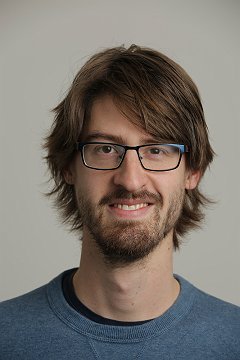
Burghard Baltrusch is a Professor of Galician and Latin Philology at the University of Vigo's Faculty of Philology and Translation in Galicia, Spain. Since 2015, he has directed the International José Saramago Chair at the University of Vigo, an institution funded internationally by the Instituto Camões and the Universidade Lusófona de Humanidades e Tecnologias. He coordinates the BiFeGa research group in Cultural Studies, Translation and Interpretation, recognized as a GRC group by the Xunta de Galicia since 2019, and collaborates with the Institute of Comparative Literature Margarida Losa at the University of Porto. Baltrusch obtained his doctorate (doctor philosophiae) from the University of Bonn in 1996 after studying at the Universities of Bonn and Cologne (Germany), Nova de Lisboa (Portugal), and Complutense (Spain). His academic journey has been dedicated to Lusophone literatures, particularly focusing on the intersection of literary studies, cultural analysis, and political discourse within Portuguese-speaking contexts. His primary research interests center on contemporary poetry and its relationship to political discourse, with special attention to the works of Fernando Pessoa and José Saramago. Baltrusch has pioneered studies examining how poetic expression functions in public spaces, the hermeneutics of translation, and the political dimensions of literary works. His scholarship demonstrates a consistent engagement with how literature interacts with social movements, critiques of neoliberal capitalism, and questions of identity and resistance. The researcher has particularly focused on Galician and Portuguese literary traditions while maintaining a comparative perspective that spans Iberian and Lusophone contexts. Analysis of Baltrusch's recent publications reveals a sustained exploration of the intersection between poetic expression and political discourse, particularly in contemporary Iberian and Lusophone contexts. His work consistently examines how poetry engages with social conflicts, political movements, and cultural resistance. A significant portion of his recent scholarship focuses on José Saramago's legacy, Adília Lopes' feminist poetry, and the visual-literary dialogue between writer José Saramago and artist Graça Morais. His research demonstrates increasing attention to intermedial approaches, examining how poetry interacts with visual arts, performance, and digital media in contemporary cultural production. Burghard Baltrusch has directed the International José Saramago Chair since 2015 and established the JANGADA network in 2019, which connects nine José Saramago chairs worldwide along with five additional chairs and four research centers. He has served as principal investigator for two significant research projects on "Contemporary Poetry and Politics" funded by the Spanish Ministry of Science and Innovation. His academic leadership extends to coordinating the BiFeGa research group and formerly serving as coordinator of the Interuniversity Doctoral Program in Literary Studies. Through these roles, he has mentored numerous graduate students and fostered international academic collaborations across Iberian and Lusophone institutions. As director of the International José Saramago Chair and coordinator of the BiFeGa research group, Baltrusch leads initiatives that bridge academic research with public engagement. His work with the JANGADA network has created a global platform for Saramago studies, while his research group focuses on interdisciplinary approaches to literary studies, translation, and cultural analysis. The researcher has organized numerous conferences, exhibitions, and collaborative projects that bring academic scholarship into dialogue with contemporary cultural and political issues, particularly through events examining the 50th anniversary of Portugal's Carnation Revolution and exhibitions exploring the relationship between Saramago's literary work and Graça Morais' visual art.