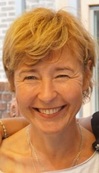
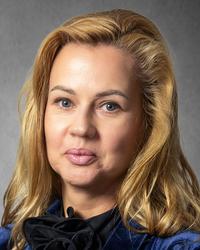
Prof. Dr. hab. Joanna Orska is a faculty member at the Institute of Polish Philology , University of Wrocław, specializing in modernism, postmodernism, and avant-garde studies. She oversees the Contemporary Critical Forms Workshop and co-founded the Textual Culture and Practice program. Her research bridges literary criticism, poetry analysis, and translation theory. Department of Post-1918 Literature (since 2004) Key focus: Avant-garde syntax, poetic constructivism, and transnational literary discourse Her publications analyze Polish poetry (1989–present), avant-garde manifestos, and intermediality in literary works. She co-edited Learning to Walk: Programmatic Texts of the Late Avant-garde (2019) and participates in international conferences on mountain humanities and literary culture. As a juror for the Wisława Szymborska and Silesius Poetry Awards, she shapes contemporary Polish literary criticism. Recent trends in her work include metalepsis in translation, retro-avant-garde movements, and intersections of politics and poetic form. She collaborates with European institutions like the German Historical Institute and Leibniz-Institut, with articles appearing in Teksty Drugie , Ruch Literacki , and Nowe Książki .
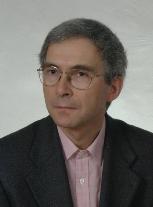
Dr. Muriel Waterlot serves as an Assistant Professor at the Department of Dutch Language and Literature within the Faculty of Humanities at the John Paul II Catholic University of Lublin. Her research focuses on translation didactics , intercultural competence , and contrastive linguistic analysis between Polish, Dutch, and Flemish contexts. Supervised 18+ diploma theses on topics like Zeeuws dialect preservation, Dutch-English modal verbs, and Polish-Dutch phraseological units Contributed to translation theory through publications and presentations at international conferences including TransELTE and THERMOS Active in editorial and expert councils for academic journals and PhD programs Her recent work explores terminological variants in Polish-Dutch-French contexts , multilingual translation approaches , and pedagogical models for foreign language teaching . She advocates for task-based translation methodologies and cross-cultural business communication frameworks. Key projects involve EU-funded initiatives like Language in Business – Business in Language (Erasmus+) Developed the Waterlot Model for tourism web-text translation Coordinated international translation education programs
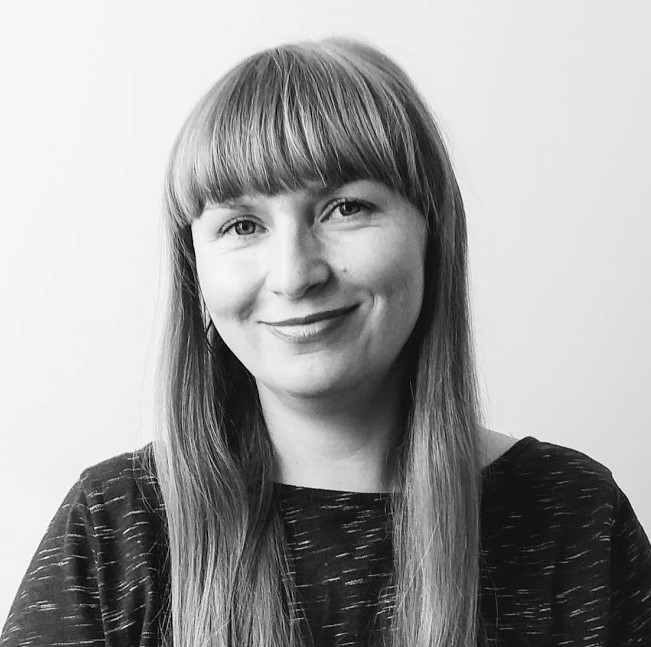
Prof. Dorota Klus-Stańska serves as Professor and Head of the Department of Childhood and School Research within the Institute of Pedagogy at the University of Gdańsk's Faculty of Social Sciences. Her academic leadership spans critical analysis of educational systems, teacher development, and institutional frameworks shaping early education in Poland. Her research interrogates foundational tensions in educational practice: the conflict between institutional standardization and cognitive autonomy in children, the paradoxes of school readiness assessments, and the linguistic construction of educational realities. She champions reconceptualized paradigms that prioritize holistic child development over developmental imperatives, examining how multicultural inclusivity intersects with pedagogical traditions. Her work consistently challenges transmissive teaching models while exploring narrative-based alternatives that honor children's epistemic agency. Analysis of her 2019-2025 publications reveals three dominant trajectories: deconstruction of educational language traps (27% of output), reconceptualization of early social education models (41%), and critical examinations of teacher autonomy within bureaucratic systems (32%). This scholarship bridges continental philosophy, Polish educational policy, and classroom ethnography, with increasing international engagement evident in her 2023-2025 English-language publications. Scientific Awards: No specific awards documented in available sources. While doctoral advisees and grant details remain unlisted, her departmental leadership and prolific publication record (15+ articles annually) indicate significant mentorship responsibilities. Her position as Head of Department suggests oversight of curriculum development and academic quality assurance within early childhood education programs. Research infrastructure appears integrated within the Department of Childhood and School Research, with no dedicated laboratories specified. Her collaborative work with the Pomeranian Centre for Cultural Research suggests cross-institutional engagement in sociocultural analyses of education.
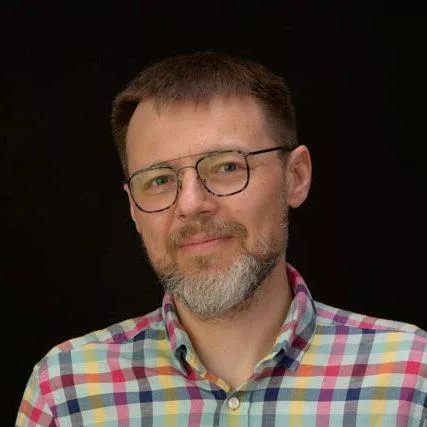
Damian Niwinski is a Professor in the Institute of Informatics at the Faculty of Mathematics, Informatics and Mechanics, University of Warsaw, Poland. He is a member of the Automata Theory Group and actively contributes to research and academic life at the university. His research interests include logic, automata theory, fixed point calculi, information theory, complexity, and games . These areas represent core topics in theoretical computer science, with applications in formal verification, programming languages, and computational logic. He has supervised several PhD students, including Filip Murlak, Eryk Kopczyński, Michal Strojnowski, Szczepan Hummel, and Marcin Przybyłko, indicating a strong commitment to academic mentorship and the development of future researchers in his field. Prof. Niwinski is involved in editorial work as a member of the editorial board of Fundamenta Informaticae and organizes the Automata Theory Seminar , further demonstrating his leadership and engagement in the academic community. He maintains a public academic presence through his Google Scholar profile and personal website, where he shares his papers and talks.
Adam Chuderski is an Associate Professor at the Jagiellonian University in Krakow, where he serves as Head of the Cognitive Science Department and Head of MA Programs in Cognitive Science within the Faculty of Philosophy. With a strong interdisciplinary background spanning computer science and psychology, he has established himself as a leading researcher in cognitive science with particular expertise in fluid intelligence, working memory, and relational reasoning. MA in Computer Science, University of Łódź, 1999 PhD in Psychology, Jagiellonian University, 2006 Habilitation in Psychology, Jagiellonian University, 2014 Chuderski's research focuses on the cognitive and neurophysiological mechanisms underlying relational reasoning and learning, with special emphasis on fluid intelligence and working memory. He employs diverse methodologies including behavioral experimentation, psychometric methods, eye-tracking, electroencephalography (EEG), and functional near-infrared spectroscopy (fNIRS). His work integrates computational modeling, structural equation modeling, and advanced signal analysis techniques to understand how neural oscillations relate to cognitive abilities. He is also deeply interested in foundational questions in cognitive science, particularly biologically-plausible cognitive architectures and emergentist theories of the human mind. His extensive publication record demonstrates a consistent focus on how working memory relates to fluid intelligence, with particular attention to how time pressure affects this relationship. Recent work has explored neural oscillations (particularly theta and gamma rhythms) as potential mechanisms underlying individual differences in reasoning ability, and how transcranial stimulation techniques might modulate these processes. Several Prizes for scientific achievements awarded by the Rector of Jagiellonian University (2013-2016) Best paper prize (with K. Andrelczyk & T. Smoleń), International Conference on Cognitive Modeling, Berlin (2012) Featured article on Scientific American website (2013) Chuderski has secured substantial research funding from Poland's National Science Center and Foundation for Polish Science, including multiple OPUS and SONATA grants totaling over 5 million PLN. His research on neural dynamics underlying relational reasoning (2020-2023) and oscillatory mechanisms of reasoning ability (2016-2018) represents some of his most significant contributions. He has mentored numerous students through the Cognitive Science Department's programs and collaborates extensively with researchers across multiple laboratories including the Brain and Cognition Lab and ERPinator Lab at Jagiellonian University. His work bridges theoretical cognitive science with practical applications in understanding individual differences in cognitive abilities, with implications for educational approaches and cognitive enhancement techniques.
Prof. Dr. hab. Anna Bondaruk is a full Professor at the Department of Theoretical Linguistics , Institute of Linguistics , and Faculty of Humanities at John Paul II Catholic University of Lublin. She has served as Head of Department since 2019 and previously held that role from 2008-2019. Her research focuses on theoretical linguistics, specializing in Polish and Irish syntax, copular clauses, control theory, and case marking within the Minimalist Program. Linguistic Expertise : Syntactic Structures (Polish, Irish, Old English) Psych Verbs and Experiencer Constructions Passive Voice Typology Minimalist Program Applications Polish-Specific Theoretical Frameworks Recent Research Trends include studies on dative possessors, unaccusative verbs, and the syntax of experiential predicates. Her 2024 work explores possessive constructions involving 'lack'-type verbs, while 2023 publications analyze existential uses of Polish verbs and comparative syntax. Scientific Recognition : Inner Reward (Nagroda Rektora KUL) for top publication (2024) Erasmus+ Scholar (multiple awards 2001-2024) Medal za Długoletnią Służbę (2020) Nagroda Premiera Rady Ministrów RP (2006) Editorial Board Member for journals like Poznań Studies in Contemporary Linguistics
Patrycja Rudnicka , PhD in Humanities and occupational/organizational psychologist, serves as an Assistant Professor at the Academy of Fine Arts in Katowice (ASP Katowice) in the Department of Art Theory and History. Combining academic and business expertise, she teaches courses in product psychology, interpersonal communication, and design for implementation (English-language track) while collaborating with global brands and institutions through Mobee Dick agency. Graduated from University of Silesia in Katowice Expert in technology readiness and UX measurement Focus on ethical challenges in artificial intelligence Specializes in Human Centered Design and Value Sensitive Design Her research examines intersections between psychology, technology, and design, with emphasis on e-learning systems, digital therapeutics, and urban information systems. She leads large-scale projects like EDIDesk (Erasmus+ KA220-HED) and Clinpro platform development for digital therapy monitoring, while mentoring women in IT through the DareIT program .
Professor Jerzy Koch is a distinguished academic at Adam Mickiewicz University in Poznań, serving as Professor Ordinarius since 2012 and head of the Department of Dutch and South African Studies. He also maintains an active research fellowship at the University of the Free State in South Africa since 2001. His academic journey includes degrees from Wrocław University (MA in Dutch/Flemish and German, 1982), Catholic University of Leuven (Ph.D. in Dutch/Flemish literature, 1991), and Wrocław University again (D.Litt. in Afrikaans literature, 2002). He earned full professor status in 2005 and Professor Ordinarius title in 2012. Professor Koch's research focuses on Dutch and Flemish literature of the 19th and 20th centuries, Afrikaans literature, post-colonial literature from South Africa, Suriname, and the Caribbean, and the culture of the Low Countries and South Africa. His scholarly approach combines historical, comparative, and post-colonial perspectives, with particular attention to xenofania (strangeness) in literature and the representation of 'the other' in South African texts. His work often bridges European and African literary traditions, examining cross-cultural influences and translations. An analysis of his 15 most recent publications reveals a consistent focus on Afrikaans literary history, with particular emphasis on the development of Afrikaans literature from colonial to post-colonial periods. His scholarship demonstrates expertise in both historical literary analysis and contemporary theoretical frameworks, including affect theory and canon formation. His work on writers like Marie Linde, Olga Kirsch, and Joan Hambidge shows his commitment to recovering marginalized voices in literary history. Second prize in the Multatuli-Competition, Amsterdam, 1991 M. Nijhoff-Award for Translations from Dutch Literature, Amsterdam, 1995 Minister of National Education Award for outstanding research results (2004, 2005) ANV-Visser-Neerlandiaprijs, 2008 Nagroda Ministerstwa Spraw Zagranicznych Królestwa Holandii for promoting Dutch culture in Poland, 2009 Order Oficerski Leopolda I (Leopoldsorde), 2010 aFrykas Roku 2015 in the Science category GDYNIA Literary Award for translation, 2023 Professor Koch has supervised numerous academic projects and edited the scholarly journal 'Werkwinkel. Journal of Low Countries and South African Studies.' His international collaborations include work with scholars across Central Europe, South Africa, and the Caribbean. He has been instrumental in establishing academic connections between Polish institutions and universities in South Africa, particularly through his role as Research Fellow at the University of the Free State. His editorial work includes co-founding and editing the 'Werkwinkel Library' series, which has published significant works on Low Countries and South African studies. Professor Koch maintains strong connections with academic communities in South Africa, particularly through his membership in the South African Academy for Science and Arts and the Afrikaanse Letterkundevereniging. His work demonstrates a commitment to building bridges between Polish and South African academic communities, with particular attention to translation studies and comparative literature. His contributions to understanding the cultural connections between the Low Countries and South Africa have been particularly noteworthy.
Radosław Kaczan, Ph.D., Assistant Professor at SWPS University's Faculty of Psychology in Warsaw, specializes in developmental psychology with a focus on creating diagnostic tools for children and adolescents. His work addresses peer violence in schools through research and implementation of prevention programs like RESQL. He contributes to standardizing learning outcomes and collaborates with academic and professional organizations. Education: Ph.D. in Psychology His research spans developmental psychology, educational psychology, and inclusion studies. Key projects include the RESQL bullying prevention system and analyses of vocational education pathways. Awards highlight his innovative impact, particularly with RESQL's recognition as social innovation and Mazovia's Innovator. Recent publications reflect his expertise in early childhood assessment, working memory's role in learning, and identity formation challenges. He actively participates in academic conferences and collaborates with institutions like the Bullying Research Center (BRC). Teaching responsibilities include human development psychology courses. Scientific Awards: Genius Universitatis 2025 competition success Best Social Innovation (RESQL System) Innovator of Masovia (RESQL System) Positive Impact Startup 2022 by Leon Kozminski Academy Warsaw Booster'21 winner (RESQL System) Polish Science Gala 2022 award (RESQL System) PRom Association awards Dr. Kaczan's work integrates research on cognitive development, bullying prevention, and inclusive education policies. His lab collaborations, particularly with the Bullying Research Center, drive practical implementations nationwide. He remains engaged in advancing educational frameworks through both academic and applied research.
Professor Agnieszka Górka-Chowaniec serves as a full Professor in the Department of Management and Innovation in Healthcare at the Jerzy Kukuczka Academy of Physical Education in Katowice. She maintains active teaching responsibilities across multiple academic programs and semesters, with course offerings extending through the 2024-2025 academic year. Her research expertise centers on the intersection of management theory and practical applications in healthcare and gastronomy sectors. Professor Górka-Chowaniec specializes in process optimization within service industries, human capital development in wellness enterprises, and strategic brand management in gastronomic contexts. Her work demonstrates a multidisciplinary approach connecting business administration with nutrition science and physical education domains. She coordinates numerous courses including Process Management, Gastronomy and Commodity Science, Organization of Human Nutrition, and Human Capital Management across various academic levels. Her teaching portfolio includes both Polish-language courses and international offerings such as 'Management of Managerial Personality'. Professor Górka-Chowaniec maintains regular student consultation hours, requiring advance scheduling via email at least two business days prior to appointments. She conducts meetings through MS Teams during summer periods and maintains office hours in room 223 at the Academy's campus located at Mikołowska 72a, 40-065 Katowice, Poland.
Ewa Bobrowska is an Assistant Professor at the Faculty of Media Arts, Academy of Fine Arts in Warsaw, and an active member of the Polish Philosophical Society, Polish Society of Aesthetics, and Athens Institute for Education & Research. Her career uniquely bridges visual art practice and academic philosophy. Her educational background includes: PhD in Fine Arts from University of Arts, Poznań PhD in Philosophy from University of Warsaw (supervised by Prof. Iwona Lorenc) Graduate of Faculty of Graphic Arts at Academy of Fine Arts in Warsaw (Rector's Honors under Prof. M. Wasilewski) Graduate of Faculty of English at University of Warsaw Postdoctoral internship at University of California Dr. Bobrowska's research centers on critical theory's application to contemporary art, with deep engagement in Derridean deconstruction, Lyotardian postmodernism, and Nancy's ontological inquiries. She investigates how philosophical frameworks shape artistic production and reception, particularly in California's theoretical traditions, while examining aesthetics through the lens of visual culture and artistic practice. Her publications reveal a consistent trajectory exploring the Irvine School's influence on contemporary art. The 2013 monograph established foundational concepts, the 2019 anthology expanded collaborative critical perspectives, and the 2020 book synthesized these threads through analysis of artists like Bruce Nauman. Collectively, they demonstrate evolving focus from theoretical exposition to practical application in art contexts. Her scientific recognition includes: Creative Scholarship from ZAIKS (awarded twice) Dr. Bobrowska secured significant research funding as principal investigator for the "New Humanities in Research" grant (2014-2019) at University of California, funded by Poland's National Program for Development of Humanities. This project facilitated transnational collaboration between Polish and Californian scholars in critical theory and contemporary art practice, generating interdisciplinary publications and exhibitions. Her leadership of the "New Humanities in Research" initiative demonstrates collaborative team management across institutional boundaries. Though no dedicated lab is specified, this project created a de facto research collective bridging Warsaw's Academy of Fine Arts with University of California scholars, fostering dialogue between European and American critical theory traditions through workshops and joint publications.
Rev. Dr. Marcin Ferdynus serves as Assistant Professor at the Department of Ethics, Faculty of Philosophy, John Paul II Catholic University of Lublin. A Catholic priest ordained in 2006, he holds MA in Theology (2006) and PhD in Philosophy (2018) from KUL. His academic career spans teaching roles at European Integration College in Szczecin (2016-2017), pastoral care (2008-2016), and administrative positions including Educational Center Deputy Director (2017-2019) and scholarship recipient (2022). Research Interests Biomedical Enhancement Ethics Medical Futility vs Persistent Therapy Human Dignity in Healthcare Personhood Theory AI Moral Agency Catholic Bioethical Frameworks Recent publications analyze dignity's necessity in healthcare, comparative end-of-life policies, and AI limitations in psychotherapy. His research demonstrates strong international engagement through Erasmus+ internships at Oxford, Padua, Malta, and Slovakia institutions. Scientific Awards Prime Minister's Award for doctoral work (2017) Minister of Education Stipendium (2022) Komisja Edukacji Narodowej Medal (2022) KUL Publication Awards (2021, 2023, 2024) Academic Leadership Philosophy program coordinator (2024-) Scholarship Commission Chair (2023-) Editorial Board of Roczniki Filozoficzne (2019-) Organizer of interdisciplinary conferences International conference speaker (UK, Italy, Czech Republic)
Dr. Beata Jarosz is an Assistant Professor with habilitation at the Department of Polish Education , Maria Curie-Skłodowska University (UMCS), Lublin, Poland. Her career spans over a decade at UMCS, including roles in academic editing, curriculum development, and sociolinguistic research. She specializes in professional languages , particularly Polish journalistic jargon, and has led major projects in media linguistics and lexicography . Education: Master’s in Polish Philology (UMCS, 2009), postgraduate studies in Academic Editing (UMCS, 2013–2014) and Intellectual Property Protection (UMCS, 2013–2014). Research: Focuses on sociolinguistics , media studies , and professional lexicons , with a landmark 2023 monograph on the professional language of Polish journalists (XIX–XXI centuries). Awards: Nominated for the Polish Academy of Sciences Linguistics Award (2024), recipient of multiple Rektor of UMCS Awards (II, III, IV, V degrees), and Brązowy Medal za Długoletnią Służbę (2022). Projects: Key contributor to the Excellent Science program (2022–2023), Nauczyciel na miarę XXI wieku (2019–2022), and international collaborations via CLARIN-PL and Erasmus+ . Her 15 most recent publications (2014–2023) explore topics such as diachronic evolution of journalistic language , lexicographic methodologies , and multimodal sports commentary . She is a reviewer for journals like Socjolingwistyka and Neofilolog , and serves on editorial boards including Białostockie Archiwum Językowe .
Dr. Renata Kołodziejczyk serves as Assistant Professor in the Department of Special Education at the John Paul II Catholic University of Lublin's Faculty of Social Sciences. Her work focuses on inclusive education, speech therapy for hearing-impaired individuals, and the Cued Speech method (Fonogestów), with particular emphasis on language accessibility and communication support systems. Department of Special Education, Institute of Pedagogy Faculty of Social Sciences, John Paul II Catholic University of Lublin Her research explores: Development of communication skills in deaf individuals Implementation of Cued Speech across educational settings Universal design for learning environments Teacher training for inclusive education Educational accessibility for hearing-impaired students Deaf community integration strategies Recent publications demonstrate trends in: Cued Speech methodology advancements Inclusive curriculum design Assistive communication technologies Life course analysis for hearing-impaired individuals Educational policy implementation Interdisciplinary rehabilitation approaches Scientific contributions recognized through: 4th Degree Team Award (2019) Bronze Cross of Merit (2015) Editorial roles in 'Logopedia' journal Leadership in Polish Cued Speech Association Key projects managed: Cued Speech Europa (EU-funded) Language Creativity of Hearing-Impaired Youth (KUL-funded) Postgraduate Training in Communication Support (Ministry-funded) Integrated Development Program (EU-funded)
Dr. Artur Basiura serves as an Assistant Professor in the Department of Applied Informatics at AGH University of Science and Technology's Faculty of Electrical Engineering, Automatics, Computer Science and Biomedical Engineering in Kraków, Poland. His institutional affiliation centers on applied informatics research within electrical engineering and computer science domains. His research spans graph theory applications in lighting systems, energy efficiency optimization, and software engineering. Key interests include graph-based street lighting modernization, XBRL taxonomy integration, and adaptive control systems. His work bridges theoretical computer science with practical electrical engineering solutions for urban infrastructure. Analysis of his 14 publications (2004-2022) reveals an evolving research trajectory: early work (2004-2007) focused on software engineering fundamentals including e-commerce frameworks and UML diagram comprehension, while recent publications (2016-2022) demonstrate a strategic shift toward graph-theoretic approaches for lighting system optimization and energy reduction in urban environments.