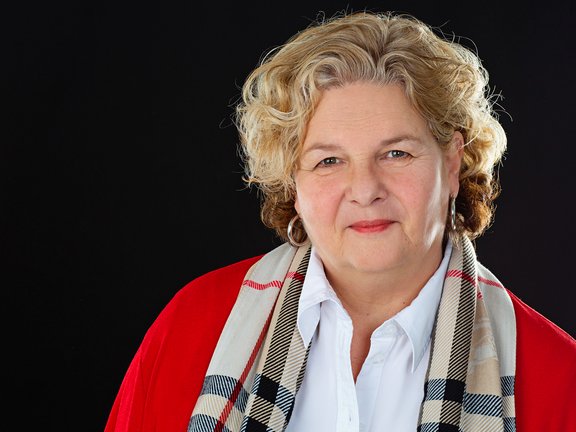
Sonja Maria Schiebl is a Lecturer at the Institute for Professionalization in Elementary and Primary Education at the Pädagogische Hochschule Wien. She holds a BEd, MA in Education, and MSc in Media Pedagogy. Her roles include deputy head of the institute and coordination of quality assurance in teacher training programs. Her teaching focuses on inclusive education, literacy development, and supporting students with special needs. She teaches courses like Methods for Early Reading and Writing Instruction , Multisensory Integration in Language Development , and Support for Students with Social/Emotional Needs . Her research investigates classroom spatial dynamics (proxemics), teacher beliefs influencing inclusive practices, and heterogeneous classroom management. She has published in journals like JEP – Journal für Elementar- und Primarbildung and Pädagogische Horizonte . Professionally, she has over 15 years of experience including classroom teaching in integrative schools, international teaching in Barcelona, and teacher training coordination. She is certified as a PERMA-Teach multiplier and online tutor with expertise in online pedagogy.
Christian Filko is a Lecturer in History and Political Education with a focus on Human Rights Education, Migration, and Global Citizenship Education at Vienna Pedagogical University's Department of Urban Diversity Education. He holds a Master's in Political Science (with distinction) from the University of Vienna and completed extensive pedagogical training including teaching qualifications for secondary education. His professional roles include coordinating teacher training programs in multilingual education and serving as project lead in initiatives like the CODES interreg project. Key Affiliations: Vienna Pedagogical University (since 2022) Education: Master's in Political Science (U Wien 2021), Global Citizenship Education (AAU Klagenfurt 2023) Research Leadership: Heads the Anti-Discrimination Working Group and represents the university in EU democracy initiatives His research emphasizes critical analyses of historical narratives, migration representation in curricula, and inclusive pedagogies for multilingual classrooms. Recent work explores how global crises like pandemics and climate change intersect with sustainability education objectives. Notable contributions include textbook critiques on globalization representation and co-developing media literacy training materials for secondary schools. His work consistently bridges theoretical educational frameworks with practical classroom applications.
Prof. Nysret Musliu is an Associate Professor at TU Wien's Department of Databases and Artificial Intelligence within the Faculty of Informatics. His primary affiliation is with the E192-02 research area, focusing on optimization, scheduling, and AI applications. He leads projects like 'Artificial Intelligence in Employee Scheduling' and 'Predictive Analytics for Emergency Call Infrastructure,' demonstrating expertise in combinatorial optimization and real-world problem-solving. Academic Rank: Associate Professor Institution: TU Wien Key Projects: AI-driven scheduling, constraint programming, metaheuristics Research interests include scheduling algorithms, constraint programming, and hybrid optimization methods. His work bridges theoretical advancements with industrial applications, addressing challenges in manufacturing, healthcare, and transportation. Recent publications emphasize hyper-heuristics, large neighborhood search, and AI integration for complex scheduling problems. Notable contributions include systematizing test laboratory scheduling and developing exact methods for oven scheduling. His research group collaborates on projects involving personnel scheduling, production leveling, and parallel machine optimization.
Thomas Eiter is a Professor at TU Wien's Institute of Logic and Computation. His research focuses on declarative programming paradigms, knowledge representation, and artificial intelligence. He leads projects in neurosymbolic systems, answer set programming (ASP), and stream reasoning, with applications in visual question answering, scheduling optimization, and semantic scene generation. Eiter has contributed to foundational work in ASP semantics, computational complexity, and hybrid reasoning frameworks. His work bridges logical formalisms with practical AI challenges, emphasizing explainability and scalability. Projects like ALASPO and neurosymbolic integration showcase his focus on advancing both theoretical and applied aspects of AI. Projects: HumanE AI Network, WASP, REWERSE Research Themes: Neurosymbolic AI, Answer Set Programming, Stream Reasoning Notable achievements include pioneering work on semiring-based reasoning frameworks and developing efficient ASP solvers like Alpha. His contributions span over 471 publications, emphasizing interdisciplinary applications in computer vision, robotics, and automated planning.
Tomáš Skřivan serves as a Research Fellow at the Hoskinson Center for Formal Mathematics , Carnegie Mellon University. His work bridges formal mathematics with practical scientific computing through the development of the SciLean library in Lean 4, targeting enhanced reliability in machine learning and simulation software. Skřivan's research spans interdisciplinary domains with core emphases on: Physics-based simulation of fluid dynamics and wave phenomena Computer graphics algorithms for light transport and rendering Formal verification techniques applied to numerical methods Mathematical modeling of viscoelastic materials His publication trajectory since 2016 reveals evolving expertise from computational fluid dynamics (water wave simulation, viscoelastic modeling) toward formal methods in scientific computing, consistently merging theoretical rigor with practical implementation. Recent work on SciLean represents a strategic pivot toward verified software foundations. As a key contributor to the Hoskinson Center's mission, Skřivan collaborates on projects leveraging proof assistants to eliminate errors in scientific code. The center, established through Charles Hoskinson's support, pioneers mathematically guaranteed correctness in computational science through formal verification frameworks.
Verena Plutzar is a Lecturer at the Church University of Education Vienna/Lower Austria (KPH Vienna/Krems), affiliated with the Department of Language Education and Multilingualism under the Institute for Advanced Training. She holds a Dr. Phil. from the University of Vienna and an MA in Intercultural Competences from Danube University Krems. Her work focuses on multilingualism, migration, trauma, and transcultural communication in educational contexts. She co-founded the SprachenRechte network and contributed to the European Language Label-winning Language and Qualification Portfolio for migrants and refugees. Her current projects include research on multilingualism in schools (with Judith Purkarthofer) and language education integration in teacher training (with Sabine Zelger). She is part of the Competence Center for Intercultural Learning and the Mehr:Sprachigkeit! research area. Key publications address attitudes in teacher education, inclusive language policies, and trauma-informed pedagogy. Education: Dr. Phil. (2010), University of Vienna MA Intercultural Competences (2004), Danube University Krems Magistra in German Philology and Art History (2000), University of Vienna Research Interests: Multilingualism in education, migration and flight contexts, language policy, psychoanalytic perspectives on communication, and institutional power dynamics. She emphasizes practical applications of theory, such as developing training programs for educators and language policies. Awards: European Language Label (2009) for the Language and Qualification Portfolio project. Professional Roles: Director of multiple research projects including the KPH sub-project on language education attitudes and the Global Citizens? GCED project. She also represents KPH in networks like BIMM and voXmi. Her work bridges academic research with grassroots education initiatives in Austria, Kenya, and beyond.
Thomas Ballhausen is a Professor of Media Education with a focus on innovative digital learning environments at the Vienna University of Teacher Education. He leads the Competence Center for STEM and Digitality (K:MID) and contributes to the Department for Media Education, Information Technology Education, and Digitality. His work bridges academic and artistic research, emphasizing media pedagogy, digitality critiques, and interdisciplinary collaboration. Ballhausen holds degrees in comparative literature, German philology, philosophy, and linguistics. His research explores (post-)digitality, material ecocriticism, and the intersection of literature with AI. He co-edits the journal Medienimpulse and has authored influential works like Fiction: Language Arts and Spatial Storytelling (2023) and Under Electric Moons (2023). His recent projects include the internationally acclaimed HOORCH initiative funded by Vienna’s 'Mutmillion' program, addressing youth communication skills. He received the 2023 International Main Prize for Science & Research from the Salzburg Cultural Fund, recognizing his contributions to media education and artistic research. Ballhausen actively engages in policy-making, co-authoring the university’s position paper on AI in higher education and delivering lectures on AI ethics and pedagogical innovation.
Katja Schirmer is a researcher and project coordinator at the Competence Center MINT and Digitality (K:MID) within the Department for Media Education, Information Technology Education and Digitality at the Vienna University of Teacher Education (PH Wien). Since 2021/22, she has been employed at the Center for Learning Technology and Innovation (ZLI), focusing on developing teaching materials and coordinating projects like the free online keyboard program Typewriter Vienna and the AI-focused change project AI and Language . Her work bridges artificial intelligence applications in schools, digital literacy, and sustainable education practices. Before joining the PH Wien, she taught computer science, German, and psychology/philosophy at the Kenyongasse Education Center. Her prior career included roles in media documentation, including editorial research at the Süddeutsche Zeitung in Munich. She actively contributes to initiatives such as the Digital LEVEL-UP Licence and the participatory sustainability project ÖHA! – Media Action and Ecological Awareness . Her research emphasizes innovative pedagogical approaches to AI integration in education, digital basic education frameworks, and spatial design for learning environments. She co-authored the PH Wien position paper on AI in higher education and leads projects funded by the Innovation Foundation for Education (ISB), such as the Embracing Technology initiative. Her professional network includes collaborations with the Future Learning Lab Wien (FLL), the European Digital Skills Awards, and interdisciplinary teams across Austrian schools. She regularly organizes workshops, conferences (e.g., eBazar 2025), and publishes in journals like medienimpulse .
Dr. Monika Angerer is a Senior Scientist in the Department of Psychology at the University of Salzburg, affiliated with the Laboratory for Sleep, Cognition & Consciousness Research within the Faculty of Natural Sciences. She holds a PhD in Natural Sciences (Dr. rer. nat.) and is concurrently completing clinical psychology training at the Austrian Academy for Psychology. Since March 2024, she has also served as a Psychologist at the Hospital 'Barmherzige Brüder' in Salzburg, integrating clinical and research expertise. Her educational background includes a Master’s in Psychology (cognitive neuroscience), a Bachelor’s in Educational Science, and dual Bachelor’s degrees in Psychology and Nursery Education. She has been continuously involved in research at the University of Salzburg since 2016, progressing from Research Assistant to Senior Scientist. Dr. Angerer’s research focuses on disorders of consciousness, chronobiology, circadian rhythms in brain-injured patients, prenatal and postnatal influences on infant development, early dyadic interactions, and attachment . Her work combines neurophysiological measurements (e.g., actigraphy, HRV) with behavioral and developmental assessments. She has led and co-led significant research projects, including an FWF-funded study on prenatal programming and cognitive development. Her 15 most recent publications reveal a strong trajectory in sleep science, neurorehabilitation, infant development, and pandemic-related mental health . Key themes include circadian rhythm entrainment through daylight exposure, neural speech tracking in newborns, maternal mental health, and parent-infant interaction. Her work spans high-impact journals such as Sleep , BMC Medicine , and European Journal of Neurology . Dissertation Prize for Natural Sciences 2023 (University of Salzburg) Wilhelm Strubreither Prize 2022 (Austrian Association for Neuropsychology) Christian-Doppler-Award 2021 (Land Salzburg) Multiple merit scholarships and presentation awards Dr. Angerer has been actively involved in academic service, including serving as Early Career Researcher Representative for the Austrian Association for Psychology (2020–2023). She regularly presents at international conferences such as ESRS, SLTBR, and ASSC. While no formal advisees are listed, she collaborates extensively with researchers and students in the Sleep Lab. She is a member of several professional societies and serves as a reviewer for journals including Clocks & Sleep , Clinical Neurophysiology , and Sleep .
Univ.-Prof. Dr. Julia Brandl is a Full Professor of Human Resource Management and Employment Relations at the University of Innsbruck's Faculty of Business Administration. She leads the Human Resource Management & Employment Relations group within the Department of Organisation and Learning. Her research focuses on strategies for managing shifting priorities in employment relations, emphasizing frameworks like Économie des conventions (EC), institutional theory, and paradox analysis. Key areas include pay transparency legislation, language in job advertisements, and up-skilling for temporary workers. Brandl holds a PhD in Social and Economic Sciences (WU Wien, 2004) and a Habilitation in Management (Wirtschaftsuniversität Wien, 2011). She has received the Diversitas-Preis (2022) for her team's development of the inclusive language decoder JADE. Her work bridges academic research and practical HR challenges, with over 111 publications and significant citation impact (86,262 reads). Current projects include analyzing the societal implications of pay disclosure laws and the role of technology in fostering inclusive hiring practices. She collaborates internationally, notably with the Dutch HRM Network and institutions like ResearchGate. Brandl's teaching integrates cutting-edge research, ensuring students engage with contemporary HRM debates and methodologies.
Ulrike Jessner-Schmid is an Extraordinary Professor at the University of Innsbruck (Austria) and holds an academic position at North West University (South Africa). Her primary affiliation is with the Department of English . She holds a PhD in English and French Philology (1988) from Karl-Franzens-Universität Graz, followed by a Habilitation (2006) at Leopold-Franzens Universität Innsbruck, recognized with the Liechtenstein Award. She also serves as an official representative for the Austrian Science Fund (FWF) since 2016. Research Interests: Focuses on Applied Linguistics, Multilingualism, Third Language Acquisition (TLA), Metalinguistic Awareness, and Cross-cultural Pragmatics . Her work challenges monolingual educational norms, emphasizing multilingual advantages in cognitive development and pedagogical strategies. Key Achievements: Received the Arthur-Haidl-Prize 2015 for the DyME research group's contributions to multilingualism research. Coordinates international partnerships, including with South Africa and Hungary, and leads the DyME (Dynamics of Multilingualism with English) research group. Her research extends to multilingual education in diverse contexts like South Tyrol, Tanzania, and South Africa. Administrative Roles: Oversees linguistic publications, serves as a grant reviewer for FWF, and manages educational initiatives such as the MKT Metalinguistischer Kompetenztest for evaluating multilingual competencies. Her work bridges theory and practice, influencing language policies and teaching methodologies globally.
Alice Vadrot is a Professor in the Department of Political Science at the Faculty of Social Sciences. Her research focuses on marine biodiversity governance, science-policy interfaces, and global environmental agreements. She leads projects like MARIPOLDATA, examining marine biodiversity data politics and negotiation processes. Her work addresses Sustainable Development Goal 14 (Life Below Water), with expertise in topics like epistemic selectivity, environmental diplomacy, and BBNJ treaty negotiations. Recent projects include MARine Coastal BiOdiversity Long-term Observations (2022–2026) and MARIPOLDATA (2018–2023). Research Interests: Marine biodiversity, science policy, environmental agreements, ecosystem services, knowledge systems Key Contributions: Developed MARIPOLDATAbase for negotiation tracking, analyzed expert authority in global governance Media Engagement: Provided expert commentary on biodiversity crises and ocean protection Publications span 52 works since 2010, emphasizing interdisciplinary approaches to environmental governance challenges.
Sebastian Schrittwieser is a Researcher in the Research Group Security and Privacy, part of the Faculty of Computer Science. His work focuses on cybersecurity, code obfuscation, malware analysis, and machine learning applications in security. He leads and contributes to projects like INODES (Cyber Defense Strategies) and EMRESS (Resilience Evaluation Models). His research bridges theoretical foundations and practical applications, addressing challenges in software protection and threat detection. Key research interests include: Code Obfuscation Techniques and Resistance Adversarial Machine Learning and Risk Assessment Malware Analysis and Program Simulation User Behavior in Cybersecurity Contexts Recent publications emphasize empirical studies on IT/OT infrastructure security, graph neural network vulnerabilities, and quantum-inspired machine learning. He actively collaborates with institutions like SBA Research and presents at international conferences. Grants include Research Funding for projects on optimal cyber defense strategies (INODES) and software resilience evaluation (EMRESS). His work aligns with interdisciplinary efforts in security engineering and privacy-preserving technologies.
Manuel Schabus is a University Professor of Psychology at the University of Salzburg, specializing in sleep research, consciousness studies, and cognitive neuroscience. With over 403 publications and numerous ongoing research projects through 2027, he leads significant work in understanding sleep mechanisms and developing innovative sleep interventions. His research spans from fundamental neuroscience to practical applications for sleep disorders. Professor Schabus's work focuses on the intersection of sleep, brain activity, and cognitive functions, with particular expertise in EEG analysis and sleep architecture. His research explores how sleep affects memory consolidation, emotional regulation, and overall mental health. He has pioneered digital approaches to sleep assessment and intervention, including mobile applications and online therapy platforms that make evidence-based sleep treatments accessible to broader populations. His recent publications reveal a strong trend toward digital sleep medicine, with multiple studies on AI-enhanced wearables, mobile CBT-I applications, and personalized sleep optimization strategies. The research spans from fundamental neuroscience (examining prediction-related signals during sleep) to applied interventions (including specialized programs for Ukrainian refugees and shift workers). Franz Gerstenbrand Wachkoma Award 2020 Kurt-Zopf-Förderpreis 2018 START-Preis 2014 Professor Schabus manages numerous research grants totaling millions in funding, with current projects including the Virtual Sleep Laboratory (2024-2027), Sleep2Optimize, and specialized interventions for shift workers and Ukrainian refugees. He actively mentors junior researchers and collaborates internationally across multiple institutions. His work bridges laboratory research with real-world applications, as evidenced by his frequent media appearances discussing practical sleep optimization strategies for the general public. He leads the Center for Cognitive Neuroscience at the University of Salzburg, where his team operates both traditional sleep laboratories and develops digital sleep assessment tools. The research group combines expertise in neuroscience, psychology, computer science, and clinical medicine to tackle sleep-related challenges from multiple angles, with a strong emphasis on translating research findings into practical interventions that improve sleep health in diverse populations.
Lars Mehnen serves as a Senior Lecturer and Researcher at the University of Applied Sciences Technikum Wien (UAS Technikum Wien) in Austria, where he has been teaching since 2019 in Computer Science and previously from 2003-2019 in Biomedical Engineering. His academic career includes significant roles at Vienna University of Technology as University Assistant (2004-2007) and Research Assistant (1998-2002), along with leadership positions in major international space initiatives including QB50 (2010-2013), GENSO (2006-2010), and SSETI (1999-2006). TU-Wien: Dipl.Ing. in Computer Engineering and Medical Informatics Dr. Techn. from Institute for Fundamentals and Theory of Electrical Engineering and Institute of Technical Mathematics Mehnen's research spans multiple domains with particular expertise in Artificial Intelligence, Evolutionary Algorithms, and Sensor Technology. His work in explainable and non-parametric evolutionary algorithms represents cutting-edge contributions to AI methodology. In biomedical engineering, he has developed innovative magnetoelastic skin curvature sensors for cardiovascular monitoring and other medical applications. His teaching portfolio is exceptionally diverse, covering Statistics (parametric and non-parametric), Artificial Intelligence, Aerodynamics (particularly for sports equipment), Physics for game engineering, and extensive programming topics including Java, C/C++, Python, and functional programming languages. His publication record from 2001-2024 shows a clear evolution from early work on magnetostrictive bilayer sensors toward more recent applications of machine learning in biological classification, medical diagnostics, and educational technology. The 2024 publication on ChatGPT's diagnostic accuracy for medical conditions demonstrates his engagement with the latest AI developments. His research consistently bridges theoretical computer science with practical applications in healthcare, sports engineering, and space technology. Mehnen has been deeply involved in European collaborative projects throughout his career, including QB50 (EC F7), GENSO (ESA initiative), and B-Sens (EC-Project in 5th framework). These projects involved coordination with numerous universities and institutions across Europe, demonstrating his ability to lead international research collaborations. His work on the SSETI Express satellite project resulted in the successful launch of a micro-satellite at the end of 2005. At UAS Technikum Wien, Mehnen contributes to curriculum development across multiple domains including statistics, AI, programming, and physics. His research on paraglide control systems demonstrates application of his expertise to sports safety technology, while his recent work in teaching analytics shows commitment to improving educational outcomes through data-driven approaches.