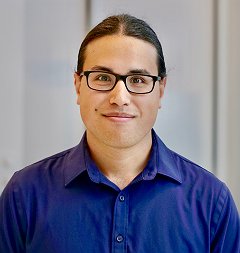
Xavier Serra is a Full Professor at the Department of Engineering at Universitat Pompeu Fabra (UPF), Barcelona. He is the founder and director of the Music Technology Group (MTG), and leads the UPF-BMAT Chair on AI and Music. He also coordinates the Master in Sound and Music Computing and serves as President of the Phonos Foundation. His research focuses on audio signal processing, sound and music computing, and computational musicology, emphasizing open science and open innovation. Education: BSc in Biology, University of Barcelona (1981) Master in Music, Florida State University (1983) PhD in Computer Music, Stanford University (1989) Research Interests: Audio Signal Processing Data-Driven and Knowledge-Driven Methodologies Music Information Retrieval Cultural Music Analysis (e.g., Carnatic/Turkish/Andalusian Music) Music Education Technology Notable Projects: CompMusic (ERC Advanced Grant, 2010-2017): Multicultural computational music analysis Open datasets: Freesound, Saraga, FSD50K Technologies: Reactable, Vocaloid, Essentia API Recent Trends in Articles: Focus on AI-driven audio processing (neural fingerprints, generative models), cross-cultural music analysis, and explainable music difficulty estimation. Awards: ERC Advanced Grant (2010) for CompMusic Project. Labs/Teams: Director of MTG, Phonos Foundation, and UPF-BMAT Chair. Active in open-source projects and international collaborations.
Albert Atserias is a Professor in the Department of Computer Science at the Universitat Politècnica de Catalunya (UPC), affiliated with the Faculty of Informatics of Barcelona (FIB) and the ALBCOM research group (Algorithms, Bioinformatics, Complexity, and Formal Methods). He is also associated with the Institut de Matemàtiques de la UPC-BarcelonaTech. His research is central to theoretical computer science, with a strong emphasis on logic and complexity. Atserias's research interests span Computational Complexity, Logic in Computer Science, Finite Model Theory, Proof Complexity, and Constraint Satisfaction Problems . His work explores the fundamental limits of computation, the expressive power of logical languages over finite structures, and the complexity of proving mathematical statements. He investigates the algebraic and combinatorial properties of proof systems, the limits of efficient algorithms for constraint solving, and the theoretical foundations of databases. His research often bridges logic, algebra, and combinatorics to provide deep insights into computational phenomena. The trends in his recent publications show a sustained focus on the logical and algebraic underpinnings of computational problems. Key themes include the consistency and complexity of database queries , the power and limitations of proof systems (like resolution and sum-of-squares), and the expressive power of homomorphism counts in graph theory. His work on the hardness of automating resolution and the development of circular proof systems are particularly significant contributions to proof complexity. The 2024 PODS Best Paper Award for work on relational consistency underscores the impact and timeliness of his research. Among his notable scientific awards are the prestigious ICREA Acadèmia , the PODS 2024 Best Paper Award , the Premi Extraordinari de Doctorat (Extraordinary Doctoral Prize), and the Kleene Award for Best Student Paper . These accolades reflect both the excellence of his early work and his continued leadership in the field. Atserias has been a principal investigator on numerous competitive research projects, including funding from the European Research Council (ERC) and the Spanish Ministry of Science. He has advised doctoral students, such as Toni Hakoniemi, whose thesis on proof complexity he supervised. His extensive collaborative network includes leading researchers like Phokion Kolaitis, Anuj Dawar, and Victor Dalmau. He has also served on the scientific committees of major conferences, contributing to the academic community. He is a core member of the ALBCOM research group , a leading team at UPC focused on theoretical aspects of computer science, which provides a vibrant environment for research in algorithms, complexity, and formal methods. His work is also connected to the broader Institut de Matemàtiques de la UPC, fostering interdisciplinary collaboration between computer science and mathematics.
Danfeng Zhang is a faculty member at Duke University whose research sits at the intersection of programming languages and security. Active across the premier PL conferences since 2015, Zhang has served on more than two-dozen program committees and currently co-chairs the POPL Student Research Competition. Education & Affiliation: Home page: users.cs.duke.edu/~dz132 Affiliation: Duke University, United States Research Interests: Zhang’s work spans programming-language design, static and dynamic analysis, formal verification, and security. A recurring theme is developing language-based techniques that guarantee strong security and privacy properties—ranging from side-channel resistance and constant-time execution to differential-privacy proofs—while preserving performance and usability. His recent projects combine type systems, program logics, and automated reasoning to build practical verification tools for concurrent, speculative, and approximate software. Publication Trends: Across nine representative papers (2015-2024) Zhang has advanced static detection of cache side channels, automated proofs of differential privacy, and relaxed concurrency models. The trajectory shows deepening integration of security concerns into language infrastructure, with tool-building (CtChecker, SpecSafe, LightDP) that bridge formal guarantees and real-world systems. Service & Leadership: 2024 POPL Student Research Competition Co-Chair 2025 POPL Program Committee member Repeated reviewer/PC member: PLDI, SPLASH/OOPSLA, ISSTA, ECOOP, APLAS, PriSC, PASS Zhang regularly mentors student researchers through SRC sessions and workshop panels, fostering diversity and early-career participation in the programming-languages community.
Danel Ahman is an Associate Professor at the Institute of Computer Science , University of Tartu , Estonia, specializing in programming language theory . His research focuses on dependent/refinement types , computational effects , and verified software . Education PhD in Theoretical Computer Science (University of Edinburgh, 2017) MPhil in Advanced Computer Science (University of Cambridge, 2012) BSc in Informatics (Tallinn University of Technology, 2010) Research Interests : Danel investigates programming languages with algebraic effects and effect handlers for verified software, exploring denotational/operational semantics and fibrational approaches to effects. His work bridges theoretical computer science with practical formal verification. Scientific Awards : Estonian Research Council grant (2025) Marie Skłodowska-Curie Fellowship (2019) PhD dissertation prize (2018) Google/Citrix dissertation awards (2012) Teaching & Supervision : He teaches courses like Logic in Computer Science and Functional Programming at the University of Tartu, and supervised BSc/MSc theses on topics including asynchronous effects and formal verification. Danel also organizes research seminars and guest lectures on F*.
Pere-Pau Vázquez is an Assistant Professor in AI for Visual Computing at the Computer Vision Lab, TU Wien, Austria . Previously, he held academic positions at the ViRVIG Group and Facultat d'Informàtica de Barcelona (UPC) , where he taught courses in Programming, Computer Graphics, and Visualization for over 20 years. His research focuses on Information Visualization, Scientific Visualization, Medical Data Visualization, Molecular Visualization, and AI applications to Visual Computing . Current Teaching : Data Visualization, Fast Realistic Rendering, Information Visualization, Medical Images, Scientific Visualization, Virtual Reality, and 3D Medical Visualization. Former PhD Students : Elena Molina, Alexandra Cortez, Jesús Díaz, Pedro Hermosilla, Eva Monclús. His scientific awards include the Best PhD Thesis Award (UPC, 2003), Best Student Paper Award (SPIE, 2012), and Best Paper Award (International Conference on Computer Graphics Theory and Applications, 2013). Recent publications explore AI integration in biomedical visualization, molecular data analysis, and interactive techniques for volume rendering. He serves on the EuroGraphics Executive Board as Secretary and is active in steering committees for EuroVis and Visual Computing for Biology and Medicine . His work bridges Computer Graphics, Artificial Intelligence, and Human-Computer Interaction , with applications in medical and molecular data analysis.
Gemma Boleda is an ICREA Research Professor at Universitat Pompeu Fabra in Barcelona, Spain, where she co-directs the Computational Linguistics and Linguistic Theory (COLT) research group. Her research focuses on understanding how humans convey meaning through language, investigating the formal properties that support communication, and exploring how languages are shaped by cognitive and communicative factors. Her primary interests include lexical semantics, cross-linguistic variation, and the integration of linguistic theory with computational methods. She employs interdisciplinary approaches combining linguistics, artificial intelligence, and cognitive science, utilizing large-scale data analysis to study universal patterns and variations across languages. Boleda's publications demonstrate a consistent focus on computational semantics, lexical variation, and language evolution. Her recent work explores the intersection of symbolic and neural approaches to language processing, lexical creativity across development and evolution, and computational models of semantic phenomena like colexification and polysemy. She teaches Computational Semantics in the Master's in Theoretical and Applied Linguistics program and has secured significant research funding including ERC Starting Grants. Her work has contributed valuable linguistic resources such as the ManyNames dataset and Database of Catalan Adjectives.
Susagna Tubau Muntaña is an Associate Professor at the Autonomous University of Barcelona (UAB), Department of English Philology and German Studies. She is part of the Center for Theoretical Linguistics and the Theoretical Linguistics Research Group funded by the Generalitat de Catalunya. Her academic roles include tenures as Associate Professor (2020–2023), Interim Associate Professor (2015–2020), and various teaching/research positions at UAB and other institutions since 2001. Education: PhD in English Philology (UAB, 2008) MA in Linguistics (University College London, 2004) MA in English Philology (UAB, 2003) Bachelor's in English Philology (UAB, 2001) Research Focus: Main interest: Theoretical linguistics, syntax, and negation phenomena (simple/double negation, negative agreement, negative quantifiers) Secondary areas: First/second language acquisition, the that-trace effect in English, gender expression in translated texts Key contributions: Studies on Catalan and English negative concord, experimental syntax, and language typology Grants & Projects: Principal Investigator (IP) of a funded project, plus member of 6 other projects and 2 thematic networks Active in projects like La interpretación de las categorías funcionales (2018–2021) and EXPLETIVITAD Y SIGNIFICADO EXPRESIVO (2024–2027) Awards & Recognition: Positive evaluations from CNEAI (National Commission for Research Activity) and AQU (Catalonia's Quality Agency) Speaker at 40+ linguistics conferences Reviewer for journals, La Caixa-British Council grants, and U.S. National Research Foundation projects Lab/Team Affiliation: Member of the consolidated Theoretical Linguistics Group funded by the Catalan government
Ángel M. Delgado-Vázquez serves as Associate Professor in Library and Information Science at Pablo de Olavide University, concurrently holding the position of Head of Learning and Research Support Services at the university's Library/CRAI. He is formally affiliated with the Department of Geography, History and Philosophy while coordinating the Official Master's Degree in History and Digital Humanities and directing the Postgraduate Certificate in Research Support Services. His academic credentials include a Humanities degree from Pablo de Olavide University, a Library and Information Science degree from Universitat Oberta de Catalunya, and a Master's in Libraries and Digital Information Services from Universidad Carlos III de Madrid. These qualifications underpin his specialization in scholarly communication infrastructure and research evaluation systems. Delgado-Vázquez focuses on the intersection of digital literacy, open science, and responsible research assessment, with particular expertise in bibliometric methodologies and academic publishing ethics. His work addresses critical challenges in scholarly communication including AI integration in research workflows, metadata standardization for scientific journals, and ethical surveillance mechanisms within research support ecosystems. Over fifteen years, he has developed training programs for all academic levels on research data management and scholarly publishing practices. Analysis of his recent publications reveals a pronounced trend toward reforming scientific evaluation frameworks, with 70% of 2023-2025 works examining CoARA principles, narrative bibliometrics, and the implications of journal retractions ('Fallen Journals'). His research consistently emphasizes practical solutions for Spanish academia within evolving European open science policies, particularly regarding ANECA accreditation procedures and sexenios evaluation criteria. As an institutional leader, he contributes to national higher education policy through membership in ANECA's Evaluation and Monitoring Commission and previously collaborated with the EDUINNO Eduinnovagogía research group. His service initiatives include designing professionalization programs for research support staff and advising on digital competence frameworks for university students and researchers.
Luis Miguel Bergasa is a Full Professor at the Department of Electronics, University of Alcalá (UAH), with a career spanning over 25 years. He leads the RobeSafe Lab (since 2010) and serves as Director of Digital Transformation at UAH (since 2022). His academic roles include heading the Department of Electronics (2004–2010) and coordinating multiple educational programs. He teaches Perception Systems (Master in Industrial Engineering) Intelligent Control Systems (Computer Science) Computer Vision (Computer Science) His research focuses on Perception Systems for Intelligent Vehicles , emphasizing driver behavior analysis, scene understanding, and sensor fusion via deep learning. He has authored over 300 papers and holds 9 patents. Notable recognitions include being ranked #81 in Computer Science (Spain) by Research.com (2025) and receiving 30+ awards in Robotics/Automotive fields. Recent publications highlight advancements in Transformer-based driver action recognition (2025) Infrastructure-vehicle cooperative frameworks (2025) 3D semantic segmentation for autonomous perception (2024) Simulation-to-reality gap bridging (2024) Scientific Leadership Senior Editor, IEEE Transactions on ITS (2025) International Program Committee roles in 15+ conferences (2024–2025) Co-founder of Vision Safety Technologies Ltd (2009–2016) He supervises 9 active PhD students and has advised 14 former PhD candidates. His group collaborates with institutions in Germany, USA, China, and Spain, including KIT, UC Berkeley, and Northwestern Polytechnic University.
Lluís Codina Bonilla is an Associate Professor at Pompeu Fabra University's Faculty of Communication, specializing in Journalism and Audiovisual Communication. As a founding member of the DigiDoc Research Group (SGR-01103) and Director of the Cybermedia Observatory, he bridges Information Science and Digital Communication through research on SEO, content curation, and digital media systems. PhD in Information Science (Universitat Autónoma de Barcelona) Co-founder of academic journal Hipertext.net Principal Investigator for multiple Spanish national R&D projects Research Interests: His work focuses on Search Engine Optimization (SEO) for news media, Semantic Web applications in journalism, and content curation systems. Recent studies explore AI applications in content creation and academic research. Academic Contributions: With over 200 articles and 6 books (including Design and SEO for Content-Intensive Websites ), his publications analyze digital media quality assessment, information architecture, and media verification. His 21 doctoral theses (all cum laude) highlight his role as a mentor in digital communication. Premio Roblón 2021 for Investigator of the Year Multiple UPF Social Council Awards for Teaching Quality Nominated Scimago Best Scientific Article Recognized Researcher Tranches (CNEAI/AQU) Academic Infrastructure: Leads the Cybermedia Observatory and contributes to UPF's SEO Media Lab, while maintaining affiliations with the Catalan Society of Communication and Institute of Catalan Studies. His teaching spans Journalism, Audiovisual Communication, and Research Master's programs.
Maria Mercedes Eurrutia Cavero is a Professor of French Philology at the University of Murcia's Faculty of Arts and Humanities, within the Department of French, Romanesque, Italian, and Arabic Philology. She holds a Doctorate from the University of Murcia (1997), focusing on specialized French linguistics in legal and medical contexts. Her research primarily revolves around lexicology, sociolinguistics, and translation studies, with notable contributions to the study of slang, color terminology, and digital discourse in tourism. Research Interests: Her work examines lexical semantic change, sociocultural implications of language, and practical applications of specialized French. She explores how language reflects social identity (e.g., slang, color symbolism) and bridges cultural gaps through translation, particularly in festivals and gastronomy. Her recent studies address digital communication's impact on tourism lexicons. Publications: Over 15 articles since 1996, including key works on technical discourse contrast, circus lexicology, and online tourism communication. Her 2007 study on color terminology highlights language as a sociocultural artifact, while 2013's work on Internet-based tourism discourse underscores digital lexical evolution. Affiliations: Leader of the 'General and Applied French Linguistics' research group and part of the 'Translation, Lexicology, and Writing' team. She has supervised doctoral research and contributed to UNED's distance-learning French pedagogy programs.
Elena Montiel Ponsoda is an Associate Professor in the Department of Applied Linguistics at the Faculty of Computer Science, Universidad Politécnica de Madrid (UPM), and a member of the Ontology Engineering Group since 2006. Her interdisciplinary expertise bridges linguistic sciences with computer science, focusing on multilingual aspects of knowledge representation. Education: PhD in Applied Linguistics (2011) from Universidad Politécnica de Madrid M.A. in Conference Interpreting and Translation (2000) from Universidad de Alicante B.A. in Technical Interpreting (2003) from Hochschule Magdeburg-Stendal, Germany Her research centers on the integration of linguistic resources with Semantic Web technologies, specializing in ontology localization, lexicalization, and multilingual terminology representation. She has pioneered approaches to connect translation studies with knowledge engineering, developing frameworks for linguistic linked data and semantic interoperability across languages. Recent publications reveal a strategic shift toward legal domain applications, with significant contributions to the LYNX project's knowledge graph for multilingual legal compliance. Her work demonstrates consistent innovation in representing terminological resources using OntoLex-lemon, with increasing focus on practical implementations in legal informatics and labor market analysis. As an active mentor, she has guided numerous graduate students through thesis research while participating in major international projects including NeOn, ICPS, Monnet, BabeLData, and LIDER. Her leadership extends to organizing key workshops on multilingual semantic web technologies and serving on program committees for top-tier conferences. Montiel Ponsoda maintains influential roles in W3C Community Groups (Ontolex, BMLOD, ld4lt), helping shape international standards for multilingual linked data and language technologies on the Web.
Emmanuel Haucourt is a Professor of Computer Science at École Polytechnique, conducting research at the Computer Science Laboratory (LIX) within the Cosynus team. His work focuses on applying directed algebraic topology to analyze concurrent programs. Research Interests: Directed Algebraic Topology, Concurrency Theory, Geometric Models in Computer Science, Static Analysis of Concurrent Programs, Software Verification, and Theoretical Computer Science. Publications Trends: His publications emphasize the use of higher-dimensional geometric structures (e.g., d-spaces, cubical areas, non-Hausdorff manifolds) to model concurrency, enabling deadlock detection and state-space reduction through theoretical advances in category theory and topology. Laboratory: Affiliated with the Computer Science Laboratory (LIX) at École Polytechnique and the Cosynus team.
Tiark Rompf is an Assistant Professor at Purdue University , with research spanning programming languages, compilers, and systems. His work bridges domains including architecture, databases, machine learning, and AI through projects like Reachability Types and Rhyme. Co-director of the Purdue Center for Programming Principles and Software Systems (PurPL) Scientific Advisor at SambaNova Systems Previously a member of the Scala team at EPFL His research focuses on: Runtime code generation and advanced compiler technology Expressive data-centric query languages (Rhyme, Datalog) Reachability type systems for memory safety and effect handling Metaprogramming and logical relations for formal verification Recent publications highlight contributions to Datalog compilation (Flan), nested data structures (Rhyme), and polymorphic reachability types. He leads projects exploring: Compiler optimizations for emerging architectures (GPU, TPU, FPGA) ML-driven compiler improvements Secure multi-party computation via metaprogramming Scientific awards include: NSF CAREER Award (2016) Google Faculty Research Awards (2017, 2018) DOE Early Career Research Award (2017) ACM SIGPLAN PL Software Award (2019) GPCE Test of Time Award (2020) Students and alumni from his group have joined institutions like Databricks, DeepMind, Galois, and Meta. He teaches advanced compiler courses including: CS 590 - Advanced Topics in Compilers CS 352 - Compilers CS 502 - Graduate Compilers
Carlo Angiuli is an Assistant Professor of Computer Science at the Luddy School of Indiana University . He is a leading researcher in type theory , with a focus on its applications to programming language design and logic . His work bridges theoretical foundations and practical implementations, particularly through dependent types , proof assistants , and homotopy type theory . His research interests include: Type Theory (foundational systems for programs and proofs) Programming Language Foundations (formal semantics and reasoning) Homotopy Type Theory (higher-dimensional structures) Dependent Types (expressive type systems) Proof Assistants (formal verification tools) Computational Logic (algorithmic reasoning) Angiuli actively contributes to the programming languages community as a POPL Program Committee member and co-author of a forthcoming textbook on dependent type theory. His students include Johnson He, Huang Xu, Kelton OBrien, and Ian Ray , who joined in Fall 2025. He has received significant recognition, including the Best Paper Award at FSCD 2019 and the School of Computer Science Distinguished Dissertation Award from Carnegie Mellon University. His current work explores advanced type-theoretic frameworks and their implementation in proof assistants like the red* family of tools. Scientific awards: Best Paper Award, FSCD 2019 (Junior Researchers category) School of Computer Science Distinguished Dissertation Award, Carnegie Mellon University He teaches courses such as Modern Dependent Types (CSCI-B619), Programming Language Foundations (CSCI-B522), and Introduction to Computer Science (CSCI-C211).