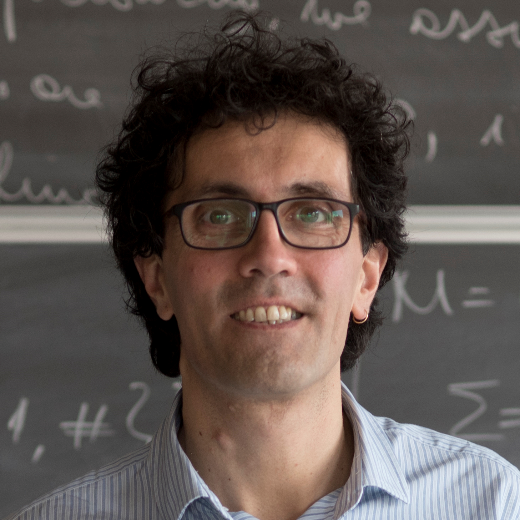
Mike Papadakis is an Associate Professor at the University of Luxembourg's Interdisciplinary Centre for Security, Reliability and Trust (SnT), where he leads the SerVal research group. His research focuses on software engineering, software security, and artificial intelligence. He holds a PhD in Software Testing and Verification from Athens University of Economics and Business, with an MSc and BSc from the same institution. His research explores mutation testing, machine learning applications in software development, and test optimization. Recent publications demonstrate a strong emphasis on AI robustness, flaky test analysis, and automated debugging techniques. Notable achievements include the IEEE TCSE Rising Star Award (2020) and 12 additional research awards. He has published over 100 peer-reviewed articles and delivered more than 30 invited talks globally.
Chenyu You is an Assistant Professor in the Department of Applied Mathematics & Statistics and Department of Computer Science at Stony Brook University. He is affiliated with CVLab, AI Institute, and Institute for Advanced Computational Science. His research focuses on principles and practice of trustworthy machine intelligence, emphasizing generalization and reliability in machine learning, with applications to healthcare, biomedical imaging, and cognitive neuroscience. Ph.D. in Electrical Engineering from Yale University (2024) M.S. in Electrical Engineering from Stanford University (2019) B.S. in Electrical Engineering from Rensselaer Polytechnic Institute (2017) His research spans three major areas: Efficient World Foundation Models (task-agnostic pretraining, scalable adaptation), Learning with Imperfect Data (label scarcity, class imbalance), and Biomedical Foundation Models (large-scale medical AI agents). Applied work includes healthcare, biomedical imaging, and cognitive neuroscience. Recent publications (2025) include breakthroughs in sparse coding (ICML), cycle-consistent diffusion models (ICCV), optimal transport for survival analysis (MICCAI), and prompt theory (ACL). His team addresses challenges in trustworthy AI, spurious correlation mitigation, and multi-modality robustness. Scientific recognition includes Excellence in Teaching Award (2025) , World's Top 2% Scientists (2024) , and multiple IEEE TMI Platinum Distinguished Reviewer awards. He advises students Qin Ren and Yifan Wang, with alumni pursuing roles at Two Sigma, Amazon Science, and top PhD programs. His lab collaborates with leading institutions and actively seeks motivated students for flexible-start positions. He serves as Associate Editor for IEEE Transactions on Medical Imaging and Area Chair for major conferences like MICCAI and NeurIPS.
Zhe He is a Full Professor at Florida State University (FSU), leading the eHealth Lab in the School of Information (iSchool) within the College of Communication & Information. He holds courtesy appointments in the Department of Behavioral Sciences and Social Medicine (College of Medicine), Department of Computer Science, and Department of Statistics. His research focuses on biomedical informatics, AI, and big data analytics, aiming to improve population health and advance biomedical research through informatics applications. He directs the Institute for Successful Longevity and co-leads the Biostatistics, Informatics, and Research Design Program (BIRD) of the UF-FSU Clinical and Translational Science Award. Education: Postdoctoral training at Columbia University (2015), PhD in Computer Science from NJIT (2014), MS from Columbia University (2009), and BE from Beijing University of Posts and Telecommunications (2007). Research Interests: Clinical trial generalizability, ontology quality assurance, consumer health informatics, and AI in medicine. His work bridges biomedical terminologies, patient engagement, and healthcare equity, with a focus on older adults and underserved populations. Grants & Funding: Over $21.9M in grants from NIH (NLM, NIA, NIMH), AHRQ, Amazon, NVIDIA, and Eli Lilly. Active grants include projects on medical marijuana effects, AI-driven clinical training, HIV prevention, and lab result interpretation tools for older adults. Awards & Honors: 2022 Lois Lunin Award (ASIS&T), FAMIA (2022), two AMIA Distinguished Paper Awards, and recognition for interdisciplinary research. Promoted to Full Professor in 2025 after early tenure as Associate Professor (2020). Labs & Teams: Directs the eHealth Lab and collaborates with跨学科 teams in the OneFlorida Data Trust, UF-FSU Clinical and Translational Science Award, and the National Center for Biotechnology Information (during sabbatical).
Angelina Wang is an incoming Assistant Professor at Cornell Tech and the Department of Information Science at Cornell University, starting Fall 2025. Her research focuses on responsible AI, particularly machine learning fairness and algorithmic bias. She holds a Ph.D. in Computer Science from Princeton University and a B.S. in Electrical Engineering and Computer Science from UC Berkeley. Current postdoctoral work at Stanford’s HAI and RegLab explores sociotechnical challenges in AI deployment. Her research addresses fairness evaluation in generative AI, societal impacts of AI systems, and ethical trade-offs in algorithm design. Notable awards include the NSF GRFP, Siebel Scholarship, and Microsoft AI & Society Fellowship. Her work bridges technical and social dimensions of AI, emphasizing human-centered evaluation and interdisciplinary collaboration. Recent publications span medical AI applications (e.g., Alzheimer’s subphenotypes, corticosteroid treatment efficacy) and foundational fairness research. She advocates for proactive ethical considerations in technical work, citing examples like surveillance risks in facial recognition and dataset biases in computer vision. Angelina advises prospective PhD students in Cornell’s Information Science program and collaborates on projects like SciDaSynth for scientific knowledge synthesis. Her advocacy includes challenging fairness impossibility theorems and promoting algorithmic pluralism in auditing practices.
Brian Magerko is Professor of Digital Media in the School of Literature, Media, and Communication at Georgia Institute of Technology , where he also serves as Director of Graduate Studies for the Digital Media program and holds an adjunct appointment in the School of Interactive Computing . He directs the Expressive Machinery Lab and has led over $20 million in federally funded research at the intersection of cognition, computation, and creativity. Education Ph.D. Computer Science and Engineering, University of Michigan (2006) M.S. Computer Science and Engineering, University of Michigan (2001) B.S. Cognitive Science (minor Computer Science & Jazz Performance), Carnegie Mellon University (1999) Research Interests Dr. Magerko’s scholarship integrates cognitive science , AI , and computational media to investigate three core themes: (1) social and creative collaboration between humans and AI; (2) design of interactive narrative, music, and arts-based computational experiences; and (3) inclusive STEAM education that leverages personal expression—most notably through the widely-adopted EarSketch platform, which engages learners in computer science via music remixing and coding. Publication Trends Recent publications (2022-2025) reveal a surge in work on generative and co-creative AI systems , AI literacy frameworks , and accessible computing education . Studies span dance improvisation agents (LuminAI), inclusive design for blind and visually-impaired learners, and large-scale evaluations of creativity and learning outcomes in EarSketch classrooms across the United States. Awards & Honors Methods Paper Recognition, ACM CSCW 2022 Best Paper Award, ACM Creativity & Cognition 2021 & 2017 Ivan Allen College Researcher of the Year 2018 NCWIT Engagement Excellence Award 2017 Multiple Best Student Paper Awards (AIED 2021, ICCCI 2021) CETL Thank-a-Teacher Award 2008 Grants & Advising Dr. Magerko has served as PI or Co-PI on numerous NSF, NEA, and private foundation grants totaling more than $20 million. His projects fund interdisciplinary teams of graduate and undergraduate students, post-docs, and external collaborators, producing open-source software, museum installations, and K-12 curricula. Labs & Teams As head of the Expressive Machinery Lab , he mentors researchers creating AI partners for dance, drawing, music, and storytelling. The lab’s artifacts have been exhibited at the Smithsonian, ArtScience Museum Singapore, MoogFest, and other international venues.
Sonit Bafna is an Associate Professor and Director of the Ph.D. Program in Architecture at the Georgia Institute of Technology's College of Design. He holds a Ph.D. from Georgia Tech (2002), an SMArchS from MIT (1993), and a professional degree in Architecture fromCEPT University (1990). His research bridges empirical studies on space-human interaction and critical architectural theory, focusing on morphology, behavior, perception, and aesthetics. Key research areas include home layout's impact on mental health (e.g., reduced depression risk in living-area-centered apartments), workplace design's role in employee wellbeing, and the relationship between spatial configuration and cognitive abilities. His work is funded by organizations like the General Services Administration and Kaiser Permanente. Bafna supervises doctoral research in morphology, design theory, and cognitive studies. Current projects include a book on imaginative reasoning in architecture and studies on hospital corridor design and film spatial analysis. His courses cover architectural theory, design analysis, and research methods. Notable contributions include interdisciplinary studies on space syntax, the therapeutic potential of domestic environments, and the visual functioning of buildings. His research emphasizes the socio-cultural dimensions of architecture and its imaginative potential beyond functionalism.
James Essegbey is a Professor of African Languages and Linguistics in the Department of Languages, Literatures & Cultures at the University of Florida (Gainesville), affiliated with the Center for African Studies, Center for Latin American Studies, and African American Studies. His research focuses on language endangerment documentation, syntax-semantics interfaces, and West African languages like Ewe, Akan, and Nyangbo. He holds a PhD from Leiden University (1999) and has held postdoctoral fellowships in the Netherlands and Germany. Key research areas include: Documentation of endangered languages (e.g., Nyangbo, Tutrugbu) Syntax of Kwa languages and Atlantic creoles Cultural influences on linguistic structures (e.g., left-hand taboos in Ghana) Creole genesis and trans-Atlantic language contacts Award-winning scholar with over 20 years of grant-funded projects, including: NSF grants for CoLang and documentary linguistics training programs NSEP funding for African languages summer institutes Leadership in language revitalization initiatives Teaching includes courses on Akan language, African elements in the Americas, and methods of language documentation. Active in professional organizations like the African Studies Association and Society for Pidgin and Creole Languages.
Shion Guha is an Assistant Professor at the University of Toronto's Faculty of Information, cross-appointed to the Department of Computer Science. He directs the Human-Centered Data Science Lab and is affiliated with the Schwartz Reisman Institute for Technology and Society and the Data Sciences Institute. His research focuses on integrating technical methodologies with critical social science approaches to address algorithmic biases in public sectors like child welfare, healthcare, and policing. Key roles include coordinating the Human-Centred Data Science concentration in the Master of Information program and advising national policies on AI ethics. Education: PhD in Information Science and Statistics, Cornell University (2016) MS in Information Science, Indian Statistical Institute (2010) Bachelor of Business Administration, Jadavpur University (India) Research Interests: Human-Centered Data Science, AI ethics, public policy, healthcare systems, algorithmic accountability, and marginalized communities' interaction with technology. His work emphasizes participatory design and real-world impact, addressing high-stakes decisions in public services. Recent Trends in Articles: Focus on participatory AI design in public sectors, algorithmic harms in child welfare, and cultural biases in NLP tools. His studies explore the intersection of technical systems and societal values, advocating for equity and transparency in algorithmic decision-making. Awards: Way-Klingler Early Career Award (2019) Connaught New Researcher Award (2021) Schwartz-Reisman Institute Faculty Fellowship (2023–2025) Grants & Advising: Secured funding from NSERC, CIFAR, and others for projects like the Responsible AI for Health Systems (RAIHS) framework. Advises PhD students through cross-departmental programs and collaborates with organizations like Parkview Health and the ACLU. Current supervisees include Ramaravind Kommiya Mothilal and Seh Young Moon. Labs & Initiatives: Leads the Human-Centered Data Science Lab, contributing to interdisciplinary research on AI ethics. Active in policy advocacy, including work with the Canadian government’s AI Policymakers Expert Group and the CIFAR AI Solutions Network.
Christian Newman is an Associate Professor in the Department of Software Engineering at the Golisano College of Computing and Information Sciences, Rochester Institute of Technology (RIT). He serves as the Graduate Program Director and has expertise in software engineering methodologies, refactoring techniques, and source code analysis. His research focuses on improving code quality, developer practices, and automated documentation. Education: Newman holds a BS, MS, and Ph.D. from Kent State University. His academic background aligns with his current research in software engineering and empirical studies. Research Interests: His work emphasizes identifier naming standards, technical debt management, refactoring strategies, and code reuse. He explores how developers perceive and implement refactoring tools, as well as the role of large language models (LLMs) in programming education and code generation. Publications: Newman's recent work includes studies on identifier semantics, part-of-speech tagging for code analysis, and the performance of LLMs in introductory programming tasks. His research often combines empirical studies with tool development, such as SATDBailiff for technical debt tracking and TSDetect for test smell detection. Teaching & Advising: He teaches courses like SWEN-250 (Personal Software Engineering), SWEN-331 (Engineering Secure Software), and graduate-level thesis supervision. His courses emphasize secure development, software design principles, and team-based projects. Tools & Contributions: Newman has developed tools like srcSlice (static slicing), srcType (type resolution), and SCALAR (identifier analysis). These tools support software evolution, code comprehension, and empirical research in the field.
Bing Yan is an Assistant Professor in the Department of Electrical and Microelectronic Engineering at Rochester Institute of Technology (RIT), affiliated with the Kate Gleason College of Engineering. She holds a B.S. in Information Management from Renmin University of China (2010), and M.S. and Ph.D. degrees in Electrical Engineering and Statistics from the University of Connecticut (2012–2017). Prior to RIT, she was an Assistant Research Professor at the University of Connecticut. Dr. Yan’s research focuses on power system optimization , including grid integration of renewables (wind/solar), microgrid operations, distributed energy systems, and manufacturing scheduling. She has published over 30 peer-reviewed articles and secured grants from the National Science Foundation (including a CAREER Award), Department of Energy, and industry partners like Brookhaven National Laboratory and ABB. Her work emphasizes mixed-integer linear programming and machine learning applications in energy systems. Notable contributions include stochastic unit commitment models for wind farms, voltage control via deep reinforcement learning, and multi-layer weather models for PV prediction. She advises on projects involving grid resilience, smart manufacturing, and data-driven optimization. Awards: National Science Foundation Faculty Early Career Development (CAREER) Award Multiple NSF grants, DOE grants, and industry contracts Teaching: Courses include Circuits I , Electric Power Transmission & Distribution , and Advanced Power Systems . She also mentors students through co-op programs and independent studies. Labs/Teams: Leads the Intelligent Lab of Power and Manufacturing (ILPM), focusing on multidisciplinary solutions for energy and manufacturing systems. The lab emphasizes hands-on training and innovation in smart grid technologies and sustainable energy systems.
Raymond T. Ng is a Professor of Computer Science at the University of British Columbia (UBC) and serves as Director of the Data Science Institute . In addition, he is the part-time Chief Informatics Officer at the PROOF Centre of Excellence for the Prevention of Organ Failures located at St Paul’s Hospital. Since 2016 he has held the prestigious Canada Research Chair in Data Science and Analytics. Education B.Sc. (Hons.) Computer Science, University of British Columbia, 1986 M.Math. Computer Science, University of Waterloo, 1988 Ph.D. Computer Science, University of Maryland, College Park, 1992 Research Interests Professor Ng’s research lies at the intersection of data mining , text mining , health informatics , sensor analytics , and databases . Over the past decade he has focused on two major domains: Genomics & Biomarker Discovery: Developing multi-omics biomarker panels for heart, lung and kidney transplant rejection and COPD exacerbations using transcriptomics, proteomics and metabolomics data. Natural Language Processing: Mining and summarizing conversational text such as emails, blogs and meeting transcripts to generate structured metadata and actionable insights. Scientific Awards Canada Research Chair in Data Science and Analytics (2016-2026) Best Paper Award, ACM SIGMOD 2004 Best Paper Award, ACM SIGKDD 2001 Selected among Best Papers of VLDB ’99 & ’98 Governor General’s Gold Medal, UBC (1986) Research Funding & Leadership Since joining UBC in 1992, Professor Ng has continuously secured major peer-reviewed funding from NSERC, CIHR, Genome Canada, CFI, MITACS and industry partners (Google, IBM, SAP). He leads or co-leads several large-scale initiatives: HEARTBiT multi-marker blood test for cardiac transplant rejection (CIHR 2018-2021) MERIDIAN ocean acoustic data infrastructure (CFI 2018-2021) Pan-Canadian Early Detection of Lung Cancer (Terry Fox 2018-2021) Business Intelligence Network (NSERC 2009-2014) Multiple Genome Canada programs on biomarker translation (2004-2018) Laboratories & Teams Professor Ng directs the Data Science Institute and works closely with the Natural Language Processing Research Group . At the PROOF Centre he heads a multidisciplinary team of statisticians, computer scientists and clinicians advancing computational biomarker pipelines from discovery to clinical implementation.
Elsa A. Olivetti is the Jerry McAfee (1940) Professor in Engineering and Professor of Materials Science and Engineering at MIT, and a MacVicar Faculty Fellow. She leads the Olivetti Group, focusing on sustainable materials design, recycling strategies, and computational models for environmental and economic impact assessment. Her work bridges materials science with sustainability, emphasizing circular economy principles and decarbonization. Education: B.S. in Engineering Science from University of Virginia (2000); Ph.D. in Materials Science and Engineering from MIT (2007). Her doctoral research centered on lithium-ion battery electrode materials. She joined MIT’s Department of Materials Science and Engineering (DMSE) in 2014 as an Assistant Professor, later advancing to full Professor. She co-directs the MIT Climate & Sustainability Consortium and chairs the MIT Climate Nucleus. Research interests include: sustainable materials systems, recycling-friendly material design, waste mining, and AI-driven materials discovery. She develops models for cost prediction, environmental impact analysis, and policy-relevant supply chain dynamics. Notable contributions include high-throughput zeolite design and battery recycling frameworks. Awards include the Bose Teaching Award (2021), NSF Early Career Award (2018), and Minerals, Metals & Materials Society Early Career Fellowship (2019). Her work emphasizes education and curriculum development, including courses for MIT’s Climate Scholars program. Labs/Teams: Olivetti Group (MIT), MIT Climate & Sustainability Consortium. Active in global sustainability initiatives, focusing on materials for energy transition and climate resilience.
Giuseppe Bruno Averta is a Fixed-term Researcher at the Department of Control and Computer Science (DAUIN), Polytechnic University of Turin, and a member of the Interdepartmental Center SmartData@PoliTO - Big Data and Data Science Laboratory. He is affiliated with the College of Computer, Film and Mechatronics Engineering and contributes to national and international research in artificial intelligence and robotics. Averta has held a Visiting Researcher position at the Massachusetts Institute of Technology (MIT) from January to June 2019. His research interests include Computer Vision, Deep Learning, Robotics, Neural Architecture Search, Egocentric Vision, Embodied Intelligence (Edge/Tiny ML), and Human-Robot Collaboration . His work is aligned with ERC sectors in Artificial Intelligence, Machine Learning, and Robotics, and contributes to UN SDGs such as Good Health and Well-being, Industry Innovation and Infrastructure, and Responsible Consumption and Production. The recent publication trends highlight his focus on vision-language models (e.g., CLIP), egocentric action recognition, efficient neural architectures (e.g., BiSeNet, MaskFormer), and robust deep learning. His research bridges theoretical advances with practical robotics applications, including grasping and manipulation. Scientific Awards and Recognitions: Georges Giralt PhD Award (euRobotics AISBL, 2021) Wiley Best Reviewer (Wiley, Italy, 2021) Best Paper Award, ICUMT 2015 (2017) Fellow, ELLIS Network of Excellence (2022–) Fellow, DAAD AInet (2022–) DAAD AInet Fellowship Advising and Grants : Averta supervises multiple PhD students in the Artificial Intelligence and Computer and Systems Engineering doctoral programs at Politecnico di Torino. He is involved in teaching at both the master’s and doctoral levels, including courses on Robot Learning and Machine Learning and Deep Learning. He is also a co-inventor on a national and international patent for a method and algorithm for the automatic design of neural networks through machine learning, indicating active research funding and innovation. Labs and Research Groups : He is a member of the SmartData@PoliTO center and contributes to research in the VANDAL PoliTO lab (as indicated by his student Davide Buoso). His work is deeply integrated with teams working on egocentric vision, embodied AI, and neural architecture search.
Diego Calvanese is a Full Professor in Computer Engineering at the Faculty of Engineering of the Free University of Bozen-Bolzano, Italy. He serves as Spokesperson of the Institute of Computer Science and Artificial Intelligence and Director of the Smart Data Factory technology transfer lab at NOI Techpark. As Coordinator of the Intelligent Integration and Access to Data (In2Data) research group, part of the Research Centre for Knowledge and Data (KRDB), he leads significant research initiatives in knowledge representation and data management. Calvanese's research focuses on virtual knowledge graphs for data access and integration, ontology-based data access, description logics, semantic web technologies, graph data management, and verification of data-aware processes. His work bridges theoretical foundations with practical applications through the Ontop framework, which enables SPARQL query answering over OWL 2 QL ontologies connected to external data sources. His research has substantial practical impact, powering the South Tyrol Open Data Hub Knowledge Graph and supporting numerous European and national research projects. With more than 400 refereed publications and over 39,000 citations (h-index 80), Calvanese's recent work demonstrates continued leadership in virtual knowledge graphs, ontology-based data federation, explainable AI through knowledge representation, and integration of complex data types including 3D city models and raster data. His publications show a clear trajectory from theoretical foundations toward increasingly practical and applied research addressing real-world data integration challenges across multiple domains. ACM Fellow (2019) EurAI Fellow (2015) AAIA Fellow Program Chair of PODS 2015 and KR 2020 General Chair of ESSLLI 2016 Calvanese has secured significant research funding through numerous competitive projects including EU H2020 INFRAEOS Project (INODE), Italian PRIN Project (HOPE), FESR Project (IDEE), and EU FP7 IP Project (Optique), totaling close to 6.4M Euro. As an originator and co-founder of Ontopic, the first spin-off of the Free University of Bozen-Bolzano, he has successfully translated research into commercial applications. He serves as Associate Editor of Artificial Intelligence (AIJ) and has participated in over 200 program committee roles for international conferences. As Director of the Smart Data Factory technology transfer lab and coordinator of the In2Data research group, Calvanese bridges academic research with industry applications, focusing on practical implementations of knowledge graph technologies. His work with the KRDB Research Center has established Bozen-Bolzano as a significant hub for knowledge representation and data management research in Europe.
Dr. George Waddell is Performance Research and Innovation Fellow at the Royal College of Music (RCM), where he also serves as Area Leader in Performance Science for the BMus programme. Additionally, he holds an honorary Research Associate position in the Faculty of Medicine at Imperial College London. His work focuses on understanding and optimizing how performers learn, prepare, perform, and are evaluated, with particular emphasis on the role of technology in enhancing these processes. Dr. Waddell's research spans multiple domains within performance science, with significant contributions to understanding musicians' health and wellbeing, performance evaluation methodologies, and technology-enhanced learning. His work often bridges disciplines, connecting music performance with psychology, health sciences, and technology. As Area Leader in Performance Science, he oversees modules that integrate the latest scientific knowledge into musical training, and he designs and leads courses on research methods, performance psychology, and professional skills development. His research output demonstrates a consistent trajectory of innovation, with recent publications focusing on musicians' health, pandemic impacts on arts professionals, technology-enhanced performance training, and interdisciplinary applications of performance science. Dr. Waddell's work has expanded from traditional music performance contexts to broader applications in mental health (particularly postnatal depression interventions through songwriting) and cross-cultural studies of arts professionals' wellbeing. Dr. Waddell has secured significant research funding, including multiple Arts and Humanities Research Council grants totaling over £2 million, and has led the development of the RCM's Performance Laboratory featured in BBC News. He serves as Associate Editor for Frontiers in Psychology: Performance Science and on the editorial board for the Journal of Piano Research. As a doctoral supervisor, Dr. Waddell mentors several research students working on diverse projects within performance science. His collaborative approach is evident in his extensive co-authorship with colleagues across multiple institutions, particularly with Professor Aaron Williamon and other members of the Centre for Performance Science.