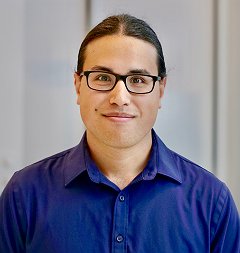
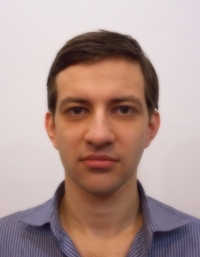
Carlo Angiuli is an Assistant Professor of Computer Science at the Luddy School of Indiana University . He is a leading researcher in type theory , with a focus on its applications to programming language design and logic . His work bridges theoretical foundations and practical implementations, particularly through dependent types , proof assistants , and homotopy type theory . His research interests include: Type Theory (foundational systems for programs and proofs) Programming Language Foundations (formal semantics and reasoning) Homotopy Type Theory (higher-dimensional structures) Dependent Types (expressive type systems) Proof Assistants (formal verification tools) Computational Logic (algorithmic reasoning) Angiuli actively contributes to the programming languages community as a POPL Program Committee member and co-author of a forthcoming textbook on dependent type theory. His students include Johnson He, Huang Xu, Kelton OBrien, and Ian Ray , who joined in Fall 2025. He has received significant recognition, including the Best Paper Award at FSCD 2019 and the School of Computer Science Distinguished Dissertation Award from Carnegie Mellon University. His current work explores advanced type-theoretic frameworks and their implementation in proof assistants like the red* family of tools. Scientific awards: Best Paper Award, FSCD 2019 (Junior Researchers category) School of Computer Science Distinguished Dissertation Award, Carnegie Mellon University He teaches courses such as Modern Dependent Types (CSCI-B619), Programming Language Foundations (CSCI-B522), and Introduction to Computer Science (CSCI-C211).
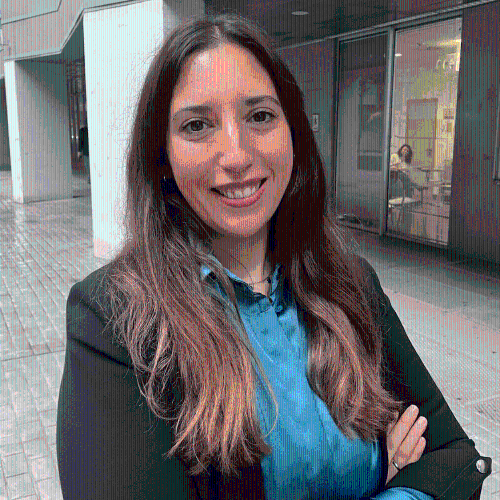
Caleb Stanford is an Assistant Professor in the Department of Computer Science at the University of California, Davis. He specializes in programming languages and formal methods with applications to distributed systems, data processing, and computer security. His research focuses on developing practical tools and theoretical foundations for secure and reliable systems. Research interests span programming languages theory, formal verification techniques for distributed systems, Rust ecosystem security, stream processing verification, and automata theory extensions. Specific projects include securing Rust crates through automated auditing tools, extending derivative-based abstractions for regular expressions, and developing verification frameworks for dataflow programming. His publications demonstrate consistent focus on formal methods applications, with recent emphasis on Rust program safety (2025), stream processing verification (2020-2024), and incremental graph algorithms (2023). Article keywords frequently include formal verification, programming languages, distributed systems, and automata theory. Dr. Stanford actively recruits students for research positions: Undergraduates should demonstrate excellence in relevant coursework Prospective PhD students must apply through UC Davis admissions Current openings focus on Rust security, formal methods, and distributed systems verification He leads the Guided Incremental Digraphs (GID) research project and collaborates with UCSD on Rust security initiatives. Community contributions include serving as Artifact Evaluation Co-Chair for POPL 2024 and committee member for PLDI and OOPSLA conferences.
Montse Magro Gutiérrez serves as Professor and Director of Early Childhood and Primary Education degrees at Antonio de Nebrija University's School of Language and Education within the Department of Didactics and School Organisation. She actively contributes to the CEDI Research Group on Cognition, Education and Individual Differences and participates in the EduSoC Lab think tank at Complutense University of Madrid. Her educational foundation includes: PhD in Education (Cum Laude, International Mention) from Universidad Camilo José Cela (2021) Master's in Pedagogy from Universidad del Sur, Chiapas, Mexico Bachelor's in Early Childhood Education from Escuela Normal de Educadoras “Bertha Von Glummer y Leyva”, Mexico As an expert in rural multigrade education , teacher training , and inclusive early childhood practices , her research bridges Spain and Mexico through comparative studies on curriculum design, educational policy for developing regions, and sustainable development frameworks. Her work emphasizes contextualized pedagogical approaches for diverse rural settings, particularly focusing on indigenous communities and grouped school systems. Analysis of her 2018-2023 publications reveals a consistent focus on multigrade teaching competencies, with increasing attention to visual literacy and sustainable development. Her research demonstrates methodological diversity through comparative studies, teacher perception analyses, and curriculum implementation evaluations, predominantly situated in Mexican rural contexts with Spanish cross-references. Professionally, she has served as preschool teacher in Mexican public/private institutions, technical advisor for Mexico's Ministry of Education preschool programs, and collaborator with Chiapas' Federalized Education Subsecretariat. She has developed international exchange projects with Slovenia's University of Maribor and Spanish institutions, while contributing to university initiatives for students with specific learning needs. She actively participates in educational conferences as organizer and evaluator, and serves on the editorial board of the Journal of Learning Styles (ISSN: 2332-8533), advancing research in learning methodologies through her role in EduSoC Lab's academic network.
Inmaculada Martin Espinosa serves as an Interim Substitute Teacher at the University of Cadiz within the Department of History, Geography and Philosophy, specializing in the Theory and History of Education area. Her academic foundation includes doctoral research completed at the University of Seville in 2023. Educational background: PhD in Education, University of Seville (2023), thesis: 'The profile of the undergraduate student at the University of Seville for learning English as a foreign language: perspectives of students and university faculty', supervised by Dr. Rosario Gil Galván Her research program demonstrates dual expertise in contemporary language education and historical pedagogy. She investigates motivational dynamics in English language acquisition among university students, examining parental influences and competency development through frameworks like the Attitude/Motivation Test Battery. Concurrently, she conducts rigorous historical analysis of early childhood education systems, focusing on foundational figures (Comenius, Rousseau, Pestalozzi, Montessori) and institutional developments in France and England. Her methodological approach frequently employs learning contracts as pedagogical tools and comparative studies across educational contexts. Analysis of her 15 recent publications (2021-2024) reveals two dominant research trajectories: 70% center on language learning psychology in higher education (particularly motivational profiles and parental socio-educational impacts), while 30% explore historical foundations of early childhood education. This dual focus manifests in practical educational tools like Genially and Quizziz resources for teaching historical education concepts. As an active member of the HUM 561 Research Group (Southwest Research), she contributes to collaborative scholarly initiatives. Her work shows consistent application of educational psychology principles across both research strands, with emerging interest in global citizenship formation through language education. Current projects appear focused on value education implementation in secondary schools and competency-based learning frameworks.
Daniel Adrover Roig is a Full Professor at the University of the Balearic Islands (UIB), where he serves in the Department of Applied Pedagogy and Educational Psychology within the Faculty of Education. He has held several administrative positions including Vice-Dean of the Faculty of Education since 2017 and Coordinator of Admission Tests for Early Childhood and Primary Education degrees since 2019. He leads the Development, Education and Language (I+DEL) research group at UIB and serves on the Research Ethics Committee of the university. His academic background includes: 2004: Psychology Degree from the University of the Balearic Islands 2005: Teaching Aptitude Course (CAP) from the Institute of Educational Sciences 2007: Postgraduate in Teaching Techniques for the European Higher Education Area 2009: PhD in Psychology from the University of the Balearic Islands 2009-2011: Postdoctoral studies at the Montreal Geriatrics Institute in Canada Dr. Adrover Roig's research primarily focuses on how bilingualism influences human cognition, with particular interest in children with language difficulties, healthy adults, and elderly individuals without cognitive decline. His work explores the relationship between school bullying and educational needs, language difficulties, and communication. He examines how linguistic, cognitive, and temperamental foundations interact across the lifespan, with special attention to Developmental Language Disorder (DLD). His interdisciplinary approach combines clinical psychology, cognitive psychology, neuropsychology, psycholinguistics, and psychopedagogy to understand educational and emotional challenges in children with Specific Educational Support Needs. His recent publications demonstrate a strong focus on language development, bilingualism effects, school bullying, and cognitive processing in children with language disorders. The research shows consistent exploration of how bilingualism impacts executive control, the relationship between language disorders and social outcomes, and the validation of assessment tools for bullying victimization. His work spans multiple methodologies including longitudinal studies, experimental cognitive tasks, and validation of psychological instruments. His notable scientific recognitions include: The 'Jordi Perelló' award from the College of Speech Therapists of Catalonia A Flash Call in Social Sciences project grant from the 'La Caixa' Foundation in January 2022 for expanding research on cyberbullying Dr. Adrover Roig has directed numerous doctoral theses on topics related to language development, bilingualism, and educational challenges. He has served as principal investigator for two consecutive projects funded by the Ministry of Science and Innovation. His teaching portfolio includes courses in Educational Psychology, School Psychology, Developmental Psychology in School Age, and Language Disorders in Primary Education. He has also contributed to teacher training programs and research on educational guidelines and best practices. He leads the Development, Education and Language Research Laboratory (I+DELab), an interdisciplinary research group focused on psychological development across the lifespan and psychological aspects linked to education. The laboratory promotes knowledge transfer through school training activities, psychopedagogical guidance teams, early intervention programs, hospitals, and media appearances. The team comprises researchers with diverse backgrounds including clinical psychology, cognitive psychology, neuropsychology, psycholinguistics, and speech therapy.
Cesar Pablo Dominguez Prieto is a University Professor in the Department of Theory of Literature and Comparative Literature at the University of Santiago de Compostela. He teaches core and elective courses in literary theory and comparative literature across multiple undergraduate and postgraduate programs, including degrees in Spanish, Galician, English, and Classical Philology, as well as the Master in Literary and Culture Studies and the Doctoral Programme in Literature and Cultural Studies. His research is centered on literary and cultural theory, with a strong regional focus on Galician, Portuguese, Brazilian, and African literatures within the Lusophone world. He is affiliated with the research group Cultural Studies on Galician, Portuguese, Brazilian and African Countries of Portuguese Language Systems . He supervises graduate training and offers doctoral complementary courses, indicating an active role in academic mentorship. His teaching includes foundational courses such as Basic Concepts of Literary Theory and Comparative Literature and advanced topics like Comparative Literary Studies and Contemporary Theories of Literature and Culture . While no specific scientific awards or publications are listed in the provided text, his sustained academic presence and professorial rank reflect a distinguished research and teaching career. His work contributes significantly to the theoretical and comparative frameworks of Iberian and Lusophone literary studies.
Marta Arias is an Associate Professor in the Computer Science Department at Universitat Politècnica de Catalunya (UPC), Barcelona, and a member of the LARCA research group. She has held academic positions since 2007, including roles at Columbia University and the University of Edinburgh. Her research focuses on Machine Learning, Data Mining, Algorithm Design, and Logic in Computer Science. She teaches advanced courses in Machine Learning, Information Retrieval, and Complex Networks at undergraduate and master's levels, including the Erasmus Mundus program in Data Mining and Knowledge Management. Educations: PhD in Computer Science from Tufts University (2000-2004), Postgraduate Studies at University of Edinburgh (1999-2000), B.Sc. in Computer Science from UPC (1992-1997). Professional experience includes software engineering and research roles in New York and Barcelona. Research highlights include developing algorithms for real-time ranking systems, Twitter-based financial forecasting, and causal network analysis. Notable contributions include the 'Best Paper Award' at AIPESW@ECAI 2020 and a 3rd place award in football performance research. Her work spans theoretical foundations (e.g., Horn clause learning) and applied domains like cybersecurity, healthcare analytics, and energy systems. Teaching responsibilities include labs and lectures on Machine Learning, Information Retrieval, and Programming, with active involvement in curriculum design and pedagogical innovation. Ongoing projects include enterprise risk analysis, synthetic data generation, and network modeling.
Pedro Cabalar is Full Professor at the Department of Computer Science of the University of Corunna, Galicia, Spain, and current coordinator of the inter-university Master in Artificial Intelligence (Universities of A Coruña, Santiago de Compostela and Vigo). He also serves as Area Editor (Theory Foundations) for Theory and Practice of Logic Programming and as Standard Editor for the Artificial Intelligence journal. Education: PhD in Computer Science, University of Corunna, 2001 Master in Computer Science, Politéchnic University of Madrid, 1993 Bachelor in Computer Science (3-year degree), University of Santiago de Compostela / University of Corunna, 1989 Research interests revolve around Knowledge Representation & Reasoning , especially Answer Set Programming , non-monotonic reasoning , temporal and modal logics , and causal reasoning . He investigates theoretical foundations (equilibrium logic, temporal extensions, deontic operators) and practical systems (telingo, eclingo, aspBEEF), with applications ranging from planning and diagnosis to explainable AI and healthcare decision support. His recent articles (2023-2025) exhibit a clear trend toward temporal and metric extensions of ASP , explainability , and hybrid reasoning systems , often combining logic programming with deontic or probabilistic features. Scientific awards & recognition: University of Corunna Dissertation Award, 2003 Best Paper Award at LPNMR 2019 Best Student Paper at ICLP 2020 Best Student Paper at JELIA 2019 Grants & projects: He currently leads or co-leads nationally funded Spanish projects (GEISER 2024-2028, ARLEKIN 2021-2024) and has coordinated EU COST actions (DigForASP) as well as earlier MINECO projects on temporal ASP and medical reasoning (TARDIS, MERLOT, FEAST, etc.). PhD supervision: He has successfully supervised three PhD theses (Martín Diéguez, Jorge Fandiño, Brais Muñiz) and continues to advise students within the Information Retrieval Laboratory (IRLab) and the Spanish node of Potassco Solutions.
Susana Sanduvete Chaves serves as a Researcher in the Department of Psychology at the University of Seville, Spain, where she specializes in Behavioral Science Methodology. Her academic foundation includes a 2008 Doctorate from the University of Seville with the thesis "Innovaciones metodológicas en la evaluación de la formación continúa" (Methodological Innovations in Continuous Training Evaluation), supervised by Dr. Salvador Chacón Moscoso. She maintains active roles in both research methodology development and applied psychological interventions across clinical and educational settings. Her research program centers on three interconnected pillars: methodological quality assessment in psychological research, health psychology interventions, and educational innovations in psychology training. She has pioneered tools like the Methodological Quality Scale (MQS) and Methodological Quality Checklist for Observational Methodology (MQCOM), establishing rigorous standards for intervention program evaluation. In health psychology, her work targets chronic pain management, parental support for preterm infants, and quality-of-life improvements for autoimmune disorder patients. Educational contributions include bilingual teaching methodologies and active learning frameworks for psychology statistics courses. Analysis of her 2022-2025 publications reveals a strategic integration of methodological precision with real-world applications. Her health psychology studies predominantly employ randomized controlled trials and systematic reviews to evaluate interventions for vulnerable populations, while her methodological work emphasizes cross-cultural adaptation and international research standards. Educational publications document practical innovations in Spanish university settings, particularly regarding English-medium instruction challenges in psychology methodology courses. Though specific grant details remain undocumented in available sources, her extensive publication record in high-impact areas suggests sustained research funding and collaborative projects with healthcare institutions. Her work demonstrates consistent leadership in advancing methodological rigor within Spanish psychological research while addressing pressing clinical and educational needs through evidence-based interventions.
Katixa Agirre Migelez is a Senior Lecturer and Researcher in the Department of Audiovisual Communication and Advertising at the Faculty of Social Sciences and Communication, University of the Basque Country (UPV/EHU). With a PhD and Degree in Audiovisual Communication, she has established herself as a prominent scholar in Basque cinema, minority language media, and cultural studies. Her academic journey began with a foundational education in Audiovisual Communication, leading to her current position where she contributes significantly to the understanding of Basque cultural production within global media frameworks. Her work bridges theoretical scholarship with practical applications in cultural policy development. Dr. Agirre Migelez's research spans multiple interconnected domains with particular emphasis on how Basque language and culture navigate contemporary media landscapes. Her scholarship explores the representation of political conflict and gender in Basque cinema, examining how film functions as both reflection and shaper of cultural memory. Her innovative work on queer cinema in Basque contexts represents groundbreaking research at the intersection of language, sexuality, and cultural identity. Through publications on maternity representations, she contributes significantly to gender studies within Basque cultural frameworks. Her research on language diversity in streaming platforms has direct policy implications, as evidenced by her commissioned report for the European Parliament. Her publication record demonstrates consistent scholarly output across multiple subfields, with recent work focusing on the challenges and opportunities for minority language cinema in the streaming era. Her research shows a clear trajectory from examining Basque cinema's historical development to analyzing its current position in global digital media environments. Dr. Agirre Migelez has been actively involved in academic projects with policy relevance, most notably her work on language diversity in streaming platforms commissioned by the European Parliament. While specific students are not documented in available materials, her position as Senior Lecturer indicates her involvement in teaching and mentoring within the Department of Audiovisual Communication and Advertising. Her academic work is deeply connected to Basque cultural institutions and initiatives, contributing to the understanding and promotion of Basque language and culture in contemporary media environments. Her research bridges academic scholarship with practical applications in cultural policy development for minority language communities.
Dr. Borja Sanz Urquijo serves as a Senior Lecturer at the Faculty of Engineering, University of Deusto, and has been a core researcher at DeustoTech-Computing since 2008, including a tenure as Head Researcher (2015-2018). He holds a cum laude PhD in Information Systems (2012) from the University of Deusto, specializing in Android malware detection. Education PhD in Information Systems, University of Deusto (2012, cum laude) His research spans machine learning, big data, and knowledge discovery, with critical expansion into AI ethics, fairness, accountability, and societal impact. He investigates AI applications in domestic violence intervention, health rights, law enforcement transparency, and Edge Computing optimization, consistently bridging technical innovation with social responsibility. His work demonstrates rigorous methodology in small-dataset machine learning and genomic sequence analysis. Dr. Sanz Urquijo's publication trajectory reveals evolving expertise from foundational cybersecurity (Android malware analysis, spam filtering) to contemporary societal challenges (feminist AI frameworks, quantum software security). Recent articles emphasize interdisciplinary collaboration, particularly in feminist technology studies and ethical AI governance, while maintaining technical depth in Edge Computing and genomic analytics. Advising and Projects He has supervised multiple theses including doctoral work on Edge Computing for digital twins and cybersecurity competency frameworks. As lead researcher in over 50 projects (H2020, national, private), he currently directs BEACON (industrial AI systems) and contributes to EU initiatives like IMPROVE (domestic violence response) and ELKARTEK (Industry 5.0 ethics). His collaborations span social organizations, enterprises, and research centers globally. Research Environment As a pillar of DeustoTech-Computing, he operates within a multidisciplinary unit advancing AI, cybersecurity, and Edge Computing applications. His leadership in projects like AI-Driven Cognitive Robotic Platforms and REal tiME control systems demonstrates integration of theoretical research with industrial implementation in smart manufacturing contexts.
Martín Ceresa is a Post-doctoral Researcher at the IMDEA Software Institute in Madrid, Spain. His work focuses on theoretical computer science, programming languages, type theory, and blockchain technologies. He collaborates extensively with Prof. César Sánchez on formal methods for scaling blockchains and verifying smart contracts. Education: PhD in Computer Science from the National University of Rosario (Argentina), under Dr. Mauro Jaskelioff. His thesis developed an effectful improvement theory for languages with algebraic effects. Research Interests: Blockchain scalability, formal verification of smart contracts, runtime verification, embedded systems design, and foundational mathematics. His current projects include Setchain (a Byzantine-tolerant distributed data structure) and a non-Turing-complete language for critical embedded systems. Key Contributions: Co-developed the MegaDeTH tool for test case generation (now QuickFuzz), created the Coq-based Multi library for multi-contract analysis, and pioneered formal methods for layer-2 blockchain solutions. Collaborations: Active in the formal methods community, with contributions to EasyCrypt and collaborations with researchers like Gustavo Grieco and Antonio Fernández Anta.
José Santiago Fernández Vázquez serves as a Full Professor in the Department of Modern Philology at the University of Alcalá, specializing in English-language literature and cultural studies. His academic portfolio spans both teaching and administrative responsibilities across multiple degree programs including English Studies, Hispanic Studies, and Translation. His research interests center on postcolonial literature, ecolinguistics, and critical discourse analysis, with particular emphasis on transcultural narratives and environmental communication. Recent scholarly output reveals a strategic pivot from traditional postcolonial literary analysis toward multimodal ecolinguistic studies examining sustainability discourse in digital spaces. Analysis of his 15 most recent publications demonstrates an evolving trajectory from foundational postcolonial literary criticism (2000-2015) toward contemporary interdisciplinary environmental communication research (2020-2023), reflecting broader academic shifts toward sustainability studies while maintaining postcolonial theoretical frameworks. His work consistently applies critical discourse analysis to examine power structures in both literary and digital contexts. Fernández Vázquez actively participates in the American Interdisciplinary Cultural Studies research group, focusing on Spanish presence in North America, US-geopolitical relations, and American comic studies. His collaborative projects frequently address educational innovation, particularly regarding sustainability competencies and transcultural awareness in university curricula. His teaching responsibilities include History of English-Speaking Countries and Postcolonial Literatures across multiple undergraduate programs, demonstrating institutional commitment to decolonial perspectives in language education. Administrative contributions include directing orientation programs for secondary school students and participating in university sustainability initiatives through the UI GreenMetric framework.
Michael Raskin is a Lecturer (maître de conferences) at LaBRI, University of Bordeaux, where he conducts research in theoretical computer science with a focus on distributed systems and formal methods. His work bridges theoretical foundations with practical implementations, particularly in population protocols, temporal graphs, and Petri nets. His research interests span Theoretical Computer Science , Distributed Systems , Algorithms , and Formal Methods , with specific expertise in population protocols, temporal graph analysis, vector addition systems, and verification techniques for parameterized systems. His publications demonstrate a consistent focus on computational complexity, state complexity, and threshold phenomena in distributed models. Recent publication trends show a strong emphasis on temporal graph theory (with multiple papers on random temporal graphs and giant components), population protocol analysis (including modular protocols and leaderless rendez-vous systems), and verification techniques for parameterized systems. His work often combines mathematical rigor with practical implementation insights. Raskin has developed significant software projects including: Agnostic Lizard - A portable code walker for Common Lisp QueryFS - A filesystem defined through compiled queries His technical contributions span both theoretical advances and practical systems implementation, with a recurring theme of applying programming language techniques to systems problems. His work on Common Lisp tools demonstrates a commitment to practical language implementation alongside theoretical research.
Ana Rosa Lopez serves as a Lecturer at the University of Deusto's Bilbao campus, primarily affiliated with the Language Centre. She delivers English language instruction across multiple academic contexts, including undergraduate Tourism programs and diverse proficiency-level courses through the central Language Centre. Her educational background includes a Bachelor of Arts in English Philology earned at the University of Deusto, establishing her foundational expertise in language studies. Her professional focus centers on Language Teaching with specialized application in tourism contexts. She designs and delivers structured English curriculum including sequential courses (English I, II, III) for Tourism undergraduates, while simultaneously managing varied English language instruction at multiple competency levels through the Language Centre. This dual teaching role demonstrates her adaptability across academic and general language education frameworks. No scientific awards were documented in the available materials. While specific student advising relationships aren't enumerated, her instructional responsibilities encompass direct teaching of Tourism undergraduate cohorts and Language Centre participants. No research grants or funded projects are referenced in the current documentation.