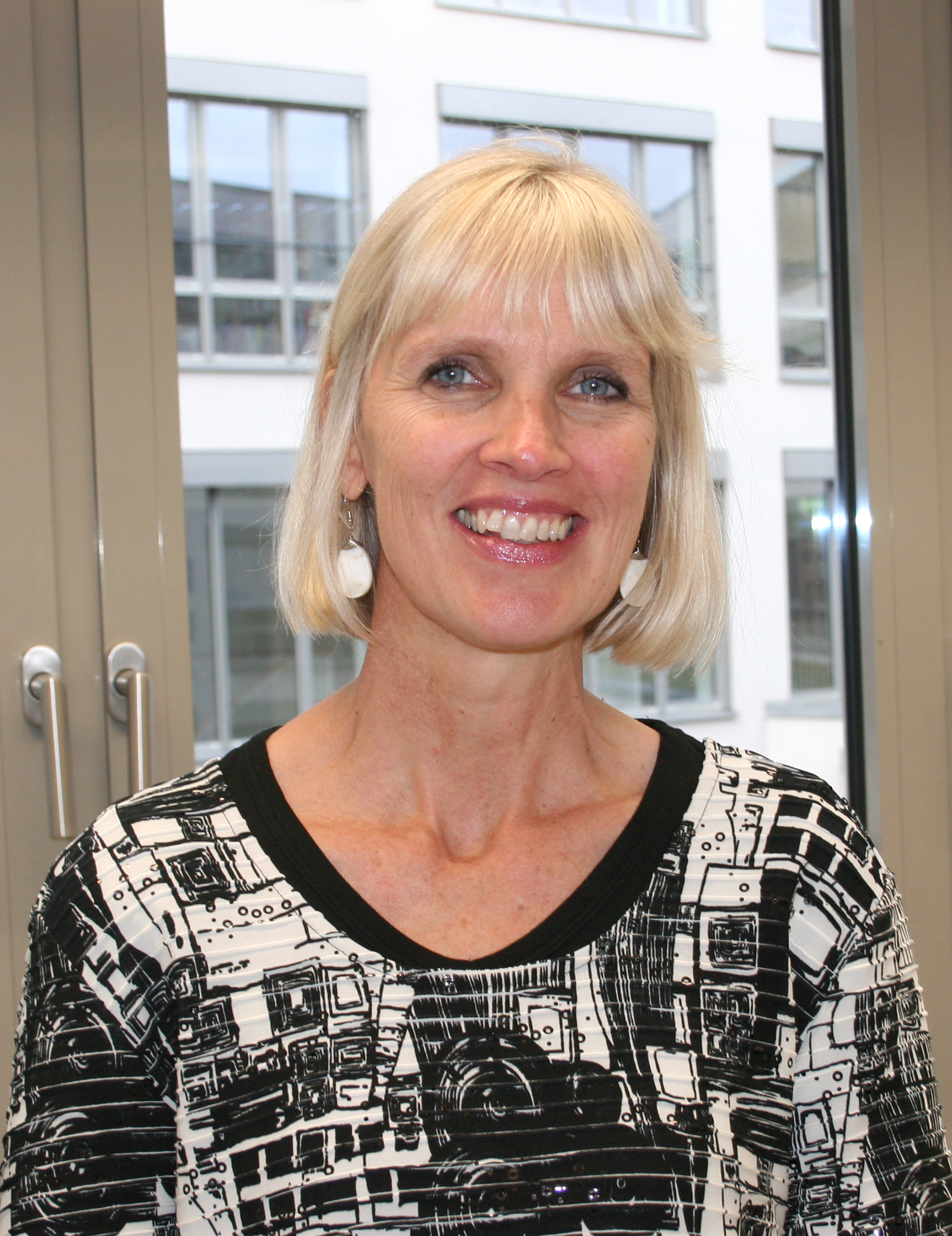
Paolo G. Giarrusso is a researcher at the Institute for Programming Languages and Software Engineering within the Faculty of Informatics at the University of Tübingen . Previously, he was a Ph.D. student at the University of Marburg , where he defended his thesis Optimizing and Incrementalizing Collection Queries by AST Transformation in January 2018.
Maximilian Schüle serves as Assistant Professor in the Department of Data Engineering at the University of Bamberg's Faculty of Information Systems and Applied Computer Sciences since October 2022. Previously, he held research positions at Technical University of Munich (2017-2022). His research bridges database systems and machine learning through compiler-based approaches. His research focuses on in-database machine learning , GPU-accelerated query processing , and recursive SQL extensions . Key contributions include: Developing MLIR-based compilers for automatic differentiation in SQL (DuoLingo-AutoDiff) Creating GPU code generators for database kernels using NVRTC Designing higher-order lambda functions for expressive query languages Implementing end-to-end neural network training within database engines His recent publications (2023-2025) demonstrate consistent output in top venues including ICDE, VLDB workshops, and BTW conferences, with growing emphasis on hardware-aware optimization and compiler techniques for analytical workloads. He currently leads a DFG-funded project on elastic memory hierarchies for memory-intensive applications (2025-2028), supporting multiple PhD researchers. His supervision emphasizes open-source contributions to database systems like Umbra and practical implementation skills alongside theoretical foundations. As an active member of the database community, he serves as workshop chair for BTW 2025 and regularly reviews for ACM TODS, VLDB Journal, and Information Systems. His work on public transport analytics demonstrates real-world impact through collaborations with urban mobility initiatives in Bamberg.
Miroslav Janík, PhD, serves as Research Assistant at the University of Trier's Department of German Studies and Research Associate at Masaryk University's Faculty of Education, Research Institute for School Education. He advises German as a Second Language (DaZ) and German as a Foreign Language (DaF) degree programs while teaching core methodology courses on German language didactics and integrative language mediation. His academic profile bridges empirical research on multilingual education with practical teacher training initiatives across Central European contexts. His educational foundation includes: PhD in Education (Foreign Language Didactics) from Masaryk University (2011-2016) Master's degree in Teaching German as a Foreign Language and Social Studies (2009-2011) Bachelor's degree in Teaching German as a Foreign Language and Social Studies (2005-2009) Dr. Janík's research investigates the intersection of language policy, multilingual school realities, and teacher professionalization. He examines how language regimes operate within inclusive frameworks in Czech and Austrian urban schools, revealing tensions between institutional homogenization and linguistic diversity. His work employs innovative video-based methodologies and eye-tracking to analyze teacher cognition and classroom dynamics, contributing to evidence-based approaches for multilingual education. Analysis of his 2014-2024 publications shows consistent focus on Central European educational contexts, with recent work emphasizing practical implications of language policy implementation. His scholarship demonstrates growing engagement with teacher professional vision development and equity issues in linguistically diverse classrooms, reflecting evolving research priorities toward actionable interventions. Dr. Janík actively secures competitive research funding, currently leading the Nikolaus Koch Stiftung project (2024) supporting linguistically diverse students. His grant portfolio includes multiple Czech Science Foundation projects examining multilingual school spaces (2019-2022), teacher professional vision (2017-2019), and novice teacher socialization (2015-2017), demonstrating sustained research productivity and institutional trust. As an educator, he guides DaZ/DaF students through curriculum design and teaching methodologies while conducting classroom-based research that directly informs his instructional practice. His dual institutional appointments facilitate cross-pollination between theoretical research at Masaryk University and practical application at the University of Trier, creating a robust cycle of research-informed teaching and practice-based inquiry.
Professor Sandra Reitbrecht is a W2 Professor of German Linguistics / German as a Foreign Language at the University of Bamberg since September 2025, where she leads research and teaching in her specialized field. Previously, she served as a University Lecturer at the University College of Teacher Education Vienna (2017-2025) and held research positions including Project Manager for the Sparkling Science Project 'AaMoL' and Research Associate in the FWF project on scientific text competence at the University of Graz. Her research focuses on pronunciation didactics in German as a foreign/second language, academic language competence development, text competence, and writing didactics. She has made significant contributions to understanding how reflective modeling can enhance academic writing skills in secondary education contexts. Her work bridges theoretical linguistics with practical classroom applications, particularly through the development of model videos and material-based writing tasks. Professor Reitbrecht's publication record shows a clear trend toward increasingly interdisciplinary work that combines writing studies, language education, and technology integration. Her recent publications (2023-2025) demonstrate growing interest in AI applications for language instruction, multilingual approaches to language teaching, and the transfer of writing strategies across educational contexts. Member of the International Committee of the International Association for Germanic Studies (since 07/2025) Vice President of the Austrian Association for German as a Foreign/Second Language (2017-2023) Member of the organizing committee for the 18th International Conference of German Teachers in Lübeck 2025 Member of the jury for the European Language Label 2021 and 2025 Review activities for numerous academic journals including InfoDaF and International Journal of Multilingualism As an educator, Professor Reitbrecht has coordinated the Eye-Tracking Research Group and developed professional development courses for teachers across multiple countries. Her commitment to science communication is evident through her role as a Young Science Ambassador and her participation in public outreach activities including radio interviews and workshops at the Children's University of Vienna.
Professor Frank Gustrau serves as Dean of the Department of Information Technology, demonstrating leadership in both academic administration and electrical engineering education. His career spans multiple decades with consistent contributions to RF and microwave engineering education. Professor Gustrau's research interests focus on RF and Microwave Engineering , High-Frequency Technology , Electromagnetic Design , and Electromagnetic Compatibility . His work bridges theoretical field theory with practical applications in wireless communications, medical technology, and circuit design. The progression of his publications from foundational German texts to international English editions demonstrates growing global impact in the field. His publication record shows remarkable consistency and evolution, with the forthcoming 4th edition of RF and Microwave Engineering (2025) building on previous works dating back to 2006. These publications represent comprehensive educational resources that have shaped RF engineering curriculum internationally, including a Chinese translation (2015) that expanded their global reach. As an educator, Professor Gustrau teaches across multiple programs: Theoretical Electrical Engineering (TET1/TET2) - Master's level core course EM Design (EMD) - Bachelor's level elective High-frequency technology and EM Simulation (HFE) - Master's level elective covering both theoretical and practical simulation aspects Physics courses for Biomedical and Information Technology programs Professor Gustrau maintains an open-door policy for thesis supervision, actively encouraging students to seek him out during office hours for bachelor's and master's projects in the Department of Information Technology. His teaching approach emphasizes connecting theoretical concepts with practical implementation through simulation tools and real-world applications.
Michael Müller serves as a Senior Lecturer at the Institute of Geography and its Didactics, University of Education Freiburg since 2009, holding multiple leadership roles including elected Senate membership, chair of the Senate Sustainability Committee, and Director of the Sustainability Office. His work focuses on geography didactics for secondary education, integrating research with teaching and extensive administrative duties in curriculum development and institutional governance. His educational trajectory includes doctoral completion in 2017 on bilingual geography task design, preceded by Realschule teacher training at PH Freiburg (1991-1995) and professional experience as a school teacher (1997-2006). Key appointments include secondments to the Institute for Anglistik (1999-2009) where he developed the European Teaching Program. Research centers on geography education innovation , particularly bilingual teaching methodologies (Geography-English) and intercultural competence development . His signature contribution is a task-based model for fostering students' value orientations through reflective classroom activities, expanded into sustainable development education (2025) and ethical geography teaching (2022). This bridges language acquisition, subject knowledge, and cultural awareness in secondary contexts. His publication record shows sustained output since 2006, with monograph-level depth in 2018 and recent expansion into sustainability ethics. Approximately 70% address bilingual geography teaching, demonstrating consistent specialization while evolving toward broader educational frameworks like Sustainable Development Goal 4. As an advisor, Müller supervises student internships and research projects, emphasizing practical application through field excursions (Rhine River, Freiburg's Vauban district) and curriculum development. His administrative scope spans examination regulations, European program coordination, and sustainability strategy implementation across the university. Though no formal lab exists, his leadership of the Sustainability Office and international IGU-CGE collaborations creates research-oriented opportunities. His work maintains strong connections to classroom practice while contributing to global geography education discourse through conferences in London, Lancaster, and New York.
Professor Johannes Schneider is affiliated with the Konstanz University of Applied Sciences for Technology, Business and Design , specifically the Faculty of Computer Science . He holds the dual roles of Professor in Computer Science and Dean of Studies for the Bachelor's Program in Business Informatics . His research and teaching expertise centers on Software Development , with particular emphasis on practical engineering methodologies. Key focus areas include: Software Engineering principles and practices Software Architecture design patterns Programming language implementation Professor Schneider instructs core courses for the Business Information Systems (WIN) program: Introduction to Programming [WIN1] Software Engineering 1 [WIN3] Software Engineering 2 [WIN4] Software Architecture [WIN4-7] As Dean of Studies, he provides academic leadership for the Business Informatics curriculum. Contact is available via email johannes.schneider@htwg-konstanz.de or phone +49 7531 206-9043 during appointment-based office hours.
Professor Kristina Kelber is a faculty member at HTW Dresden (Hochschule für Technik und Wirtschaft Dresden), holding the Chair of Communications Engineering within the Faculty of Electrical Engineering. She is also a member of the Faculty Council, contributing to academic governance at the institution. Her research focuses on signal processing , digital image processing , and the analysis and design of nonlinear dynamic systems . Her work spans theoretical aspects of communications engineering and practical applications in diverse fields including music technology for accessibility applications, bird song identification, film restoration, and visitor center information systems. Her publication record demonstrates consistent expertise from the 1990s to present, with evolving applications from foundational work in chaos-based encryption systems to more recent applied research with social impact. Professor Kelber has secured research funding for projects such as "sprechAktiv," a child-friendly interactive language learning media initiative developed in cooperation with Linguwerk GmbH, Dresden, and funded by the BMBF's SME innovative program from 2013-2015. Her research methodology combines theoretical analysis with practical implementation, as evidenced by publications ranging from mathematical analysis of chaotic systems to applied projects in music technology and image processing. Member of the Faculty Council at HTW Dresden Associated with the Communication Technology laboratory Active researcher with publications spanning over two decades Professor Kelber teaches courses in systems theory, signals and systems, audio and video technology, signal coding, and digital image processing across multiple degree programs. She offers both traditional classroom instruction and distance learning options through the Bildungsportal Sachsen (OPAL) platform, demonstrating adaptability to different educational delivery methods and commitment to accessible education.
Professor Elke Kraus is a Professor of Occupational Therapy at the Alice Salomon University of Applied Sciences Berlin (ASH Berlin) where she has held a faculty position with significant leadership responsibilities. She serves as Head of the Bachelor's program in Occupational/Physiotherapy (2016-2025) and holds a professorship for Academicization and Professionalization in the Therapy Professions (2022-2027) as part of the BMBF-funded SAGE project. Her institutional roles include membership in the AS Academic Senate (2020-2027), the Research and Young Talents Commission (2023-2025), and the Digitalization Commission as representative of university lecturers. Dr. Kraus's research interests focus on occupational therapy with particular expertise in handedness and motor skills development, digital diagnostics and assessment tools, school-based occupational therapy, evidence-based practice, and interprofessional collaboration. Her work bridges clinical practice and academic research, with significant contributions to pediatric assessment tools and the digital transformation of therapeutic practices. She has pioneered the development of several standardized assessment instruments including the Händigkeitsprofil (Handedness Profile), PEAP (Pediatric Occupational Therapy Assessment and Process Instrument), and Treffpunkt (Screening for Graphomotor Skills). Her publication record shows a strong focus on the digital transformation of occupational therapy assessment methods, interprofessional education models, and evidence-based practice implementation. Recent work examines the comparability of digital versus traditional assessment methods, development of online interprofessional healthcare programs, and international perspectives on efficient diagnostics and therapy. She has been instrumental in establishing the German Society for Occupational Therapy Science (DGEW) and serves as co-editor of ergoscience, the only German-language peer-reviewed occupational therapy journal. Professor Kraus maintains extensive professional affiliations including representation in the Conference of University Presidents' Working Group on Health Sciences (HRK AG-GW), leadership in the Therapiewissenschaften Fachbereichstag (FBTT), membership in the German Society for Occupational Therapy Science (DGEW), and active participation in international networks including ENOTHE (European Network of Occupational Therapy in Higher Education) and WFOT (World Federation of Occupational Therapists). Her educational background includes a PhD from La Trobe University, Melbourne (2003) with dissertation on handedness development in children, a Post-graduate Diploma in Adult Education from University of Cape Town (1991), and a Bachelor of Science in Occupational Therapy from University of Cape Town (1987). She has led numerous research projects including manDAAD (digital assessment of manual skills), dig-TEMA (digital test system for manual actions), and Health Care Professionals (interprofessional online degree program).
Prof. Dr. Tobias C. Stubbe serves as Professor at the Chair of Quantitative Methods in the Social Sciences and Statistics within the Institute for Methods and Methodological Foundations of the Social Sciences, Faculty of Social Sciences at Georg August University of Göttingen, Germany. His office (Room 1.106) is located at Goßlerstrasse 19, 37073 Göttingen, with primary contact via tstubbe@uni-goettingen.de and teaching-specific inquiries directed to lehre.stubbe@uni-goettingen.de. His research centers on quantitative educational assessment, specializing in international large-scale studies (PIRLS, IGLU, TIMSS) to analyze social disparities in student achievement across reading, mathematics, and science competencies. Key interests include school effectiveness comparisons (private vs. public institutions), transition dynamics from primary to secondary education, and impacts of socioeconomic background on learning outcomes. Methodologically, he employs advanced statistical techniques to examine longitudinal trends and differential item functioning in assessment instruments. Analysis of his 2011-2018 publications reveals consistent focus on educational equity through rigorous quantitative analysis of national and international datasets. His work demonstrates particular expertise in reading comprehension assessment frameworks and mathematical competency development among diverse student populations, with recurring emphasis on migration background effects and gender disparities. The research trajectory shows increasing methodological sophistication in handling complex educational survey data. While specific grant details and advised students aren't documented in the source material, his leadership of the Chair indicates responsibility for graduate supervision and research team management. His involvement in major assessment programs like IGLU implies participation in funded research consortia requiring significant grant acquisition. The Chair of Quantitative Methods functions as both a research hub for educational methodology development and a teaching unit within the Institute, likely comprising researchers specializing in psychometrics, statistical modeling, and educational data analysis who support Germany's contribution to international comparative studies.
Sonja Niemann serves as a Scientific Officer Research and research associate at the Bavarian Foundation for Science, Technology and Society (bidt), specializing in human-AI co-creation systems with emphasis on code generation within the pAIrProg research project. Her academic background includes: Bachelor's degree in Psychology from University of Trier Master's degree in Computing in the Humanities from Otto-Friedrich University of Bamberg, focusing on cognitive systems and AI Niemann's research centers on trust dynamics in human-AI collaboration for programming tasks, examining how user expertise levels affect performance outcomes. She actively investigates ethical dimensions of generative AI systems and develops frameworks for equitable human-AI co-creation, integrating cognitive science methodologies with practical AI implementation. Her work bridges technical AI development and human-centered design principles to address real-world adoption challenges. Her 2025 publication analyzes prompt engineering strategies for optimizing user-AI interactions, demonstrating how structured questioning techniques significantly improve output quality from language models. This research reveals consistent patterns where domain-specific prompt templates outperform generic queries across diverse user skill levels. As a core contributor to bidt's pAIrProg project, she designs experimental protocols studying human-AI code collaboration. Her public engagement includes co-hosting workshops like 'AI is not neutral – you can change that!' at TINCON 2025, where she demonstrates bias mitigation techniques and advocates for inclusive AI development practices through hands-on coding exercises.
Thorsten Berger is a Professor and Head of the Chair of Software Engineering at Ruhr University Bochum, Germany. His office is located at MC 4.101 on the RUB campus, with contact details including phone (+49 (0) 234 32 25975) and email (thorsten.berger@rub.de). He's an active researcher with extensive service in the software engineering community, serving on program committees for major conferences including ICSE, FSE, ASE, and SPLC. Professor Berger's research primarily focuses on software engineering with specialization in variability management, software product lines, and robotics software engineering. His work bridges theoretical foundations with practical applications, particularly in behavior trees for robotic systems, configuration management, and domain-specific language engineering. His interdisciplinary approach connects software engineering with control theory and machine learning applications. Analysis of his recent publications reveals a strong trend toward robotics software engineering, with increasing focus on behavior trees, test-case specification, and runtime verification for robotic systems. His work also shows growing interest in machine learning integration with traditional software engineering practices, particularly in model integration and asset management for ML-enabled systems. The research demonstrates consistent evolution from foundational work in variability management toward more applied domains. His scientific achievements have been recognized with numerous awards: Multiple Most Influential Paper Awards (SLE 2024, VaMoS 2023, VaMoS 2020) Wallenberg Academy Fellowship VR Starting Grant from Swedish Research Council (2016) Best Paper Awards at Modularity (2015) and CSMR (2013) Distinguished Reviewer Awards from ASE, ICSE, and SPLC conferences ERC Starting Grant finalist (2019, 2020) Professor Berger has secured substantial research funding as Principal Investigator for multiple projects including Novel Techniques for Data-Driven Root-Cause Analysis and Variability Management (Volkswagen Infotainment), Properties and Verification Techniques for Behavior Trees (Phoenix Contact Foundation), and PrivacyE2E framework for AI-enabled systems (Federal Ministry of Education and Research). His Wallenberg Academy Fellowship and VR Starting Grant demonstrate his capacity to attract competitive early-career funding. He leads the Virtual Platform project funded by the Swedish Research Council and participates in EU-funded initiatives like CO4ROBOTS. As Head of the Chair of Software Engineering at Ruhr University Bochum, he leads a research group focused on advanced software engineering techniques with particular emphasis on variability-intensive systems. His team actively participates in international research collaborations including the Wallenberg Autonomous Systems Program (WASP) and has organized significant events like the Dagstuhl seminar 19191 on 'Software Evolution in Time and Space: Unifying Version and Variability Management.'
Coen De Roover is a Professor at the Vrije Universiteit Brussel (VUB) since October 2015, affiliated with the Software Languages Lab (SOFT) where he leads the Code Analysis and ManiPulation (CAMP) subgroup. He serves as programme director for the bachelor's program in Computer Science since the 2019-2020 academic year. His research focuses on the design of program analyses and their application to software quality problems , with particular expertise in static and dynamic analysis techniques. Key research areas include: Soft verification of contracts and incremental abstract interpretation Fine-grained change analysis of individual commits Mining for change patterns across multiple commits Vulnerability detection in infrastructure code (particularly Ansible) Concolic testing and resilience analysis Recent publication trends show increasing focus on infrastructure as code security, WebAssembly analysis, and modular abstract interpretation frameworks. His work bridges theoretical program analysis with practical software engineering applications, often validated through empirical studies on open-source projects. As an active contributor to the software engineering community, he has served on program committees for major conferences including ASE, ECOOP, ICSE, and SPLASH. His leadership roles include steering committee positions for GPCE and SANER, and program co-chair roles for International Conference on Program Comprehension. De Roover directs the CAMP research subgroup which has published over 120 peer-reviewed articles. The group develops practical analysis tools while advancing theoretical foundations of program analysis, with recent work focusing on infrastructure code security and WebAssembly analysis.
Achiya Elyasaf is an Assistant Professor at the Software and Information Systems Engineering Department of Ben-Gurion University of the Negev, Israel. He received all his academic degrees in computer science from Ben-Gurion University and completed postdoctoral research in David Harel's group at the Weizmann Institute. In 2021, he co-founded Provengo Technologies, which develops software-testing solutions leveraging his expertise in software engineering and artificial intelligence. Dr. Elyasaf's research focuses on creating synergies between software engineering and artificial intelligence. He pioneered Context-Oriented Behavioral Programming, a paradigm for developing context-aware systems through natural and incremental behavior specification. His work on utilizing expert knowledge for evolving solvers to combinatorial games has been recognized as one of the most important achievements in AI gaming, mentioned alongside Deep Blue's victory over Kasparov and Watson's Jeopardy! win in Nick Bostrom's 2014 book 'Superintelligence: Paths, Dangers, Strategies'. His recent publications demonstrate strong activity in model-based testing, combinatorial sequence testing, and behavior composition. The articles reveal consistent focus on applying AI techniques to software engineering challenges, particularly in testing and verification domains, with practical implementations like the Provengo tool suite and EC-KitY framework. Dr. Elyasaf has received significant recognition for his work, including three HUMIE Awards from the Genetic and Evolutionary Computation community (Gold in 2013 and 2011, Bronze in 2009). He is actively recruiting MSc students, PhD students, and post-docs with funded positions, indicating an expanding research program at Ben-Gurion University. His GitHub profile shows active development of EC-KitY, a scikit-learn-compatible Python toolkit for evolutionary computation.
Yu Feng is an Associate Professor in the Computer Science Department at the University of California, Santa Barbara. He received his Ph.D. in Computer Science from the University of Texas at Austin in 2018 and his MS in Computer Science from Beihang University in 2008. His research focuses on programming languages, program analysis and verification, program synthesis, and security. Specifically, he aims to build automated tools that guarantee the desired behavior of systems in a sound, precise, and scalable way. He is particularly interested in applying program synthesis and analysis to tackle security and performance problems in mobile devices and blockchain applications. Professor Feng's recent publications demonstrate a strong focus on program synthesis for security applications, particularly in blockchain and zero-knowledge proofs. His work spans multiple top-tier conferences including PLDI, POPL, ASE, and CCS, showing consistent contributions to both programming languages and security communities. His research often combines logical reasoning with machine learning techniques to develop innovative solutions for complex problems in program analysis and synthesis. Ethereum Academic Award (2025, 2024, 2023) ACM SIGPLAN Distinguished Paper Award, PLDI 2022 ACM SIGCHI Best Paper Award, CHI 2021 Google Faculty Research Award (Security), 2021 ACM SIGSOFT Distinguished Paper Award, ASE 2020 DARPA HARDEN grant (2022-2025) NSF-SaTC grant (2019-2022) ACM SIGPLAN Distinguished Paper Award, PLDI 2018 Professor Feng actively mentors students in his research group, currently advising several PhD students including Yanju Chen, Junrui Liu, Hongbo Wen, and Hanzhi Liu. He has served on program committees for numerous top conferences including CCS, PLDI, OOPSLA, ICSE, ASPLOS, and POPL. His research is supported by prestigious grants including DARPA HARDEN and NSF-SaTC. His laboratory focuses on developing cutting-edge program synthesis and analysis frameworks that combine logical reasoning with machine learning. The team works on applications in blockchain security, zero-knowledge proofs, and secure protocol implementation.