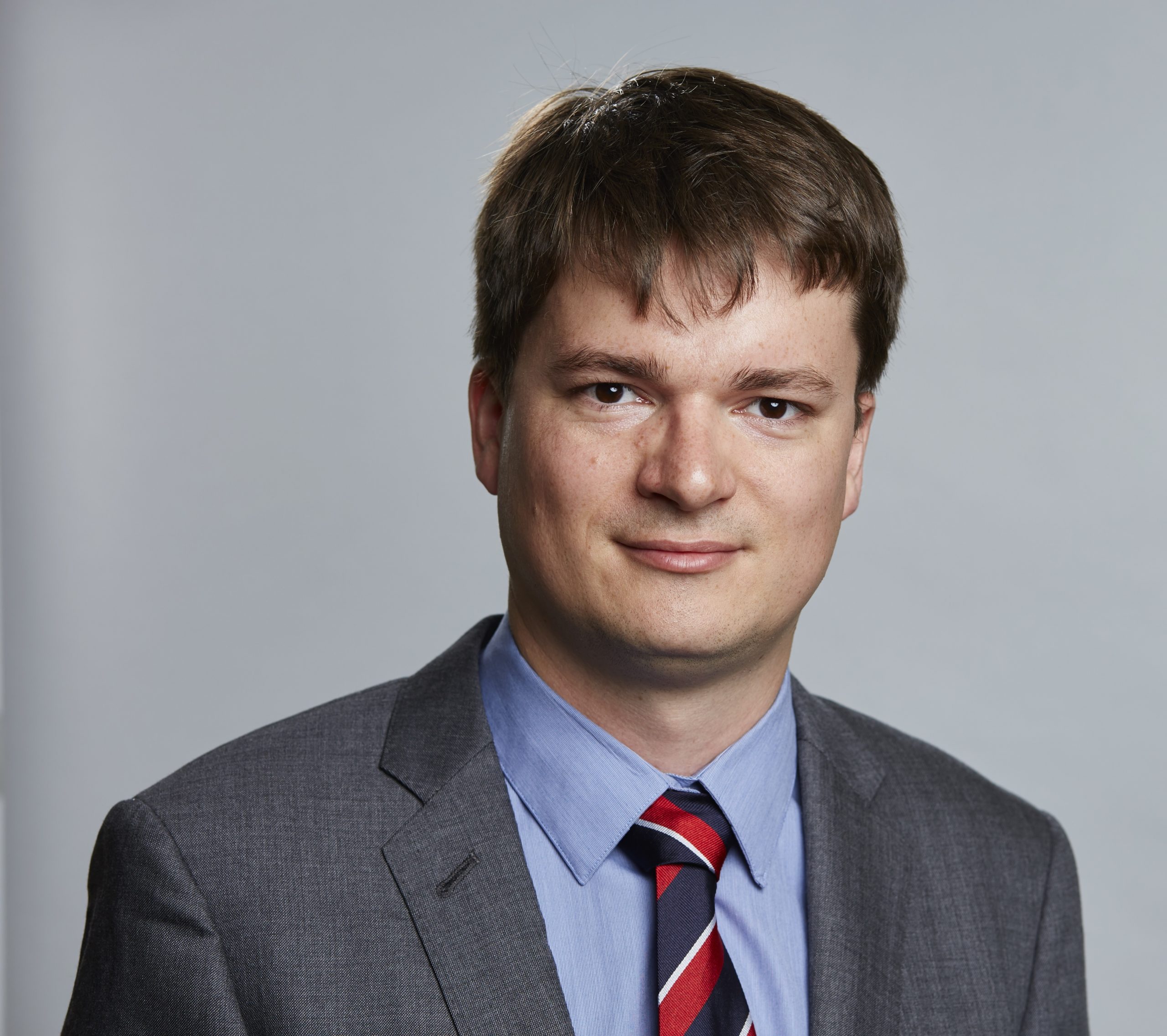
Abdur Sikder serves as a Lecturer in the Department of Computer Science at San Francisco State University. His office is located in Thornton Hall 906, and office hours are Monday-Friday from 9 a.m. to 4 p.m. He contributes to teaching and research in computer science, with a focus on interdisciplinary applications spanning cloud computing security, bioinformatics, and machine learning. His research interests include leveraging machine learning for protein structure prediction and bioinformatics challenges, analyzing cybersecurity risks in cloud environments, and advancing educational methods in programming. He also explores motor imagery decoding and smart health technologies, reflecting a blend of computational and biomedical applications. Notable research trends in his work include the application of ensemble learning and deep learning models across domains such as healthcare, virology, and enterprise data protection. He has contributed to foundational studies on protein phosphorylation, domain boundary prediction, and computational methodologies in bioinformatics. Abdur holds no explicitly listed scientific awards but maintains an active publication record since 2004, reflecting sustained contributions to both computer science education and advanced computational research.
Dr. Michael Horsch is a retired Associate Professor in the Department of Computer Science at the University of Saskatchewan. His research focuses on Artificial Intelligence, Reasoning Under Uncertainty, Constraint Satisfaction, and Machine Learning. He has contributed to bioinformatics through the P2IRC sub-theme, linking genotype and environment to phenotype using computational methods. Education: PhD (Computer Science, UBC, 1998), M.Sc. (Computer Science, UBC, 1990), B.Sc. (Computer Science & Physics, University of Toronto, 1988). Postdoctoral work at Simon Fraser University (2000). Research interests emphasize practical AI applications, including Bayesian networks, constraint satisfaction algorithms, and machine learning. His work bridges theoretical foundations and real-world problems, such as path planning and sensor optimization. Teaching highlights include courses on AI (CMPT 317), programming (CMPT 145), and machine learning (CMPT 423/820). He revised first-year curricula to improve student accessibility, replacing C++ with more user-friendly languages. Recognized for teaching excellence with the 2014 Provost’s Award. Publications span constraint satisfaction, probabilistic reasoning, and Bayesian networks, with notable contributions to algorithm design and optimization.
Kristian Kloeckl serves as Associate Professor in the Department of Art + Design within Northeastern University's College of Arts, Media and Design. His academic appointment bridges the School of Architecture and design disciplines, focusing on the intersection of urban systems and digital technologies. His research centers on urban data visualization and real-time city systems , with expertise in creating frameworks for hybrid urban environments where physical and digital layers interact. Kloeckl's work explores improvisation-based design methodologies for developing meaningful technological interventions in cities, emphasizing human-centered interactions with urban data streams. Key themes include digital public space design , technology mediation , and data-driven urban planning approaches that transform how citizens engage with city infrastructure. His publication portfolio demonstrates consistent focus on urban data platforms, with recent works analyzing dockless bike-sharing systems and improvisational frameworks for hybrid cities. Earlier research established foundational work in real-time urban data integration through projects like Live Singapore! which synthesized transportation, energy, and environmental data streams. Kloeckl maintains active professional engagement through exhibitions at major institutions including MoMA New York, Venice Architecture Biennale, and Singapore Art Museum. His speaking engagements span global forums from World Bank events to MIT Media Lab symposia. Academic leadership includes directing research units at IUAV Venice and establishing MIT Senseable City Lab's Singapore research unit. His educational background combines architecture (Technische Universität Graz), industrial design (Politecnico di Milano), and doctoral studies in Product and Communication Design at Università Iuav di Venezia.
Coleman Collins is an interdisciplinary artist, writer, and Assistant Professor of Art at the University of California, Irvine, with an additional affiliation as an IDEA fellow at Stony Brook University's Future Histories Studio. His work explores the intersections of physical and digital realities through technological transmission, debt systems, and iterative processes that produce outsized effects over time. Collins received his MFA from UCLA in 2018, was a 2017 resident at the Skowhegan School for Painting and Sculpture, and participated in the Whitney Museum's Independent Study Program in 2019. His educational background informs his interdisciplinary approach that bridges traditional art forms with emerging technologies. His research centers on debt and deontology, digital and physical inheritance, and the social production of virtual spaces. Collins investigates how gradual, iterative processes manifest through technological developments and relationships of obligation, working across sculpture, video, photography, and text to synthesize seemingly opposed terms: subject and object; object and image; original and duplicate; freedom and captivity. His practice examines connections between physical reality and its digital approximations, particularly how real and virtual spaces are socially constructed. Collins' recent exhibition history demonstrates a consistent exploration of AI, digital inheritance, and spatial perception. His work increasingly investigates how digital technologies reshape our understanding of presence, absence, and continuity across physical and virtual realms, with a growing focus on 'latent space' concepts that examine how unseen structures shape visible realities. Guggenheim Fellow (2025) Graham Foundation research grant (2022) New York Foundation for the Arts support Cafe Royal Cultural Foundation support Collins maintains an active international exhibition practice with recent shows at Ehrlich Steinberg (Los Angeles), Brief Histories (New York), Carré d'Art (Nîmes), and Kunsthalle Wien (Vienna). His writing appears in MIT Press, BOMB Magazine, and ESPN publications. His teaching at UC Irvine focuses on interdisciplinary approaches that bridge traditional media with emerging technologies, emphasizing critical engagement with digital culture. Based in Los Angeles, Collins continues to develop projects exploring technology, memory, and cultural transmission, with his work represented in the permanent collection of the Hammer Museum in Los Angeles.
William Rapaport is an Eminent Professor Emeritus in the Department of Computer Science and Engineering at the University at Buffalo, with affiliated roles as Emeritus Associate Professor in Linguistics and Philosophy. His research focuses on artificial intelligence, cognitive science, computational linguistics, and philosophical issues in computer science. He holds a PhD in Philosophy with a Mathematics minor from Indiana University (1976). His work bridges computer science, philosophy, and linguistics, exploring topics like the Turing Test, computational semantics, and the philosophical foundations of AI. Notable contributions include theories on contextual vocabulary acquisition and critiques of computationalism. Rapaport has received prestigious awards, including the American Philosophical Association Barwise Prize (2015) and the SUNY Chancellor's Award for Excellence in Teaching. His recent publications (2025–2017) address AGI feasibility, syntax-semantics interfaces, and the nature of computation. He maintains active engagement with interdisciplinary debates, particularly on AI ethics and the limits of computational cognition. Rapaport's legacy includes foundational contributions to the SNePS knowledge representation system and pedagogical innovations in computer science education.
Nathaniel Tkacz is a Professor of Digital Media and Culture at Goldsmiths, University of London, serving as Associate Co-Head of the Media, Communications and Cultural Studies Department. He holds a PhD in Culture and Communication from the University of Melbourne (2012). His research critically examines how digital technologies shape culture and society, focusing on apps, data interfaces, and collaborative platforms like Wikipedia. Tkacz’s work blends theoretical inquiry with creative methodologies, exploring topics such as dashboarding practices, financial technologies, and sustainability data innovations. Key research areas include the socio-political dimensions of digital media, open collaborative systems, and the role of data in governance. His methodologies involve ethnographic approaches like 'data diaries' and multi-situated analyses of apps. Tkacz is a co-author of foundational works such as *Wikipedia and the Politics of Openness* (2015) and *Being with Data: The Dashboarding of Everyday Life* (2022). He has led projects on platform migration, pandemic app ecosystems, and equitable knowledge production in Australia. Teaching commitments include leading the MA Digital Media program and supervising students in areas like digital commons, social media alternatives, and digital finance. Tkacz actively engages with interdisciplinary collaborations, notably the Waterproofing Data initiative for climate resilience. His research has been published in journals such as *Global Environmental Change*, *Current Opinion in Environmental Sustainability*, and *Distinktion: Journal of Social Theory*.
Jillian W. Gregg is a Senior Lecturer in the Department of Crop and Soil Science at Oregon State University (OSU), where she teaches courses like Introduction to Climate Change (SUS 103) and Stable Isotope Ecology (FS 499). She is affiliated with OSU’s Sustainability Double Degree program and serves as founding CEO of Terrestrial Ecosystems Research Associates (TERA). B.S., M.S. in Biology (University of Utah) Ph.D. in Ecology and Evolutionary Biology (Cornell University) Postdoctoral Research, US EPA Her research focuses on climate change impacts on plant growth, pollutant effects on ecosystems, soil carbon storage, and stable isotope applications. She has secured $2+ million in grants for climate change and pollutant research. Recent publications analyze asymmetric warming effects, climate-vegetation interactions, and ecosystem carbon dynamics. She also contributes to climate education through hands-on experiments and interdisciplinary sustainability courses. Scientific Awards US EPA Science and Technology Achievement Level I Award (2004) Highly Cited Article (Essential Science Indicators) (2004) Mellon Foundation Research Fellowship (1996) Edna Bailey Sussman Research Fellowships (1994, 1993) US EPA Special Accomplishment Awards She actively accepts graduate students and has served on committees at OSU. Her work integrates field experiments, modeling, and policy analysis to address climate challenges.
W. Benjamin Rogers is an Associate Professor of Physics and Chair of the Biological Physics Program at Brandeis University's Martin A. Fisher School of Physics. He leads a research group focused on soft condensed matter and biological physics, exploring self-assembly mechanisms and driven systems. His work integrates experimental, simulation, and theoretical approaches to uncover physical principles governing material and biological organization. Education: PhD in Physics from University of Pennsylvania (2012) Research interests include DNA nanotechnology, membrane biophysics, and programmable self-assembly. His group investigates how interactions at nanoscale/micrometer scales guide assembly, and how chemical fuel drives non-equilibrium phenomena. Key projects involve biomolecular condensates and colloidal systems with DNA-mediated interactions. Recent work highlights programmable colloidal crystals, geometrically controlled assembly pathways, and DNA origami applications. Publications span prestigious journals like Science and Proceedings of the National Academy of Sciences . Funding: Supported by NSF, Smith Family Foundation, Human Frontier Science Program, and Brandeis MRSEC Lab activities emphasize interdisciplinary collaboration, with ongoing projects on enzymatic integration into DNA frameworks and cryo-EM analysis of multisubunit assemblies. The lab hosts regular seminars and workshops, such as the 100th NECF event at Brandeis.
Martin Radfar is an Assistant Professor in the Department of Computer Science at Stony Brook University, affiliated with the Institute for AI-Driven Discovery and Innovation. He holds a Ph.D. in Machine Learning and Signal Processing from the University of Toronto (2014). His academic roles include teaching courses such as CSE215 (Foundations of Computer Science), CSE351 (Introduction to Data Science), and ISE316 (Introduction to Networking). He has advised PhD student Xuan Xu and MS student Pranavi Meda. Radfar's research focuses on voice-based human-machine interfaces, auditory scene analysis, Bayesian networks, and cancer drug target prediction using machine learning. His expertise spans signal processing, computational biology, and healthcare applications. Notable contributions include developing the PGMLAB library for Bayesian networks and pioneering work in microRNA target prediction. His academic achievements include awards such as the NSERC Postdoctoral R&D Fellowship (2014) and the Edward S. Rogers Graduate Scholarship (2008). His teaching emphasizes foundational computer science, data science tools (Python, Jupyter notebooks), and network architecture. He has published widely in venues like IEEE Signal Processing Society journals and ACM Transactions, addressing topics like speech separation, genomic data analysis, and network protocols.
Jonathan Lessard is an Associate Professor at Concordia University's Department of Design and Computation Arts, Faculty of Fine Arts. He serves as a Primary Investigator for LabLabLab and holds the Behaviour Interactive Research Chair in Game Design . His research explores intersections of game design, history, and computational technologies. Education: PhD in Cinema Studies, Université de Montréal MA in History, Université de Montréal BA in Arts and Humanities, Université de Montréal Dr. Lessard's work focuses on emergent narratives , interactive storytelling , natural language interactions , and game design history , with technical expertise in 3D modeling, rendering, and computer graphics. His research spans playful technologies, possible worlds theory, and procedural dialogue systems. Research trends in his publications reveal deep engagement with game design methodologies , narrative systems , and procedural generation . Key contributions include tools for narrative analysis, documentation frameworks for game design, and explorations of language interaction in games. Scientific Awards: Behaviour Interactive Research Chair in Game Design Second Best Paper Award (Foundations of Digital Games, 2018) As a thesis supervisor at Concordia University, Dr. Lessard guides students in Design (MDes) , Individualized PhD Programs , and Humanities PhD Programs . His LabLabLab team develops experimental games like Chroniqueur and SimHamlet , with a focus on design research.
Gabriel Vigliensoni is an Assistant Professor in Creative Artificial Intelligence within the Department of Design and Computation Arts at Concordia University. He holds a PhD in Music Technology from McGill University and maintains active research and creative practice at the intersection of artificial intelligence, music, and human-computer interaction. His work spans academic research, artistic performance, and music production. PhD in Music Technology, McGill University Assistant Professor, Department of Design and Computation Arts, Concordia University Vigliensoni's research focuses on sound and music making through machine learning, human-computer interaction, artificial intelligence, embodied musical interaction, music information retrieval, and new interfaces for musical expression. His approach merges formal musical training with extensive experience in sound recording, music production, and computational techniques. His creative work challenges traditional notions of liveness and immediacy in digital music production through procedural composition and embodied interaction. His recent publications demonstrate a strong focus on interactive machine learning for creative applications, particularly in audio and music domains. The research trends show increasing emphasis on explainable AI for the arts, ethical considerations in AI music applications, and the development of interfaces that facilitate sustained artistic practice with machine learning systems. His work spans from theoretical foundations to practical implementations in musical interfaces. 2025-2027: Co-Applicant, New Frontiers in Research Fund—Exploration 2024–2025: PI, Petro-Canada Young Innovator Award (PCYIA) 2024–2025: Collaborator, Responsible AI UK international partnerships UKRI 2023–2025: PI, Explore and Create | Research Creation (Canada Council for the Arts) 2023–2025: PI, Faculty Research Development Program (Concordia University) 2022–2023: PI, Knowledge Mobilization Grant (FRQSC) 2020–2022: PI, Postdoctoral Research Creation (FRQSC) Vigliensoni supervises graduate students in Design (MDes), Individualized Programs (MA, MSc), and Individualized Programs (PhD). His research is supported by significant grants from Canadian funding agencies as well as international collaborations. His work bridges academic research with artistic practice, creating feedback loops between theoretical exploration and creative output. His studio practice and research involve developing interactive systems for musical expression, with notable projects including Clastic Music, Telematic Awakening, and Re•col•lec•tions. These projects often combine real-time audio processing, machine learning, and gestural interfaces to create novel musical experiences that explore the relationship between human performers and AI systems.
Jeremiah Murphy serves as an Assistant Professor in the Department of Physics at Florida State University, maintaining his office in 606 Keen Building with contact email jwmurphy@fsu.edu. His research mission centers on understanding core-collapse supernovae (CCSNe) and black hole formation mechanisms while fostering inclusive scientific environments. Murphy leads a dynamic research group employing dual theoretical and observational approaches to determine why some massive stars explode as supernovae while others collapse directly into black holes. This work connects to neutron stars, nucleosynthesis, gravitational waves, and neutrino physics. The group utilizes order-of-magnitude estimates, analytical models, and computational frameworks like BETHE-hydro for theoretical work, while observational studies leverage Bayesian inference applied to Hubble Space Telescope and Gaia data, with future James Webb Space Telescope campaigns planned. Analysis of his 15 most recent publications (2022–2025) reveals a dominant focus on the “Force Explosion Condition” framework for predicting stellar explodability, complemented by progenitor mass studies in galaxies like M31, M33, and NGC 6946. His output spans theoretical astrophysics, computational methods, and observational astronomy with significant emphasis on neutrino-driven convection and multidimensional effects in supernova simulations. Funding for Murphy’s research has been secured through competitive grants from the National Science Foundation, Research Corporations for Science Advancement, Space Telescope Science Institute, and Los Alamos National Laboratory. His group actively develops open scientific tools including the Phoebus framework for relativistic astrophysics simulations and stellar age inference codes, contributing to both methodology advancement and observational data analysis in the field. Murphy maintains active observational programs with space-based telescopes and computational projects advancing supernova theory, while his commitment to inclusive research environments is reflected in educational outreach publications focused on increasing diversity in astronomy at all academic levels.
Amy Shapiro serves as Dean of the Honors College at the University of Massachusetts Dartmouth, where she oversees the University Honors Program and Commonwealth Scholar requirements. Located in the Claire T. Carney Library, she teaches HON 490 and HON 491 courses focused on honors thesis development and public presentation of research. PhD in Psychology from Brown University (1992) Dr. Shapiro's research program investigates cognitive mechanisms underlying memory storage and retrieval across multiple contexts. Her work spans classroom settings, laboratory environments, and real-world applications, with particular emphasis on how digital technologies influence learning processes. Current research examines why individuals employ rigorous cognitive strategies in most domains yet adopt error-prone approaches when evaluating conspiracy theories and misinformation, seeking to identify the personality characteristics and cognitive processes that drive these inconsistencies. Her publication record reveals consistent scholarly productivity with research themes evolving from foundational memory studies toward contemporary investigations of misinformation and technology-mediated learning. The most recent work (2024) addresses domains of baseless belief, while earlier publications (2017-2005) established her expertise in classroom response systems, hypertext learning, and memory phenomena. This trajectory demonstrates sustained contribution to understanding how people process information and form beliefs across changing technological landscapes. Dr. Shapiro has secured research funding from significant sources including the US Department of Education's Institute of Education Sciences (IES) program and the James S. McDonnell Foundation, supporting her investigations into memory and learning processes. Directs individual advising, mentoring, and funding initiatives for honors students Oversees the Honors College Student Council which builds academic community Manages the APEX (Advanced Practice Experience) requirement for Commonwealth Scholars The Honors College under her leadership has launched initiatives supporting student achievements through specialized advising and research funding opportunities, including the Founders' Scholarship program for incoming students.
Nicolas C. Pégard is an Assistant Professor at the University of North Carolina at Chapel Hill, jointly affiliated with the School of Medicine's Biomedical Engineering department and the Applied Physical Sciences program. He directs the Computational Biophotonics Laboratory, which develops advanced optical instrumentation for neuroscience and medical applications. His research integrates physics, engineering, and computer science to create novel optical tools for interrogating biological systems. Key interests include computational microscopy, holography, machine learning approaches to neural imaging, optogenetics, and high-speed optical systems for monitoring neural activity. The lab focuses on task-based optical systems rather than traditional imaging. Dr. Pégard's publications demonstrate a consistent focus on advancing optical techniques for neuroscience. Recent work (2023-2025) shows strong trends in developing holographic methods, compressive imaging techniques, and integrated systems for multimodal neural recording. His team frequently publishes on applications of deep learning to optical problems and creates open-source tools for the research community. Sloan Fellowship in Neurosciences (2023) Kavli Innovation Grant (2022) Beckman Young Investigator Award (2021) Burroughs Wellcome Career Award (2018) The lab actively trains PhD students in interdisciplinary research, with recent graduates including Dr. Hossein Eybposh. Current projects explore holographic optogenetics, voltage imaging, and integrated systems for behavioral neuroscience. The group maintains collaborations with Janelia Research Campus and receives funding from NSF, NIH, and private foundations for developing next-generation neurotechnology platforms.
Emily Slusser is a Professor in the Department of Child and Adolescent Development at San José State University's College of Education and holds a faculty position in the Educational Leadership Doctoral Program. She co-founded the Early Childhood Institute and holds a PhD in Cognitive Science from UC Irvine. Dr. Slusser's research bridges cognitive science and education, focusing on: Development of numerical cognition and mathematical understanding Relationships between language development and mathematical ability Proportional reasoning and spatial estimation Early STEM education foundations Her extensive publication record examines how children develop quantitative concepts, with specific focus on numerical estimation, counting development, and the role of language in mathematical learning. Recent work investigates socioeconomic influences on mathematical development and cognitive models of numerical judgment. She teaches courses including Quantitative Analysis in Education, Cognitive and Language Development, and Child Development. Dr. Slusser serves on multiple editorial boards and has reviewed for NSF grants and academic journals including Child Development and Developmental Psychology.






/prod01/production-cdn-pxl/media/umassdartmouth/profiles/honors-college/AmyShapiro--IMG_9574.jpg)