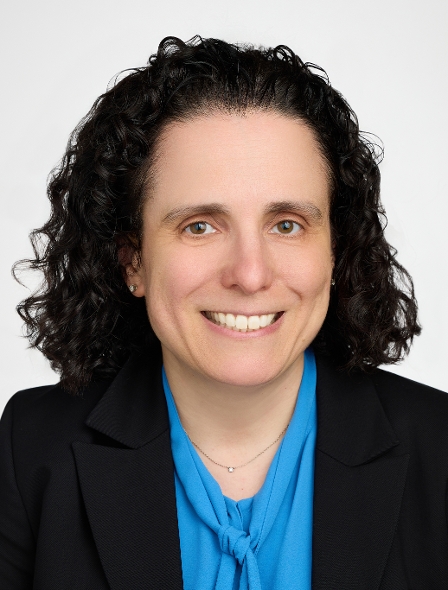
Dr. Maureen D. Martino is an Associate Professor in Psychiatry at the Icahn School of Medicine at Mount Sinai and serves as Vice Chair of Psychiatry at Mount Sinai Morningside/West. Her career includes roles as an emergency psychiatrist, in-patient psychiatrist, and director of emergency psychiatry and CPEP (Child Psychiatry Emergency Program) at various institutions including NYU Langone Health and Bellevue Hospital. Education: MD from Sackler School of Medicine (Tel Aviv University) Psychiatry Internship at Metropolitan Hospital Center Psychiatry Residency at Icahn School of Medicine at Mount Sinai Research Interests: Focuses on psychiatric emergencies, child and adolescent mental health, and clinical psychiatry. Her work emphasizes emergency department interventions and inpatient psychiatric care coordination. Hospital Affiliations: Includes Mount Sinai Beth Israel, Mount Sinai Morningside, Mount Sinai Brooklyn, Mount Sinai Queens, The Mount Sinai Hospital, and Mount Sinai West. Advising & Grants: No formal advisee list or grants mentioned.
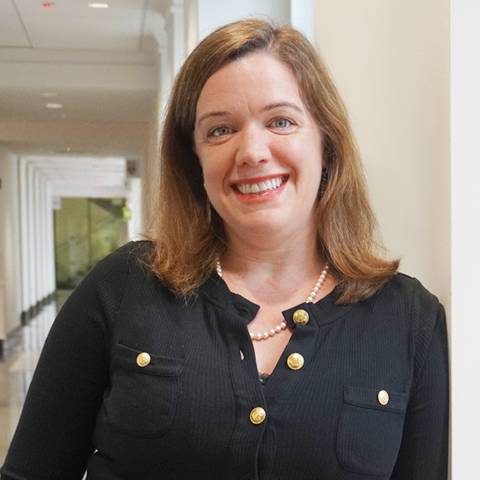
Colleen Carey is an Associate Professor at the Jeb E. Brooks School of Public Policy, Cornell University. Her research focuses on the industrial organization of healthcare systems, particularly federal regulation of health insurance markets like Medicare and Medicaid. She examines topics such as reinsurance mechanisms, risk adjustment policies, and the impact of physician-industry financial relationships on prescribing behaviors. Carey is a Faculty Research Fellow at the National Bureau of Economic Research and previously held roles including Robert Wood Johnson Scholar in Health Policy Research and Staff Economist at the Council of Economic Advisers. Education: Bachelor’s Degree: Yale University Ph.D. in Economics: Johns Hopkins University Research Interests: Federal health insurance market design (e.g., ACA marketplaces) Adverse selection mitigation strategies in subsidized insurance Pharmaceutical industry practices and physician prescribing Opioid abuse policy evaluation Social Security Disability Insurance health outcomes Recent Work Trends: Her 2020-2025 publications emphasize healthcare policy evaluation, including analyses of Medicare Advantage enrollment dynamics, racial disparities in disability programs, and the effects of prescription drug marketing on clinical decisions. She consistently bridges economic theory with applied policy analysis. Scientific Awards and Roles: Editorial Board Member, American Journal of Health Economics Robert Wood Johnson Health Policy Research Scholar (2018-2020) NBER Faculty Research Fellow (ongoing) Advising and Grants: Though no formal advisees are listed, her research often involves collaborations with institutions like the Council of Economic Advisers and NBER. She contributes to policy discussions through evidence-based insights. Labs and Teams: Collaborates extensively with NBER’s Health Economics Group and maintains affiliations with Princeton’s Center for Health and Wellbeing.
George T.-C. Chiu is a Professor in the School of Mechanical Engineering at Purdue University, with courtesy appointments in Electrical and Computer Engineering and Psychological Sciences. He holds a 50% appointment as Assistant Dean for Global Engineering Programs and Partnerships. Previously, he served as a Program Director at the NSF, managing the Control Systems Program and National Robotics Initiative. His research focuses on mechatronics, dynamical systems, and control, with applications in printing, robotics, and human-machine interaction. Education: PhD (1994), University of California, Berkeley MS (1990), University of California, Berkeley BS (1985), National Taiwan University Research Interests: Functional printing technologies for biomedical and environmental sensors Robotics and human-robot interaction Control systems for manufacturing and dynamic systems Energy-efficient sensor design His work bridges mechanical engineering, materials science, and control theory, addressing challenges in precision manufacturing and sustainable technology. Awards: Fellow, ASME (2021) Fellow, Society for Imaging Science and Technology Grants & Projects: USDA-funded projects on food safety sensors and sustainable agriculture NSF initiatives in robotics and additive manufacturing Collaborative research with industry partners like HP and the Army Labs & Outreach: Founded the Purdue FIRST Programs, mentoring K-12 students in robotics. Co-developed experiential courses for student mentors, fostering leadership and project management skills.
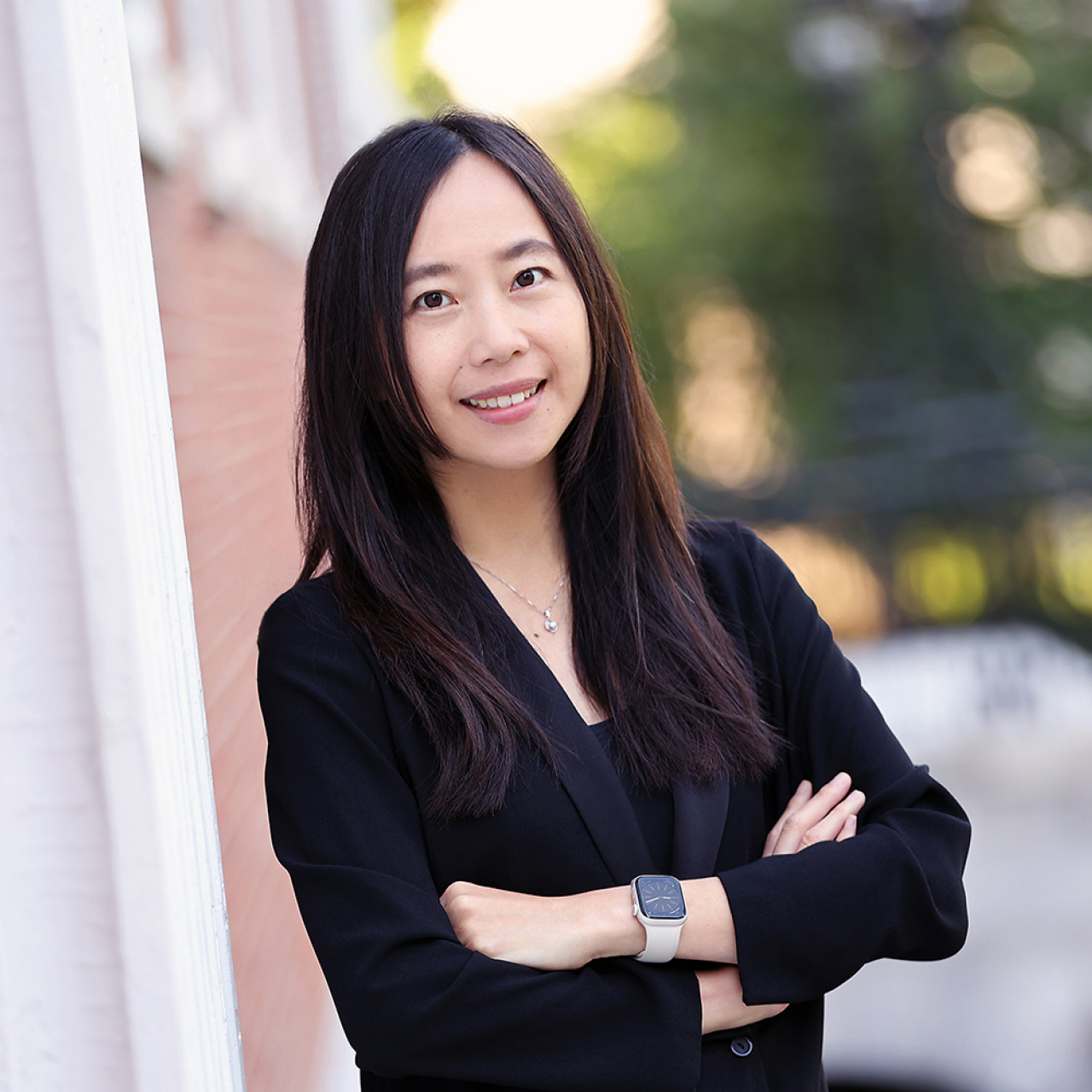
Ying Xu is an Assistant Professor at the Harvard Graduate School of Education (HGSE), specializing in the design of AI technologies to support children's language, literacy, STEM learning, and well-being. Her research emphasizes creating AI systems that act as interactive learning companions and language partners for children while fostering human-AI collaboration with educators and families. She holds a Ph.D. in Language, Literacy, and Technology from the University of California, Irvine, and previously served as an Assistant Professor at the University of Michigan from 2022 to 2024. Her work focuses on understanding how AI can complement human interactions, particularly through conversational agents integrated into media like books and educational TV programs. Collaborations include partnerships with PBS KIDS, GBH Education, and Sesame Workshop. Funded by organizations such as the National Science Foundation and Schmidt Futures, her research bridges developmental psychology, education, and human-computer interaction. Xu's studies highlight AI's potential for personalized learning while addressing ethical considerations like AI literacy and social impact. Key achievements include numerous best paper awards and recognition as an Early Career Interdisciplinary Scholar by SRCD. Her interdisciplinary approach involves designing technologies that reflect community values and linguistic/cultural diversity, ensuring equitable access to AI-driven educational tools. Xu advocates for balanced AI integration in children's lives, emphasizing the need for transparency about AI's limitations and the importance of maintaining human connections. She explores how AI can empower stakeholders (e.g., educators, parents) to co-create technologies tailored to their needs, ensuring AI serves as a complement—not replacement—for human interaction. Current projects investigate conversational AI's design principles, children's perceptions of AI, and strategies for fostering critical evaluation of AI-generated content. She also examines how AI affects social interactions and developmental processes, advocating for ethical guidelines to maximize benefits while mitigating risks.
Zhou Zhi-Hua is a Professor at Nanjing University's Department of Computer Science & Technology, serving as Standing Deputy Director of the National Key Lab for Novel Software Technology and Founding Director of LAMDA (Institute of Machine Learning and Data Mining). He holds simultaneous fellowships from ACM, AAAI, AAAS, IEEE, IAPR, IET/IEE, and CCF, reflecting his exceptional contributions to computational intelligence. His educational background includes: B.Sc. in Computer Science from Nanjing University (1996) M.Sc. in Computer Science from Nanjing University (1998) Ph.D. in Computer Science from Nanjing University (2000) Zhou's research pioneers fundamental advances in machine learning theory and applications. His seminal work on ensemble methods established new frameworks for classifier combination, while innovations in multi-label learning and anomaly detection addressed critical challenges in complex data analysis. His research bridges theoretical rigor with practical implementations across diverse domains including biometrics, data mining, and computer vision, resulting in over 150 publications and 18 patents. His textbooks "Ensemble Methods" (2012) and "Machine Learning" (2016) have become standard references in the field. Analysis of his publication trajectory reveals sustained leadership in core machine learning challenges: evolving from neural network ensembles (2002) through semi-supervised learning breakthroughs (2005) to foundational work on multi-instance learning (2012) and theoretical margin analysis (2013). His recent focus demonstrates increasing sophistication in handling complex data structures while maintaining theoretical soundness. His scientific excellence is recognized through: National Natural Science Award of China (2013) PAKDD Distinguished Contribution Award (2016) IEEE ICDM Outstanding Service Award (2016) IEEE CIS Outstanding Early Career Award (2013) Microsoft Professorship Award (2006) Simultaneous fellowships from 7 major international societies Zhou provides extraordinary service to the academic community as Executive Editor-in-Chief of Frontiers of Computer Science and Associate Editor-in-Chief of Science China Information Science. He founded the ACML conference and has chaired premier events including ICDM'16 and PAKDD'14. His leadership extends to serving as General Chair for ICDM'16, Program Chair for IJCAI'15 Machine Learning Track, and Area Chair for multiple top conferences. The available text does not specify student advising details or research grants. He directs LAMDA research group at Nanjing University, which has established itself as a global powerhouse in machine learning research, and contributes significantly to the National Key Lab for Novel Software Technology's mission of developing next-generation intelligent systems.
Prof. Martin Boeker is a Professor of Medical Informatics at the Technical University of Munich (TUM), affiliated with the TUM School of Medicine and Health. His work focuses on advancing healthcare through AI-driven solutions, interoperability frameworks, and precision medicine initiatives. Key projects include the German Medical Text Corpus (GeMTeX) and the MIRACUM DIFUTURE Alignment Hub. Expertise: Medical Informatics, AI in Healthcare, Federated Learning, Health Data Integration Key Contributions: FHIR-based systems, clinical decision support, patient-centered outcomes research Leadership: Director of the Institute for AI and Informatics in Medicine at TUM Hospital Right of the Isar Research emphasizes bridging clinical practice and data science through projects like modular health crawlers, automated guideline adherence monitoring, and cross-institutional medical NLP solutions. His work spans oncology informatics, rare disease management, and pandemic response data ecosystems. Recent articles highlight innovations in digital twins for precision oncology, federated analysis in oncology, and German-language medical NLP challenges. He collaborates internationally on EHR standardization and healthcare interoperability, contributing to the Medical Informatics Initiative (MII) and pandemic evidence ecosystems. Grants and collaborations involve the German Federal Ministry of Education and Research, European initiatives, and industry partnerships. Educational efforts focus on training future medical informatics professionals through MII competency programs.
Professor Tongming Zhou is a faculty member in the Department of Civil, Environmental and Mining Engineering at the School of Engineering, The University of Western Australia (UWA) . He serves as Director of the UWA Boundary Layer Wind Tunnel Laboratory and Program Chair for Civil Engineering , contributing to both academic leadership and industrial applications. His work bridges fundamental fluid mechanics with practical engineering challenges. Education : PhD in Fluid Mechanics from The University of Newcastle (1999) Teaching : Coordinates core units like CIVL2551, CIVL5551, and CIVL4402/CIVL3402 Hydraulics, emphasizing real-world application and industry collaboration Research Interests focus on: Suppression of vortex shedding and vortex-induced vibrations (VIV) in cylindrical structures Enhancement of VIV and galloping for renewable energy harvesting Wave resonance in floating LNG facilities Sloshing dynamics in tanks with Newtonian/non-Newtonian fluids Wind tunnel testing for industrial wind load analysis Recent Research Trends show interdisciplinary work combining experimental and numerical fluid dynamics, with applications to offshore engineering, maritime safety, and energy systems. His projects explore VIV in flexible risers, gas leakage effects on pipelines, and triboelectric nanogenerators for wind energy. Grants : ARC Grant (2019-2021): Development of novel inerter-based dampers ARC Grant (2013-2015): Local Scour below Offshore Pipelines ARC Grant (2011-2015): Vortex & Force Characteristics of Inclined Cylinders UWA Grant (2008): Control of Vortex Shedding with Helical Strakes Facilities Leadership : Upgraded UWA’s Boundary Layer Wind Tunnel , Hydraulic Laboratory Water Flume , and 6DOF Hexapod motion platform , acquiring advanced equipment like PIV systems and high-precision load cells.
Casey Reas is a Professor of Design Media Arts at the University of California, Los Angeles (UCLA), within the UCLA School of the Arts and Architecture. Previously, he served as an Associate Professor at Interaction Design Institute Ivrea (2001–2003). His academic background includes a BSc in Design from the University of Cincinnati (1996) and an MSc in Media Arts and Sciences from MIT (2001). Reas co-created the open-source programming language Processing with Ben Fry, revolutionizing visual arts and education globally. He is renowned for blending art and technology, creating generative works exhibited in institutions like the Centre Georges Pompidou and the Whitney Museum of American Art. His research focuses on computational aesthetics, algorithmic art, and digital media's intersection with music and design. Education: Bachelor of Science in Design, University of Cincinnati, 1996 Master of Science in Media Arts and Sciences, MIT, 2001 Research Interests: Reas explores the synergy between code and creativity, emphasizing generative systems, real-time visualization, and interactive installations. His work often addresses themes of randomness, pattern formation, and human-computer interaction. Notable projects include Processing language development, music video collaborations with The National, and immersive installations like Sketch Machine and Warm Up . Recent Collaborations: Music videos for The National’s Sleep Well Beast (2017), blending algorithmic visuals with Grammy-winning music. Interactive installations such as Impure Functions (2017) and Warm Up (2017), co-created with UCLA’s Conditional Studio. Public commissions like Sketch Machine (2018), an open-source drawing tool for GIPHY. Awards: Contributor to The National’s Grammy Award for Best Alternative Music Album ( Sleep Well Beast , 2018). Labs/Teams: Reas leads the Reas Studio and collaborates with UCLA’s Arts Conditional Studio, focusing on experimental software, generative art, and interdisciplinary projects.
Maj Schian Nielsen is a Senior Research Librarian at the University Library of the University of Agder. Her work focuses on multilingualism, crosslinguistic awareness, and German language pedagogy. She is affiliated with the research groups 'Media and Communication Studies' and 'Multilingualism in Society and Education (MUSE).' University of Agder Research Groups: Media and Communication Studies, MUSE Her research explores how multilingual awareness can enhance grammar instruction in German third-language (L3) teacher education programs across Denmark and Norway. Recent publications analyze curriculum structures, educational materials, and the integration of generative AI tools like ChatGPT in multilingual education contexts. Scientific output trends reveal a focus on: Cross-linguistic pedagogy L3 German acquisition Grammar teaching methodologies AI applications in language learning Teacher training for multilingual classrooms Systemic Functional Linguistics (SFL) frameworks She has not been publicly recognized with scientific awards listed in the available data.
Ghazal Aarabi is an Associate Professor at the Department of Periodontology, Preventive Dentistry and Dental Conservation within the University Medical Center Hamburg-Eppendorf (UKE). She actively participates in clinical research projects and publications focusing on oral-systemic health connections. Researcher in periodontal epidemiology Key contributor to the Hamburg City Health Study (HCHS) Principal investigator in migration health research (MuMi Study) Research Focus spans three main areas: Periodontal-Brain Interactions through inflammatory pathways Oral Health Literacy among migrant populations Oral-Cardiovascular Links in aging populations Selected Publications (2018-2022) demonstrate her work in: Periodontal disease and cerebral microangiopathy Dental care utilization during pandemics Oral health disparities in migration contexts Current Projects include: PAROCARD : Oral health and cardiovascular surrogate markers MuMi : Migrant oral health promotion Cerebral Microangiopathy study in periodontitis patients
Joel S. Hayworth is an Associate Professor in the Department of Civil Engineering at Auburn University's College of Engineering. His research focuses on environmental and ecosystem restoration, particularly in estuarine, terrestrial, and freshwater systems. He leads the Estuarine Environments Research Program (EERP), which investigates the fate of endocrine-disrupting chemicals (EDCs), PFAS, and oil spill residues in coastal environments. Dr. Hayworth's educational background includes a PhD in Civil Engineering (Hydrology/Hydraulics) from Auburn University, an MS in Hydrology from the University of Nevada, Las Vegas via the Desert Research Institute, and a BS in Geophysics from the University of California, Santa Barbara. He previously worked at the Tennessee Valley Authority Engineering Laboratory and the U.S. Air Force Research Laboratory, and founded Hayworth Engineering Science in 1999 before returning to academia in 2010. His research interests span environmental engineering, hydrology, hydraulics, estuarine science, pollutant fate and transport, and chemical fingerprinting. He has developed advanced analytical methods for detecting EDCs and PFAS in water, sediment, and biota. His work integrates field studies, laboratory experiments, and environmental modeling to understand complex hydrologic, geologic, chemical, and biological processes in human-impacted ecosystems. The 15 most recent articles highlight a strong trend in environmental contaminant analysis, particularly focusing on PFAS, oil spill residues, and endocrine disruptors. His research combines analytical chemistry with environmental modeling and field monitoring, often in collaboration with interdisciplinary teams. Key themes include the development of UHPLC-MS/MS and GC-MS/MS methods, fate and transport modeling of pollutants, and ecological risk assessment in estuarine systems. Dr. Hayworth's scientific contributions are supported by funding from agencies such as the Gulf Coast Ecosystem Restoration Council (RESTORE Council). His work has led to significant publications in journals like Science of the Total Environment , Marine Pollution Bulletin , and Water . He actively mentors students and collaborates with researchers like T.P. Clement, G.F. John, and V. Mulabagal. His projects, such as the restoration assessment of Cotton Bayou and Terry Cove, demonstrate applied science for environmental problem-solving. He has developed state-of-the-art analytical laboratories and partnered with coastal communities for long-term monitoring. His laboratory, the Estuarine Environments Research Program (EERP), conducts multi-year studies on endocrine disruptors in estuaries, develops innovative sampling and analysis methods, and trains the next generation of environmental engineers and scientists. The team works across disciplines to address complex environmental challenges in the Gulf Coast region.
Professor Peter F. Driessen is a faculty member in the Department of Electrical and Computer Engineering at the University of Victoria, with a cross-appointment in the School of Music. He holds a BSc and PhD from the University of Victoria and is a Professional Engineer (PEng). His research focuses on communication systems, signal processing, control, and interdisciplinary projects in computer music and wireless technologies. Key areas include audio/video signal processing, radio propagation, sound recording, and multimedia systems. He leads the University of Victoria Propagation Laboratory, which explores radio wave propagation and Amateur radio integration with engineering education. His work spans theoretical research and applied projects like ECOSat satellite systems, software-defined radio (SDR), and innovative musical instruments such as the Radio Drum. He supervises undergraduate and graduate projects in these domains through ELEC 499 courses. Notable contributions include the APEGBC Editorial Board Award for Best Paper (2002) and patents in wireless networking and signal processing. His teaching includes courses in signal analysis and electromagnetics, and he collaborates on interdisciplinary programs like the Music/Computer Science degree. Education: BSc in Electrical Engineering, University of Victoria PhD in Electrical Engineering, University of Victoria Research Interests: Audio and video signal processing for music and media Software-defined radio and Amateur radio technologies Satellite communication and ground station development Gesture-based interfaces and musical instrument design Error mitigation in streaming audio/video Optical and microwave-photonic systems Labs & Collaborations: Propagation Laboratory (radio wave research) UVic Experimental Radio Group (Amateur radio club) UVic Satellite Design Team (ECOSat projects) UVic Centre for Aerospace Research Grants & Awards: APEGBC Editorial Board Award (2002) Multiple US patents in wireless systems and signal processing
Matthias Parey is a Professor in the Department of Economics at the University of Surrey. He holds additional roles as a Research Fellow at the Institute for Fiscal Studies (IFS) and the Institute for the Study of Labor (IZA), a Researcher at the ESRC Research Centre on Micro-Social Change (MiSoC), and a Research Associate at ZEW. His research spans Labour economics Economics of education Micro-econometrics Inequality Economics of innovation . His recent publications analyze high-skilled migration selection, trade shocks, cannabis market size estimation, and gasoline demand elasticity. He has contributed to journals like Review of Economics and Statistics , Economica , and Journal of the European Economic Association . Scientific awards include fellowships at IFS and IZA. His work on trade shocks examines gender-specific labor supply responses to Chinese import competition, while his cannabis market research introduces a forensic economics approach using legal inputs. Earlier studies focus on maternal education impacts on child development and the long-term labor market effects of Erasmus student exchanges.
Lin Fang is a Professor and Factor-Inwentash Chair in Children’s Mental Health at the University of Toronto's Factor-Inwentash Faculty of Social Work (FIFSW). She holds a Ph.D. from Columbia University and founded the Talk It Out Counseling Clinic , which provides free mental health services to marginalized communities. Her research focuses on cross-cultural experiences, immigrant family dynamics, substance abuse prevention, and anti-Asian racism interventions. Education: Ph.D., Columbia University. Research & Projects: Lin’s work includes SSHRC-funded initiatives like Project APPA (combating anti-Asian racism through parent collaboration), This is My Regent Park (youth perspectives on urban redevelopment), and My Script My Voice (addressing anti-Asian racism among Asian youth). She employs community-based participatory and arts-based methodologies. Developed web-based intervention programs for mental health services. Explores neighborhood and structural factors impacting youth well-being. Grants & Partnerships: Principal Investigator for SSHRC grants, collaborating with organizations like Baycrest and Hong Fook Mental Health Association. The Talk It Out Clinic has trained 39 MSW students, serving over 450 clients in Toronto. Awards: Recipient of the 2015-2016 FIFSW Teaching Award for integrating clinical practice with research in pedagogy. Community Engagement: Advocates for mental health access in racialized communities, particularly during the pandemic. Her work bridges academia and grassroots organizing, emphasizing social justice and equity.
David Jerison is a Professor of Mathematics at the Massachusetts Institute of Technology (MIT), where he conducts research in Fourier analysis and partial differential equations. His work focuses primarily on free boundary problems and, more recently, on internal Diffusion Limited Aggregation (internal DLA), a stochastic growth model. He maintains an active research program with numerous publications in leading mathematical journals. Professor Jerison's research spans several interconnected areas of mathematical analysis. His primary interests include Fourier analysis and partial differential equations, with particular emphasis on free boundary problems. In recent years, he has expanded his research to include internal Diffusion Limited Aggregation, a stochastic growth model that has connections to probability theory and mathematical physics. His work often bridges geometric analysis, spectral theory, and probabilistic methods, demonstrating the deep connections between different branches of mathematics. Analysis of Professor Jerison's recent publications reveals a consistent focus on geometric aspects of partial differential equations, particularly free boundary problems. His research shows progression from classical PDE theory toward more stochastic and probabilistic approaches, as evidenced by his work on internal DLA. The publications demonstrate interdisciplinary connections between mathematical analysis, probability theory, and mathematical physics, with applications ranging from geometric measure theory to quantum mechanics. Professor Jerison is actively involved in teaching and mentoring at MIT. He has taught courses including Differential Equations (18.03), Fourier Analysis and Applications (18.103), and Differential Analysis (18.155). He also directs the Summer Program for Undergraduate Research (SPUR), which is exclusively for MIT undergraduates, and organizes the mathematics section of the Research Science Institute (RSI) for high school students. His teaching materials are available through MIT's Open Courseware platform, indicating his commitment to educational outreach and accessibility.