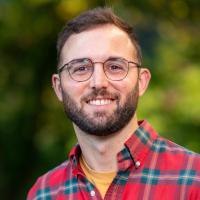
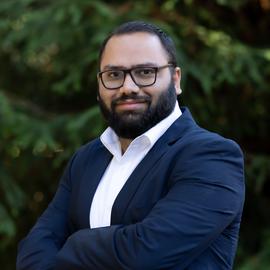
Trevor Goodyear is an Assistant Professor at the University of British Columbia (UBC) Faculty of Applied Science, School of Nursing. His research explores substance use, mental health, and health equity among marginalized populations, particularly 2S/LGBTQ+ youth and people who inject drugs. Education: MSN, MPH, PhD Research Interests: Harm reduction, LGBTQ+ health, mental health, public health, health equity, social determinants of health His recent work examines harm reduction strategies, structural vulnerabilities, and health narratives in urban drug scenes. Publications analyze cannabis use, overdose prevention, conversion practices, and the intersection of gender identity with substance use. His research employs qualitative methods like photovoice and narrative analysis to center marginalized voices. Key trends in his articles include the role of stigma in healthcare, policy implications of substance use research, and the impact of the COVID-19 pandemic on mental health disparities. He advocates for evidence-informed policies and community-driven interventions to address systemic inequities.
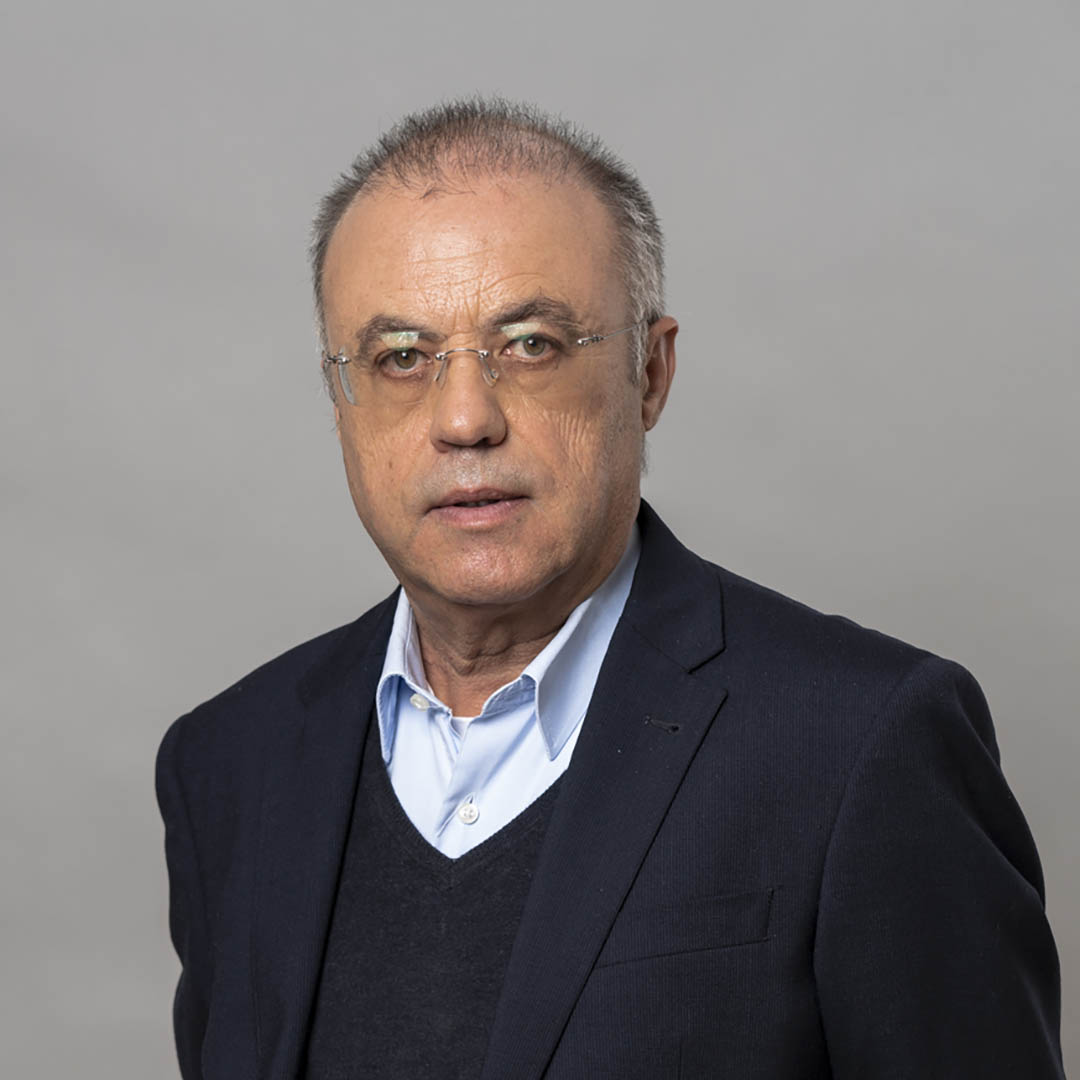
Nina Vollenbroker serves as Associate Professor of Architecture and Director of the Architectural Design PhD programme at University College London's Bartlett School of Architecture. A registered architect in the UK (ARB) and Germany (Architektenkammer NRW), she also acts as editor for Architectural Research Quarterly since 2020 and serves on the Society of Architectural Historians’ advisory committee on accessibility. Her educational background includes a PhD in Architectural History from UCL, along with multiple UCL degrees: Master of Architecture (2005), Certificate (2004), Master of Science (2002), Diploma (2001), and Bachelor of Architecture from Oxford Brookes University (1997). Vollenbroker's research centers on the intersection of deafness, disability, and architectural design, challenging normative spatial paradigms through historical and contemporary lenses. Her current Paul Mellon Centre-funded project "Hide and Speak" examines the first purpose-built deaf schools in 19th-century Britain, revealing how architecture actively shaped cultural understandings of deafness. She extends this work through "Deafening Architectural Modernism," which re-evaluates Adolf Loos's contributions through the lens of his hearing loss, demonstrating how sensory experience fundamentally informs spatial design. Her broader research encompasses migration studies, gendered domestic spaces, and critical examinations of architectural exclusion. Her recent publications span architectural history, disability studies, and material culture, with significant contributions to edited volumes on deafness in architecture (University of Illinois Press, 2025), mobile home-making (Brill, 2025), and the American West (Routledge, 2025). These works consistently demonstrate her methodological approach of centering marginalized perspectives within architectural discourse. Wilhelm Award from Pioneer America Society for outstanding research in material cultures studies Paul Mellon Centre Mid-Career Fellowship Royal Institute of British Architects Research Award British Academy Research Fund Award Vollenbroker supervises doctoral students in architectural design while securing major research funding from bodies including the Arts and Humanities Research Council, British Academy, and Royal Institute of British Architects. Her international collaborations include work with the Lebanese NGO Biladi on migration studies and knowledge-exchange programs funded by The Council for British Research in the Levant. She regularly convenes major conference sessions, including at the Society of Architectural Historians and Architectural Humanities Research Association conferences, and presents at institutions worldwide including Columbia University, Yale University, and Heidelberg University. Her research group actively engages with disability advocacy organizations and architectural practitioners to translate historical insights into contemporary inclusive design practices, particularly through her editorial work on special journal issues addressing disability and architecture.
Associate Professor at the University of Lisbon's School of Economics and Management (ISEG) since 1983, João Carlos Lopes specializes in Portuguese economic analysis with emphasis on sectoral dynamics, European integration impacts, and circular economy applications. His institutional affiliation spans decades of active teaching and research within Portugal's premier economics institution. Research interests center on Input-Output Analysis , Circular Economy transitions , and Portuguese industrial history , particularly the cork sector. His work examines EU structural funds' regional impacts, migration economics through consumption patterns, and austerity policy consequences. Key thematic areas include: Macroeconomic policy evaluation in peripheral Eurozone economies Historical evolution of Portuguese industrial clusters EU migration's economic consequences via input-output modeling Rural innovation driven by young farmers in peripheral regions His 15 most recent publications (2013-2024) reveal a clear trajectory toward circular economy applications in Portuguese automotive and construction sectors, while maintaining core focus on EU integration challenges. Articles consistently employ Portuguese case studies to address broader European economic questions, with strong methodological emphasis on input-output frameworks and historical institutional analysis. Supervising over 40 Master's students since 2010, his advising portfolio shows thematic consistency with research interests: Circular Economy : 7 theses on automotive, construction, and pharmaceutical sectors EU Policy Analysis : 12 theses on migration, fiscal policy, and structural funds Portuguese Industry : 9 theses on cork, rubber, and regional specialization Teaching responsibilities include Macroeconomics I and EU Economics courses, with documented instruction from 2007-2025 across undergraduate and graduate programs.
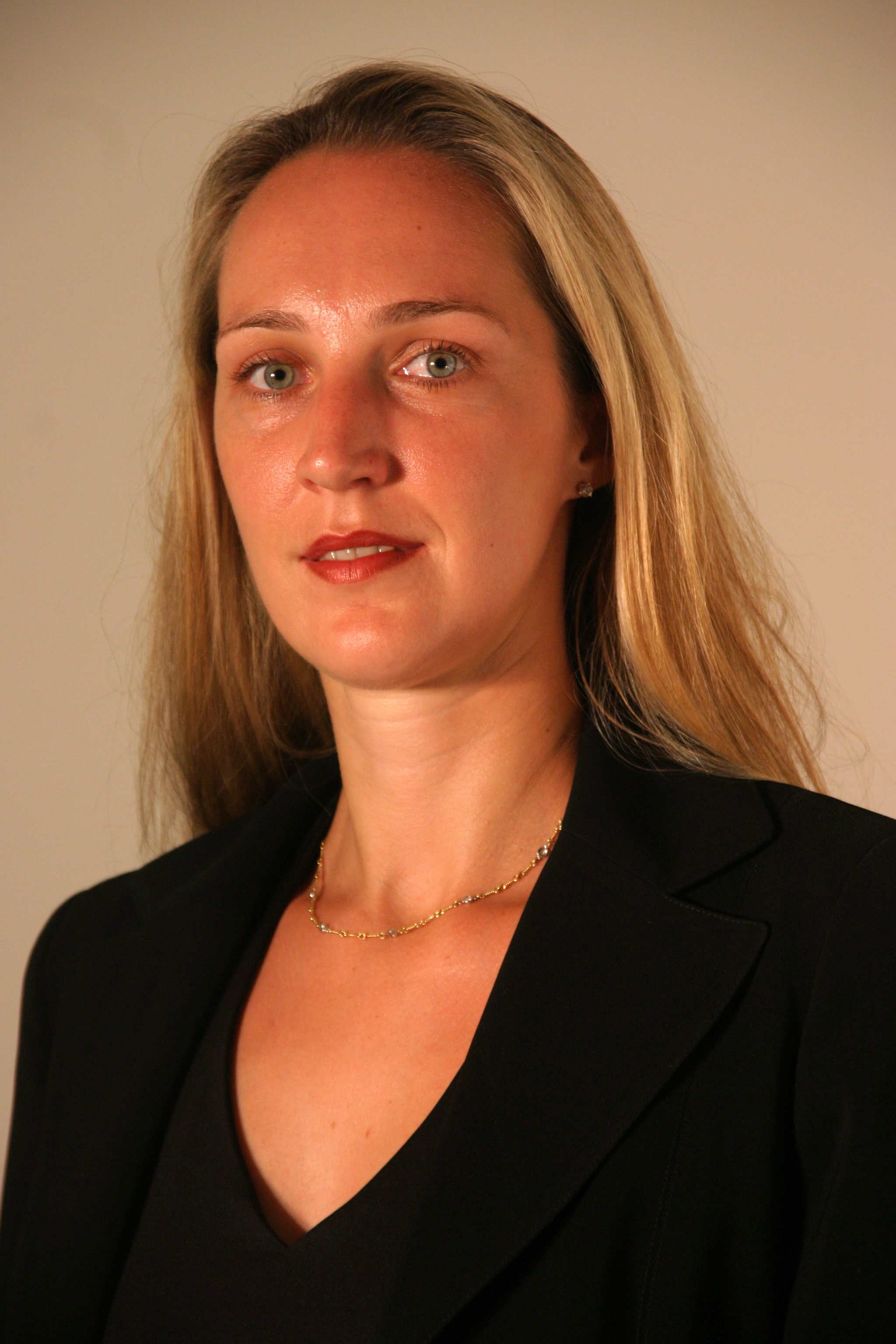
Dr. Mel Marquis serves as Senior Lecturer and Deputy Associate Dean (Engagement) at Monash University's Faculty of Law. An internationally recognized scholar in competition law and policy, Dr. Marquis is also an Advance HE Fellow (FHEA) and actively contributes to global competition law discourse through research, teaching, and international collaborations. Dr. Marquis earned his educational qualifications from prestigious institutions: Doctorate from the Institute of International and European Law at the University of Macerata, Italy LL.M from the European University Institute (Florence) J.D. magna cum laude from Seton Hall University (Newark) B.A. in political science from the University of Washington (Seattle) Dr. Marquis's research focuses on competition law and policy across multiple jurisdictions, with particular expertise in Australian competition law, East Asian regulatory systems, and ASEAN competition frameworks. His work examines the intersection of cultural contexts and competition enforcement, especially Confucian influences on competition law in East Asia. He has made significant contributions to understanding vertical agreements in the ASEAN Economic Community and the evolution of merger control frameworks. Analysis of Dr. Marquis's recent publications reveals a strong emphasis on comparative competition law, with particular focus on Australia, East Asia, and the ASEAN region. His work bridges legal theory and practical enforcement challenges, addressing contemporary issues like digital markets, merger control reforms, and the cultural dimensions of competition enforcement. The publications demonstrate interdisciplinary approaches combining legal analysis with economic perspectives. Dr. Marquis has received numerous scientific awards and recognitions: Dean's Award for Excellence in Research, 2025 Advance HE Fellow (FHEA) since 2024 Grant recipient for Competition Law Principles for Vertical Agreements in the ASEAN Economic Community (2024) Grant recipient for Distribution Agreements research (2023) Antitrust Writing Awards - Named to Jury and Academic Steering Committee (2021-2022) Monash Teaching Award, 2020 academic year Dr. Marquis actively supervises PhD students in competition law and related fields, welcoming research with global, comparative, interdisciplinary, and Australian perspectives. His grant portfolio includes significant projects funded by the Australian Commonwealth and administered by the ACCC, focusing on competition law applications in ASEAN countries. He has served as an International Expert for the Trade Competition Commission of Thailand and worked with international organizations including the United Nations, Asian Development Bank, World Bank, and Italian Ministry of Foreign Affairs. Dr. Marquis is Convenor of the Monash High Academic Achievers Program and a member of the Executive Board of the Centre for Commercial Law and Regulatory Studies (CLARS). He co-organizes inter-faculty events with the Monash Business-Economics Faculty and serves as a University of Oxford Ambassador for the Value of Competition. Additionally, he is a member of the East Asia Academic Network on Competition Policy and Law and the Virtual ASEAN Competition Research Centre.
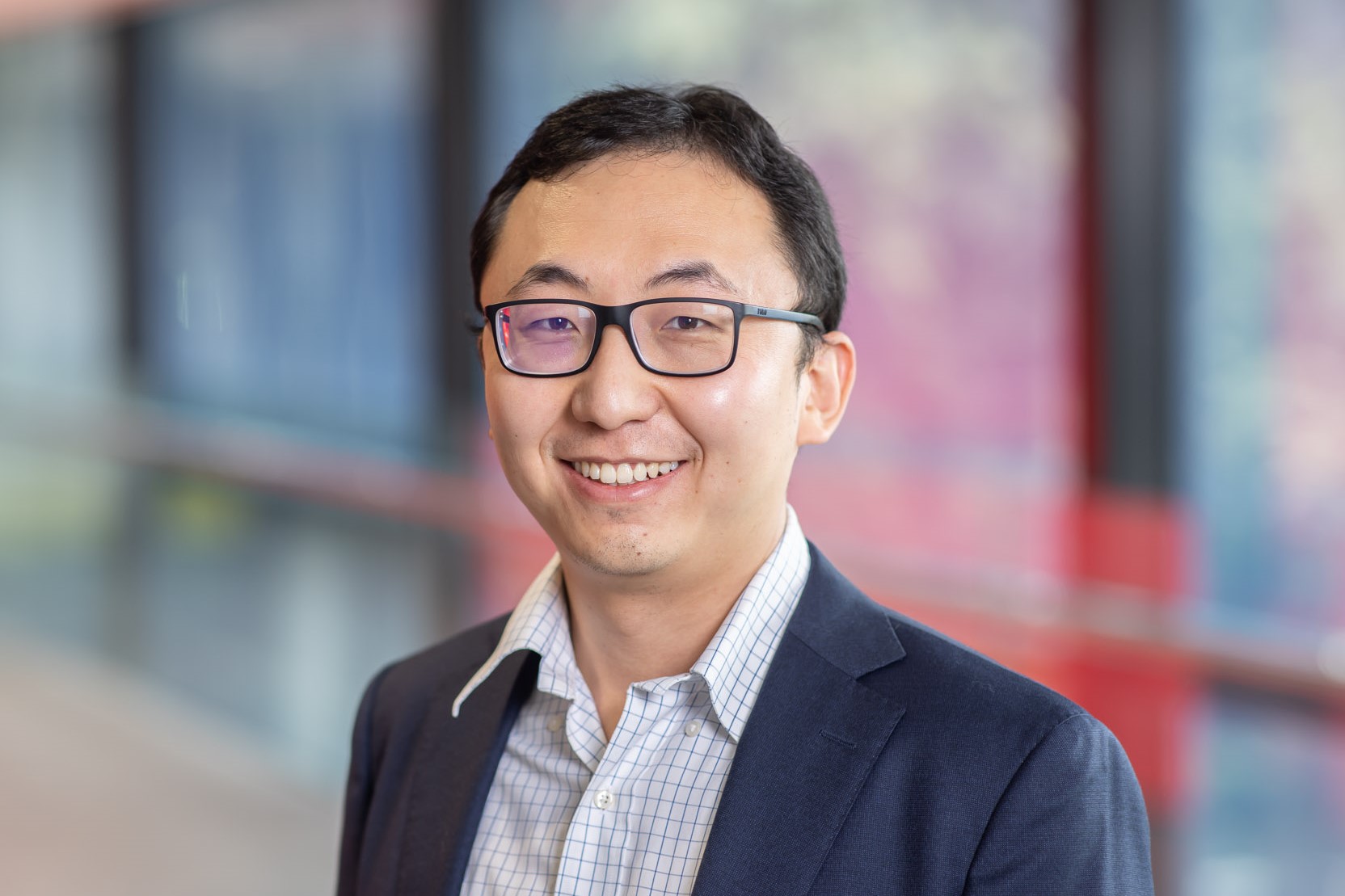
Dr. Guangyao Si serves as an Associate Professor at the School of Minerals and Energy Resources Engineering, University of New South Wales (UNSW). With extensive international experience studying and working across three continents, he has established himself as a prominent researcher in mining engineering disciplines. His educational background includes graduating as the top student from China University of Mining Technology in 2010, followed by a PhD at Imperial College London under Professor Sevket Durucan. After completing his thesis in 2015, he continued as a Research Associate at Imperial College London until December 2017, when he joined UNSW. Mining Engineering Mine Ventilation Rock Mechanics Mine Safety Coal Mine Methane Geomechanics and resources geotechnical engineering Applied geophysics Dr. Si's research program focuses on developing safer, smarter, and more sustainable mining technologies. His work spans coal seam gas capturing and utilization, goaf management, spontaneous combustion prevention, multiphysics coupled simulation, mining-induced seismicity management, and machine learning applications in mining. His research integrates reservoir engineering, geophysics, geostatistics, and geomechanics to address modern mining industry challenges. With over AUD 12 million secured in research funding as lead or co-investigator, his projects include significant ARC Linkage and ACARP grants addressing critical mining safety and efficiency issues. His work demonstrates strong industry relevance through collaborations with major mining companies including Anglo American, Glencore, BMA, South32, and Centennial. Research Excellence (Early Career) Award-Faculty of Engineering UNSW Excellent Scientific Editor (JRMGE, 2022) Best Reviewer (IJCS&T, 2022) High Impact Paper Award (Engineering Journal) MINESOC Best Lecturer (2018) Unearthed Young Innovator Award (2018) Dr. Si actively supervises numerous PhD students across mining health and safety, mining geomechanics, mining-induced seismicity, and mine ventilation research areas. He teaches core mining engineering courses including Mining Geomechanics (MINE3310), Mine Ventilation (MINE3510), Mining Systems (MINE3430), and Advanced Mine Ventilation (MINE4510). He serves on the Editorial Board of the Journal of Rock Mechanics and Geotechnical Engineering and is a member of the International Rock Mechanics Society, Australasian Institute of Mining and Metallurgy, and Society of Mining, Metallurgy and Exploration.
Ada Gavrilovska is a Professor at Georgia Tech's School of Computer Science under the College of Computing. Her work focuses on systems software for emerging technologies, including hybrid memory systems, edge computing, and cloud infrastructure. She leads projects in the PRISM Center and ADA Center , with funding from NSF, DoE, SRC, and industry leaders like Cisco and VMware. Education: PhD in Computer Science, Georgia Tech (2004) Research Interests: Designing systems for new hardware and applications, including edge computing, heterogeneous memory management, and LEO satellite platforms. Her work bridges low-level OS mechanisms with high-level distributed systems challenges. Recent Publications highlight trends in LEO satellite resource scheduling Edge-based ML preprocessing Hybrid memory OS abstractions Disaggregated graph analytics Compiler-assisted performance optimization Scientific Awards: Best paper, NFV World Congress (2016) Spotlight paper, IEEE Transactions on Cloud Computing (2014) ISCA-50 25-year retrospective (2023) Advising & Grants: Ada has mentored over 15 PhD students and 10 MS students, with research supported by NSF, DoE, SRC, and industry grants. She serves as PI in the SRC/DARPA PRISM Center.
Sainyam Galhotra is an Assistant Professor in the Department of Computer Science at Cornell University. His research focuses on developing data science tools for effective and responsible analytics, leveraging techniques from causal inference, data management, theoretical computer science, machine learning, and human-computer interaction to address challenges in trustworthy system design including robustness, explainability, and fairness. Education: Postdoc: University of Chicago PhD: University of Massachusetts Amherst (supervised by Barna Saha) BTech: Indian Institute of Technology Delhi (IIT Delhi) (supervised by Prof. Amitabha Bagchi) Research Interests: Dr. Galhotra's research spans several interconnected areas in data science and artificial intelligence. His work primarily focuses on Responsible Data Science , where he develops methods to ensure that data-driven systems operate fairly and transparently. Within this broad area, his specific interests include: Causal Inference techniques for understanding cause-effect relationships in complex data Algorithmic Fairness approaches to mitigate bias in machine learning systems Explainable AI methods that make black-box models more interpretable Data Management systems for efficient and reliable data processing Entity Resolution techniques for integrating data from multiple sources Trustworthy System Design that addresses robustness, explainability, and fairness His recent publications demonstrate a clear trend toward developing frameworks that combine causal reasoning with practical data management systems, particularly focusing on how to make data-driven decisions more transparent and equitable. The intersection of database systems with fairness considerations appears to be a particularly active area of his research. Scientific Awards: Rising Star in Data Science at the Data Science Institute, UChicago (Oct 2021) Computing Innovation Fellowship Award Recipient (by CRA, CCC and NSF) (Apr 2021) DAAD AInet Fellow (Feb 2021) ACM SIGMOD Entity Resolution Programming Contest – Top 5 finalist (May 2020) Most reproducible paper award in SIGMOD 2018 and 2019 (Jun 2019) First recipient of Krithi Ramamritham Computer Science Scholarship (Jun 2019) Best paper award in SIGSOFT FSE 2017 (May 2017) Dr. Galhotra is actively seeking students to collaborate with on his research projects. His work has been supported by various fellowships and awards, including the prestigious Computing Innovation Fellowship. He has mentored several students through his research projects, with a focus on developing the next generation of data scientists who can build responsible and trustworthy systems. His research group appears to focus on the intersection of database systems and responsible AI, developing tools like HypeR for causal reasoning, Ver for view discovery, and Nexus for correlation discovery in spatio-temporal data. This work suggests a cohesive research agenda centered around making data systems more transparent, fair, and user-friendly.
Professor Heinrich Liechtenstein is a full professor in the Department of Financial Management at IESE Business School. He teaches in MBA and executive education programs, specializing in entrepreneurial venture financing, wealth management, and entrepreneurial family governance. His academic work bridges theoretical research with practical application in the finance industry. His educational background includes: Ph.D. in Economics and Business Administration from the University of Vienna MBA from IESE Business School, University of Navarra B.Sc. in Economics and Business Administration from Karl-Franzens-Universität Graz European Financial Analyst (CEFA) certification Professor Liechtenstein's research focuses on private equity, venture capital, and family wealth management. His work examines operational value creation in private equity, investment impact, and governance structures for entrepreneurial families. He has developed country attractiveness indices for venture capital and private equity investments, providing valuable tools for institutional investors evaluating global opportunities. His publication record shows a consistent focus on practical finance applications, with particular emphasis on family offices, venture capital fund selection criteria, and country-level investment climates. His research often involves collaboration with practitioners and addresses real-world challenges faced by investors and family businesses. Professor Liechtenstein brings significant practical experience to his academic work, having served at Liechtenstein Global Trust working with high-net-worth individuals, advised families at Boston Consulting Group, and founded and sold two successful companies. He currently serves on the boards of several family foundations.
Folker Hanusch is a Professor and Vice Dean at the Faculty of Social Sciences, University of Vienna, where he also serves as Vice-Director of Studies for Mass Media and Communication Science. He is based in the Department of Communication and teaches advanced seminars on journalism theory, research methods, and master's level courses. His educational qualifications include: BA (Hons) PhD Professor Hanusch's research focuses on: Journalistic cultures and role perceptions across national contexts Lifestyle journalism and boundary work with peripheral actors Cultural impacts on journalistic practices in Pacific Islands and Austria Phenomenological approaches to media trust and social identity Digital transformation challenges including audience analytics Commercial pressures on journalistic autonomy His recent publications (2024-2025) demonstrate concentrated exploration of peripherality in journalism, showing how lifestyle journalists negotiate authority against influencers while navigating platformization and commercial demands. Cross-cultural comparisons reveal how local contexts fundamentally shape journalistic values and practices. As Vice-Director of Studies, he oversees academic programs but no specific student advisees are documented in available sources.
Adam M. Kleinbaum is Professor of Leadership and Organizations at the Tuck School of Business, Dartmouth College, where he teaches MBA courses in organizational behavior, social networks, and leads global expeditions to Israel. He also serves as interim faculty chair for Health Care Management Education at Dartmouth, teaching in both the Masters in Healthcare Delivery Science and Masters of Health Administration programs, as well as an organizational behavior class in the Thayer School of Engineering. Dr. Kleinbaum holds a DBA from Harvard University (2008) and an AB from Harvard College (1998). Prior to joining Tuck, he served as a post-doctoral fellow at Harvard Business School. His research examines the antecedents and evolution of social networks in organizations, investigating how formal and informal structures, career history, personality, and even brain structure shape network formation. A second research stream applies network science to study diversity, equity and inclusion practices. His work has been published in top journals including Nature Communications , Administrative Science Quarterly , Organization Science , and Strategic Management Journal . Analysis of his publications reveals consistent focus on network dynamics within organizational contexts, with increasing attention to DEI applications and remote/hybrid work implications in recent years. His work bridges theoretical organizational research with practical business applications. 2018 ASQ Award for Scholarly Contribution for 'Organizational Misfits' Featured in 2018's 'Top Ten Insights from the Science of a Meaningful Life' Third most-read Life and Biological Sciences paper in Nature Communications (2018) Recognized as one of Poets & Quants' Best 40-Under-40 MBA Professors Professor Kleinbaum serves as Deputy Editor at Administrative Science Quarterly , with previous editorial roles at Management Science and Academy of Management Annals . He co-founded the Dartmouth Interdisciplinary Network Research (DINR) Group, which brings together scholars from multiple disciplines to advance network science applications. His research has been featured in major media outlets including the New York Times , Wall Street Journal , Scientific American , and The Atlantic .
Yang P. Liu is an Assistant Professor in the Computer Science Department at Carnegie Mellon University's School of Computer Science. Previously, he was a Postdoctoral Member at the Institute for Advanced Study and earned his PhD from Stanford University under the supervision of Aaron Sidford. He completed his undergraduate studies at MIT, graduating in May 2018. His educational background includes: PhD in Computer Science, Stanford University (Advisor: Aaron Sidford) Bachelor's degree, Massachusetts Institute of Technology (graduated May 2018) Dr. Liu's research spans the intersection of mathematics and computer science, with particular focus on graph algorithms , optimization , high-dimensional geometry , and additive combinatorics . His work often develops novel algorithmic techniques that bridge theoretical insights with practical applications. He has made significant contributions to areas such as convex optimization, linear programming, and combinatorial problems. His teaching includes courses like "A Principled Approach to Optimization" (CS 15-759), which covers rigorous treatments of convex optimization topics including gradient descent, interior point methods, linear regression, linear programming, and sparsification. His extensive publication record in top-tier conferences (FOCS, STOC, SODA) demonstrates a consistent focus on developing almost-linear time algorithms for fundamental graph problems, optimization techniques, and combinatorial theorems. Recent work shows increasing emphasis on combinatorial lines, corners theorem, and k-CSP approximability, while maintaining strong connections to optimization theory and graph algorithms. Dr. Liu has received notable recognition for his work: National Defense Science and Engineering Graduate (NDSEG) Fellowship (2018-2021) Google PhD Fellowship (2022-2023) Best Paper award at FOCS 2022 for "Maximum Flow and Minimum-Cost Flow in Almost Linear Time" Best Student Paper at STOC 2021 for "Discrepancy Minimization via a Self-Balancing Walk" His research has been supported by prestigious fellowships including the NDSEG Fellowship and Google PhD Fellowship. His work on graph algorithms, optimization, and combinatorics involves collaborations with researchers across theoretical computer science and mathematics. His publications often involve co-authors from multiple institutions, suggesting active research collaborations across the field. Dr. Liu maintains an active research program with a focus on developing efficient algorithms for fundamental computational problems. His recent work continues to push the boundaries of what's computationally feasible in graph algorithms, optimization, and combinatorial mathematics, with particular emphasis on achieving almost-linear time complexity for challenging problems.
Gareth Hall is a Senior Lecturer in Psychology at Aberystwyth University's Department of Psychology, where he has been an established member since the department's founding in 2007. He holds a PhD from Glamorgan University and is a Chartered Member of the British Psychological Society (BPS) and a Fellow of the Higher Education Academy (FHEA). His academic career includes significant administrative roles such as Examinations Officer (2007-2014, 2016), Senior Tutor (2014), and Acting Director of Admissions and Recruitment (2009, 2011). Dr. Hall's research focuses on social psychology with particular expertise in social identity theory applied to real-world contexts. His work spans sport psychology, examining sport for development programs, intergroup behavior in fandom, and well-being in physical culture communities like CrossFit. He has pioneered research testing laboratory theories in real-world settings, challenging traditional experimental paradigms through creative methodologies that incorporate digital technologies and interdisciplinary approaches. His publication record shows consistent output since 2006, with significant contributions in 2019-2023 focusing on sport psychology applications in Brazil, forensic psychology, and educational technology. His work demonstrates a clear trajectory toward interdisciplinary collaboration, particularly in sport for development contexts and the application of social identity theory to complex social issues. Scientific Awards and Recognition: Teaching and Learning Improvement Award from Aberystwyth University (2011) Active editorial roles including for Frontiers in Sports and Active Living (2021) and Bulletin of Latin American Research (2019) Dr. Hall has secured research funding from prestigious organizations including the Economic and Social Research Council (2018) and British Council (2015). His external engagements include committee membership with the British Psychological Society's Undergraduate Education Committee (2015-present), AQU Catalunya (2022-2023), and visiting researcher positions at the University of Padua (2017-2018). His work contributes to multiple UN Sustainable Development Goals, particularly those related to social development and inclusion.
Stefaan Smis is a Professor at the Faculty of Law and Criminology of the Vrije Universiteit Brussel . He is also a part-time Reader at the University of Westminster , where he teaches International Criminal Law and related courses. His research focuses on International Law , Human Rights , and International Humanitarian Law , with a particular emphasis on the prosecution of grave human rights violations and regional integration in Africa. He has been actively involved in academic cooperation, including founding the Centre régional des droits de l’homme et de droit international humanitaire in the Democratic Republic of Congo. His editorial roles include serving as Editor-in-Chief of the Human Rights & International Legal Discourse journal and a member of the editorial board of the Revue de droit africain . Scientific Awards: Fellow of the International Law Association's Committee on Indigenous Peoples (2008) Fellow of International Legal Materials (1998) Founding member of VORMEN (Vlaamse Organisatie voor Mensenrechteneducatie) (2000) Research Trends: His recent publications address transnational ecological conflicts, climate litigation, and regional African courts tackling global challenges. He often bridges human rights law with environmental and climate justice frameworks. Teaching and Supervision: He has supervised PhD candidates such as Holvoet, M. and taught at institutions including the University of Georgia , University of Ghent , and Université Catholique de Bukavu in the Democratic Republic of Congo.
Sarah E. Stein is an Associate Professor and Deloitte Foundation Faculty Fellow in the Department of Accounting and Information Systems at Virginia Polytechnic Institute and State University (Virginia Tech). She serves as Director of the Ph.D. Program within the Pamplin College of Business. Her academic journey includes a Ph.D. from the University of Missouri, a B.S. and M.S. in Accounting from Truman State University, and CPA licensure in Colorado. Prior to academia, she worked as an audit manager at Deloitte in Denver. Education: Ph.D., University of Missouri; B.S. and M.S., Truman State University; CPA (Colorado) Roles: Deloitte Foundation Faculty Fellow, Director of Ph.D. Program Dr. Stein’s research focuses on auditor expertise, corporate governance, auditing networks, and financial reporting challenges. Her work has been published in top journals like The Accounting Review and Auditing: A Journal of Practice & Theory . She received the 2019 Best Paper Award in Issues in Accounting Education and the 2020 Innovation in Auditing Education Award for her data visualization audit case. Her recent articles (2023–2025) highlight themes such as audit committee responsibilities, CFO-audit partner dynamics, and small accounting firm strategies. Her teaching includes graduate auditing courses and PhD seminars. Research trends in her articles emphasize audit quality, governance evaluation, and emerging technologies in auditing. She actively contributes to professional standards through commentaries on PCAOB releases. Awards: 2019 Best Paper Award, 2020 Innovation Award, Deloitte Doctoral Fellowship Dr. Stein advises the Ph.D. program and collaborates with industry on audit innovation. Her lab focuses on auditing education and case development, reflecting her commitment to bridging academic research and practical application.
Professor Line Roald is a faculty member in the Department of Electrical and Computer Engineering at the University of Wisconsin-Madison. Her research focuses on power system optimization, renewable energy integration, grid resilience, and wildfire risk mitigation using stochastic optimization and data-driven methods. Education : PhD (2016), MS (2012), BS (2009) from ETH Zurich Key Research Areas : Power Systems Optimization, Renewable Energy Integration, Wildfire Risk Mitigation, Stochastic Programming, Grid Decarbonization Her work addresses critical challenges in sustainable energy systems, including balancing grid efficiency and risk, optimizing electrolyzer scheduling for flexibility, and predicting cascading blackout severity using graph neural networks. She has developed frameworks for carbon intensity comparison and wildfire risk assessment in power systems. Scientific Awards : 2024 Inclusion, Equity and Diversity in Engineering Award 2024 Vilas Faculty Early Career Investigator Award 2023 IEEE Power Tech Best Student Paper Award 2021 NSF CAREER Award 2019 MTLE Fellow Professor Roald mentors graduate students and teaches courses including Introduction to Optimization and On-Line Control of Power Systems . Her publications highlight innovative approaches to grid security, carbon-efficient energy markets, and climate resilience in infrastructure systems.