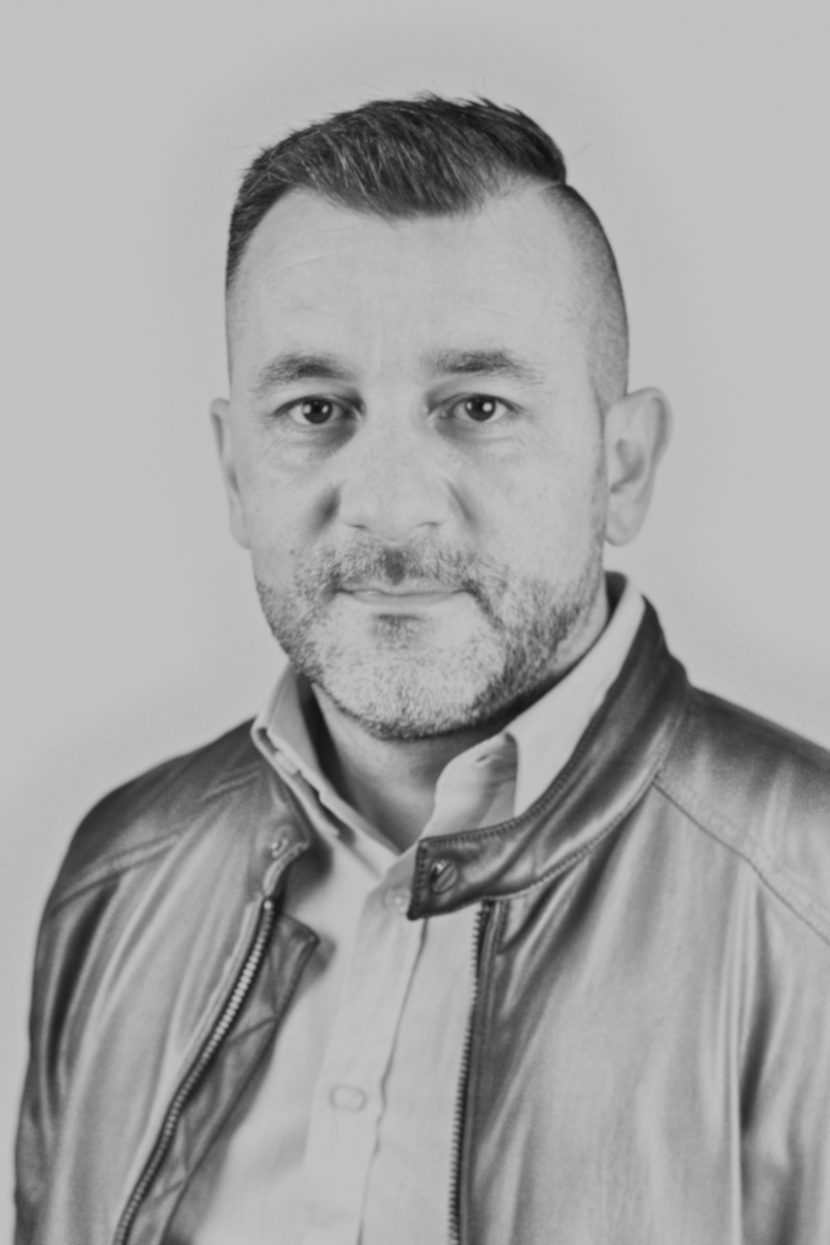
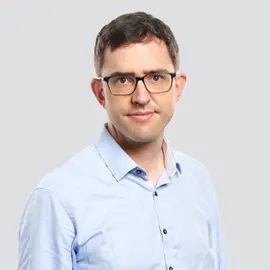
Robert Blażlak is affiliated with the Faculty of Organization and Management at Lodz University of Technology, working within the Institute of Marketing and Sustainable Development. His role involves active participation in academic functions, including serving as a Council Member of the Management Engineering Study Programme. University: Lodz University of Technology School: Faculty of Organization and Management Department: Institute of Marketing and Sustainable Development Blążlak’s research focuses on innovation management , technology transfer and marketing , processes management , and marketing management . His work often examines how innovation and sustainable practices intersect in business contexts, particularly within SMEs and regional ecosystems. His recent publications highlight trends in business innovation , with emphasis on technology transfer mechanisms , innovation ecosystems , and marketing strategies . These works span topics like closed-loop supply chains, digital branding, and challenges in online consumer behavior.
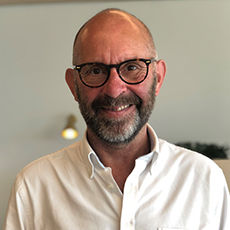
Alen Biskupović , Vice Dean for Study Programmes and Associate Professor in Theatre Studies at the Academy of Arts and Culture (Josip Juraj Strossmayer University of Osijek), specializes in theatre history, drama criticism, and cultural identity. Since 2008, he has taught courses on drama and theatre history, while contributing extensively as a theatre critic to platforms like Kazalište.hr and Hrvatsko glumište. Education: PhD in Humanities (2014) and MA from Faculty of Humanities and Social Sciences (2006). Research: Focuses on marginalized aspects of theatre criticism, German-language theatre in Croatia, and cabaret studies, with a 2019 monograph Osječka kazališna kritika 1902–1945 . Publications: Over 20 scholarly works, including analyses of WWI's impact on theatre, digital media's influence on criticism, and Croatian dramatists like Miro Gavran. Editorial Roles: Former editor-in-chief of Artos journal and contributor to international theatre publications. Key Contributions: Systematizes Osijek's theatre criticism, challenges Zagreb-centric narratives in Croatian theatre scholarship, and explores interdisciplinary approaches to cabaret as a reflection of crisis-era cultural dynamics.
Patrick Dorin is an Assistant Professor in the Department of Mechanical Engineering at Clemson University's College of Engineering, Computing and Applied Sciences. He joined the department in August 2025 after serving as a Postdoctoral Research Fellow at the University of Michigan. His office is located in 243 Fluor Daniel Building, and he can be reached at (864) 656-6851 or padorn@clemson.edu. Ph.D., University of Michigan, 2023 M.S.E., University of Michigan, 2020 B.S., University of Notre Dame, 2015 Dorin's research focuses on controlling and harnessing vibrations and elastic waves using architected metamaterials. His work explores structural dynamics, wave propagation, topological mechanics, and physical intelligence to develop advanced systems for energy harvesting, sensing, vibration/noise mitigation, structural health monitoring, and information processing. His recent publications highlight innovations in 3D topological metamaterials, mechanical logic implementation, and piezoelectric wave control systems. These works demonstrate expertise in multimodal wave manipulation, low-frequency elastic wave engineering, and programmable material architectures.
Juho Vesa serves as an Academy Research Fellow and Doctoral Programme Supervisor in the Department of Media and Communication Studies at the University of Helsinki's Faculty of Social Sciences. His research examines how interest groups navigate political and media landscapes to influence policy, with particular focus on corporate lobbying, media visibility dynamics, and network-based political strategies across diverse institutional contexts. His primary research interests include interest group politics , lobbying mechanisms in corporatist systems , media visibility of political actors , and network analysis of policy influence . Vesa investigates how wealth concentration shapes advocacy strategies, how digital platforms transform interest representation, and how partisan cues interact with policy preferences in welfare state debates. His comparative approach spans Finland, Denmark, and broader European contexts, revealing how political institutions mediate advocacy effectiveness. Analysis of Vesa's 15 most recent publications (2019-2025) shows evolving emphasis from digital advocacy tactics toward complex coalition formation and hidden influence of economic elites. Key trends include integration of network analysis with experimental methods, cross-national comparisons of lobbying structures, and examination of how extreme wealth circumvents traditional media channels. His work consistently bridges political science, communication studies, and sociology to dissect power structures in policy processes. Scientific Awards: Academy Research Fellow (Academy of Finland) Vesa supervises doctoral candidates in the Social Sciences Doctoral Programme and leads multiple externally funded projects. Current grants include the Academy of Finland project Globalization and the Rise of Corporate Lobbying in Corporatist Countries (2024-2026) examining multinational corporate influence, and the Kone Foundation project Lobbaus sosiaalisessa mediassa (2023-2026) analyzing social media lobbying strategies. His research involves extensive international collaboration with institutions including Aarhus University and University of Copenhagen. He actively contributes to the Climate Change Policy Networks in World Society project and serves on Finland's Lobby Register Advisory Board (2023-2026), shaping national transparency frameworks. Through recurring visiting researcher appointments at Aarhus University, Vesa maintains strong Nordic research networks while developing methodologies for tracking hidden advocacy channels in digital political environments.
Raul Hakli is a University Researcher in Practical Philosophy at the University of Helsinki, working within the Faculty of Arts. He is affiliated with the RADAR research group focusing on Robophilosophy, AI ethics and Datafication, and is part of TINT – Centre for Philosophy of Social Science. Hakli serves as a supervisor for the Doctoral Programme in Philosophy, Arts, and Society. His research spans the intersection of philosophy, artificial intelligence, and social science, with particular expertise in: AI Ethics and Responsible AI development Robophilosophy and the philosophical implications of social robotics Social ontology and the nature of group action We-reasoning and collective intentionality Moral agency in human-AI collaborative systems Hakli's recent publications reveal a strong focus on how artificial intelligence systems, particularly social robots, interact with human social structures. His work examines trust mechanisms in human-robot groups, the extension of moral agency to AI systems, and the philosophical foundations of collective decision-making involving both humans and artificial agents. He has been instrumental in developing frameworks for understanding how robots can participate in social institutions while maintaining ethical considerations. Among his notable projects are: EthicAI4CARE (2024-2027): Implementing Ethics by Design in AI for the Healthcare Sector as Co-Principal Investigator REPAIR (2022-2025): Valuable breakages: repair and renewal of algorithmic systems as Participant S-FACTOR (2021-2024): Foundational research on Group Processes in Human-Robot Ensembles Ethical Risks and Responsibility of Robotics and Artificial Intelligence (2020-2024): As Project manager Towards Responsible Artificial Intelligence (2020-2024): As Principal Investigator Hakli actively contributes to the academic community through peer review for journals including International Journal of Social Robotics and Philosophy and Phenomenological Research. He regularly presents at conferences such as Robophilosophy, with recent talks focusing on AI responsibility and trust in human-robot groups.
Marie Kelly serves as Programme Director of the MA in Arts Management & Creative Producing and Lecturer in Drama and Theatre Studies at University College Cork's Department of Theatre within the School of Music and Theatre. She previously held the position of Head of Department from July 2015 to July 2016. Her educational background includes a PhD in Drama Studies (2011) and MA in Modern Drama and Performance (2005), both from University College Dublin. Prior to her academic career, she accumulated significant professional experience at the Abbey Theatre from 1993-2006, initially as Executive Assistant to the Artistic Director and subsequently establishing and leading the Casting Department. Dr. Kelly's research integrates scholarly and practice-based approaches, focusing on dramaturgy, contemporary Irish theatre, theatre producing, and casting methodologies. Her work uniquely bridges cognitive science applications with performance studies, particularly examining consciousness frameworks in theatrical production. She has pioneered research connecting European and American theatre experimentation with contemporary Irish dramatic traditions, with special emphasis on Tom Mac Intyre's works. Her publications demonstrate sustained scholarly engagement with Irish playwrights, theatrical consciousness, and casting theory. The research output reveals evolving interests from textual analysis of specific playwrights toward broader investigations of cognitive frameworks in performance and contemporary producing practices. Strategic Research Fund (2014) CACSSS Research Support Fund (2013) Strategic Research Fund (2013) Government of Ireland Research Scholarship (2006) Facing Forward award from Arts Council of Ireland (2005) Dr. Kelly actively mentors postgraduate students while maintaining strong industry connections through her board memberships with Everyman Theatre Cork and previous involvement with Corcadorca Theatre Company. She coordinates Perforum events that connect students with leading practitioners and has organized national showcases at the Abbey Theatre. Her outreach initiatives include community workshops like The Lantern Project and Women of the South: Revolutionaries and Radicals series, demonstrating commitment to public engagement with theatre arts.
Professor Colin Diamond CBE serves as Professor of Educational Leadership at the School of Education, University of Birmingham, where he works part-time (Monday-Wednesday). With decades of experience in English education systems, he has held senior roles including Director of Education/Children's Services in local authorities, Head of Education Advisers for the Academies and Free Schools Programme at the Department for Education, and Deputy Education Commissioner during Birmingham's Trojan Horse crisis. His educational background includes: MA (Education) from the Open University Advanced Diploma in Education Management (Open University) Certificate in Counselling (Lincoln Clinic) Certificate in Emotional Factors in Learning Difficulties (Tavistock Clinic) BA (Hons) in Economic History from the University of Leeds Qualified Teacher Status in England Diamond specializes in urban educational leadership with emphasis on transforming failing institutions, inclusion practices for students with special educational needs, and policy implementation. His research bridges frontline school improvement with national education governance, particularly examining how autonomy and network structures impact resource allocation and equity outcomes in challenging urban contexts. His recent publications analyze critical tensions in educational systems, exploring OfSTED inspection methodologies and comparative school financing models across governance frameworks. These works demonstrate consistent focus on practical policy solutions for school improvement through evidence-based leadership approaches. Recognition includes: CBE for services to education (2016) Diamond actively advises Never Such Innocence (WW1 education initiatives), the Associated Board of the Royal School of Music, and the Compassionate Education Foundation, leveraging his crisis management expertise from high-stakes education interventions. His media training and frequent broadcast appearances extend his policy influence beyond academic circles.
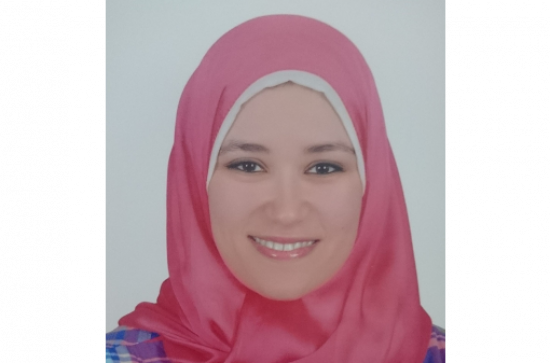
Abeer Eshra is a Postdoctoral Researcher at the Hamilton Institute, Maynooth University, specializing in cutting-edge DNA computing research. She works from the Eolas Building, 3rd Floor, Room 340, and serves as Principal Investigator for significant research projects advancing molecular computing. Dr. Eshra's research focuses on developing innovative DNA-based computing systems that address critical limitations in the field. Her work spans DNA logic circuits, renewable computing architectures, and biomolecular reaction networks. She has made substantial contributions to creating reusable DNA computing systems that overcome the traditional one-time-use limitation of DNA circuits through thermal regulation and photoregulation techniques. Her research program demonstrates a clear trajectory from fundamental DNA computing concepts toward practical applications in nanotechnology, drug delivery, and biosensing. The interdisciplinary nature of her work bridges computer science, molecular biology, and nanotechnology, positioning her at the forefront of molecular computing innovation. Principal Investigator for €658,510 project: "Thermally-regulated Renewable and Automated DNA Computing Devices" (2025-2029) Multiple high-impact publications in top journals including Nature Nanotechnology and Journal of the American Chemical Society Research advancing sustainable and energy-efficient computational paradigms through molecular approaches Dr. Eshra's work has significant implications for future computing technologies, offering potential breakthroughs in sustainable computing, nanobiosensors, and targeted therapeutic delivery systems. Her research represents a critical step toward making DNA computing practical for real-world applications beyond theoretical demonstrations.
Prof. Dr. med. dent. Stefan Zimmer is Chair for Conservative and Preventive Dentistry and Head of the Department of Conservative and Preventive Dentistry at the University of Witten/Herdecke, Germany. Since 2021 he also serves as Dean of the Faculty of Health. His clinical and research activities centre on the prevention of caries and non-carious hard-tissue lesions, evidence-based fluoride programmes, occupational dental prevention and public-health implementation. Education & Academic Career 1988 – Dr. med. dent., Free University of Berlin 1994 – Specialist training (Fachzahnarzt) 2000 – Habilitation & Privatdozent, FU Berlin 2005 – Extraordinary Professor, Heinrich-Heine-University Düsseldorf 2008 – Full Professor & Chair, University of Witten/Herdecke 2021 – Dean, Faculty of Health, University of Witten/Herdecke Research Interests Prof. Zimmer’s work spans basic laboratory science , clinical intervention trials and public-health implementation research . Key themes include: Caries prevention through fluoride toothpastes, varnishes, salt and rinses Occupational dental prevention programmes in workplace settings Surface degradation and erosion from acidic beverages and bleaching agents Effectiveness of manual, sonic and powered oral-hygiene devices Development of evidence-based guidelines for vulnerable age groups (children, elderly, HIV patients) Scientific Awards Gesundheitspreis NRW (2015) Ehrenzeichen des Bundesverbandes der Zahnärzte im Öffentlichen Gesundheitswesen in Silber (1998) Tholuck Medaille der Gesellschaft für Zahnhygiene (2013) Gesundheitspreis NRW – 2nd place (2008) Hufeland-Preis (2006) Advising & Grants Prof. Zimmer currently mentors numerous doctoral and master’s students in clinical and public-health dentistry. His projects receive funding from the German Research Foundation, Federal Ministry of Health, European regional programmes and industry partners. He leads the interdisciplinary Research Group on Occupational Dental Prevention and coordinates several multi-centre clinical trials on fluoride delivery systems. Laboratories & Teams He directs the Laboratory for Preventive Dentistry and Public Health and is scientific director of the University Centre for Dental Prevention , which houses pre-clinical simulation units, microbiological and materials-testing labs, and a clinical trial outpatient clinic.
Junior Professor Dr. Carola Fricke is a faculty member at Saarland University since 2023, holding a Cluster Professorship for Human Geography with a European Focus in the Department of European Social Sciences within the Faculty of Empirical Human Sciences. She also serves as Head of the Master's programme 'Spaces, Politics, Societies of Europe' since January 2024. Her academic background includes a doctorate in urban and regional planning (Dr. phil.) completed between 2013-2018 at the Technical University of Berlin, where she analyzed the Europeanization of metropolitan regions in Germany and France. She earned her Magister Artium degree in Scientific Politics, Geography, and Public Law from Albert-Ludwigs-University of Freiburg, including ERASMUS studies at Institut d'Études Politiques in Lille, France. Prof. Fricke's research examines how spaces in Europe—regions, border areas, cities, neighborhoods—are transformed by society, economy, planning, and politics, and how they in turn structure social relations. Her work emphasizes geographical approaches in European studies, geographies of housing, and comparative urbanism. She investigates the dynamics of housing markets, the digitalization of urban development, and the spatial dissemination of knowledge through a human geography lens. Her publications reveal a consistent focus on European metropolitan regions, cross-border cooperation, housing policy, and the Europeanization of urban governance. Her recent work (2022-2025) demonstrates particular attention to transnational housing issues in border regions, the impact of digital transformation on urban planning, and comparative analyses of European urban policies. Margarete von Wrangell Habilitation Program Fellowship (2020-2023) Prof. Fricke actively contributes to the academic community through her membership in professional organizations including the Housing Market Research Working Group in the German Geographical Society, the European Network for Housing Research (ENHR), and the European Urban Research Association (EURA). She also serves on the Urban Planning Advisory Board of the State Capital Saarbrücken and participates in the Working Group on Urban Futures.
Zlatko Baracskai is a Bosnian-Hungarian experimental musician, sound programmer, and academic. He currently serves as a Senior Lecturer at the University of West of England in the Faculty of Computer Science and Creative Technologies, while also holding a Visiting Professor position at the Faculty of Music in Belgrade's Music Direction Study Program since 2020. His academic journey includes a sonology degree from the Institute of Sonology in Den Haag and a PhD in contemporary composition from the University of Birmingham (2011). Research interests span Electronic music composition Algorithmic sound processing Experimental audio technologies Neural network applications in music Asymmetrical rhythm development His publications demonstrate technical expertise in audio algorithm design and neural networks for sound manipulation, with conference papers presented at AES, ICMC, and IEEE SpliTech. Notable projects include Coca-Cola Beatbox Pavilion (2012) and De-Fuse Interactive Installation (2005).
Dr. Clotaire Michel serves as a Lecturer in Risk Assessment and Risk Management at ZHAW School of Engineering, where he also holds roles as Deputy Programme Director for MAS/DAS/CAS Integrated Risk Management (IRM), Module Manager for Risk Management (Bachelor), and Coordinator for the CAS Risk Assessment program. His academic work spans Technology Assessment in the Master Circular Economy Management program and MSE module coordination. His educational background includes a PhD in Earth Sciences from Université Grenoble Alpes (2004-2007), an Ingénieur Civil des Mines (Engineering Geology) from Ecole Nationale Supérieure des Mines de Nancy (2001-2004), and a Master in Earth Sciences from Université Grenoble Alpes (2003-2004). Continuing education includes CAS Earthquake Engineering (HSLU, 2023) and Habilitation à diriger les recherches (Université Grenoble Alpes, 2017). Michel's research focuses on interdisciplinary risk management, integrating seismic risk assessment, technology evaluation, and climate resilience. His work bridges engineering geology with practical safety applications, particularly in structural safety, fire protection systems, and earthquake engineering. Current projects address circular economy risk frameworks and regulatory compliance in European safety standards. His 15 most recent publications (2020-2025) reveal evolving expertise from traditional seismic site characterization toward broader risk domains including climate adaptation and fire safety. Key trends include methodological advances in ambient vibration analysis for structural monitoring and practical applications of risk assessment frameworks in European regulatory contexts. Professional networks include Verein Risiko und Sicherheit, Netzwerk Risikomanagement, Institut pour la maîtrise des risques (ImdR), Association Française du génie ParaSismique (AFPS), and Schweizer Gesellschaft für Erdbebeningenieurwesen und Baudynamik (SGEB). His industry role as Project Manager/Section Leader at Risk&Safety AG complements his academic work in hazard and risk analysis. As Deputy Programme Director for IRM, Michel oversees curriculum development and program coordination for professional risk management education. His research group within ZHAW's Technology Assessment focus conducts field studies on structural safety systems and develops risk assessment protocols adopted by Swiss safety agencies.
T. Cole Jones serves as an Associate Professor in the Department of History within the College of Liberal Arts at Purdue University, teaching undergraduate courses including American History to 1877, American Military Affairs, Colonial America, and The Revolutionary Era, alongside the Cornerstone program's Transformative Texts course. He holds a Ph.D. in early American history from Johns Hopkins University and a B.A. in history from Duke University, with prior postdoctoral appointments as the Hench Fellow at the American Antiquarian Society and a NEH Fellow at the New-York Historical Society. His research specializes in the American Revolution, Colonial British North America, Comparative Revolutions, and the Cultural History of Violence and Warfare, examining how vengeance, political ideology, and cultural norms shaped military conduct during revolutionary conflicts through rigorous analysis of primary sources and interdisciplinary methodologies. Dr. Jones's publications, led by the award-winning book Captives of Liberty , consistently explore the social dimensions of warfare in the Revolutionary era, with his current project Tory Rising: Insurrection in the Revolutionary South extending this analysis to loyalist uprisings and southern military campaigns. His scholarly achievements have been recognized with prestigious awards: 2021 Society of the Cincinnati Prize (American Revolution Institute) 2022 Excellence in American History Book Award (National Society Daughters of the American Revolution) Honorable Mention, Colonel Richard W. Ulbrich Memorial Book Award (U.S. Military History Group) Honorable Mention, Harry M. Ward Book Prize (American Revolution Roundtable of Richmond) Finalist, Journal of the American Revolution Book of the Year Award (2020) Dr. Jones has secured substantial research funding from the Harry Frank Guggenheim Foundation, United States Army Center of Military History, Fred W. Smith National Library for the Study of George Washington, Virginia Historical Society, David Library of the American Revolution, and Georgian Papers Programme, while actively mentoring graduate students interested in the American Revolution period through structured research supervision and professional development guidance.
James A. Duffy is an Associate Professor of Economics at the University of Oxford and the Andrew Glyn Tutorial Fellow at Corpus Christi College. He joined Corpus in 2016 after a postdoctoral fellowship at Nuffield College, Oxford, and holds dual appointments in the Department of Economics and his college. His educational background includes: PhD in Economics from Yale University (2014) Undergraduate studies in Economics and Mathematics at the University of Sydney Duffy's research centers on econometrics, with emphasis on macroeconometrics and time series analysis. He develops statistical methods for economic models involving nonlinear or highly persistent time series data, common in macroeconomics and finance. His work spans econometric theory , mathematical statistics , cointegration , and structural macroeconomic models , addressing inference challenges in strongly dependent processes. His 2016-2024 publications in premier journals reveal consistent innovation in time series methodology, particularly in unit root processes, fractional integration, and nonlinear cointegration. Key contributions include Tobit modeling for dynamic systems, robust inference for weakly nonstationary data, and discrete choice estimation techniques, bridging theoretical rigor with empirical applications. At Oxford, Duffy serves as course convenor for Quantitative Economics and lectures for the MPhil programme on instrumental variables, generalized method of moments, and maximum likelihood estimation. He also provides undergraduate tutorials in Microeconomics and Quantitative Economics at Corpus Christi College, integrating research insights into teaching.
Sarah Butcher is a Professor of Microbiology at the University of Helsinki, affiliated with the Faculty of Biological and Environmental Sciences and the Molecular and Integrative Biosciences Research Programme. She serves as a supervisor for doctoral programmes in Integrative Life Science and Microbiology and Biotechnology. Her research focuses on structural virology, particularly using electron microscopy to study virus structure, assembly, and host interactions. She leads the Cryo-Electron Microscopy Facility and coordinates the FINStruct Structural Biology Finland infrastructure. Her research interests span structural virology with emphasis on picornaviruses , coronaviruses , and flaviviruses . She applies advanced techniques including cryo-electron microscopy , X-ray crystallography , and image processing to understand viral architecture, host-pathogen interactions, and mechanisms of viral entry and assembly. Her work has significant implications for antiviral drug development and vaccine design. Her recent publications reveal a strong focus on viral structure-function relationships, particularly in tick-borne encephalitis virus, coxsackieviruses, and SARS-CoV-2. Her research bridges structural biology with virology, producing insights into viral maturation, membrane interactions, and antiviral strategies. She has been instrumental in developing community standards for cryo-EM data validation and archiving. Alfred Kordelin Prize (2017) Maikki Friberg award (2013) Professor Butcher has supervised numerous doctoral and master's students and serves on multiple doctoral thesis committees. Her research has been supported by major competitive funding including Academy of Finland grants, Biocenter Finland, Sigrid Juselius Foundation, and European Commission projects. She currently leads the FINStruct infrastructure and the Instruct-ERIC Centre Finland. She directs the Cryo-Electron Microscopy Facility at the Institute of Biotechnology and coordinates the FINStruct Structural Biology Finland infrastructure, which provides state-of-the-art structural biology resources to researchers across Finland. Her team specializes in advanced cryo-EM techniques for studying complex biological structures, particularly viral particles and membrane proteins.