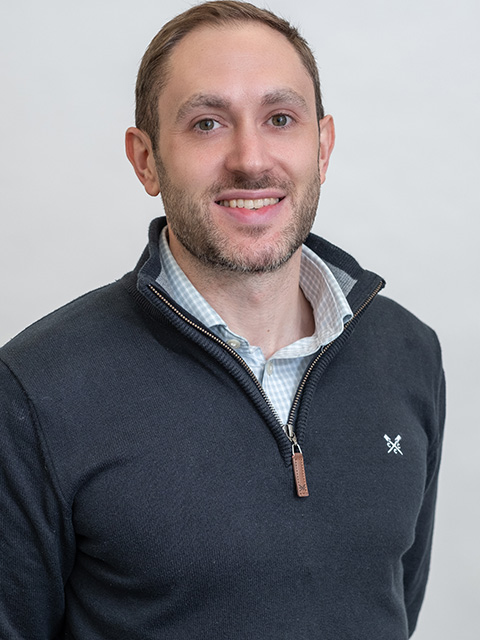
Dr. Crystal Senko is an Assistant Professor and Canada Research Chair in Trapped Ion Quantum Computing at the Institute for Quantum Computing (IQC) , University of Waterloo. Her research focuses on quantum simulations, quantum computing with trapped ions, and qudit-based systems. She holds a Ph.D. in Physics from the University of Maryland (2014) and a B.Sc. in Physics from Duke University (2009). Her research interests span Quantum Computing , Quantum Simulation , Trapped Ion Manipulation , and Photonics . Key projects include optimizing qudit-based quantum computing protocols and developing photonic crystal waveguides for atom-photon interactions. Recent work emphasizes trapped ion efficiency, laser noise mitigation, and programmable quantum simulators. Dr. Senko has authored influential papers on trapped ion systems, including studies on multi-level qudit control, nanophotonic cavity coupling, and non-thermalization in spin chains. Her work bridges theoretical quantum models and experimental advancements in scalable quantum hardware. Awards: Canada Research Chair (Trapped Ion Quantum Computing) Teaching: Courses include Quantum Physics 2 (PHYS 334), Quantum Mechanics 1 (PHYS 701), and Special Topics in Quantum Information Processing (PHYS 768/QIC 890). Labs/Teams: Affiliated with IQC and previously contributed to Harvard’s Center for Ultracold Atoms.
Andres F. Arrieta is an Associate Professor of Mechanical Engineering at Purdue University's School of Mechanical Engineering in West Lafayette, Indiana. He leads the Programmable Structures Lab and holds affiliations with multiple research areas including dynamics, advanced materials, and robotics. His research focuses on adaptive structures, mechanical metamaterials, and programmable systems. Education: Mechanical Engineer, Universidad de los Andes, Bogotá, 2006 Ph.D., University of Bristol, United Kingdom, 2010 Postdoctoral Research Fellow, ETH Zurich, 2012 Research Interests: His work emphasizes multistable structures, structural nonlinearity, and elastic instabilities. He explores applications in energy harvesting, morphing wings, and mechanical metamaterials. Recent trends include bio-inspired designs and smart materials for adaptive systems. Awards: 2019 ASME Best Paper Award (Bioinspired Materials) 2018 Gary Anderson Early Achievement Award 2017 Journal Cover Feature (Chiral Metastructure) 2012 ETH Postdoctoral Fellowship Labs/Teams: Leads the Programmable Structures Lab, focusing on innovative metastructures and adaptive robotics systems.
Marcos Cruz is Professor of Innovative Environments at The Bartlett School of Architecture, University College London (UCL), where he leads research in bio-integrated design. He runs Bio-ID with Dr. Brenda Parker, a multidisciplinary research platform investigating design driven by biotechnology, computation, materials, and fabrication. Previously, he served as Director of The Bartlett from 2010-2014 and founded the BiotA Lab (2014-2018). His academic career spans multiple institutions including University College London (where he ran MArch Unit 20 for 19 years), University of Westminster (2008-2010), UCLA (2010), and IAAC (2014-present). Professor Cruz holds a Licenciatura from ESAP Porto, a Masters with distinction from UCL, and a PhD from UCL (2007), sponsored by the Portuguese Foundation for Science and Technology. His doctoral research on 'Neoplasmatic Architecture' earned him the RIBA President's Research Award in 2008. He is a registered architect with both the Architects Registration Board (ARB) and the Portuguese Architecture Chamber. His primary research area is Bio-Integrated Design, which explores how biotechnology and computation can reshape our built environment in response to climate change. This work goes beyond using nature as inspiration; instead, it treats nature as the medium for a multi-layered design approach. His key research project, Poikilohydric Living Walls, investigates integrating growth systems directly on building facades using algae and mosses that can switch photosynthetic activity on and off without additional maintenance. Another significant research area is The Body in Architecture, which examines the relationship between human flesh and architectural flesh, proposing a 'thick embodied flesh' that creates truly inhabitable architectural interfaces. His recent publications demonstrate a strong progression toward integrating living systems directly into building materials and facades. The research spans from microbial to tectonic scales, with increasing focus on biomaterials, robotic fabrication, and sustainable design approaches that actively participate in urban ecosystems rather than merely responding to them. RIBA President's Research Award (2008) for 'Neoplasmatic Architecture' Multiple Best Unit awards at Bartlett Summer Show (awarded by Thom Mayne, Paul Finch, Richard Rogers, Claude Parent, and Ross Lovegrove) Work part of permanent collection at FRAC Orleans Exhibitions at Venice and São Paulo Biennales Professor Cruz has supervised numerous PhD students through UCL's Research-by-Design programme and currently directs the MArch/MSc in Bio-Integrated Design. His research has been supported by EPSRC and involves industrial partners including Laing O'Rourke, Pennine Stone Limited, and Amorim, with academic partners at UCL Biochemical Engineering, University of Coimbra, and IST Tomar. He co-founded MAM-ARCH London (formerly marcosandmarjan) in 2000, whose work has built buildings and pavilions, won international competitions including the Kunsthaus Graz, and been exhibited globally. His practice represents a significant bridge between architectural design and biological systems, positioning him at the forefront of bio-integrated architectural research.
Andres Arrieta is an Associate Professor in the School of Mechanical Engineering at Purdue University. His research focuses on adaptive structures, mechanical metamaterials, and programmable systems. He holds a PhD from the University of Bristol and conducted postdoctoral research at ETH Zurich. Education: Mechanical Engineer, Universidad de los Andes, 2006 PhD in Mechanical Engineering, University of Bristol, 2010 Postdoctoral Research Fellow, ETH Zurich, 2012 Research Interests: Adaptive Structures Multistable Systems Structural Nonlinearity Robotics & Mechanosensing Origami Engineering Awards: 2019 ASME Best Paper Award 2018 Gary Anderson Early Achievement Award 2012 ETH Postdoctoral Fellowship Labs: Directs the Programmable Structures Lab , exploring smart materials and morphing systems.
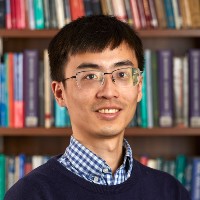
Tengyao Wang is a Professor in the Department of Statistics at the London School of Economics and Political Science (LSE), serving as the MSc Statistics (Financial Statistics) Programme Director. Prior to LSE, he held positions as a Lecturer at University College London and a Research Fellow at the Cantab Capital Institute for the Mathematics of Information, University of Cambridge. His research focuses on high-dimensional statistics, computational efficiency, and statistical limitations imposed by computational constraints. Education: PhD in Statistics under Prof Richard Samworth at the University of Cambridge, with earlier studies including a Part III Essay in Empirical Process Theory. Research interests include sparse signal detection, change-point analysis, dimension reduction, robust statistics, and applications in medical statistics, financial data analysis, and material discovery. Key contributions include methodologies for handling missing data, high-dimensional change-point detection algorithms, and statistical learning techniques. Publications span theoretical advancements and applied innovations, with recent work emphasizing deep learning with missing data, residual permutation tests, and semi-supervised learning via random projections. His work has been recognized with awards such as the Royal Statistical Society Research Prize (2019) and the Guy Medal in Bronze (2023). He is an Associate Editor of the Journal of the Royal Statistical Society, Series B (JRSS B), and actively contributes to open-source tools like the 'ocd' and 'MissInspect' R packages for changepoint detection and missing data analysis.
Dr. Alister Smith is a Reader (Associate Professor) in Geotechnics at Loughborough University, where he directs the £1M National Engineered Slope Simulator (NESS) – the world’s first climate-controlled facility testing clay slope deterioration. His £6.7M research portfolio addresses geotechnical infrastructure resilience under climate change. Innovations include acoustic emission (AE) landslide early warning systems deployed across five continents, with the Community Slope SAFE project recognized in REF2021. Current work includes the RAINDROP doctoral training cluster on infrastructure prognosis and the £4.9M EPSRC ACHILLES programme on climate impacts. Awards: Philip Leverhulme Prize, ICE Thomas Telford Premium (twice), and Hawley Award for Engineering Innovation. He serves on the Lilly Fellows Program Board and edits for the International Journal of Christianity and Education.
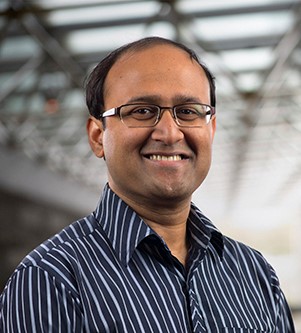
K. Rajibul Islam is an Associate Professor at the University of Waterloo, affiliated with the Institute for Quantum Computing (IQC) and the Department of Physics and Astronomy. He holds a joint appointment with the Perimeter Institute for Theoretical Physics and co-founded Open Quantum Design and Lightflow Optics Inc. His research focuses on quantum information processing, quantum simulation, and trapped ion systems, with applications in quantum computing and entanglement studies. Education: Ph.D. in Physics (2012, University of Maryland), M.Sc. in Physics (2007, Tata Institute of Fundamental Research), B.Sc. in Physics (2005, Jadavpur University). Postdoctoral research at Harvard University (2012–2015) and MIT (2015–2016). Research Interests : Quantum simulation of spin models, quantum computing with trapped ions, entanglement measurement, frustrated spin systems, and quantum materials. His lab, QITI (Quantum Information with Trapped Ions), develops scalable quantum simulators and open-access quantum computers like 'QuantumIon.' Awards : Fellow of the American Physical Society (2024), VAIBHAV Fellowship (2024), Excellence in Teaching Award (2024), Early Researcher Award (2019), and Distinguished PhD Dissertation Award (2012–13). Teaching : Courses include PHYS 701 (Graduate Quantum Physics), PHYS 234 (Quantum Physics I), PHYS 393 (Physical Optics), and PHYS 256 (Geometrical and Physical Optics). He emphasizes outreach via initiatives like Bigyan.org.in , a Bengali-language science platform. Lab and Collaborations : Active in developing trapped-ion quantum hardware, including ion trap designs, optical addressing systems, and holographic control methods. Collaborates on quantum algorithms, machine learning for quantum systems, and experimental quantum thermodynamics.
Dr. Shirley Coyle is an Assistant Professor in the School of Electronic Engineering at Dublin City University (DCU) and Programme Chair for the BSc Global Challenges. She holds a BEng in Electronic Engineering from DCU (2000) and a PhD in Biomedical Engineering from NUI Maynooth (2005). Her career includes roles as a Telecoms Engineer at Siemens, Research Fellow at the National Centre for Sensor Research, and Team Leader of Wearable Sensors in the INSIGHT Centre for Data Analytics. She also studied part-time at the Grafton Academy for Fashion Design and later founded a consultancy in wearable technologies. Her research focuses on smart garments, wearable sensors, and sustainable textiles, with applications in healthcare, sports performance, and S.T.E.A.M. integration. Key interests include developing wearable chemical sensors, energy-autonomous sensing systems, and IoT-enabled rehabilitation devices. She has pioneered work on wearable sensors for monitoring chronic diseases, athlete training, and home rehabilitation using VR. Dr. Coyle’s work spans interdisciplinary collaboration, combining biomedical engineering with textile design. Her contributions include innovations in electrospun textiles, self-powered sensors, and sensor integration with microfluidics. She has held leadership roles in DCU’s Governing Authority and promotes STEM education through design-focused initiatives.
Dr. Stephanie Spahr is a Research Group Leader at the Leibniz Institute of Freshwater Ecology and Inland Fisheries (IGB) in Berlin, Germany, where she leads the Organic Contaminants research group within the Department of Ecohydrology and Biogeochemistry. Previously, she served as a Junior Research Group Leader at the University of Tübingen's Center for Applied Geoscience (2019-2021) and as a Postdoctoral Researcher at Stanford University's Department of Civil and Environmental Engineering (2016-2019). Dr. Spahr earned her PhD in Environmental Chemistry from the Swiss Federal Institute of Technology Lausanne (EPFL) and the Swiss Federal Institute of Aquatic Science and Technology (Eawag) in 2016. Her doctoral research focused on the formation of N-nitrosodimethylamine during water disinfection with chloramine. She completed her MSc in Geoecology at the University of Tübingen in 2012, with thesis work on carbon and nitrogen isotope analysis of benzotriazoles conducted at Eawag, and her BSc in Geoecology/Ecosystem Management at the same institution in 2010. Dr. Spahr's research focuses on trace organic contaminants in aquatic systems, with particular expertise in transformation processes of contaminants in natural and engineered systems, advanced oxidation processes for water treatment, urban blue-green infrastructure, and compound-specific isotope analysis. Her work bridges environmental chemistry, engineering, and ecology to address water quality challenges in urban and natural water systems. She employs advanced analytical techniques to track contaminant sources and transformation pathways, with a strong emphasis on practical applications for water treatment and environmental protection. Her recent publications demonstrate a strong focus on biochar-based water treatment technologies, particularly for stormwater management. She investigates how biochar amendments can remove trace organic contaminants from urban runoff, with recent work examining persulfate activation mechanisms, the role of chloride in reactive species formation, and the performance of engineered media filters under dynamic conditions. Her research also extends to understanding contaminant transport in rivers, the ecological impacts of pollutants, and developing analytical methods for environmental monitoring. The interdisciplinary nature of her work connects chemical processes with ecological outcomes. Outstanding Review Paper Award 2023 in Environmental Science: Water Research & Technology Selected for the Falling Walls Female Science Talents Intensive Track 2023 Selected mentee in the Leibniz Mentoring Programme 2022-2023 Best poster award (1st prize) at the Wasser 2022 of the Water Chemistry Society Selected fellow in the Postdoc Academy for Transformational Leadership 2020-2022 (Robert Bosch Stiftung) Selected fellow in the Athene Program for early female career researchers at the University of Tübingen, 2020-2021 As a Research Group Leader, Dr. Spahr supervises multiple research projects including 'POllution in UrbaN ponds, eco-evolutionary Dynamics, and Ecosystem Resilience (POUNDER)', 'Dynamic hyporheic zone', 'NYMPHE', and the 'Incident-related special investigation programme for the environmental disaster in the Oder River'. She serves on the Executive Board of the German Water Chemistry Society and heads its Expert Committee on 'Oxidative Processes'. Her collaborative work spans numerous institutions across Germany and internationally, addressing critical water quality challenges through interdisciplinary approaches. Dr. Spahr leads the Organic Contaminants research group at IGB Berlin, which focuses on understanding the fate and treatment of organic pollutants in water systems. Her team employs advanced analytical techniques including compound-specific isotope analysis to track contaminant sources and transformation pathways. The group collaborates extensively with other departments at IGB and with international partners on projects addressing urban water challenges and ecological impacts of pollution. Current research emphasizes innovative water treatment technologies, particularly biochar-based systems for stormwater management, and investigating the complex interactions between contaminants, aquatic ecosystems, and human activities.
Dr. Zheng Yuan is an Associate Professor (Senior Lecturer) in the School of Computer Science at the University of Sheffield. Previously, they held roles as an Assistant Professor at King's College London and a Research Associate at the University of Cambridge's Department of Computer Science and Technology. Their primary research focuses on machine learning and deep learning applications in natural language processing (NLP), particularly in educational technology, healthcare, creativity, and multilingual contexts. Key projects include computer-assisted language learning (CALL), human-centered NLP in education, computational code-switching, and creative AI. Education includes a PhD and MPhil in Natural Language Processing from the University of Cambridge, and a BSc(Eng) from Queen Mary University of London. They hold affiliated positions at the University of Cambridge, King's College London, and are a Fellow of Trinity College, Cambridge. They contribute to The Alan Turing Institute's Data-Centric Engineering Programme and hold FHEA status (2024-). Research interests span educational NLP, multilingual systems, transfer learning, and explainable AI. They actively organize workshops and serve on editorial boards (e.g., PeerJ Computer Science) and conference committees (ACL/EMNLP). Recent activities include co-organizing NLP workshops at ACL 2025 and NAACL 2024, alongside roles in professional societies like the ACL Professional Conduct Committee. Awards include Fellowship of the Higher Education Academy (2024-) and ASEFClassNet18 Faculty Collaboration (2025-). They welcome PhD applications in NLP and machine learning, emphasizing interdisciplinary applications.
Dr. Alex S Clark is an Associate Professor in Quantum Technologies at the University of Bristol's School of Physics, where he serves as a Senior Lecturer and Royal Society University Research Fellow. He is a key member of the Quantum Engineering Technology Labs (QETLabs) and leads the Interfaces Work Package in the EPSRC Programme Grant 'Quantum Science with Ultracold Molecules (QSUM).' Additionally, he holds a Visiting Academic position at Imperial College London and serves as Honorary Secretary for the QQQ Group at the Institute of Physics. His research focuses on Solid State Quantum Nanophotonics, exploring the use of atoms, molecules, and solid state defects to develop quantum technologies. Dr. Clark's work spans quantum imaging, quantum sensing, and quantum information processing, with particular emphasis on creating on-demand photon sources, quantum memories, photonic quantum gates, and hybrid interfaces to link disparate quantum systems. His research integrates experimental and theoretical approaches across quantum photonics, nanophotonics, and quantum technology. Analysis of his recent publications reveals a strong trend toward practical quantum applications, particularly in quantum sensing and imaging using undetected light. His work demonstrates increasing focus on real-world applications including methane sensing, medical diagnostics, and environmental monitoring, while maintaining fundamental research in quantum optics and nanophotonics. The interdisciplinary nature of his research bridges physics, engineering, and materials science. Among his notable achievements is the prestigious Royal Society University Research Fellowship, recognizing his significant contributions to quantum technology research. His work has resulted in numerous publications and patents in quantum photonics and related fields. Dr. Clark leads multiple major research initiatives, including the Quantum Positioning, Navigation, and Timing Hub (2024-2029) and the Integrated Quantum Networks project. His research has secured substantial funding through EPSRC grants and other sources, supporting a vibrant research group focused on advancing quantum technologies from fundamental principles to practical applications. Within the Quantum Engineering Technology Labs (QETLabs), Dr. Clark's research group works at the intersection of quantum optics, nanophotonics, and quantum information science. His team develops novel photonic platforms for quantum applications, with particular expertise in quantum imaging with undetected photons, quantum sensing, and integrated quantum photonics.
Katrina Morgan-Innes is a Lecturer (Assistant Professor) at the School of Electronics and Computer Science, University of Southampton. Her research focuses on advanced flexible materials for energy harvesting and storage, leveraging semiconductor industry fabrication techniques to develop wearable thermoelectric devices and next-generation batteries. She leads the Morgan Materials and Devices for Energy (MADE) research group and a £220k EPSRC New Horizons grant (Smart Cloth). Her work emphasizes commercial scalability and integration of 2D materials with flexible substrates. Education: MPhys in Physics (University of Sussex, 2011), CASE Award PhD in Electronics and Computer Science (University of Southampton, 2016–2022). Previous roles include Photonics Development Engineer at the AIM Photonics Programme (SUNY) and Visiting Fellow at the Optoelectronics Research Centre. Research interests include energy harvesters, flexible wearables, 2D materials, and nanofabrication. She has pioneered scalable manufacturing methods for photonic and energy devices and contributed to chalcogenide material applications. Her research group aims to create fully flexible systems enabling integrated sensing, power, and communication on lightweight platforms. Key grants include EPSRC funding for wearable thermoelectric generators and collaborations like the ChAMP/WAFT-funded projects on flexible ion sensors and 3D nanophotonics. She has published in high-impact journals (e.g., ACS Applied Materials and Interfaces , npj 2D Materials and Applications ) and conferences, focusing on thermoelectric materials, photonic heterostructures, and scalable manufacturing. Awards: UNSW Women in Engineering Visiting Fund (2019), Top 100 Physics Paper (2020), Outreach Engagement Award (2016) Labs/Teams: Morgan MADE Group, Collaboration with Optoelectronics Research Centre and Zepler Institute Advocacy: Chair of WiSET+ (University-wide STEM+ Equality Committee), founder of Early Career Researcher Forum
Jennifer Lewis is the Hansjorg Wyss Professor of Biologically Inspired Engineering and Jianming Yu Professor of Arts and Sciences at Harvard University's Harvard John A. Paulson School of Engineering and Applied Sciences (SEAS). Her research focuses on bioengineering, materials science, and advanced manufacturing, with emphasis on 3D-printed functional materials, organoids, and soft robotics. She leads the Lewis Research Group, which develops biomimetic technologies for regenerative medicine, energy systems, and robotics. Lewis holds appointments in SEAS, the Department of Chemistry and Chemical Biology, and the Wyss Institute for Biologically Inspired Engineering. Her research areas include applied mathematics, fluid mechanics, soft matter physics, and bioengineering applications such as kidney organoid models, vascularized tissues, and programmable materials. Notable innovations include kidney organoid-on-chip systems for drug testing, 3D-printed liquid crystal elastomers, and bioprinted cardiac tissues. Lewis was awarded the 2025 James Prize in Science and Technology Integration for pioneering interdisciplinary research. Her lab's projects span organ building blocks, immune-response modeling in transplanted tissues, and acoustophoretic printing techniques for high-resolution bioprinting. Collaborations include the NIH Somatic Cell Genome Editing Program and industry partnerships for bioprosthetic valve research. She advises on grants totaling over $20M and mentors a multidisciplinary team of postdocs and graduate students in materials science, biomedical engineering, and mechanical engineering. Lewis' lab facilities include the Pierce Hall lab (Cambridge) and Allston SEAS campus, with state-of-the-art 3D printing systems, microfluidics platforms, and bioreactors for organoid culture. Current projects aim to engineer functional human tissues for therapeutic applications and develop smart materials with programmable mechanical/chemical responses.
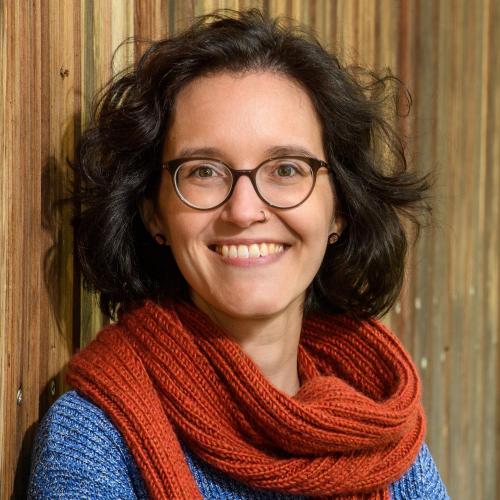
Andrea Blanco-Redondo is Florida Photonics Center of Excellence Endowed Professor at University of Central Florida's College of Optics and Photonics. Her research focuses on quantum photonics, topological photonics, and nonlinear phenomena in integrated photonic systems. Research areas include: Topological protection of quantum states Pure-quartic soliton dynamics Programmable photonic circuits Non-Hermitian photonic systems Silicon-based quantum devices Recent publications (2023-2025) show primary focus on topological photonics (6/11) and soliton physics (4/11), with emerging work in optical neural networks. Current group includes 3 PhD students and 2 undergraduate researchers with backgrounds in optics, quantum physics, and materials science. Significant honors: Optica Fellow (2024) Geoff Opat Early Career Prize (2016) Ada Byron Award for women in technology (2014) Marie Curie Fellowship (2013)
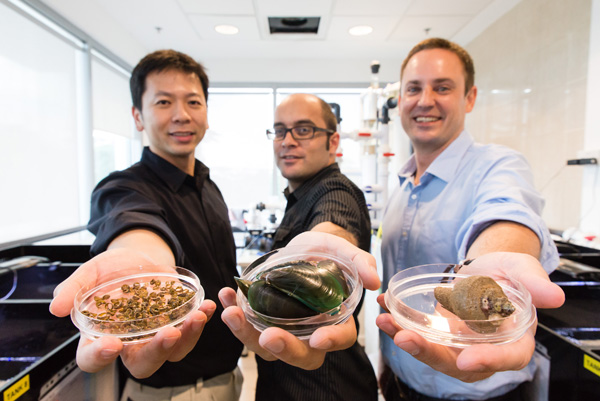
Professor Ali Gilles Tchenguise Miserez holds a joint appointment as Professor in the School of Materials Science and Engineering and the School of Biological Sciences at Nanyang Technological University (NTU) in Singapore. He is also the President's Chair in Materials Science and Engineering. His research group, the Biological and Biomimetic Materials Laboratory (BBML), is highly interdisciplinary, bringing together molecular biologists, chemists, bio-physicists, and materials scientists to study natural materials with unique properties not found in man-made materials. Prof. Miserez's research interests span multiple areas including bioelastomeric membranes & coiled-coil engineering, mechanisms of biofouling adhesion & anti-adhesive coatings, molecular biomimetics of non-mineralized hard tissues, biomineralized structures with graded properties, and liquid-liquid phase separation. His work focuses on understanding the molecular, physico-chemical, and structural principles of biological materials and translating these designs into novel biomimetic synthesis strategies. His laboratory emphasizes "green chemistry" approaches that mimic nature's energy-efficient synthesis methods under ambient conditions. Prof. Miserez's publication record demonstrates significant impact across multiple disciplines, with work appearing in top journals including Science, Nature Materials, Nature Biotechnology, Nature Chemical Biology, and Advanced Materials. His recent research has particularly focused on peptide coacervates for intracellular delivery of therapeutics, with applications in cancer treatment, mRNA delivery, and nucleic acid therapeutics. This work represents a convergence of materials science, biochemistry, and medicine with significant translational potential. Singapore National Research Foundation (NRF) Fellowship (2011) - $3 Million individual research grant for early career scientists Prof. Miserez has mentored numerous PhD students and postdoctoral researchers, many of whom have gone on to successful careers in academia and industry. His laboratory has developed strong international collaborations and has secured significant research funding. Current projects include developing peptide-based delivery systems for cancer therapeutics, understanding marine biofouling mechanisms, and creating biomimetic materials inspired by natural systems. The BBML laboratory is actively recruiting talented researchers interested in interdisciplinary work at the interface of biology and materials science.