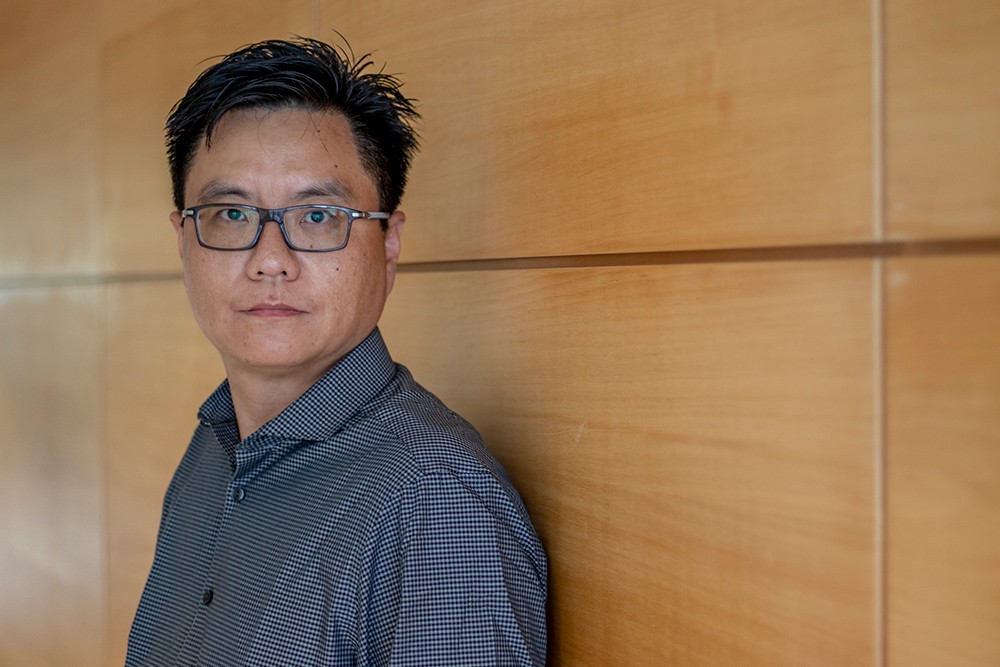
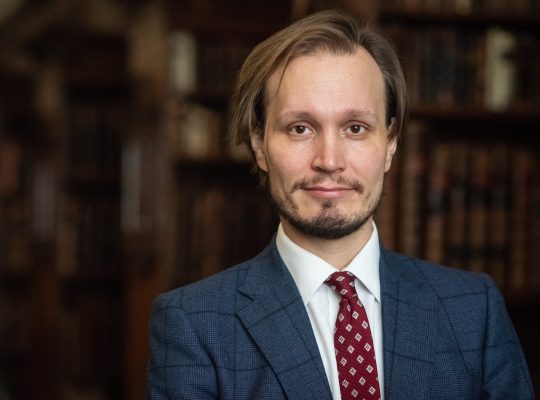
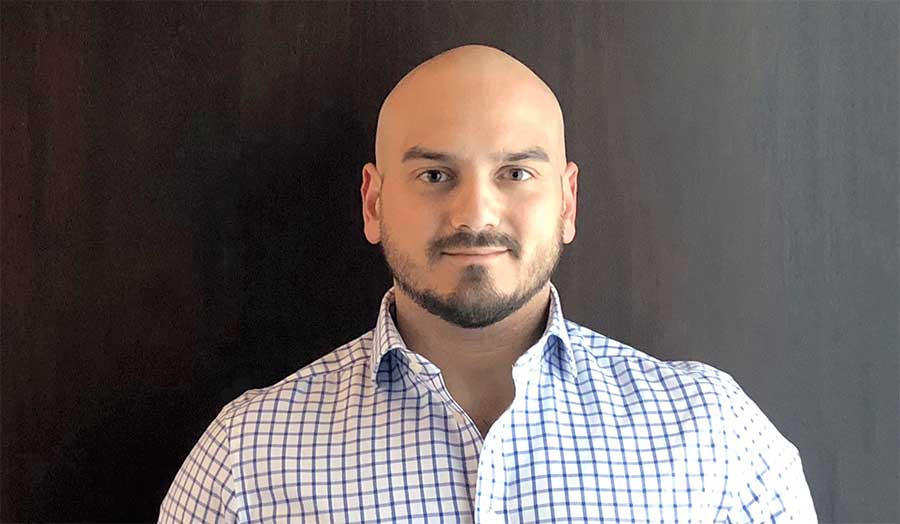
Dr. Andy Ye is an Associate Professor in the Department of Electrical, Computer, and Biomedical Engineering at Ryerson University, where he conducts research and teaches courses in advanced digital systems. Education : PhD (2004), MASc (1999), and BASc (1996) from the University of Toronto Research Interests focus on: Field-programmable gate array (FPGA) architectures Computer-Aided Design (CAD) tools for FPGAs and VLSI Logic synthesis and hardware implementation Digital communication algorithms and computer vision systems Publication Trends demonstrate expertise in FPGA area modeling, motion estimation architectures, and VLSI design optimization across multiple IEEE and ACM venues. Scientific Achievements : Best Paper Award (2016) at International Conference on Field Programmable Logic and Applications Teaching Contributions include graduate-level FPGA design (EE 8219), low-power digital circuits (ELE 734), and fundamental network theory (ELE 302). He maintains active supervision availability for students.
Professor Stan Skafidas is a leading academic at the University of Melbourne , holding the Professor of Nanoelectronics title in the Department of Electrical and Electronic Engineering under the Faculty of Engineering and Information Technology. He serves as Deputy Dean, Engagement and maintains an honorary professorial fellowship in the Department of Medicine. Education: PhD (University of Melbourne, 1997) Masters (Research) (University of Melbourne) Bachelors Degree (University of Melbourne) Research Interests: Nanoelectronics for biomedical applications Printable electronics and graphene technology Wireless communication systems Medical diagnostics and biosensor development Cognitive technology for dementia care Scientific Achievements: Awards: Fellow of Australian Academy of Technological Sciences and Engineering (ATSE) (2012) Richard Newton Award for Research Excellence (2009) INNOVIC 'Innovation Excellence' (2009) Fellow of Institution of Engineers of Australia (2007) Patents: Adaptive Frequency Hopping (US Patent 7027418) - foundational for Bluetooth robustness High-isolation Transmit/Receive Switch on CMOS (2009) Approach for managing communications channels (multiple patents) Commercialization: Co-founded Bandspeed (acquired by Broadcom) Co-founded Nitero (acquired by AMD) Recent Publications focus on printable electronics (475+ publications), with trends in wearable biosensors, 60GHz wireless systems, and dementia care technology. His 2025 work on nanomaterials for biosensors and 3D printed CMOS circuits demonstrates his interdisciplinary approach.
Marco Chiesa is an Associate Professor at the KTH Royal Institute of Technology in the Intelligent Network System Lab (INSight) group under the Division of Software and Computer Systems . His research focuses on computer networking, particularly Internet protocols and architectures, with emphasis on security, privacy, network design optimization, and Software Defined Networking (SDN) approaches. Current research areas: SDN, IXPs, stateful packet processing, network monitoring Teaching roles: Advanced Internetworking (IK2215), Computer Hardware Engineering (IS1200), Network Systems with Edge or Cloud Datacenters (IK2227) Email: mchiesa@kth.se Recent publications highlight advancements in high-speed packet processing, network security, and SDN applications. Key trends include leveraging programmable switches for stateful operations, improving BGP hijacking detection, and optimizing network monitoring on multi-pipeline architectures.
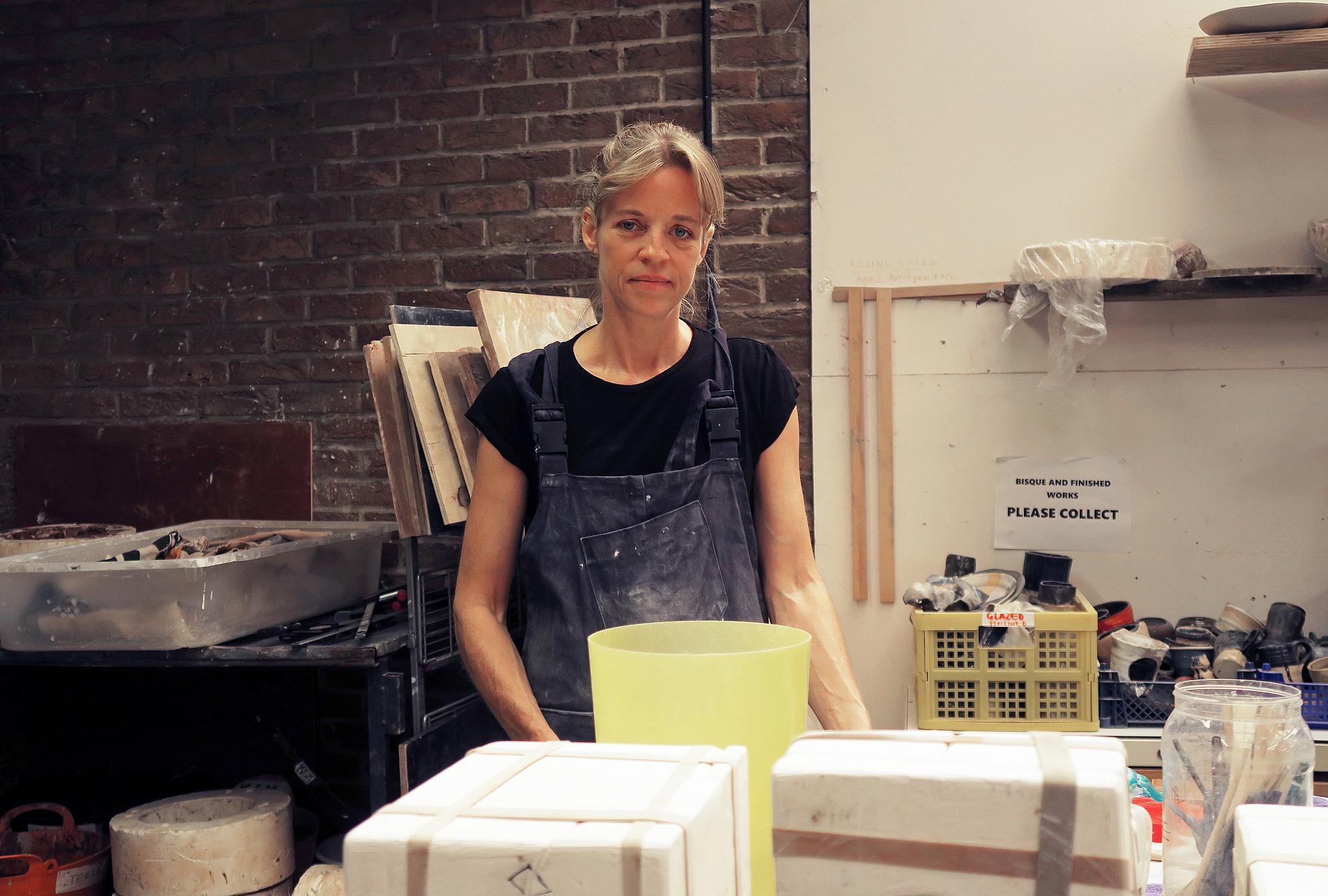
Laura White is a Reader in Fine Art at the Department of Art, Goldsmiths, University of London. She has been teaching on the Fine Art Undergraduate Programme at Goldsmiths since 2006 and has also taught at Manchester Metropolitan University, Nottingham Trent University, Loughborough University, and London Metropolitan University. She serves as an external examiner at various institutions and mentors on the MASS Correspondence Course. Her educational background includes: 2004: MA Fine Art, Goldsmiths College, London 1997: MA Fine Art, Nottingham Trent University, Nottingham 1990: BA (Hons) Fine Art: Sculpture, Loughborough University School of Art and Design Laura White's practice focuses on interactions with materials and objects, exploring ideas of value, profile, association, and meaning. She examines things both as material stuff and anthropological signifiers capable of revealing the human condition - vulnerabilities and capabilities, value systems affected by consumerism and material status, and object/human dependencies. Her works occupy a fluid space, demanding critical discourse while maintaining their own ambiguous and intuitive logic. She continually expands her knowledge through participating in skill-based courses including fish knife skills, taxidermy, baking, butchery, basket weaving, pot throwing, and fishing, reflecting her interest in the notion of 'the constant amateur.' White's recent work shows a consistent exploration of materiality across various forms - from Baroque-inspired pieces to food-based installations and earthbound works. Her practice bridges traditional fine art with conceptual explorations of everyday objects and materials, often incorporating interdisciplinary approaches that span sculpture, installation, drawing, and digital platforms like her TENDERFOOT website. Her notable recognition includes: Ampersand Foundation Fellowship (2023) Laura White has curated numerous exhibitions at prestigious venues including Tintype and Saatchi Gallery in London, Gallery Cadaqués in Spain, SPACEX in Exeter, and Marlborough Contemporary in London. Her project DIWO (Doing it with others) (2015-2017) demonstrates her collaborative approach, while her involvement in workshops like 'what it means to handle stuff - auto-pedagogy - a course in butchery' shows her commitment to hands-on learning and material engagement. She maintains an active digital presence through TENDERFOOT, an online platform for writing on materiality funded by a Goldsmiths Research Award. Her work continues to explore the complex relationships between humans and objects, challenging conventional boundaries between art forms and everyday experiences.
Mario Baldi is a researcher affiliated with the Polytechnic University of Turin, Italy , with significant contributions to computer networking , distributed systems , and software-defined networking . Key research themes: network function virtualization , programmable dataplanes , time-driven scheduling , and traffic analysis . Recent work focuses on RDMA-enabled compute offloading (2023) and DNN inference in network data planes (2023). Longstanding expertise in multicast routing , voice/data packet efficiency , and XML-based protocol parsing (2000–2006). Collaboration network includes Yoram Ofek , Fulvio Risso , and Han Hee Song , with 99+ publications spanning 1994–2023.
Markus Gerschberger is a Professor at the Steyr University of Applied Sciences , affiliated with the Center of Excellence Logistics LOGISTIKUM . His research focuses on Supply Chain Management , Resilience , and Sustainability , with a particular emphasis on Value Networks , Green Supply Chain Practices , and Process Variability . He has led significant projects such as JRC LIVE (2019–2023) and LOG-ReSCUE (2014–2015), funded by the 7th Framework Programme of the European Union and BRIDGE: science transfer . Key research areas: Supply Chain Complexity, Organizational Adaptability, Carbon Emissions Mitigation. Collaborations: EU institutions, Austrian automotive suppliers, and international researchers. Recent work: 2025 systematic review on sustainable supply chains, 2024 studies on circular economy and carbon emissions. His publications highlight trends in EU supply chain regulation , greenhouse gas compliance , and resilience strategies . He actively participates in peer-review and conferences like CSCMP 2018 and ICLT 2017 , often co-authoring with colleagues such as Verena Schmidt and Franz Aschauer . His work spans 146 research outputs and 6 projects , reflecting deep engagement with logistics innovation.
Eini Haaja serves as Research Manager and Postdoctoral Researcher at the Pan-European Institute (PEI) within the University of Turku's Turku School of Economics, while also holding affiliation with the Turku Institute for Advanced Studies (TIAS). With continuous service at PEI since 2008 across research, teaching, and administrative capacities, she specializes in International Business dynamics with particular emphasis on Baltic Sea and Barents Sea regional development, maritime industry networks, and sustainability transformations. Dr. Haaja holds a Doctor of Science in Economics. Her research portfolio centers on International Business, Maritime Industry competitiveness, Sustainability transitions, Digitalisation impacts, SME internationalisation, Geoeconomic developments, Arctic business environments, and Baltic Sea regional economics. She investigates how maritime ecosystems navigate sustainability challenges through collaborative innovation, stakeholder engagement, and adaptation to geopolitical disruptions, with growing focus on cruise industry transformations and shipbuilding network dynamics. Analysis of her 2024-2025 publications reveals concentrated scholarly activity in maritime sustainability transitions, showing strong thematic alignment around eco-innovation in shipbuilding networks, multi-actor green transition experiences, and competitiveness maintenance amid geopolitical disruptions. Her work consistently bridges theoretical frameworks of international entrepreneurship with practical applications in maritime value chains, demonstrating methodological evolution toward futures research and multidisciplinary approaches. Dr. Haaja maintains extensive teaching experience at Turku School of Economics, supervising numerous master's and bachelor's thesis students while delivering courses on Eastern European and Arctic business environments. She has secured substantial research funding including the MUUTOS project (Foundation for Economic Education), ECOPRODIGI (EU Interreg Baltic Sea Region Programme flagship project with €4.2 million budget), SusCon (Business Finland), and SmartComp (EU Interreg Central Baltic Programme), demonstrating exceptional grant acquisition capabilities across European and national funding mechanisms. As integral member of the Pan-European Institute and Turku Institute for Advanced Studies, she actively participates in multidisciplinary research collectives examining sustainable industrial transformation, particularly through her current Postdoctoral project 'Agents of sustainable industrial transformation – exploring the multilevel dynamics in maritime industry' which employs futures research methods to analyze shipbuilding ecosystem evolution.
Dr Kai Li Lim is the St Baker Fellow in E-Mobility at the Dow Centre for Sustainable Engineering Innovation , part of the Faculty of Engineering, Architecture and Information Technology at The University of Queensland (UQ) . Specializing in data engineering , telematics , and autonomous vehicle systems , his research examines electric vehicle (EV) usage patterns , charging reliability , and spatiotemporal data analysis to inform policy and sustainable transport strategies. Education : BEng (Hons) in Electronic and Computer Engineering (University of Nottingham), MSc in Computer Science (Lancaster University), PhD in Artificial Intelligence and Robotics (The University of Western Australia, funded by Australian Government Research Training Programme). Research Interests include: Electric vehicle telematics and data analytics Computer vision and deep learning for autonomous navigation Policy development for sustainable transport Infrastructure planning for EV and hydrogen systems Integration of cloud computing and IoT in mobility solutions Publication Trends reveal a focus on EV charging behaviors , data platform architectures , and autonomous driving frameworks , with recent work addressing regional emission disparities , modular safety systems , and online assessment integrity . Scientific Awards : St Baker Fellow in E-Mobility, Visiting Fellowship at UC Davis Electric Vehicle Research Center, Australian Government Research Training Programme (PhD funding). Supervision and Grants : Available for supervision, Dr Lim has secured funding from Energy Consumers Australia , iMove CRC , and Australian Urban Research Infrastructure Network (AURIN) for projects on EV charging incentives, freight emissions modeling, and longitudinal vehicle data databases. Labs and Collaborations : Collaborates with UC Davis Electric Vehicle Research Center , UQ School of Civil Engineering , and UQ School of Electrical Engineering and Computer Science . Leads the UQ Teslascope Project and contributes to the Green Australian Vehicle Ownership (GreenAVO) Capability for AURIN .
Mette Gørtz is a Professor at the Department of Economics, University of Copenhagen, with affiliations to the Centre for Health Economics and Policy (CHEP), Centre for Economic Behavior and Inequality (CEBI), and Centre for Applied Microeconometrics (CAM). Her work spans health economics, family economics, and labor economics using microeconometric methods. Education M.Sc. Econ. (1993), Ph.D. Econ. (2006) - University of Copenhagen Research Interests : Health economics, family economics, labor economics, personnel economics, aging, and time use. She focuses on socioeconomic outcomes linked to health innovations, parental time investment, daycare assignment, and intergenerational inequality. Notable Research Trends : Her 15 most recent articles address topics like: Behavioral responses to health innovations Child penalty effects in labor markets Education-health gradients Daycare choice and discrimination Parental preferences and child development Long-term care systems Leadership & Grants : As Deputy Center Director of CHEP and Head of the PhD Programme in Economics (2021-2023), she leads projects funded by the Novo Nordisk Foundation and ERC, including PARENTIME. She collaborates with institutions like Dartmouth College, UC San Diego, University of Sydney, and Aarhus University. Teaching : Lectures and supervises in health economics, family economics, and labor economics. Previously served as Head of Studies (2013-2016) and Visiting Scholar at the University of Michigan.
Matthew Jones is a Senior Lecturer in Theology at the School of Theology, Charles Sturt University , affiliated with Hong Kong Ming Hua Theological College. Holding a PhD from the University of Auckland, he specializes in Melanesian Brotherhood and theologies of relational power in the Asia-Pacific region. Education : BA (Hons), MA, PhD (University of Auckland) Research Focus : Contemporary theology in global contexts, indigenous theologies, and Christianity in Oceania/Melanesia Teaching : Courses include Christian Theology, Ecological Theology, and The Triune God Leadership : Involved in clergy training and Doctor of Educational Ministry Programme at Ming Hua His publications analyze Christian adaptation in Melanesia, Solomon Islands, and Oceania, emphasizing indigenous practices and interfaith dialogues. Jones contributes to Anglican theological networks and explores Christianity's intersection with ecological ethics. Contact: majones@csu.edu.au
Professor Tiago Moreira is a leading scholar in the Department of Sociology at Durham University, with fellowships at the Wolfson Research Institute for Health and Wellbeing and the Institute for Medical Humanities. His work bridges science and technology studies with social and cultural gerontology. Professor of Sociology Fellow of Wolfson Research Institute Fellow of Institute for Medical Humanities Research focuses on: Intersections of aging, technology, and society Knowledge organization in health care Priority setting in health innovation Social studies of medicine Recent publications explore engineered living materials, AI in aging, biological age metrics, and post-COVID frailty dynamics. Collaborations span Physics, Medical Humanities, and Environmental Sciences. Scientific roles include: Plenary speaker at BSA Medical Sociology Conference (2014) Research Professorship at Copenhagen University (2013) Editorial board memberships (Science, Technology and Human Values, Journal of Aging Studies) ESRC Inclusive Ageing Programme panel (2021) Supervises postgraduate researchers in: Jiaxi Li Katie Smith Luany Promenzio Shuman Xie Trayten Zhang Coleads SMART Soils Laboratory initiative and founded the Health and Social Theory Research Cluster, advancing responsible innovation frameworks in biotechnology and aging studies.
Professor Mark Handley is a Professor of Networked Systems in the Department of Computer Science at University College London. His research focuses on network architecture, protocols, and systems with a particular emphasis on low-latency networking, datacenter networks, and network security. Education: Doctor of Philosophy, University College London (1997) Bachelor of Science (Honours), University College London (1988) Professor Handley's research spans multiple areas of computer networking with a focus on practical, deployable solutions. His work addresses fundamental challenges in network architecture, including low-latency routing, congestion control, network security, and datacenter networking. He has made significant contributions to Multipath TCP, congestion control algorithms, and network security protocols. His research often bridges theoretical foundations with practical implementation, ensuring real-world applicability of his innovations. His recent publications demonstrate a continued focus on cutting-edge networking challenges, particularly in low-latency routing, datacenter networks, and network security. The trend shows increasing attention to space-based networking, in-switch processing, and novel approaches to congestion control. His work consistently addresses the fundamental tension between theoretical network design and practical deployment constraints. Scientific Awards: IEEE Internet Award (2012) Usenix NSDI Best Paper Award (2011) ACM SIGCOMM Test of Time Award (2011) Roger Needham Award (2007) Professor Handley has served on numerous program committees including ACM SIGCOMM and Usenix NSDI. His work has influenced both academic research and industry standards, with contributions to IETF RFCs including Multipath TCP and TCP encryption. He has mentored numerous students and researchers who have gone on to make significant contributions in the networking field. His research group at UCL focuses on next-generation network architectures, with particular expertise in low-latency routing, datacenter networks, and network security. The group maintains strong collaborations with industry partners to ensure practical relevance of their research.
Dr. Wouter Henkelman is a Guest Researcher and Project Director at the Institute of Ancient Near Eastern Studies, affiliated with the Department of History and Cultural Studies at the Free University of Berlin. His current project, funded by the German Research Foundation (DFG), is titled "The Unexplored Heartland: Institutional Landscapes and Networks in Eastern Fars" within the Priority Programme "The Iranian Highlands: Resiliences and Integration in Premodern Societies" . This research explores socio-cultural dynamics and institutional frameworks in premodern societies of the Iranian Highlands. His academic work focuses on ancient administrative systems, cultural interactions, and geographical studies of the Near East. The project emphasizes archaeological and historical analysis to uncover how institutions shaped regional integration in Eastern Fars. Dr. Henkelman is based at the Arnimallee 10 campus in Berlin, where he contributes to interdisciplinary research initiatives. His professional activities include coordinating DFG-funded projects and maintaining academic networks in Near Eastern studies.
Professor Vili Lehdonvirta is a leading academic in digital economies and platform governance, holding dual roles as Professor of Economic Sociology and Digital Social Research at the University of Oxford’s Oxford Internet Institute (OII) and Professor of Technology Policy at Aalto University’s Department of Computer Science. He leads the Digital Economic Security Lab (DIESL) and has advised the European Commission, OECD, and World Bank on digital policy. His work focuses on the geopolitical implications of digital infrastructure, including cloud computing and AI compute resources, and the governance challenges posed by digital platforms. Education: PhD in Economic Sociology (University of Turku, 2009), MSc in Information Networks (Helsinki University of Technology, 2005), and studies in Law (National University of Singapore, 2023-2024). Prior to academia, he worked as a software developer and game programmer. Research Interests: Geopolitics of digital infrastructure, platform governance, AI compute distribution, cloud sovereignty, and the intersection of technology policy with international relations. His influential books *Cloud Empires* (MIT Press, 2022) and *Virtual Economies* (MIT Press, 2014) explore how digital platforms reshape economic and political landscapes. Key Projects: GEOCLOUD (mapping global cloud infrastructure), Political Geography of AI Infrastructure (tracking AI compute resources), and iLabour (examining platform labor markets). His research has been supported by major grants from the European Research Council and UK ESRC. Awards: PROSE Award Finalist (2023), multiple ERC grants, and advisory roles on EU expert groups. He co-organizes the SASE Digital Economy Network and sits on editorial boards of journals like *Information Society*. Labs/Teams: Leads the DIESL lab at OII, collaborating with global researchers on digital infrastructure geopolitics and policy strategies. Supervises doctoral students exploring AI governance, platform monopolies, and public sector AI projects.
Dr. Ahmet Erdi Öztürk is a Senior Lecturer in Politics and International Relations at London Metropolitan University. He holds concurrent positions as a Marie Skłodowska-Curie Fellow at Coventry University (UK) and GIGA (Germany), and serves as an Associate Researcher (Chercheur Associé) at Institut Français d'Études Anatoliennes and a Non-Resident Senior Scholar at ELIAMEP’s Turkey Programme. He co-edits Edinburgh University Press’ Series on Modern Turkey and edits the International Journal of Religion. Research Interests: Focus on religion and global politics, authoritarianism, nationalism, theories of ethnicity and identity, Turkish politics, Balkans and Middle East studies, foreign policy analysis, and diaspora movements. Scientific Awards: Recognized with the 2022 ISA ENMISA Distinguished Emerging Scholar award and the 2020 Marie Skłodowska-Curie Individual Fellowship (Horizon 2020). Publications: Authored over 50 peer-reviewed articles and several books, including Religion, Identity and Power: Turkey and the Balkans in the Twenty-First Century (2021) and co-edited volumes on Turkish authoritarianism and the Gülen Movement. His work spans Turkish foreign policy via Diyanet, secularism, and the political impact of diaspora networks. Professional Roles: Serves as a Middle East Expert in Wikistrat Crowdsourced Consulting and EUREL correspondent on European religious data.