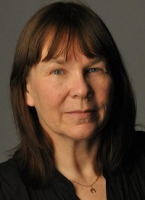
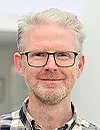
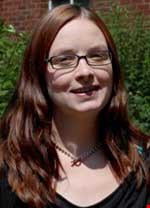
Yasu Xu is a Postdoctoral Researcher at the McGovern Institute for Brain Research, part of MIT's renowned Brain and Cognitive Sciences program. Their research focuses on synthetic biology, particularly leveraging CRISPR-Cas systems to engineer programmable gene circuits in Escherichia coli. Xu's work emphasizes the design of bistable genetic toggle switches and plasmid systems with tunable copy numbers, integrating principles from physics and systems biology to improve CRISPR-based circuit performance. Research interests span synthetic biology, gene regulation mechanisms, and microbial engineering with applications in biotechnology and biomedical research. Xu's contributions address challenges in programmable genetic systems, including circuit stability, thermodynamic determinants of CRISPR-Cas interactions, and high-throughput assay development.
Dr. Katarzyna Kajdanek is an Associate Professor at the Department of Urban and Rural Sociology, University of Wrocław. She holds leadership roles including Deputy Chairperson of the Council for Sociological Sciences, Head of the Sociology College in the Doctoral School, and Erasmus+ Programme Coordinator. She is a board member of ESA’s Urban Sociology Network (RN37) and active in the Polish Sociological Association (PTS). Her research focuses on urban-rural dynamics, civic engagement, and socio-spatial transformations. Her academic career includes scholarships for outstanding researchers (2017-2020) and leadership in funded projects like 'Reviving rural areas?' (2018-2021) and 'Return from suburbs to cities' (2019-2020). She publishes in top journals such as *City&Society* and *Applied Geography*, addressing topics like pandemic-induced urban migration, mountainous region development, and urban identity commercialization. She also edited *City and Power* (2017) and serves on the editorial board of *Sociological Studies*. Key Projects: OPUS Grant on rural revival (2018-2021), MINIATURA3 suburban migration study (2019-2020) Professional Roles: Doctoral College Head, Erasmus+ Coordinator, ESA Network Leadership Her work bridges urban sociology with policy research, analyzing how spatial changes affect social structures and vice versa. Current interests include post-pandemic urban-rural linkages and participatory urban planning strategies.
Dr. Muhammad Fahim is a Lecturer in the School of Electronics, Electrical Engineering and Computer Science at Queen's University Belfast. His research focuses on AI-driven solutions for healthcare, including wearable sensor data analysis, deep learning models for healthcare platforms, and integrating intelligence into digital twins for societal impact. He specializes in multimodal sensor data, energy expenditure estimation, and activity recognition in smart homes. His work spans projects such as TUDOR (Ubiquitous 3D Open Resilient Network) and MISO (Atmospheric Carbon Monitoring). He has been awarded the Queen's Merit Fellowship and SEDA Leading Undergraduate Programmes Certification. His research interests include edge intelligence, quantum-based models, and proactive health monitoring systems. Dr. Fahim collaborates internationally and has contributed to over 60 publications in areas like smart healthcare systems, network security, and environmental modeling. He actively participates in academic activities, including PhD examinations and invited talks on AI and wearable computing.
Aldina Franco is Associate Professor in Ecology and Global Environmental Change at the School of Environmental Sciences, University of East Anglia (UEA). She is a member of the Centre for Ecology, Evolution and Conservation, Environmental Biology, and ClimateUEA. She has been at UEA since 2009, progressing from Lecturer to her current role, and serves as Director of the International Master in Applied Ecology and Chair of Postgraduate Taught Programmes. She is actively accepting PhD students and supervising a diverse, international research group. PhD in Conservation Biology, UEA MSc in Maths Applied to Biological Sciences, University of Lisbon MSci in Biology with Ecology, University of Lisbon Her research focuses on movement ecology, biogeography, and ecological responses to global change . She investigates animal migration, dispersal, and behavioral responses to climate change and anthropogenic pressures. Her group develops advanced animal tracking technologies (e.g., GSM, LoRa) and applies niche modeling to inform conservation. Key research areas include climate impacts on biodiversity, design of protected areas, and conservation of migratory species. Her recent publications (2023–2025) reflect a strong focus on climate change impacts on animal movement, conservation technology, and biodiversity monitoring . Articles cover thermal sensitivity in insects, bird migration dynamics, sensor development for wildlife tracking, and multi-threat vulnerability assessments for migratory birds. There is a clear trend toward interdisciplinary research integrating ecology, technology, and policy. Marsh Award for Ornithology (2023) Scientific Committee LIFE Connect Ricotí (2022) Aldina Franco leads and co-leads multiple NERC and internationally funded projects, including research on heatwave impacts, landslide monitoring, and bird migration. She supervises numerous PhD students and postdoctoral researchers, many from Portugal and funded by FCT. She collaborates with NGOs such as BTO, BirdLife International, and SPEA, and institutions in the UK, Portugal, and the USA. She coordinates the Movetech Telemetry project, developing state-of-the-art tracking devices in collaboration with BTO and the University of Porto. Her work contributes to UN Sustainable Development Goals related to climate action and life on land.
Dr. Chris Homewood is an Associate Professor in World Cinemas and German at the University of Leeds' School of Languages, Cultures and Societies. He joined the institution in 2007 after completing his PhD at Leeds, preceded by an MA from the University of Nottingham and a BA from the University of Bangor. As Programme Manager for the MA Film Studies, he oversees postgraduate education in cinematic studies. His research explores three primary domains: German cinematic traditions spanning Weimar era to contemporary Berlin School, with special focus on representations of left-wing terrorism (RAF) and cultural memory of '1968' Popular geopolitics and orientalism , particularly analyzing Hollywood-China relations through frameworks of soft power and neo-colonial discourse Genre theory in World Cinemas , examining transnational narrative patterns and aesthetic developments His publication portfolio (2005-2021) demonstrates consistent focus on German film history, terrorism representation, and cinematic geopolitics, with recent work increasingly examining Sino-Hollywood dynamics. Thematically, his scholarship interrogates how cinema shapes collective memory, negotiates political trauma, and mediates cross-cultural power relations. He has successfully supervised five postgraduate researchers to completion, with projects covering German/Austrian cinema, Gothic horror, music biopics, and gender studies. As co-editor of New Cinemas: Journal of Contemporary Film and advisory board member for Studies in European Cinema , he actively shapes academic discourse. He has organized significant conferences including 'Cinema, Soft Power, and Geopolitical Change' (2017) and the German Screen Studies Network meeting (2014).
Jan Baumbach is a Professor in the Department of Mathematics and Computer Science at the University of Southern Denmark (SDU), where he leads cutting-edge research at the intersection of computer science, bioinformatics, and biomedical data science. His work integrates machine learning, network biology, and systems medicine to address complex challenges in health and disease. His research interests include Bioinformatics , Machine Learning , Gene Regulatory Networks , Drug Repositioning , Biomedical AI , and Computational Biology . He applies advanced computational methods to analyze large-scale biological data, with applications in cancer, metabolic diseases, dermatology, and infectious diseases. The 15 most recent publications highlight a strong trend toward biomedical artificial intelligence , network-based analysis , and translational bioinformatics . His work spans from foundational machine learning in healthcare to clinical applications in osteoarthritis, bone regeneration, and skin biology. A consistent theme is the integration of multi-omics data and the development of privacy-preserving federated learning frameworks for distributed healthcare systems. Jan Baumbach has been principal investigator on several major research projects, including: EU Horizon2020: Privacy-preserving federated machine learning in distributed healthcare Danish National Research Foundation: ATLAS Center for Functional Genomics of Tissue Plasticity Villum Foundation: Big Data Bioinformatics (Young Investigator Programme) Carlsberg Foundation: Computational profiling of bacterial volatile metabolomes (ProVol) He has supervised 13 PhD students and has an extensive publication record of 262 works. His research has been featured in high-profile media outlets, emphasizing the societal impact of drug repositioning and AI in medicine. He leads a research group focused on computational systems biology , with strong collaborations across Europe in the fields of genomics, metabolomics, and clinical data science.
Ingo Take is a Senior Lecturer at the Faculty of Philosophy and Social Sciences , Heinrich Heine University Düsseldorf , with expertise in Global Governance , International Relations , and Non-state Actors . His work explores legitimacy beyond the nation-state, focusing on cross-border governance in the EU, international organizations, and the Global South. He has led multiple DFG projects , including 'Sources of Legitimacy of Regional Governance in the Global South' (2019–2022), and co-founded the interdisciplinary Baltic Borderlands Graduate Programme (2009–2012). Take actively contributes to Internet regulation and environmental policy research, and serves as a reviewer for journals like European Journal of International Relations and Global Society . Research Trends : His recent work (2024–2012) spans legitimacy in regional governance (African Union, ASEAN), comparative governance models , and internet infrastructure regulation . Earlier studies address transnational NGOs , world society theories , and peace/conflict research , with keywords including Globalization , Security Policy , and Environmental Sustainability . Sub-fields emphasize cross-border cooperation , democratization , and multi-stakeholder initiatives . Projects and Collaborations : Since 1996, Take has been a member of the World Society Research Group , collaborating on globalization, political convergence, and non-state actors. He co-organized workshops on Governing Above, Below, and Alongside the Nation-State (2008) and Economics, Civil Society, and Globalization Discourse (2004), and contributed to the POLITIKON project (2003, 2001). He also reviewed for the VW Foundation (2002) and DFG (since 2002).
Dorota Rancew-Sikora is a Professor at the University of Gdańsk , affiliated with the Faculty of Social Sciences and serving as Head of the Department of Sociological Theory and Social Research Methodology . Her work bridges qualitative sociology , social anthropology , and discourse analysis , with a focus on multimodal communication and everyday culture . Education : PhD in Sociology (Faculty of Humanities, Nicolaus Copernicus University, Toruń), dissertation: Conversational Analysis in the Context of Social Structure Habilitation in Sociology (University of Warsaw), based on The Meaning of Hunting: Contemporary Meanings of Traditional Practices MA in Psychology (University of Gdańsk), thesis: Contradictions as Factors Favoring Intuition Research Interests center on qualitative methods , human-animal relationships , and environmental sociology . She explores conversational analysis of family rituals , hospitality practices , and social movements , often using video recordings to study multimodal interaction . Her work spans Polish-Icelandic collaborations on leisure practices and nature perception . Scientific Awards : Rector’s Individual Award (University of Gdańsk, 2010) for The Meaning of Hunting Rector’s Award (University of Gdańsk, 2022) for Hospitality: Letting Its Ideal Go Grants and Leadership include a National Science Centre Grant on Cultural Diagnostics (2009) and a Humanities Development Programme Grant (2012-2016) as principal investigator. She chairs the Polish Academy of Sciences Sociology Committee (2024–2027) and co-edits Przegląd Socjologii Jakościowej . Her international collaborations with scholars like Unnur Dís Skaptadóttir (Iceland) and Anna Horolets (Poland) highlight cross-border research on community gardens and transnational hospitality . Labs and Teams : She leads the Discourse.net network and co-founded the Discourse Analysis Consortium . Her team investigates micro-level social practices through conversation analysis , discourse theory , and ethnographic fieldwork , including studies of urban peripheries and Polish-Norwegian intercultural dynamics .
Professor Andrew Jackson FRS is a Programme Leader at the MRC Human Genetics Unit within the Institute of Genetics and Cancer at the University of Edinburgh. He serves as Group Leader for the Microcephaly, Cancer and Autoinflammation research program and holds an honorary consultant position in Clinical Genetics. Elected as a Fellow of the Royal Society in 2020, he has also been recognized as a Fellow of the Royal Society of Edinburgh and Academy of Medical Sciences (2014) and Member of EMBO (2013). His research program focuses on identifying genes causing inherited disorders of the brain, with particular emphasis on microcephaly, Aicardi-Goutieres syndrome, and connections between genome stability, inflammation, and cancer. The Jackson lab has discovered over 20 human disease genes involved in fundamental cellular processes related to growth and inflammation. His work bridges clinical genetics with basic molecular mechanisms, exploring how faults in nucleases mimic viral infection of the brain and how ribonucleotides in DNA can cause genome damage relevant to cancer. Analysis of his recent publications reveals a strong focus on genome instability mechanisms, with particular attention to how these processes relate to both rare genetic disorders and common diseases. His work integrates human genetics with cellular and molecular approaches, often using model organisms to understand disease mechanisms. Fellow of the Royal Society (2020) Fellow of the Royal Society of Edinburgh (2014) Fellow of the Academy of Medical Sciences (2014) Member of EMBO (2013) Professor Jackson leads an active research group with multiple postdoctoral researchers, technicians, and PhD students. His work is supported by major funders including the Medical Research Council, European Research Council, and EMBO. His research has significant translational potential, particularly in understanding the genetic basis of developmental disorders and identifying mechanisms relevant to cancer therapies. The Jackson lab maintains strong collaborations across the University of Edinburgh and with international partners in the US and Europe, focusing on genomic instability, DNA repair mechanisms, and developmental disorders.
Dr Caroline Ruddell is a Reader and Senior Lecturer in Film and Television at Brunel University London, within the Department of Arts and Humanities, College of Business, Arts and Social Sciences. She previously served as Programme Director in Film at St. Mary’s University. Her academic leadership includes roles as Programme Lead and active editorial responsibilities in key animation publications. Research Interests: Caroline specializes in animation, particularly handmade and craft-based animation, and the representation of identity on screen. Her work explores themes of gender, sexuality, horror, and television, with a strong focus on historical and cultural contexts. Publication Trends: Her recent publications center on Lotte Reiniger and the cultural value of craft in animation. She frequently contributes book chapters and edited collections, demonstrating deep engagement with interdisciplinary animation studies, identity representation, and fantasy genres. Scientific and Editorial Roles: Book Series Editor, Palgrave Animation Associate Editor, animation: an interdisciplinary journal (Sage) Author of monograph The Besieged Ego Editor of four book collections PhD Supervision and Grants: Caroline supervises PhD research in animation and identity representation. While specific grants are not listed, her extensive editorial and collaborative work suggests strong research leadership and funding engagement. She has co-authored works with scholars such as Paul Ward, Karen Boeckenhoff, and Claire Holliday, indicating an active research network. Research Groups and Teams: She is part of a collaborative research network in animation studies, particularly through her co-edited volumes and series editorship. Her co-author network includes Prof. Paul Ward and Prof. Meredith Jones, with whom she explores interdisciplinary themes in media and identity.
Valentin Jeutner is Associate Professor and Senior Lecturer in the Department of Law at Lund University, where he also serves as Director of the Master Programme in International Human Rights Law. His academic work spans public international law, legal theory, and interdisciplinary studies connecting law with philosophy, theology, and technology. PhD in Law, University of Cambridge PhD in Theology, University of Münster LLM, Georgetown University MTh, Lund University BA in Law, University of Oxford Attorney and Counselor at Law, New York State Jeutner's research centers on the foundational principles of international law, exploring its conceptual and aesthetic dimensions. He investigates how law interacts with philosophy, art, and digital technologies. His recent works include The Aesthetic Authority of Law and [l]ex machina , reflecting his interest in legal form and AI. He teaches courses in Public International Law, Legal Theory, EU Law, and Law & Technology. His recent publications reveal a strong trend in bridging legal theory with ethical, technological, and aesthetic questions. Topics include empathy in military decision-making, legal rituals, and the impact of quantum AI on law, indicating a forward-looking and interdisciplinary scholarly trajectory. Jeutner has received significant recognition for his work: University of Münster's Dissertation Prize (2024) Election to The New Society of Letters at Lund (2021) He actively supervises doctoral research and participates in major projects such as The Lotus Project, QSHIFT, and research on housing rights for migrants. He serves on the academic board of the Cambridge International Law Journal and is a book review editor for the Nordic Journal of International Law . In 2019, he advised the German Federal Chancellery on digital policy, demonstrating real-world policy engagement. He leads the Öresund International Law Workshop, fostering regional academic collaboration. Jeutner is involved in several research groups and labs, including those focused on global constitutionalism, law & technology (QSHIFT), and international human rights. His work is deeply embedded in both theoretical and applied legal networks across Europe.
Dr. Karin Leistner serves as Group Leader for Nanoelectrodeposition and Magneto-ionic Materials at the Leibniz Institute for Solid State and Materials Research Dresden (IFW Dresden). Her research focuses on the intersection of electrochemistry and magnetism, developing energy-efficient methods for voltage-controlled magnetic nanostructures. Her primary research interests include Magneto-ionic Materials , Nanoelectrodeposition , Magnetic Nanostructures , and Voltage-Controlled Magnetism . Through electrochemical approaches, she pioneers methods to manipulate magnetic properties at the nanoscale without requiring external magnetic fields, enabling applications in low-power spintronics and memory devices. Her work emphasizes redox transformations, electrolytic gating, and interfacial engineering to achieve programmable magnetism in hybrid metal/oxide systems. Analysis of her publication trends reveals consistent innovation in magneto-ionic effects (2021-2025), with increasing focus on microscale patterning (2023-2025) and energy-efficient device applications . Her research spans fundamental electrochemistry (e.g., self-terminated electrodeposition) to applied nanotechnology (e.g., magnetoresistance switching aerogels), demonstrating strong translational potential. Recent work integrates advanced characterization techniques like Kerr microscopy with electrochemical control for precise magnetic manipulation. Dr. Leistner has delivered over 20 invited talks at international institutions including TU Chemnitz, Forschungszentrum Jülich, and Simon Fraser University, highlighting her recognition as a leading expert in electrochemically controlled magnetism. Her collaborative research spans multiple continents, with publications co-authored by teams in Germany, USA, Mexico, Austria, and Slovenia. She leads research activities within IFW Dresden's nanoelectrodeposition laboratory, utilizing specialized electrochemical cells coupled with in situ magnetic characterization. Her group maintains strong collaborations with transmission electron microscopy facilities for real-time observation of electrochemical deposition processes, as demonstrated in joint work with the Wigner Research Centre for Physics.
Mathias Ekstedt is a Professor of Industrial Information and Control Systems at KTH Royal Institute of Technology in Stockholm, Sweden. Affiliated with the Software Systems Architecture and Security (SSAS) research group under the Division of Network and Systems Engineering in the Department of Computer Science, School of Electrical Engineering and Computer Science (EECS). He holds a Ph.D. (2004) and M.Sc. (1999) from KTH. Co-founder of foreseeti (acquired by Google in 2022) Director of KTH's Master Programme in Cybersecurity Member of the Digital Futures research center's Trust Working Group Affiliated with Center for Cyber Defense and Information Security (CDIS) Ekstedt's research focuses on information security and cybersecurity integrated with software/systems architecture modeling and analysis . His work emphasizes probabilistic attack/defense graphs for system-of-systems security evaluation, particularly in SCADA and Industrial Control Systems within power infrastructure. He has developed the Meta Attack Language (MAL) and collaborated extensively with the power industry. Recent research trends (2022-2025) include: Threat modeling languages for ICT and power systems Probabilistic attack graph applications in energy flexibility markets and smart cities Software Bill of Materials (SBOM) challenges in Java ecosystems Dynamic attack graph generation and lazy evaluation techniques Cyber-physical security for low-voltage grids and substation automation Ekstedt supervises 17 Ph.D. students (11 as main supervisor, 6 as co-supervisor) and has mentored numerous postdocs. He leads major projects like the SSF project CHAINS (software supply chain security) and coordinates initiatives within SweGRIDS , HONOR , and SOCCRATES .
Miia Lindström is a Professor at the University of Helsinki's Faculty of Veterinary Medicine, specializing in Food Hygiene and Environmental Health. She serves as a Supervisor for the Doctoral Programme in Clinical Veterinary Medicine and the Doctoral Programme in Food Chain and Health, and is a key member of Helsinki One Health (HOH), which aims to make the University of Helsinki one of the world's most recognized institutions in One Health research by 2025. Her research primarily focuses on veterinary science, particularly Clostridium botulinum and botulinum neurotoxins, food safety, microbiology, and food hygiene. Her work spans fundamental research on bacterial pathogenesis, sporulation mechanisms, and neurotoxin production, as well as practical applications in food safety and public health. She has contributed significantly to understanding how bacterial pathogens contaminate food sources and how they can be controlled. Analysis of her recent publications reveals a strong trend toward molecular and genomic approaches to understanding bacterial pathogenesis, particularly focusing on Clostridium botulinum. Her research increasingly integrates structural biology, genomics, and microbiome analysis to understand bacterial adaptation, toxin mechanisms, and host-pathogen interactions. She has also expanded her research to include insect vectors of bacterial pathogens and the role of mobile genetic elements in bacterial adaptation. As an active member of Helsinki One Health, Professor Lindström has contributed to profiling One Health research at the University of Helsinki, focusing on food safety, antimicrobial resistance, and risk management. Her research has substantial societal impact, particularly evident during the COVID-19 pandemic where HOH researchers were frequently featured in Finnish and international media. Professor Lindström has supervised numerous Master's and doctoral students, including Sirja Koskensalo, Anna Mertaoja, Tinja Toikka, and Hanna Castro. She has been involved in multiple significant research projects, including 'Understanding the Clostridium Spore' (CLOSPORE) and 'A Clostridal Biology Network' (CLOSTNET), which have received substantial funding and involved international collaborations. Her professional activities include extensive conference participation, peer reviewing for journals like Food Control and Research in Microbiology, and numerous public engagements. She has been particularly active in the Annual Finnish Veterinary Congress and various international conferences on botulism research and food microbiology.
Xiaoyue Ni is an Assistant Professor at Duke University’s Thomas Lord Department of Mechanical Engineering and Materials Science, with additional appointments in Biostatistics & Bioinformatics and Electrical and Computer Engineering. They lead the Ni Lab, developing human-oriented materials intelligence through soft electronics and digital metamaterials. PhD, California Institute of Technology (2018) Research focuses on flexible electronics , mechanical metamaterials , and machine learning to create dynamic materials that sense and adapt to human physiology. Key innovations include soft wireless sensors , liquid metal actuation , and non-invasive biomarker monitoring . Recent publications (2022–2019) highlight expertise in wearable health technology , mechanical-acoustic interfaces , and programmable materials . Collaborative work spans reconstructive surgery , athlete monitoring , and thermal expansion control .

.jpg)