Ellen Zegura is the Stephen Fleming Chair and Professor in the School of Computer Science at Georgia Tech's College of Computing. She holds multiple degrees from Washington University in St. Louis: BS in Computer Science, BS in Electrical Engineering, MS in Computer Science, and DSc in Computer Science. Her research focuses on computer networking, social responsibility in STEM education, and computing for development. She co-founded the Computing for Good initiative, emphasizing project-based learning to address societal challenges. Zegura is an IEEE and ACM Fellow, and serves on the Computing Research Association (CRA) Executive Board. Her education spans interdisciplinary fields at Washington University, combining computer science and electrical engineering. She has held leadership roles at NSF and CRA, advocating for equitable technology policies. Notable contributions include advancing QoE metrics for video conferencing, analyzing mobile broadband infrastructure disparities, and developing ethics education frameworks for computing curricula. Research interests include network measurement, community-empowered data practices, and bridging technical innovation with social impact. Recent work examines tribal mobility during pandemics, sensor co-design with Indigenous communities, and ethical pedagogy for teaching assistants. Her labs and collaborations, such as CERCS, emphasize interdisciplinary problem-solving. Zegura’s awards reflect her dual impact in technical innovation and societal engagement.
Eetu Mäkelä is a Professor of Digital Humanities at the University of Helsinki, leading the research group at the Helsinki Centre for Digital Humanities. He focuses on computational methods in humanities and social sciences, including datafication and interdisciplinary collaboration. He serves as Technical Director of DARIAH-FI and a Research Programme Director at the Helsinki Institute for Social Sciences and Humanities. Currently, he heads the preparatory group for the Helsinki Liberal Arts and Sciences Bachelor’s Programme. His research emphasizes technological and theoretical foundations of computational research, with notable contributions to linked open data, sociolinguistic analysis, and historical text mining. He has developed widely used tools like Recon, Palladio, and Octavo, which are employed in academic and public sectors. His work has garnered over 20 awards, including best paper and open science recognitions. Key areas of expertise include digital humanities methodologies, data integration, and open science practices. He actively contributes to teaching, designing courses such as 'Methods for Digital Humanities' and demonstrating innovative pedagogical approaches. His recent projects involve analyzing 18th-century philosophical texts and sociolinguistic change using computational methods. Awards: Multiple best paper awards, open data awards, and open science awards. Grants/Advising: Leads research initiatives funded by the Academy of Finland and other bodies. Mentors interdisciplinary research teams but no specific student names listed. He maintains active roles in academic infrastructure, including the DARIAH-FI initiative and the Helsinki Institute’s datafication program. His work bridges technical innovation with humanities scholarship, emphasizing practical, enduring systems for academic and public use.
Dr. Philipp Rode is Executive Director of LSE Cities and Associate Professor (Education) at the London School of Economics' School of Public Policy. He leads interdisciplinary urban development research, focusing on transport, sustainability, and governance. His work spans global urban challenges, including climate policy, emergency governance, and urban transitions. Rode co-founded the Urban Age Programme and advises international organizations like UCLG and Metropolis. He holds degrees in transport systems (TU Berlin), city design (LSE), and urban governance (PhD, LSE), and has authored/co-edited influential books such as Governing Compact Cities and Shaping Cities in an Urban Age . Affiliations: LSE Cities, University of St. Gallen (Visiting Professor) Key Roles: Co-Director of LSE's MSc in Cities, Lead of Emergency Governance Initiative Global Engagement: Partnered with OECD, UNDP, World Resources Institute, and over 50 city governments Research interests center on multi-dimensional urbanization, socio-technological transitions, and governance systems. His recent work emphasizes emergency governance frameworks for cities, climate-resilient urban policies, and accessibility strategies. Rode has contributed to shaping the UN's New Urban Agenda and advised the Global Commission on the Economy and Climate. Publications span peer-reviewed journals ( Transport Policy , Environment and Planning B ) and edited volumes addressing urban sustainability, transport governance, and strategic planning. His work bridges academic insights with policy impact, emphasizing actionable frameworks for equitable and resilient cities.
Jordi Perelló Muntan is an Associate Professor in the Department of Computer Architecture at the Universitat Politècnica de Catalunya (UPC), Barcelona, Spain, where he is also affiliated with the Escola Tècnica Superior d'Enginyeria de Telecomunicació de Barcelona (ETSETB). He is a member of the Broadband Communications Systems and Architectures (CBA) and IDEAI-UPC research groups, focusing on advanced optical and future internet networking technologies. Research Interests: His research spans telecommunications networks, optical fiber and optical networking, resource optimization, network architectures, and the Future Internet. He investigates performance optimization in 5G transport networks, Spatial Division Multiplexing (SDM), Recursive Inter-Network Architecture (RINA), elastic optical networks, and cognitive networking. His work integrates SDN, network virtualization, and green networking principles for scalable and efficient infrastructures. Publication Trends: His recent publications focus on probabilistic constellation shaping in multicore fiber networks, cognitive strategies for optical margin reduction, RINA-based QoS assurance, and migration planning toward spectrally-spatially flexible optical networks. These reflect a strong trend toward intelligent, adaptive, and energy-efficient network design for future communication systems. Scientific Awards: Co-recipient of the 2020 Fabio Neri Best Paper Award Runner-up (Elsevier Journal of Optical Switching and Networking) Co-recipient of the ONDM 2021 Best Paper Award Co-recipient of the 2019 IEEE Communications Society Charles Kao Award Co-recipient of the ONDM 2012 Best Student Paper Award Advising and Grants: He has advised multiple PhD students on topics including RINA, optical network planning, and virtual provisioning. He has led or participated in major European (H2020, FP7) and national (PID, TEC) research projects such as SLICENET, PRISTINE, TRAINER, and ALLIANCE, focusing on 5G, RINA, and sustainable network infrastructures. Labs and Teams: He is an active member of the CBA research group at UPC, contributing to experimental and theoretical advancements in optical and programmable networks. His team collaborates internationally on testbed development and standardization efforts in next-generation networking.
Raouf Boutaba is a Professor at the University of Waterloo , serving as Director of the David R. Cheriton School of Computer Science since July 2020. He holds prestigious fellowships including FRSC , FIEEE , FIEC , and FCAE . 2024: Inaugural Rogers Chair in Network Automation 2024: Ontario Research Fund–Research Excellence (ORF–RE) $2M grant for next-gen mobile networks 2021: University Professor title, University of Waterloo Research Interests span network automation, resource management in wired/wireless networks, network function virtualization (NFV), software-defined networking (SDN), cloud computing, blockchain, future Internet architecture, and cybersecurity. His work focuses on zero-touch networks, 5G/B5G slicing, and AI-driven orchestration. Scientific Contributions include 15+ recent publications on topics like reinforcement learning for RAN slicing, encrypted traffic classification, quantum network optimization, and self-driving infrastructure. His projects 5G LEAP and 5G ELITE explore network isolation and Open RAN principles. 2024: IFIP/IEEE CNOM Test of Time Paper Award 2024: Graduate Supervision Excellence Award 2021: Kenneth C. Sevcik Outstanding Student Paper Award (advisor) Teaching includes co-developing the NSERC CREATE Network Softwarization program, offering courses like Network Softwarization: Principles and Foundations (Winter 2024) and Technologies and Enablers since 2018. He emphasizes hands-on training in SDN, NFV, Open RAN, and 5G. Students and Collaborations : Supervised PhD students such as Shihabur R. Chowdhury (2021), Nashid Shahriar (2020), and undergrad Leni Aniva (2022 Gov. Gen. Silver Medal ). His team includes researchers working on 5G, blockchain, and AI-driven network management. Professional Leadership : Organized Rogers TEP Workshops (2024-2025), delivered keynotes at IEEE Globecom, ColCom, and BalkanCom, and served on expert panels for AI orchestration and 5G cybersecurity at major symposia.
Cornelia Schneider is a Professor and Head of the Institute of Computer Science at the University of Applied Sciences Wiener Neustadt. She leads research in digital health and care technologies, focusing on applications like Augmented Reality, sensor data analysis, and social robotics for vulnerable populations. Her work emphasizes user-centered design and has been supported by projects funded by FFG and the Active Assisted Living Programme. Her research spans telemedicine infrastructure, elderly care robotics, and health monitoring systems. Notable projects include 24/7-Digital (2023-2026), Care about Care (2021-2023), and AgeWell (2019-2022). She has pioneered solutions like CARU cares and DigiCare training programs. Dr. Schneider has been recognized with the AAL Award (2014) and the tecnet | accent Innovation Award (2021). She coordinates interdisciplinary teams and actively participates in conferences like Health Informatics Meets Digital Health. Her lab collaborations include FOTEC and Salzburg Research, where she previously led the e-Health Competence Center until 2019.
Jukka Manner is a Full Professor (tenured) of Networking Technology at Aalto University's Department of Communications and Networking (Comnet), School of Electrical Engineering. With a career spanning over two decades in internet technologies, he leads research in networking, wireless systems, and energy-efficient ICT solutions. Dr. Manner received his MSc (1999) and PhD (2004) degrees in computer science from the University of Helsinki. His academic journey has been marked by significant contributions to internet standardization through the IETF since 1999, where he served as co-chair of the NSIS working group. Professor Manner's research focuses on networking, software and distributed systems, with particular emphasis on wireless and mobile networks, transport protocols, energy efficient ICT and cyber security. His work bridges theoretical advancements with practical applications, addressing critical challenges in modern communication systems, sustainable networking practices, and security frameworks. His research group has made significant contributions to 5G technologies, UAV communications, and energy-efficient network design. His extensive publication record shows a clear evolution toward sustainability in networking technologies, with recent work focusing on energy efficiency in 5G systems, sustainable web technologies, and the environmental impact of digital infrastructure. The research demonstrates strong interdisciplinary connections between telecommunications engineering, computer science, and environmental science, with particular emphasis on reducing the carbon footprint of digital systems while maintaining performance. Cross of Merit, Signals (2014) Medal for Military Merits for contributions in national defence and C4 (2015) Professor Manner has supervised over 200 MSc theses and more than 20 doctoral dissertations, establishing himself as a dedicated mentor in the field. He has been principal investigator and project manager for over 15 national and international research projects, including serving as Academic Coordinator for the Finnish Future Internet research programme (2008-2012). His leadership extends to conference organization, having served as local co-chair of Sigcomm 2012 in Helsinki, and active participation as a peer reviewer and member of various Technical Program Committees. As an active contributor to internet standardization through the IETF, Professor Manner's work has practical impact on global networking technologies. His research group maintains strong connections with industry partners and participates in shaping future networking standards and practices, particularly in the areas of sustainable networking, 5G evolution, and security frameworks for emerging technologies.
Professor Anoush Ehteshami holds the Nasser al-Mohammad al-Sabah Chair in International Relations at Durham University's School of Government and International Affairs. He directs the Institute for Middle Eastern & Islamic Studies (IMEIS), one of Europe's oldest centers of excellence in Middle Eastern studies, and leads the HH Sheikh Nasser al-Mohammad al-Sabah Programme in International Relations, Regional Politics and Security. Previously, he served as Durham's Dean of Internationalization (2009-2011), founding Head of the School of Government and International Affairs (2004-2009), and Joint Director of the £3.9 million AHRC-funded Open Worlds Initiative (2016-2021). His research centers on Middle Eastern international relations with emphases on Persian Gulf dynamics, regional security architectures, and China's geopolitical expansion through the Belt and Road Initiative. He examines evolving power structures including Iran-Saudi rivalries, Eurasian connectivity, and the impact of non-state actors on regional stability. His work bridges theoretical frameworks with policy-relevant analysis of energy politics, strategic alliances, and cultural diplomacy in contested spaces. Ehteshami's publication trajectory reveals intensifying focus on Asia-Middle East linkages, Iranian strategic behavior, and multipolar security frameworks. Recent works analyze China's economic statecraft, proxy warfare mechanisms, and the fragmentation of regional orders through lenses of geopolitical competition and institutional adaptation. Scientific Awards: Fellow of the World Economic Forum (2002) As a doctoral supervisor, Ehteshami mentors Abdullah Al-Khonaini, Fahad Al Fahad, and Mengqi Sun. His £3.9 million AHRC grant directed cross-linguistic community research, while his RCUK-funded Centre for Advanced Study of the Arab World (2006-2016) established national doctoral training networks. He edits two major book series and serves on seven international journal editorial boards, shaping scholarly discourse on Middle Eastern and Islamic studies. He leads IMEIS as a hub for interdisciplinary Middle Eastern scholarship and directs the HH Sheikh Nasser al-Mohammad al-Sabah Programme, which integrates security studies with political economy analyses through collaborative international research initiatives.
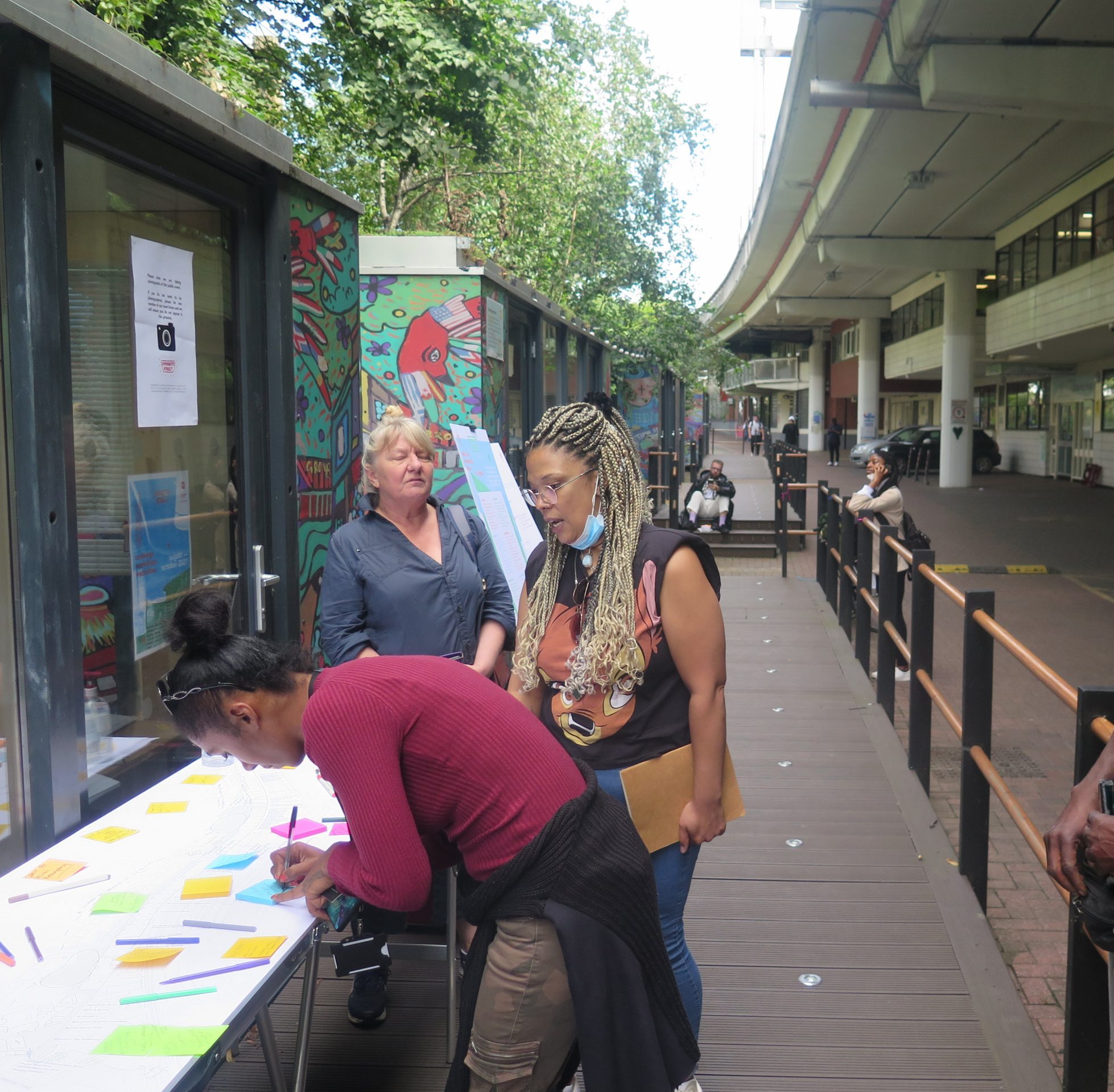
Pablo Sendra is an Associate Professor in Planning and Urban Design at The Bartlett School of Planning, University College London. He serves as Director of the MSc Urban Design and City Planning Programme and Coordinator of the Civic Design CPD and Cultural Infrastructure short course. Sendra combines his academic work with professional practice through his urban design firm LUGADERO LTD, which specializes in community co-design processes, and is co-founder of the CivicWise network. Architect Engineer, Universidad de Sevilla (2007) MArch Urban Design, University College London (2009) MSc in Sustainable City and Architecture, Universidad de Sevilla (2011) PhD in Architecture, Universidad de Sevilla (2014) Sendra's research focuses on social housing, community activism, co-design methodologies, social infrastructure, and public spaces, particularly examining how regeneration processes impact communities. His work emphasizes participatory action research conducted directly with communities, exploring how to design urban environments that encourage unplanned activities, social interaction, and collective governance. He advocates for disorder as a productive force in urban planning, challenging conventional top-down approaches to city design. His publications reveal a consistent focus on community-led alternatives to conventional urban regeneration, with particular attention to social housing estates. The research demonstrates a methodological commitment to co-production with communities, resulting in practical tools and frameworks that empower residents to develop their own regeneration proposals. His work bridges academic theory with practical application through community engagement. Fellow of the Higher Education Academy (2017) Designing Disorder included in The Observer's (The Guardian) Best Books of 2020 Sendra has secured significant research funding including a British Academy/Leverhulme Small Grant as Principal Investigator for the project 'Community-led social housing regeneration: between the formal and the informal,' and two Higher Education Innovation Fund grants for co-producing community-led proposals for social housing regeneration. His work with community groups such as Just Space and Granville Community Kitchen demonstrates a commitment to practical application of academic research. He has also served as a referee for numerous prestigious journals including International Journal of Urban and Regional Research, City, and Journal of Urban Design. Through LUGADERO LTD and the UCL Civic Exchange team, Sendra facilitates co-design processes for community street projects, public space transformations, and social infrastructure development. His work with the Westway Trust's Community Street project and Play Wimbledon demonstrates practical application of his research on collaborative urbanism. The CivicWise network serves as a platform for citizen-led initiatives in urban development.
Maria Monica Wihardja serves as a Visiting Fellow and Co-coordinator of the Media, Technology and Society Programme at ISEAS–Yusof Ishak Institute while holding an Adjunct Assistant Professor position at the National University of Singapore. Her career bridges academic research and high-impact policy engagement, including former roles as World Bank Economist in the Poverty and Equity Global Practice and senior advisor to Indonesia's Presidential Executive Office on strategic economic reforms. Her educational background features: PhD in Regional Science, Cornell University MPhil in Economics, Cambridge University BA in Applied Mathematics-Economics, Brown University Wihardja's research integrates economic analysis with sociotechnical systems, focusing on digital transformation's impact on labor markets, food security, and democratic processes. She examines how technological disruption creates both opportunities for inclusion and risks of inequality, particularly through studies of platform economies, electoral disinformation, and sustainable agro-food systems. Her methodology combines quantitative econometrics with policy-oriented field research, often leveraging large-scale datasets from government and private sector partnerships. Analysis of her recent publications reveals three dominant research trajectories: (1) Digital economy effects on labor market polarization and inclusion, (2) Food system resilience through agricultural modernization, and (3) Geopolitical dimensions of supply chain reconfiguration. These intersect with her policy engagement in ASEAN economic integration frameworks and Indonesia's G20 presidency initiatives. Her scientific recognition includes: Nikkei Asian Scholar 2023 award Wihardja actively shapes regional discourse through editorial roles at East Asia Forum and Center for Indonesian Policy Studies. Her grant-funded work frequently involves World Bank partnerships and Indonesian government collaborations, particularly on stunting prevention and food policy reforms. Current projects examine deepfake impacts on electoral integrity and sustainable financing mechanisms for green transitions. She leads the Media, Technology and Society Programme at ISEAS, coordinating interdisciplinary research on digital governance and Southeast Asian technology policy. The programme partners with regional think tanks, government agencies, and private sector stakeholders to develop evidence-based policy responses to technological disruption.
Professor Julian Richards is a leading academic in security and intelligence studies at the University of Buckingham, where he serves as Director of the Centre for Security and Intelligence Studies (BUCSIS). He holds a PhD in Political Violence from the University of Cambridge (1993) and spent nearly two decades in British Government intelligence roles before transitioning to academia in 2006. His roles include Programme Director for three MA programmes and supervising BUCSIS’s MPhil/DPhil research students. Education: PhD in Political Violence (Cambridge University, 1993). Prior to academia, he held senior intelligence positions with the UK Government. Research focuses on global security, extremism/radicalization, intelligence analysis techniques, and cyber threats. He has authored four books and numerous articles, including works on counter-terrorism, cyber-warfare, and Far-Right extremism in Europe. His media commentary spans BBC, Sky News, and international outlets. His articles explore contemporary security challenges such as post-Brexit intelligence dynamics, cyber resilience, and extremist propaganda in digital spaces. He emphasizes interdisciplinary approaches, combining political science, technology, and ethical considerations in intelligence practices. Awards: None explicitly listed, though his contributions to security discourse are widely recognized. He advises on policy and has testified in government inquiries on privacy-security balances. Advising & Grants: Supervises doctoral researchers in security studies and leads BUCSIS’s research initiatives. His work intersects academia and policy, addressing real-world security challenges through rigorous analysis. Labs/Teams: Directs BUCSIS, fostering collaborative research on global security threats. The Centre hosts interdisciplinary projects on intelligence analysis, cyber security, and counter-extremism strategies.
Jens Øllgaard Duus is a Professor and Vice Dean at the Technical University of Denmark (DTU), with dual roles in the Office for Study Programmes and Student Affairs and the Center for Teaching and Learning in Engineering Education. His primary academic affiliation is with the Department of Chemistry at DTU, where he conducts advanced research in NMR spectroscopy and structural analysis of complex organic molecules. His research focuses on the development and application of analytical methods for carbohydrates, natural products, and peptides, with applications in food and pharmaceutical sciences. Key areas include glycosylation, enzyme mechanisms, and structural elucidation of bioactive compounds. His work contributes to UN Sustainable Development Goals in life sciences and analytical chemistry. The recent publications highlight a strong trend in glycoscience, particularly in enzyme-catalyzed glycosylation, structural analysis of polysaccharides, and engineering of glycosyltransferases and glycosidases for synthetic applications. His work bridges chemistry, biotechnology, and medicine. Jens Øllgaard Duus actively supervises multiple PhD students across interdisciplinary projects, including work on drug delivery to the CNS, nucleic acid analogues, and AI in education. He is involved in both fundamental and applied research, contributing to sustainable chemistry and biotechnology. Structural elucidation of novel pro-inflammatory polysaccharides from Daphne mezereum L. (2024) Denmark as the Energy Island Pioneer (2023) Promiscuous Yet Specific: A Methionine-Aromatic Interaction in Glycosyltransferase (2023) Engineered Hexosaminidase as a Glycoligase (2023) Family 1 Glycosyltransferase from Zea mays (2022) He has supervised PhD projects on generative AI in education, nucleic acid analogues, CNS drug delivery, and asymmetric catalysis. His leadership in educational innovation and research supervision underscores his dual impact on science and pedagogy. He is affiliated with research groups in chemistry and biotechnology at DTU, contributing to a collaborative network focused on sustainable science and engineering education. His work integrates analytical chemistry with biological applications, forming a unique interdisciplinary fingerprint.
Rachee Singh is an Assistant Professor of Computer Science at Cornell University, leading the sysphotonics research group. She concurrently serves as an Amazon Scholar within the SageMaker Hyperpod teams, specializing in large-scale machine learning infrastructure development for cloud environments. Her research focuses on photonic interconnect systems for server-scale, rack-scale, and long-haul communication networks, targeting performance optimization for distributed machine learning and planet-scale cloud workloads. Key specialties include optical network design, fault-tolerant WAN architectures, and energy-efficient datacenter interconnects, with strong emphasis on practical deployment in real-world systems. Her group bridges theoretical networking principles with applied AI infrastructure challenges. Recent publications demonstrate concentrated innovation in photonic network optimization for ML workloads, particularly in wavelength management, collective communication algorithms, and chip-to-chip photonic fabrics. This work spans optical physics, distributed systems, and machine learning, revealing a trajectory toward sustainable, high-performance AI infrastructure. Scientific recognition includes: Amazon Research Award (2023) Cisco Research Award Dr. Singh actively mentors graduate researchers including Jonathan Aimuyo, Byungsoo Oh, and Arjun Devraj, whose co-authored publications form the core of her group's output. Research funding is secured through competitive grants from the NSF (including a $1M award for chip-to-chip photonic fabrics), SRC/DARPA JUMP 2.0 program, Cisco, and Cornell's Atkinson Center for Sustainability. The sysphotonics group operates as Cornell's hub for photonic network systems research, developing programmable integrated photonics solutions and collaborating with Amazon on SageMaker Hyperpod for next-generation ML infrastructure.
Kathy Fontaine serves as Senior Lecturer in Information Technology and Web Science at Rensselaer Polytechnic Institute and Program Manager for the RPI-IBM AI Research Collaboration. She joined RPI in 2014 after 25 years at NASA Goddard Space Flight Center where she developed international data access policies through CEOS WGISS, GEO, and USGEO. Her educational background includes: B.S. in Physics with Astrophysics Option from New Mexico Institute of Mining and Technology (1984) M.A. in Science, Technology and Public Policy from The George Washington University (2002) Ph.D. in Public Policy and Public Administration from Walden University (2013) Dr. Fontaine's research integrates data science policy with ethical frameworks, focusing on international data sharing cultures and volunteer organization dynamics. She develops courses like Big Data Policy and Ethical Informatics that address data scientists' societal responsibilities. Her work examines how policy implementations affect global earth observation systems and research data ecosystems, with particular attention to cross-cultural collaboration challenges in scientific consortia. Analysis of her publications reveals strong interdisciplinary connections between earth sciences and computer science, with emerging trends in data dexterity training, knowledge graph applications for social equity, and mineral inventory data legacies. Her research increasingly bridges technical data infrastructure with ethical considerations in data sharing. Dr. Fontaine actively contributes to scientific communities through the Earth Science Information Partners (ESIP), where she serves on GEO's Programme Board, and maintains affiliations with AGU, ACM Web Science, IEEE GRSS, and IEEE SSIT. Her current leadership in the RPI-IBM AI Research Collaboration extends her mission to develop responsible AI frameworks.
Professor Paul Nugent is a Professor of Comparative African History at the School of History, Classics and Archaeology at the University of Edinburgh, where he also serves as Research Director in History. His work bridges historical scholarship with contemporary policy concerns, particularly regarding African borderlands, wine history, and governance dynamics across the continent. Professor Nugent holds a BA Hons from the University of Cape Town, and MA and PhD from the School of Oriental and African Studies (SOAS) in London. His academic journey began with a temporary lectureship in Comparative Politics at Keele University before joining Edinburgh, where he was promoted to Reader in 2003 and Professor in 2005. Professor Nugent's research primarily focuses on the comparative history of African borderlands, with particular attention to West Africa. His work examines how border regions have shaped state formation, governance, and everyday life, challenging conventional notions of margins and centers. He has also conducted extensive research on the history of the South African wine industry, exploring connections between race, consumption, and economic development. His scholarship spans colonial and postcolonial history, with special attention to Ghana, where he has studied electoral politics and social contracts. Professor Nugent approaches these topics through interdisciplinary frameworks that connect historical analysis with contemporary policy challenges. His scholarly output demonstrates remarkable consistency in exploring the intersections between space, power, and identity in African contexts. Over the past decade, his work has increasingly focused on the governance implications of infrastructure development and border management across the continent, while maintaining his longstanding interest in Ghanaian politics and the cultural history of wine production. ERC Advanced Grant (€2.5 million over 5 years) for "African Governance and Space: Transport Corridors, Border Towns and Port Cities in Transition" (AFRIGOS) Leverhulme Research Fellowship for research on South African wine history British Academy ODA-Challenge grant (2024-2025) for "Living Heritage, Climate Change and Sustainability in South African Agriculture" Fellow of the Stellenbosch Institute of Advanced Study (STIAS) Member of the Institute for Advanced Study (IAS) in Princeton FRHistS (Fellow of the Royal Historical Society) Professor Nugent has supervised 34 successful PhD projects and currently mentors doctoral students including Francesco Longo and Kpanie Addy. His supervisory interests span wine and cultural heritage, African borderlands, regional integration, consumption studies (particularly alcohol), West African politics, and comparative imperial and colonial history. He has received significant research funding including a major ERC Advanced Grant and multiple British Academy grants, demonstrating the impact and relevance of his work to contemporary policy debates. His engagement extends beyond academia through advisory roles with the African Union Border Programme, ECOWAS, and the UNDP African Borderlands Centre. Professor Nugent founded and chairs the African Borderlands Research Network (ABORNE), which has evolved into a major international collaborative platform. He has also led significant research projects including the ERC-funded AFRIGOS project, which examined governance effects of large-scale infrastructure investments across Africa, and currently serves as PI for a British Academy project addressing climate action in the South African wine industry.