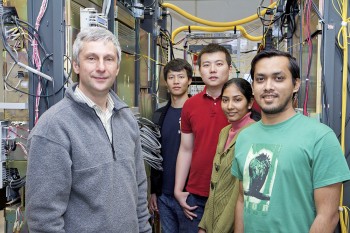
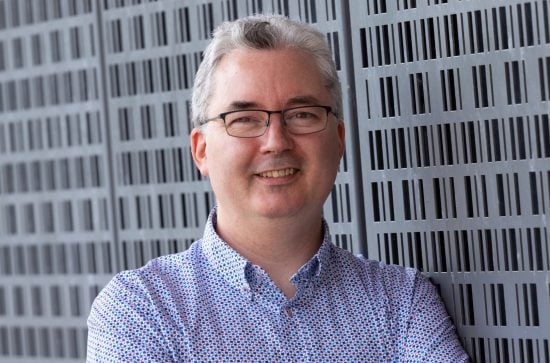
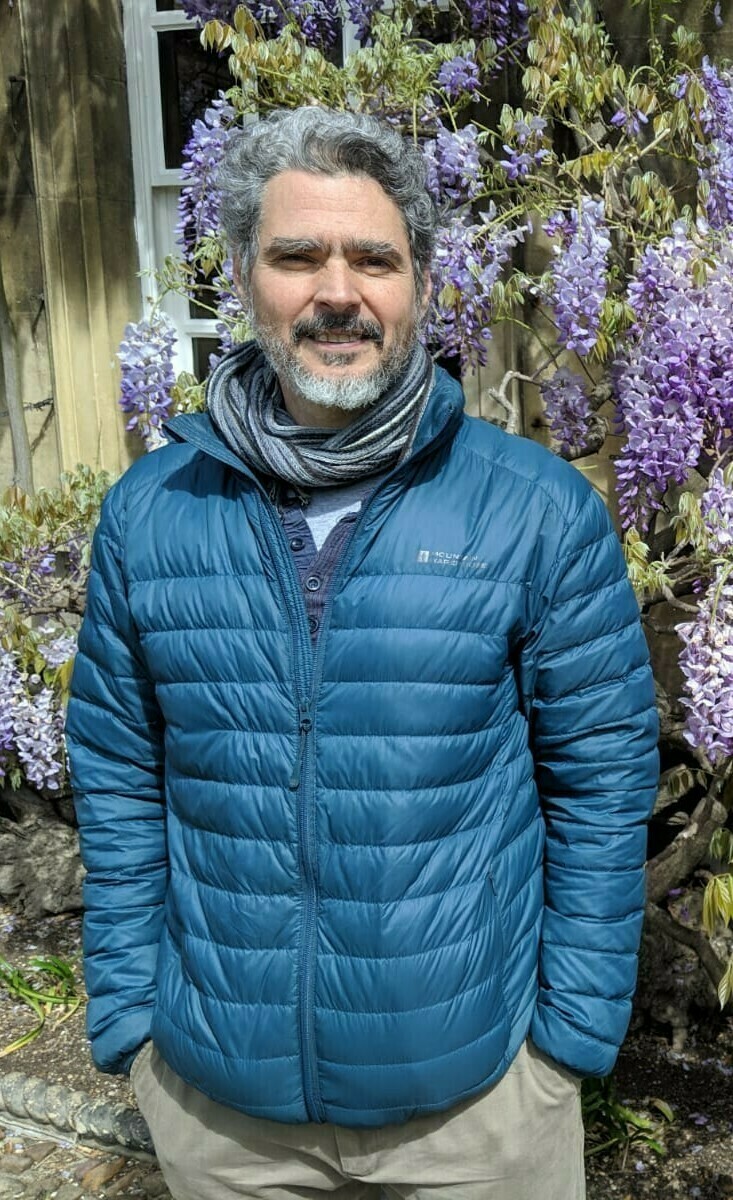
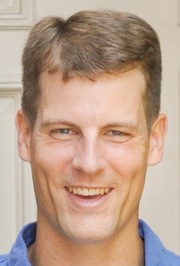
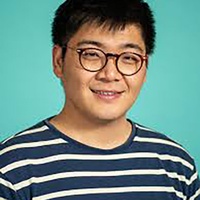
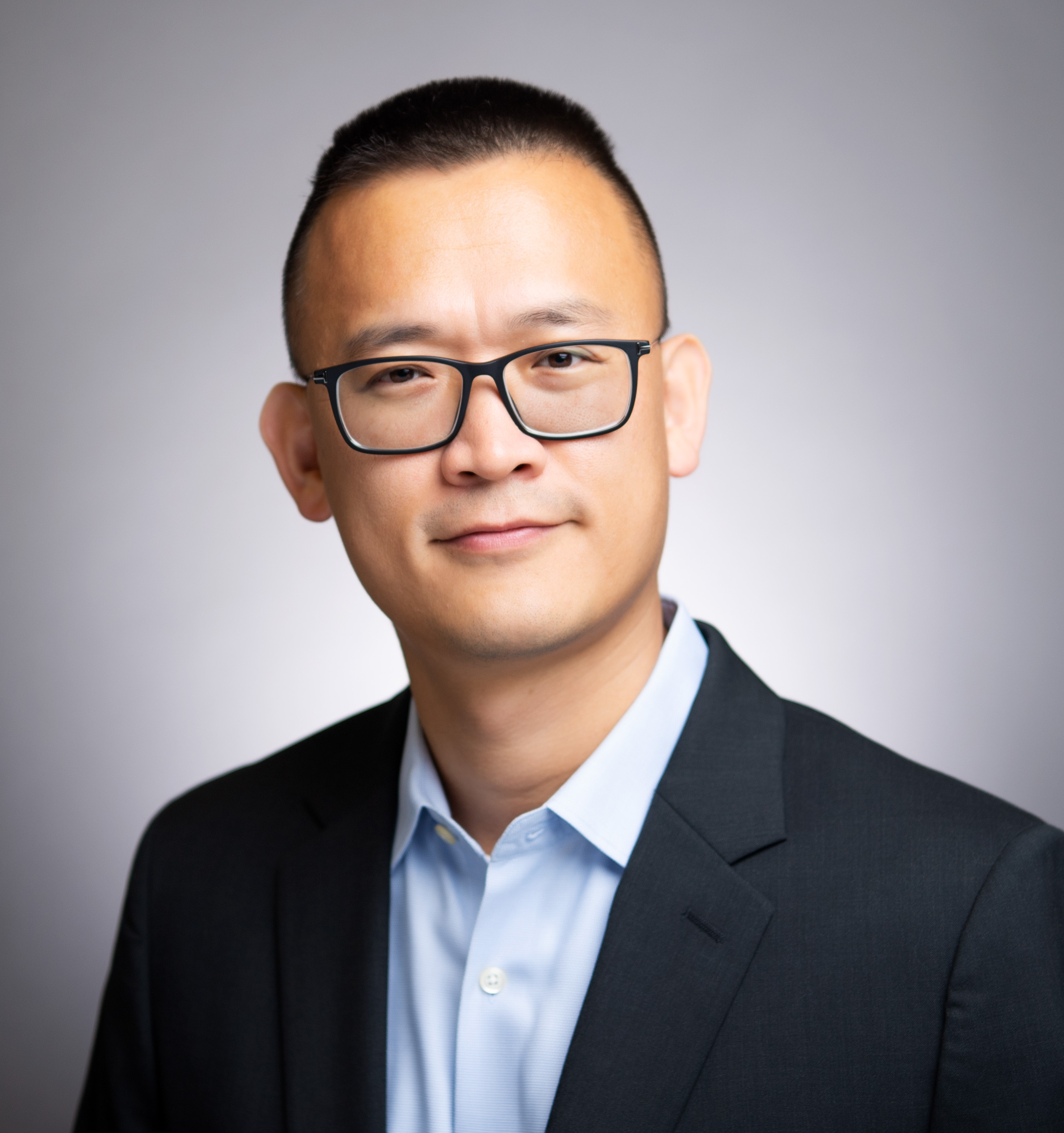
Luciano Lavagno is a Full Professor at the Department of Electronics and Telecommunications, Polytechnic University of Turin, with over two decades of academic and research contributions. His work bridges hardware acceleration, low-power electronics, and intelligent system design. Research Focus: Hardware-accelerated machine learning, high-level synthesis (HLS) for FPGA/ASIC, heterogeneous CPU/GPU/FPGA platforms Key Projects: SPACE (predictable acceleration), REBECCA (secure AI acceleration), HPC-National Center (quantum computing), and oral history preservation via "Ti racconto una storia" initiative His recent publications analyze CNN inference optimization, subgraph isomorphism, and superword-level parallelism exploitation. Lavagno supervises multiple PhD students working on FPGA acceleration, neural network hardware, and embedded systems. As Principal Investigator for national and EU-funded projects (PRIN, JTI-ECSEL, PNRR), he drives advancements in sustainable computing infrastructure. His patented technologies include MIx&Latch timing methodology, capacitive sensing innovations, and 5G acceleration frameworks.
Andrea Fumagalli is a Professor in the Department of Electrical Engineering at the Erik Jonsson School of Engineering and Computer Science , The University of Texas at Dallas. He earned his Ph.D. (1992) and Laurea (1987) in Electrical Engineering from Politecnico di Torino, Italy. Research Interests: All-Optical Network Architectures, Photonic Slot Routing, Wavelength Routing and Protection, Sensor Networks, Cooperative Wireless Networks, Network Optimization, Next Generation Internet (NGI), and Multi-hop Optical Networks. Education: Ph.D., Electrical Engineering, Politecnico di Torino (1992) Laurea, Electrical Engineering, Politecnico di Torino (1987) Key Research Trends: His recent publications focus on 5G networking, optical network automation, elastic optical networks, network reliability, and cross-layer optimization. He explores FPGA acceleration in 5G Low-PHY functions, live migration of containerized network components, and spectral fragmentation mitigation in EONs. Scientific Awards: Best Teaching Award, Electrical Engineering, UTD (2002) Best Thesis Award for Ph.D. Advisee Isabella Cerutti (2002) IEEE ComSoc Distinguished Lecturer Tour (2000) Best Paper Award (1999): 'An Optimal Design Algorithm for Photonic Slot Routing Networks Migrating to Optical Packet Switching' Advising and Grants: He advised Ph.D. student Isabella Cerutti. In 2001, he secured a $300,000 grant from FUNDACAO CPqD for optical network reliability research. He leads the Optical Networking Advanced Research (OpNeAR) Lab at UTD, collaborating on international projects like the Italian government-funded grid computing initiative (2002) and the OMEGA Test-bed for differentiated reliability. Laboratories and Teams: He directs the OpNeAR Lab , which develops tools for optical network emulation and reliability testing. His projects involve partnerships with institutions in Brazil (Unicamp), Sweden (KTH), Italy (Politecnico di Torino, Scuola Superiore Sant'Anna), and CNR/CNIT.
Hossein Valavi is a Lecturer and Assistant Director of Undergraduate Studies at Princeton University, contributing to advancements in computer architecture and hardware acceleration. His research focuses on in-memory computing, neural networks, and energy-efficient systems, with notable work in reconfigurable architectures and mixed-signal processing. He has received multiple teaching awards, including recognition for innovative pandemic-era Car Lab courses and collaborative work honored by the Edison Patent Award. His academic contributions span academic positions since 2018, emphasizing both research and pedagogical excellence. Key technical areas include scalable in-memory computing systems, analog neural network accelerators, and low-power matrix factorization algorithms. His work addresses critical challenges in data movement reduction and hardware-software co-design for modern computing systems. Awards: Teaching Excellence Awards (2021, 2023), Edison Patent Award (2023) Grants & Projects: Leading developments in in-memory computing accelerators and embedded microprocessor designs Research teams under his guidance have produced impactful IP in semiconductor layouts, CNN accelerators, and programmable architectures, aiming to bridge theoretical computer science with practical hardware implementations.
Stephen Brown is a Professor at the University of Toronto within the Department of Electrical and Computer Engineering under the Faculty of Applied Science and Engineering. He earned his B.A.Sc and M.A.Sc in Electrical Engineering from the University of Toronto and New Brunswick, respectively, and a Ph.D. in Electrical Engineering from the University of Toronto (1992). His career spans over two decades in academia and industry collaboration. Education : B.A.Sc, University of New Brunswick M.A.Sc, University of Toronto Ph.D, University of Toronto Professor Brown’s research focuses on field-programmable gate arrays (FPGAs) , CAD algorithms , and computer architecture , with applications in machine learning and high-level synthesis . He is a principal investigator in the LegUp project , an open-source high-level synthesis framework that bridges software and hardware design. His work also extends to optimizing FPGA interconnect delays, physical synthesis, and logic block architectures. Key trends in his publications include advancements in high-level synthesis tools, FPGA architecture evaluation, and timing-driven design methodologies. His contributions often intersect with design automation , resource sharing , and embedded systems . Scientific Awards : NSERC 1992 Doctoral Prize Hart Professorship for Innovation in Teaching (2017) Multiple teaching excellence awards Best Paper Award at ICCAD 1990 Best Paper Award nomination at Canadian Conference on VLSI (1989) As Director of the FPGA University Program at Intel Corporation, he leads industry-academia initiatives. His teaching portfolio includes courses like ECE253 (Digital Logic) and ECE1733F (Switching Theory).
Paul R. Genssler is a Dr.-Ing. researcher at the Chair of AI Processor Design (AI-Pro) within the Technical University of Munich (TUM), actively advancing hardware solutions for artificial intelligence under Prof. Hussam Amrouch. His work bridges computer engineering and emerging technologies, focusing on overcoming fundamental limitations in conventional computing architectures through brain-inspired paradigms. His research spans critical domains in next-generation computing: Hyperdimensional Computing for robust pattern recognition and bioinformatics applications Neuromorphic and In-Memory Computing architectures for energy efficiency Reliability engineering for emerging memory technologies (FeFET, etc.) Quantum computing support systems including cryogenic embedded electronics Machine learning-driven transistor aging prediction and mitigation Analysis of his 15 most recent publications (2023-2024) reveals a dominant trend toward hyperdimensional computing as a unifying framework for addressing reliability challenges in emerging technologies. His work consistently integrates in-memory computing techniques to bypass von Neumann bottlenecks while targeting real-world applications like genome matching and unsupervised learning. A significant portion focuses on error-resilient implementations for unreliable nanoscale devices, demonstrating exceptional cross-stack expertise from transistor physics to algorithm design. As a core member of TUM's AI Processor Design group affiliated with the Munich Institute of Robotics and Machine Intelligence (MIRMI), Genssler collaborates extensively on projects spanning cryogenic quantum control systems, FPGA-based AI resilience, and monolithic 3D integration. The team operates at the intersection of semiconductor physics, computer architecture, and machine learning, with strong industry connections evident through publications at DATE, ASP-DAC, and ICCAD.
Professor Damien Woods is a faculty member at Maynooth University's Faculty of Science & Engineering, specifically affiliated with the Department of Computer Science and the Hamilton Institute. He leads groundbreaking research in DNA computing, molecular programming, and optical computing, focusing on self-assembly, algorithmic design, and computational complexity. ERC Consolidator Grant: 'Computationally Active DNA Nanostructures' SFI ERC Support Award EIC Pathfinder Challenge Grant: 'DISCO - DNA Infrastructure for Storage and Computation' His research projects explore programmable DNA storage, molecular robotics, and robust self-assembly systems. Recent publications span diverse topics like algorithmic DNA tile assembly, thermodynamic stability, and computational universality in nanosystems. Awards include ERC and SFI grants, with a focus on bridging theoretical computer science and experimental molecular biology. Scientific Contributions include: 2022: 'Turning Machines' - Molecular Robotics 2019: 'Diverse Molecular Algorithms' in Nature 2017: 'A Cargo-Sorting DNA Robot' in Science
Marcelo Fiore is a Professor in Mathematical Foundations of Computer Science at the Department of Computer Science and Technology, University of Cambridge, and a Fellow of Christ's College. His research spans category theory, lambda calculus, equational logic, type theory, and mathematical structures in computer science. University: University of Cambridge Department: Department of Computer Science and Technology Academic Rank: Professor College Affiliation: Christ's College Fiore's work focuses on the intersection of category theory and computer science, particularly in abstract syntax, denotational semantics, and algebraic structures. Recent publications explore combinatorial models, normalization by evaluation, and homotopy type theory applications. 2025: Creation/annihilation operators in mathematical structures 2024: Lawvere theories in toposes and differential linear logic 2023: Homotopy type theory and normalization frameworks 2022: Second-order abstract syntax formalization and quotient types Fiore has advised PhD students including N. Arkor (2022) and O.M. Elsayed (2011), who researched monadic structures and second-order algebraic theories respectively. He contributes to departmental initiatives such as the Accelerate Programme for Scientific Discovery and Data Trusts Initiative at Cambridge.
Kath Scanlon is a Distinguished Policy Fellow at LSE London and CASE Associate with 25 years of experience at the London School of Economics. She specializes in housing policy research across multiple tenures including social and private rented housing as well as owner-occupation, with additional expertise in comparative mortgage finance and collaborative housing approaches. Her research is grounded in economics but draws on techniques and perspectives from geography and sociology to improve the evidence base for policy decisions. Since 2015, she has focused on accelerating new housing development in London, examining solutions from cohousing to large-scale private rented schemes. She has also edited the authoritative book Social Housing in Europe (Wiley, 2014). Scanlon's publications reveal a strong focus on practical housing policy applications across multiple dimensions including private renting, social housing, housing finance, and collaborative approaches. Her work increasingly incorporates cost-benefit analysis methodologies applied to housing policy questions, with recent projects examining NRPF policies, domestic abuse support systems, and metropolitan area strategies. She has worked with numerous national and international institutions including the Council of Europe Development Bank, the Inter-American Development Bank, Denmark's Realdania foundation, and the European Investment Bank. Her international experience spans living and working in the USA, Spain, Denmark, Yugoslavia, Kuwait and Peru, and she speaks Spanish, Italian, Serbian, Danish and French. Scanlon has led numerous policy-relevant research projects for clients including the Scottish Government, London Councils, Camden Council, Shelter, the Greater London Authority, and various housing associations. Her work consistently bridges academic research and practical policy implementation in the housing sector.
Dirk Koch is an Associate Professor in the Department of Computer Science at the University of Manchester. He specializes in reconfigurable computing, FPGA architecture, and hardware acceleration. His research addresses challenges in field-programmable gate arrays (FPGAs), high-level synthesis, and stream processing. He leads the Advanced Processor Technology group and contributes to the Digital Futures Institute for Data Science and AI. Education: Doctorate in Computer Engineering Affiliations: Centre for Digital Trust and Society, EPSRC Functional Oxide Reconfigurable Technologies Programme His work focuses on optimizing FPGA performance, reducing power consumption, and advancing reconfigurable hardware systems. Recent projects include bitstream manipulation frameworks, runtime stream processing pipelines, and FPGA fabric optimization techniques. He has collaborated extensively with industry partners like AMD-Xilinx. Dirk Koch has supervised 11 research projects, including work on clock region process variation analysis and FPGA virus scanning. He holds grants from EPSRC and has published 62 peer-reviewed works.
Nicola Peserico is a Research Professor in the Department of Electrical & Computer Engineering at the University of Florida, affiliated with the College of Engineering. His primary research focus is on Integrated Optical Circuits and Silicon Photonics, with an emphasis on heterogeneous integration, hardware for Machine Learning/Neural Networks, and biosensing applications using integrated photonics. Education: Ph.D. (2018), M.S. (2014), and B.S. (2011) in Telecommunication Engineering from Politecnico di Milano. His research explores cutting-edge photonic technologies for accelerating neural networks, including Fourier-based convolution operations, reconfigurable circuits for solving PDEs, and energy-efficient optical interconnects. Recent work highlights advancements in photonic-electronic ICs, thermal management in photonic systems, and overcoming bottlenecks in memory and compute architectures. His publications emphasize photonic tensor cores, joint transform correlators, and silicon photonics integration for AI acceleration. Notable contributions include roadmap analyses for neuromorphic photonics and innovative packaging strategies for photonic neural network accelerators. No scientific awards or grants are explicitly listed in the provided texts. His advising record is not documented here. Labs/Teams: His work is part of broader efforts in photonic computing and AI hardware acceleration at the University of Florida, leveraging silicon photonics for next-generation computing systems.
Lisa Yan serves as a Teaching Professor in the Department of Electrical Engineering and Computer Sciences at the University of California, Berkeley, appointed in Spring 2022. She teaches core computer science education courses including CS 195 (Social Implications of Computer Technology), CS H195 (Honors variant), CS 294-189 (Teaching Process Design), and CS 375 (Teaching Techniques), holding regular office hours in Soda Hall for student engagement. Her academic credentials include: PhD in Electrical Engineering from Stanford University (2019) MS in Electrical Engineering from Stanford University (2015) BS in Electrical Engineering and Computer Science from UC Berkeley (2013) Dr. Yan's research centers on data-driven analysis of student learning in large-scale computer science courses, with significant contributions to computing ethics pedagogy and teaching assistant development programs. Her work develops innovative methodologies for assessing student earnestness in interactive lectures, creating flexible learning extensions, and designing integrity-focused assessments. Earlier research focused on software-defined networking and network switch performance optimization, demonstrating technical depth before her pivot to educational innovation. Current projects emphasize scalable teaching techniques and mastery learning frameworks that address challenges in modern CS education. Analysis of her 14 publications (2013-2024) reveals a strategic shift from computer networking (pre-2018) to computer science education research (2018-present). Recent work (2020-2024) dominates in venues like SIGCSE, featuring tools such as Otter-Grader for Jupyter notebook grading and the Earnest Insight Toolkit for lecture participation analysis. This evolution highlights her commitment to solving practical educational challenges through data analysis and tool development, particularly for large undergraduate courses. She received recognition through: The Faculty Award for Outstanding Mentorship of GSIs (2024) Lisa actively mentors Graduate Student Instructors and collaborates with educational technology initiatives. Her research team includes dedicated support staff like Taylor Kaserman (taylor.kase@berkeley.edu), reflecting structured collaboration in developing teaching innovations. She contributes to curriculum design committees within EECS, focusing on assessment integrity and scalable pedagogical methods for growing student populations. Her work operates through the EECS department's educational infrastructure, utilizing Soda Hall resources for both teaching coordination and research development, with strong connections to Berkeley's broader computing education ecosystem.
Chris Peikert is a Professor in the Department of Computer Science and Engineering at the University of Michigan's College of Engineering. He received his Ph.D. from MIT's Computer Science and Artificial Intelligence Laboratory in 2006 under the supervision of Silvio Micali. Peikert is a leading researcher in cryptography, particularly known for his foundational work in lattice-based cryptography. His research interests span cryptography, lattices, coding theory, algorithms, and computational complexity, with a particular focus on cryptographic schemes whose security can be based on the apparent intractability of lattice problems. Peikert has made significant contributions to the development and analysis of lattice-based cryptographic primitives, including ring-LWE, fully homomorphic encryption, and zero-knowledge proofs. Peikert's recent work demonstrates continued leadership in post-quantum cryptography, with publications in top venues like CRYPTO, EUROCRYPT, and STOC. His research spans theoretical foundations of lattice problems to practical implementations of lattice-based cryptographic systems, including hardware acceleration for fully homomorphic encryption. IACR Fellow (2024) Test-of-Time Award from Crypto 2008 (2023) TCC Test-of-Time Award (2017) Patrick C. Fischer Development Professor of Theoretical Computer Science (2017) Best Paper Award at Eurocrypt 2010 Best Paper Award at STOC 2009 Alfred P. Sloan Foundation Fellowship Google Research Award Peikert has been actively involved in the cryptographic research community, serving on program committees for major conferences including CRYPTO, EUROCRYPT, FOCS, and TCC (where he was program co-chair in 2021). He has also developed educational resources, including extensive lecture materials on lattice-based cryptography and teaching courses on cryptography and theoretical computer science at both the undergraduate and graduate levels.
Dewei Yi is a Senior Lecturer (Associate Professor) in the Department of Computing Science, School of Natural and Computing Sciences at the University of Aberdeen, UK. He holds a PhD from Loughborough University and is an active researcher in AI, computer vision, and intelligent systems. He serves as Director of the MSc AI and MSc Robotics and AI programmes. Research Interests: His research spans AI-enabled healthcare, medical image processing, intelligent vehicles, robotics, precision agriculture, remote sensing, and applied machine learning. He focuses on hybrid intelligent systems, personalised AI, federated learning, fairness, and explainability. Recent Publication Trends: His latest work includes medical image quality evaluation using contrastive learning, federated learning for diabetic retinopathy, UAV-based solar panel inspection, vascular image analysis, and emotion recognition from ECG data, reflecting a strong trend toward healthcare and intelligent systems with real-world impact. Scientific Awards: Fellow of the Higher Education Academy (FHEA) Outstanding Reviewer, Transportation Research Part C (TRC) Advising and Grants: Dr Yi supervises multiple PhD students in AI, computer vision, and machine learning. His graduated PhDs include Debinal Bakyavathi Rajan, Sami Hamid Al Sulaimani, and Adinath Abhimanyu Ghadage. He has secured significant funding as PI and Co-PI, including a £408K Smartawl 5.0 project and a £794K Cancer Research UK grant (Co-PI). Labs and Teams: He leads research in AI for healthcare and intelligent vehicles, collaborating with institutions like University of Warwick, Loughborough University, and industry partners such as AVL Powertrain Ltd. His work is supported by interdisciplinary teams focusing on embedded AI, medical applications, and sustainable technologies.
Dr. Hui Lu is an Assistant Professor in the Department of Computer Science and Engineering at The University of Texas at Arlington (UTA), where he has been serving since September 2023. Prior to joining UTA, he was an Assistant Professor at SUNY Binghamton from 2017 to 2023. His academic journey includes a Ph.D. in Computer Science from Purdue University (2017), and Master’s and Bachelor’s degrees in Electronic Engineering from Shanghai Jiao Tong University. Ph.D., Computer Science, Purdue University, 2017 M.S., Electronic Engineering, Shanghai Jiao Tong University, 2009 B.S., Electronic Engineering, Shanghai Jiao Tong University, 2006 Dr. Lu's research centers on systems software with a focus on operating systems, virtualization, cloud computing, file and storage systems, and computer networks. His work emphasizes performance optimization and security in cloud-native environments. He has collaborated with leading industrial research labs including HPE Labs, IBM Research, Microsoft Research, AT&T Labs, and NEC Labs. His recent publications span top-tier venues such as OSDI, SOSP, USENIX ATC, and VLDB. The article trends reflect a strong emphasis on secure container technologies, memory tiering, packet processing optimization in virtualized networks, and efficient cloud storage systems. His work increasingly integrates hardware-aware optimizations and lightweight security mechanisms. NSF CAREER Award (2023) UT System Rising STARs Award (2023) Summer Faculty Fellowship, Air Force Research Lab (2019) Dr. Lu has successfully advised multiple Ph.D. students, including Jiaxin Lei, who is now an Assistant Professor at Kean University. His research is supported by major grants from the National Science Foundation (NSF) and the Air Force Research Lab (AFRL), focusing on secure containers, non-volatile memory management, and cloud-native virtualization. He has served as Principal Investigator (PI) on multiple funded projects, demonstrating strong leadership in research and innovation. He is actively involved in teaching core courses such as Operating Systems and advanced topics in systems and architecture. He mentors a growing group of Ph.D. students and welcomes motivated individuals to join his research group.
Daehyeok Kim is an Assistant Professor in the Department of Computer Science at The University of Texas at Austin, where he co-leads the UT Networked Systems Research Group and participates in the Wireless Networking and Communications Group and 6G@UT. He serves as co-PI for the LDOS NSF Expeditions in Computing project, a major initiative rethinking operating systems through AI. His educational background includes a Ph.D. in Computer Science from Carnegie Mellon University under advisors Vyas Sekar and Srinivasan Seshan, where his dissertation introduced abstractions for elastic in-network computing. He also earned B.S. and M.S. degrees in Computer Science and Engineering from POSTECH, South Korea, followed by research scientist work at KAIST prior to his Ph.D. Kim's research centers on hardware-software co-design for cloud and edge data centers, targeting speed, efficiency, and resilience. Key projects include resource management for programmable infrastructure, robust cellular network design, end-to-end network transport frameworks, and learning-directed operating systems. His work bridges computer networks, operating systems, distributed systems, and 5G/6G technologies, with emphasis on virtualized radio access networks (vRAN) and edge computing challenges. Analysis of his recent publications reveals a dominant focus on enhancing 5G/6G infrastructure reliability—particularly in virtualized RANs—through innovations in failover mechanisms, integrity protection, and latency-sensitive resource allocation. His research consistently addresses critical industry pain points like sub-second availability requirements, fronthaul security vulnerabilities, and end-to-end service-level objective (SLO) guarantees for mobile-edge applications. Notable scientific awards include: NSF CAREER Award (2025) for advancing cloud hardware efficiency Microsoft Research PhD Fellowship (2019) Bronze Award at Samsung HumanTech Paper Awards (2018) Qualcomm Innovation Awards (2016) His grant portfolio features leadership in the $10M+ LDOS NSF Expeditions project and the NSF CAREER award, both driving transformative work in AI-integrated operating systems and resilient network infrastructure. These projects demonstrate strong industry-academia collaboration with Microsoft Research, wireless vendors, and cloud providers. Kim co-leads the UT Networked Systems Research Group, which operates within the Wireless Networking and Communications Group and 6G@UT consortium. These labs maintain a 5G/6G testbed for Open RAN validation and focus on solving real-world problems in cellular infrastructure, edge computing, and network security through close partnerships with industry leaders.