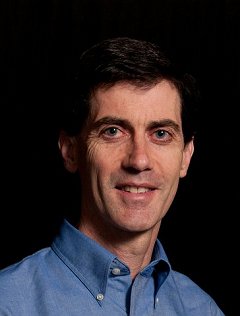
Thomas Reps is a Professor at the University of Wisconsin-Madison 's Computer Sciences Department. He has held the J. Barkley Rosser Professor and Rajiv and Ritu Batra Chair since joining in 1982. His research spans program analysis , model checking , abstract interpretation , computer security , and quantum computing . Ph.D. in Computer Science from Cornell University (1982), ACM Doctoral Dissertation Award winner Co-founder of GrammaTech, Inc. (1988) Held visiting positions at INRIA (France), University of Copenhagen (Denmark), CNR (Italy), and University Paris Diderot (France) Research Interests include program slicing, interprocedural dataflow analysis, pointer analysis, software model checking, and code instrumentation. His recent work focuses on quantum circuit verification , CFLOBDDs , and unrealizability logic . His scientific awards include: ACM Fellow (2005) Foreign Member, Academia Europaea (2013) ACM SIGPLAN Achievement Award (2017) He has advised Ph.D. students like Akash Lal (SIGPLAN Dissertation Award) and Gogul Balakrishnan (ETAPS Best Paper Award). His work has produced influential papers such as the 1988 PLDI paper on interprocedural slicing (50 most influential PLDI paper, 2004) and the 2003 TOPLAS paper on parametric shape analysis.
Prof. Sebastian Müller holds a professorship in Finance at the TUM School of Management, TUM Campus Heilbronn since 2019. Previously, he was a professor at the German Graduate School of Management and Law (GGS) in Heilbronn (2016–2019). He earned his PhD from the University of Mannheim in 2011 and was a visiting scholar at UC Berkeley (2012–2013). His research focuses on capital markets, investor behavior, and the digitalization of finance, employing machine learning and text analysis. He has been recognized with awards such as the SUERF/UniCredit Prize (2019) and the Spängler-IQAM Award (2018/2019). Notable contributions include work on market anomalies, ESG integration, and the impact of media on financial trends. His research infrastructure projects, like SLICES-RI and pos framework, emphasize reproducible experimentation in networked systems. Education : Mannheim University (Business Admin, PhD 2011) University of Swansea (Business Admin) Research interests span quantitative finance, AI-driven analytics, and sustainable investing. His recent work explores global market dynamics and the application of generative AI in financial analysis. He has published in top journals like the Journal of Financial Economics and Review of Financial Studies . Awards : 7th SUERF/UniCredit Foundation Research Prize (2019) Spängler-IQAM Award (Runner-Up, 2018/2019) Acatis Value Prize (2018) and Young Talent Award (2015) Prof. Müller collaborates on interdisciplinary projects like the EnGINE infrastructure for time-sensitive networks and SLICES-RI for reproducible experiments. His work bridges finance theory and technological innovation in digital finance.
Joseph M. Hellerstein is the Jim Gray Professor of Computer Science at the University of California, Berkeley, within the College of Engineering. His research spans databases, distributed systems, and programming languages, with a focus on data-centric systems. He actively bridges academia and industry as co-founder of startups like Aqueduct and Trifacta, Faculty Fellow at Sutter Hill Ventures, and former Director of Intel Research, Berkeley. Research Interests: His work addresses foundational challenges in data systems, including cloud programming models, distributed dataflow frameworks, and verified synthesis of coordination mechanisms. He integrates human-computer interaction, AI systems, and security into data-centric computing paradigms. Selected Publications (2021-2025): These span choreographic programming for distributed dataflow, equality saturation techniques, CRDT synthesis, and declarative cloud models. Keywords include distributed systems, formal verification, Rust, and compiler design. Scientific Awards: ACM SIGMOD Codd Innovations Award ACM Fellow Sloan Fellowship Six Test of Time Awards Advising: He oversees graduate students in the Berkeley Data Systems group, including Nithin Chalapathi, Audrey Cheng, David Chu, and Zongheng Yang. His team collaborates with labs such as EPIC, Sky, and Slice at UC Berkeley.
Mario Botsch is a Professor in the Department of Computer Science at the Faculty of Technology, University of Bielefeld. His research focuses on computer graphics and geometry processing, with major contributions to polygonal mesh modeling, virtual reality, and GPU-accelerated rendering techniques. Research Interests: Immersive data visualization in 3D knowledge spaces Virtual reality for historical relationship discovery Point-based rendering and surface splatting GPU-accelerated geometric modeling Mesh processing and multiresolution modeling Surface reconstruction and anti-aliasing Scientific Contributions: Developed Phong splatting techniques for high-quality rendering Created multiresolution frameworks using displacement volumes Innovated feature-sensitive sampling for mesh optimization Pioneered GPU-based tolerance volume analysis for error control Established OpenMesh data structure for polygonal mesh handling
Mirko Stoffers is a Postdoctoral Researcher and head of the Cyber-Physical Systems (CPS) group at COMSYS, RWTH Aachen University. He holds a Master’s (2011) and Doctorate (2019) from RWTH Aachen, with a PhD focusing on automated optimization of discrete event simulations. His research spans Cyber-Physical Systems, smart grids, and parallel programming, contributing to projects like REDeFiNE, QuGrids, and SAFEr Grid. He has led teams in developing resilient communication protocols and energy management systems. Education: PhD in Computer Science (2019), RWTH Aachen Master’s in Computer Science (2011), RWTH Aachen Research Scholar at Georgia Tech (2011-2012) under Prof. George Riley Research Interests: Cyber-Physical Systems integration and resilience Parallel and distributed simulation techniques Smart grid communication and energy systems Data-driven optimization in networked systems Publications highlight innovations in simulation automation (e.g., memoization techniques) and network softwarization. He has received two Best Paper Awards for contributions to parallel simulation and wireless network modeling. Labs/Teams: Leads the CPS group within COMSYS, collaborating on interdisciplinary projects at the intersection of computing and physical systems.
Roland Wismüller is a Professor at the Institute of Computer Science, University of Siegen, Germany, with previous affiliations at the Technical University of Munich (LRR-TUM). His extensive academic career spans over three decades with continuous publications from 1994 through 2025, demonstrating sustained research activity and leadership in computer science. Wismüller's research interests focus on distributed systems, parallel computing, and performance analysis, with significant contributions to monitoring systems for grid applications. His work has evolved to include contemporary areas such as Device-to-Device (D2D) networking, automotive systems, and mobile security. His research spans both theoretical foundations and practical implementations, with numerous tools and frameworks developed for performance measurement, debugging, and monitoring of distributed applications. Analysis of his publication trends reveals a clear progression from foundational work in parallel and distributed systems in the 1990s and early 2000s toward more applied domains in recent years. His early work established frameworks for performance analysis of grid applications (G-PM tool), while his recent publications address challenges in D2D communications, automotive sensor systems, and Android security. This evolution demonstrates adaptability to emerging technological domains while maintaining core expertise in system performance and monitoring. Wismüller has maintained long-standing collaborations with researchers including Marian Bubak, Wlodzimierz Funika, and Bartosz Balis, with whom he has co-authored numerous publications. His work has appeared in prestigious venues including Future Generation Computer Systems, IEEE Communications Surveys & Tutorials, and Sensors, reflecting both the quality and interdisciplinary nature of his research.
Prof. Dr. Tarik Taleb is a Professor at the Faculty of Electrical Engineering and Information Technology at Ruhr University Bochum, leading the Networked Energy-Efficient Systems department. His research focuses on 5G/6G networks, IoT security, edge computing, and AI-driven network optimization. Education: Not explicitly stated; however, his academic role implies doctoral qualifications in electrical engineering or related fields. Roles: Professor, Department Head of Networked Energy-Efficient Systems, and active contributor to collaborative research projects like KI-ROJAL and PINK. Research Interests: 6G and beyond: Architecture, semantic communication, and non-terrestrial integration. Edge computing: Resource allocation, caching, and deterministic networking. Cybersecurity: Encryption as a service, DDoS detection, and federated learning-based defense mechanisms. IoT and AI: Energy-efficient IoT systems, reinforcement learning for network slicing, and digital twins. Articles Trends: Recent work emphasizes 6G innovations, edge-centric solutions, and cybersecurity in distributed systems. Key themes include energy harvesting for covert communication, semantic-aware networking, and AI-driven resource optimization. Advising & Grants: Advises on doctoral and master’s theses in his research areas. Collaborates with industry partners like Nagoya University and Purdue University through international programs. Labs/Teams: Leads the Networked Energy-Efficient Systems group, contributing to projects such as the Roads Infrastructure Digital Twin initiative and robotic teleoperation frameworks.
Dr. Tomohiro Uchiyama is a tenured Associate Professor at the Faculty of International Liberal Arts, Soka University in Japan. He holds a PhD in Mathematics from the University of Auckland, an MSc and Graduate Diploma in Mathematics from the University of Canterbury, and a BA in Economics from Hitotsubashi University. As a lifetime member of the Alexander von Humboldt Foundation, he previously held a Humboldt research fellowship in Germany through the Research Explorer Ruhr program. His educational background combines advanced mathematical training with economic theory, enabling his unique interdisciplinary research approach. He completed his doctoral work at the University of Auckland focusing on algebraic groups, building on earlier mathematical studies at the University of Canterbury, while his undergraduate economics education at Hitotsubashi University provides the foundation for his economic modeling research. Dr. Uchiyama's research spans two major interconnected domains. In pure mathematics, he investigates Serre's notion of complete reducibility for subgroups of reductive algebraic groups using geometric invariant theory and spherical buildings, engaging with the recently proved center conjecture of Tits. His mathematical economics research applies chaos theory to economic dynamics, seeking complete characterizations of topological chaos in economic models while using ergodic theory to predict outcomes even in chaotic systems. His publication record shows a consistent trajectory from foundational mathematical work to interdisciplinary economic applications. Among his notable achievements are multiple Alexander von Humboldt fellowships and lifetime membership in the Foundation, which enables him to host German researchers. His animation film "Dancing in the rain," produced with his wife Chao-chun Yeh, has been selected for prestigious international festivals including Oberhausen, BUFF Malmö, New York International Children's Film Festival, and Athens Animfest. Dr. Uchiyama actively mentors students across all academic levels, supervising research in algebraic groups (PhD/Masters), cryptography, game theory, microeconomics, and AI. His current research is supported by a JSPS grant-in-aid for early-career scientists (2022-2028) and previous Humboldt fellowships. He leads the Uchiyama Seminar where students develop skills in Python AI programming, Android Studio, and game development, maintaining an active blog documenting their progress.
Professor Olivier Zaro-Weber is a Professor of Neurology at Fulda University of Applied Sciences (Hochschule Fulda), Department of Health Sciences, since October 2023. Previously, he served as a specialist physician and group leader for "Multimodal Imaging in Stroke" at Charité Universitätsmedizin Berlin's Center for Stroke Research and the Max Planck Institute for Neurological Research in Cologne. His international experience includes short-term consultant neurologist positions at NHS university hospitals in London, UK (2017-2022). He completed his habilitation in Neurology at Charité Humboldt University and Free University Berlin in 2013. His research focuses on innovative therapeutic approaches for stroke patients and multimodal imaging in stroke , specifically utilizing Neuro-PET, -MRI & -CT, hybrid imaging (PET-MR & PET-CT), high-field MRI (Siemens), 320-slice CT (Toshiba), and Artificial Intelligence applications in stroke imaging. His work centers on validating imaging techniques against gold standards, particularly using PET measurements to validate MRI-based penumbra detection in ischemic stroke. His publication record demonstrates a consistent research trajectory in stroke imaging, with a focus on validating MRI techniques against PET measurements as the gold standard. His work has established optimal parameters for mismatch detection in acute stroke, developed multiparametric models for penumbral flow prediction, and evaluated novel imaging sequences like arterial-spin-labeling for clinical applications. His research bridges advanced imaging techniques with practical clinical applications in acute stroke management. Professor Zaro-Weber serves on the editorial board of Frontiers in Neurology and acts as a reviewer for leading journals including Stroke , Journal of Cerebral Blood Flow and Metabolism , Annals of Neurology , Cerebrovascular Diseases , Frontiers of Neurology , and Neurology . He also reviews funding proposals for Deutsche Forschungsgemeinschaft (DFG), Agence Nationale de la Recherche (ANR), Deutscher Akademischer Austauschdienst (DAAD), and Max-Planck-Gesellschaft (MPG). He has been actively involved in teaching since 2011, serving as an examiner and lecturer for neurology courses at Charité Universitätsmedizin Berlin for medical students, neuroscientists, and nurses. Previously, he taught at the Max Planck Institute for Neurological Research in Cologne (2012-2022) and the University of Cologne (2003-2009), covering both mandatory and elective neurology courses in human medicine and nursing programs. He has also completed medical didactic certifications from Baden-Württemberg and NRW (LAMA Certificate).
Dr. Hayder Amin serves as Group Leader of the BIONICS research group at the German Center for Neurodegenerative Diseases (DZNE) in Dresden, Germany. His interdisciplinary research program bridges neuroscience, engineering, and computational science to investigate the complex network dynamics of the brain in health and disease. Dr. Amin's research focuses on understanding how neural computations are coordinated across multiple scales to generate robust functional outcomes. His work examines the 'yin and yang' of neural computations performed by different brain regions and investigates collective network stability during dynamic changes induced by experience, learning, disease, and neurogenesis. A key aspect of his research involves exploiting the brain's reparative regenerative capabilities to rewire existing distributed circuitry through adult neurogenesis in the hippocampus. His laboratory employs a comprehensive suite of cutting-edge technologies including high-resolution high-density biosensors, calcium imaging, patch-clamp recordings, in-vitro HiPSC-derived neuronal cultures, ex-vivo transgenic mouse brain slices, genome-wide spatial transcriptomic profiling, opto- and chemogenetics, and advanced computational analytical tools. Current projects investigate hippocampal circuit dynamics, olfactory circuitry, and the relationship between spatial transcriptomics and functional dynamics in large-scale brain networks. Dr. Amin actively recruits Bachelor's and Master's students in neuroscience, bioengineering, mathematics, and computer science to join his dynamic international research team working at the forefront of neurotechnology development.
Prof. Dr. Matthias Tichy is a Full Professor and head of the Institute of Software Engineering and Programming Languages at Ulm University, Germany, since 2015. His research focuses on domain-specific languages (DSLs), model-driven engineering (MDE), self-adaptive software , and cyber-physical systems , with an emphasis on safety-critical applications and graph transformation formalisms. He employs empirical research methods to evaluate technical contributions and human factors in software engineering. University: Ulm University Role: Professor & Institute Head Research Interests span domain-specific languages for mechatronic systems, collaborative modeling , performance prediction in model transformations, and software evolution in industrial contexts. His work often bridges graph transformations and safety assurance for self-adaptive systems. Recent Publications highlight trends in model versioning (e.g., operation-based caching), DSL design (e.g., flowR for R code analysis), and automotive software testing (e.g., clustering test case specifications). He frequently collaborates with international institutions on topics like cyber-physical systems and IoT resilience . Key Collaborations include projects with Chalmers University, University of Gothenburg, and industrial partners like dSPACE GmbH. His grants and industry partnerships focus on automotive software , robotics , and self-healing systems .
Lukasz Wisniewski is a Professor at Ostwestfalen-Lippe University of Applied Sciences (TH OWL), where he serves as Deputy Director of the Institute Industrial IT (inIT) since 2024. He leads the research area 'Technologies of Digital Transformation' and established the bachelor's program 'Digital Management Solutions' (DiMS) in Herford starting 2022. Research Focus: Internet of Things (IoT), industrial communication technologies, digital business models, heterogeneous networks, and AI-driven automation systems. Leadership: Research group manager at inIT (2014–2022), active in IEEE committees, and organizer of major conferences like IEEE ETFA and WFCS. His recent work emphasizes AI integration for wireless network reliability, asset administration shells (AAS), OPC UA PubSub/TSN convergence, and 5G network slicing in industrial contexts. He has published extensively on these topics, with a focus on zero-touch management and cybersecurity. Scientific recognition includes Best Paper Awards at IEEE ETFA 2012 and IEEE WFCS 2017. He contributes as Guest Editor to IEEE Access and Transactions on Industrial Informatics.
Coen De Roover is a Professor at the Vrije Universiteit Brussel (VUB) since October 2015, affiliated with the Software Languages Lab (SOFT) where he leads the Code Analysis and ManiPulation (CAMP) subgroup. He serves as programme director for the bachelor's program in Computer Science since the 2019-2020 academic year. His research focuses on the design of program analyses and their application to software quality problems , with particular expertise in static and dynamic analysis techniques. Key research areas include: Soft verification of contracts and incremental abstract interpretation Fine-grained change analysis of individual commits Mining for change patterns across multiple commits Vulnerability detection in infrastructure code (particularly Ansible) Concolic testing and resilience analysis Recent publication trends show increasing focus on infrastructure as code security, WebAssembly analysis, and modular abstract interpretation frameworks. His work bridges theoretical program analysis with practical software engineering applications, often validated through empirical studies on open-source projects. As an active contributor to the software engineering community, he has served on program committees for major conferences including ASE, ECOOP, ICSE, and SPLASH. His leadership roles include steering committee positions for GPCE and SANER, and program co-chair roles for International Conference on Program Comprehension. De Roover directs the CAMP research subgroup which has published over 120 peer-reviewed articles. The group develops practical analysis tools while advancing theoretical foundations of program analysis, with recent work focusing on infrastructure code security and WebAssembly analysis.
Ding Li is an Assistant Professor in the School of Computer Science at Peking University. He holds a Ph.D. in Computer Science from the University of Southern California (USC) and a B.S. from Peking University. His research focuses on program analysis, energy optimization for mobile applications, and security, with publications in top conferences including ICSE, FSE, and ASE. His research interests span: Program Analysis : Techniques to optimize mobile application energy consumption. System Security : Identifying vulnerabilities in Android apps and WebAssembly binaries. Cloud/Edge Computing : Enhancing serverless computing efficiency and federated learning security. Dr. Li's recent work explores the integration of large language models into pointer analysis and automated optimization of resource inefficiencies. His publications demonstrate a consistent focus on practical system optimizations and security enhancements across mobile, cloud, and machine learning domains. Awards: Viterbi Undergraduate Research Mentoring Award (2014)
Prof. Andreas Hykade serves as Head of Animation Directing at the Animation Institute of the Baden-Württemberg Film Academy since September 2022, following his tenure as Institute Director (2015-2022). His career bridges acclaimed creative production and academic leadership in animation. Research and creative interests center on: Advanced animation techniques for diverse audiences (adult/children) Virtual production pipelines and performance capture systems Interactive media and stereoscopic 3D storytelling Visual effects innovation through tools like TRACER and FRAPPER His creative works—including 'Ring of Fire', 'The Runt', and the interactive series 'Tom & the Slice of bread with Strawberry Jam and Honey'—have received over 70 international awards. Current leadership involves directing the institute's participation in European R&D projects like EMIL, MAX-R, and SAUCE. As Head of Animation Directing, he oversees academic programs in Animation, Effects Producing, Technical Directing, and Visual Effects, embedding students in real-world projects spanning virtual production, digital actors, and immersive media development.