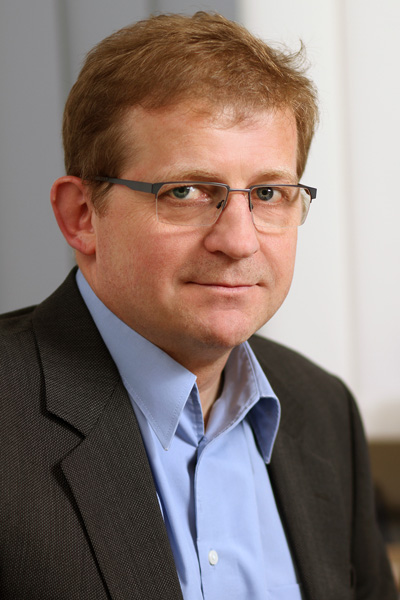
Wolfgang Kunz is a Full Professor (C4, W3) and Chair of Electronic Design Automation at the Technische Universität Kaiserslautern since 2001. His academic career spans multiple prestigious institutions, including Goethe-University Frankfurt/Main and the University of Massachusetts, Amherst. He has held leadership roles such as Dean (2005-2007) and Vice-Dean (2007-2009) at TU Kaiserslautern. Habilitation (Dr. rer. nat. habil.), Computer Science, University of Potsdam (1996) Doctoral degree (Dr.-Ing.), Electrical Engineering, University of Hannover (1992) Dipl.-Ing. degree, Karlsruhe Institute of Technology (1989) His research focuses on hardware verification, security, and optimization, particularly in embedded systems and processors. His work on formal verification methods has been commercialized by companies like Synopsys, Mentor Graphics, and Siemens EDA. His 2016-2021 publications address critical security issues such as Spectre/Meltdown and introduce innovative verification frameworks adopted by industry leaders like Infineon and OneSpin Solutions. Scientific awards include the IEEE Fellow (2006), German IT Society Award (2005), and TU Kaiserslautern Distinguished Teaching Award (2016). He has served on editorial boards of major journals and coordinated the Erasmus Mundus European Master Program in Embedded Computing Systems since 2010. Key students: Jörg Bormann, Raik Brinkmann, Tobias Ludwig Collaborations: Siemens EDA, Infineon, AbsInt, Intel SCAP Spin-offs: LUBIS EDA, OneSpin Solutions
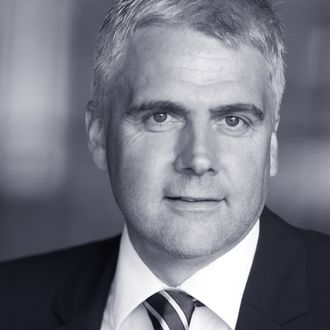
Matteo Maffei is a Full Professor at TU Wien, leading the Security and Privacy group. He joined in 2017 after 11 years at Saarland University's CISPA. He holds a Ph.D. in Computer Science from Ca’ Foscari University of Venice (2006). He coordinates the TU Wien Cybersecurity Center, the SecInt Doctoral School, and the FWF Special Research Program SPyCoDe. His research focuses on formal methods for security and privacy, blockchain technologies, and web security. Roles: Full Professor, Coordinator of TU Wien Cybersecurity Center, Module Head of Christian Doppler Lab for Blockchain Technologies (CDL-BOT), Board Member of Vienna Cybersecurity and Privacy Research Cluster (ViSP). His work emphasizes formal verification of cryptographic protocols, smart contracts, and decentralized systems. Key achievements include ERC Advanced (2024) and Consolidator (2018) Grants, and leadership roles in conferences like IEEE Computer Security Foundations Symposium (CSF). Research Interests: Formal methods, smart contracts, blockchain scalability, web security, privacy-preserving protocols, and decentralized systems. His recent projects include optimizing Lightning Network channels, secure multi-hop payments, and AI-driven robustness verification. Publications: Over 200 publications in top venues like CCS, IEEE S&P, and CRYPTO. Recent work includes advancements in blockchain interoperability (e.g., Alba bridges), light client protocols (Blink), and neural network verification techniques. Grants & Awards: ERC Advanced Grant (2024), ERC Consolidator Grant (2018), DFG Emmy Noether Fellowship (2009). Led projects funded by EU Horizon, FWF, and industry partners like ABC Research GmbH. Advising & Labs: Supervised over 20 PhD/Master theses. Active in the Christian Doppler Lab for Blockchain Technologies and the SPyCoDe SFB. Collaborates with institutions like SBA Research and Stanford University.
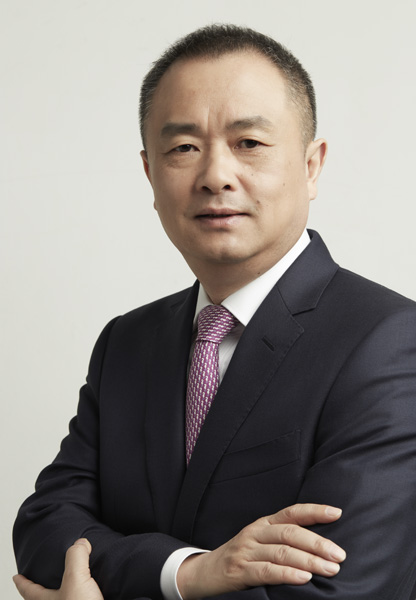
Univ.-Prof. Dr. Claus Staringer is Professor of Tax Law with a special focus on Corporate Tax at the Vienna University of Economics and Business Administration (WU Wien). He has served as Head of the Corporate Tax Group and Deputy Chairman of the Department of Austrian and International Tax Law since 2003, and as Director for legal Doctoral Studies since 2005. Additionally, he has been a Principal Consultant at Freshfields Bruckhaus Deringer since 2001, maintaining a strong connection between academic research and professional practice in international tax law. Staringer earned his Mag.iur. in Economics and Law from the Vienna University of Economics and Business Administration and University of Vienna, followed by a Dr. iur. with excellence (thesis: "Einlagen und Umgründungen") and habilitation in Tax Law (thesis: "Besteuerung doppelt ansässiger Kapitalgesellschaften"). His academic journey includes assistant positions at both WU Wien and the University of Vienna, blending academic rigor with practical insights from his work at Deloitte and Freshfields. His research focuses on international tax law, particularly corporate taxation, double taxation agreements, and European tax coordination. Staringer has made significant contributions to understanding dual resident corporations, cross-border reorganizations, and the interaction between EU law and tax treaties. His work bridges theoretical frameworks with practical applications in multinational tax planning and compliance. Staringer's publication record shows consistent scholarly output with emphasis on European tax developments, treaty interpretation, and corporate restructuring. His recent work addresses emerging challenges including digital economy taxation, minimum global taxation, and sustainability reporting implications for tax systems. The publications demonstrate methodological rigor with thorough analysis of case law from the European Court of Justice and international tax tribunals. Rudolf Sallinger Award (1994) for Doctoral Thesis Mitchell B. Carroll Prize of the International Fiscal Association (1999) Albert Hensel Prize of Deutsche Steuerjuristische Gesellschaft (1999) Gerhard Thoma Prize of German Institute of Tax Consultants (1999) Award for academic achievements from IFA National Committee (2000) Award for "Innovative Teaching" at WU Wien (2006) Staringer has been instrumental in developing the European Tax Moot Court program and has supervised numerous doctoral candidates through his role as Director of legal Doctoral Studies. His professional engagements include significant contributions to EU tax policy discussions, particularly regarding the Common Consolidated Corporate Tax Base (CCCTB) and the implementation of the OECD's BEPS recommendations in European jurisdictions. He leads the Corporate Tax Group at WU Wien, which has established itself as a leading research center for Austrian and international tax law. The group regularly organizes the Vienna Symposium on International Tax Law and contributes to major research projects on international tax coordination, including EU-funded initiatives examining cross-border tax challenges in the single market.
Gerald Pruckner is a Professor at the Department of Economics, Johannes Kepler University Linz (JKU), where he serves as Head of the Institute of Health Economics and Dean of the Kurt Rothschild School of Economics and Statistics (RoSES). His academic career spans over three decades with significant leadership roles including heading the Christian Doppler Laboratory for Aging, Health, and the Labor Market (2014-2021), and serving on the board of the Austrian Health Economics Association (ATHEA). He teaches multiple courses including Introductory Microeconomics, Empirical Economics, and Health Economics for the 2025W semester. Pruckner earned his PhD in Economics from the University of Linz in 1993. His academic journey began as an Assistant Professor at JKU (1989-2002), followed by a Professorship at the University of Innsbruck (2002-2006), then returning to JKU as Associate Professor (2006-2010) before his current Professorship (since 2011). He has held visiting positions at the University of Adelaide and UC Berkeley. His research focuses at the intersection of health economics, behavioral economics, and aging, examining healthcare systems, physician behavior, and the relationship between labor markets and health outcomes. Recent work investigates hospital crowding effects, gender differences in medical practice, chronic disease screening effectiveness, and child health services. His research consistently applies economic principles to understand healthcare delivery with emphasis on the Austrian context, often utilizing register data for evidence-based policy insights. Analysis of Pruckner's publication trends shows a sustained focus on practical healthcare issues with policy relevance. His work spans hospital management challenges, gender differences in medical practice, chronic disease screening effectiveness, and child health services. The research consistently bridges academic inquiry with practical health policy applications, with increasing attention to pandemic impacts and digital transformation in healthcare. Board member of Austrian Health Economics Association (ATHEA) since 2015 Member of Health Economics Committee (Verein für Socialpolitik) since 2013 Deputy head of national research network 'The Austrian Center for Labor Economics and the Analysis of the Welfare State' (2008-2013) Head of Christian Doppler Laboratory for Aging, Health, and the Labor Market (2014-2021) Pruckner actively mentors graduate students through dissertation colloquia and master's thesis supervision. His research portfolio includes 23 projects with significant funding, including current work on health services research in Upper Austria and empirical analysis of Linz healthcare provision. As Dean of RoSES and Head of the Health Economics Institute, he provides institutional leadership while maintaining an active research agenda with over 100 publications. He leads multiple research teams focused on health services research, with current projects examining healthcare provision in Linz, health indicators for the region, and broader health system analysis. His work bridges academic research and practical health policy applications through collaborations with regional health authorities and participation in professional associations.
Mei Hong is a Professor and Vice President for HR and International Collaboration at Beijing Institute of Technology since 2016. Previously, she held leadership roles including Vice President for Research at Shanghai Jiao Tong University (2013-2016) and Dean of the School of Electronics Engineering and Computer Science at Peking University (2006-2014). She has made groundbreaking contributions to software engineering and system software fields. BSc and MSc in Computer Science & Engineering from Nanjing University of Aeronautics & Astronautics (1984, 1987) PhD in Computer Science and Technology from Shanghai Jiao Tong University (1992) Her research focuses on software architecture , component-based software engineering , and cloud computing/big data systems . She has led over 40 grants totaling 200+ million CNY and holds 20+ patents. Her work addresses critical challenges in software lifecycle modeling, interoperability, and standardization. As a leading authority in software engineering, she has received China's highest honors including State Awards for Science and Technology Progress (2006), Technology Invention (2008), and Natural Science (2012). She was elected Member of the Chinese Academy of Sciences in 2011 and IEEE Fellow in 2014. Executive Editor-in-Chief of Science China-Information Sciences (2012-2017) Editor-in-Chief of Science China-Information Sciences (2018-present) Advisory Board Member of Alibaba DAMO Academy (2017-present)
Cornelia Schneider is a Professor and Head of the Institute of Computer Science at the University of Applied Sciences Wiener Neustadt. She leads research in digital health and care technologies, focusing on applications like Augmented Reality, sensor data analysis, and social robotics for vulnerable populations. Her work emphasizes user-centered design and has been supported by projects funded by FFG and the Active Assisted Living Programme. Her research spans telemedicine infrastructure, elderly care robotics, and health monitoring systems. Notable projects include 24/7-Digital (2023-2026), Care about Care (2021-2023), and AgeWell (2019-2022). She has pioneered solutions like CARU cares and DigiCare training programs. Dr. Schneider has been recognized with the AAL Award (2014) and the tecnet | accent Innovation Award (2021). She coordinates interdisciplinary teams and actively participates in conferences like Health Informatics Meets Digital Health. Her lab collaborations include FOTEC and Salzburg Research, where she previously led the e-Health Competence Center until 2019.
Philipp Eichmeir is a Researcher at the Research Center Wels within the Upper Austria University of Applied Sciences . His work focuses on optimal control , multibody dynamics , and adjoint methods applied to robotics and automotive systems. Expertise in adjoint gradient computation for extremal value optimization Active in automotive/mobility and smart production domains Philipp's research spans computational mathematics , robotics , and mechanical engineering , utilizing advanced numerical methods and simulation modeling for complex dynamic systems. His recent publications focus on multibody dynamics , adjoint optimization , and inequality constraint handling in control systems. Collaborative projects include IOMMS (Innovative Optimization Methods for Multibody Systems) and JR-Centre for Thermal NDE of Composites . Scientific Awards Best Paper Award (2020) Automatisierte Körperschallauswertung (2015)
Elisa Riedo is a tenured Professor of Chemical and Biomolecular Engineering at New York University (NYU) Tandon School of Engineering, with joint appointments as Professor of Physics in NYU’s College of Arts and Science and as affiliated Professor of Mechanical Engineering at Tandon. She serves as Director of Faculty Development at NYU Tandon and has held prior tenured positions at Georgia Tech (2003–2015) and CUNY ASRC (2015–2018). Her academic career spans over two decades, with a Ph.D. in Physics from the University of Milano (2000) and postdoctoral work at EPFL. Her research focuses on nanotechnology , graphene and 2D materials , and thermal scanning probe lithography (tSPL) , with applications in biomedical diagnostics quantum electronics electromagnetic interference shielding mechanical reinforcement of materials She pioneered tSPL for sustainable nanofabrication and discovered diamene—a single-layer diamond structure from graphene under pressure. Her recent work involves transparent infrared electrodes using silver nanowires (2025) and self-organized graphene stacking domains for quantum technologies (2024). She has secured major grants from National Science Foundation , Department of Defense , and Army Research Office . Scientific honors include: 2023 NYU Tandon Excellence in Research Award 2013 American Physical Society Fellow 2005 CREA Innovation Award Membership in the Academy of Europe (2023) She contributes to editorial boards for journals like 2D Materials and Applications and advises companies such as Mirimus Inc. and SwissLitho AG .
Victor Vianu is a Professor of Computer Science and Engineering at the University of California, San Diego and holds the INRIA International Chair at INRIA-Saclay in Paris. He has maintained continuous faculty status at UC San Diego since 1983 while developing extensive international collaborations, particularly with French research institutions including INRIA, ENST-Paris, ENS-Paris, and the University of Paris. His academic credentials include a Ph.D. in Computer Science from the University of Southern California (1983) and undergraduate studies in Mathematics and Informatics at the University of Bucharest (1974-1977). Professor Vianu's research spans computational logic, database systems and theory, and automatic verification. His work uniquely bridges theoretical foundations with practical applications in XML processing, workflow systems, and data-driven applications. He has made seminal contributions to understanding the theoretical underpinnings of database query languages and their expressive power, particularly in the context of XML technologies and workflow systems. His research demonstrates a consistent trajectory from theoretical computer science to practical database systems applications. His publication record reveals significant contributions to database theory spanning over three decades, with particular emphasis on XML technologies, workflow systems, and formal methods for data-driven applications. His work shows a clear evolution from foundational theoretical work to practical applications in business processes and web technologies. INRIA International Chair (2013) Fellow of the American Association for the Advancement of Science (AAAS) (2013) ACM PODS Alberto O. Mendelzon Test-of-Time Award (2010) Fellow of the Association for Computing Machinery (ACM) (2006) Professor Vianu has held significant leadership roles including Editor-in-Chief of the prestigious Journal of the ACM, numerous program committee chair positions for major database conferences (PODS, ICDT, ASIAN), and General Chair for ACM SIGMOD conferences. He has served on the executive committees of SIGMOD (1998-2000) and PODS (1993-2004), and was a member of the ICDT Council (1997-2007), demonstrating sustained influence in the theoretical database community. His extensive invited talks at major conferences including College de France, ACM PODS, and International Conference on Database Theory highlight his international recognition.
Georges Gielen is Full Professor in the Department of Electrical Engineering (ESAT) at KU Leuven, Belgium, and part-time Research Director at imec. He has held multiple leadership roles including Chair of ESAT Department (2012-2013, 2020-2024) and Vice-Rector for Science, Engineering & Technology (2013-2017). His academic career spans over 30 years at KU Leuven, progressing from Assistant to Full Professor. His research focuses on analog and mixed-signal integrated circuit design automation , with expertise in CAD tools, design optimization, sensor interfaces, and neuromorphic systems. His work bridges hardware design with machine learning, particularly in hardware-efficient AI implementations and biomedical applications. He has pioneered techniques for automated analog circuit sizing, topology synthesis, and reliability-aware design in nanometer CMOS. Gielen has received numerous accolades including the IEEE CAS Mac Van Valkenburg Award (2015), IEEE CAS Charles Desoer Award (2020), and EDAA Achievement Award (2021). He holds an ERC Advanced Grant AnalogCreate and is an IEEE Fellow since 2002. As a prolific scholar, he has chaired major conferences including DATE (2006), ICCAD (2007), and ESSCIRC (2017). He has graduated over 55 PhD students through the MICAS research group at KU Leuven, currently supervising 13 doctoral candidates. His research team collaborates extensively with imec and industry partners on cutting-edge projects in carbon-aware AI accelerators, uncertainty-aware design, and neuromorphic sensor interfaces.
Maria Papathoma-Köhle is an Associate Professor at the Institute of Alpine Natural Hazards , University of Natural Resources and Life Sciences, Vienna. She holds a PhD in Tsunami Vulnerability Assessment from Coventry University (UK) and has held roles as Academic Coordinator of the MSc 'Risk Prevention and Disaster Management' at University of Vienna. Her research focuses on natural hazard vulnerability , particularly wildfire and flood risks in alpine regions, with methodological expertise in indicator-based vulnerability assessment and physical vulnerability indices . Education: PhD in Natural Hazards (Coventry University, UK) MSc in Environmental Management (University of Durham, UK) Geology Degree (University of Athens, Greece) Research: Specializes in wildfire vulnerability indices, flood risk modeling, and climate change adaptation frameworks. Developed the Physical Vulnerability Index (PVI) for buildings and contributed to EU-funded projects like FLOODLABEL and EXTEND. Awards: Elise Richter Scholarship (2016) Back to Research Grant (2012) Young European Scientist Award (2002) Projects: Led FWF-funded research on physical vulnerability indicators and collaborated on EU programs for wildfire preparedness. Current work includes climate change adaptation tools for Austrian infrastructure. Advising: Supervised 6 Master's/PhD students on wildfire and flood vulnerability topics. Publications: Over 106 peer-reviewed works; recent articles focus on wildfire indices, IPCC risk diagrams, and dynamic flooding assessment.
Bernhard Aichernig is an Associate Professor at the Institute of Software Engineering and Artificial Intelligence. His work bridges formal methods, model-based testing, and artificial intelligence, with a focus on automata learning, digital twins, and AI-assisted programming. Institution: Institute of Software Engineering and Artificial Intelligence Key Research Areas: Model-Based Testing, Automata Learning, AI-Driven Verification His research explores the integration of machine learning into formal verification, enabling scalable testing of complex systems like IoT devices and reinforcement learning agents. Recent projects include AI-Augmented DevOps frameworks (AIDOaRT) and digital twin validation (LearnTwins). Notable scientific awards include multiple best paper recognitions at SEFM (2020, 2021) and the TAYSIR Competition first place (2023). His publications emphasize hybrid approaches combining genetic programming, SMT solving, and neural networks for system modeling. 2025 : AI-assisted programming, timed automata via domain knowledge 2024 : Stochastic environment modeling, Git system learning 2023 : Reinforcement learning under partial observability, digital twins for VPN servers He actively contributes to testing frameworks like AALpy and investigates explainable AI for fault diagnosis in cyber-physical systems.
Univ.-Prof. Martin Pinzger is a Professor at the Department of Informatics Systems, Alpen-Adria-Universität Klagenfurt. He serves as Head of Department and Member of the Senate, actively contributing to academic governance. Research Focus: Automating Software Engineering Tasks, Mining Software Repositories, Program Analysis, Software Evolution and Visualization Recent Work: Developing tools for API evolution analysis, cybersecurity AI (CAI), robotics benchmarking (RobotPerf), and dependency validation His research combines empirical studies with tool development for software maintenance and security. Current projects address challenges in REST API breaking changes, cloud security certifications, and robotic system performance evaluation. Publications since 2023 demonstrate continued engagement with topics spanning AI-driven code segmentation, microservice API evolution, and cybersecurity tool development. Key trends include cross-disciplinary applications of NLP to software engineering and security-focused tool creation. Contact: martin.pinzger@aau.at
Marietta Metzker is a researcher at the Institute of Agricultural and Forestry Economics within the University of Natural Resources and Life Sciences, Vienna (BOKU) . She specializes in Forest Economics , Agrobiodiversity Management , and Test Farm Network Analysis , with a focus on sustainable development and economic efficiency in agricultural and forestry sectors. University: University of Natural Resources and Life Sciences, Vienna (BOKU) School: Department for Economics and Social Sciences Department: Institute of Agricultural and Forestry Economics Email: marietta.metzker@boku.ac.at Research Interests center on developing economic frameworks for sustainable forestry, agrobiodiversity valuation, and data-driven agricultural management. Her work bridges ecological conservation with financial viability through test farm networks and efficiency metrics. Publication Trends show a consistent focus on Forest Economics (2018-2025), analyzing revenue models, efficiency indicators, and regional comparative studies across Austria and the DACH region. Key subfields include Timber Revenue Analysis , Forest Management Efficiency , and Agricultural-Biodiversity Integration . Projects include the EU-funded FARMER CLUSTERS FOR REALISING AGROBIODIVERSITY MANAGEMENT ACROSS EUROPE (2020-2025), where she contributes to sustainable agricultural practices.
Bernhard Schmidpeter is an Assistant Professor (tenure track) at the Department of Economics, WU Vienna University of Economics and Business. He specializes in institutional economics and labor economics, focusing on topics such as labor market dynamics, public policy impacts, and behavioral economics. His teaching includes courses like 'Specialization Course - Institutional Economics' in the Bachelor's program. Research interests span labor market effects of immigration, wage disparities, and health economics. He actively publishes in peer-reviewed journals and engages in policy-relevant studies. Currently affiliated with the university, he contributes to both teaching and applied research in economics and public policy.