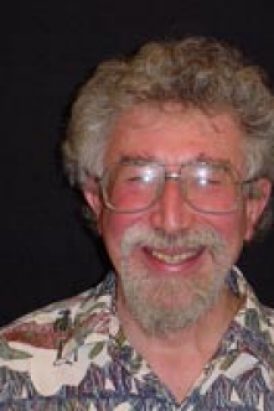
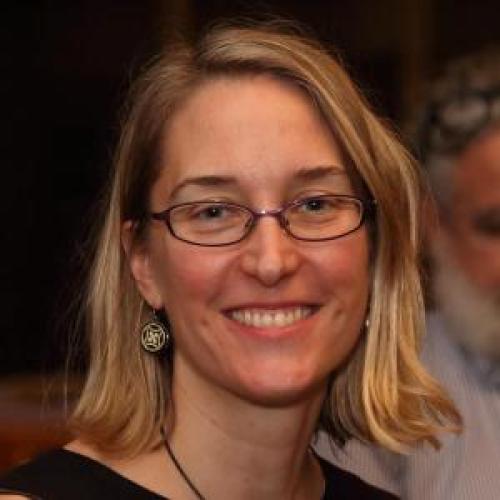
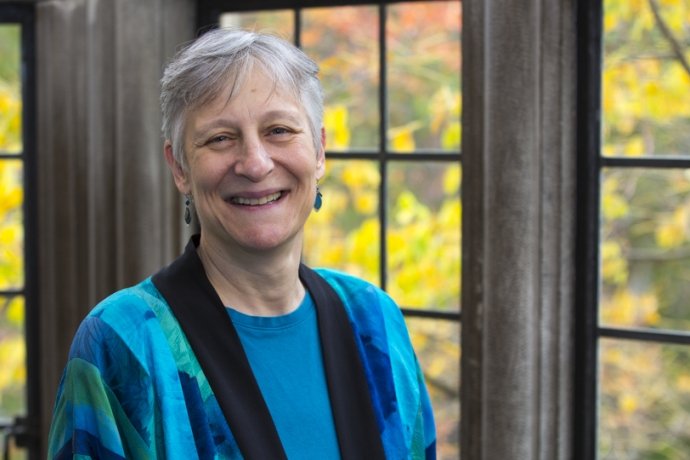
Herbert Eagle is an Associate Professor in the Arts and Ideas in the Humanities Program at the University of Michigan's Residential College, with additional affiliations in Screen Arts and Cultures, Slavic Languages & Literatures, and CREES. He earned his Ph.D. from the University of Michigan in 1973. His research spans Russian and East European cinema, film semiotics, poetry, and dissident literature under communist regimes. Research interests focus on: Semiotic analysis of cinematic narratives Eastern European directors (e.g., Eisenstein, Polanski, Kundera) Socialist realism and its subversion Structural innovation in avant-garde film Publications consistently explore cinematic semiotics, narrative disruption in Soviet-bloc art, and interdisciplinary cultural analysis, with works examining Polish, Czech, and Ukrainian filmmakers through theoretical frameworks like formalism and structuralism. Awards include: Teaching excellence honors from Purdue University (1975, 1976) University of Michigan's Excellence in Education Award (1991) Early-career recognition: Borden Prize (1960) and Michigan Society of Fellows (1970-73)
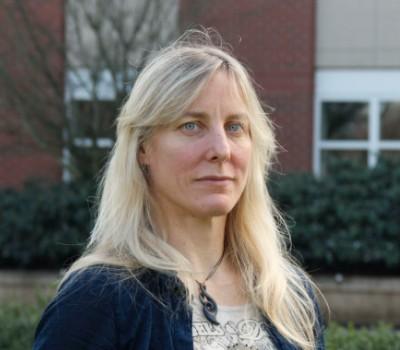
Cindy Grimm is a Professor and Graduate Program Director in the School of Mechanical, Industrial, and Manufacturing Engineering at Oregon State University (OSU), part of the College of Engineering. She is affiliated with the Robotics group, Human-Centered Computing, and Graphics and Visualization. Her research focuses on robotic grasping and manipulation for agricultural applications, ethics in robotics, and interdisciplinary projects such as 3D modeling, medical imaging segmentation, and bio-inspired sensor design. Education: Ph.D. in Computer Science, Brown University, 1996 M.S. in Computer Science, Brown University, 1992 B.A. in Computer Science and Art, University of California, Berkeley, 1990 Research Interests: Dr. Grimm’s work bridges computer science and robotics, emphasizing practical applications in agriculture and ethics. Key areas include robotic fruit harvesting systems, human-robot interaction, and the development of perception-driven algorithms for complex tasks like tree pruning and object manipulation. Her earlier projects explored surface modeling, bat sonar patterns, and 3D sketching interfaces. Publications: Her recent work addresses challenges in autonomous orchard management, robotic gripper design, and public understanding of service robots. Themes include precision agriculture, grasp planning, and sociotechnical aspects of robotics adoption. Awards: Recipient of the NSF CAREER Award, recognizing her contributions to robotics and interdisciplinary research. Service: Leads the Robotics graduate program at OSU, emphasizing ethical and technical training. Collaborates with the Collaborative Robotics and Intelligent Systems Institute (CoRIS) to advance robotics applications. Labs/Teams: Active in the CoRIS Institute, focusing on collaborative robotics and real-world robotic systems. Her lab develops hardware-software solutions for agricultural robotics and human-centered robotic interfaces.
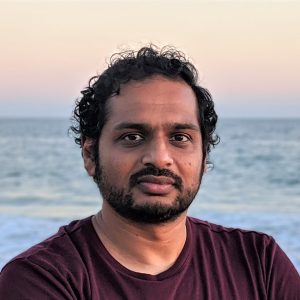
Sameer Singh is a Professor of Computer Science at the University of California, Irvine's Donald Bren School of Information and Computer Sciences. He also holds affiliations with Linguistics and EECS departments. His research primarily focuses on the robustness and interpretability of machine learning algorithms, along with models that reason with text and structure for natural language processing. Dr. Singh received his PhD from the University of Massachusetts, Amherst in 2014, an MS in Computer Science from Vanderbilt University in 2007, and a BEng in Electrical Engineering from the University of Delhi in 2004. His research interests span machine learning robustness, natural language processing, model interpretability, and knowledge representation. Singh investigates how to make AI systems more reliable and understandable, particularly focusing on testing methodologies for NLP models and developing techniques to improve model behavior. His work bridges theoretical understanding with practical applications in AI safety and reliability. Analysis of Singh's recent publications reveals a strong focus on language model interpretability, bias detection, and model robustness. His work explores how language models process information, where they fail, and how to make them more reliable. A significant portion of his recent research examines the limitations of multimodal models, language model alignment techniques, and addressing social biases in AI systems. Dr. Singh has received numerous prestigious awards including the Kavli Fellowship from the National Academy of Sciences, the NSF CAREER award, UCI Distinguished Early Career Faculty award, and the Hellman Faculty Fellowship. His papers have won multiple awards including at KDD 2016, ACL 2018, EMNLP 2019, AKBC 2020, and ACL 2020. His research group has secured substantial funding from major organizations including the Allen Institute for AI, Amazon, NSF, DARPA, Adobe Research, Hasso Plattner Institute, NEC, Base 11, and FICO. Singh previously served as an Allen Fellow at the Allen Institute for AI (2021-2023) and is currently a co-founder and CTO of Spiffy AI in Seattle. He completed postdoctoral research at the University of Washington after earning his PhD. Dr. Singh maintains an active presence in the AI community through his work on projects like AutoPrompt and Checklist, which have become influential tools for testing and interpreting NLP models. His research continues to shape how the field approaches model evaluation and interpretability.
Dr. Gunjan Y. Parikh serves as an Associate Professor in the Department of Neurology at the University of Maryland School of Medicine, where she also functions as the Medical Director of the UMMC Neuro Critical Care Unit. Her clinical practice focuses on the intersection of neurology and critical care medicine, with particular expertise in managing patients with acute neurological emergencies including traumatic brain injury, intracerebral hemorrhage, and subarachnoid hemorrhage. Dr. Parikh completed her undergraduate education with a BA in Biochemistry from The University of Texas at Austin, followed by her MD from Texas A&M College of Medicine. Her clinical training includes an Internal Medicine internship at St. Vincent's Hospital - Manhattan, Neurology residency at Barrow Neurological Institute at Saint Joseph's Hospital and Medical Center (where she also served as Chief Resident), and specialized fellowship training in Neurocritical Care/Vascular Neurology at Columbia University Medical Center/Weill Cornell Medical Center. She further enhanced her research skills through an NINDS Research Fellowship in Neuroimaging at the National Institutes of Health. Her research program centers on identifying biomarkers during the resuscitation phase of patients with acute brain injuries that determine lesion repair, restoration of function, and recovery of consciousness. This work has led to significant contributions in characterizing the MRI signature of primary microvascular injury after head trauma and other acute brain injuries through both in vivo and ex vivo investigations. Her lab integrates multimodality monitoring with advanced neuroimaging techniques to translate findings to clinical care and develop outcome measures for clinical trials targeting currently untreatable aspects of brain injury such as demyelination and neurodegeneration. Analysis of Dr. Parikh's recent publications reveals a strong focus on translational neuroscience with emphasis on neuroimaging techniques, biomarker discovery, and clinical applications for acute brain injury management. Her work spans from basic science investigations of microvascular injury to clinical studies on patient outcomes, with particular attention to traumatic brain injury, intracerebral hemorrhage, and subarachnoid hemorrhage. Recent publications demonstrate increasing integration of data science approaches for predicting neurological deterioration and developing automated clinical assessment tools. Fellow of the Neurocritical Care Society (2024) Member, American Academy of Neurology Member, Neurocritical Care Society Member, National Neurotrauma Society Dr. Parikh serves as Site Co-PI for the DISCOVERY study (Determinants of Incident Stroke Cognitive Outcomes and Vascular Effects on Recovery) under NINDS/NIA U19 NS115388, and as SubK site-PI for the REACH-ICH study (Race/Ethnicity, Hypertension and Prevention of VCID and Stroke after Intracerebral Hemorrhage) under NINDS/NIH 5R01NS093870-08. Her research has been featured in multiple media outlets including MD Edge Psychiatry, News Medical, and SciTech Daily, highlighting her contributions to understanding vascular injury in traumatic brain injury. As Medical Director of the UMMC Neuro Critical Care Unit, Dr. Parikh leads a multidisciplinary team focused on providing high-reliability, quality care with emphasis on patient experience. Her research group actively investigates cerebral hemodynamics, neuroimaging biomarkers, and clinical decision support tools for patients with acute neurological conditions, with particular attention to improving triage and interhospital transfer of neuroscience patients.
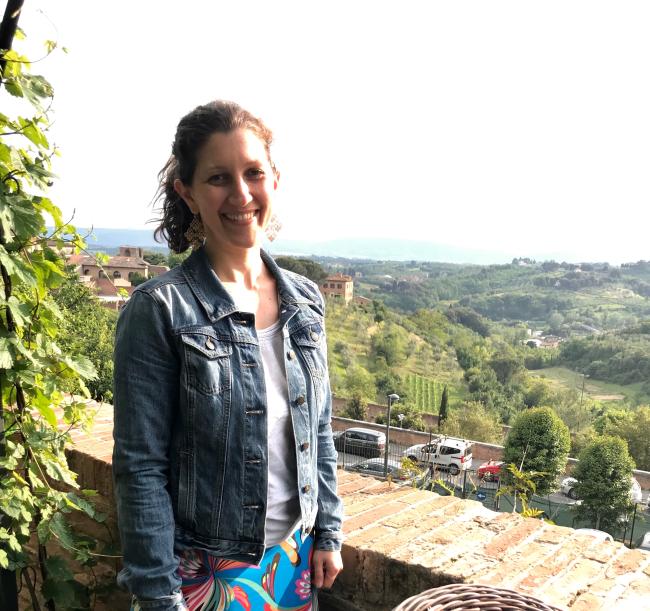
Dr. Jami Fisher serves as Senior Lecturer and Director of the American Sign Language (ASL) Program at the University of Pennsylvania's Department of Linguistics. Affiliated with the College of Arts & Sciences, their work focuses on documenting Philadelphia-area ASL variation, global deaf community collaborations (especially with Italian communities), and integrating sign language studies into broader linguistic curricula. Education includes an Ed.D. in Higher Education from UPenn (2014), M.S.Ed. (2002) and B.A. in Linguistics (1997). Their pedagogical innovations emphasize Academically Based Community Service (ABCS) partnerships with local organizations like the Pennsylvania School for the Deaf and Deaf-Hearing Communication Centre. Research interests bridge sociolinguistics and community engagement, analyzing the linguistic landscape's visual representation of sign languages and exploring how signed languages reflect cultural values. They co-lead the ASL/Deaf Studies minor program, integrating interdisciplinary coursework with field-based capstone projects. Program leadership includes developing UPenn's longest-running Ivy League ASL program, offering advanced courses in Deaf History, Culture, and Linguistics. Collaborative projects emphasize mutually beneficial partnerships with Deaf communities to ensure culturally responsive research and education.
Ben Mason is an Associate Professor in the Department of Geological Sciences and Engineering at the University of Nevada, Reno (joined January 2025). Previously, he held faculty positions at Oregon State University's College of Engineering and conducted research at the U.S. Geological Survey's Geologic Hazards Science Center in Golden, Colorado. He holds a Professional Engineer certification (State of Colorado). Education: Ph.D. in Civil and Environmental Engineering, University of California, Berkeley, 2011 M.S. in Civil and Environmental Engineering, University of California, Berkeley, 2007 B.S. in Civil and Environmental Engineering, Georgia Institute of Technology, Atlanta, 2006 Research Focus: Mason's work centers on geological earthquake engineering, cascading hazards (e.g., earthquake-tsunami interactions), coastal geotechnics, and post-disaster field reconnaissance. He has conducted extensive studies on fault displacement uncertainty, anthropogenic impacts on ground failure, and sediment instability during tsunami events. His recent projects include analyses of the 2023 Türkiye earthquakes (Pazarcık and Kahramanmaraş) and the 2022 Chihshang earthquake in Taiwan. Publications Trends: His recent articles emphasize advanced modeling techniques for seismic hazards, integration of field observations with theoretical frameworks, and contributions to building code improvements. He frequently collaborates on multi-hazard studies involving tsunami and earthquake interactions, particularly focusing on soil dynamics and liquefaction mechanisms in coastal regions. Grants & Advising: No specific grants or advisee information is provided in the text. However, his involvement with the GEER team (Geo-engineering Extreme Events Reconnaissance) indicates active participation in disaster-response research initiatives. Labs/Teams: Participates in the GEER team for post-disaster geotechnical investigations and collaborates with research groups studying seismic risks and coastal infrastructure resilience. His work leverages centrifuge modeling facilities and state-of-the-art geophysical analysis tools.
Mark Stremler is a Professor in the Department of Mechanical Engineering at Virginia Tech's College of Engineering, serving as the Engineering Mechanics Graduate Chair. His research focuses on fluid mechanics, with emphases on vortex dynamics, fluid-structure interaction, and biological fluid mechanics. He holds the Otto Moensted Visiting Professorship and has been recognized with awards including the Liviu Librescu Faculty Prize and Army Research Office Young Investigator award. His academic leadership roles include directing the Multi-Scale Transport in Environmental and Physiological Systems (MultiSTEPS) IGERT Program (2010-2017), serving as Graduate Chair of Engineering Mechanics (2019-present), and directing undergraduate studies in Engineering Science and Mechanics. He earned his Ph.D. from the University of Illinois at Urbana-Champaign and dual B.S. degrees in Mechanical Engineering and Mathematics from Rose-Hulman Institute of Technology. Research interests include reduced-order modeling of fluid flows, coherent vortical structures, and applications in biological systems such as mosquito drinking mechanics and coronary hemodynamics. His work bridges theoretical, computational, and experimental approaches to fluid dynamics challenges.
MICHEL SANNER is a Professor of Molecular Biology at the Department of Integrative Structural and Computational Biology at Scripps Research. He holds a PhD in Computer Science from the University of Haute Alsace, France (1992). His research focuses on computational methods for molecular interactions, molecular graphics, and component-based software development. Notable contributions include the AutoDock suite (for molecular docking), PMV (a molecular visualization environment), and Vision (a visual programming tool). His research group develops tools like AutoDock CrankPep for peptide docking and F2Dock for protein-protein interactions. These tools are widely used in drug discovery and structural biology. His work emphasizes software engineering principles to create adaptable computational pipelines for analyzing macromolecular structures and simulating interactions. Publications span topics like peptide-docking methodologies, ligand-binding site prediction, and GPU-accelerated docking algorithms. His articles highlight advancements in computational methods for understanding protein-ligand interactions, with applications in anticoagulant research and HIV/FIV protease inhibition. Collaborations include work with Arthur J. Olson and David S. Goodsell on docking methodologies.
Lisa Sanders is a Professor in the Department of Psychological and Brain Sciences at the University of Massachusetts Amherst. She leads the Neurocognition and Perception Laboratory and is affiliated with the Neuroscience & Behavior Graduate Program, Center for Research on Families, Healthy Development Initiative, Initiative in Cognitive Science, and the Institute for Applied Life Sciences. PhD, 2001, University of Oregon Her research lies at the intersection of cognitive neuroscience and developmental science, focusing on auditory perception, speech processing, and selective attention across the lifespan. She investigates how listeners process speech in noise, how prosody and rhythm influence perception, and the neural mechanisms underlying attentional allocation in both speech and music. Her work employs behavioral, EEG, and ERP methodologies with participants ranging from toddlers to older adults. The most recent publications highlight a strong trend in temporal attention, speech segmentation, and the influence of prosody and musical structure on perception. Her research increasingly explores cross-modal and developmental aspects of auditory cognition, using artificial languages and controlled stimuli to isolate perceptual mechanisms. Collaborative work extends into emotional decision-making and visual attention. Lisa Sanders has not been mentioned as receiving any scientific awards in the provided text. She advises graduate students through the Neuroscience & Behavior program and leads a multidisciplinary research team. Her lab conducts externally funded research projects such as LiveNoise, SpeechRate, PrecedNoise, and PhonoLearn, often in collaboration with researchers across departments and institutions. While specific grants are not listed, her sustained research output and lab operations imply active grant support. She directs the Neurocognition and Perception Laboratory at Tobin Hall, where her team investigates neural and cognitive mechanisms of perception using electrophysiological and behavioral methods. The lab fosters collaboration across psychology, linguistics, neuroscience, and communication disorders.
Matt Rosen is an Associate Professor in the Department of Sociology and Anthropology at Ohio University’s College of Arts and Sciences. His academic work bridges visual and media anthropology with deep regional expertise in South Asia and Southeast Europe, particularly Albania. He is based in Bentley Annex 113 and is affiliated with interdisciplinary programs such as International Studies and Asian Studies. Research Interests: Rosen’s scholarship focuses on visual and media anthropology, the anthropology of art and literature, urbanism in postsocialist contexts, communication technologies, and public culture. He explores how reading, literary practices, and urban life intersect in transforming societies, especially in Tirana, Albania, and parts of India. His work emphasizes ethnographic approaches to literature and everyday cultural expression. The recent publications reveal a sustained engagement with literary ethnography, urban visibility, and the emotional and structural dynamics of postsocialist transformation. Themes of marginality, public culture, and textual practices recur across his work, reflecting a cohesive and innovative research trajectory that blends anthropological theory with literary and visual analysis. Scientific Awards and Grants: Stavro Skëndi Book Prize for Achievement in Albanian Studies (2023) Fulbright-Nehru Research Fellowship National Science Foundation Doctoral Dissertation Improvement Grant Dr. Walter A. Eberstadt Dissertation Fellowship Humanities Research Fund Award, College of Arts & Sciences Ohio University Research Committee Award Melikian Center Fellows Award Department of Scientific & Industrial Research (DSIR) Grant, India Advising and Grants: While specific students are not listed, as an associate professor and active researcher with major external funding—including from the NSF, Fulbright, and Ohio University—Rosen likely supervises graduate students and mentors junior scholars. His grant portfolio demonstrates sustained success in securing competitive funding for ethnographic and interdisciplinary research in challenging field contexts. Labs and Research Teams: Though no formal lab is mentioned, Rosen collaborates with scholars like Smoki Musaraj and participates in research networks focused on Albania and urban studies. His editorial work on The Ethnography of Reading at Thirty indicates leadership in shaping scholarly conversations in literary anthropology.
Caroline Stark is Associate Professor of Classics at Howard University in the Department of Classics, College of Arts & Sciences. She also serves as Director of Interdisciplinary Humanities in the Ancient and Modern Interdisciplinary Studies program. Her academic work bridges classical studies with Renaissance and African diasporic reception, focusing on the enduring influence of antiquity in diverse cultural contexts. BA in Latin, Sweet Briar College MA in Cultural and Intellectual History, Warburg Institute, University of London MA, MPhil, PhD in Classics and Renaissance Studies, Yale University Her research explores ancient cosmology, anthropology, ethnography , and the reception of classical antiquity in Medieval and Renaissance Europe, Africa, and the African Diaspora. She is particularly interested in how classical narratives are reinterpreted across time and space, especially in postcolonial and African American contexts. Her recent publications reveal a strong trend in cinematic and literary reception of ancient texts, such as Spike Lee’s Chi-Raq as a reimagining of Aristophanes’ Lysistrata , and the use of classical rhetoric in W. E. B. Du Bois’s educational philosophy. Her work often engages with humanism, philosophy, art, and science in the Renaissance, and she is currently working on book projects related to Africana receptions of classical heroines and fifteenth-century humanist interpretations of Lucretius. Research Fellow, Harvard’s Center for Hellenic Studies Humanities Writ Large Faculty Fellow, Duke University She is the creator of the Io Project , an online resource on the history and reception of Classics in Africa and the African diaspora, and is co-editing A Companion to Latin Epic 14–96 CE with Wiley-Blackwell. Her advising and scholarly leadership reflect a commitment to interdisciplinary and globally engaged classical scholarship.
Mary Renda is the Emily Dickinson Professor of History at Mount Holyoke College, where she is also affiliated with the Department of Gender Studies. She is a leading scholar in U.S. imperialism, cultural history, Haitian and Caribbean studies, and women's history. Ph.D., M.Phil., M.A., Yale University B.A., Brown University Her research explores the intersections of empire, race, gender, and culture in U.S. history. She is particularly known for her award-winning book Taking Haiti , which examines the U.S. military occupation of Haiti through cultural sources like letters, photographs, and memoirs. Her work extends into feminist theory, missionary history, and the visual representation of empire. She has contributed to major scholarly volumes on Latin American history, modern empire, and Protestant missions. Her recent and ongoing scholarship analyzes the symbolic legacy of Mary Lyon and the material culture of empire. The articles reflect a consistent engagement with transnational history, sovereignty, and the cultural underpinnings of U.S. imperial formations. Scientific Awards: John Hope Franklin Prize, American Studies Association Stuart L. Bernath Book Prize, Society for Historians of American Foreign Relations Pangynaskeia Faculty Award, Mount Holyoke College Renda founded the Department of Gender Studies at Mount Holyoke (2005–2011) and has been deeply involved in interdisciplinary programs including Critical Social Thought, Africana Studies, and American Studies. She has led campus-wide initiatives on fair labor, anti-racism, and community listening, particularly in response to Haiti’s 2010 earthquake. Her mentorship and teaching have been widely praised by students. She is currently working on a book manuscript titled ‘Entangled in the Things of This World’: Mary Lyon, the Promises of Sovereignty, and the Course of Empire , further expanding her research into the visual and material culture of American institutions and empire.
Dafna Zur is an Associate Professor at Stanford University in the Department of East Asian Languages and Cultures , with a courtesy appointment in Comparative Literature. She has served as Director of the Center for East Asian Studies (2019-2025) and Director of Undergraduate Studies (2017-present), while teaching courses on Korean literature, cinema, and popular culture. Education: Ph.D. in Asian Studies (2011), M.A. in Asian Studies (2002), B.A. in Asian Studies and General Studies (1998) Her research examines Korean children's literature and postcolonial cultural identity , with a focus on moral education in science fiction, cinematic childhood representations, and K-pop's transnational influence. She explores intersections of science and literature in East Asia, analyzing youth magazines and state-sponsored translation projects. Recent publications include work on North Korea's Anne Frank translation and Hebrew K-pop fan practices. She supervises graduate students and advises the Stanford Ethics Program (2013-2014). Awards include the Korea Times Translation Award and multiple Korea Foundation scholarships. Scientific Awards: Korea Foundation Fellowships (1998-2010) 35th Korea Times Translation Award (2004) New Translator Award, KLTI (2004) Outstanding Paper, Worldwide Consortium for Korean Studies (2009)
Lars Schmitz is an Associate Professor of Biology at the Keck Science Department within The Claremont Colleges. He holds a joint appointment across Claremont McKenna College, Pitzer College, and Scripps College, serving as a faculty member in the Biology program. Education Postdoc at University of California Davis, Wainwright Lab Ph.D. in Biology from University of California Davis (2008, supervisor: Ryosuke Motani) MSc in Biology from University of Bonn (2003, supervisor: Martin Sander) BSc in Biology from University of Bonn (2000) Research Interests Lars Schmitz focuses on functional and evolutionary vertebrate morphology, paleobiology, and the evolution of vertebrate vision. His work integrates phylogenetic comparative methods to study morphological adaptations across geological timescales. His lab employs advanced visualization techniques, such as confocal laser scanning microscopy, to analyze retinal structures and test visual performance through behavioral experiments. Publication Trends His recent publications emphasize vertebrate sensory adaptation, phylogenetic analysis of fossil records, and paleoecological reconstructions. Key topics include the transition to terrestrial vision, nocturnal behavior in synapsids, and marine predator evolution during the Triassic period. Advising and Grants He mentors students in morphological evolution projects using museum collections (e.g., LA County Museum of Natural History) and computational methods. His lab supports thesis work involving retinal physiology, visualization techniques, and phylogenetic data analysis with a strong computational component. Labs and Teams His research group operates within the Keck Science Department’s facilities, including a confocal laser scanning microscope for retinal analysis. Students participate in data collection from museum specimens, lab experiments, and visualization technique development.
Dr. Sam S. Ramanujan is Professor of Computer Information Systems and Analytics at the University of Central Missouri , affiliated with the Harmon College of Business and Professional Studies . He teaches advanced object-oriented programming and software engineering courses, combining over two decades of academic expertise with substantial industry experience in complex system deployment. Doctor of Philosophy in Information Systems (University of Houston, 1995) MBA in CIS and Quantitative Analysis (University of Arkansas, 1989) PGDM in Information Systems (XLRI Institute of Management Studies, 1987) Bachelor of Arts (Hons) in Economics (University of Delhi, 1985) His research spans big data architecture , visual analytics , healthcare IT , and legal aspects of technology . He has published extensively on topics including software maintenance, e-commerce trust models, and cloud-based healthcare systems, with a focus on bridging technical and legal challenges in digital environments. Dr. Ramanujan's academic work shows a consistent focus on software engineering (1995–2017), healthcare IT (2004–2017), and legal-compliance frameworks (2000–2017). His publications demonstrate interdisciplinary expertise in merging technical systems with regulatory requirements . Best Paper Award , Journal of American Academy of Business, Cambridge (2006) He has contributed to pedagogical advancements in distributed computing curricula and collaborates with scholars like S. Kesh and S. Nerur. His industry experience informs real-world applications of his research in software maintenance and offshore operations.