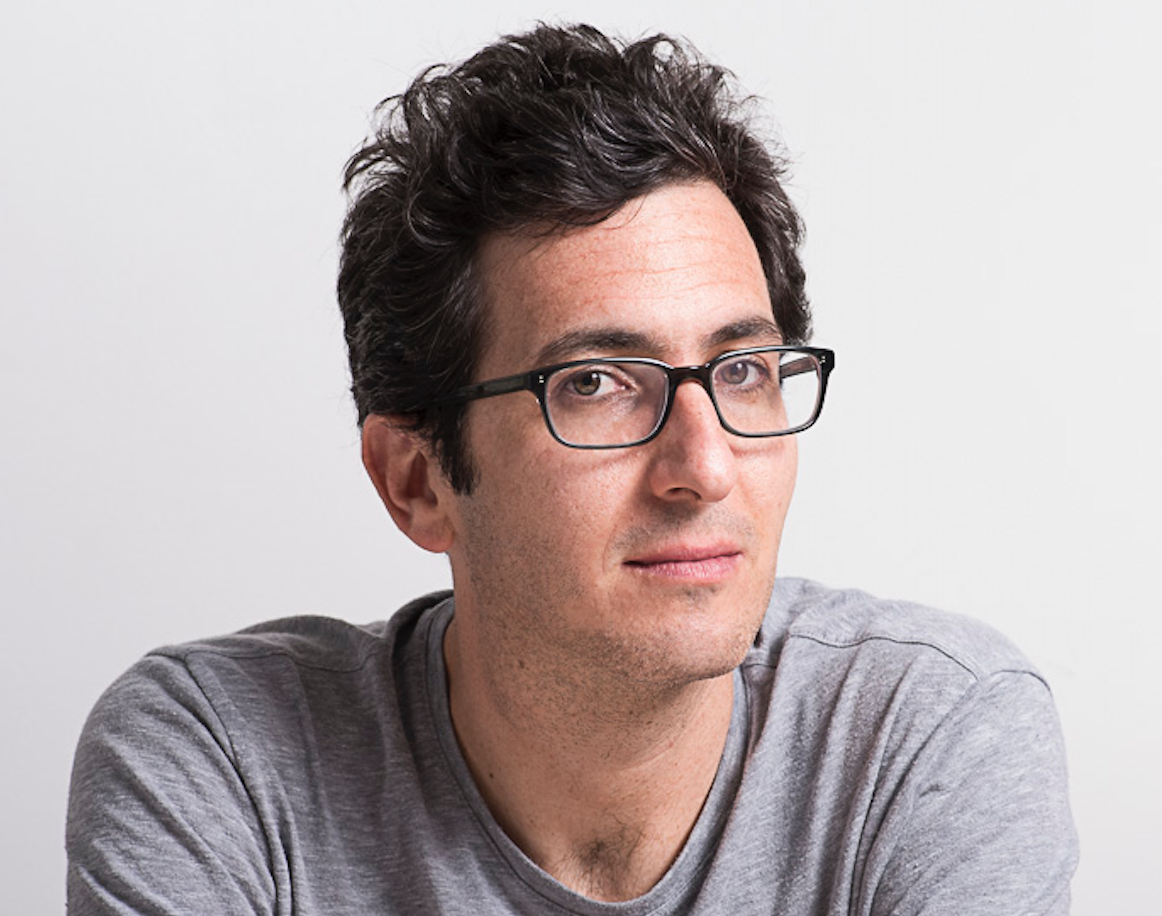
Nathanaël Fijalkow is a senior researcher at CNRS in LaBRI, Bordeaux, where he leads the Synthesis team. His work bridges program synthesis, games on graphs, automata theory, and applications in machine learning and formal verification. Research interests include: Program synthesis and code generation Game theory for algorithmic verification Linear Temporal Logic learning Probabilistic automata and dynamical systems Boolean network synthesis for biological modeling Recent publications focus on GPU-accelerated program synthesis, decidable classes of POMDPs, and optimal transformations in automata theory. He received the AAAI 2025 Outstanding Paper Award. He supervises PhD students and collaborators in the Synthesis team, working on projects like ANR ZADyG, ANR Shannon meets Cray, and PEPR IA SAIF. The team develops tools such as Scarlet and BoNesis for LTL learning and Boolean network analysis.
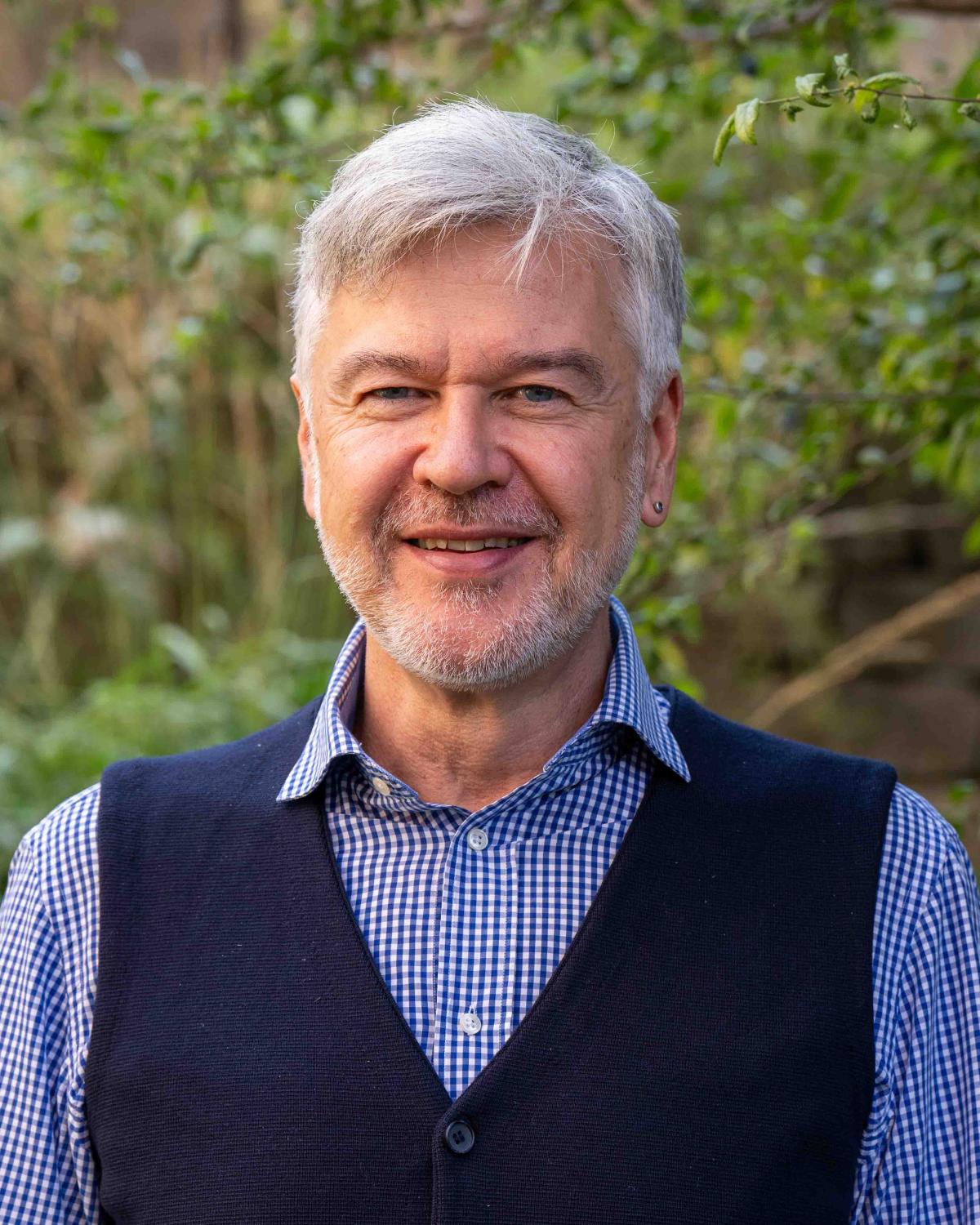
Craig Innes is a Research Fellow at the University of Edinburgh , affiliated with the Institute for Perception, Action and Behaviour (IPAB) . His research bridges symbolic logic and formal verification with black-box probabilistic models in cyber-physical systems , focusing on trustworthiness , risk assessment , and safety guarantees for autonomous vehicles and robotics . His work explores temporal logic specifications , adaptive experiment design , and probabilistic calibration to improve safety validation . Key trends in his publications include formal verification for machine learning systems , physics-informed simulation for soft robotics , and risk-driven perception system design . He also investigates unawareness in decision-making and scenario generation via large language models . Craig supervises PhD students in areas like hybrid AI for cyber-physical systems and autonomous robotics , with funding opportunities through EPSRC Doctoral Training Partnerships and Centre for Doctoral Training programs in Dependable Robotics and Machine Learning Systems . He emphasizes research proposal development and collaboration with industry in his supervision approach.
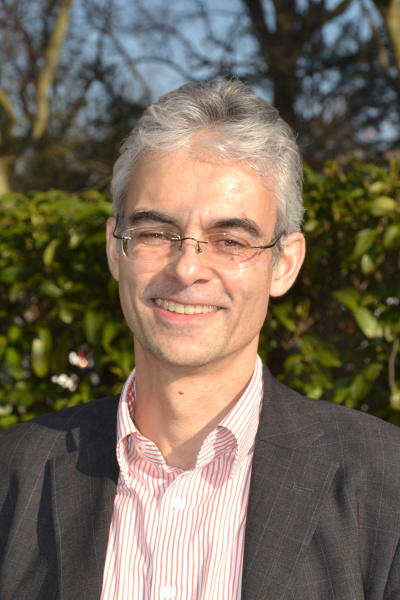
Jonathan Berant is an Associate Professor at the Blavatnik School of Computer Science, Tel-Aviv University, and a Research Scientist at the Allen Institute for Artificial Intelligence. Currently on leave of absence at Google (based in Seattle) until summer 2026, he has established himself as a leading researcher in Natural Language Processing with significant contributions to semantic parsing, question answering, and weak supervision techniques. His research focuses on Natural Language Understanding problems including Semantic Parsing, Question Answering, Paraphrasing, Reading Comprehension, and Textual Entailment, with particular interest in learning from weak supervision that is easy to obtain and grounded in the world, as well as tasks requiring multi-step inference or handling of language compositionality. His work bridges theoretical foundations with practical applications in language understanding systems. Berant's recent publications demonstrate strong trends in language model alignment, robustness, and reasoning capabilities, with significant contributions to understanding how language models process information and how to make them more reliable. His work spans from fundamental NLP tasks to addressing critical challenges in modern large language models. Senior area chair outstanding paper award (NAACL 2025) Outstanding paper award (ICLR 2024) Spotlight talk (NeurIPS 2023) Spotlight talk (3% of submissions) (NeurIPS 2022) Oral presentation (NeurIPS 2021) Berant has advised numerous PhD and Master's students who have gone on to positions at leading AI companies and research institutions including Google, AI21, Allen Institute for AI, and academic programs. His teaching includes advanced NLP courses and research seminars at Tel-Aviv University. His educational background includes a Ph.D. from Tel-Aviv University (2006-12) with advisors Ido Dagan, Jacob Goldberger, and Eytan Ruppin, followed by postdoctoral work at Stanford University with Percy Liang and Chris Manning, and at Google Mountain View.
Thomas Bernauer is a Full Professor at the Department of Humanities, Social and Political Sciences (D-GESS) at ETH Zurich, Switzerland, where he maintains his office at Haldeneggsteig 4, 8092 Zurich. His research focuses on the intersection of environmental governance, political institutions, and public opinion, with particular emphasis on climate policy implementation and international regulatory frameworks. Bernauer's research program investigates how democratic systems influence environmental outcomes, with groundbreaking work on pollution offshoring, public acceptance of climate policies, and cross-national variations in environmental governance. His methodology combines experimental designs with large-scale survey data, notably through leadership of the Swiss Environmental Panel and Swiss Mobility Panel projects that track citizen attitudes and behaviors on sustainability issues. Recent studies demonstrate how democratic accountability affects emissions patterns and how policy design elements like revenue recycling influence public support for carbon pricing. His publication record reveals strong trends toward experimental analysis of policy instruments (especially carbon taxes and electric vehicle regulations), international comparative studies of environmental attitudes, and investigations into the political economy of pollution shifting. Work increasingly focuses on Global South contexts, examining air pollution governance in emerging economies and the role of state capacity in environmental protection. Bernauer directs major longitudinal research initiatives including the Swiss Environmental Panel (tracking CO 2 removal attitudes and circular economy preferences) and Swiss Mobility Panel (analyzing transport behavior and road pricing acceptance). These projects employ sophisticated survey methodologies across multiple waves to capture evolving public opinion on sustainability transitions in Switzerland.
Franck Gabriel is an Associate Professor at University Claude Bernard Lyon 1 , affiliated with the Institut de Science Financière et d'Assurances (ISFA) . His research bridges Machine Learning , Economics/Blockchain , Mathematical Physics , and Random Matrices , with notable work on neural tangent kernels, DeFi protocols, and asymptotic matrix theory. Research Focus : Machine Learning: Theoretical analysis of neural networks, kernel methods, and generalization bounds. Blockchain Economics: Decentralized finance, staking mechanisms, and smart contract design. Mathematical Physics: Holonomy fields, Yang-Mills theory, and random matrix asymptotics. Recent Publications highlight trends in denoising diffusion models, free probability in matrix theory, and DeFi credit systems. His work often integrates cross-disciplinary approaches, merging deep learning with financial technology and quantum field theory. Scientific Awards : 2025 AI 2000 Most Influential Scholar Award in Theory 2024 AI 2000 Most Influential Scholar Award in Theory 2023 AI 2000 Most Influential Scholar Award in Theory As an organizer of the ISFA Seminar , he fosters interdisciplinary discussions in insurance, economics, and machine learning. His collaborations span institutions like Ecole Polytechnique Fédérale de Lausanne, Courant Institute, and EPFL.
Prof. Hans Wernher van de Venn is a Professor at the ZHAW School of Engineering's Institute of Mechatronic Systems, Zurich, Switzerland. His work focuses on Industry 4.0, robotics, predictive maintenance, and human-robot collaboration. He leads and collaborates on projects such as SmartAssets, Cybathlon 2024, and Robo-Mate, aiming to enhance industrial automation and safety. Research Interests: His research spans robotics systems, digital twins, and sustainable manufacturing. Notable contributions include predictive maintenance algorithms using autoencoders and domain adaptation techniques, as well as advancements in human-robot interaction safety through deep learning. He has also pioneered wearable robotic exoskeletons for industrial applications. Projects & Awards: Over 20 projects highlight his leadership in Industry 4.0 innovation. Recent work includes testing frameworks for digital twins, generative SDK development, and applying ChatGPT for structured industrial data. His publications emphasize practical applications of AI in manufacturing and healthcare robotics. Grants & Labs: Active in collaborative grants focusing on smart factories, maintenance systems, and embedded systems. His team develops solutions at the intersection of mechatronics and software engineering, with a focus on real-world deployment.
Dr. Martin Patel is a full professor and Chair for Energy Efficiency at the University of Geneva, Switzerland. His research focuses on energy savings, emission reduction, bio-based products, and environmental-economic assessments. He leads the Energy Track in the Environmental Master Programme (MUSE) and coordinates international projects on energy transition, including roles in SCCER consortia. Previously, he held academic positions at Utrecht University and worked at the Fraunhofer Institute and ECOFYS. His work integrates techno-economic modeling, policy analysis, and sustainability metrics to address climate change and resource efficiency challenges. Educational background: Chemical Engineering (University of Karlsruhe, 1992), PhD in Carbon Cycle Dynamics from Utrecht University (1999). He has extensive experience in energy systems, policy evaluation, and interdisciplinary research. His projects involve stakeholders from academia, governments, and industry, aiming to bridge research and real-world implementation. Key research areas include energy efficiency in industry and buildings, renewable energy integration, and climate policy design. He has supervised numerous doctoral students and authored over 200 publications, focusing on energy storage, district heating, and transition pathways. His work emphasizes translating technical innovations into actionable policies and sustainable practices.
Dr. Michael Klippel is a Lecturer and Senior Scientist at the Institute of Structural Engineering, Timber Structures (IBK) at ETH Zurich. He specializes in Timber Engineering, Fire Safety, and Sustainable Materials, leading the 'Fire in Timber Group' since 2014. Klippel coordinates the MAS ETH Fire Safety Engineering program and focuses on advancing timber construction standards. His academic background includes a Dipl.-Ing. in Civil Engineering (2009) from RWTH Aachen University and a Dipl.-Wirt.Ing. in Business Management (2013). Research Interests: Klippel's work bridges structural engineering and fire safety, emphasizing innovative timber applications, carbon-neutral construction, and interdisciplinary projects. His research addresses challenges like fire-resistant CLT design, adhesive performance under fire, and sustainable material utilization. Publications: Key contributions include studies on tall timber structures, carbon credits in real estate, and fire behavior of CLT. His work appears in journals like Sustainability and Journal of Renewable Materials , alongside industry guides and reports. Awards: Honors include the L.J. Markwardt Award (2019), Leo Schörghuber-Preis (2015), and F.C. Trapp-Preis (2010). He also won a VDI student competition for a UHPC bridge design in 2008. Grants & Labs: Klippel leads the 'Fire in Timber Group' and collaborates with industry on standardization projects. His work integrates academic research with practical applications in construction safety and sustainability.
Michalis Kokologiannakis is a Tenure Track Assistant Professor of Computer Science at ETH Zurich's Department of Computer Science (D-INFK). Previously, he was a postdoctoral researcher at the Max Planck Institute for Software Systems (MPI-SWS), where he completed his doctorate. His research focuses on programming languages, formal software verification, and automated reasoning, with a particular emphasis on concurrency, weak memory models, and algorithmic techniques for scalable verification of concurrent data structures. Education: PhD in Computer Science, Max Planck Institute for Software Systems (MPI-SWS) MEng in Electrical and Computer Engineering, National Technical University of Athens (NTUA) Research Interests: Developing algorithms for analyzing large-scale concurrent program executions Formal verification of software correctness using mathematically rigorous techniques Tools like GenMC and Kater for weak memory model analysis Practical applications of research in non-academic contexts Teaching Philosophy: Advocates for interactive, dialogue-based education that connects students with cutting-edge research tools and methodologies. Envisions integrating his group's research software into classroom experiences. Labs/Teams: Collaborates with the Institute for Programming Languages and Systems at ETH Zurich to address challenges in verification and concurrency research.
Ladan Pooyan-Weihs is the Head of Program at the Lucerne School of Computer Science and Information Technology (Lucerne University of Applied Sciences and Arts). She holds a PhD in Computer Science from Berlin University of Technology (2000) and a Master's in Computer Science from the same institution (1992). Her research focuses on digital transformation, cryptography, database modeling, and interdisciplinary studies in technology's societal impacts. She also lectures in discrete mathematics and statistics. Professional highlights include leadership roles at Atos AG (2006–2016) and senior management consulting at Theorem (2002–2006). She is a Diversity Officer at the Information Technology Department (2018), ICT Expert at Innosuisse (2019), and board member of OpenData.CH. Academic contributions span theoretical computer science (e.g., process calculi formalisms) and applied research in data-driven business transformation. Her publications emphasize bridging theory and practice, with recent work on digital transformation frameworks and foundational studies in concurrent systems. Awards include a prestigious German Research Foundation (DFG) scholarship supporting collaborative research in Edinburgh and Amsterdam.
Dejan Romancuk is a Lecturer at the Lucerne School of Engineering and Architecture, part of HSLU. He teaches Statics and Mechanics of Materials at both Bachelor and Master levels. His research focuses on Aeronautical Structural Integrity, Additive Manufacturing, and Structural Health Monitoring. Previously, he held roles at Pilatus Aircraft Ltd. (2006–2018) as Lead Engineer for Fatigue and Damage Tolerance, contributing to the PC-24 business jet certification and PC-12 life extension programs. He also worked at Rheinmetall Air Defence AG (2003–2005) and Georg Fischer Automotive AG (2001–2003). Education: MSc ETH Mechanical Engineering from ETH Zurich (1994–2000), with additional studies at ISAE-SUPAERO (Toulouse) and a research internship at Contraves Space. His professional expertise includes Structural Integrity, Aeronautical Fatigue Analysis, Additive Manufacturing Certification Strategies, and Aging Fleet Management. Projects such as 'Defect Tolerant Additive Manufacturing' and 'Structural Health Monitoring for Composites in Aircraft Applications' highlight his focus on advancing material reliability in aerospace systems. Recent publications address fatigue performance of additive-manufactured alloys and defect analysis in aerospace components. His industrial contributions include failure analysis, risk assessments, and compliance verification for aircraft structures. He has presented widely on topics like aeronautical fatigue investigations in Switzerland and holistic structural integrity processes.
Timon Gehr is part of the Professorship for Computer Science at ETH Zurich's Department of Computer Science, affiliated with the Institute of Programming Languages and Systems. His research focuses on quantum computing, probabilistic programming, neural network robustness, and privacy enforcement. He has contributed to the development of quantum languages like Silq and frameworks for certifying adversarial robustness in machine learning systems. His research interests include formal methods for programming languages, scalable symbolic reasoning, and applying probabilistic techniques to security and privacy. Recent work emphasizes robustness certification of neural networks and symbolic integration in machine learning. Key projects involve exact inference for probabilistic programs and differential privacy violation detection. Notable publications include work on quantum uncomputation, adversarial examples, and integrating logic into neural networks. No specific advising or grant details are provided in the text, but his involvement with the Institute of Programming Languages and Systems indicates active participation in academic collaborations and research teams.
Dr. Malte Schwerhoff is a Lecturer at the Department of Computer Science at ETH Zürich. His teaching responsibilities include courses such as Introduction to Programming , Software Engineering , and Preparatory Course in Computer Science . His research focuses on formal verification, automated reasoning, and symbolic execution techniques, with a particular emphasis on security protocols, programming languages, and compiler design. His work bridges theoretical computer science with practical applications in software engineering and cybersecurity. Research contributions span modular verification methodologies, permission-based reasoning frameworks, and the development of tools like Viper for static analysis. His studies address challenges in ensuring correctness and security in software systems through formal methods. Notably, his work on symbolic execution profiling and generalized magic wand support has advanced automated program verification techniques. While no awards or grants are explicitly listed in the provided texts, his active publication record reflects ongoing engagement with cutting-edge topics in computer science. Advising and lab affiliations are not detailed here, but his involvement in teaching and research underscores his role as an educator and scholar in computational theory and practice.
Johannes Hostert is a Researcher at the Department of Computer Science (D-INFK) , ETH Zurich, since October 2023. He works under the guidance of his advisor Ralf Jung in the PLF lab . His research focuses on program verification, separation logic, type theory, and formal methods in Rust programming. Bachelor’s and Master’s degrees from Saarland University Advisor: Ralf Jung Research Trends include formal verification of programming languages, especially Rust and OCaml/C interoperability, mechanised logic in Coq, and aliasing models like Tree Borrows. His work bridges compiler optimization with memory safety guarantees. Scientific Awards : Distinguished Paper Award for Tree Borrows (2025) Labs & Collaborations : PLF lab at ETH Zurich, working with team members like Neven and Derek on projects such as Tree Borrows and MiniRust formalization.
Prof. Ralf Jung is an Assistant Professor at ETH Zürich's Department of Computer Science, leading the Programming Language Foundations Lab under the Institute for Programming Languages and Systems. His work focuses on formal verification of programming languages, particularly Rust and Iris. Previously, he earned his PhD at Saarland University and MPI-SWS, advised by Derek Dreyer, followed by a postdoc at MIT CSAIL's PDOS group. Research Interests: Formal foundations of Rust, including tools like Miri for detecting undefined behavior and MiniRust for precise specification. Iris logical framework for modular verification of programming languages at scale. Concurrent and distributed systems verification using separation logic. Advising & Labs: He leads the Programming Language Foundations Lab and is hiring postdocs. His work integrates theoretical rigor with practical tooling for real-world language verification challenges. Labs/Teams: Programming Language Foundations Lab at ETH Zürich, collaborating with the Rust language team and global research community.