Aymeric Fromherz is a researcher at Inria Paris, focusing on formal methods for secure systems. He leads projects in Rust verification, high-assurance cryptography, and formalization of computational legal texts. Education includes a PhD from Carnegie Mellon University (co-advised by Bryan Parno and Corina Păsăreanu) and degrees from École Normale Supérieure. His research spans Rust verification (via Aeneas toolchain), verified cryptographic primitives , and computational law (through the Catala language). Recent publications address memory allocators, borrow-checking, and legal ambiguity detection. Major Scientific Awards : Distinguished Artifact Award (CAV 2025) Best Tool Paper Award (ESOP 2024) ACM SIGSAC Dissertation Award (2021) A.G. Milnes Dissertation Award (2021) He contributes to conferences like POPL, ICFP, and CPP, and participates in the Everest Project. The Prosecco Team at Inria Paris supports his research on formal methods and security.
Bernd Finkbeiner is a Professor of Computer Science at Saarland University and a faculty member at the CISPA Helmholtz Center for Information Security . He leads the Reactive Systems Group, which merged with CISPA in 2020, focusing on formal methods for ensuring system safety and security. University: Saarland University Research Institution: CISPA Helmholtz Center for Information Security His research spans synthesis, verification, and monitoring of reactive systems , with applications to program repair, static/dynamic analysis, and security guarantees . Recent work includes coinductive proofs for hyperliveness, asynchronous hyperproperty verification, and symbolic execution for bug detection. Key trends in his publications include: Hyperliveness and fairness in reactive systems Symbolic execution for hyperbug identification Integration of synthesis and verification techniques Formal guarantees for cybersecurity and software reliability He contributes to academic communities through committee roles at conferences like POPL, ICFP, SPLASH, and VMCAI.
Elvira Patricia Pino Blanco is a Professor in the Department of Computer Science at the Barcelona East School of Engineering, Polytechnic University of Catalonia (UPC). She is a member of the ALBCOM research group (Algorithms, Bioinformatics, Complexity and Formal Methods) and has an extensive publication record spanning over two decades. Her research interests focus on formal methods in computer science, particularly in graph theory, logic programming, and database systems. She has made significant contributions to navigational logics for graphical structures, graph databases, and model synchronization using triple graph grammars. Her work bridges theoretical foundations with practical applications in software engineering and data management. Her publication trends show a consistent focus on graph-based approaches to computational problems, with recent work emphasizing logical approaches to graph databases and navigational query languages. She has published in high-impact venues including Journal of Logical and Algebraic Methods in Programming, Theoretical Computer Science, and various international conferences. Professor Pino Blanco has been involved in numerous competitive R&D projects related to algorithmics, bioinformatics, and formal methods. Her work demonstrates interdisciplinary connections between theoretical computer science and practical applications in data management and software engineering. She is affiliated with the ALBCOM research group which focuses on algorithmics, bioinformatics, complexity theory, and formal methods. This group represents a vibrant research community working at the intersection of theoretical computer science and practical applications.
Maria-Cristina Marinescu serves as a Lecturer in the Department of Mathematics and Data Analytics at IQS School of Management. With a strong foundation in computational methods and data analysis, she contributes significantly to both teaching and research within the institution. Her academic profile demonstrates consistent scholarly activity with 44 documented scientific production items spanning over two decades. Dr. Marinescu's research interests center on Machine Learning, Data Analytics, and Artificial Intelligence, with notable applications in epidemic modeling, wireless sensor networks, and programming models. Her work bridges theoretical computer science with practical applications addressing real-world challenges in public health, digital well-being, and medical diagnostics. The fingerprint analysis of her work shows strong emphasis on Machine Learning (100%), Learning Systems (100%), and Transportation Models (100%), with substantial contributions to Programming Models (84%) and Wireless Sensor Networks (77%). Her recent publications reveal a trend toward interdisciplinary research that combines computational methods with societal challenges. She has made significant contributions to epidemic modeling during the COVID-19 pandemic, developing methods for accurate incidence rate estimation in Spain and analyzing information gains from multiple epidemic model outputs. Additionally, her work extends to medical applications including research on ocular ischemia and glaucoma, as well as innovative approaches to automated metadata annotation using machine learning techniques. Dr. Marinescu actively leads and participates in multiple research projects including Uncovering patterns of unconscious reactions to fake content (as Principal Investigator), MobilePressure (focused on reducing children's smartphone exposure), and ADAMIQS: Applied Data Analytics and Modelling IQS . These projects demonstrate her commitment to addressing contemporary issues through data-driven approaches while mentoring students and collaborating with interdisciplinary research teams.
María Belén Pérez Lancho is a Full Professor in the Department of Computer Science and Automation at the University of Salamanca, Spain. With over 25 years of academic experience since completing her PhD in 1995, she maintains active affiliations with multiple research groups including BISITE (Bioinformatics, Intelligent Computing Systems and Educational Technology), CaUSAL (Academic Culture, Heritage and Social Memory), and Process Supervision and Control. Dr. Pérez Lancho earned her doctoral degree from the University of Salamanca with her thesis "Integrated process control system: a practical approach" supervised by Dr. Eladio Sanz García. Her academic foundation in systems engineering and automation has evolved into diverse research applications across multiple domains. Her research program demonstrates remarkable breadth while maintaining technical coherence. She has pioneered context-aware multiagent systems for home care environments, developing architectures like HoCa and HoCCAC that monitor patients and optimize task scheduling. In environmental science, she created hybrid intelligent systems for forest fire prediction using Case-Based Reasoning with topology-preserving algorithms. More recently, she has addressed cybersecurity challenges in educational technology through two-factor authentication systems. Her work consistently bridges theoretical computer science with practical implementations in real-world settings. Analysis of her publication trajectory reveals a consistent focus on adaptive intelligent systems that respond to environmental changes. Her earliest work established foundations in systems engineering, which evolved into sophisticated multi-agent applications across healthcare, environmental monitoring, and security domains. The most recent publications continue this trajectory while addressing contemporary challenges in educational technology security. Dr. Pérez Lancho maintains extensive collaborative relationships, particularly with Juan M. Corchado at the University of Salamanca, as evidenced by numerous co-authored publications. Her research has been implemented in actual home care environments and environmental monitoring systems, demonstrating the practical impact of her work. Her research infrastructure includes: BISITE group focusing on intelligent computing systems and educational technology CaUSAL group examining academic culture and heritage Process Supervision and Control group applying her foundational work to industrial contexts These affiliations support her interdisciplinary approach to solving complex problems through computational methods.
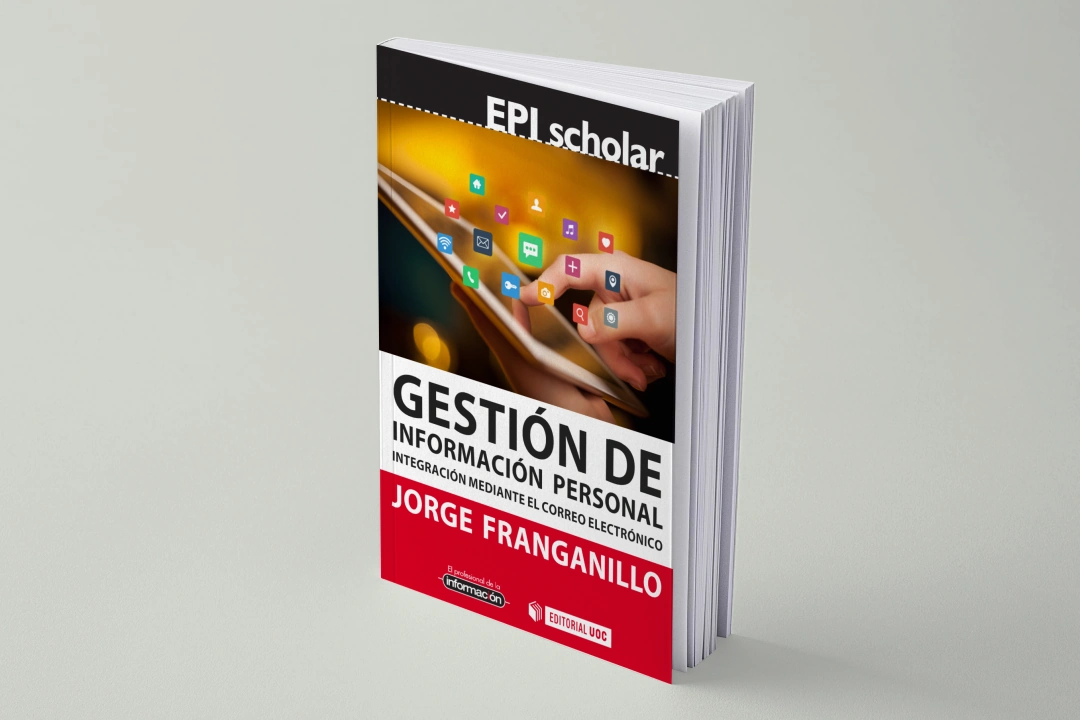
Jorge Franganillo is a Professor and researcher at the University of Barcelona's Faculty of Information and Audiovisual Media, where he coordinates the Master's Degree in Digital Content Management since 2023. He belongs to multiple teaching collectives including GIDD, CAV, CSM, GCD, and Contracted teaching staff. His international experience includes teaching positions at Hochschule der Medien (Stuttgart), Fachhochschule Kärnten (Villach), Jan Amos Komenský University (Prague), University of Dubrovnik, University of Bucharest, and Polytechnic University of Valencia. Dr. Franganillo holds a Doctorate in Information and Communication. His academic journey reflects a deep commitment to bridging theoretical knowledge with practical applications across various international contexts in the field of information science and audiovisual media. His research spans several interconnected domains focused on the evolving digital landscape. Franganillo investigates how individuals manage personal information across multiple devices and platforms, examining the psychological aspects of digital organization. He explores the application of artificial intelligence in content creation, particularly analyzing both the opportunities and ethical challenges presented by generative AI technologies. His work on digital formats management addresses the technical and organizational challenges of preserving digital information over time. Franganillo also contributes significantly to the field of clear language communication, particularly through his analysis of the ISO 24495-1 standard for plain language in official communications. His research on television nostalgia and segment programming reveals how audiovisual archives are being creatively repurposed in contemporary media. Franganillo's recent publications demonstrate a clear trajectory toward examining the intersection of emerging technologies with information management practices. His work increasingly focuses on AI applications across multiple domains - from library science to media production - while maintaining a critical perspective on ethical implications. He has expanded his research to include analysis of digital communication clarity in public administration and the psychological impact of AI-generated content on media consumers. His scholarly output shows a consistent pattern of addressing timely issues at the forefront of information science and digital communication. As coordinator of the Master's Degree in Digital Content Management, Franganillo guides numerous student projects and research initiatives. He has participated in significant European projects including eMEDia (2013-2017) and CRISH (2017-2018), demonstrating his capacity to secure and manage substantial research funding. His work with the UB DIBA Chair of Applied Communication to Public Administrations highlights his commitment to knowledge transfer between academia and public institutions. Franganillo actively participates in the Research Center for Information, Communication and Culture (CRICC) and the Teaching Innovation Group in Communication and Audiovisual Media (In-COMAV). These affiliations provide collaborative frameworks for his research and enable him to integrate theoretical insights with practical applications in educational settings. His involvement in these research groups facilitates interdisciplinary approaches to complex information challenges in contemporary society.