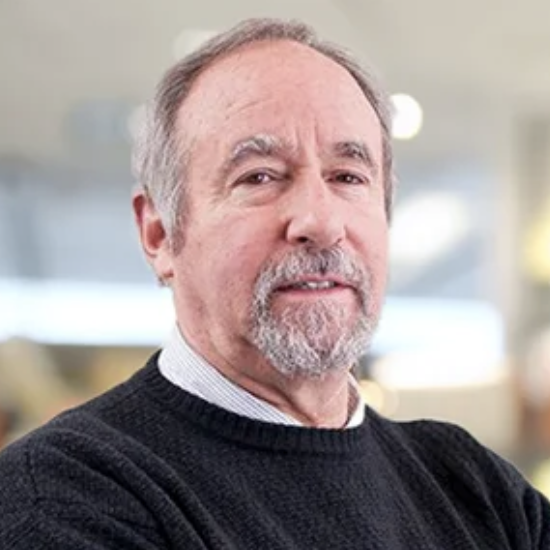
Sicun Gao is an Associate Professor in the Computer Science and Engineering department at the University of California, San Diego. His research focuses on practical algorithms for NP-hard search and optimization problems in computational systems, emphasizing combinatorial perspectives in numerical and statistical contexts to achieve reliable autonomy. Research Interests: Automated reasoning, Hamilton-Jacobi reachability, safe reinforcement learning, control barrier functions, and optimization in cyber-physical systems. Teaching: Courses on AI search, optimization, and graduate research seminars. The 15 most recent publications highlight advancements in safe AI control, motion planning, and policy optimization, often integrating neural networks with formal verification. Awards include the IEEE Power & Energy Society Technical Committee Prize Paper Award and the IROS RoboCup Best Paper Award. He advises PhD students working on AI-driven control and robotics, with alumni placed at institutions like Seoul National University, Amazon, and Apple. Grants include NSF Career, Air Force Young Investigator, and DARPA Assured Autonomy funding. His lab develops tools like dReal for automated reasoning in nonlinear theories over the reals.
Eric Wong is an Assistant Professor in the Department of Computer and Information Science at the University of Pennsylvania, affiliated with the ASSET Center and leading the Brachio Lab. His research focuses on robust and reliable machine learning, including model debugging, adversarial robustness, and explainable AI. He holds a PhD from Carnegie Mellon University (CMU), advised by J. Zico Kolter, and completed a postdoc with Aleksander Madry. His work bridges theory and practice, addressing challenges in model interpretability, safety, and scalability. Teaching includes CIS 5200 (Machine Learning), CIS 3333 (Mathematics for Machine Learning), and a specialized course on debugging ML pipelines. Notable contributions include the FIX Benchmark for interpretable features and defenses against LLM jailbreaking attacks. He received an Amazon Research Award in 2024 and has published extensively in top conferences like ICML, NeurIPS, and ICLR. Affiliations: University of Pennsylvania (CIS), ASSET Center, Brachio Lab Education: PhD in Machine Learning (CMU), Postdoc at MIT Key Projects: FIX Benchmark, DOLPHIN framework, SmoothLLM defense Awards: Amazon Research Award (2024) Lab Focus: Safe AI, model debugging, neurosymbolic learning
James McCann is an Associate Professor at the Carnegie Mellon Robotics Institute, where he leads the Carnegie Mellon Textiles Lab. He has been a faculty member since May 2017 after working at Disney Research Pittsburgh. McCann's academic journey includes a PhD from Carnegie Mellon advised by Nancy Pollard, followed by a postdoc at Adobe Research and a period developing video games. McCann's research focuses on building creative tools that operate in real-time and build user intuition, with particular emphasis on textiles fabrication and machine knitting. His work spans computer-aided fabrication, simulation, graphics, and creative tools development. He has pioneered systems for machine knitting design, including compilers for knitting instructions and tools for automatic conversion of 3D meshes to knitting patterns. His recent publications demonstrate a strong trend toward computational textiles, with significant contributions to knitting semantics, deployable textile structures, and applications of machine knitting in healthcare and robotics. McCann's work bridges computer science, robotics, and textile arts, creating practical systems for once-off manufacturing with industrial knitting machines. McCann actively mentors students, with current PhD candidates working on solid knitting machines, knit calibration, and assistive devices. His teaching portfolio includes courses on Real-Time Graphics, Algorithmic Textiles Design, and Game Programming. He has taught at CMU since 2017, developing innovative courses that blend computer science with physical fabrication. As director of the Textiles Lab, McCann oversees research projects spanning machine knitting, robotic painting, and real-time graphics systems. His lab develops practical tools for creators, emphasizing intuitive interfaces and real-time feedback that lower barriers to advanced fabrication techniques.
Yonatan Bisk is an Assistant Professor at Carnegie Mellon University within the Language Technologies Institute (with courtesy appointment in Robotics Institute). His research bridges Natural Language Processing , Robotics , and Embodied AI , focusing on language grounding, theory of mind, and multimodal interaction. Education : Ph.D. in Computer Science from University of Illinois at Urbana-Champaign Postdoctoral Experience : USC ISI, University of Washington, Allen Institute for AI Industry Appointments : Microsoft Research, Meta AI His research emphasizes embodied language systems and social intelligence in AI . Recent projects include WebArena for autonomous agents, SOTOPIA for social reasoning, and HomeRobot for open-vocabulary manipulation. He leads the REAL Center (Robotics, Embodied AI, and Learning) to foster interdisciplinary collaboration. Key scientific awards include selection for the DARPA ISAT Study Group (2024). He teaches courses like "Talking to Robots" and "Multimodal Machine Learning" while serving as area chair/editor across NLP, Robotics, and ML communities.
Justine Sherry is the A. Nico Habermann Associate Professor of Computer Science at Carnegie Mellon University, affiliated with the College of Engineering. She holds a PhD (2016) and MS (2012) from UC Berkeley and a BS/BA (2010) from the University of Washington. Her research focuses on networked systems, including middleboxes, cloud computing, congestion control, and hardware acceleration (e.g., SmartNICs/FPGAs). Notable projects include Pigasus (open-source 100Gbps IDS), APLOMB (cloud-based middlebox scaling), and BlindBox (encrypted traffic scanning). Her academic roles include serving on the SIGCOMM CARES Committee, DARPA ISAT Study Group, and ACM CoNEXT Steering Committee. Awards include the Alfred P. Sloan Fellowship, VMware Systems Award, and IETF Applied Networking Prize. She advises over 15 students and collaborates with industry partners like Intel and VMware. Research highlights include radical shifts in datacenter architectures (SmartNIC compute control), fairness in congestion algorithms (BBR analysis), and database-proxy innovations (Tigger with eBPF). Her teaching emphasizes systems as science labs, integrating experimental design and hypothesis testing into projects. Education: PhD UC Berkeley (2016), MS UC Berkeley (2012), BS/BA University of Washington (2010) Labs/Teams: CyLab, SNAP Research Group, CMU Portugal Collaboration Grants: NSF, Intel, Google Faculty Awards
Franz Franchetti is the Kavčić-Moura Professor of Electrical & Computer Engineering at Carnegie Mellon University. He serves as Associate Dean for Research and Director of the Engineering Research Accelerator at CMU. Education: Ph.D. in Computational Mathematics (Vienna University of Technology, 2003) M.Sc. in Technical Mathematics (Vienna University of Technology, 2000) His research interests focus on automatic performance tuning and program generation for emerging parallel computing platforms , including multicore CPUs , GPUs , and 3DIC chip design . He leads the SPIRAL effort to automate highly optimized software libraries and explores domain-specific compiler transformations in HPC applications for smart grids and material sciences . Recent work extends SPIRAL to quantum computing . The scientific awards Franchetti has received include the Gordon Bell Prize (2006) , HPC Challenge Class II Award (2010) , and the CIT Dean's Early Career Fellowship (2013) . He and his students have won multiple Best Paper Awards at HPEC, DAC, and ISPA ACM TODAES Best Paper (2014) Student Research Competition wins (PACT 2024, CGO 2023) Franchetti has advised students like Richard Veras and Thom Popovici . He has secured significant grants from agencies such as DARPA, DOE, NSF, and industry partners (Intel, NVIDIA, Mercury). He co-founded SpiralGen, Inc. and holds leadership roles in organizations like ASciNA Western Pennsylvania and as Honorary Consul of Austria in Pittsburgh.
Richard M. Stern is a Professor of Electrical and Computer Engineering at Carnegie Mellon University (CMU), holding courtesy appointments in the Language Technologies Institute and Department of Computer Science, and serving as an Artist Lecturer in the School of Music since 2007. His interdisciplinary work bridges engineering and music technology through the School of Music's programs. Education: Ph.D. in Electrical Engineering from Massachusetts Institute of Technology (MIT), 1976 Professor Stern's research spans sound, speech, hearing, and music, with core emphases on robust speech processing in variable acoustic environments, music information retrieval, automated accompaniment, and foundational contributions to binaural perception theory. His work integrates psychoacoustic principles with machine learning to address challenges in speech recognition and human-robot interaction. Recent publications (2022-2025) reveal intensified focus on deep learning for speech enhancement in reverberant/noisy conditions, human-robot interaction scenarios, and music tagging—highlighting innovations in beamforming, source separation, and temporal modulation modeling. Awards and Honors: Fellow of the IEEE Fellow of the Acoustical Society of America Fellow of the International Speech Communication Association (ISCA) ISCA Distinguished Lecturer Allen Newell Award for Research Excellence (1992) Lutron Award for Teaching Excellence (2018) Professor Stern has advised numerous graduate students in speech and audio research, though specific names are unlisted in source materials. His grant portfolio includes significant National Science Foundation and industry-funded projects in speech technology, with leadership roles in initiatives like Interspeech 2006. He actively collaborates with CMU's Language Technologies Institute and Music and Technology program. He maintains strong ties to CMU's interdisciplinary ecosystem through the Language Technologies Institute and School of Music's Music and Technology program, contributing to research that merges acoustic engineering with musical applications.
Vyas Sekar is the Tan Family Professor of Electrical and Computer Engineering at Carnegie Mellon University (CMU), with a courtesy appointment in the Computer Science Department. He is affiliated with CyLab and co-directs the Future of Enterprise Security initiative. His research focuses on networking, cybersecurity, distributed systems, and IoT security, with an emphasis on data-driven approaches and network verification. Education: Ph.D. in Computer Science (2010) from CMU; B.Tech. from IIT Madras (President of India Gold Medal recipient). Professional roles include Chief Scientist at Conviva and co-founder of Rockfish Data. Research Interests: Cybersecurity, network security, software-defined networking (SDN), IoT security, DDoS defense, privacy-preserving data sharing, and network performance optimization. Recent work includes developing tools like Pigasus (FPGA-accelerated intrusion detection), Nomad (cloud side-channel mitigation), and frameworks for anomaly detection in IoT networks. Articles Trends: Recent publications address advanced threats like LLM-driven network attacks, stealthy automotive network exploits (CANDid), and optical-layer DDoS defenses. Emphasis on practical solutions (e.g., SketchPlan for telemetry, Pryde for firewall evasion detection). Awards: ACM SIGCOMM Test of Time Award (2022), IIT Madras Young Alumni Achiever Award (2022), Intel Outstanding Researcher Award (2021), and NSF CAREER Award (2016). Recognized for contributions to intrusion prevention, network security, and IoT resilience. Grants & Projects: Led NSF-funded ONSET project (optical-layer DDoS defense), CyLab's Secure IoT Initiative, and collaborations with industry partners like Intel, Facebook, and Nokia Bell Labs. Advises graduate students in cybersecurity and networking. Labs & Teams: Active contributor to CyLab, co-developer of frameworks like Lumos (hidden IoT device detection) and KalKi (IoT security platform). Engages in interdisciplinary research across CMU’s Robotics Institute and Software Engineering Institute.
Norman Sadeh is a Professor in the School of Computer Science at Carnegie Mellon University (CMU), where he has made significant contributions to cybersecurity, privacy, and AI research. He has co-founded and co-directed several groundbreaking graduate programs at CMU, including the Privacy Engineering Program (2012-present), the Ph.D. Program in Societal Computing (2003-2013), and the MBA track in Technology Strategy and Product Management (2005-2017). Carnegie Mellon University, School of Computer Science Software and Societal Systems Department CyLab Security and Privacy Institute Manufacturing Futures Institute Dr. Sadeh received his Ph.D. in Computer Science at CMU with a major in Artificial Intelligence and a minor in Operations Research. He holds an M.Sc. in computer science from the University of Southern California and a BS/MS degree in electrical engineering and applied physics from the Free University of Brussels (Belgium) as 'Ingénieur Civil Physicien.' Professor Sadeh's research spans cybersecurity, online privacy, Human-AI Interaction, AI governance, mobile computing, the Internet of Things, user-oriented machine learning, and language technologies. He is particularly known for his pioneering work on AI-based privacy enhancing technologies, including privacy assistants, automated privacy compliance tools, and NLP-based privacy solutions. His work has influenced the design of privacy features at major technology companies including Apple, Google, and Facebook/Meta, as well as privacy policies at regulatory agencies like the Federal Trade Commission and the California Office of the Attorney General. Analysis of his recent publications shows a strong focus on practical privacy solutions, particularly in mobile and IoT contexts, with an emphasis on making privacy more usable and understandable for end users. His work bridges technical innovation with policy implications, addressing both the technological and human aspects of privacy protection. 2018 Outstanding Entrepreneur of the Year award from the Pittsburgh Venture Capital Association Test of time award by the AAAI Conference on Web and Social Media (ICWSM) Gartner Group's Magic Quadrant leader in Security Awareness Computer-Based Training for 4 consecutive years Deloitte's Technology Fast 500 recognition for 3 consecutive years Professor Sadeh has advised numerous students, including PhD candidates like Aerin (Shikhun) Zhang, whose dissertation focused on understanding diverse privacy attitudes. His research has been funded through various grants, including NSF SaTC projects, and has resulted in technologies that protect tens of millions of users worldwide. He also founded Wombat Security Technologies, which was acquired by Proofpoint in 2018 and whose technologies are used by over 75% of Fortune 100 companies. Professor Sadeh leads several research initiatives including the Privacy Engineering Program, the Usable Privacy Policy Project, the Personalized Privacy Assistant Project, and CMU's Privacy Infrastructure for the Internet of Things. His Mobile Commerce Lab and E-Supply Chain Management Lab have produced influential research that has been commercialized by major organizations including IBM, Raytheon, Boeing, and the U.S. Army.
Graham Neubig is an Associate Professor at the Language Technologies Institute (LTI) within Carnegie Mellon University (CMU). His research focuses on advancing artificial intelligence, particularly in natural language processing (NLP), multimodal reasoning, and large language models (LLMs). He explores topics such as AI safety, generative AI, and human-AI interaction, with an emphasis on practical applications like machine translation and web-agent systems. His work often involves developing frameworks for evaluating AI systems, such as OpenAgentSafety and BehaviorBox, which assess real-world agent performance and model behavior. Neubig's research also delves into improving LLM capabilities through reasoning analysis, hallucination detection (e.g., ZINA), and culturally aware systems (e.g., CAIRe). He has contributed to open-source projects like Pangea (a multilingual LLM) and frameworks such as Cmulab for model deployment. His recent work addresses challenges in agentic tasks, self-improving agents (Skillweaver), and benchmarking across domains like visual reasoning (VisualPuzzles) and software engineering. Notable achievements include advancing evaluation methodologies for LLMs, developing tools for ethical AI, and creating benchmark suites that test systems under realistic conditions. His lab collaborates on projects like the BrowserGym ecosystem and OpenHands platform, which aim to standardize web-agent research and AI-driven software development. Neubig's contributions span theoretical advancements and practical implementations, bridging the gap between cutting-edge research and real-world applications. He advises students such as Apurva Gandhi and actively publishes in top venues, addressing topics from instruction-following improvements to the societal impacts of AI. His work frequently emphasizes the importance of transparency, controllability, and cultural awareness in AI systems.
Steve Awodey is a Professor of Philosophy and Mathematics at Carnegie Mellon University, affiliated with the Dietrich College of Humanities and Social Sciences and the Department of Philosophy. His research bridges Category Theory, Homotopy Type Theory, and Algebraic Set Theory, with significant contributions to constructive mathematics and the philosophy of type theory. PhD in Mathematics, University of Chicago (1997), dissertation: Logic in Topoi: Functorial Semantics for Higher-Order Logic Awodey's work focuses on the intersection of categorical logic, homotopy theory, and constructive mathematics. He co-founded the Univalent Foundations Program at the Institute for Advanced Study and leads the Hoskinson Center for Formal Mathematics at CMU. His recent publications explore algebraic models of type theory, cubical set models, and higher categorical structures. His research output spans formal verification, proof-theoretic semantics, and topos-theoretic interpretations of modal logic. The 15 most recent articles emphasize Homotopy Type Theory (HoTT), polynomial functors, and applications of algebraic geometry to intuitionistic logic. Trends include univalent foundations, higher inductive types, and model category-theoretic approaches. Scientific Awards: The Dean's Chair in Logic, Carnegie Mellon University Participant Support Grant for Homotopy Type Theory Conferences NSF Grant for Homotopy Type Theory Research Advising and Grants: Awodey has advised numerous PhD students across philosophy, mathematics, and computer science on topics like Martin-Löf complexes, polynomial pseudomonads, and synthetic homotopy theory. He has secured multiple NSF grants for HoTT research and conference support, with affiliations to the Institute for Advanced Study and nLab collaborative projects. Labs and Teams: He leads the Hoskinson Center for Formal Mathematics and collaborates with the Laboratory for Symbolic and Educational Computing at CMU. His work engages international research groups in categorical logic and higher category theory.
Sean Welleck is an Assistant Professor at Carnegie Mellon University's School of Computer Science, specifically within the Language Technologies Institute (LTI). He leads the L3 Lab and serves as an advisor for the AI for Math Fund. His academic journey includes a PhD from New York University under Kyunghyun Cho and postdoctoral positions at the Allen Institute for Artificial Intelligence and the University of Washington with Yejin Choi. Dr. Welleck's educational background shows a strong foundation in computer science. He earned his PhD in Computer Science from New York University, where he worked under the mentorship of Kyunghyun Cho and Zheng Zhang. Prior to this, he completed his MSE and BSE in Computer Science from the University of Pennsylvania, demonstrating a long-standing commitment to the field. Dr. Welleck's research focuses on bridging informal and formal reasoning with AI, with particular emphasis on developing learning, inference, and evaluation algorithms for large language models. His work spans multiple cutting-edge areas including mathematical reasoning , code generation , inference algorithms , and AI reasoning agents . A significant portion of his recent work involves combining AI with formal methods for mathematics, where he has developed frameworks like Llemma (an open-source language model for mathematical reasoning) and meta-generation (for inference-time algorithms). His research is characterized by a strong theoretical foundation coupled with practical applications that push the boundaries of what AI systems can achieve in formal reasoning domains. Analysis of Dr. Welleck's recent publications reveals a clear research trajectory focused on enhancing language models' capabilities in formal reasoning and mathematical problem-solving. His work demonstrates an evolution from foundational research in neural text generation to increasingly sophisticated approaches that integrate formal methods with deep learning. Key trends include the development of inference-time algorithms that improve model performance without additional training, frameworks for mathematical reasoning that connect informal and formal proofs, and novel evaluation methodologies for language models. His publications consistently appear in top-tier conferences including NeurIPS, ICLR, ICML, and ACL, reflecting the high impact of his contributions to the field. Dr. Welleck's scientific achievements have been recognized with several prestigious awards: NAACL 2025 Best Paper Award ICLR 2025 Oral Presentation (Top 2%) ICLR 2025 Spotlight Presentation (Top 5%) NeurIPS 2021 Outstanding Paper Award (Top 0.1%) for MAUVE NVIDIA AI Labs Pioneering Research Award (2017 and 2018) As an educator and mentor, Dr. Welleck actively guides the next generation of AI researchers. He currently advises multiple PhD students including Pranjal Aggarwal, Weihua Du, Andre He, and Seungone Kim (some co-advised with other faculty), along with MS students Riyaz Ahuja, Jiewen Hu, Qinyue Tan, and Thomas Zhu, and undergraduate Tate Rowney. At CMU, he teaches advanced courses such as Neural Code Generation and Advanced NLP, and has previously taught at New York University and the University of Washington. His commitment to education extends to creating resources like the Thesis Review Podcast and developing tutorials on neural theorem proving that have been presented at major conferences. Dr. Welleck leads the L3 Lab at CMU, which focuses on the intersection of language, learning, and logic. The lab brings together students and researchers to tackle challenging problems in AI reasoning, with particular emphasis on mathematical reasoning and code generation. Recent initiatives include the development of Llemma, an open-source language model specialized for mathematical reasoning, and work on inference-time algorithms that enable language models to improve their performance through additional computation during inference rather than through additional training.
David Garlan is a Professor at the Software and Societal Systems Department within the School of Computer Science at Carnegie Mellon University , where he also serves as Associate Dean for Master’s Programs . He received his Ph.D. from Carnegie Mellon in 1987 after working in industry as a software architect. His research focuses on controlling complexity in large software systems through formalized architectural design, self-adaptive systems, and cyber-physical systems. He developed AcmeStudio , a widely used architecture design environment, and pioneered formal representation and analysis of software architecture. Education : Ph.D. in Computer Science (Carnegie Mellon, 1987) Research Interests include: Software Architecture: Formal methods for architectural design, end-user composition, and architectural styles Self-Adaptive Systems: Stochastic planning, model checking, security adaptation, and uncertainty reduction Cyber-Physical Systems: Multi-view design methods, consistency checking, and automotive systems Recent Article Trends address microservice resiliency, hybrid planning (combining formal methods and ML), simulation-augmented robotics, and sustainable machine translation. Themes include stochastic modeling , probabilistic verification , and adaptive decision-making . Scientific Awards : Stevens Award Citation (2005) ACM SIGSOFT Outstanding Research Award (2011) Allen Newell Award for Research Excellence (2016) IEEE TCSE Distinguished Education Award (2017) Nancy Mead Award (2017) Fellow of IEEE and ACM Advising and Grants : He has advised 25+ graduate students and collaborated on projects with Toyota and the Software Engineering Institute. His work includes model-based adaptation, automated planning, and formal verification of adaptive systems. Labs & Teams : Affiliated with the Institute for Software Research and works on tools like AcmeStudio, Rainbow, and IPL for architectural modeling and self-adaptation.
Claire Le Goues is an Associate Professor in the School of Computer Science at Carnegie Mellon University , affiliated with the Software and Societal Systems Department (formerly Institute for Software Research). She holds a Ph.D. and M.S. in Computer Science from the University of Virginia and a B.A. in Computer Science from Harvard College. Her research focuses on software engineering with emphasis on program analysis , transformation , and search-based repair . She leads the squaresLab group and co-directs the REUSE@CMU summer program. Her work spans automated program improvement (stochastic/formal approaches), software assurance, quality metrics, and systems from open source to robotics. Recent scientific awards include the ACM FSE 2025 Test of Time Award Honorable Mention and the Presidential Early Career Award for Scientists and Engineers (PECASE) . She mentors students in software engineering and actively collaborates on projects like SearchRepair and GenProg , supporting empirical benchmarks such as ManyBugs and IntroClass . She teaches software engineering and program analysis at undergraduate, master’s, and doctoral levels, addressing challenges in scaling modern systems. Her lab focuses on software repair , code transformation , and AI-driven testing .
Travis D. Breaux is an Associate Professor in the School of Computer Science at Carnegie Mellon University, where he directs the Requirements Engineering Lab . His research bridges software engineering, privacy, security, and legal compliance, with a focus on developing formal methods to ensure software systems adhere to regulatory frameworks. He holds appointments in the Software and Societal Systems Department and directs the Masters of Software Engineering (MSE) Professional Programs. Breaux's research investigates privacy policy compliance , empirical extraction of legal requirements , and risk quantification in system design. His work employs AI, formal specification, and empirical methods to resolve ambiguities in policies and quantify privacy/security risks. Key themes include regulatory alignment, automated reasoning for compliance, and human factors in risk perception. Recent publications emphasize AI-driven requirements engineering , including LLM applications for goal modeling, legal requirement extraction, and automated question generation. His work consistently addresses the intersection of formal methods, policy analysis, and scalable compliance verification. Awards and Honors: NSF CAREER Award (2015) IEEE RE Distinguished Paper Award (2018) Distinguished Reviewer Awards (ICSE 2018, RE 2023) IEEE RE Most Influential Paper Award (Honorable Mention, 2016) Breaux advises PhD and Master's students in privacy engineering and requirements formalization. He has led NSF-funded initiatives including the Workshop on Designing Accountable Software Systems (DASS) . Current courses include Prompt Engineering and Artificial Intelligence for Software Engineering , focusing on LLM applications and AI ethics.