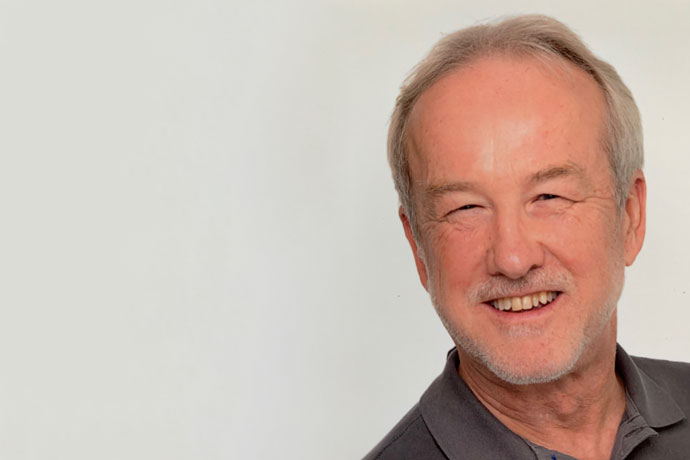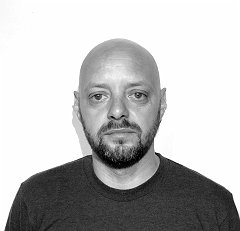
Nazareno Aguirre is a Full Professor at the Departamento de Computación, Facultad de Ciencias Exactas, Físico-Químicas y Naturales (FCEFQyN), Universidad Nacional de Río Cuarto, Argentina. He is also an Independent Researcher at Argentina's National Council for Scientific and Technical Research (CONICET) and a Visiting Professor at Guangdong Technion - Israel Institute of Technology in Shantou, China. Aguirre was promoted to Full Professor at the University of Rio Cuarto in November 2024, having previously served as an Associate Professor. His research interests focus on Software Engineering, particularly Formal Methods for Software Development. Aguirre specializes in formal analyses of software based on SAT solving, including specification inference, automated testing, bounded verification, and program repair. His work aims to build reliable quality software through formal underpinnings and automated techniques. He has made significant contributions to the analysis of Alloy specifications, test generation, and program verification. Analysis of Aguirre's recent publications (2023-2025) reveals a strong focus on advancing formal methods for software verification and testing. His work spans multiple dimensions including specification inference (SpecFuzzer, EvoSpex), test generation (BEAPI, combinatorial test generation for Alloy), program repair (ACoRe), and verification techniques (LTL solvers, Alloy model analysis). A common thread through his research is the application of formal methods and SAT solving to practical software engineering challenges, with emphasis on automation and scalability. Nazareno Aguirre serves in several important academic roles: Associate Editor of IEEE Transactions on Software Engineering Coordinator of the Informatics, Electronics and Communications Commission at Argentina's National Agency for the Promotion of Research Program Committee member for major conferences including ICSE 2025, ISSTA 2025, ASE 2025, and ICST 2025 His research group at Universidad Nacional de Río Cuarto collaborates extensively with international researchers, particularly with Marcelo Frias and colleagues at the same institution, as well as with researchers from institutions worldwide including the University of Bergamo in Italy. Aguirre's work is characterized by a strong theoretical foundation combined with practical tool development, as evidenced by numerous tool demonstration papers at top software engineering conferences.