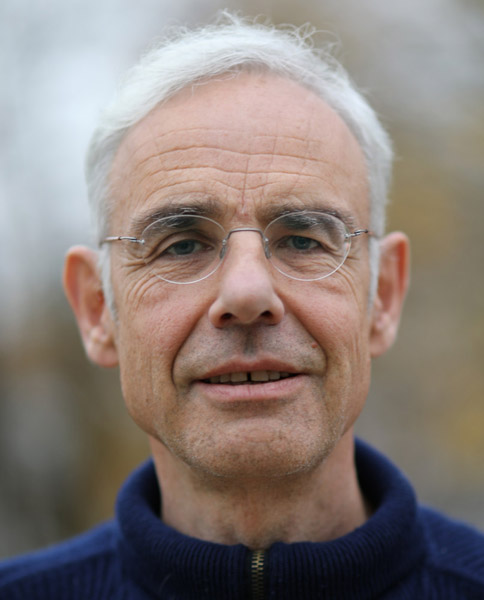
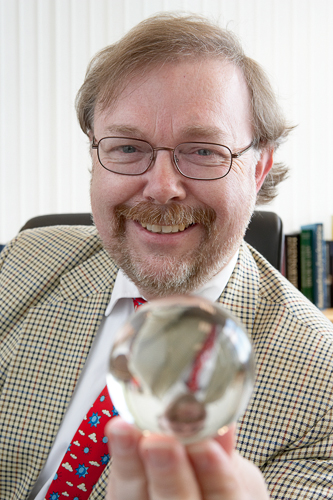
Tobias Nipkow is a Professor for Logic and Verification at the Department of Informatics, Technical University of Munich (since 2011), previously serving as Professor for Theory of Programming (1992-2011). His career spans academic roles at The University of Manchester, MIT, and University of Cambridge, including positions as Lecturer, Research Associate, and Advanced SERC Fellow. Research Interests focus on foundational aspects of computer science, particularly Formal verification of algorithms and systems Interactive theorem proving Term rewriting systems Semantics of programming languages Development of proof assistants Automated reasoning techniques Notable Publication Trends include extensive contributions to Isabelle/HOL formalization, verification of programming languages, and critical advancements in term rewriting and automated deduction. His work bridges theoretical foundations with practical verification tools. Scientific Awards Herbrand Award for Distinguished Contributions to Automated Reasoning (2021) Editorial Leadership includes tenure as Editor-in-Chief of the Journal of Automated Reasoning (2007-2020) and co-founding editor roles for ACM Transactions in Computational Logic and Logical Methods in Computer Science .
Ernst-Rüdiger Olderog is a full Professor (C4) at the Department of Computing Science of the University of Oldenburg since 1994. He has held visiting positions at ETH Zürich (2004/05, 2012), University of Amsterdam (1989/04-1990/09, part-time), and Oxford University (1981-1983). He directs the Research Training Group SCARE (since 2012) and previously led the Graduate School TrustSoft (2008-2010), both funded by DFG. Education: Diploma (Master) in Computer Science, University of Kiel (1979) Doctoral degree in Computer Science, University of Kiel (1981) Habilitation in Computer Science, University of Kiel (1989) Research interests focus on formal methods for system verification, including reactive systems, sequential/concurrent programming, real-time system design, and hybrid system decomposition for traffic applications. His work combines process theory, temporal logic, and data specification frameworks. Scientific awards include: 1994 Leibniz Prize (DFG) 1983 IFIP WG 2.2 membership 1982 Kiel University doctoral dissertation award He has coordinated the 'Real-Time' project area in the Collaborative Research Center AVACS (since 2004) and served as Editor-in-Chief of Acta Informatica (since 2000). His career spans research stays at CWI Amsterdam, Oxford, SRI International, and Kestrel Institute.
Jerzy Tiuryn is a Full Professor at the Faculty of Mathematics, Informatics and Mechanics, University of Warsaw (since 1992), with a PhD in Mathematics from the same university (1975). He served as Vice Dean for Scientific Matters and International Relations (2005-2012) and is actively engaged in editorial roles for journals like Theoretical Computer Science , Information and Computation , and BioMed Research International . Education: PhD in Mathematics (University of Warsaw, 1975). Research Interests: His work spans past contributions in program verification, semantics, typed lambda calculus, and type theory, with current focus on bioinformatics and computational biology. Specific areas include sequence analysis, gene family evolution, protein-protein interaction networks, gene regulatory regions, gene mutations in bacterial drug resistance, and comparative genomics. Trends in Publications: His recent articles emphasize computational methods in bacterial genomics (CAMBerVis, CAMBer), regulatory element prediction (Bi-Billboard), protein interaction mapping via phylogeny, and Bayesian network modeling for gene expression. Themes center on genomic data analysis, evolutionary conservation, and algorithm development for biological systems. Scientific Contributions: Awards and memberships highlight leadership in European and Polish academic networks: Board Member, European Research Consortium for Informatics and Mathematics (ERCIM) (2011) First President, Polish Bioinformatics Society (2008-2010) Founding Member/President, PLERCIM (2007-2012) Member, Academia Europaea (since 1996)
John Tucker is a Professor of Computer Science at Swansea University's Department of Computer Science within the School of Physical Sciences. He has held leadership roles including Head of Department (1994-2007) and Head of School (2007-2011). His academic career spans institutions like University of Leeds and University of Bristol, with a PhD in Mathematical Logic (1977) and MSc in Mathematical Logic and Foundations of Mathematics and Computer Science (1974). Education : PhD (1977) and MSc (1974) from University of Bristol. His research focuses on the theory of synchronous algorithms , algebraic specification , physical foundations of computation , and computational physics , with historical interests in computing, mathematics, and science. He pioneered equational specification methods applied to micro-processors (ARM6 verification), 3D graphics, and non-linear systems modeling whole-heart dynamics. Scientific Awards : Founding Fellow of the Learned Society of Wales (2010) Elected Member of BCS-IET joint UK Computing Research Committee (2007-present) Trustee of the Institute of Welsh Affairs (2006) Fellow of British Computer Society (1998) As an academic leader, Tucker founded three journals and two book series (Cambridge Tracts in Theoretical Computer Science, Springer's History of Computing). He supervised 16 PhD students, advised on EU projects (FP3, FP4), and organized public science programs in Wales. His editorial roles include founding editor of Cambridge Tracts in TCS, Managing Editor of the Journal of Logic and Algebraic Programming, and service on boards of top-tier journals.
Glynn Winskel is a Professor of Computer Science at the University of Cambridge and a Fellow of Emmanuel College, Cambridge. He has held significant academic roles, including founding director of the BRICS research center at Aarhus University (1994–2000) and Reader in Theoretical Computer Science at Cambridge (1987). He earned a B.A. and M.A. in Mathematics from the University of Cambridge (1975), an M.Sc. in Mathematical Logic from the University of Oxford (1976), and a Ph.D. in Computer Science from the University of Edinburgh (1980). He was awarded an Sc.D. by the University of Cambridge in 1995. Winskel's research spans theoretical computer science, with a focus on logic, category theory, and their applications to semantics of programming languages , domain theory , concurrent computation , and computer security . His work has influenced foundational models like event structures and proof systems for concurrency. His scientific awards include: Fellow of the Royal Society (2024) ERC Advanced Grant ECSYM (2011) Royal Society Leverhulme Trust Senior Research Fellowship (2010–2011) British Computer Society Brendan Murphy Memorial Prize (2001) Funding for BRICS research center (Denmark, 1994–2000) Winskel has supervised 19 PhD students and contributed to education through courses on denotational semantics and concurrency. He has led major EU research projects like CEDISYS, CLICS, and APPSEM, and organized academic events such as CONCUR'97 and LICS'97.
Moshe Y. Vardi is a University Professor and the Karen Ostrum George Distinguished Service Professor in Computational Engineering at Rice University . He also serves as a Fellow for Science and Technology Policy at the Baker Institute for Public Policy and is a Senior Editor of the Communications of the ACM . Vardi has held significant roles such as Department Chair at Rice (1994-2002) and leadership positions at IBM and Stanford. Education : Ph.D. in Computer Science (1981), Hebrew University, Jerusalem, Israel. Research Interests : Vardi's work spans automated reasoning , a field with applications in machine learning , database theory , computational-complexity theory , knowledge in multi-agent systems , and computer-aided verification . His research emphasizes the unusual effectiveness of logic in computer science and societal implications of technology. Scientific Awards : Vardi has received numerous accolades, including the Gödel Prize , Knuth Prize , Blaise Pascal Medal , ACM SIGMOD Codd Award , and multiple IBM Outstanding Innovation Awards . He is a fellow of over 10 prestigious societies, including the IEEE , ACM , American Academy of Arts and Sciences , and National Academy of Sciences . Advising and Leadership : Vardi has advised notable students like Kuldeep S. Meel , who won awards under his guidance. He has led initiatives such as the Technology, Culture, and Society program at Rice and served as Editor-in-Chief of Communications of the ACM .
Dr. Christoph Kogler MSc. BSc. is a postdoctoral researcher and lecturer at the University of Natural Resources and Life Sciences, Vienna (BOKU) and the University of Applied Sciences Campus Wien. He is affiliated with the Department of Economics and Social Sciences and the Institute of Production, Economics and Logistics, where his work focuses on logistics, supply chain and risk management, business analytics, industrial engineering, and sustainability in the bioeconomy, particularly the forestry and timber sectors. He is actively pursuing his habilitation and is recognized for his innovative teaching and research. His research interests center on sustainability research, supply chain management, risk management, agent-based and discrete event simulation, serious game-based learning, logistics, business process modeling, and transport in industrial engineering. He applies interdisciplinary methods from economics, social sciences, and computer science to promote a fair transition toward a sustainable bioeconomy. His teaching innovations have earned him nominations for the Austrian State Prize for Teaching (Ars Docendi) in 2022 and 2023, and his courses are featured in the national Atlas of Good Teaching. The recent publications and projects reflect a strong trend in using simulation technologies to enhance the sustainability, resilience, and efficiency of wood supply chains. His work emphasizes decision support systems, risk analysis, contingency planning, and educational applications of simulation in forestry logistics. He leads and contributes to multiple projects funded by FFG, the Austrian government, and Erasmus+, with a focus on digital transformation and e-learning in higher education. Fellow of the Freiburg Rising Stars Academy Fellow of the Austrian Marshall Plan Foundation Fellow of ACM/SIGSIM Nominated for Ars Docendi State Teaching Prize (2022, 2023) Recipient of Dissertation, Teaching, and Paper Awards Best Thesis Award, Karl-Franzens-University Graz (2016) Kogler advises master’s students in logistics and supply chain topics and has led numerous workshops and international symposia. He is deeply involved in academic service, serving as a reviewer for over 30 journals, editorial board member of Drewno , and active organizer and program committee member for major conferences such as the Winter Simulation Conference and International Wood Supply Game Competition. His research stays at UC Berkeley, Brno University of Technology, and the University of Freiburg highlight his international collaboration and academic leadership. He leads the project 'Serious Game-basierte and Agenten-basierte Modellierungskompetenzen für die Holzwertschöpfungskette' and contributes to several others focused on sustainable wood transport and resilient supply chain management. His work integrates serious games and simulation to train future leaders in sustainable enterprise management. He is a key figure in advancing simulation-based learning and digital transformation in academic and industrial forestry contexts.
Friedrich Slivovsky is a researcher at the Institute of Logic and Computation within the Faculty of Informatics at Technische Universität Wien (Vienna University of Technology). His work focuses on theoretical and practical aspects of computational logic, with particular expertise in Quantified Boolean Formulas (QBFs), Propositional Model Counting (#SAT), and Knowledge Compilation. His research interests span the theoretical foundations and practical applications of computational logic. Slivovsky investigates the complexity of logical reasoning problems, develops efficient algorithms for solving them, and creates practical tools that implement these theoretical advances. His work bridges the gap between theoretical computer science and practical applications in areas like hardware verification, artificial intelligence, and electronic design automation. Analysis of his publication trends reveals a consistent focus on QBF solving techniques, with increasing emphasis on circuit minimization, proof complexity, and practical solver engineering. His recent work (2023-2024) shows a strong focus on circuit minimization techniques, combining QBF and SAT approaches to solve complex optimization problems in hardware design. Earlier work (2019-2021) emphasized dependency schemes, certification methods, and theoretical foundations of QBF solving. Slivovsky leads several significant software projects that have become important tools in the computational logic community: Qute : A dependency learning QBF solver with GitHub repository showing active development (latest commit December 2024) Unique : A preprocessor for (D)QBF that computes unique Skolem and Herbrand functions Pedant : A certifying DQBF solver These projects demonstrate his commitment to translating theoretical advances into practical tools that benefit the broader research community.
Alexey Ignatiev is an Associate Professor in the Optimisation research group at Monash University's Faculty of Information Technology. Previously, he was a postdoctoral researcher and researcher at the University of Lisbon's Faculty of Sciences, focusing on SAT/SMT-based decision procedures. He holds a Ph.D. from the Matrosov Institute for System Dynamics and Control Theory (Russian Academy of Sciences), where his thesis explored parallel CDCL-BDD integration. His research emphasizes formal methods in AI, including explainable AI (XAI), SAT-based reasoning, and optimization for applications like software upgradability, model-based diagnosis, and fault localization. His work spans over 100 publications, with notable contributions to MaxSAT solving (RC2 solver), neuro-symbolic frameworks (NEUSIS), and rigorous explanations for machine learning models. He has collaborated extensively with institutions like the University of Lisbon and Monash University, contributing to advancements in formal verification and interpretable machine learning.
Martina Seidl is a researcher and principle investigator at TU Wien's Institut für Softwaretechnik und Interaktive Systeme (E188). Her main affiliation is within the Faculty of Informatics. She leads the FAME Project (Formalizing and Managing Evolution in Model-Driven Engineering), focusing on advancing formal methods in software engineering. Her research interests include formal verification techniques, SAT/QBF solving algorithms, model-driven engineering, and automated reasoning. She has contributed to advancements in quantified Boolean formula (QBF) solving, parallel computing methodologies for logical problems, and formal methods in software model analysis. Her work spans theoretical computer science and practical applications in automated theorem proving and model checking. Notable contributions include expansion-based QBF solving approaches, parallel solving frameworks, and feature-based classifications of formal verification techniques. Seidl co-organized the QBF Gallery initiative, which curates benchmark suites for quantified Boolean formula competitions. She has also published extensively on clause redundancy optimization, blocked clause analysis, and the integration of formal methods in educational contexts like UML@Classroom.
Thomas Eiter is a Professor at TU Wien's Institute of Logic and Computation. His research focuses on declarative programming paradigms, knowledge representation, and artificial intelligence. He leads projects in neurosymbolic systems, answer set programming (ASP), and stream reasoning, with applications in visual question answering, scheduling optimization, and semantic scene generation. Eiter has contributed to foundational work in ASP semantics, computational complexity, and hybrid reasoning frameworks. His work bridges logical formalisms with practical AI challenges, emphasizing explainability and scalability. Projects like ALASPO and neurosymbolic integration showcase his focus on advancing both theoretical and applied aspects of AI. Projects: HumanE AI Network, WASP, REWERSE Research Themes: Neurosymbolic AI, Answer Set Programming, Stream Reasoning Notable achievements include pioneering work on semiring-based reasoning frameworks and developing efficient ASP solvers like Alpha. His contributions span over 471 publications, emphasizing interdisciplinary applications in computer vision, robotics, and automated planning.
Tomáš Skřivan serves as a Research Fellow at the Hoskinson Center for Formal Mathematics , Carnegie Mellon University. His work bridges formal mathematics with practical scientific computing through the development of the SciLean library in Lean 4, targeting enhanced reliability in machine learning and simulation software. Skřivan's research spans interdisciplinary domains with core emphases on: Physics-based simulation of fluid dynamics and wave phenomena Computer graphics algorithms for light transport and rendering Formal verification techniques applied to numerical methods Mathematical modeling of viscoelastic materials His publication trajectory since 2016 reveals evolving expertise from computational fluid dynamics (water wave simulation, viscoelastic modeling) toward formal methods in scientific computing, consistently merging theoretical rigor with practical implementation. Recent work on SciLean represents a strategic pivot toward verified software foundations. As a key contributor to the Hoskinson Center's mission, Skřivan collaborates on projects leveraging proof assistants to eliminate errors in scientific code. The center, established through Charles Hoskinson's support, pioneers mathematically guaranteed correctness in computational science through formal verification frameworks.
Sebastian Schrittwieser is a Researcher in the Research Group Security and Privacy, part of the Faculty of Computer Science. His work focuses on cybersecurity, code obfuscation, malware analysis, and machine learning applications in security. He leads and contributes to projects like INODES (Cyber Defense Strategies) and EMRESS (Resilience Evaluation Models). His research bridges theoretical foundations and practical applications, addressing challenges in software protection and threat detection. Key research interests include: Code Obfuscation Techniques and Resistance Adversarial Machine Learning and Risk Assessment Malware Analysis and Program Simulation User Behavior in Cybersecurity Contexts Recent publications emphasize empirical studies on IT/OT infrastructure security, graph neural network vulnerabilities, and quantum-inspired machine learning. He actively collaborates with institutions like SBA Research and presents at international conferences. Grants include Research Funding for projects on optimal cyber defense strategies (INODES) and software resilience evaluation (EMRESS). His work aligns with interdisciplinary efforts in security engineering and privacy-preserving technologies.
Tobias Eberwein is Deputy Director of the Institute for Comparative Media and Communication Studies (CMC), a joint entity of the Austrian Academy of Sciences and the University of Klagenfurt, where he leads the Research Group “Media Accountability & Media Change.” He also serves as a Lecturer at the University of Klagenfurt's Department of Media and Communications and at Hamburg Media School. His research spans media ethics, accountability structures, journalism practices, and digital innovation in media systems. Education: Doctoral studies in Cultural Studies at TU Dortmund (2007–2013), focusing on literary journalism. Certified program in “Professional teaching skills for university” at TU Dortmund. Journalism, Political Sciences, and Anglo-American Literature studies at University of Dortmund (1999–2006). Research Focus: Eberwein investigates media accountability mechanisms, ethical challenges in digital journalism, and comparative media governance. His work emphasizes the impact of technological change on media ethics, participatory communication, and the evolution of public service media. Current projects include EU-funded initiatives like DIACOMET (dialogic communication ethics) and MEDIADELCOM (European media landscape scenarios). Publications & Trends: His recent articles analyze media monitoring, deliberative communication, and crisis reporting ethics. Common themes include transnational media governance, digital accountability tools, and the ethical implications of datafication. His scholarship often employs comparative methodologies to assess media systems across Europe. Awards & Recognition: META Medienethik-Award (2010) for contributions to media ethics. Professional Activities: Eberwein serves as President of the International Association for Literary Journalism Studies (2023–2025) and Specialty Chief Editor for “Frontiers in Media Governance.” He coordinates major conferences, including the IALJS annual meetings, and has led Horizon Europe projects. He is also active in advisory roles for KommAustria and the Diversity Media Research Center.
Andreas Uhl is a University Professor in Artificial Intelligence and Human Interfaces at the Department of Computer Science, University of Salzburg. With a prolific research career spanning from 1996 to present, he has authored or co-authored 534 publications and led or participated in 59 research projects. His work demonstrates sustained academic productivity with recent publications and projects extending through 2025. Professor Uhl's research interests span multiple domains at the intersection of artificial intelligence and practical applications. His primary focus areas include computer vision, biometrics, biomedical imaging, and digital forensics, with significant contributions to pattern recognition and image analysis. His work bridges theoretical computer science with practical applications in cultural heritage preservation, medical diagnostics, and security systems, demonstrating a versatile research portfolio that addresses both fundamental challenges and real-world problems. His recent publications reveal a strong emphasis on temporal image forensics, biomedical image analysis, and biometric security. The research shows a clear trajectory toward increasingly sophisticated applications of AI in specialized domains, with particular attention to validation methodologies and limitations of current approaches. His work on cultural heritage applications demonstrates an innovative application of computer vision techniques to historical artifacts. Best paper award @ 25th ACM Symposium on Applied Computing (Applications Track), 2010 Best Paper award @ 2nd European Workshop on Visual Information Processing (EUVIP'10), 2010 IEEE Biometrics Council Best Paper Award (TBIOM), 2022 Kurt Zopf Preis, 2023 Professor Uhl actively leads multiple significant research initiatives, including the CDL-POSA project on People and Object Surface Authentication (2025-2032), Artificial Intelligence driven Biomedical Imaging Innovation (2025-2029), and the AIBIA Research and Transfer Junior Lab (2023-2025). His research group maintains active collaborations with institutions like Carnegie Mellon University, as evidenced by his recent research stay there in September 2024. The scope and duration of his current projects indicate substantial grant funding and institutional support for his research agenda. His laboratory activities focus on AI applications in biomedical imaging, border security through vehicle-integrated technologies (AutoBorder project), and cultural heritage analysis. The research environment appears to integrate academic inquiry with practical transfer through initiatives like the FFG Student Internships program, suggesting a strong commitment to both fundamental research and real-world implementation.