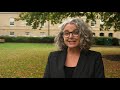
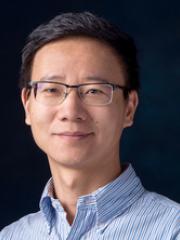
Dr. Mike Bambach is a Senior Lecturer at the University of Sydney's School of Civil Engineering, where he also serves as Director of the Centre for Advanced Structural Engineering and Undergraduate Program Director for Civil Engineering. His research spans composite materials, crashworthiness, and structural optimization. Structural Engineering Composite Material Analysis Road Safety & Impact Mechanics Research Interests Dr. Bambach investigates advanced structural systems using fiber-reinforced polymers (FRP), natural fiber composites for sustainable construction, and crash energy absorption in transportation systems. His work combines experimental testing with numerical modeling to improve structural performance under extreme loads. Recent Publications (2025-2018) Current research focuses on natural fiber composites for structural applications, hybrid metal-composite energy absorption systems, and innovative buckling control mechanisms. Key trends include sustainable material development and dynamic structural response analysis. Teaching & Supervision He teaches foundational civil engineering courses and supervises PhD/Master's students working on projects like AI-based quality control in steel fabrication, sustainable cementitious composites, and deep foundation reuse solutions.
Dr. Masood Mansoori is a Lecturer at the School of Professional Studies , UNSW Canberra . He holds a PhD in Engineering from Victoria University of Wellington, New Zealand (2017), a Master of Computer Science from University Malaya, Malaysia (2010), and a Bachelor of Computer Science & IT from Eastern Mediterranean University, Cyprus (2005). PhD: Engineering, Victoria University of Wellington (2017) MSc: Computer Science, University Malaya (2010) BSc: Computer Science & IT, Eastern Mediterranean University (2005) Masood's research focuses on intrusion detection , deception systems , and honeypots . He designed YALIH and miniC , two client honeypots, and contributed to open-source projects like Cowrie Honeypot . His work spans browser-based geolocation attacks , IoT security , and malicious web behavior analysis . Recent publications include studies on advanced persistent threats using genetic programming (2024), ransomware classification via particle swarm optimization (2022), and IoT attack clustering with autoencoders (2022). His research integrates machine learning and security analytics to address evolving cyber threats. Scientific Awards : Best Student Paper Award, Australian Information Security Conference (ACSW - AISC), 2014 Best Student Paper Award, Australian Information Security Conference (ACSW - AISC), 2013 Victoria University of Wellington Scholarship, 2013 CORE Scholarship, 2015 Masood has extensive experience in curriculum design , course coordination , and teaching cybersecurity , digital forensics, risk management, and network security. He currently works at D236, UNSW Canberra, Reid Campus .
Dr. Nicole Lesley Gardner is a Registered Architect (NSW ARB 7921) and Program Director of Computational Design at the School of Built Environment, UNSW Sydney . Her interdisciplinary research examines digital transformation in architecture, urban technology, and the ethics of smart cities. A Chief Investigator for the $9M Australian Research Council (ARC) Industrial Transformation Training Centre , she has led multiple Commonwealth-funded grants and co-authored over 40 peer-reviewed publications. Education: PhD in Architecture (UTS 2018), Bachelor of Architecture (Adelaide 2000), Bachelor of Design Studies (Adelaide 1998) Leadership: Chair of CAADRIA 2024 , co-editor of CAADRIA Post-Carbon proceedings (2022) Research Interests span computational design, smart city paradigms, and digital transformation in the AEC sector. Her work integrates ethical frameworks, gender dynamics, and material innovation in urban technology, with a focus on practice-based design research and industry collaboration. Scientific Awards : ADA Faculty Research Fellowship (2021-2022)
Professor Aruna Prasad Seneviratne serves as the Foundation Professor of Telecommunications at the University of New South Wales (Australia), where he holds the prestigious Mahanakorn Chair of Telecommunications. He is currently the Research Director for the Cyber Physical Systems Research Program within Data61, following the merger of NICTA with CSIRO. Previously, he directed the Australian Technology Park Laboratory of NICTA and led their Networked Systems research activities. Professor Seneviratne's research focuses on physical analytics - technologies enabling applications to interact intelligently and securely with their environment in real time. His recent work includes behavioral biometrics, wearable device optimization, and IoT system verification. His extensive publication record spans cybersecurity, artificial intelligence, communications engineering, and mobile technologies, with particular emphasis on integrated communications and sensing systems. His scholarly contributions include over 180 refereed technical papers and book chapters, reflecting his leadership in telecommunications and networked systems research. Professor Seneviratne's work demonstrates a consistent trajectory toward developing practical solutions for next-generation digital services and security frameworks. His scientific recognition includes prestigious fellowships at British Telecom and Telecom Australia Research Labs, underscoring his industry impact alongside academic contributions. Professor Seneviratne has supervised 30 PhD dissertations throughout his career, mentoring the next generation of telecommunications researchers. His leadership extends to directing major research initiatives at NICTA and Data61, where he has guided the development of new technologies for establishing trust, energy-efficient content storage, search, and distribution within digital economies. His laboratory work centers on the Cyber Physical Systems Research Program at Data61, where his team develops innovative approaches to secure and intelligent interaction between digital systems and physical environments.
Derry Wijaya is an Associate Professor in the Data Science program at Monash University, Indonesia, specializing in natural language processing with a focus on multilingual applications, machine translation, and large language models. Her research bridges computational linguistics with social applications, examining how language technologies can address challenges in low-resource language settings. Her research interests center on natural language processing, with particular expertise in machine learning applications for multilingual contexts. Wijaya investigates how well-annotated languages can improve translation of less-documented languages, and explores the use of images, related tasks, data augmentation, and large language models to enhance representation and translation for languages with limited training data. Her work demonstrates strong interdisciplinary connections between technical NLP research and real-world social applications. Analysis of her recent publications (2023-2025) reveals a research trajectory that spans core NLP methodologies while increasingly incorporating social media analysis, policy applications, and cross-cultural communication challenges. Her work shows particular strength in addressing low-resource language challenges while maintaining relevance to Indonesian and global contexts, with notable publications examining climate change perception among Indonesian youth and comparative water quality issues between Indonesia and the United States. Wijaya maintains active research collaborations across multiple institutions, with numerous co-authored publications addressing diverse applications of NLP from public health communication to political discourse analysis. Her research demonstrates consistent productivity, with significant output in top computational linguistics venues.
Professor Alexandra Wake is a leading academic and journalist in the School of Media and Communication at RMIT University. She serves as Program Manager for the Graduate Diploma in Journalism and President of the Journalism Education and Research Association of Australia. Her research focuses on journalism practice, trauma in the newsroom, international journalism, and media policy. She has held visiting fellowships at institutions like Columbia University and Aarhus University. Prof. Wake has received multiple awards for her contributions to journalism education, research, and Indigenous engagement. She leads Australian Government-funded projects on journalism and mental health, and collaborates internationally on gender, media, and ICTs through UNESCO. She currently supervises seven PhD students and actively contributes to media debates on climate change, media literacy, and global journalism trends. Grants: Australian Journalism, Trauma and Community (2024–2027) Mitigating the impact of media on mental illness stigma (2024–2028) Fellowships: Visiting Scholar, Columbia University Academic Fellow, Constructive Institute, Aarhus University Research Interests: Journalism ethics, trauma-informed reporting, international journalism aid, media governance, and media’s role in global challenges like climate change. Awards: Includes RMIT Dean’s Awards for Indigenous Engagement (2020, 2023), Media Star Awards, and recognition for journalism education innovations. Labs/Teams: Member of the Journalism Education Trauma Research Group (Oceania co-leader), Dart Centre Asia Pacific, and UNESCO’s Gender, Media and ICTs network.
Professor Sebastian Sardina is a Professor in Artificial Intelligence at RMIT University's School of Computing Technologies. He holds a Bachelor's from South National University (Argentina) and a PhD from the University of Toronto (Canada). His research focuses on AI for dynamic systems, including automated planning, knowledge representation, and agent-oriented programming. He has contributed to enhancing agent programming languages with learning capabilities and advanced AI planning techniques. His work frequently appears in top AI venues like IJCAI and AAAI, with notable best paper nominations. Teaching interests include foundational CS courses such as Theory of Computation and Intro to AI. He actively promotes computational thinking through workshops for youth and educators, including roles in Victorian curriculum development (VCE Algorithmics). Supervision projects span hand gesture recognition, autonomous vehicle safety, and goal recognition in path-planning. His research has been presented globally and applied across domains like aviation safety, manufacturing systems, and healthcare. Recent trends in his publications emphasize goal recognition techniques (e.g., process mining applications), agent behavior modeling, and interdisciplinary AI applications in healthcare and automotive engineering. He has collaborated with industry and academic partners internationally, contributing to both theoretical advancements and practical AI solutions. Scientific Recognition: Multiple best paper nominations in AI conferences. Community Engagement: MAV conference presenter, VCAA Algorithmics curriculum panel member (2023). Supervision: Active mentor for 4+ research projects in AI planning and recognition.
Toby Murray is a Professor in the School of Computing and Information Systems at the University of Melbourne, where he serves as Director of the Defence Science Institute and Co-Lead of the Computer Science Research Group. His work bridges formal methods, cybersecurity, and practical system security, with significant contributions to verified security and vulnerability detection. Murray's research focuses on building highly secure computing systems cost-effectively, with expertise in formal verification, information flow security, and vulnerability detection. His current research projects include Verisimilar (Verified, Secure Machine Learning), EDEFuzz (Detecting excessive data exposure in web applications), COVERN (Proving information flow security of concurrent programs), and Time Protection (Proving timing channel freedom for seL4). His work combines theoretical rigor with practical implementation, resulting in multiple open-source tools including SecC, Legion, and Underflow. Murray's recent publications demonstrate a consistent focus on verified security properties across diverse domains, from neural networks to concurrent systems. His work often bridges the gap between formal methods and practical security concerns, with increasing attention to machine learning security and policy implications of technical security measures. His publications span top venues in security, formal methods, and software engineering. Distinguished Paper Award at ICSE 2024 for EDEFuzz work on detecting excessive data exposure in web applications Extensive media commentary on cybersecurity issues including CrowdStrike outage analysis and social media regulation Regular contributions to The Conversation and Pursuit on cybersecurity policy matters Murray has advised numerous PhD students to completion, including Lianglu Pan (EDEFuzz), Zhiyuan Zhang, Mo Zhang, and Renlord Yang. He currently supervises multiple PhD students working on security verification, machine learning security, and web application security. His service includes being Program Chair for CSF'25, Associate Editor for IEEE Security & Privacy and ACM TOPS, and membership in IFIP's WG 1.7 and WG 2.3. His research group has developed multiple significant software tools including SecC (Verified Security for Concurrent C Programs), Legion (Principled Automatic Test Case Generation), and Underflow (Compositional Vulnerability Detection for C Programs), all available under open source licenses. Murray's work often involves discovering and reporting bugs in security analysis tools during his research, demonstrating the practical impact of his verification approaches.
Dr. Thinh Le is a Postdoctoral Research Fellow at the School of Computer Science , University of Technology Sydney , where he works at the Centre for Quantum Software and Information (since 2023). His academic journey includes research fellowships at the Institute for Quantum Optics and Quantum Information Vienna (2020-2023) and Leibniz University Hannover (2019-2020). He earned his PhD in Physics (2015) and BSc in Physics (2011) from the National University of Singapore . Thinh's research focuses on quantum information science , bridging theoretical foundations and experimental implementations. His work addresses critical challenges in quantum computing (error correction, fault tolerance), quantum tomography (device-independent characterization), and quantum software stack development. He investigates quantum randomness generation, Bell nonlocality, and entanglement distillation for quantum networks, with applications in quantum cryptography and secure communication. His recent publications examine advanced topics like trapped-ion lattice surgery (2025), quantum correlation boundaries (2025), and quantum backflow phenomena (2023). Earlier work established foundational limits for real quantum theory (2021) and developed practical entanglement distillation protocols (2018). Scientific awards include the Lise Meitner Postdoctoral Fellowship (2020-2023) and Humboldt Postdoctoral Fellowship (2019-2020). His funded research projects focus on quantum computing error correction and device-independent quantum tomography , aligning with his theoretical expertise guided by experimental applications.
Shui Yu is a Professor of the School of Computer Science in the Faculty of Engineering and Information Technology at the University of Technology Sydney (UTS), where he also serves as the Deputy Chair of the UTS Research Committee. His academic career spans over 20 years in Australia and 7 years in China, with additional teaching experience in Hong Kong and Indonesia. He has developed more than 10 units in cybersecurity, computer science, data analytics, and computer games, serving as the Course Director for Computer Science undergraduate programs. Professor Yu's research interests center on cybersecurity, privacy, networking aspects of Big Data, and applied mathematics for computer science. He pioneered the field of 'networking for big data' in 2013 and edited the seminal book 'Networking for Big Data' published in 2015. His work has practical applications in industry, including Amazon Cloud's auto-scale strategy against distributed denial-of-service attacks. Current research focuses include privacy and security concerns associated with big data, security issues in smart grids, anonymous transactions on Blockchain, and anonymous communication for web browsing privacy. Analysis of his recent publications reveals a strong research trajectory spanning cybersecurity, privacy-preserving technologies, networking for big data, and applied mathematics. His work shows increasing focus on quantum-resistant cryptography, federated learning security, and adversarial robustness in AI systems. The interdisciplinary nature of his research bridges theoretical foundations with practical applications in IoT, blockchain, and cloud environments. Fellow of IEEE (2023) Distinguished Lecturer of IEEE Communications Society (2018-2021) Distinguished Visitor of IEEE Computer Society (2022-2024) Professor Yu has secured numerous research grants from the Australian Research Council, including current projects on privacy and fairness in high intelligence models (DP240100955), improved security and privacy for online platforms (LP220200808), and secure blockchain for financial applications (LP220100453). He has served on editorial boards of multiple IEEE journals including IEEE Communications Surveys and Tutorials, IEEE Communications Magazine, and IEEE Internet of Things Journal. His service extends to organizing major conferences such as IEEE Globecom 2015 and IEEE INFOCOM 2016-2017.
Dr. Peter J. Robinson is an Honorary Research Fellow at the School of Electrical Engineering & Computer Science, The University of Queensland. His academic career spans over three decades, focusing on foundational research in programming languages, formal methods, and distributed systems. His work includes contributions to Qu-Prolog, a multi-threaded Prolog implementation, and TeleoR, a robotic task programming framework. Research interests include agent-based systems, blockchain security for aerospace applications, software verification, concurrent programming, and education technology. Notable projects include the Pedro publish/subscribe server and MyPyTutor, an interactive Python learning tool. He has collaborated on railway safety protocols and spacecraft control systems using blockchain. Publications span journals like Formal Aspects of Computing and conferences such as IEEE Symposium on Computers and Communications. Technical reports include work on unification algorithms and multi-agent verification frameworks. He has advised on projects involving IoT architectures and swarm intelligence simulations.
Professor Sara Denize serves as Associate Dean, Education at the UTS Business School, overseeing learning innovation and quality across 10,000+ students. She chairs the UTS Curriculum Approval Committee and collaborates with the Jumbunna Institute for Indigenous Education and Research. Her expertise spans large-scale curriculum transformation, online education delivery, and transdisciplinary course development. With a background in Western Sydney University and VET sector partnerships, she emphasizes accessibility and innovation in business education. Education: B.Com(Hons) M.Com PhD Research Interests: Curriculum design, hybrid education models, flipped classroom strategies, and business marketing innovation. Specializes in leveraging technology to enhance student experiences through microcredentials, stackable degrees, and remote delivery systems. Publications: Recent works focus on luxury brand extensions, innovation networks, and agent-based modelling in business contexts. Her co-authored textbook Principles of Marketing is widely recognized. Awards: National teaching citation Advising & Grants: Led major curriculum projects at UTS and Western Sydney University. Collaborates internationally to develop quality business programs. Currently advancing UTS's Indigenous Graduate Attribute implementation. Labs/Teams: Works with interdisciplinary teams across sciences, social sciences, and humanities to create innovative educational frameworks.
Dr. Claire Konkes is a Senior Lecturer in Media and Communication at the University of Tasmania's School of Creative Arts and Media. She is affiliated with the Institute for the Study of Social Change and the Centre for Marine Socioecology, focusing on environmental and science communication, journalism studies, and media's role in policy debates. PhD, University of Tasmania (2015) Her research examines how media facilitates deliberation on environmental governance, law, and climate change communication. She has published extensively on topics including: Environmental conflict and litigation Science-policy-media intersections Media framing of climate justice Regional journalism sustainability Communication during ecological crises Her recent projects include grants like: Flags and Fibre : Investigating regional digital connectivity (2025-2026) AAD-UTAS collaboration : Public engagement with Antarctic research (2022-2024) PCK for Higher Education : Pedagogical content knowledge (2018-2019) Science vs. Scientism : Understanding public perceptions of climate science (2018) Claire supervises research on topics such as: Environmental communication strategies Media's role in marine resource debates Climate change narratives Science communication during conflict Environmental policy translation She actively engages in public discourse through media appearances and leadership roles in professional associations.
Dr. Guowei Yang is a Senior Lecturer at the School of Electrical Engineering and Computer Science , The University of Queensland, Australia. He transitioned to this role in 2021 after serving as a tenured Associate Professor at Texas State University's Department of Computer Science. His research focuses on the intersection of Software Engineering Machine Learning Programming Languages Cybersecurity with an emphasis on system reliability and security. His recent publications (2022-2025) analyze: Android API compatibility challenges Symbolic execution optimizations Fuzzing techniques for JVM security Moving target defense strategies Automated patch generation Constraint classification in code analysis He leads a research group seeking students with backgrounds in software engineering, formal methods, and AI. Current funding includes a 2023-2026 Oracle Corporation grant for DevSecOps analysis. Dr. Yang supervises multiple PhD and Master's projects, often as principal advisor, focusing on topics like deep learning testing, IoT analysis, and DevSecOps integration.
Tim French is an Associate Professor in the Department of Computer Science and Software Engineering at the University of Western Australia's School of Physics, Maths and Computing. He is affiliated with the UWA Oceans Institute and serves as Regional Contest Director for the South Pacific Programming Contest and Programme Chair for the Australasian Conference on Artificial Intelligence 2022. His research focuses on logic, artificial intelligence, knowledge representation, and reasoning about uncertainty in multi-agent systems, probabilistic reasoning in games, and industrial applications like automated planning and machine learning for complex processes. French holds a PhD in Computer Science (2007) and BSc in Computer and Mathematical Sciences (1999), both from UWA. His expertise spans algorithms, automated reasoning, formal methods in software, and temporal logic verification systems. He has led or contributed to 6 major research projects including the ARC Research Hub for Transforming Energy Infrastructure and the ARC Training Centre for Transforming Maintenance through Data Science. His research outputs include 118 publications covering topics like aleatoric logic for probabilistic reasoning, semantic knowledge extraction from industrial maintenance systems, and deep learning applications in wastewater treatment. He has developed novel methods for knowledge graph construction, state estimation in complex systems, and user interface design informed by work characteristics models. Key grants: 6 active/finished projects totaling $M+ funding Leadership roles: Programming contest director, conference chair Interdisciplinary focus: Combines formal logic with industrial automation challenges French's work contributes to UN Sustainable Development Goals through education and innovation in sustainable industrial processes and environmental systems modeling. His team has developed practical solutions for maintenance procedure digitization, wastewater plant optimization, and robust agent-based systems for uncertain environments.