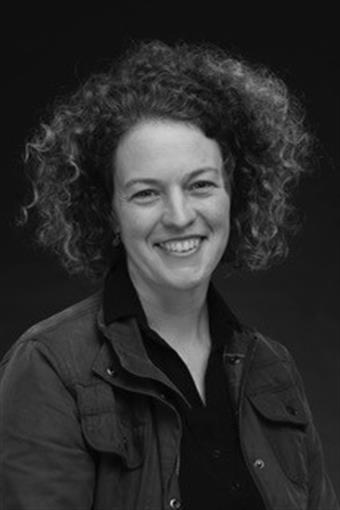
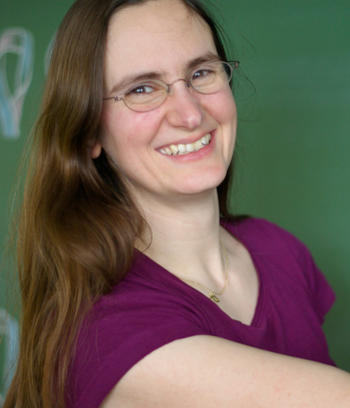
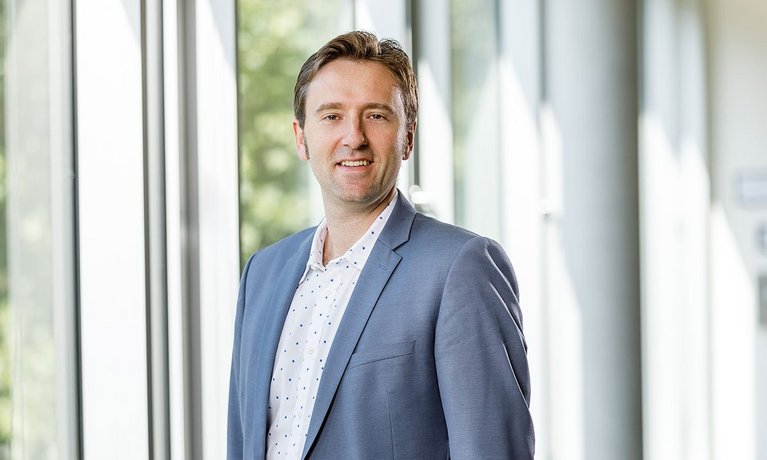
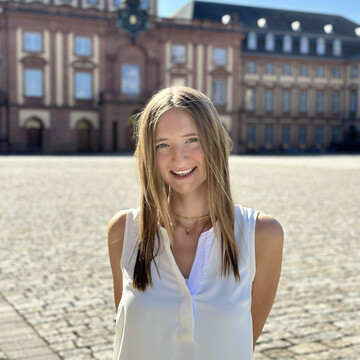
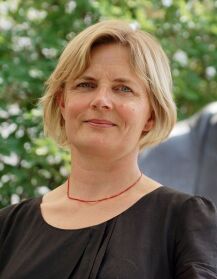
Alicia de Bánffy-Hall is a Professor of Music in Social Work/Community Music at Hochschule Düsseldorf (University of Applied Sciences Düsseldorf). Her work bridges community music practice, music education, and cultural democracy, focusing on transforming educational and cultural institutions into inclusive spaces. She collaborates with organizations like the Konzerthaus Dortmund, Elbphilharmonie Hamburg, and National Football Museum to integrate community music into societal frameworks. Education: BA Performing Arts/Community Arts, Liverpool Institute for Performing Arts (2004) MSc Arts and Cultural Management, Manchester Metropolitan University (2008) PhD in Music Education, Hochschule für Musik und Theater München (2019) Research Interests center on community music practice, inclusive music education, and the role of music in social institutions. She advocates for cultural democracy through initiatives like the first MA in Inclusive Music Education/Community Music in Germany (co-developed in 2016) and serves as a Research Fellow at the Laurier Centre for Music in the Community (Canada). Her work explores intersections between music, pedagogy, and societal transformation. Publications and Awards include co-editing the first German book on community music (2017), a special issue of the International Journal of Community Music on Germany (2016), and the Bavarian Culture Award (2019) for her PhD thesis. She has lectured at universities in Germany, the UK, Switzerland, and Austria and co-founded the German Community Music Netzwerk (2020). Collaborations span institutions like Münchner Philharmoniker, York St John University, and Elbphilharmonie Hamburg. She currently leads a module at the University of Hildesheim and serves as Co-Chair of the Community Music Activity Commission (International Society for Music Education).
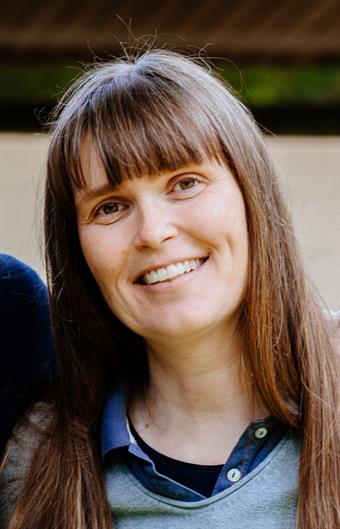
Antje Hunger is a Professor at the Hochschule Düsseldorf University of Applied Sciences , affiliated with the Faculty of Social Sciences and Cultural Studies . Her research focuses on Clinical Psychology and Cognitive Behavioral Therapy , particularly in Impulse Control Disorders , Obsessive-Compulsive Spectrum Disorders , and Body-Focused Repetitive Behaviors . Specializes in Trichotillomania , Excoriation Disorder , and Body Dysmorphic Disorder Develops evidence-based Cognitive Behavioral Therapy protocols Advances in Digital Interventions for mental health Her work includes both experimental studies and clinical assessment development, with notable contributions to understanding compulsive buying and dissociative mechanisms in disorders. Contact: antje.hunger@hs-duesseldorf.de | Office: Room 03.1.007, Building 3, Münsterstraße 156, 40476 Düsseldorf
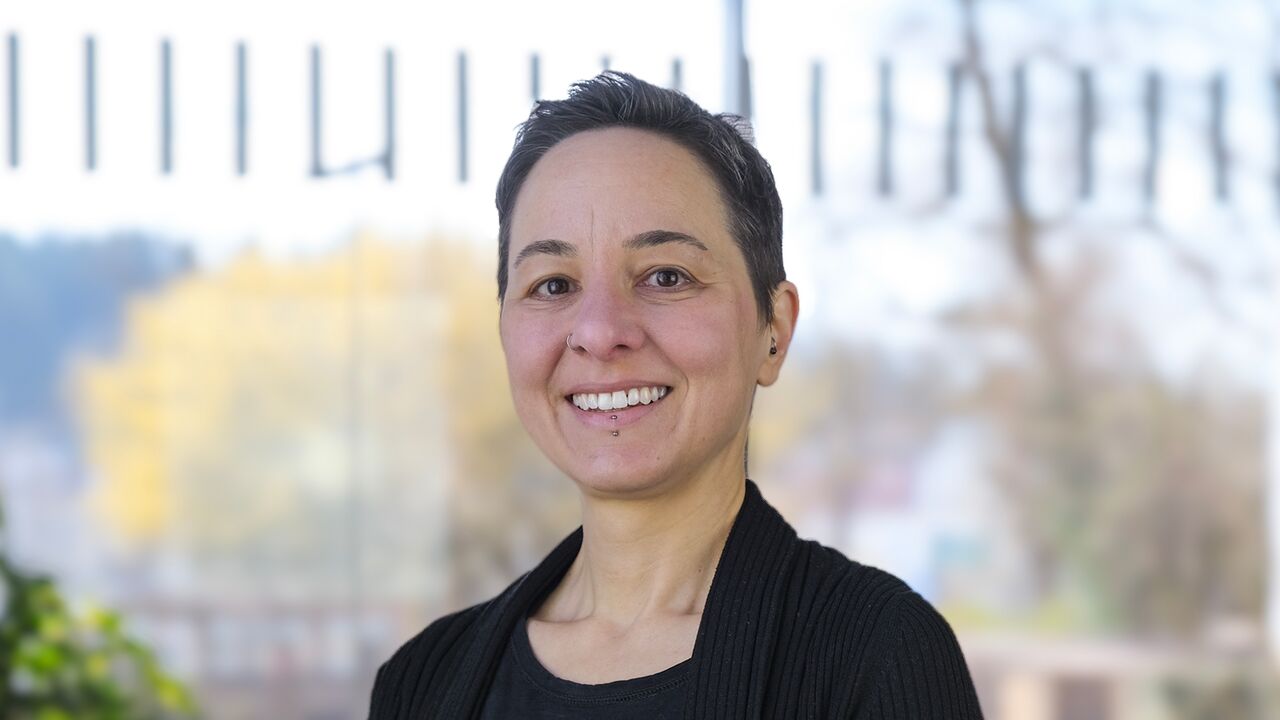
Prof. Dr. Karin E. Sauer is a Professor of Social Work at the Faculty of Social Work at Baden-Württemberg Cooperative State University Villingen-Schwenningen. She has been teaching at the university since 2009 and has held leadership positions including Head of the Social Work - People with Disabilities program (2013-2018) and Academic Director of the Master's program Social Work in the Migration Society at CAS Heilbronn (2016-2018). She also teaches in the Master's program Cultural Diversity in Music Education at the University of Hildesheim since 2018. Her educational background includes: Diploma in Educational Science from Universität Tübingen (1993-1999) Doctoral studies in the research project "Integration of Children in Baden-Württemberg and California" (2004-2006) Postdoc project "Paths of Integration in the Education Process" in Southern Brazil (2006-2007) Master in Diversity Education Community Music Facilitator Certificate from the State Music Academy NRW (2024) Prof. Sauer's research focuses on Social Work in post-conflict societies, with particular attention to Germany-Rwanda connections. Her work spans Gender & Diversity studies, Disability Studies, Cultural Studies, and Community Music as communication forms. She examines inclusion-exclusion dynamics in migration societies and explores socialization processes from intercultural perspectives. Her research often incorporates Paulo Freire's pedagogy of liberation and emphasizes participatory approaches to knowledge production. Her recent publications reveal a strong focus on memory work in post-conflict societies, particularly examining German and Rwandan contexts. She explores how arts-based methodologies, especially community music, can facilitate social inclusion and healing processes. Her work consistently addresses intersectional approaches to gender, disability, and migration, with increasing attention to climate justice and ecological transformation in social work practice. The geographical scope of her research spans Germany, Rwanda, Burundi, and the broader Great Lakes region of Africa. Prof. Sauer is actively involved in several professional networks including the Network for Racism-Critical Migration Education Baden-Württemberg, the German Society for Social Work Research Network FIRE (Female International REsearch), and the DGSA Working Group on Climate Justice and Socio-Ecological Transformation in Social Work. She has collaborated extensively with African researchers and practitioners, particularly from Rwanda, on memory work and peacebuilding initiatives. Her work demonstrates a commitment to decolonial and regenerative practices, with recent projects focusing on "Blumen der Versöhnung" (Flowers of Reconciliation) in post-genocide Rwanda. She integrates community music approaches with social work practice, developing innovative pedagogical formats that address diversity and inclusion in higher education settings.
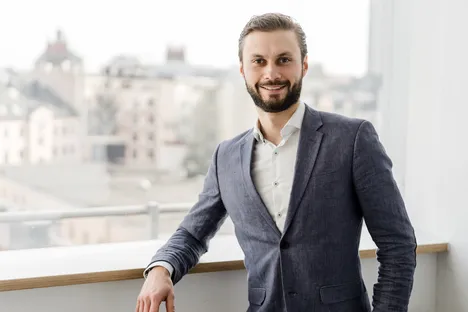
Prof. Dr. Julia Gillen serves as Vice President for Education at Leibniz University Hannover while maintaining her professorship at the Institute of Vocational Education and Adult Education within the Faculty of Humanities. She holds multiple leadership positions including Chairperson of the Equal Opportunities Commission and active participation in various educational committees focused on vocational teacher training. Her institutional presence spans across multiple locations including Welfengarten 1 (Presidential Office), Im Moore 11B, and Schloßwender Straße 1 in Hannover. Julia Gillen's research program centers on vocational education and teacher training with increasing emphasis on digital transformation in educational settings. Her recent work explores futures literacy frameworks for educators, examining how teachers can develop capacities to understand, anticipate, and shape multiple educational futures. She investigates reflective teaching practices that enhance professional competency and addresses critical challenges of diversity, inclusion, and health literacy within vocational educational contexts. Her scholarship bridges theoretical frameworks with practical implementation strategies for modern educational challenges. Analysis of Gillen's recent publications reveals a clear trajectory toward integrating digital technologies with vocational pedagogy while maintaining focus on human-centered educational values. Her work increasingly addresses the systemic challenges of preparing educators for rapidly evolving professional landscapes, with particular attention to mental health considerations in educational settings. The consistent thread across her scholarship demonstrates how futures literacy concepts can be operationalized in concrete educational practices, particularly within vocational teacher education programs. As Vice President for Education, Gillen oversees significant institutional resources and initiatives including the "Plattform Lehramt an berufsbildenden Schulen" (PLABS) and "Leibniz works 4.0" projects. These initiatives represent substantial investments in modernizing vocational teacher education through phase-crossing and subject-integrated approaches. Her leadership extends to advising multiple committees focused on educational quality, admission standards, and examination procedures for vocational teacher training programs. Gillen leads the Institute of Vocational Education and Adult Education's executive structure and plays a central role in the "Leibniz works 4.0" project team dedicated to transforming vocational teacher education. Her chairmanship of the Equal Opportunities Commission demonstrates institutional commitment to diversity and inclusion across all educational programs. Through her various committee memberships, she shapes collaborative frameworks between schools and universities that strengthen the practical dimensions of teacher preparation while maintaining academic rigor.
Dr. Tobias Ludwig is a Researcher at the Chair of Technology Didactics within the TUM School of Social Sciences and Technology, Technical University of Munich. Since joining in July 2020, he has contributed to teaching while leading research in vocational education transformation. His educational journey includes a carpentry apprenticeship, master craftsman certification, and advanced degrees in education with specializations in civil engineering and physics. Research Focus: Dr. Ludwig investigates technology-mediated learning innovations, with emphasis on: 3D printing competency frameworks for construction education Systemic school development strategies Vocational teacher training methodologies Design and validation of next-generation learning environments His publications demonstrate consistent focus on digital education evolution, particularly hybrid learning models and competency-based approaches in vocational settings. Recent works analyze teacher professionalization pathways and additive manufacturing's educational implications. Projects & Collaborations: Key initiatives include: Hybrid-Learn : Developing digital teacher training frameworks DFG AMC TRR277 : Researching additive manufacturing competencies PERLEN4.0 : Implementing school-based digital experiments
Ulrike Bücking serves as a Senior Lecturer in the Department of Mathematics and Computer Science at Free University of Berlin, where she is Deputy Head of the Primary School Mathematics Group within the Discrete Methods in Algebraic Geometry & Mathematics for Teacher Training working group. Her academic responsibilities include teaching mathematical professional knowledge courses for primary school teacher candidates since 2019, with recent expansion to advanced specialized instruction for mathematics-focused teacher trainees. Her research spans two interconnected domains: theoretical discrete differential geometry focusing on convergence of discrete conformal mappings, rigidity of planar patterns, and discrete minimal surfaces; and mathematics education specifically tailored for primary school teacher preparation. This dual expertise manifests in publications ranging from pure mathematical investigations of circle patterns and discrete Riemann surfaces to innovative pedagogical frameworks for mathematics teacher education. Analysis of her 15 most recent publications reveals a consistent trajectory in discrete complex analysis with increasing integration of mathematics education research since 2020. Her geometric work demonstrates methodological evolution from foundational circle pattern theory toward sophisticated discrete surface constructions, while her educational publications address practical curriculum development for teacher training programs. The 2023 MatheProfIL paper exemplifies her applied approach to bridging theoretical mathematics with classroom pedagogy. Dr. Bücking maintained continuous research activity through her decade-long participation (2012-2024) in the Collaborative Research Center/Transregio 'Discretization in Geometry and Dynamics' (Project A01: Discrete Riemann Surfaces). Her teaching portfolio shows significant evolution from advanced mathematics courses for physicists at TU Berlin (2002-2018) to specialized mathematics education for primary teachers at Free University of Berlin. She actively contributes to the Primary School Mathematics Group and collaborates within the Discrete Methods in Algebraic Geometry & Mathematics for Teacher Training working group, maintaining an office at Arnimallee 3 in Berlin's mathematics institute where she supervises course development and coordinates teacher education initiatives.
Professor Sebastian Mueller is a faculty member at the TUM School of Management, Technical University of Munich, Campus Heilbronn. He holds a PhD in Finance from the University of Mannheim and has served as Professor of Corporate Finance at the German Graduate School of Management and Law (Heilbronn) and as Assistant Professor in Finance at the University of Mannheim. His research focuses on asset pricing, digital finance, sustainable finance, and investor behavior. PhD in Finance (summa cum laude), University of Mannheim His empirical research combines quantitative methods with machine learning, text analysis, and generative AI to analyze financial market anomalies, economic linkages, and media impacts on investor decision-making. He teaches finance courses across TUM's Bachelor, Master, and Executive Education programs, including Corporate Finance, Digital Finance, and Sustainable Finance. His awards include the SUERF/UniCredit Foundation Research Prize (2019), Acatis Value Awards (2015, 2018), and the VHB Young Talent Award (2015). He supervises finance students through seminars and thesis projects while leading research initiatives at the Center for Digital Transformation and Global Center for Family Enterprise.
Sonja Jähnig is a Professor of Aquatic Ecogeography at the Humboldt University of Berlin, Faculty of Mathematics and Natural Sciences, Geographical Institute, and Head of the Department of Ecology of Communities and Ecosystems at the Leibniz Institute of Freshwater Ecology and Inland Fisheries (IGB) in Berlin. She leads a research group focused on aquatic ecogeography and has established herself as a leading expert in freshwater biodiversity, river ecosystem functioning, and the impacts of global change on freshwater systems. Prof. Jähnig's educational background includes a Diploma in Environmental Sciences from the University of Duisburg-Essen (1997-2001), followed by doctoral studies at the same institution (2004-2007). She further developed her expertise through postdoctoral positions at the Institute of Hydrobiology, Chinese Academy of Sciences, Wuhan (2008), and the Department of River Ecology and Conservation Research, Senckenberg, Frankfurt (2009), before leading a Junior Research Group at the Biodiversity and Climate Research Center (BiK-F), Frankfurt (2010-2013). Her research program centers on understanding the complex relationships between freshwater biodiversity, ecosystem functions, and human impacts. Prof. Jähnig investigates large-scale distribution patterns of freshwater organisms, particularly focusing on how river ecosystems respond to multiple stressors including climate change, land use alterations, and infrastructure development. Her work bridges fundamental ecological research with practical conservation applications, emphasizing the importance of freshwater megafauna and the need for integrated management approaches. She has been instrumental in highlighting the critical status of freshwater ecosystems globally and advocating for evidence-based conservation strategies. Analysis of Prof. Jähnig's recent publications reveals a strong focus on freshwater biodiversity conservation, with particular emphasis on freshwater megafauna, hydropower impacts, river restoration, and the development of systematic approaches to understanding human impacts on freshwater ecosystems. Her work spans multiple geographical contexts from European rivers to global analyses, demonstrating both regional expertise and global perspective. A significant portion of her research involves collaborative, large-scale projects that bring together diverse expertise to address complex freshwater conservation challenges. Senior Editor at WIRES Water (since 2022) Member of the Scientific Advisory Board of FEdA - Research Initiative for the Conservation of Biodiversity (since 2019) Co-Chair of the Alliance for Freshwater Life (since 2018) Member of the IUCN Species Survival Commission: Freshwater Conservation Committee (since 2018) IGB representative in Alternet; member of the Alternet Management Board (2017-2022) IGB representative for the Freshwater Information Platform Prof. Jähnig actively mentors the next generation of freshwater scientists, supervising multiple doctoral students including Graciela Madariaga, Abdul Waheed, Bianca Dörgeloh, and Yaochun Wang. Her research is supported by numerous collaborative projects including "Zukunft der limnischen Megafauna" (2020-2026), "BioAgora" (2022-2027), "ODER~SO" (2023-2026), "DANUBE4all" (2023-2027), and "RESIST" (2021-2028), reflecting the broad relevance and impact of her work across multiple funding agencies and international collaborations. She leads the Aquatic Ecogeography research group at IGB, which includes postdocs, visiting researchers, doctoral students, and technical staff specializing in GIS and data analysis. The group employs a range of methodological approaches from field surveys and experimental studies to large-scale data synthesis and modeling, contributing significantly to both theoretical advances in freshwater ecology and practical applications for river management and conservation.
Dr. Deborah Mateja is a Researcher at the University of Mannheim , affiliated with the Business School and Department of Information Systems . Her work centers on Generative Artificial Intelligence , Computational Creativity , and Human-AI Interaction , with involvement in projects like Cloud Mall Baden-Württemberg and LogoAI (AI innovation competition BW). She has presented at conferences and contributed to academic publications. Education : B.Sc. and M.Sc. in Business Informatics from the University of Mannheim and Baden-Wuerttemberg Cooperative State University (DHBW) Mannheim. Professional Experience : Internships at McKinsey & Company and SAP Deutschland SE & Co. KG, including a dual study program. Teaching : Delivered courses at both Bachelor's and Master's levels, including Introduction to Business Information Systems (Fall 2022) and Applied IT Management in the Digital Age (2020–2021). Awards : fwi Science Prize 2019 Bronnbacher Scholarship from the Cultural Circle of the German Economy Research Trends : Focus on leveraging AI for creative processes, integrating generative models into business workflows, and enhancing human-AI collaboration in digital transformation contexts.
Professor Annette Textor holds a Professorship for Educational Science with a focus on empirical school research at the Faculty of Education, University of Bielefeld. She serves as Scientific Director of the Scientific Institution Laboratory School and is an active member of multiple university committees including the Faculty Conference (FaKo), Internationalization Commission (InKo), and the Institute for Interdisciplinary Conflict and Violence Research. As Spokesperson for university lecturers, she represents academic staff interests within the university structure. Prof. Textor's research focuses primarily on inclusive education, school development, and empirical school research. Her work examines the practical implementation of inclusion in educational settings, teacher training for inclusive classrooms, and the structural development of schools as learning organizations. She has developed assessment frameworks for identifying quality inclusive teaching practices and investigates how educational institutions can better respond to diverse student needs. Her research extends to sustainability education and the relationship between education for dignified living and addressing epochal challenges. Her recent publications demonstrate a clear trajectory toward practical applications of inclusive education theory, with significant emphasis on teacher training, school development models, and empirical research methodologies. The publications show strong collaboration with colleagues across disciplines, particularly in developing frameworks for assessing inclusive teaching quality and understanding educational transitions. There's a notable focus on the Laboratory School model as a site for educational innovation and research-practice partnerships, with increasing attention to sustainability education and pandemic-related educational adaptations. Prof. Textor actively contributes to educational policy through her leadership roles, particularly as Scientific Director of the Laboratory School where she oversees research-practice partnerships between the university and school settings. Her work on the TRANSiT project examines European approaches to inclusive teacher education, while her research on school enrollment patterns and segregation processes provides empirical foundations for educational decision-making. As Scientific Director of the Laboratory School, Prof. Textor leads a unique research-practice partnership where university and school staff collaborate on educational innovation. This institution serves as both a research site and a model for school development, with particular emphasis on inclusive practices. Her work with Working Group 4 focuses on school development and empirical research methods to improve educational practices, creating a bridge between theoretical educational research and classroom implementation.
Dr. Martin Lenz is a researcher at the Institut für Numerische Simulation at the University of Bonn , specializing in numerical methods for materials science and mechanics. His work bridges computational mathematics with applications in magnetic-shape-memory materials, microstructure optimization, and multiscale modeling. Teaching: Lecturer for Ingenieurmathematik III (module M43), Ingenieurmathematik II (module B42), and Ingenieurmathematik (Master module M22). Current Research: Leads Numerical optimization of shape microstructures (Project C06, DFG SFB 1060) focusing on two-scale optimization of elastic materials. Past Research: Developed continuum models for magnetic-shape-memory materials (Project A6, DFG priority program 1239) and studied multiscale phase separation with elastic misfit. His recent publications (2023-2012) emphasize shape-memory alloys , microstructure dynamics , and adaptive numerical schemes . Key methodologies include finite volume methods, homogenization, and phase field modeling. Education: PhD (2007) and Diploma in Mathematics (2002) from the University of Bonn.
Anke John is a Professor of History Didactics at Friedrich Schiller University Jena , holding this position since the summer semester of 2013. Her academic journey includes previous roles as Acting Professor at the University of Duisburg-Essen (2009-2011) and Research Assistant at the University of Rostock (2006-2013). She has coordinated significant research initiatives like ReTransfer (BMBF-funded 2022-2025), which explores digital subject concepts in social science teacher education, and ProfJL (2015-2023), focusing on teacher training quality improvement. E-Teach Network Thuringia (2014-2025) ReTransfer (2022-2025) WOL II Glokale Schulentwicklung (2022-2025) Das Tagebuch der Eva Schiffmann (2021-2022) Weltoffen lernen (2020-2022) Graduiertenkolleg DDR & European Dictatorships (2017-2020) Anke John's research focuses on history didactics, 20th-century historical consciousness, digital humanities applications in education, and regional history pedagogy. Her publications and projects demonstrate expertise in transforming historical knowledge into teachable frameworks through citizen science approaches and digital tools. She has served as peer reviewer for History Education Research Journal since 2023 and maintains active roles in multiple scientific councils including the International Society for History Didactics board since 2023. Her educational background includes a doctorate in Mecklenburg regional history from the University of Rostock (1996) and postdoctoral work at Free University of Berlin (1996). She has supervised numerous state examination theses on topics ranging from digital media in memorial education to gender perspectives in medieval teaching, reflecting her commitment to diverse historical pedagogy research.
Gabriella Volpe is a Lecturer at Technische Universität Berlin, teaching courses such as "Artificial Intelligence" and "Current Topics in Informatics" since June 2023. Starting April 2025, she will co-lecture "AI and Robotics" in the master's program Digital Transformation. She began her doctorate in November 2024 at the TU University in Berlin under Prof. Merten Stender, focusing on "Future Directions of Reservoir Computing and Neuromorphic Computing". Education: M.Sc. in Information Systems, Freie Universität Berlin Her research spans Artificial Intelligence, Robotics, and Neuromorphic Computing, with a focus on Cyber-Physical Systems and Intelligent Process Automation. Professional experience includes roles as Senior Application Developer, Lead Specialist, and Consultant in AI and Intelligent Process Automation. Currently affiliated with the Cyber-Physical Systems in Mechanical Engineering department at Technische Universität Berlin, she contributes to AI education and research while pursuing her doctoral studies.
Dr. Steffen Zierholz is an Assistant Professor in the Department of Early Modern Art History at the University of Tübingen's Faculty of Humanities. Previously, he held positions as Assistant Professor at the University of Bern (2016-2018) and Visiting Professor at Ruhr University Bochum (2021). His academic journey includes prestigious fellowships at the Bibliotheca Hertziana in Rome, the Kunsthistorisches Institut in Florence, and a Getty Foundation/American Council of Learned Societies Postdoctoral Fellowship. Ph.D. in History of Art, University of Bern (2016) M.A. in History of Art, University of Tübingen (2010) M.A. in Educational Studies, University of Tübingen (2009) Zierholz's research centers on Jesuit Art, Aesthetics of Existence in Early Modernity, and the material properties of stone surfaces. His work explores how early modern religious practices intersected with artistic production, particularly within Jesuit contexts. He investigates the relationship between spiritual exercises and visual/material culture, examining how surfaces, stones, and architectural spaces functioned as technologies of the self. His monograph 'Räume der Reform. Kunst und Lebenskunst der Jesuiten in Rom, 1580–1700' (2019) established him as a leading scholar in Jesuit art history. His recent publications reveal a consistent focus on Jesuit visual culture, with particular attention to Ignatian spirituality, celestial imagery, and material transformations. Zierholz demonstrates how stone surfaces functioned as alternative aesthetic systems, how copper's material properties shaped religious imagery, and how early modern artists conceptualized heavenly contemplation. His work bridges art history, religious studies, and material culture studies, revealing the complex interplay between visual forms and spiritual practices. Getty Foundation/American Council of Learned Societies Postdoctoral Fellowship in the History of Art ($65,000) Postdoctoral Fellowship at Kunsthistorisches Institut in Florenz, Max Planck Institute Postdoctoral Fellowship at Bibliotheca Hertziana, Max Planck Institute for Art History, Rome UniBE Initiator Grant Zierholz has received significant recognition for his scholarship, including multiple reviews of his monograph in prominent journals such as Renaissance Quarterly and Journal of Jesuit Studies. His research has been supported by major funding bodies including the Swiss National Science Foundation. While specific grant details aren't provided in the text, his fellowship history demonstrates sustained external research support. His academic trajectory shows progression from research assistant to independent fellow to faculty positions at prestigious institutions, reflecting strong scholarly impact in the field of early modern art history.
Jens Kosiol is a Lecturer in Computer Science at University of Marburg, specializing in theoretical aspects of software engineering with particular emphasis on model-driven approaches and formal methods. Dr. Kosiol's research spans several interconnected areas within computer science: Model-Driven Engineering and Software Development Graph Transformation and Rewriting Systems Formal Methods for Software Verification Model Consistency and Synchronization Software Engineering Tools and Frameworks Theoretical Foundations of Model Transformation Analysis of Dr. Kosiol's recent publications (2020-2024) reveals a cohesive research program focused on advancing the theoretical foundations of graph-based model transformation while addressing practical challenges in software engineering. His work consistently explores double-pushout rewriting, model consistency restoration, and constraint-preserving transformations. A significant portion of his research investigates how to maintain consistency across different model views while minimizing information loss during synchronization processes. His publications frequently appear in venues emphasizing rigorous theoretical frameworks with practical applications in model-driven development. Dr. Kosiol has established productive collaborations with researchers including Gabriele Taentzer, Lars Fritsche, and Stefan John, indicating active participation in international research communities focused on formal methods. His work demonstrates both theoretical depth in category theory and graph transformation, while maintaining relevance to practical software engineering challenges through implementations in frameworks like Eclipse Modeling Framework.