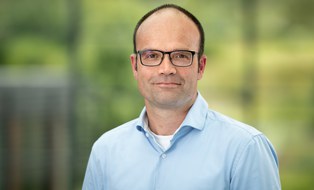
Dr. Wolfgang Beutel serves as Acting Professor for Didactics of Political Education at Leibniz University Hannover's Faculty of Philosophy, where he leads the Institute for Didactics of Democracy (IDD) and holds an appointment at the Institute of Political Science. His academic career spans decades of dedicated work in democracy education, democratic school development, and political pedagogy. His educational background includes a doctorate in philosophy from Friedrich Schiller University of Jena (1996) with a thesis on "School as a Place of Political Education," a State Examination in Political Science from Eberhard Karls University of Tübingen (1989), and teacher training in German and Educational Sciences at the same institution (1980-1985). Beutel's research focuses on democracy education in schools and youth work, democratic school development and reform, and political education. His work examines how democratic values and practices can be integrated into educational settings, with particular attention to crisis situations and digital transformations in education. He investigates the relationship between political education and practical democratic action, exploring how schools can function as democratic learning environments. His recent publications reveal a strong emphasis on monitoring democracy education practices, analyzing the effects of crises on democratic school culture, and developing frameworks for democratic school development. His work spans theoretical foundations, empirical research, and practical implementation strategies for democracy education across various educational contexts. Beutel has served in numerous advisory roles for prominent foundations including the Heidehof Foundation, Robert Bosch Foundation, Eugen Biser Foundation, DAAD, and the Center for Educational Research. He has been instrumental in shaping national education policy through his jury membership for the German School Prize and Federal Competition for Political Education. His leadership extends to multiple research initiatives including the Democracy Education Monitor project and various Erasmus+ funded programs focused on democratic education, XR technology for diversity-sensitive education, and interventions for digital parenting challenges. He has established numerous networks connecting academic research with practical school development initiatives across Germany and internationally.