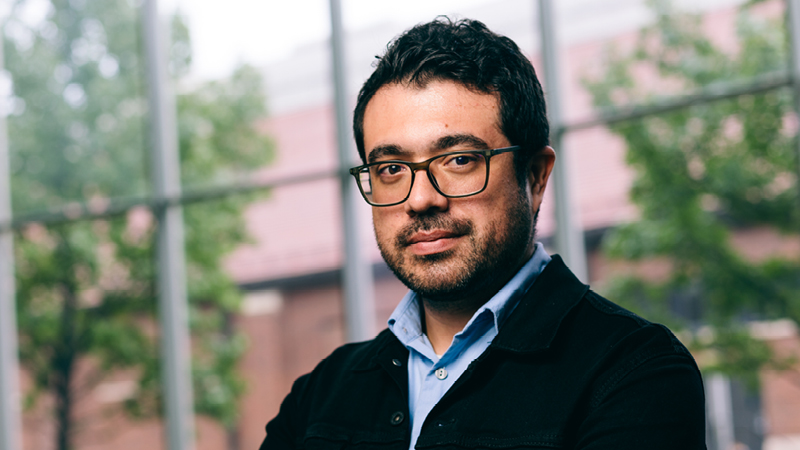
Milos Gligoric is an Associate Professor in the Department of Electrical and Computer Engineering at The University of Texas at Austin. His research focuses on software engineering and formal methods, particularly in software testing (test generation and regression testing), proof engineering, systems-supported software engineering, and software engineering for scientific computing. He holds a Ph.D. from the University of Illinois at Urbana-Champaign (2015) and M.Sc./B.Sc. degrees from the University of Belgrade. Research Interests: Improving software quality and developer productivity through automated testing techniques, compiler optimizations, and formal verification methods. Recent work explores applications of large language models in test generation and code evolution. Publication Trends: Recent articles (2023-2025) show strong emphasis on LLM applications for test generation, JIT compiler testing, Python/C++ performance optimization, parallel computing, and innovative testing tools. Work frequently appears at top venues like ICSE, FSE, ISSTA, and OOPSLA. Scientific Awards: ACM SIGSOFT Outstanding Doctoral Dissertation Award David J. Kuck Outstanding PhD Thesis Award Multiple ACM SIGSOFT Distinguished Paper Awards Best Paper Award nominations (ICST 2012, ICS 2021) New Ideas and Emerging Results Distinguished Paper Award Research Support & Advising: Funded by Army Futures Command, Cisco, DOE, Google, Huawei, NSF, Runtime Verification, and Samsung. Mentors 7 PhD students and has graduated 12 PhD/MS students. Maintains industry collaborations with DBT (part-time contractor), Katana Graph, and Samsung. Labs & Tools: Leads UT Austin's software engineering research group. Developed multiple open-source tools including Ekstazi (regression test selection), mCoq (mutation analysis for Coq), Roosterize (lemma suggestion for Coq), and JAttack (JIT compiler testing).
Andy D. Pimentel is a Full Professor at the University of Amsterdam, where he chairs the Parallel Computing Systems (PCS) group within the Systems and Networking Lab at the Informatics Institute. His research focuses on multi-core and multi-processor computer systems, with emphasis on design, programming, and run-time management. Dr. Pimentel earned his PhD in Computer Science in 1998 and MSc in Computer Science in 1993, both from the University of Amsterdam. His educational background laid the foundation for his extensive work in computer architecture and embedded systems. His research interests span a wide range of topics including multi-core embedded systems, system-level design and simulation, design space exploration, performance and power analysis, system dependability, hardware/software co-design, run-time resource management, and Edge AI. His work consistently addresses the extra-functional aspects of computing systems such as performance, energy consumption, and system dependability, while also considering the productivity of designing and programming these complex systems. Analyzing his recent publications reveals a clear trajectory toward sustainable and efficient computing systems. His work has evolved from foundational research in embedded systems design space exploration to cutting-edge research in Edge AI, distributed deep learning, and energy-efficient computing. His publications demonstrate strong interdisciplinary connections between computer architecture, artificial intelligence, and sustainable computing. IEEE CEDA Outstanding Service Recognition Award DATE Fellow Award Professor Pimentel has held significant leadership roles in the academic community, serving as Chair of the Board for the Advanced School for Computing and Imaging (ASCI) since 2021, and as a Board member of ICT Research Platform Nederland (IPN) since 2020. He has organized major conferences including serving as General Chair for Design Automation and Test in Europe (DATE) 2024 and IEEE/ACM Embedded Systems Week 2026. His extensive service to the community demonstrates his leadership in the field of computer architecture and embedded systems. At the University of Amsterdam, Professor Pimentel leads the Parallel Computing Systems group, which investigates the design, programming, and run-time management of multi-core and multi-processor systems. The group's research emphasizes modeling, analysis, and optimization of performance, power/energy consumption, and system dependability, while also focusing on improving the productivity of designing and programming these complex systems.
Vikram Adve is the Donald B. Gillies Professor of Computer Science at the University of Illinois at Urbana-Champaign, with appointments in both the Computer Science Department and the Center for Digital Agriculture. He co-founded and co-leads the Center for Digital Agriculture and serves as the director of AIFARMS, a $20M National Artificial Intelligence Research Institute funded by USDA NIFA and NSF. Adve has been a professor at UIUC since August 2011 and previously served as Interim Head of the Computer Science Department from 2017 to 2019. Adve received his Ph.D. in Computer Science from the University of Wisconsin-Madison in 1993. His academic journey has been marked by significant contributions to compiler infrastructure and computer systems research, culminating in his current distinguished professorship at one of the world's leading computer science departments. Adve's research spans multiple cutting-edge domains in computer systems. His work on the LLVM Compiler Infrastructure has revolutionized how software is compiled and optimized across diverse hardware platforms. Currently, his research focuses on three primary thrusts: Digital Agriculture and AI : Through the Center for Digital Agriculture and AIFARMS Institute, he's developing AI solutions for agricultural challenges, including the CropWizard system for generative AI in farming Edge Computing : His HPVM, ApproxHPVM, and ApproxTuner projects address the programming challenges of heterogeneous computing at the network edge Compiler Innovation : His Hydride and MISAAL projects use program synthesis to automatically build compilers for complex hardware architectures His work bridges theoretical compiler research with practical applications in agriculture, autonomous systems, and distributed computing. Adve's publication record demonstrates a consistent trajectory from foundational compiler research to applied AI systems. Early work focused on memory safety (SAFECode), deterministic parallel programming (DPJ), and the LLVM infrastructure. More recently, his publications reflect a strategic pivot toward agricultural AI and edge computing, with significant contributions to generative AI applications, compiler techniques for heterogeneous systems, and multimodal data processing for precision agriculture. His work maintains strong theoretical foundations while addressing real-world challenges in resource-constrained environments. Adve's scientific recognition includes numerous prestigious awards: ACM Software System Award (2012) for LLVM ACM Fellowship (2014) NSF CAREER Award (2001) Multiple best paper awards at top conferences including PLDI 2005, SOSP 2007, and CGO 2004 (retrospective) University Scholar designation at UIUC (2015) Donald B. Gillies Professorship (2018) Distinguished Alumnus Award from IIT Bombay (2023) As an advisor, Adve has mentored numerous successful students, including Chris Lattner (co-creator of LLVM), Robert Bocchino (ACM SIGPLAN Outstanding Dissertation Award winner), and John Criswell (ACM Doctoral Dissertation Award Honorable Mention). His research group has secured significant funding from diverse sources including USDA NIFA, NSF, Intel Corporation, Amazon-Illinois AICE Center, and the state of Illinois through the Discovery Partners Institute. Current projects include the $20M AIFARMS institute and multiple edge computing initiatives focused on agricultural robotics and distributed AR/VR systems. Adve leads the Programming Languages, Systems, and Networking research group at UIUC, which maintains strong connections with industry partners. His group's work on LLVM has had widespread industry impact, with applications in Apple's iOS ecosystem, Android, NVIDIA GPUs, and numerous other commercial products. The group's current focus on agricultural AI through the Center for Digital Agriculture represents a strategic expansion into domain-specific applications of systems research.
Roland Leißa is an Assistant Professor in the School of Business Informatics and Mathematics at the University of Mannheim, Germany. His research focuses on programming languages, compilers, and domain-specific languages (DSLs) for high-performance computing across heterogeneous architectures. He teaches courses on parallel programming, compiler construction, and advanced programming topics. His work emphasizes automatic parallelization, intermediate representations, and program optimizations, particularly through partial evaluation techniques. He has contributed to tools like MimIR, AnyDSL, and FLOWER, which address challenges in GPU programming, FPGA synthesis, and ray tracing. Roland leads research on abstracting industrial and scientific application problems into reusable, theoretically sound compiler solutions. His projects span sequence alignment accelerations, dataflow compilation, and vectorization strategies, targeting modern hardware including GPUs and SIMD architectures. Contact: leissa@uni-mannheim.de | Personal Website | ORCID: 0000-0002-2444-6782
Dr. Tien N. Nguyen is a Professor in the Computer Science Department at the Erik Jonsson School of Engineering and Computer Science, The University of Texas at Dallas. His research focuses on applying artificial intelligence, machine learning, and natural language processing to solve challenges in software engineering and software security. His primary research interests include: AI/ML4Code: Integration of AI and machine learning in software engineering Software security and program analysis Software testing methodologies Software mining and repository analysis Software evolution and maintenance techniques Professor Nguyen's recent publications (2024-2025) demonstrate strong emphasis on large language models for software engineering tasks, including code analysis, testing automation, program behavior prediction, and repository-level code completion. His work frequently appears in premier venues like ICSE, FSE, and ASE. His research achievements have been recognized with multiple prestigious awards: ACM SIGSOFT Distinguished Paper Award (FSE 2024, FSE 2016, ESEC/FSE 2009, ASE 2012, ASE 2014) IEEE Computer Society TCSE Distinguished Paper Award (SANER 2022) ASE Best Paper Award (2014) FOSS Impact Award - Special Mention (MSR 2019) Professor Nguyen has secured substantial research funding through NSF grants including NSA NCAE-C-002-2021, CNS-2120386, CCF-1723215, CCF-1723432, CNS-1723198, and others. He currently has open positions for TA/RA and encourages interested students to contact him.
Bas Spitters is an Associate Professor in the Department of Computer Science at Aarhus University, Denmark, specializing in the rigorous intersection of programming languages, formal methods, and cryptography. His work prioritizes mathematical precision in software verification, particularly for security-critical systems like cryptographic protocols and blockchain applications. His research focuses on Programming Languages , Formal Verification , and Cryptology , with deep expertise in Type Theory , Homotopy Type Theory , and Blockchain . Key themes include verified compiler backends (e.g., WebAssembly), formal security analysis of Rust implementations, and foundational verification of cryptographic primitives. His fingerprint reveals dominant associations with Smart Contracts (100%), Type Theory (99%), and Blockchain (47%), reflecting his commitment to eliminating vulnerabilities through formal proofs. Analysis of his 15 most recent publications (2022-2025) shows a consistent trajectory toward end-to-end verification of high-assurance systems. He bridges theoretical foundations (e.g., homotopy type theory) with practical implementations in Rust, targeting real-world problems in blockchain consensus, zero-knowledge proofs, and side-channel-resistant cryptography. His work increasingly integrates multiple verification tools (e.g., Coq, hax) to address complex security properties. Scientific awards: None documented in available sources. Dr. Spitters has supervised 2 PhD students and led the project Verifiable Cryptographic Software (2019-2023), developing foundational tools for verifying cryptographic implementations. His research group collaborates globally on formalizing decentralized exchanges, optimizing verified cryptographic libraries, and advancing proof automation for security protocols. Current efforts focus on Rust-based verified pipelines and formal specifications for zero-knowledge protocols like halo2, with implications for blockchain scalability and security.
Benjamin Goldberg is an Associate Professor in the Computer Science Department at New York University, where he conducts research at the intersection of compiler design, programming languages, and formal methods. His work emphasizes building reliable and efficient compiler optimizations for modern architectures through rigorous validation frameworks. Education Ph.D. in Computer Science, Yale University B.A. in Mathematical Sciences, Williams College (1982) Research Interests Goldberg's primary research spans compiler optimizations for instruction-level parallel architectures, verification of compiler transformations to guarantee correctness, and storage management techniques including advanced garbage collection. He pioneered the Trimaran Compiler Research Infrastructure for experimental compiler development and leads the Compiler Validation Project (ACSys group) focused on translation validation. His work integrates theoretical foundations with practical compiler implementation, addressing critical challenges in speculative optimization and memory management for distributed systems. Publication Trends Analysis of his 15 most recent publications reveals a dominant focus on compiler validation (7 papers, 2002-2010), particularly loop optimization and software pipelining verification. Earlier work (1988-1997) centers on garbage collection (5 papers) and functional programming (4 papers). This progression demonstrates a strategic shift from memory management foundations to formal methods for compiler trustworthiness, with consistent contributions to parallel computing infrastructure throughout his career. Research Groups Goldberg is a core member of NYU's ACSys research group , developing the TVOC framework for validating compiler optimizations. He co-created the Trimaran project , an open infrastructure for compiler research targeting instruction-level parallel architectures, which has become a standard platform for compiler experimentation in academia and industry.
Alexandru Paler serves as an Associate Professor in the Department of Computer Science at Aalto University, Finland, where he leads research in quantum software development. His work focuses on designing compilers and optimization frameworks for quantum circuits, with emphasis on quantum error correction implementation and fault-tolerant quantum computing systems. Based in Espoo at Konemiehentie 2, he maintains active research collaborations through the university's quantum computing initiatives. Dr. Paler's research spans quantum circuit compilation, quantum error correction (particularly surface codes and QLDPC codes), and quantum software optimization. His team develops high-performance quantum compilers for neutral atom architectures and modular superconducting systems, addressing critical challenges in resource estimation and fault tolerance. The Quantum Operating Systems (QUANTUM) research group he contributes to explores scalable quantum software frameworks that bridge theoretical algorithms with practical hardware constraints, with significant work on graph-state compilation and reinforcement learning for circuit optimization. Analysis of his 15 most recent publications (2023-2025) reveals concentrated efforts in quantum compiler design, error correction scalability, and hardware-aware quantum software. Key trends include machine learning applications for decoder optimization, novel approaches to measurement-free error correction, and queuing theory models for fault-tolerant circuit analysis. His work consistently addresses the practical barriers to large-scale quantum computing through compiler innovations and resource-efficient circuit design. Dr. Paler actively participates in the Quantum Operating Systems (QUANTUM) research group within Aalto's Department of Computer Science, focusing on Algorithms and Theoretical Computer Science. This team develops quantum software infrastructure for next-generation quantum hardware, with current projects including Pandora (ultra-large-scale circuit compilation), quantum circuit caching mechanisms, and standardized cell approaches for neutral atom systems. Their research directly supports the transition from theoretical quantum algorithms to executable, error-resilient quantum programs.
Corina Pasareanu is a Principal Scientist at Carnegie Mellon University's CyLab and Technical Professional Leader for Data Science at NASA Ames Research Center (working through KBR). She maintains strong affiliations with both CMU's School of Computer Science and NASA Ames, leading cutting-edge research at the intersection of formal verification, AI safety, and software security. She earned her Ph.D. in Computer Science from Kansas State University in 2001, following MS (1995) and BS (1994) degrees in Computer Science from University Politehcnica of Bucharest. Her academic foundation has propelled her to become a leading expert in verification techniques for complex software systems. Dr. Pasareanu's research program focuses on model checking, symbolic execution, compositional verification, and probabilistic software analysis, with growing emphasis on ensuring safety and reliability of AI systems. Her work bridges theoretical formal methods with practical applications in autonomous systems and security-critical domains. Recent efforts target verification challenges in large language models and vision-based autonomous systems, developing techniques to provide mathematical guarantees of system behavior despite AI component uncertainties. Analysis of her publication trends reveals a strategic evolution from foundational verification techniques toward increasingly complex AI systems, with strong emphasis on practical applications in safety-critical contexts. Her work consistently connects theoretical advances in formal methods with real-world security and safety challenges. Her scientific contributions have earned exceptional recognition: ACM Fellow and IEEE ASE Fellow ETAPS Test of Time Award (2021) ASE Most Influential Paper Award (2018) ESEC/FSE Test of Time Award (2018) ISSTA Retrospective Impact Paper Award (2018) Multiple historical impact awards including ACM Impact Paper Award (2010) and ICSE Most Influential Paper Award (2010) Dr. Pasareanu actively mentors the next generation of computer scientists, currently advising PhD students Aymeric Fromherz (with Bryan Parno), Yoshiki Takashima, Zichao Zhang, and Chi Zhang (all with Limin Jia), plus postdoc Ravi Mangal. She has secured substantial research funding from NSF, DARPA, AWS, NASA, and industry partners for projects including 'LLM Self-Defense Against Adversarial Attacks,' 'Trinity: Neurosymbolic Learning and Reasoning,' and 'HUGS: Human-Guided Software Testing.' Her leadership extends to Program Co-Chair for ICSE 2025 and multiple other major conferences, plus service on steering committees for ICSE, ETAPS, TACAS, and ISSTA. As Principal Scientist at CMU CyLab, she leads research teams developing verification techniques for AI systems, with particular focus on autonomous vehicles and large language models. Her NASA Ames work applies formal methods to space-related autonomous systems, while her collaborations with industry partners translate theoretical advances into practical tools. She remains at the forefront of addressing verification challenges for increasingly complex AI technologies, with upcoming keynotes at CAV 2025 and FormaliSE 2025 demonstrating her continued leadership in the field.
Andres M. Bejarano Posada is an Assistant Teaching Professor of Computer Science at Purdue University's Department of Computer Science (College of Science), where he has been since Fall 2014. He holds a Ph.D. in Computer Science from Purdue (2020) and prior degrees from Universidad del Norte, Colombia. His research focuses on theoretical computer science, artificial intelligence, and geometry processing, with applications in algorithmic solutions for computational geometry, education technology, and scientific computing. He is actively involved in AI-driven pedagogy, developing frameworks like AI-Lab and BoilerTAI to enhance programming education and course content development. His work also includes generative AI tools for plagiarism detection and interactive computer graphics. Education Background: Bachelor in Systems Engineering, Universidad del Norte, Colombia (2009) Master in Systems Engineering and Computation, Universidad del Norte, Colombia (2012) M.Sc. in Computer Science, Purdue University (2017) Ph.D. in Computer Science, Purdue University (2020) Research Interests: Dr. Bejarano's work bridges computational theory and practical education, with emphasis on: Generative AI in CS education Algorithmic solutions for geometry processing AI tools for programming course instruction Automatic plagiarism detection systems Interactive computer graphics applications Teaching & Grants: He leads core CS, Data Science, and AI courses, supervises teaching assistants, and contributes to curriculum development. His research on AI pedagogy is supported by grants from Purdue’s Innovation Hub, focusing on student engagement and educational technology advancements.
Ruby Tahboub is a Teaching Assistant Professor at the Siebel School of Computing and Data Science, University of Illinois Urbana-Champaign (UIUC), since 2022. She previously served as a Visiting Assistant Professor at Purdue University (2019–2022). She holds an M.S. (2016) and Ph.D. (2019) in Computer Science from Purdue University. Her research focuses on query compilation, spatial databases, and high-performance computing, with notable contributions to Apache Spark optimization and educational tools like LIMO for programming education. She teaches courses such as Introduction to Data Mining (CS 412) and Introduction to Programming for Engineers and Scientists (CS 101). Ruby has received the Raymond Boyce Graduate Teacher Award (Purdue, 2016) and the Best Demo Award at ACM SIGSPATIAL (2015) for her work on LIMO. Her research spans database systems, compiler design, and distributed computing, emphasizing practical applications in both industry and education. Her work bridges theoretical advancements in query processing with real-world scalability challenges, particularly in spatial and heterogeneous workloads. She also advocates for innovative teaching methods to enhance programming literacy through interactive tools like map-based activities.
Matt Fredrikson is an Associate Professor in the Computer Science Department at Carnegie Mellon University , affiliated with CyLab and the Principles of Programming Group . His research bridges security, privacy, and formal methods in machine learning and software systems. PhD in Computer Science, University of Wisconsin–Madison (2015) M.S. in Computer Science, University of Wisconsin–Madison (2012) Bachelor's in Mathematics and Computer Science, Duquesne University (2007) His work focuses on privacy in machine learning , particularly adversarial inference and differential privacy limitations. He develops formal methods for privacy-aware programming , using logics with counting to model adversarial uncertainty. Additionally, he explores probabilistic program analysis to enhance machine learning security and reliability. Recent publications highlight his contributions to LLM security , including attacks on alignment and robustness certification. His 2025 paper LLM Whisperer reveals biases in LLM responses, while 2024 works address certifiable robustness and automated adversarial attacks on coding models. Best Paper Award, USENIX Security Symposium 2014 He advises students on topics spanning AI ethics , program verification , and IoT security . Courses taught include Software Foundations of Security and Privacy and Bug Catching: Automated Program Verification and Testing .
Daniele Bonetta is an Assistant Professor in the Department of Computer Science at Vrije Universiteit Amsterdam and holds an ancillary role as a Medewerker (Employee) at Eindhoven University of Technology since June 2020. His primary affiliation is with the Faculty of Science, where he contributes to the Network Institute as well. His research focuses on optimizing virtual machines, parallel programming models, and dynamic compilation techniques, with a particular emphasis on multicore systems and distributed computing environments. Bonetta has also been involved in teaching advanced courses such as Advanced Network Programming and contributes to the Accelerator-Centric Computing Ecosystems program. His research interests are centered around improving the performance of managed runtimes, including virtual machine optimization, dynamic taint analysis, and efficient data processing in polyglot environments. He has explored topics such as speculative optimizations for JSON data access, columnar array storage transformations, and scalable solutions for virtual memory oversubscription. His work frequently addresses challenges in distributed systems, cloud computing, and cross-language program analysis. Bonetta’s recent publications (2023-2025) highlight advancements in transparent scale-out mechanisms for virtual memory, automated supernode generation in interpreters, and dynamic query engines embedded in polyglot runtimes. His contributions to the field include both theoretical frameworks and practical implementations, often leveraging the GraalVM and Truffle frameworks for polyglot execution. While no formal awards are listed, his extensive publication record (47+ outputs) demonstrates significant scholarly impact. His teaching portfolio includes courses on network programming and systems architecture, reflecting his dual focus on both theoretical research and applied computer science education.
Liliana Pasquale is an Associate Professor at the School of Computer Science, University College Dublin (UCD), and a funded investigator at Lero – the SFI Research Centre for Software. She holds a PhD in Information and Communication Technology from Politecnico di Milano (2011) and has conducted research at IBM TJ Watson Research Center (2008). Her research focuses on requirements engineering, adaptive security, forensic readiness, and GDPR compliance in cyber-physical systems, with applications in transportation networks, industrial control systems, and smart spaces. **Education**: PhD in Information and Communication Technology (Politecnico di Milano, 2011); Professional Certificates in University Teaching & Learning (UCD). **Research Interests**: She investigates adaptive security mechanisms, forensic readiness for software systems, and runtime models for complex systems. Key areas include vulnerability assessment of transportation networks, stealthy attack detection in industrial systems, and human-centric cybersecurity for smart homes. **Grants & Awards**: Recipient of the Lero Research Award (2024), Runner-Up for IEEE Best Paper Award (2023), and numerous best reviewer recognitions. Active in grant initiatives such as the €1.2M 'Towards Forensic-Ready Software Systems' (2018–2019). **Teaching**: Coordinates UCD's MSc in Cybersecurity, including modules like 'Secure Software Engineering' and 'Leadership in Security'. Develops blended learning strategies for professional learners. **Professional Activities**: Serves on program committees for ICSE, SEAMS, and FSE. Co-chaired the Student Volunteer Committee for ESEC/FSE 2024 and participates in industry collaborations through UCD’s IT Strategy Group. **Lab/Teams**: Leads the SPARE research group, focusing on secure software engineering and adaptive systems. Collaborates with Lero and industry partners on cybersecurity challenges.
Stephen Chang is an Assistant Professor in the Department of Computer Science at the University of Massachusetts Boston, affiliated with the PLT Research Group. His research focuses on programming languages, particularly type systems and language-oriented frameworks for creating extensible languages. He has contributed to foundational work on macro-extensible type systems, lazy evaluation semantics, and tools like Typed Rosette. His teaching spans courses in programming languages, formal languages, and computational theory. Chang holds a PhD in Computer Science from Northeastern University, where his dissertation explored the relationship between lazy and strict evaluation models. Research interests include advancing typed language design through macros, enabling flexible domain-specific extensions while maintaining soundness. Notable projects include Turnstile+, a Racket-based framework for building typed DSLs, and contributions to the Rosette solver-aided programming language. His work bridges theory and practice, with applications in formal verification, educational tools like ProofViz, and industry collaborations. Key publications include foundational papers on type systems as macros (POPL 2017/2020), lenient symbolic execution (POPL 2018), and lazy evaluation profiling (POPL 2014). Chang has advised multiple students in research roles, including Sloan IDS Fellow Chantelle Boateng and industry professionals like Kyle Clapper (Jabra) and Vishesh Yadav (Apple). Awards include the Best Student Paper Award at TFP 2010 for work on control stack evaluation. His teaching portfolio spans over a decade, covering theory of computation, programming paradigms, and formal language theory across institutions including Northeastern University and Harvard University.