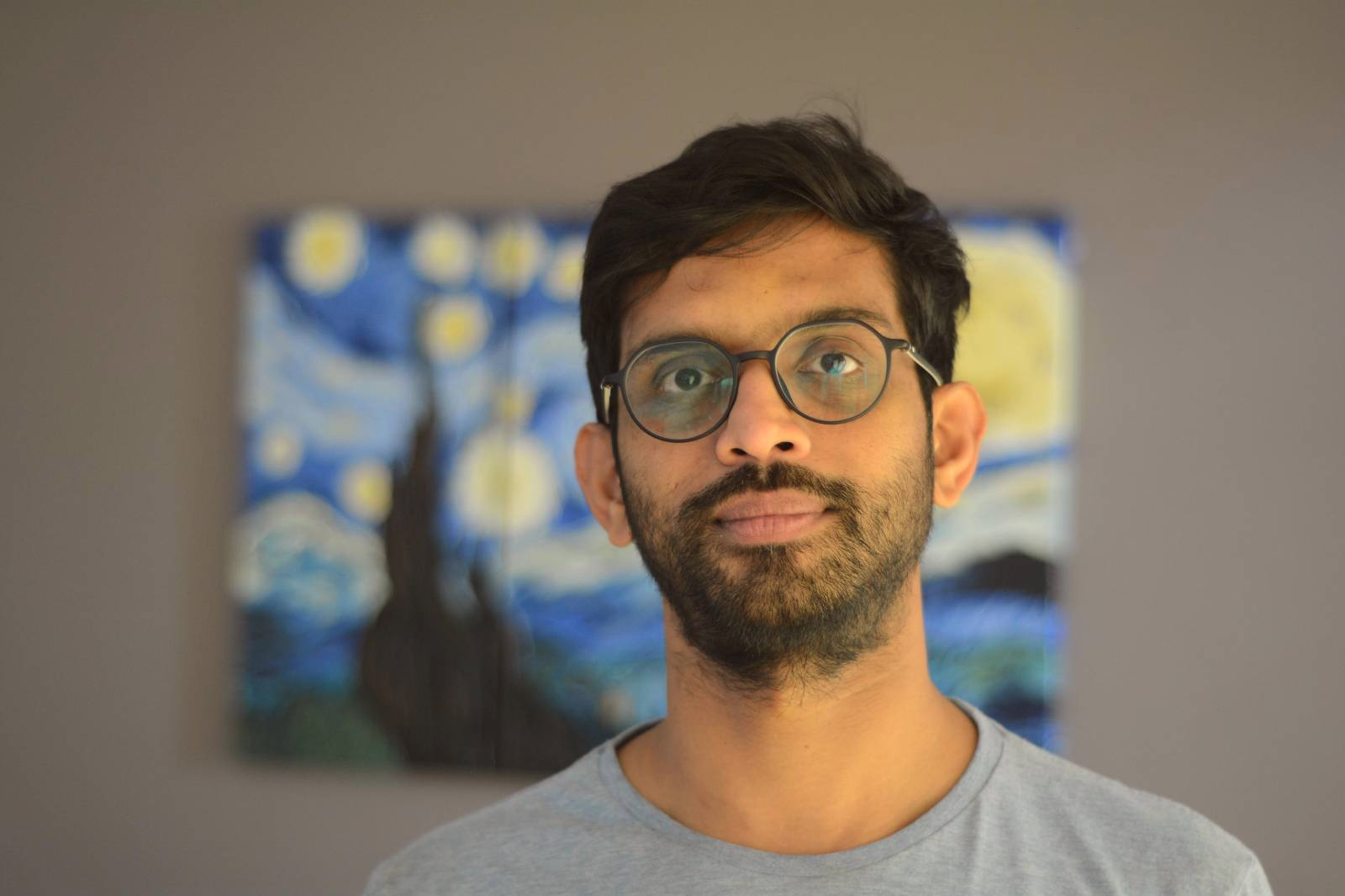
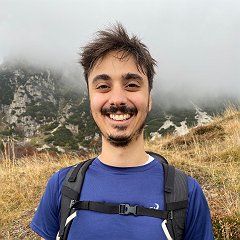
Dr. Damiano Abram is a postdoctoral research fellow at the CIFRA group of Bocconi University since June 2024, hosted by Giulio Malavolta. Previously, he completed his PhD in Cryptography at Aarhus University under Peter Scholl and Ivan Damgård (2020-2024). He is affiliated with the Cryptography Group at Aarhus University and has participated in prestigious programs like the Simons Institute's Cryptography 10 Years Later: Obfuscation, Proof Systems, and Secure Computation. Master’s degree in Mathematics (Cryptography & Coding Theory), University of Trento (2020) Bachelor’s degree in Mathematics (RSA Security), University of Padova (2017) His research focuses on theoretical cryptography , with emphasis on non-interactive protocols , homomorphic secret-sharing , pseudorandom correlation generators , and advanced cryptographic primitives like obfuscation and homomorphic encryption. He explores security models in idealised forms and distributed cryptographic techniques. Dr. Abram has received recognition through the Simons Institute Research Fellowship for summer 2025. His academic journey includes a research visit to Yuval Ishai at Technion (2022) and an internship at NTT Research under Mark Zhandry (2022). He contributes to the CIFRA group at Bocconi University and the Cryptography Group at Aarhus University, advancing collaborative work in cryptographic theory and secure computation.
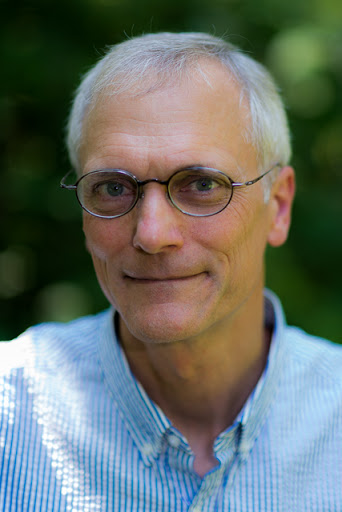
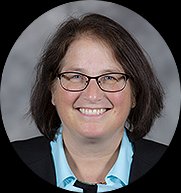
Aspasia Karalis is an Assistant Clinical Professor at the Faculty of Medicine , University of Montreal , affiliated with the Department of Pediatrics and practicing at the CHU Sainte-Justine hospital. She specializes in medical genetics with a focus on ethical, legal, and social implications in both prenatal and pediatric contexts. Harvard University (AB in History and Science, 2003) McGill University (MD and residency in medical genetics, 2012) University of Sherbrooke (LL.M. in Health Policy, 2018) University of Montreal (Microprogram in Health Sciences Pedagogy, 2019) Her research and academic work centers on integrating ethics and humanities into medical education, particularly within medical genetics . She has led the Medical Genetics and Genomics Residency Program since 2016 and teaches across all levels of medical training. Dr. Karalis also contributes to socio-legal medicine, addressing ethical dilemmas in pediatric care and genetics. Her work intersects with legal frameworks, policy development, and clinical practice. Non-obfuscated email: aspasia.karalis@umontreal.ca Contact: 514-345-4931 ext. 4284 She is based at the CHU Sainte-Justine hospital, collaborating with multidisciplinary teams in clinical genetics, and has a strong role in shaping educational strategies within the CIUSSS Mauricie and Centre-du-Québec networks.
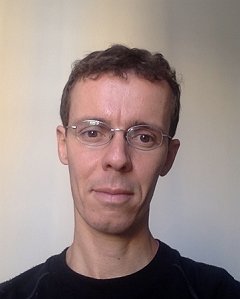
Chethan Kamath is an Assistant Professor in the Department of Computer Science and Engineering at IIT Bombay, where he is a member of the Theory Group and Trust Lab. His primary research focus is on cryptography, particularly its foundations, with broader interests extending to theoretical computer science. His educational journey includes: PhD from IST Austria (2014-2020) under Krzysztof Pietrzak, with thesis titled "On the Average-Case Hardness of Total Search Problems" Master's in CS from IISc Bangalore (2010-2013) under Sanjit Chatterjee, with thesis titled "Constructing Provably Secure Identity-Based Signature Schemes" Bachelor's in CS from University of Kerala (2005-2009) at TKM College of Engineering, Kollam Dr. Kamath's research interests span the theoretical foundations of cryptography, with particular focus on secure computation, complexity theory, and cryptographic hardness assumptions. His work often bridges theoretical computer science with practical cryptographic applications, exploring the boundaries of what can be efficiently computed while maintaining security guarantees. His research frequently addresses fundamental questions about the relationship between cryptographic primitives and complexity classes, especially the PPAD and TFNP complexity classes. His recent publications demonstrate a consistent focus on foundational aspects of cryptography, with particular emphasis on secure computation (garbled circuits, Yao's protocol), proofs systems (proofs of work, proofs of exponentiation), and complexity-theoretic aspects of cryptographic primitives. A notable trend is his exploration of the connections between complexity classes like PPAD and cryptographic assumptions, as well as his work on verifiable delay functions and their underlying number-theoretic assumptions. His research often employs tools from algorithmic graph theory (treewidth, separators) to analyze cryptographic protocols. His notable scientific achievement includes: Azrieli Fellowship during his post-doc at Tel Aviv University Dr. Kamath actively mentors students and researchers, currently advising several PhD and MS students at IIT Bombay, often in collaboration with Sruthi Sekar. His service to the academic community includes extensive program committee memberships for major conferences including Crypto, Eurocrypt, and TCC, demonstrating his standing in the cryptographic research community. He has co-organized educational events like the "Introduction to Cryptography" school as part of the ACM India Summer School 2025 and the "Theoretical Foundations of Cryptography" school as part of the ACM India Summer School 2024. He leads research activities within the Trust Lab at IIT Bombay, which focuses on theoretical and applied aspects of cryptography and security. The lab actively recruits MS/PhD students and post-docs, with ongoing research in foundational cryptography and its applications to secure computation, verifiable delay functions, and complexity-theoretic aspects of cryptographic security.
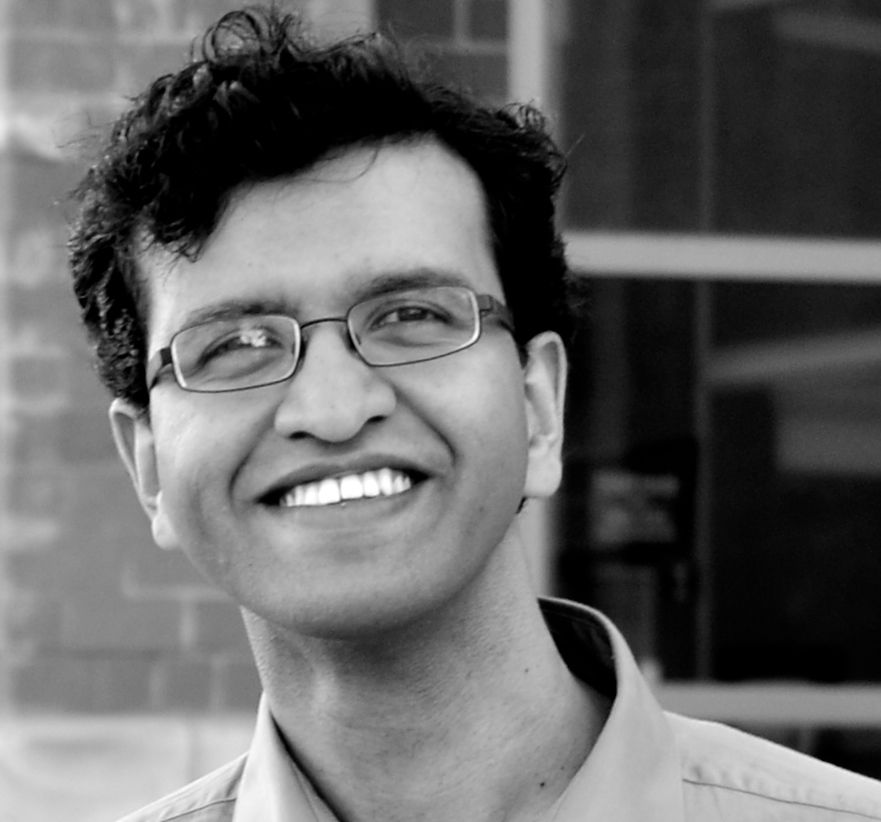
Manoj M. Prabhakaran is the Vijay and Sita Vashee Chair Professor at the Indian Institute of Technology Bombay in the Department of Computer Science and Engineering , and an Adjunct Professor at the University of Illinois, Urbana-Champaign . His research spans Cryptography, Theoretical Computer Science, Algorithms, and Complexity Theory , with a focus on Secure Multi-Party Computation (MPC) and Zero-Knowledge Proofs . As Principal Investigator of the IITB Trust Lab , he has organized major events like the 2017 MPC School and Workshop . Education: Ph.D. in Computer Science His work explores foundational questions in Cryptography , including Randomness Complexity , Non-malleable Codes , and Homomorphic Encryption . Recent publications address Leakage-Resilient Cryptography and Interactive Proofs . He advises Ph.D. students like Debasish Ray Chawdhuri and Kaartik Bhushan , and his email is publicly listed.
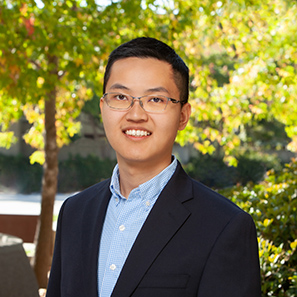
Carlos Guestrin is the Fortinet Founders Professor of Computer Science at Stanford University, Director of the Stanford AI Lab (SAIL), and Senior Fellow at the Stanford Institute for Human-Centered AI (HAI). He also serves as Chief Scientist at Visual Layer and Virtue AI, and is a Member of the National Academy of Engineering. His research centers on Machine Learning Methods, Explainability, Fairness & Ethics of AI, and Machine Learning Systems. He develops interpretable and reliable models, addresses algorithmic fairness, and builds efficient large-scale ML systems through frameworks like XGBoost. His work bridges theoretical rigor with real-world applications in healthcare and human-centered AI. His recent publications (2023–2025) demonstrate leadership in generative AI evaluation, model reliability, and ethical frameworks. Key trends include developing live benchmarks for research synthesis, on-device calibration techniques, multi-objective optimization with constraints, and societal impact assessment tools—showcasing a trajectory from foundational ML systems to responsible AI deployment. Honors include: Member of the National Academy of Engineering Details about his advising and grant activities were not provided in source materials, though his leadership roles indicate extensive mentorship and funding oversight. As Director of SAIL, he shapes one of the world’s premier AI research centers, while his HAI fellowship drives interdisciplinary initiatives ensuring AI advances human welfare. His industry roles at Visual Layer and Virtue AI translate academic research into practical AI solutions.
Darren McAvoy serves as an Extension Associate Professor in the Wildland Resources Department within the S.J. & Jessie E. Quinney College of Agriculture & Natural Resources at Utah State University. He concurrently holds the position of Extension Forestry Specialist/Assistant Professor in the Forestry Education program under USU Extension Programs, focusing on practical forestry applications for community outreach. His expertise spans Forestry , Wildland Ecology , and Natural Resource Management , emphasizing extension-based education that bridges academic research with land management practices. Dr. McAvoy's work integrates field-oriented forestry solutions into Utah's natural resource frameworks. Based at USU's Logan campus, his office is located in room NR 244 of the Old Main building (mailing address: 5230 Old Main Hill, Logan, UT 84322). Contact details are accessible via the university directory, though specific email and phone numbers require directory lookup due to obfuscation in the source text.
Gregory Wornell serves as the Sumitomo Electric Industries Professor in Engineering within MIT's Department of Electrical Engineering and Computer Science (EECS), part of the School of Engineering. He maintains key affiliations with the Computer Science and Artificial Intelligence Laboratory (CSAIL) and the Institute for Data, Systems, and Society (IDSS), while leading the Signals, Information, and Algorithms Laboratory in the Research Laboratory of Electronics (RLE). Education: BASc from the University of British Columbia SM and PhD from MIT His research program integrates theoretical foundations with practical systems across signal processing, information theory, and statistical inference. Current work explores architectures for sensing, learning, and communication systems alongside computational imaging, vision, and perception frameworks. Neuroscience applications form an emerging thread in his interdisciplinary approach, particularly regarding information processing in biological systems. Analysis of recent publications (2021-2025) reveals three dominant trends: 1) Uncertainty quantification and calibration methods for machine learning systems, 2) Fairness frameworks for AI with uncertain sensitive attributes, and 3) Novel signal processing techniques for RF communications and acoustic imaging. His work consistently bridges information-theoretic principles with deep learning implementations. Scientific awards: None specified in source materials. Advising and grants: Source materials indicate active PhD supervision through publications with students like Shah, Shen, and Sattigeri, though formal advisee lists aren't provided. Research appears supported by MIT-IBM Watson AI Lab collaborations and institutional resources from RLE/CSAIL. He directs the Signals, Information, and Algorithms Laboratory (SIAL), which focuses on developing mathematical frameworks for information extraction from complex systems. The lab maintains strong connections with MIT's wireless communications and computational imaging communities through RLE and CSAIL collaborations.
Anna Zalik is an Associate Professor at York University's Faculty of Environmental and Urban Change. Her research program critically examines the political economy and political ecology of extractive industries—particularly oil, gas, and minerals—with empirical focus on strategic exporting regions including Nigeria's Niger Delta, Mexico's hydrocarbon zones, and Canadian energy landscapes. She investigates the intersection of corporate security protocols with social welfare interventions and analyzes grassroots resistance to extraction in relation to financialized risk frameworks. Zalik's scholarship centers on three interconnected domains: 1) The spatial reorganization of energy infrastructure amid market transitions and climate pressures; 2) The geojuridical reconfiguration of resource sovereignty in terrestrial and marine frontiers; and 3) The political economy of transparency regimes in extractive governance. Her work employs interdisciplinary methodologies spanning legal geography, critical policy analysis, and political ecology. Analysis of her 15 most recent publications (2018-2025) reveals dominant thematic trajectories: evolving governance of ocean spaces beyond national jurisdiction; contested transitions in hydrocarbon economies; and critical auditing of corporate environmental accountability. Her research consistently foregrounds decolonial critiques of extraction, with recent emphasis on epistemic justice in ocean governance and the racialized calculus of environmental harm in petro-states.
Nuri Ateş is a full-time Lecturer at the School of Foreign Languages within Işık University. Their primary role involves delivering English language instruction across multiple programs including the English Preparatory Program (PREP), Undergraduate English Program (UEP), and Vocational School English Program (VSEP). Research interests focus on Language Education and Applied Linguistics , with specialization in English language teaching methodologies and curriculum development for diverse academic contexts. As a full-time academic staff member, they contribute to the institution's language education infrastructure while maintaining accessibility through obfuscated contact details.
Leon Li serves as an Assistant Professor in the School of Electrical Engineering and Computer Science at Washington State University, where his research addresses critical vulnerabilities in integrated circuit security and reliability within modern hardware systems. His academic credentials include a Bachelor's degree, Master's degree, and Ph.D., all completed at the University of California, San Diego prior to his faculty appointment at WSU. Dr. Li's research program specializes in countermeasures against hardware reverse engineering and supply chain attacks, with core competencies spanning: Hardware Security Architecture Integrated Circuit Protection Mechanisms Reverse Engineering Analysis Techniques Logic Obfuscation Methodologies Secure Hardware Testing Protocols Supply Chain Risk Mitigation Strategies Current work focuses on developing practical solutions for hardware control systems, including advanced obfuscation techniques to prevent intellectual property theft and methodologies for securing testing interfaces against malicious exploitation.
Ettore Merlo is a Full Professor in the Department of Computer Engineering and Software Engineering at Polytechnique Montréal, where he leads research in cybersecurity, artificial intelligence, and software systems. He holds an M.Sc. from the University of Turin and a Ph.D. from McGill University. His affiliations include membership in the Institute for Data Valorization (IVADO), focusing on data science and AI innovation. His research integrates software engineering with AI, emphasizing: Software artifact analysis (static/dynamic/symbolic) AI-driven security solutions for clone detection, malware analysis, and access control Fairness and robustness in machine learning systems Evolutionary analysis of software vulnerabilities Recent publications (2022-2025) demonstrate a strong focus on ethical AI, including bias mitigation in neural networks, automated anomaly detection, and certification of safety-critical ML systems. His work frequently applies graph neural networks, unsupervised learning, and formal verification methods to industrial and cybersecurity challenges. Professor Merlo has supervised 25 graduate students (10 PhD, 15 Master's), with projects ranging from avionics software to phishing kit analysis. While no scientific awards are listed, his extensive publication record includes 136 works spanning journals, conferences, and technical reports. Collaborations include partnerships with industrial telecommunication firms and international academia. No dedicated lab is specified, but his research aligns with Polytechnique Montréal's 'New Frontiers in Information and Communications Technologies' center.
Matteo Busi is a researcher at University Ca' Foscari Venice , specializing in software security, language-based security, and secure compilation. His work focuses on formal verification of security properties in cryptographic implementations and protocol verification using symbolic methods. Research interests include: Software Security Language-Based Security Secure Compilation Formal Verification Cryptographic Protocol Analysis Embedded Security Recent publications examine constant-time preservation under obfuscation, remote attestation protocols using pi-calculus, and robust compilation techniques. His contributions span POPL, PriSC, and APLAS conferences from 2019 to 2024.
Işıl Dillig is an Associate Professor of Computer Science at the University of Texas at Austin, where she leads the UToPiA research group. Her academic career spans over a decade of significant contributions to programming languages research, particularly in program analysis, verification, and synthesis. Dr. Dillig received all her academic degrees (BS, MS, and PhD) from Stanford University before joining the faculty at UT Austin. Her educational background established the foundation for her innovative research approach that bridges theoretical computer science with practical applications. Her research focuses on developing techniques to make software systems more reliable, secure, and easier to build through advanced program analysis, verification, and synthesis methods. She has pioneered approaches that combine symbolic reasoning with machine learning to tackle complex software engineering challenges across multiple domains including security, databases, and programming language theory. Her work demonstrates exceptional depth in creating practical tools that address real-world software development problems while maintaining strong theoretical foundations. Analysis of Dr. Dillig's publication record reveals a consistent trajectory of innovation in program synthesis, with recent work expanding into neurosymbolic approaches that bridge neural networks with formal methods. Her research shows strong connections between theoretical foundations and practical applications, particularly in security-critical systems, database technologies, and blockchain applications. The evolution of her work demonstrates increasing sophistication in handling complex program structures while maintaining practical usability. Dr. Dillig has received prestigious recognition for her research contributions: Sloan Fellowship NSF CAREER award As a dedicated educator and research leader, Dr. Dillig has served in significant roles including Program Chair for PLDI 2022 and Steering Committee member for PLDI. She has mentored numerous students through her UToPiA research group, guiding research in program synthesis, verification, and analysis. Her work has been supported by substantial research grants that have enabled innovative projects at the intersection of programming languages and security. Dr. Dillig leads the UToPiA (UT Austin Programming, Languages, and Analysis) research group, which focuses on developing novel techniques for program analysis, verification, and synthesis. The group maintains strong collaborations with industry partners and academic institutions worldwide, translating theoretical advances into practical tools that address real software engineering challenges.
Fernando Magno Quintão Pereira is an Associate Professor at the Federal University of Minas Gerais (UFMG), Brazil, specializing in compiler design and program analysis. His academic journey began with a Ph.D. from UCLA in 2008 under Jens Palsberg's supervision, establishing his foundation in compiler research. His research focuses on compilers , with core expertise in code generation , compiler optimizations , and static program analyses . Recent work explores quantum compilation, binary analysis, and security-aware compilation techniques. His publications reveal consistent contributions to major conferences including PLDI, CGO, and SPLASH, with emphasis on practical optimization frameworks and theoretical compiler advancements. Analysis of his 15 most recent publications (2020-2026) shows dominant themes in binary optimization (e.g., AnghaBench), security-aware compilation (e.g., Memory-Safe Elimination of Side Channels), and emerging architecture support (e.g., Quantum Computing Compilation). His work bridges theoretical compiler principles with real-world systems challenges. He actively contributes to the academic community through: Program committees for PLDI (2020-2025), CGO (2021-2026), and SPLASH conferences Leadership roles including CGO Finance Chair (2026) and PLDI Diversity & Inclusion Co-Chair (2023-2024) Organizing JENSFEST 2024 and serving on multiple conference steering committees Pereira maintains an active research group evidenced by continuous publication output and conference leadership, with his personal website ( homepages.dcc.ufmg.br/~fernando/ ) serving as a hub for his academic activities.
Myra Cohen is a Professor and the Lanh and Oanh Nguyen Chair in Software Engineering in the Department of Computer Science at Iowa State University. Previously, she held the position of Susan J. Rosowski Professor at the University of Nebraska-Lincoln where she was a member of the ESQuaReD software engineering research group. She serves on the ASE Steering Committee and has held leadership roles including general chair of ASE 2015 and program co-chair for ICST 2019 and ESEC/FSE 2020. Dr. Cohen earned her Ph.D. from the University of Auckland, New Zealand, her M.S. from the University of Vermont, and her B.S. from the School of Agriculture and Life Sciences at Cornell University. Her academic journey includes lecturing positions at both the University of Auckland and University of Vermont during her graduate studies. Her research spans several interconnected domains focused on software quality and assurance. A significant portion of her work addresses software testing challenges in highly-configurable systems, where she applies search-based techniques and combinatorial designs to create efficient test suites. More recently, her research has expanded into innovative areas including software testing for biological systems, quantum computing applications, and security testing through genetic improvement techniques. Her work demonstrates a consistent theme of addressing complex verification challenges through creative application of formal methods and automated techniques. Analysis of her recent publications reveals a growing focus on emerging domains including quantum software testing, molecular/biological computing systems, and assurance cases for safety-critical systems. She has increasingly incorporated AI techniques, particularly large language models, into traditional software engineering problems while maintaining her foundational work in configurable systems and metamorphic testing. NSF CAREER award recipient AFOSR Young Investigator Award recipient ACM Distinguished Scientist Recipient of 4 ACM Distinguished Paper awards Dr. Cohen has served as chair and committee member for numerous conferences including ASE, ICSE, ISSTA, ESEC/FSE, and ICST. She has mentored numerous students through the doctoral symposiums and student research competitions at major software engineering conferences. Her research has been supported by significant grants including those from NSF and AFOSR. She leads the LaVA-OPs (Laboratory for Variability-Aware Assurance and Testing of Organic Programs) research group at Iowa State University, which focuses on testing challenges in biological and organic computing systems.