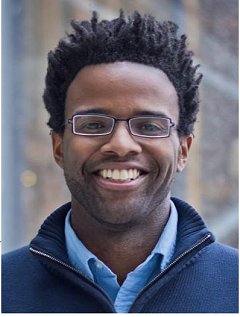
Michael Carbin is an Associate Professor at MIT in the Department of Electrical Engineering and Computer Science (EECS), where he leads the Programming Systems Group at the Computer Science and Artificial Intelligence Laboratory (CSAIL). His research centers on developing programming systems that handle uncertainty through probabilistic programming, quantum computing, and neural networks. Carbin's work spans programming languages, systems, and machine learning, with themes including uncertainty management, efficiency optimization, and formal verification. His publications demonstrate a strong focus on probabilistic inference methods, neural network optimization, and quantum programming frameworks. Awards and Honors: Sloan Research Fellowship (2020) Multiple Best Paper Awards (OOPSLA 2013, 2014; ICLR 2019) NSF CAREER Award (2018) Google Faculty Research Award (2018) As the head of the Programming Systems Group, he advises 10+ graduate students and postdocs, focusing on cutting-edge systems research. He has secured grants including Facebook Research Awards and NSF funding.
Dimitrios Karolidis is a Lecturer at the Department of Informatics and Computer Engineering within the School of Engineering at the University of West Attica (UniWA). He holds a Bachelor's degree in Physics from the University of Ioannina and a Master's in New Information and Communication Technologies from the National and Kapodistrian University of Athens (NKUA). Education: BSc in Physics, University of Ioannina MSc in New Information and Communication Technologies, NKUA His research focuses on Web Application Development , Internet Technologies , and Machine Learning . He has contributed to photovoltaic system optimization through projects like SmartPV , emphasizing fault detection, energy efficiency, and IoT integration. His publications highlight advancements in smart photovoltaic systems , including fault detection algorithms and communication protocols, aiming to reduce maintenance costs and improve energy output. He has also authored textbooks on programming languages like C and Python, widely used in academic settings. He has previously held academic positions at the Technological Educational Institute of Athens (2007-2018) and TEI Piraeus , working on laboratory and teaching roles related to computer systems and networks.
Professor Kyriakos H. Zoiros is a faculty member at the Department of Electrical and Computer Engineering, School of Engineering, Democritus University of Thrace (DUTH). Specializing in optical communications, he teaches undergraduate courses in Optical Telecommunications, Communications Networks, RF Circuit Design, and Electromagnetic Compatibility, alongside postgraduate courses on Optical Networks. His research interests include Purely optical signal processing Optical amplification and logic devices Optical computing Microring resonators Microwave photonics Free space optical communications Optical sensors Recent publications demonstrate expertise in photonic crystal semiconductor optical amplifiers, microring resonator optimization, and all-optical logic gate performance for high-speed telecommunications. His work spans optical signal processing, microwave photonics, and computational photonics applications. Professor Zoiros has contributed to international research programs such as MASSIVE (free space optic communication between unmanned vehicles), RF-EIGEN-SDR (software-defined radio structures), and SIROCOO (radio frequency conversion techniques).
Evangelos F. Magirou is a Professor of Operations Research at the Department of Informatics, School of Information Sciences and Technology, Athens University of Economics and Business (AUEB), where he has served since 1986. His academic career includes significant administrative roles including Chairman of the Faculty Union at AUEB since 1994, Deputy Chairman of the Department of Informatics since 2003, and Member of the Governing Board of the Public Power Corporation since 2004. His educational background includes: PhD in Decision and Control Sciences, Harvard University (1972-76) MS in Decision and Control Sciences, Harvard University (1971-72) BS in Electrical Engineering, Princeton University (1967-71) Professor Magirou's research spans theoretical and applied operations research with particular emphasis on applications to Greek business environment challenges. His work demonstrates consistent focus on finance, shipping, and production systems, with fundamental contributions to optimization, probabilistic models, and quantitative methods. His research trajectory shows evolution from early theoretical work in control systems and game theory to applied research in shipping economics and financial mathematics, with recent work addressing contemporary challenges including infectious disease response and American option pricing. His publication record reveals a strong interdisciplinary approach, bridging operations research with computer science, economics, and maritime transport. The 15 most recent publications indicate continued research productivity with applications spanning finance (option pricing algorithms), public health (infectious disease response), shipping (vessel positioning), and computer security (spam modeling). Professor Magirou has held numerous leadership positions including: Chairman of the Executive Committee for the MSc Program in Business Mathematics Chairman of the Hellenic Procurement Institute (1994-97) Vice Chairman of the Energy Coordination Committee (1993-95) Member of the National Energy Council's Scientific Secretariat (1977-85) He has been actively involved with professional organizations including INFORMS (Institute for Operations Research and the Management Sciences) and the Technical Chamber of Greece. His teaching responsibilities include courses in Elementary and Intermediate Mathematics of Finance, Operations Research, Game Theory, and Decision Theory, for which he has developed extensive teaching materials available in Greek.
Evangelos F. Mageirou serves as Professor of Operations Research at the Department of Informatics, School of Information Sciences and Technology, Athens University of Economics and Business (AUEB), a position held continuously since 1986. Previously, he worked at the Scientific Secretariat of the National Energy Council under Greece's Ministries of Coordination, Industry and Energy from 1977-1986. His academic credentials include: PhD in Decision and Control Sciences, Harvard University (1972-1976), Thesis: 'Topics in the Analysis of Interconnected Systems' MS in Decision and Control Sciences, Harvard University (1971-1972) BS in Electrical Engineering, Princeton University (1967-1971) Mageirou's research centers on Theoretical and Applied Operations Research with significant applications to the Greek business environment, particularly in finance, shipping logistics, and production systems. His foundational work spans optimization theory, probabilistic modeling, and quantitative methods development. The consistent publication record through 2020 demonstrates enduring scholarly productivity in his core domains. Analysis of recent publications reveals three dominant research trajectories: maritime logistics optimization (vessel speed/positioning studies), game-theoretic security applications (spam email modeling), and control theory extensions (policy iteration algorithms). These threads demonstrate methodological continuity from his early work on interconnected systems to contemporary applications in financial mathematics and pandemic response modeling.
Xenia Mamakou is an academic at the Department of Business Organization and Administration, School of Business Administration, Athens University of Economics and Business (AUEB). She is affiliated with the Business Informatics Laboratory (BILab) and holds a PhD in Information Systems from AUEB. Education: BSc in Business Organization and Administration (AUEB), MSc in Business Information Technology (UMIST, UK), PhD in Information Systems (AUEB) Her research focuses on business analytics, digital transformation, and the organizational/social impacts of technology. She has published over 30 articles on topics like business analytics, ERP systems, e-commerce, and agile methodology. Her recent works explore AI adoption, metaverse opportunities, and agile project management in Greece. She has authored an academic book on Excel-based data analysis and received two teaching excellence awards from AUEB. She serves as scientific director of an eLearning course and participates in three other programs as a lecturer. Her involvement in committees includes Teaching and Learning Support, Gender Equality and Anti-Discrimination, and AUEB Faculty Association (Treasurer since 2021). Scientific Awards: AUEB Teaching Excellence Award (twice) Treasurer, AUEB Faculty Association (2021–present)
Professor Toby Murray is a leading academic in the School of Computing and Information Systems at the University of Melbourne, Australia. He serves as Director of the Defence Science Institute and Co-Lead of the Computer Science Research Group. With a D.Phil. in Computer Science from Oxford University (awarded in 2011), Murray has established himself as a prominent researcher in security and program verification. His research focuses on building highly secure computing systems cost-effectively, with expertise spanning security assessment, vulnerability detection, secure system design, and formal verification. Murray's work bridges theoretical foundations with practical applications, particularly in information flow security for concurrent systems and neural network robustness. Murray's publication record shows a strong trajectory in security and formal methods, with recent work on verified neural network robustness (CAV 2025), EDEFuzz for detecting excessive data exposure (ICSE 2024 Distinguished Paper), and security separation logic for concurrent C programs. His research consistently addresses critical challenges in secure system development, with increasing focus on machine learning security in recent years. Scientific Awards: Distinguished Paper Award at ICSE 2024 for EDEFuzz Murray actively supervises numerous PhD students and has advised many successful researchers who have gone on to faculty positions at institutions including Swansea University and LMU Munich. His service to the community includes being an Associate Editor for IEEE Security & Privacy and ACM Transactions on Privacy and Security, as well as Program Chair for CSF 2025. Murray leads several significant research initiatives including Verisimilar (Verified, Secure Machine Learning), EDEFuzz (Detecting excessive data exposure), and COVERN (Proving information flow security of concurrent programs), demonstrating his commitment to translating theoretical security research into practical tools and methodologies.
Benjamin C. Pierce serves as the Henry Salvatori Professor of Computer and Information Science in the School of Engineering and Applied Science at the University of Pennsylvania. He is a Fellow of the ACM with extensive editorial experience, having served as co-Editor in Chief of the Journal of Functional Programming and Managing Editor for Logical Methods in Computer Science. His research spans programming languages, type systems, language-based security, formal verification, differential privacy, and synchronization technologies. Pierce is renowned for developing foundational frameworks in bidirectional transformations (lenses), property-based testing, and differential privacy verification. His work bridges theoretical computer science with practical implementation, particularly evident in his development of the Unison file synchronizer and the Clowdr virtual conference platform. The trends in his recent publications reveal a sustained focus on verification techniques for privacy-preserving systems, particularly differential privacy, alongside continued innovation in bidirectional data transformations and property-based testing methodologies. His work increasingly integrates formal verification with practical implementation concerns. Fellow of the ACM Pierce has mentored numerous researchers through PLMW (Programming Languages Mentoring Workshop) events and has served on numerous program committees for major conferences including POPL, PLDI, and ICFP. His editorial work has significantly shaped the programming languages research community through his leadership roles in key journals. He leads development of the Unison file synchronizer, a cross-platform tool used worldwide, and co-developed the Clowdr virtual conference platform that gained prominence during the pandemic. His work demonstrates a consistent pattern of creating practical tools grounded in deep theoretical foundations.
Alexandros Dimopoulos is an Assistant Professor at the Department of Informatics and Telematics, Harokopio University of Athens, with expertise in reliable embedded systems, FPGA design, and bioinformatics applications. He graduated from the National Technical University of Athens (NTUA) in 2004 with a degree in Electrical and Computer Engineering and earned his PhD in 2009 in intelligent embedded systems. Current academic roles: Assistant Professor at Harokopio University (since 2012), Lecturer at the Naval Academy (2020–2025). Collaboration: Alexander Fleming Biomedical Sciences Research Center (since 2012). His research focuses on: Reliable embedded systems for biomedical applications FPGA-based solutions in bioinformatics Machine learning for RNA-Seq data analysis Internet of Things (IoT) architecture Energy systems fault detection via pattern recognition His publications demonstrate interdisciplinary work bridging computer engineering, bioinformatics, and electrical systems. He coordinates the Greek national hub ELIXIR-GR and has extensive teaching experience in both undergraduate and postgraduate programs, with a focus on course modernization.
Isambo Karali is an Assistant Professor in the Department of Informatics and Telecommunications at the National and Kapodistrian University of Athens, a position she has held since November 2007. Prior to this, she served as a Lecturer at the same department from September 1999 to November 2007. Her academic career spans over three decades with significant contributions to knowledge representation, uncertainty reasoning, and semantic web technologies. Dr. Karali's educational background includes: PhD in Informatics (1995) from the University of Athens MSc in Computer Science (1988) from University College, University of London Bachelor of Mathematics (1986) from the Department of Mathematics, University of Athens Dr. Karali's research focuses on Knowledge Representation and Reasoning with Uncertainty, Artificial Intelligence, Logic Programming, and Object-Oriented Programming. She has made significant contributions to applying Dempster-Shafer theory for handling uncertainty in Semantic Web applications. Her work bridges theoretical foundations of logic programming with practical applications in knowledge representation, particularly in distributed and heterogeneous environments. She has supervised numerous PhD and master's theses in these areas. Her recent publications demonstrate a strong trend toward integrating uncertainty reasoning with Semantic Web technologies, particularly using Dempster-Shafer theory and fuzzy logic. Her work addresses challenges in managing imprecise and uncertain information in large-scale knowledge systems, with applications in recommendation systems, news analysis, and semantic search. The interdisciplinary nature of her research connects artificial intelligence, knowledge representation, and web technologies to solve complex information management problems. Dr. Karali has been actively involved in research funding and collaboration: Principal Investigator for "Handling uncertainty in data intensive applications on a distributed computing environment (cloud computing)" under the "Thalis" Program Scientific Responsible for "Artificial Intelligence and Logic Programming Techniques for Knowledge on the World Wide Web" at the National and Kapodistrian University of Athens Scientific Responsible for "Semantic Web and Logic Programming - Application to Guided Search" at the National and Kapodistrian University of Athens Participant in multiple EU research projects including MISSION, COSMOS, ADDSIA, PARACHUTE, APPLAUSE, and EDS As an educator, Dr. Karali has taught core undergraduate courses including Object-Oriented Programming and Logic Programming, as well as graduate courses on Knowledge Technologies and Artificial Intelligence. She has supervised numerous PhD and master's students, with a focus on uncertainty reasoning, semantic web technologies, and logic programming applications. Her mentorship extends to student competitions, including guiding the Department's team in the Microsoft ImagineCup 2009. Dr. Karali has also contributed to the academic community through service activities, including membership on program committees for conferences like IEEE ICTAI, reviewer for prestigious journals, and organizational roles in academic events. From 2000 to 2012, she was responsible for the Department's website, contributing to its architecture design and system development.
Angelos Charalambidis is an Assistant Professor at Harokopio University, affiliated with the Department of Informatics and Telematics. His academic and professional engagements focus on theoretical and applied aspects of computational logic and programming languages. Education: B.S. in Informatics, University of Athens (2005) M.S. in Computer Systems, University of Athens (2008) Ph.D. in Higher-Order Logic Programming, University of Athens (2014) His research interests include declarative programming languages, computational logic, and reasoning techniques, contributing to the broader field of Programming Languages and Software Systems. He has also explored applications in knowledge representation, preference modeling, and cloud-native systems. The trends in Angelos Charalambidis's publications highlight advancements in logic programming, including higher-order logic, fixpoint theory, ordered disjunction, and federated query processing. His work bridges theoretical foundations with practical implementations in formal methods and computational logic.
Phivos Mylonas is an Associate Professor at the Department of Informatics and Computer Engineering within the School of Engineering at the University of West Attica. He also maintains academic appointments at Ionian University where he previously served as Associate Professor and Assistant Professor in the Department of Informatics. His academic journey includes adjunct professor positions at several Greek institutions including University of Central Greece, University of the Aegean, and University of Crete. Dr. Mylonas holds a PhD in Electrical and Computer Engineering from the National Technical University of Athens, a Master's Degree in Advanced Information Systems from the National and Kapodistrian University of Athens, and a Diploma in Electrical and Computer Engineering from the National Technical University of Athens. His research spans Artificial Intelligence applications, data science, user modeling, personalization technologies, and semantic frameworks. His scholarly output shows a clear trajectory toward increasingly sophisticated AI applications, with recent publications focusing on ChatGPT integration, fuzzy logic systems, and multimodal interaction. The research demonstrates strong interdisciplinary connections between computer science, education, and cultural heritage preservation. Thomaidio Grant for Science and Art Progress (2005, 2006) ICCS-NTUA Short Term Research Grant (2005-2006) As an academic leader, Dr. Mylonas has served as Director of the Humanistic and Social Informatics Laboratory at Ionian University (2013-2022) and as a Senior Researcher at the Image, Video and Multimedia Laboratory at National Technical University of Athens. He has been instrumental in organizing numerous international conferences and has served on over 200 conference program committees. His laboratory work spans multiple institutions including collaborations with University of Patras and Ionian University.
Nikos Spanoudakis is an Assistant Professor at the Department of Electronic Engineering of Hellenic Mediterranean University , with concurrent research collaboration at Technical University of Crete . He holds a PhD in Computer Science (Artificial Intelligence) from Paris Descartes University (2009, "Très Honorable"), an MSc in Organization and Administration from Technical University of Crete, and a Diploma in Computer Engineering and Informatics from University of Patras. Research Focus: Multi-Agent Systems (AOSE, Computational Argumentation), Model-Driven Engineering , Smart Buildings , IoT , and Artificial Intelligence Applications in Ambient Intelligence, Finance, and Education Key Contributions: Created ASEME Methodology and AMOLA Language for agent modeling, developed Gorgias-B argumentation framework, and designed Kouretes Statechart Editor for robotic behavior specification His recent publications reveal a strong trend in Explainable AI (2023: Explainable Argumentation as a Service ), Smart Energy Systems (2025: Engineering IoT-Based Open MAS for Large-Scale V2G/G2V ), and EdTech Innovations (2024: Role Assignment in Programming Courses ). He has received prestigious ACM Senior Member (2023) and IEEE Senior Member (2012) distinctions, along with teaching recognition (2021) from Technical University of Crete. Academic Leadership: Serves as Editor for Springer Nature's Computer Science journal and has reviewed for 15+ top-tier publications including IEEE Intelligent Systems and Journal of Web Semantics Conference Involvement: Program Committee Member for 20+ international conferences (IJCAI, ECAI, AAMAS, AAAI) and organizer of multiple European Agent Systems Summer Schools
George Kousiouris is an Associate Professor at the Department of Informatics and Telematics , Harokopio University of Athens . He holds a Ph.D. in Cloud Computing from the National Technical University of Athens (2012) and a Dipl. Eng. in Electrical and Computer Engineering from the University of Patras (2005). His research focuses on Cloud Platforms , Serverless Computing (FaaS) , IoT Infrastructure , and Performance Engineering . He has led major EU-funded projects such as H2020 PHYSICS (lead architect), BigDataStack , and CloudPerfect , contributing to cloud service benchmarking, FaaS frameworks, and edge-cloud collaboration. His work emphasizes practical applications in healthcare, smart agriculture, and urban network analysis. Over 70 publications highlight his expertise in cloud resource optimization , service-level agreements , and data-driven infrastructure management . His recent work explores sustainable computing , human-AI collaboration , and conversational AI for MLOps . Key Projects: PHYSICS, BigDataStack, CloudPerfect, SLALOM, COSMOS Research Highlights: FaaS performance benchmarking, IoT event processing, hybrid-cloud workflows Awards/Grants: Multiple EU H2020 and FP7 project leadership roles He advises on cloud migration methodologies (e.g., ARTIST framework) and contributes to regulatory compliance frameworks like GDPR via semantic ontologies.
Dr. Fousteris Andreas is an Assistant Professor at the Department of Business Administration, University of Piraeus. He holds a PhD in Business Administration and multiple advanced degrees in Management and Economics. With nearly 20 years of private-sector experience in finance, consulting, and infrastructure sectors, his expertise spans strategic planning, sustainability, and innovation management. Education: Bachelor of Economics, University of Piraeus MSc in Management of Industrial Systems (Energy & Environmental Management specialization), National Technical University of Athens & University of Piraeus Executive MBA, University of Piraeus PhD in Business Administration, University of Piraeus Research Interests: Economic Analysis and Public Policy Environmental & Energy Management Technology & Innovation Management Sustainable Development and Corporate Governance Entrepreneurship and Feasibility Studies Recent Research Focus: His work emphasizes sustainability in maritime sectors, digital twins for building efficiency, and environmental performance assessment using machine learning. He also explores urban health integration in city planning and the impact of cultural values on corporate sustainability practices. Professional Engagement: Active in international conferences (e.g., ICBAP 2024, Southern Economic Association), with a focus on bridging academic research with industry challenges. His contributions span over 20 peer-reviewed articles and conference papers addressing environmental, economic, and technological sustainability themes.